预约演示
更新于:2026-06-02

The National Academy of Sciences of Belarus
更新于:2026-06-02
概览
标签
肿瘤
皮肤和肌肉骨骼疾病
呼吸系统疾病
小分子化药
干细胞疗法
细胞因子诱导的杀伤细胞疗法
疾病领域得分
一眼洞穿机构专注的疾病领域

技术平台
公司药物应用最多的技术
靶点
公司最常开发的靶点
关联
靶点 |
作用机制 |
在研机构 |
原研机构 |
在研适应症 |
非在研适应症 |
最高研发阶段 |
首次获批国家/地区 |
首次获批日期 |
靶点 |
作用机制 |
在研机构 |
原研机构 |
在研适应症 |
非在研适应症 |
最高研发阶段 |
首次获批国家/地区 |
首次获批日期 |
靶点 |
作用机制 |
在研机构 |
原研机构 |
在研适应症 |
非在研适应症 |
最高研发阶段 |
首次获批国家/地区 |
首次获批日期 |
NCT06167564
Development of a Diagnostic Test System Based on Microchip Technology for the Detection of IgE-dependent Allergic Reactions
NCT05654766
Development of a Method for Assessing the Functional Activity of Platelets for the Differential Diagnosis of Thrombocytopathies Using Flow Cytometry
NCT05520125
Treatment of Patients With Segmental Bone Tissue Defects Using Mesenchymal Stem Cells Enriched by Extracellular Vesicles
100 项与 The National Academy of Sciences of Belarus 相关的临床结果
登录后查看更多信息
登录后查看更多信息
2026-06-15INTERNATIONAL JOURNAL OF CANCER
Lymphoma, multiple myeloma and leukaemia incidence in regions of Belarus most heavily contaminated by the Chernobyl accident
Article
作者: Ilya Veyalkin ; Sergey Trofimik ; Alesia Yaumenenka ; Tatiana Kukhta ; Vladimir Drozdovitch ; Richard Harbron ; Pavel Moiseyev ; Victor Minenko ; Ljubica Zupunski ; Evgenia Ostroumova ; Joachim Schüz
Abstract:
There is little information on non‐thyroid cancer risks, including haematological malignancies (HM), among the residents of most contaminated regions after the Chernobyl (Chornobyl) nuclear power plant accident. We studied the incidence of lymphoma, multiple myeloma and leukaemia in relation to the raion‐average age‐specific cumulative absorbed red bone marrow (RBM) dose among the residents of Gomel and Mogilev oblasts in Belarus, which were highly contaminated. The follow‐up period was 40 years (1978–2018). HM cases and population size data were received from the Belarusian national cancer registry and the state department of statistics. Our ecological study included 7328 lymphoma, 9476 leukaemia and 2003 multiple myeloma incident cases and 90.8 million person‐years in people who were born before the accident and have attained age <80 years old. The mean (median) RBM dose accumulated by December 31, 2018 was 14.2 (6.4) mGy. We found no evidence of increased risks of Hodgkin and non‐Hodgkin lymphoma, multiple myeloma or total leukaemia associated with two‐year lagged raion‐average cumulative RBM dose after adjustment for sex, attained age, urban/rural status and calendar period effects. There was a suggestion of an elevated relative risk of myeloid leukaemia per 100 mGy after exclusion of Gomel and Mogilev cities. Little evidence was found on interaction between selected factors, except sex, and RBM dose for each study outcome. Studies with individually reconstructed cumulative absorbed RBM doses are warranted to provide more insight on dose‐effect relationships between HM risk, specifically leukaemia, and protracted environmental exposure at a low dose range.
2026-06-01JOURNAL OF STEROID BIOCHEMISTRY AND MOLECULAR BIOLOGY
A novel thiadiazole-steroid hybrid as a CYP19A1 inhibitor: Synthesis, molecular interaction analysis and assessment of steroid receptor signaling
Article
作者: Volkova, Yulia A ; Sorokin, Danila V ; Khamidullina, Alvina I ; Chursin, Anatoly Y ; Salnikova, Diana I ; Bogdanov, Fedor B ; Zavarzin, Igor V ; Dzichenka, Yaraslau U ; Sidunets, Yurii A ; Usanov, Sergey A ; Scherbakov, Alexander M ; Chebotkova, Darya V ; Uvarov, Denis Y ; Malakhova, Victoria R
The enzyme aromatase (CYP19A1) is an important target for the discovery of new therapeutic drugs against breast cancer. A series of novel heteroaryl steroidal derivatives, C-2- and C-16-thiadiazole-substituted estranes, were synthesized and biologically evaluated as potential aromatase inhibitors. These compounds exhibited cytotoxicity against breast cancer cells with IC50 values of 5.5 µM and higher. The lead compound, 2-(2'-P(O)(NHtBu)2-1',3',4'-thiadiazole)-Δ1,3,5(10)-estratrien-17-one, was shown to be selective against MCF7 cells with IC50 (MCF7) = 5.5 µM vs IC50 (MDA-MB-231) = 26.1 µM. It acts as both a potent selective agent blocking CYP19A1 and an effective apoptosis inducer, with no effects on the hormone receptors ERα and AR. The toxicity of the lead compound against normal epithelial cells has not been revealed. Molecular docking was used to more accurately define the binding mode of the lead compound to CYP19A1. In a word, here we describe a novel heteroaryl steroidal derivative promising as a CYP19A1 inhibitor for the treatment of hormone-dependent breast cancer.
2026-04-01FITOTERAPIA
Characterization of andrographolide-loaded exosome-like nanoparticles from Nauclea officinalis and their modulation of inflammatory and lipid metabolic pathologies in WRL68 cells
Article
作者: Lei, Xianglan ; Zuo, Jinfu ; Demidchik, Vadim ; Zhou, Donghai ; Li, Yan ; Liu, Jiaqi ; Peng, Yuxuan ; Lin, Yaqin
Andrographolide (AG), a natural diterpenoid compound derived from Andrographis paniculata, exhibits potential against non-alcoholic steatohepatitis (NASH). However, its therapeutic utility is limited by poor solubility, short half-life, and low bioavailability. This study aimed to enhance AG's efficacy by encapsulating it into exosome-like nanoparticles (ELNs) isolated from Nauclea officinalis (N. officinalis, Rubiaceae family) and evaluating its anti-NASH activity in WRL68 cells. This study isolated Nauclea officinalis-derived ELNs (N-ELNs) via ultracentrifugation. Loganin, andrographolide, and asiatic acid were detected in N-ELNs using the HPLC method. RNA sequencing and target gene analysis identified miRNAs in N-ELNs and their cross-kingdom targets in the human genome. AG-loaded N-ELNs (AG-N-ELNs) were prepared using a passive loading method and characterized by transmission electron microscopy, nanoparticle tracking analyzer, and high-performance liquid chromatography. Their effects were tested in free fatty acid (FFA)-exposed WRL68 cells. As for the results, AG suppressed Nuclear Factor kappa-B p50 (NF-κB p50) activation, downregulated NLRP3 expression, and reduced pro-inflammatory cytokines (IL-1β, IL-6, TNF-α) in WRL68 cells. It also restored mitochondrial membrane potential and decreased reactive oxygen species (ROS). N-ELNs targeted the ACC/ CPT1 axis to alleviate lipid deposition, reducing total cholesterol and triglyceride levels. AG-N-ELNs outperformed both AG and N-ELNs individually, demonstrating superior anti-NASH activity through synergistic effects of AG's anti-inflammatory/antioxidant properties and N-ELNs' miRNA-mediated metabolic regulation. In conclusion, AG-N-ELNs effectively alleviate NASH-like pathological features in vitro through multi-target regulation, offering a promising strategy for NASH treatment. Further in vivo validation and formulation optimization are warranted.
100 项与 The National Academy of Sciences of Belarus 相关的药物交易
登录后查看更多信息
100 项与 The National Academy of Sciences of Belarus 相关的转化医学
登录后查看更多信息
组织架构
使用我们的机构树数据加速您的研究。
登录
或
管线布局
2026年10月23日管线快照
管线布局中药物为当前组织机构及其子机构作为药物机构进行统计,早期临床1期并入临床1期,临床1/2期并入临床2期,临床2/3期并入临床3期
临床前
3
4
临床2期
其他
6
登录后查看更多信息
当前项目
登录后查看更多信息
药物交易
使用我们的药物交易数据加速您的研究。
登录
或
转化医学
使用我们的转化医学数据加速您的研究。
登录
或
营收
使用 Synapse 探索超过 36 万个组织的财务状况。
登录
或
科研基金(NIH)
访问超过 200 万项资助和基金信息,以提升您的研究之旅。
登录
或
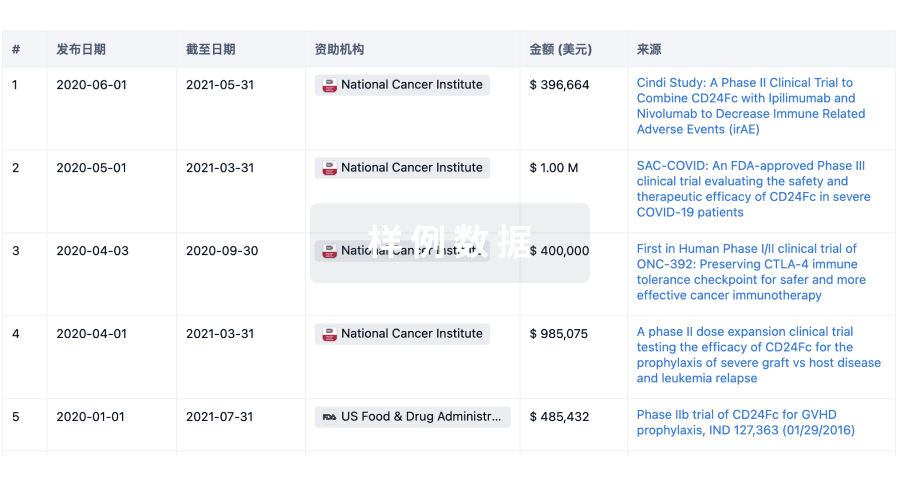
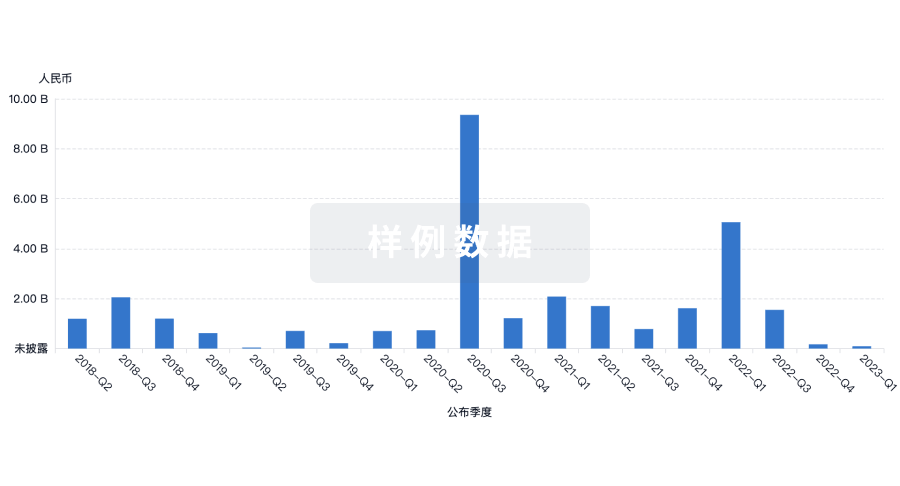
投资
深入了解从初创企业到成熟企业的最新公司投资动态。
登录
或
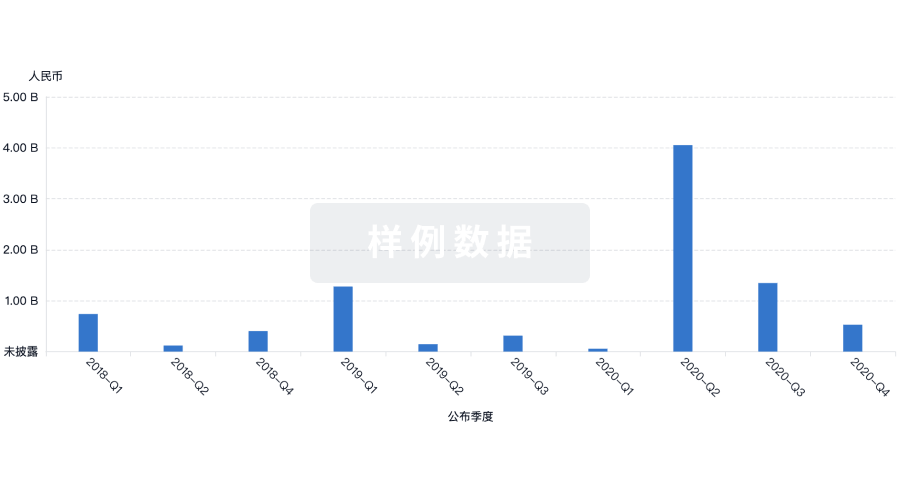
融资
发掘融资趋势以验证和推进您的投资机会。
登录
或
提出任何生物医药研究问题
让每一步生物医药决策都精准制胜
基于十亿级生物数据与全球情报的精准 AI,赋能早期药物发现
立即开始免费试用!
智慧芽新药情报库是智慧芽专为生命科学人士构建的基于AI的创新药情报平台,助您全方位提升您的研发与决策效率。
立即接入生物医药数据包
智慧芽新药库数据也通过智慧芽开放平台,以MCP或API服务形式对外开放。立即使用我们的MCP服务定制您的LLM智能体。
生物序列数据库
生物药研发创新
免费使用
化学结构数据库
小分子化药研发创新
免费使用