预约演示
更新于:2026-03-07

Bellvitge University Hospital
更新于:2026-03-07
概览
关联
NCT07368218
Randomized Clinical Trial on Morbidity, Psychological Impact, and Changes in Biomarker Concentration During the Perioperative Period Comparing Transmesocolic Versus Retromesenteric Reconstruction in Cephalic Duodenopancreatectomy (FAST Trial)
CTIS2025-523120-53-00
Prospective Multicenter Randomized Non-Inferiority Study Comparing 7 Days Versus 14 Days of Antibiotic Treatment for Graft Pyelonephritis in Kidney Transplant Recipients (KTI)
NCT07155590
Subphenotype- and Complication-guided Adjunctive Fosfomycin Therapy for Staphylococcus Aureus Bacteraemia: Pooled Analysis of Two Randomised Trials
100 项与 Bellvitge University Hospital 相关的临床结果
登录后查看更多信息
登录后查看更多信息
2026-03-01International journal of cardiology. Cardiovascular risk and prevention
Prognostic value of jugular, pulmonary and inferior vena cava ultrasound in decompensated heart failure in primary care
Article
作者: Caballol-Angelats, Rosa ; Pifarrè, Leila ; Miranzo, Esther ; Verdú-Rotellar, José María ; Enjuanes, Cristina ; Pirretas, Laura ; Navas, Elena ; Muñoz, Miguel Ángel ; Cendrós, Victoria ; Sierra, Verónica ; Inzoli, Marco ; Roger, Ana
Background:
Multiparametric ultrasound combining pulmonary and venous assessment (inferior vena cava [IVC] and internal jugular vein) is a feasible tool for characterizing hemodynamic congestion in patients with heart failure (HF) managed in Primary Care.
Objective:
To evaluate the short-term prognostic value of pulmonary and venous ultrasound in patients with decompensated HF treated with intravenous diuretics in community settings.
Methods:
Prospective cohort study including patients with decompensated HF attended between April 2024 and September 2025 across seven Primary Care teams of the Catalan Health Institute. Clinical, analytical, and ultrasound variables (IVC, jugular vein, and 8-zone lung ultrasound) were recorded. The primary outcome was a composite of death, HF hospitalisation, or new intravenous treatment within seven days.
Results:
A total of 197 patients were included (56.4 % women; mean age 84.7 ± 7.5 years). Signs of venous and pulmonary congestion were frequent at inclusion. Within seven days, 14.8 % of patients experienced the composite outcome. In multivariate analysis, IVC collapsibility <25 % (OR 3.70; 95 % CI 1.13-14.53; p = 0.039) and prior heart failure hospitalisation (OR 4.47; 95 % CI 1.48-14.10; p = 0.008) were independently associated with events, whereas lung and jugular ultrasound parameters were not.
Conclusions:
Multiparametric ultrasound performed in Primary Care allows identification and quantification of hemodynamic congestion in decompensated HF. Among evaluated parameters, only IVC collapsibility showed independent short-term prognostic value, supporting its integration into community-based risk stratification models.
2026-02-25CLINICAL INFECTIOUS DISEASES
Prevention of Tuberculosis in Patients Treated With Biological Therapies: 20 Years' Experience in a Specialized Tuberculosis Clinic in a Low-prevalence Country
Article
作者: Gómez-Vaquero, Carmen ; Ruiz-Cerulla, Alexandra ; Luque, Maria J ; Trapero, Cristina ; Sabé, Núria ; Solanich, Xavier ; Narváez, Javier ; Notario, Jaime ; Juanola, Xavier ; Guardiola, Jordi ; Pérez-Recio, Sandra ; Berbel-Arcobé, Laura ; Fornons-Servent, Rosa ; Santin, Miguel ; Rodríguez-Moranta, Francisco ; Nolla, Joan Miquel ; Sánchez-Pastor, Elena ; Grijota-Camino, Maria D
Abstract:
Background:
This study builds on previous evidence to assess the risk of tuberculosis (TB) in patients treated with biologic therapies (BioT), the role of the interferon-γ-release assay (IGRA) QuantiFERON-TB (QFT) Gold as a stand-alone screening test, and whether periodic re-testing is warranted for patients with a negative pre-BioT screening.
Methods:
A total of 1368 patients starting BioT were screened for TB infection using 4 screening strategies over 4 consecutive periods: (1) 2-step tuberculin skin test (TST); (2) 2-step TST plus QFT Gold In-Tube; (3) single-step TST plus QFT Gold In-Tube; and (4) QFT Gold In-Tube (or QFT Gold Plus) alone. All patients with TB infection were offered preventive therapy.
Results:
TB infection was diagnosed in 327 (23.9%) patients (40.8%, 39.5%, 25.3%, and 14.8% in the first, second, third, and fourth periods, respectively; P = .000). The adjusted odds ratios (ORs) with respect to the first period were 0.89 (95% CI, .55–1.44), 0.49 (95% CI, .33–.73), and 0.23 (95% CI, .15–.36) for the second, third, and fourth periods, respectively. During follow-up, 11 patients (0.8%) developed TB. The probability of remaining TB-free after 11 years of BioT exposure was 99.1%, with no significant differences between screening periods (P = .372). All TB cases in patients with negative baseline screening occurred within the first year of BioT exposure.
Conclusions:
Although BioT-associated TB can be significantly reduced, it is not completely preventable. Neither dual testing nor periodic systematic re-screening for TB infection is warranted after a negative pre-BioT test.
2026-02-25CLINICAL INFECTIOUS DISEASES
Adjunctive Fosfomycin for the Treatment of
Staphylococcus aureus
Bacteremia: A Pooled Post Hoc Analysis of Individual Participant Data From 2 Randomized Trials
Article
作者: Pujol, Miquel ; Miró, Jose M ; Tebé, Cristian ; Tong, Steven Y C ; Escrihuela-Vidal, Francesc ; Oriol, Isabel ; Liu, Kuan ; Carratalà, Jordi ; Grillo, Sara ; Pallarès, Natàlia ; Ong, Sean W X
Abstract:
Background:
The role of adjunctive fosfomycin in Staphylococcus aureus bacteremia (SAB) remains uncertain.
Methods:
We performed a post hoc pooled analysis of individual participant data from the multicenter BACSARM and SAFO randomized controlled trials, which assessed fosfomycin combined with daptomycin or cloxacillin versus monotherapy for methicillin-resistant and methicillin-susceptible SAB. The primary outcome was treatment success at 8 weeks, defined as the patient being alive, without signs of relapse, and showing resolution of fever and improvement in clinical signs and symptoms of infection. Secondary outcomes included persistent bacteremia at days 3 and 7; all-cause mortality at days 14, 30, and 60; and adverse events leading to treatment discontinuation. Bayesian and frequentist methods were used to estimate treatment effects, with the primary Bayesian analysis using a minimally informative prior centered on no treatment effect.
Results:
The intention-to-treat population comprised 369 participants, of whom 178 received fosfomycin combination therapy and 191 received monotherapy. The primary Bayesian analysis showed a 91.8% posterior probability that fosfomycin improves treatment success at 8 weeks (median relative risk [RR], 1.10 [95% credible interval {Crl}, .97–1.26]) with sensitivity analyses (using pessimistic, skeptical, and optimistic priors) yielding probabilities between 75.8% and 97.2%. Fosfomycin was associated with a significant reduction in persistent bacteremia at day 3 (median RR, 0.19 [95% CrI, .07–.41]) and day 7 (median RR, 0.22 [95% CrI, .03–.84]). The adjusted frequentist analysis demonstrated an association between fosfomycin combination therapy and treatment success at 8 weeks (RR, 1.04 [95% confidence interval {CI}, 1.02–1.06]; P < .001). Combination therapy was associated with a higher risk of adverse events (RR, 2.03 [95% CI, 1.13–3.63]; P = .017).
Conclusions:
Adjunctive fosfomycin may improve early bacterial clearance and treatment success in SAB but at the cost of increased toxicity.Clinical Trials Registration. NCT06695832.
100 项与 Bellvitge University Hospital 相关的药物交易
登录后查看更多信息
100 项与 Bellvitge University Hospital 相关的转化医学
登录后查看更多信息
组织架构
使用我们的机构树数据加速您的研究。
登录
或
管线布局
2026年10月23日管线快照
无数据报导
登录后保持更新
药物交易
使用我们的药物交易数据加速您的研究。
登录
或
转化医学
使用我们的转化医学数据加速您的研究。
登录
或
营收
使用 Synapse 探索超过 36 万个组织的财务状况。
登录
或
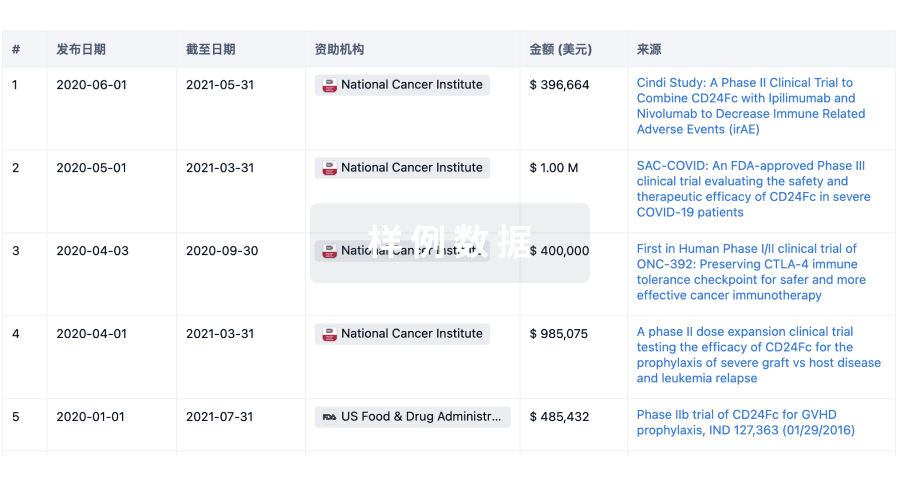
科研基金(NIH)
访问超过 200 万项资助和基金信息,以提升您的研究之旅。
登录
或
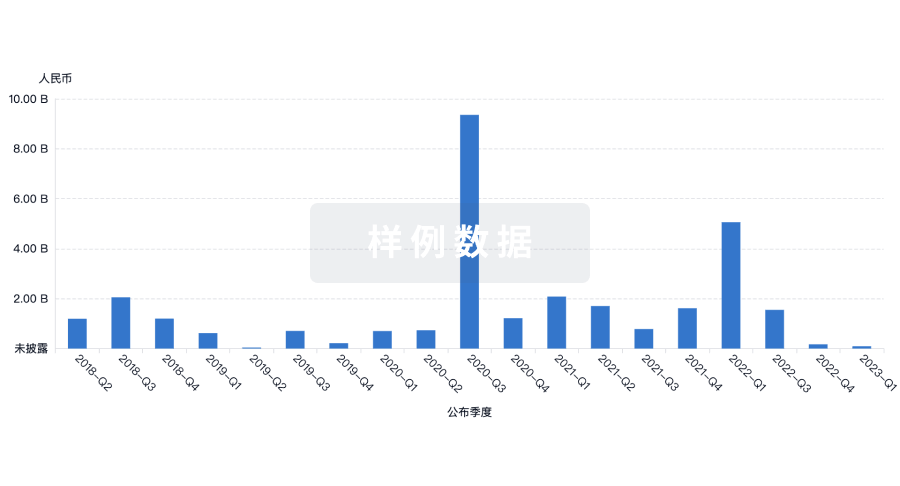
投资
深入了解从初创企业到成熟企业的最新公司投资动态。
登录
或
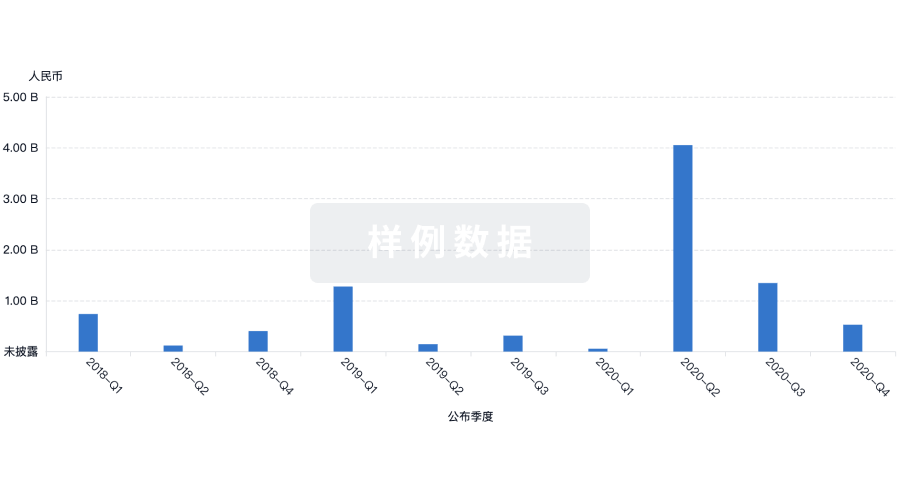
融资
发掘融资趋势以验证和推进您的投资机会。
登录
或
提出任何生物医药研究问题
让每一步生物医药决策都精准制胜
基于十亿级生物数据与全球情报的精准 AI,赋能早期药物发现
立即开始免费试用!
智慧芽新药情报库是智慧芽专为生命科学人士构建的基于AI的创新药情报平台,助您全方位提升您的研发与决策效率。
立即接入生物医药数据包
智慧芽新药库数据也通过智慧芽开放平台,以MCP或API服务形式对外开放。立即使用我们的MCP服务定制您的LLM智能体。
生物序列数据库
生物药研发创新
免费使用
化学结构数据库
小分子化药研发创新
免费使用