预约演示
更新于:2025-12-07

Thapar University
更新于:2025-12-07
概览
标签
感染
小分子化药
疾病领域得分
一眼洞穿机构专注的疾病领域
技术平台
公司药物应用最多的技术
靶点
公司最常开发的靶点

暂无数据
关联
靶点 |
作用机制 |
在研机构 |
原研机构 |
在研适应症 |
非在研适应症 |
最高研发阶段 |
首次获批国家/地区 |
首次获批日期 |
靶点 |
作用机制 |
在研机构 |
原研机构 |
在研适应症 |
非在研适应症 |
最高研发阶段 |
首次获批国家/地区 |
首次获批日期 |
100 项与 Thapar University 相关的临床结果
登录后查看更多信息
登录后查看更多信息
2026-01-01EUROPEAN JOURNAL OF MEDICINAL CHEMISTRY
Targeting drug-resistant E. coli with quinoline-thiazolidinone derivatives: A new avenue for combating antibacterial resistance from molecular design to mechanistic action
Article
作者: Paul, Kamaldeep ; Sharma, Palak
The growing threat of bacterial resistance has significantly reduced the efficacy of conventional antibiotics, necessitating the development of novel antibacterial agents with distinct mechanisms of action. In this study, we report the design, synthesis, and biological evaluation of a new class of quinoline-thiazolidinone conjugates as potent antibacterial agents. Employing a molecular hybridization strategy, a series of conjugates was synthesized by incorporating various aryl and heterocyclic derivatives into quinoline and thiazolidinone scaffolds with 62-80 % yield. The antibacterial activity of these compounds was assessed against eight Gram-positive and Gram-negative bacterial strains. Notably, compounds 12 and 27 demonstrated potent activity, particularly against Escherichia coli, exhibiting low minimum inhibitory concentrations (MICs), i.e. 1.56 μg/mL. Mechanistic studies revealed their ability to inhibit biofilm formation by over 85 % inhibition, disrupt bacterial membranes, induce oxidative stress, and cause metabolic and DNA damage. Cytotoxicity assays confirmed their safety in normal mammalian cells, ranging from 3.72 to 6.80 % and 2.32-4.96 % for derivatives 12 and 27, respectively, while time-kill kinetics indicated rapid bactericidal effects within 120 min for conjugate 12 and 90 min for conjugate 27. Furthermore, spectroscopic and computational analyses confirmed strong binding interactions with DNA (Kb = 1.02 × 10⁵ M-1 for 12 and 3.3 × 10⁵ M-1 for 27) and human serum albumin (Kb = 2.49 × 10⁵ M-1 and 4.14 × 10⁵ M-1), supporting their potential for effective bioavailability and systemic transport. Overall, these findings position quinoline-thiazolidinone conjugates, especially compounds 12 and 27, as promising lead candidates for addressing antibiotic resistance in bacterial infections.
2025-12-17Biomedical Engineering-Biomedizinische Technik
Design and analysis of metamaterial superstrate and FSS reflector loaded UWB antenna for the detection and localization of breast tumors
Article
作者: Sahu, Sanjay Kumar ; Singh, Hari Shankar ; Grover, Priyanka
Abstract:
Objectives:
This paper investigates an efficient UWB biosensor that employs monostatic radar-based microwave imaging (RBMI) to identify cancerous cells in human breast tissue.
Methods:
The proposed FSS-loaded lens applicator biosensor assembly combines three designs, including a UWB radiator, a frequency selective surface (FSS) reflector, and a square-shaped split ring metamaterial cell (SSR-M). In Computer Simulation Technology-Microwave Studio (CST-MWS) simulator, a lens applicator (UWB transceiver with SSR-M at its front side) when loaded with an FSS reflector is simulated with a breast phantom (BP), then the system performance is assessed in the context of backscattered parameters, penetration depth (PD), and specific absorption rate (SAR). Experimental validations of the fabricated prototype are captured using the Vector Network Analyzer (VNA).
Results/Key findings:
Signal processing steps are applied over the
S11
signals using MATLAB, to detect the depth/location of the malignant tissue. The proposed system is capable of detecting a minimum tumor size of 4 mm up to a maximum localization depth of 30 mm. The proposed system has an isotropic gain of 3.6 dBi and a SAR of 1.07 W/kg over 1 g of tissue.
Conclusions:
As a result, the proposed biosensor configuration is suitable option for microwave imaging applications.
2025-12-16INTERNATIONAL JOURNAL OF ENVIRONMENTAL ANALYTICAL CHEMISTRY
Health risk assessment due to uranium contamination in groundwater: MATLAB based Monte-Carlo simulations
作者: Kalkal, Sunil ; Kaur Guron, Beant ; Mehra, Rohit
Uranium contamination is a growing concern due to its inherent toxicity, which poses a significant threat to human health.The health risk assessment due to uranium contamination in groundwater of Mansa district, Punjab (India) is investigated.The LED LF-2a Fluorimeter model by Quantalase (Indore) was used for measurement of uranium concentration in groundwater collected in Oct. 2021 from twenty-six locations.A comparison is conducted between the deterministic and probabilistic approaches since the deterministic approach might either underestimate or exaggerate the risk estimationMonte-Carlo simulations are used to curtail the associated uncertainties in the data.The simulations are carried out in MATLAB for risk assessment and sensitivity anal.The deterministic and probabilistic approaches are used to calculate hazard quotient, excess cancer risk and annual ED.Using probabilistic approach, the hazard quotient for male and female at 5th percentile is 4.36 and 3.81, resp.Similarly, the hazard quotient for male and female at 95th percentile is 38.95 and 34.26, resp.The mean hazard quotient is 18.45 and 15.68 for male and female, resp., using deterministic approach.The hazard quotient is greater than 1 for both genders (male and female) and excess cancer risk is also higher than 10-4 using both deterministic and probabilistic approaches.The annual ED using deterministic approach is 0.23 mSv year-1 whereas using probabilistic approach, the 5th and 95th percentile is 0.56 mSv year-1 and 4.33 mSv year-1, resp.The sensitivity anal. indicated that the overall risk is more sensitive to concentration of uranium in groundwater and the exposure frequency.This study emphasizes on the hazards posed to humans by the ingestion of uranium contaminated groundwater, hence stressing the urgency for taking actions to protect the population of the study area.
100 项与 Thapar University 相关的药物交易
登录后查看更多信息
100 项与 Thapar University 相关的转化医学
登录后查看更多信息
组织架构
使用我们的机构树数据加速您的研究。
登录
或
管线布局
2026年03月18日管线快照
管线布局中药物为当前组织机构及其子机构作为药物机构进行统计,早期临床1期并入临床1期,临床1/2期并入临床2期,临床2/3期并入临床3期
临床前
2
登录后查看更多信息
当前项目
登录后查看更多信息
药物交易
使用我们的药物交易数据加速您的研究。
登录
或
转化医学
使用我们的转化医学数据加速您的研究。
登录
或
营收
使用 Synapse 探索超过 36 万个组织的财务状况。
登录
或
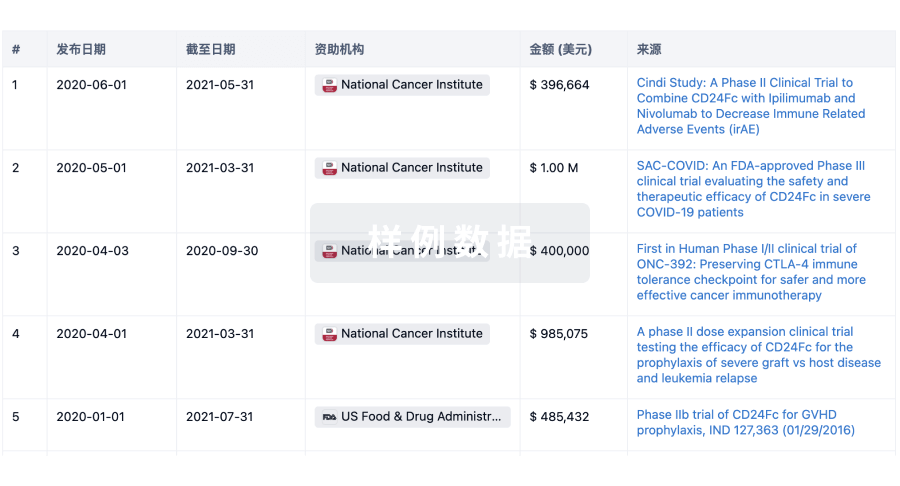
科研基金(NIH)
访问超过 200 万项资助和基金信息,以提升您的研究之旅。
登录
或
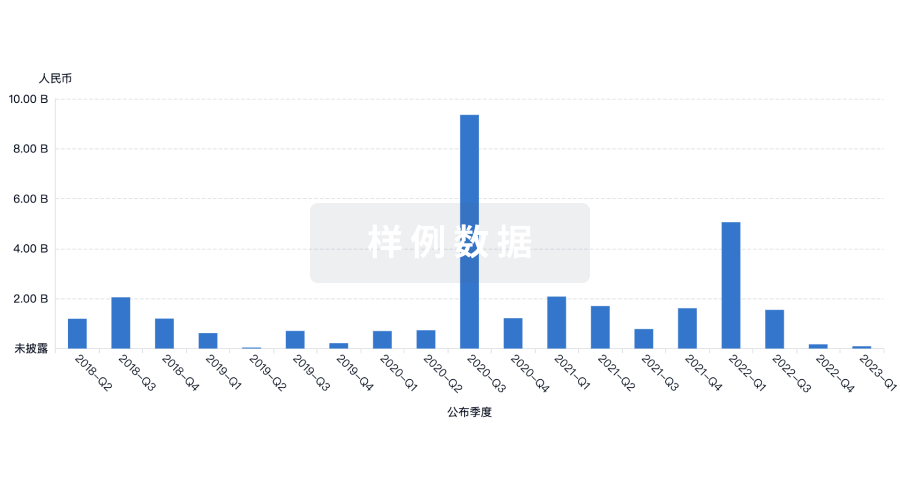
投资
深入了解从初创企业到成熟企业的最新公司投资动态。
登录
或
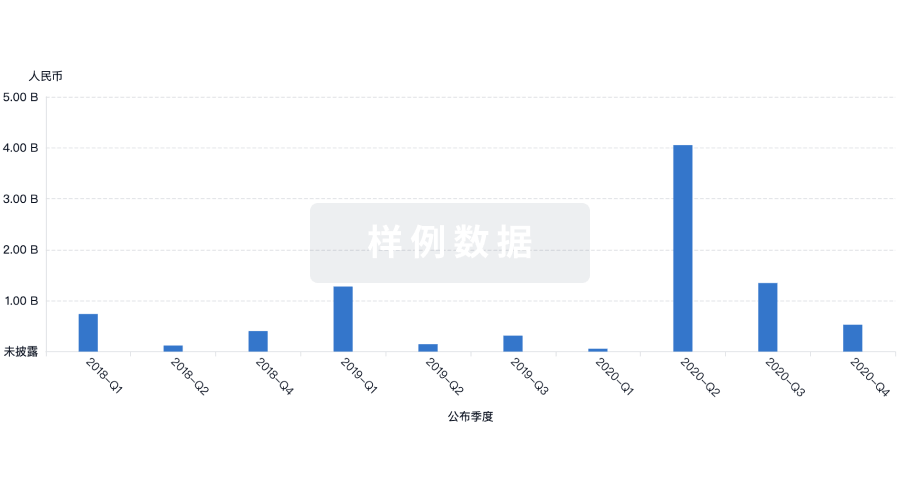
融资
发掘融资趋势以验证和推进您的投资机会。
登录
或
生物医药百科问答
全新生物医药AI Agent 覆盖科研全链路,让突破性发现快人一步
立即开始免费试用!
智慧芽新药情报库是智慧芽专为生命科学人士构建的基于AI的创新药情报平台,助您全方位提升您的研发与决策效率。
立即开始数据试用!
智慧芽新药库数据也通过智慧芽数据服务平台,以API或者数据包形式对外开放,助您更加充分利用智慧芽新药情报信息。
生物序列数据库
生物药研发创新
免费使用
化学结构数据库
小分子化药研发创新
免费使用