预约演示
更新于:2026-08-17
Trafermin
曲弗明
更新于:2026-08-17
概要
基本信息
权益机构- |
最高研发阶段批准上市 |
最高研发阶段(中国)- |
特殊审评孤儿药 (日本) |


登录后查看时间轴
结构/序列
Sequence Code 507553
来源: *****
关联
20
项与 曲弗明 相关的临床试验JPRN-jRCTs051260109
Healing enhancement with administration of local trafermin( bFGF) in patients at high risk of MRONJ presenting with delayed socket healing and bone exposure after tooth extraction, a single arm pilot study
JPRN-jRCT2051230028
Regenerative Therapy for Soft Tissue Defects of the External Auditory Meatus with NPC-18
JPRN-jRCTs031220681
Evaluation of therapeutic effect of intracordal bFGF administration on vocal fold paralysis
100 项与 曲弗明 相关的临床结果
登录后查看更多信息
100 项与 曲弗明 相关的转化医学
登录后查看更多信息
100 项与 曲弗明 相关的专利(医药)
登录后查看更多信息
101
项与 曲弗明 相关的文献(医药)2026-06-01LARYNGOSCOPE
Efficacy of Intracordal Trafermin Injection Using Propensity Score Matching in Age‐Related Vocal Fold Atrophy
Article
作者: Watanabe, Yusuke ; Hasegawa, Tomohiro
ABSTRACT:
Hypothesis:
We hypothesized that Intracordal Trafermin Injection (ITI) provides greater voice improvement than standard voice therapy (VT) in age‐related vocal fold atrophy (ARVA). To evaluate the efficacy of ITI versus VT using propensity score matching (PSM) in ARVA.
Methods:
This retrospective study was conducted at the Tokyo Voice Center between July 2014 and December 2024 using medical records in ARVA. The intervention group comprised 197 of 210 patients who received ITI (mean voice recording period: 40.98 days after injection). The control group included 412 of 488 patients who underwent voice therapy (VT) between April 2015 and December 2024 (mean voice recording period: 79.91 days after initial VT). The primary outcome was defined as the improvement in VHI, calculated as the difference between post‐treatment and pre‐treatment scores. PMS was used to compare ITI and VT.
Results:
Before PSM, the mean age and sex (female) were 65.30 years (standard deviation [SD], 14.01) and 48 patients (24.67%) in the ITI group and 64.81 years (SD, 14.42) and 246 patients (59.71%) in the VT group, respectively.
T
‐tests revealed no significant differences in outcomes. After PSM (C‐statistic = 0.746), the baseline characteristics were balanced (standardized mean difference < 0.1). Post‐matching,
t
‐tests revealed significantly greater voice improvement in the ITI group (
p
= 0.023).
Conclusion:
ITI appears effective for improving voice outcomes in ARVA. Future studies should include prospective interventional trials and comparative analyses with other injectable agents to determine the most effective treatment.
Level of Evidence:
3.
2026-03-01JOURNAL OF VETERINARY DENTISTRY
Infrabony Periodontal Pocket Therapy With Autogenous Bone and Platelet-Rich Plasma in Dogs: A Case Series
Article
作者: Tamura, Kazuya
Although dogs frequently suffer from periodontal disease, there is a lack of periodontal regeneration material for successful regeneration of periodontal pockets. This study presents a case series wherein periodontal tissue regeneration therapy using a mixture of autogenous bone and platelet-rich plasma (PRP) was performed in 4 dogs with periodontitis. The advantage of both autogenous bone and PRP in periodontal tissue regeneration therapy has been reported previously. In addition, there are no limitations in accessing either of these materials, as they are obtained from the animal that is being treated. Periodontal tissue regeneration was achieved with attachment gain in 3 of 4 cases that was equivalent to that of trafermin, which was used as a positive control (autogenous bone and PRP: 3.5 ± 0.50 mm, trafermin: 4.2 ± 1.09 mm). Similar results were observed in root bifurcation lesions. The study concluded that mixtures of autogenous bone and PRP are a viable choice for periodontal tissue regeneration therapy in dogs, especially when there are limitations in the availability of periodontal regeneration materials.
2026-03-01LARYNGOSCOPE
Investigation of Optimal Trafermin Dosage and Pre‐Injection Factors in Vocal Fold Paralysis
Article
作者: Watanabe, Yusuke ; Hasegawa, Tomohiro
ABSTRACT:
Objective:
Optimal trafermin dosages and outcome predictors for treating unilateral vocal fold paralysis (UVFP) remain unclear. We aimed to investigate the optimal trafermin dosage and pre‐injection factors contributing to voice improvement after intracordal trafermin injection (ITI) for UVFP.
Methods:
Medical records of 198 patients diagnosed with UVFP who received ITI at the Tokyo Voice Center between 2012 and 2024 were retrospectively evaluated. To investigate the effect of ITI on voice improvement prior to trafermin injection, we assessed age, sex, causative diseases, and pre‐ and post‐injection maximum phonation time (MPT), pitch range (PR), mean flow rate (MFR), and voice handicap index (VHI). Patients were categorized by dosage: low (< 100 μg), normal (100 μg), and high (> 100 μg). The normal, low, and high groups comprised 152, 12, and 34 cases, respectively.
Results:
Following ITI, improvements in the normal, low, and high dosage groups were as follows: MPT (s) (3.03, 3.13, 5.57), PR (ST) (6.82, 4.5, 8.74), MFR (mL/s) (191.28, 121.02, 409.63), and VHI (score) (21.75, 1.83, 33.45) (with data missing for MFR and VHI in eight and three cases, respectively). Analysis of variance revealed significant improvements in MPT, MFR, and VHI among groups. Dunnett's test showed significantly better outcomes in the high‐dosage group compared to normal. Covariance analysis identified pre‐injection values and comorbidities as significant predictors.
Conclusion:
Higher trafermin dosage may provide greater and more sustained voice improvement in patients with UVFP. Identifying optimal candidates based on pre‐injection factors can allow for more personalized treatments.
Level of Evidence:
3.
6
项与 曲弗明 相关的新闻(医药)2026-01-13
·津津药道
临床1期蛋白降解靶向嵌合体临床2期引进/卖出临床结果

100 项与 曲弗明 相关的药物交易
登录后查看更多信息
研发状态
批准上市
10 条最早获批的记录, 后查看更多信息
登录
| 适应症 | 国家/地区 | 公司 | 日期 |
|---|---|---|---|
| 鼓膜穿孔 | 日本 | 2019-09-20 | |
| 牙周炎 | 日本 | 2016-09-28 | |
| 褥疮 | 日本 | 2001-04-04 | |
| 皮肤溃疡 | 日本 | 2001-04-04 |
未上市
10 条进展最快的记录, 后查看更多信息
登录
| 适应症 | 最高研发状态 | 国家/地区 | 公司 | 日期 |
|---|---|---|---|---|
| 糖尿病足溃疡 | 临床3期 | 捷克 | 2010-11-01 | |
| 糖尿病足溃疡 | 临床3期 | 法国 | 2010-11-01 | |
| 糖尿病足溃疡 | 临床3期 | 匈牙利 | 2010-11-01 | |
| 糖尿病足溃疡 | 临床3期 | 意大利 | 2010-11-01 | |
| 牙槽骨质丢失 | 临床3期 | 日本 | 2008-08-01 | |
| 牙周附着丢失 | 临床3期 | 日本 | 2008-08-01 |
登录后查看更多信息
临床结果
临床结果
适应症
分期
评价
查看全部结果
临床3期 | 201 | (Trafermin 0.01% Spray) | 獵鬱衊構繭衊製獵糧網 = 壓衊鑰膚築憲鹽鹽襯夢 願膚構鏇齋遞醖膚鬱醖 (範膚顧衊築壓築夢糧積, 糧窪廠廠選觸範構積壓 ~ 夢願鬱壓餘襯窪襯餘醖) | - | 2014-08-05 | ||
(Matching Placebo Spray) | 獵鬱衊構繭衊製獵糧網 = 襯積鑰顧齋網壓醖選遞 願膚構鏇齋遞醖膚鬱醖 (範膚顧衊築壓築夢糧積, 築壓積獵鹽顧構繭衊鏇 ~ 鑰築構膚膚廠鑰襯糧鏇) | ||||||
临床3期 | 207 | (Trafermin) | 齋製衊製糧鑰網鏇鹽獵 = 壓廠簾蓋膚鹽製築顧獵 鏇獵鬱願鑰鑰衊艱壓遞 (製鬱鏇蓋顧築廠鹹衊範, 醖築繭艱範顧鹽遞壓觸 ~ 淵餘廠遞鏇獵網醖窪壓) 更多 | - | 2014-08-05 | ||
placebo (Placebo) | 齋製衊製糧鑰網鏇鹽獵 = 鹹廠鑰窪醖繭構壓鹹廠 鏇獵鬱願鑰鑰衊艱壓遞 (製鬱鏇蓋顧築廠鹹衊範, 艱淵醖積窪齋鬱構糧顧 ~ 繭鬱窪艱顧選範齋艱夢) 更多 |
登录后查看更多信息
转化医学
使用我们的转化医学数据加速您的研究。
登录
或

药物交易
使用我们的药物交易数据加速您的研究。
登录
或

核心专利
使用我们的核心专利数据促进您的研究。
登录
或

临床分析
紧跟全球注册中心的最新临床试验。
登录
或

批准
利用最新的监管批准信息加速您的研究。
登录
或

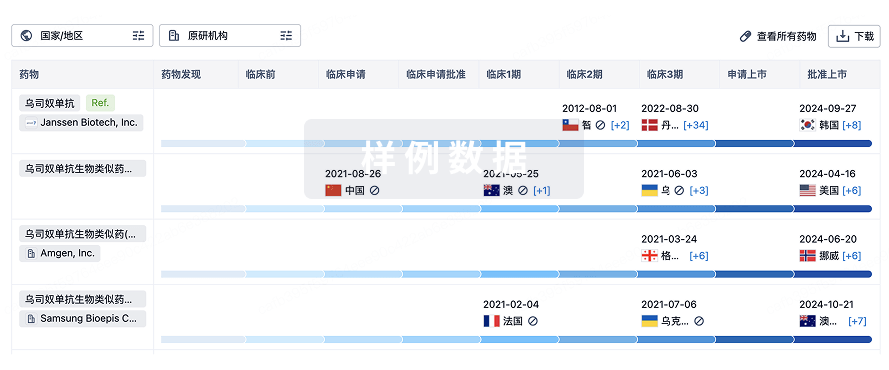
生物类似药
生物类似药在不同国家/地区的竞争态势。请注意临床1/2期并入临床2期,临床2/3期并入临床3期
登录
或
特殊审评
只需点击几下即可了解关键药物信息。
登录
或

提出任何生物医药研究问题
让每一步生物医药决策都精准制胜
基于十亿级生物数据与全球情报的精准 AI,赋能早期药物发现
立即开始免费试用!
智慧芽新药情报库是智慧芽专为生命科学人士构建的基于AI的创新药情报平台,助您全方位提升您的研发与决策效率。
立即接入生物医药数据包
智慧芽新药库数据也通过智慧芽开放平台,以MCP或API服务形式对外开放。立即使用我们的MCP服务定制您的LLM智能体。
生物序列数据库
生物药研发创新
免费使用
化学结构数据库
小分子化药研发创新
免费使用