预约演示
更新于:2026-01-31
Licarbazepine
更新于:2026-01-31
概要
基本信息
在研机构- |
权益机构- |
最高研发阶段无进展临床3期 |
首次获批日期- |
最高研发阶段(中国)- |
特殊审评- |


登录后查看时间轴
结构/序列
分子式C15H14N2O2 |
InChIKeyBMPDWHIDQYTSHX-UHFFFAOYSA-N |
CAS号29331-92-8 |
关联
9
项与 Licarbazepine 相关的临床试验NCT00424671
An Open-Label Study in Healthy Subjects and in Subjects With Stable Impaired Hepatic Function to Assess the Effect of Moderate Hepatic Impairment on Licarbazepine Pharmacokinetics and Metabolism After a Single Dose of 1000 mg Licarbazepine IR Tablets
NCT00426036
An Open-Label Study in Healthy Subjects and in Patients With Stable Impaired Renal Function to Assess the Effect of Severe Renal Impairment on Licarbazepine Pharmacokinetics and Metabolism After the Single Administration of a 500 mg Licarbazepine Immediate Release (IR) Tablet
EUCTR2004-000686-35-FI
A 52-week open-label extension study to evaluate the safety and tolerability of licarbazepine 750-2000 mg/d in the treatment of manic episodes of bipolar I disorder
100 项与 Licarbazepine 相关的临床结果
登录后查看更多信息
100 项与 Licarbazepine 相关的转化医学
登录后查看更多信息
100 项与 Licarbazepine 相关的专利(医药)
登录后查看更多信息
428
项与 Licarbazepine 相关的文献(医药)2026-01-01JOURNAL OF CLINICAL NEUROSCIENCE
Comparative effectiveness of weekly versus biweekly combined greater and supraorbital nerve blocks in chronic migraine: A retrospective observational cohort study
Article
作者: Aktan, Çile ; Çelik, Gözde
BACKGROUND/OBJECTIVE:
Greater occipital nerve (GON) and supraorbital nerve (SON) blocks are effective interventional options for chronic migraine treatment; however, the optimal frequency of injections remains undefined. This study aims to compare the short-term efficacy of weekly and biweekly GON and SON blocks in patients with chronic migraine (CM). The focus will be on pain intensity, monthly headache days (MHD), analgesic consumption and migraine-related disability.
MATERIALS AND METHODS:
This single-center, retrospective cohort study included adults meeting The International Classification of Headache Disorders, 3rd edition (ICHD-3) criteria for chronic migraine who received either weekly (n = 45) or biweekly (n = 52) standardized bilateral GON and SON blocks. The primary outcome was the change in MHD; secondary outcomes were The Visual Analogue Scale (VAS) pain scores, monthly analgesic consumption, The Migraine Disability Assessment (MIDAS) scores, responder rates, and adverse events. Within-group changes were analyzed using the Wilcoxon signed-rank test with Bonferroni correction, and between-group comparisons with the Mann-Whitney U or chi-square test. Effect sizes were calculated using Cohen's d.
RESULTS:
Baseline characteristics were comparable between groups (all p > 0.05). Both protocols produced significant improvements in VAS, MHD, analgesic use, and MIDAS scores from baseline to 3 months (all p < 0.001), with large within-group effect sizes (VAS: 2.49 vs. 2.13; MHD: 1.78 vs. 2.16; analgesic use: 1.06 vs. 1.07; MIDAS: 1.18 vs. 1.12 for weekly vs. biweekly, respectively). Between-group differences at follow-up were not statistically significant for any outcome (all p > 0.17), and between-group effect sizes were small (|d| < 0.15). Responder rates at 3 months were similarly high in both groups (e.g.
, MHD:
84.4 % vs. 86.5 %, p = 0.770). Minor adverse events occurred in 6.2 % of patients, with no serious complications.
CONCLUSIONS:
Both weekly and biweekly GON + SON block protocols were associated with substantial short-term improvements in pain, headache frequency, medication use, and disability in patients with chronic migraine. A biweekly schedule may offer similar clinical benefits to a weekly regimen and was associated with higher patient adherence, potentially reducing the frequency of procedures and overall healthcare burden.
2025-12-01EUROPEAN JOURNAL OF NEUROLOGY
Early and Sustained Shift in Headache Day Frequency Following Eptinezumab Treatment in Adults With Migraine for Whom 2–4 Previous Preventive Treatments Have Failed: A Post Hoc Analysis of the Randomized
DELIVER
Trial
Article
作者: Soni‐Brahmbhatt, Seema ; Awad, Susanne F. ; Boserup, Line Pickering ; Asher, Divya ; Lee, Xin Ying ; Starling, Amaal J. ; Tassorelli, Cristina ; Sperling, Bjørn ; Goadsby, Peter J.
ABSTRACT:
Background:
This post hoc analysis examined the reduction in monthly headache days (
MHDs
) by frequency category shifts and associated improvements following eptinezumab treatment.
Methods:
The DELIVER trial evaluated eptinezumab in adults with migraine for whom 2–4 previous preventive treatments failed. During a 24‐week, double‐blind, placebo‐controlled period followed by a 48‐week extension period, participants received IV eptinezumab 100 mg, 300 mg, or placebo every 12 weeks, with all receiving eptinezumab beginning Week 25 (dose‐blinded). Participants were categorized by MHD frequency: > 14, 8–14, 4 to < 8, 1 to < 4, 0. MHD category shifts were evaluated in the total population and several subgroups (including participants with > 14 baseline MHDs and early ≥ 50% responders). In participants reporting < 8 MHDs after all doses, the associated changes in headache intensity and disease status were evaluated.
Results:
Of randomized participants, 88% (782/890) completed the trial. The percentage of participants randomized initially to eptinezumab who reported < 4 MHDs was 23% (138/592) over Weeks 1–12 and 47% (236/498) over Weeks 61–72; 9% reported 0 MHDs after the final dose. Of participants randomized initially to eptinezumab who shifted from ≥ 8 MHDs at baseline to < 8 over Weeks 1–12, 71% (170/241) reported < 8 MHDs for the rest of the trial; of those who shifted from > 14 to < 8 MHDs, 66% (49/74) reported < 8 MHDs for the rest of the trial. Reduction to < 8 MHDs was associated with robust improvements in headache intensity and disease burden.
Conclusions:
Eptinezumab was associated with sustained reduction in MHD category, with some achieving headache/migraine freedom in patients with a history of preventive treatments that failed.
Trial Registration:
ClinicalTrials.gov
(identifier: NCT04418765;
https://www.clinicaltrials.gov/ct2/show/NCT04418765
) and EudraCT (identifier: 2019‐004497‐25;
https://www.clinicaltrialsregister.eu/ctr‐search/search?query=2019‐004497‐25
)
2025-09-01EUROPEAN JOURNAL OF PHARMACOLOGY
Optimizing oxcarbazepine therapy for epilepsy in patients aged 0–16 years: a comprehensive study of individualized treatment factors
Article
作者: Zhang, Na ; Mao, Zhenkun ; Xia, Zhengchao ; Teng, Yuetai ; Yang, Yan ; Qin, Yinhui ; Niu, Weihong ; Zhang, Panpan
Epilepsy is a prevalent neurological disorder in children and adolescents aged 0-16 years. Oxcarbazepine is commonly prescribed for its favorable pharmacological profile, yet its metabolism, efficacy, and safety vary widely among individuals. The active metabolite, 10-monohydroxy derivative (MHD), is key to its therapeutic effects, but factors influencing its blood concentration remain unclear. Identifying these determinants is crucial for optimizing personalized treatment. This study analyzed 417 epilepsy patients aged 0-16 years who received oxcarbazepine treatment between January 2023 and October 2024. Steady-state blood concentrations of MHD were measured using immunoassay, and clinical data were collected. Multiple regression models and correlation analyses were applied to determine key factors affecting MHD levels. Daily dose and daily dose per kilogram of body weight showed significant positive correlations with MHD blood concentration (r = 0.606, P < 0.001; r = 0.591, P < 0.001, respectively). Age-related differences were observed, with adolescents exhibiting higher MHD levels than younger children, likely due to differences in metabolic maturation. Gender differences indicated that female patients required higher doses to achieve comparable MHD concentrations as male patients. Renal and hepatic functions (e.g., creatinine and total bilirubin levels) significantly influenced MHD blood concentrations, highlighting the need for careful dose adjustments in patients with physiological impairments. This study provides a comprehensive analysis of MHD blood concentration determinants in pediatric epilepsy patients, emphasizing the importance of personalized treatment approaches. These findings offer a valuable reference for optimizing oxcarbazepine therapy, improving therapeutic outcomes, and minimizing adverse effects in children and adolescents with epilepsy.
100 项与 Licarbazepine 相关的药物交易
登录后查看更多信息
外链
| KEGG | Wiki | ATC | Drug Bank |
|---|---|---|---|
| D09215 | Licarbazepine | - |
研发状态
10 条进展最快的记录, 后查看更多信息
登录
| 适应症 | 最高研发状态 | 国家/地区 | 公司 | 日期 |
|---|---|---|---|---|
| 躁狂 | 临床3期 | 美国 | 2005-01-01 | |
| 躁狂 | 临床3期 | - | 2005-01-01 | |
| 躁郁症 | 临床3期 | 美国 | 2004-10-01 | |
| 躁郁症1型 | 临床3期 | 奥地利 | 2004-10-01 | |
| 躁郁症1型 | 临床3期 | 加拿大 | 2004-10-01 | |
| 躁郁症1型 | 临床3期 | 哥伦比亚 | 2004-10-01 | |
| 躁郁症1型 | 临床3期 | 捷克 | 2004-10-01 | |
| 躁郁症1型 | 临床3期 | 德国 | 2004-10-01 | |
| 躁郁症1型 | 临床3期 | 危地马拉 | 2004-10-01 | |
| 躁郁症1型 | 临床3期 | 秘鲁 | 2004-10-01 |
登录后查看更多信息
临床结果
临床结果
适应症
分期
评价
查看全部结果
登录后查看更多信息
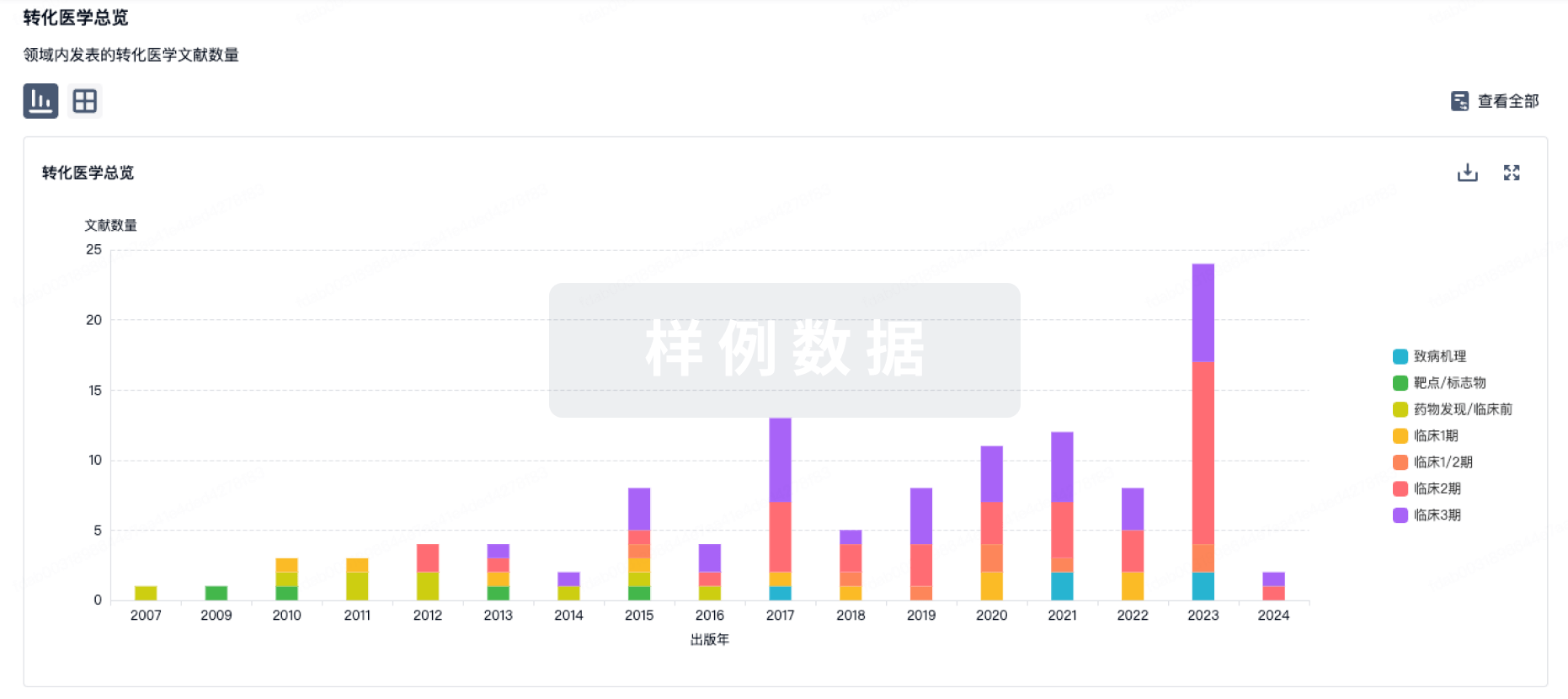
转化医学
使用我们的转化医学数据加速您的研究。
登录
或
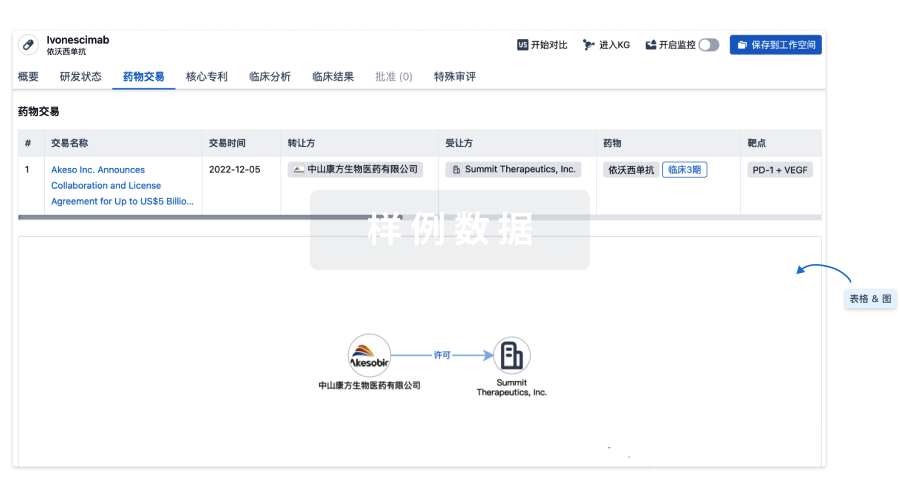
药物交易
使用我们的药物交易数据加速您的研究。
登录
或
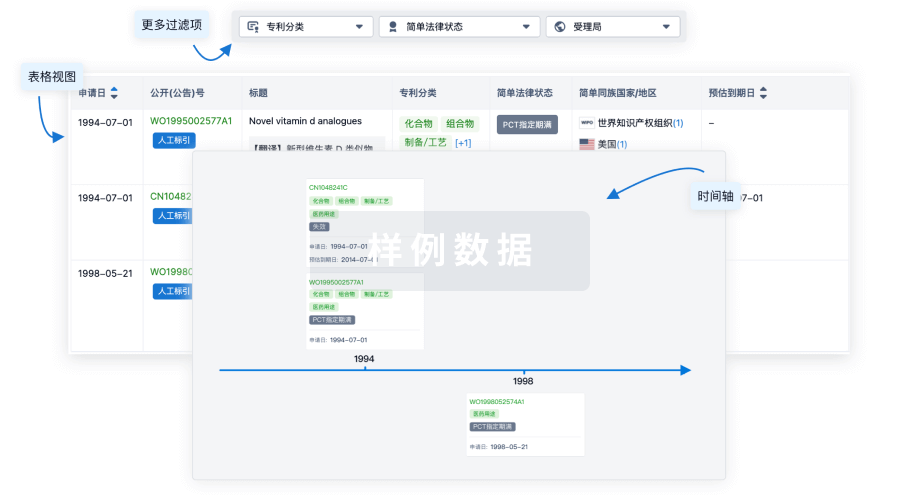
核心专利
使用我们的核心专利数据促进您的研究。
登录
或
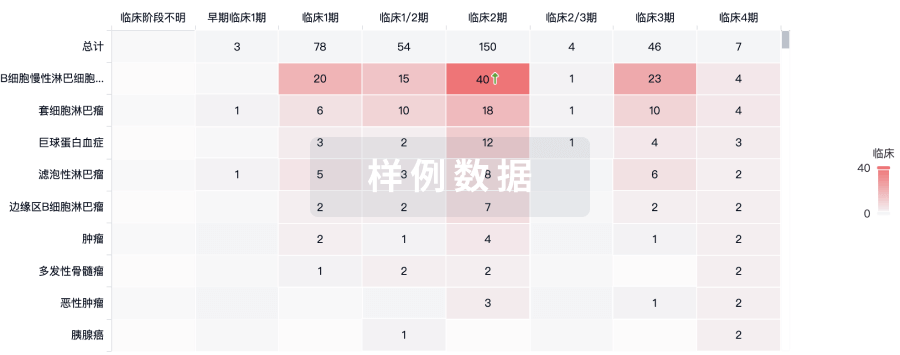
临床分析
紧跟全球注册中心的最新临床试验。
登录
或
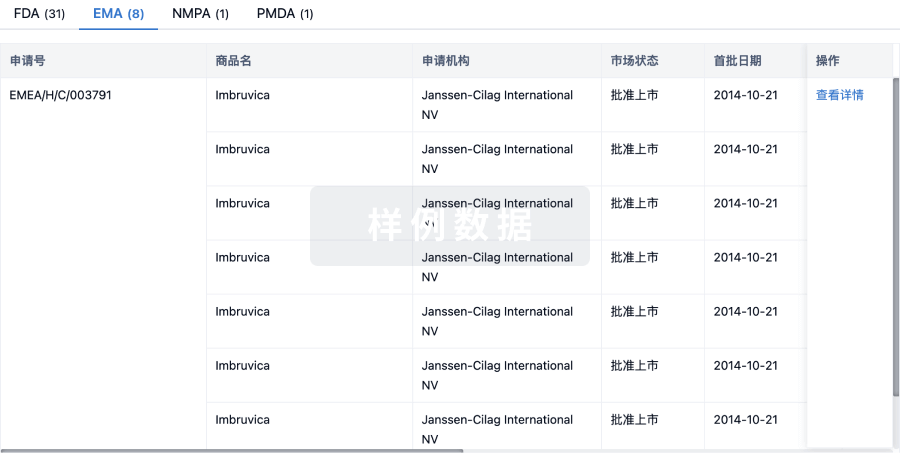
批准
利用最新的监管批准信息加速您的研究。
登录
或
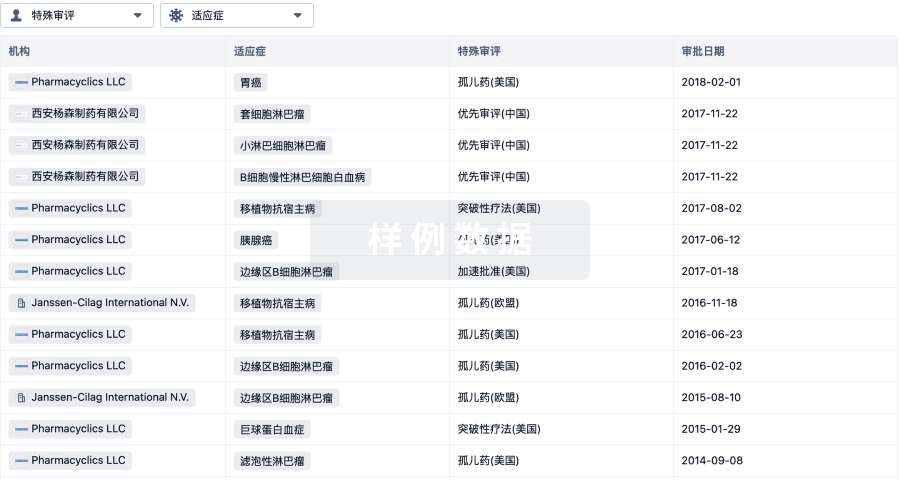
特殊审评
只需点击几下即可了解关键药物信息。
登录
或
生物医药百科问答
全新生物医药AI Agent 覆盖科研全链路,让突破性发现快人一步
立即开始免费试用!
智慧芽新药情报库是智慧芽专为生命科学人士构建的基于AI的创新药情报平台,助您全方位提升您的研发与决策效率。
立即开始数据试用!
智慧芽新药库数据也通过智慧芽数据服务平台,以API或者数据包形式对外开放,助您更加充分利用智慧芽新药情报信息。
生物序列数据库
生物药研发创新
免费使用
化学结构数据库
小分子化药研发创新
免费使用