预约演示
更新于:2026-08-29
Liraglutide (Chongqing Paijin)
利拉鲁肽(重庆派金)
更新于:2026-08-29
概要
基本信息
在研机构 |
非在研机构 |
最高研发阶段批准上市 |
首次获批日期 中国 (2026-07-08), |
最高研发阶段(中国)批准上市 |
特殊审评- |



登录后查看时间轴
关联
3
项与 利拉鲁肽(重庆派金) 相关的临床试验CTR20210173
多中心、随机、开放、平行对照比较利拉鲁肽注射液和诺和力治疗2型糖尿病患者的有效性和安全性
ChiCTR2100043348
Liraglutide injection in healthy subjects in a randomized, open, two-cycle, single-dose, double-cross clinical trial
CTR20191362
利拉鲁肽注射液在健康受试者中的随机、开放、两周期、 单次给药、双交叉临床比对试验
100 项与 利拉鲁肽(重庆派金) 相关的临床结果
登录后查看更多信息
100 项与 利拉鲁肽(重庆派金) 相关的转化医学
登录后查看更多信息
100 项与 利拉鲁肽(重庆派金) 相关的专利(医药)
登录后查看更多信息
577
项与 利拉鲁肽(重庆派金) 相关的文献(医药)2026-08-01Obesity
Appetite Suppression by
GLP
‐1 Receptor Agonists: Role of Delayed Gastric Emptying
Article
作者: Harmsen, W. Scott ; Friedman, Mark I. ; Camilleri, Michael
ABSTRACT:
Objective:
This study aimed to evaluate relationships between delayed gastric emptying and appetite suppression during treatment with liraglutide, a glucagon‐like peptide‐1 receptor agonist (GLP‐1RA).
Methods:
We conducted a secondary data analysis from a 16‐week randomized, placebo‐controlled liraglutide trial in patients with obesity. We examined correlations between solid food gastric emptying and measurements of satiation and energy intake in the entire cohorts at baseline and end of treatment and separately in placebo‐ and liraglutide‐treated patients who completed the trial. We also compared appetitive measures among liraglutide‐treated participants who displayed either normal, persistently delayed, or transiently delayed emptying during treatment.
Results:
In the entire cohorts at baseline and completion, gastric emptying correlated significantly with energy intake and, at baseline, with one parameter of satiation. Gastric emptying accounted for only 4%–6% of the variance in these appetitive measures. No such correlations were found in the placebo‐ or liraglutide‐treated groups alone. There were no differences in appetitive measures among the subgroups that displayed different gastric emptying patterns during liraglutide treatment.
Conclusions:
Delayed gastric emptying appears to play little direct role in appetite suppression induced by liraglutide. Further research should explore whether delayed emptying or other gastrointestinal effects of other GLP‐1RAs affect appetite directly or indirectly.Trial Registration:ClinicalTrials.gov
identifier: NCT02647944
2026-07-21EUROPEAN HEART JOURNAL
Glucagon-like peptide-1 receptor agonists reduce experimental atherosclerosis progression, inflammatory biomarkers and cardiovascular events, irrespective of hyperglycaemia and obesity
Article
作者: Libby, Peter ; Chowdhury, Mohammed M ; Kassab, Mohamad B ; Khraishah, Haitham ; Kawamura, Yoichiro ; Song, Du-Ri ; Bhatt, Deepak L ; Vijay, Aatira ; Tawakol, Ahmed ; Abohashem, Shady M ; Albaghdadi, Mazen S ; Thrapp, Andrew ; Jaffer, Farouc A ; Mauskapf, Adam ; Spicer, Graham ; Goudot, Guillaume ; Rentz, Thiago ; Tearney, Guillermo J ; Hsieh, Paishiun N
Abstract:
Background and Aims:
Glucagon-like peptide-1 receptor agonists (GLP-1 RAs) reduce cardiovascular events. However, their impact on atherosclerosis and inflammation, regardless of diabetes or obesity, is unknown. Here, GLP-1 RA effects were investigated on (i) atherosclerosis burden and inflammation in vivo in rabbits and (ii) inflammatory biomarkers and major adverse cardiovascular events (MACE) in clinical subjects, adjusted for glycaemic and obesity status.
Methods:
Rabbits with atherosclerosis received liraglutide (0.1 mg/kg/day) or saline for 4 weeks. Serial intravascular ultrasound (IVUS) and near-infrared fluorescence-optical coherence tomography (NIRF-OCT) assessed plaque burden and cathepsin activity. Histological, plasma, and in vitro analyses assessed GLP-1 RA effects on atheroinflammation. A clinical study of 47,324 participants from the Mass General Brigham Biobank evaluated the association between GLP-1 RA prescription and inflammatory biomarkers [lymphocyte-based ratios and C-reactive protein (CRP)], and MACE. Analyses included multivariable regression, propensity score matching (PSM), and mediation analysis.
Results:
In 28 normoglycaemic, non-obese rabbits, liraglutide significantly inhibited atherosclerosis progression compared with controls [IVUS Δ percent atheroma volume: −7.8%, 95% confidence interval (CI) −11.3 to −4.2; P < .001], and reduced NIRF-OCT plaque cathepsin activity (−9.8 nM, 95% CI −18.5 to −1.1; P = .028). Liraglutide further reduced plaque cathepsin S, macrophage content, and plasma CRP levels. In vitro, multiple GLP-1 RAs suppressed cathepsin activity and inflammatory mediators in macrophages. In biobank patients, GLP-1 RA prescription associated with significantly lower levels of inflammatory biomarkers and MACE in regression and PSM analyses, with benefits persisting in subgroups stratified by body mass index or glycated haemoglobin. Mediation analysis showed inflammatory biomarkers partly contributed to this effect.
Conclusions:
This integrative preclinical–clinical study demonstrates that GLP-1 RAs reduce atherosclerosis progression, inflammatory biomarkers and MACE, irrespective of hyperglycaemia or obesity.
2026-07-01DIABETES OBESITY & METABOLISM
Clinical Characteristics of Users of Weight Loss Drugs: Population‐Based Case–Control Study
Article
作者: Kjerpeseth, Lars J. ; Bakken, Inger Johanne ; Ruiz, Paz Lopez‐Doriga ; Sveen, Kari Anne ; Furu, Kari ; Meyer, Haakon E. ; Gulseth, Hanne L. ; Karlstad, Øystein ; Nøkleby, Kjersti
ABSTRACT:
Objectives:
To investigate the clinical characteristics of weight loss drugs (WLDs) users in Norway.
Design:
Nested population‐based case–control study.
Setting:
Nationwide healthcare registries with data on dispensed medications and healthcare diagnoses.
Participants:
Individuals aged 18–74 years initiating WLDs during 2023–2024, categorised by drugs: semaglutide (only Wegovy), liraglutide (only Saxenda), tirzepatide, bupropion‐naltrexone or orlistat. Each WLD user was matched with five age‐ and sex‐matched population controls.
Main Outcome Measures:
Comorbidities diagnosed in the 2 years preceding initiation of WLD use and comedications dispensed in the preceding year, analysed using conditional logistic regression.
Results:
150 036 individuals initiated semaglutide, 4603 liraglutide, 3596 tirzepatide, 31 172 bupropion–naltrexone and 1411 orlistat. Among WLD users, 71%–78% were registered with at least one comorbidity, compared with 49%–51% in controls. Nineteen percent to 24% of WLD users had four or more comorbidities. Hypertension was observed among 32%–38% of WLD users versus 17%–20% of controls; hyperlipidaemias: 20%–24% versus 12%–15%; sleep apnoea: 7%–11% versus 2%–3%; back pain: 15%–20% versus 10%–11%; opioids: 24%–30% versus 13%–15%; antidepressants: 20%–24% versus 10%–11%. Having only a basic level of education (≤ 10 years) was more common among WLD users than among controls (20%–28% vs. 17%), except for tirzepatide users, where the education level distribution was as for controls.
Conclusions:
WLD use is rapidly increasing, with users often having complex comorbidities. Understanding these patterns helps ensure that medications are used as intended. Like other countries with universal health systems, Norway must address the high cost of obesity treatments and mitigate health disparities to ensure access for those most likely to benefit.
100 项与 利拉鲁肽(重庆派金) 相关的药物交易
登录后查看更多信息
研发状态
10 条最早获批的记录, 后查看更多信息
登录
| 适应症 | 国家/地区 | 公司 | 日期 |
|---|---|---|---|
| 2型糖尿病 | 中国 | 2026-07-08 |
登录后查看更多信息
临床结果
临床结果
适应症
分期
评价
查看全部结果
登录后查看更多信息
转化医学
使用我们的转化医学数据加速您的研究。
登录
或

药物交易
使用我们的药物交易数据加速您的研究。
登录
或

核心专利
使用我们的核心专利数据促进您的研究。
登录
或

临床分析
紧跟全球注册中心的最新临床试验。
登录
或

批准
利用最新的监管批准信息加速您的研究。
登录
或

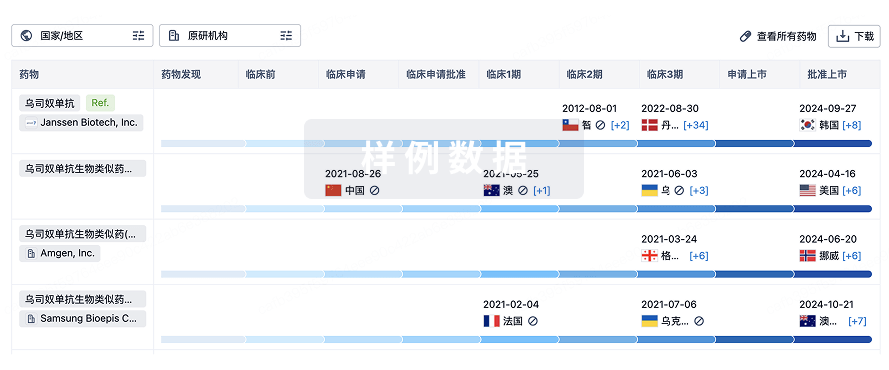
生物类似药
生物类似药在不同国家/地区的竞争态势。请注意临床1/2期并入临床2期,临床2/3期并入临床3期
登录
或
特殊审评
只需点击几下即可了解关键药物信息。
登录
或

提出任何生物医药研究问题
让每一步生物医药决策都精准制胜
基于十亿级生物数据与全球情报的精准 AI,赋能早期药物发现
立即开始免费试用!
智慧芽新药情报库是智慧芽专为生命科学人士构建的基于AI的创新药情报平台,助您全方位提升您的研发与决策效率。
立即接入生物医药数据包
智慧芽新药库数据也通过智慧芽开放平台,以MCP或API服务形式对外开放。立即使用我们的MCP服务定制您的LLM智能体。
生物序列数据库
生物药研发创新
免费使用
化学结构数据库
小分子化药研发创新
免费使用