预约演示
更新于:2026-09-26
COR-101
更新于:2026-09-26
概要
基本信息
药物类型 单克隆抗体 |
别名 COR 101、COR101、STE90-C11 |
作用方式 抑制剂 |
作用机制 SARS-CoV-2 S protein抑制剂(冠状病毒刺突糖蛋白抑制剂) |
在研适应症- |
非在研适应症 |
在研机构- |
权益机构- |
最高研发阶段无进展临床1/2期 |
首次获批日期- |
最高研发阶段(中国)- |
特殊审评- |

登录后查看时间轴
结构/序列
Sequence Code 2545CDR2-L
Sequence Code 29373CDR1-L
Sequence Code 10145053CDR2-H
Sequence Code 651206887CDR3-L
Sequence Code 669202080CDR1-H
Sequence Code 940872767CDR3-H
Sequence Code 940873010VH
Sequence Code 940873193VL
关联
1
项与 COR-101 相关的临床试验NCT04674566
Randomized, Double-blind, Placebo Controlled, Parallel Group, Multi-centre, First-in-human, Phase Ib/II Study to Assess Safety, Tolerability, Pharmacokinetics, Pharmacodynamics, Immunogenicity, and Efficacy of COR-101 in Hospitalized Patients
100 项与 COR-101 相关的临床结果
登录后查看更多信息
100 项与 COR-101 相关的转化医学
登录后查看更多信息
100 项与 COR-101 相关的专利(医药)
登录后查看更多信息
2
项与 COR-101 相关的文献(医药)2026-03-01CLINICAL THERAPEUTICS
Phase I Study Evaluating a Monoclonal Fc-Silenced SARS-CoV-2 Antibody in Patients With Moderate-to-Severe COVID-19
Article
作者: Schwab, Matthias ; Salih, Helmut R ; Fricke, Harald ; Bitter, Thomas ; Cuevas, Mandy ; Wirtz, Hubert ; Dhaen, Marie-Ann ; Walz, Juliane S ; Hust, Michael ; Marconato, Maddalena ; Göpel, Siri ; Heitmann, Jonas S ; Hackenbruch, Christopher ; Bitzer, Michael ; Dings, Christiane ; Schneider, Jochen ; Herrmann, Andreas ; Jäger, Simon ; Кirieieva, Tetiana ; Jung, Gundram ; Lehr, Thorsten ; Gavrylov, Anatoliy ; Frenzel, André ; Klein, Constantin ; Dübel, Stefan
PURPOSE:
The evolution of Severe Acute Respiratory Syndrome Coronavirus 2 challenged the effectiveness of vaccines, while monoclonal antibodies (mAbs) were discontinued due to emergent resistance. This study evaluated the safety and explored the preliminary efficacy of COR-101, a novel mAb with a silenced Fc region designed to minimize antibody-dependent enhancement in hospitalized patients with moderate-to-severe disease.
METHODS:
Thirty-three participants were enrolled across Germany and Ukraine in a randomized, double-blind, placebo-controlled Phase Ib/II trial. Patients received either a single dose of COR-101, or placebo, as add-on therapy to the standard of care.
FINDINGS:
COR-101 was well tolerated, with no treatment-related severe adverse events (AEs), grade ≥3 AEs, or acute infusion reactions. Four unrelated severe AEs were observed, and 2 patients died due to coronavirus disease 2019. COR-101 showed dose-proportional pharmacokinetics, long half-life, and serum concentrations above IC50. Patients were treated in different dose groups, and in exploratory analysis, viral clearance was observed at day 28 in 80%, 55.6%, 16.7%, and 42.9% of patients in the 4.0, 10.0, 25.0 mg/kg, and placebo groups, respectively. The predominant virus variant changed from alpha to delta and omicron, resulting in reduced in vitro neutralization, potentially explaining the observed reduced efficacy.
IMPLICATIONS:
COR-101 demonstrated a favorable safety profile, but exploratory data showed limited efficacy against omicron, highlighting the tolerability of Fc-silenced mAbs and the need for adaptive therapeutic strategies against rapidly evolving viral pathogens (ClinicalTrials.gov identifier: NCT04674566).
Viruses-Basel
Evaluation of the Neutralizing Antibody STE90-C11 against SARS-CoV-2 Delta Infection and Its Recognition of Other Variants of Concerns
Article
作者: Frenzel, André ; Gödecke, Natascha ; Kontermann, Roland E. ; Bertoglio, Federico ; Kurolt, Ivan-Christian ; Greweling-Pils, Marina ; Schubert, Maren ; Schirrmann, Thomas ; Abassi, Leila ; Dübel, Stefan ; Hust, Michael ; Seifert, Oliver ; Heine, Philip Alexander ; Čičin-Šain, Luka ; Katzmarzyk, Maeva ; Nowack, Helena ; Mačak Šafranko, Željka ; Khan, Fawad ; Markotić, Alemka ; Jacobsen, Henning
As of now, the COVID-19 pandemic has spread to over 770 million confirmed cases and caused approximately 7 million deaths. While several vaccines and monoclonal antibodies (mAb) have been developed and deployed, natural selection against immune recognition of viral antigens by antibodies has fueled the evolution of new emerging variants and limited the immune protection by vaccines and mAb. To optimize the efficiency of mAb, it is imperative to understand how they neutralize the variants of concern (VoCs) and to investigate the mutations responsible for immune escape. In this study, we show the in vitro neutralizing effects of a previously described monoclonal antibody (STE90-C11) against the SARS-CoV-2 Delta variant (B.1.617.2) and its in vivo effects in therapeutic and prophylactic settings. We also show that the Omicron variant avoids recognition by this mAb. To define which mutations are responsible for the escape in the Omicron variant, we used a library of pseudovirus mutants carrying each of the mutations present in the Omicron VoC individually. We show that either 501Y or 417K point mutations were sufficient for the escape of Omicron recognition by STE90-C11. To test how escape mutations act against a combination of antibodies, we tested the same library against bispecific antibodies, recognizing two discrete regions of the spike antigen. While Omicron escaped the control by the bispecific antibodies, the same antibodies controlled all mutants with individual mutations.
4
项与 COR-101 相关的新闻(医药)100 项与 COR-101 相关的药物交易
登录后查看更多信息
研发状态
10 条进展最快的记录, 后查看更多信息
登录
| 适应症 | 最高研发状态 | 国家/地区 | 公司 | 日期 |
|---|---|---|---|---|
| 新型冠状病毒感染 | 临床2期 | 德国 | 2021-04-21 |
登录后查看更多信息
临床结果
临床结果
适应症
分期
评价
查看全部结果
登录后查看更多信息
转化医学
使用我们的转化医学数据加速您的研究。
登录
或

药物交易
使用我们的药物交易数据加速您的研究。
登录
或

核心专利
使用我们的核心专利数据促进您的研究。
登录
或

临床分析
紧跟全球注册中心的最新临床试验。
登录
或

批准
利用最新的监管批准信息加速您的研究。
登录
或

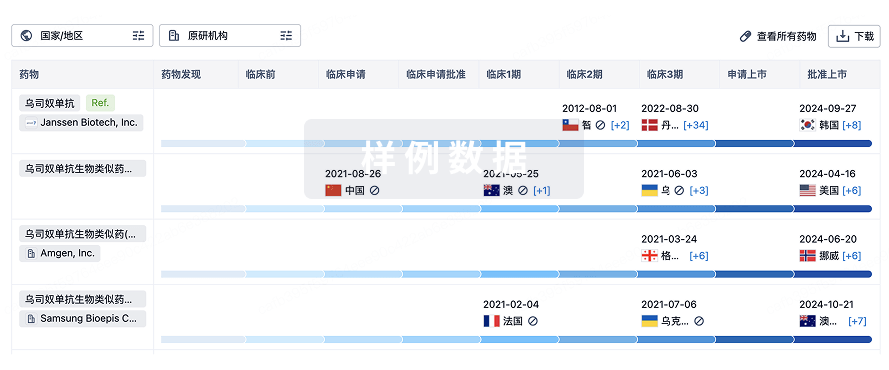
生物类似药
生物类似药在不同国家/地区的竞争态势。请注意临床1/2期并入临床2期,临床2/3期并入临床3期
登录
或
特殊审评
只需点击几下即可了解关键药物信息。
登录
或

提出任何生物医药研究问题
让每一步生物医药决策都精准制胜
基于十亿级生物数据与全球情报的精准 AI,赋能早期药物发现
立即开始免费试用!
智慧芽新药情报库是智慧芽专为生命科学人士构建的基于AI的创新药情报平台,助您全方位提升您的研发与决策效率。
立即接入生物医药数据包
智慧芽新药库数据也通过智慧芽开放平台,以MCP或API服务形式对外开放。立即使用我们的MCP服务定制您的LLM智能体。
生物序列数据库
生物药研发创新
免费使用
化学结构数据库
小分子化药研发创新
免费使用