预约演示
更新于:2026-04-18
MOD-B
更新于:2026-04-18
概要
基本信息
非在研机构- |
权益机构- |
最高研发阶段临床前 |
首次获批日期- |
最高研发阶段(中国)- |
特殊审评- |

关联
100 项与 MOD-B 相关的临床结果
登录后查看更多信息
100 项与 MOD-B 相关的转化医学
登录后查看更多信息
100 项与 MOD-B 相关的专利(医药)
登录后查看更多信息
49
项与 MOD-B 相关的新闻(医药)2025-08-20
Investors sent Celldex’s share price down by 18% to $19.72 in premarket trading.\n Celldex has stopped development of barzolvolimab in eosinophilic esophagitis (EoE) despite meeting its primary endpoint in a phase 2 trial. The biotech showed the candidate depletes mast cells in the gastrointestinal tract, but that positive finding was overshadowed by the antibody\'s failure to improve clinical outcomes.EoE is a chronic inflammatory condition of the esophagus characterized by the infiltration of eosinophils and mast cells, two types of white blood cells. Yet, efforts to treat the condition by targeting white blood cells have floundered. Allakos’ lirentelimab reduced eosinophils in a phase 2/3 trial but showed no significant effect on a dysphagia scale that assessed patients’ ability to swallow food, a key symptom of EoE.Now, Celldex has suffered a similar setback. The biotech randomized 65 patients to receive the anti-KIT antibody barzolvolimab or placebo. After 12 weeks, mucosal mast cell levels in the gastrointestinal tract had fallen significantly in the barzolvolimab cohort compared to placebo, achieving the trial’s primary endpoint. Previously, Celldex had shown the antibody can deplete cutaneous mast cells.Yet, the mucosal mast cell primary endpoint was just one of two key areas of focus for Celldex. The biotech also wanted to show that depleting mast cells improves symptoms, as Celldex CEO Anthony Marucci explained on a Tuesday call with investors to discuss the data.“We have repeatedly said that we needed to not only see profound impact of cell depletion, but we also [needed] a reduction of dysphagia scores that would be clinically meaningful and compare favorably to the current standard of care,” Marucci said. “These results did not meet our internal hurdle rate, and we will not advance development in this indication.” Scores on the Dysphagia Symptom Questionnaire were no better for patients on barzolvolimab than placebo, the biotech reported. Equally, Celldex saw no significant improvement in endoscopic scoring of EoE-related inflammation and fibrosis in the treatment group. After Celldex reported the trial findings and program discontinuation, investors sent the biotech’s share price down by 18% to $19.72 in premarket trading.Celldex is continuing to test barzolvolimab in two phase 3 trials in chronic spontaneous urticaria as well as in phase 2 studies in atopic dermatitis and prurigo nodularis. The biotech advanced in those settings on the strength of evidence that barzolvolimab depletes cutaneous mast cells. The discovery in the EoE trial that barzolvolimab also depletes mucosal mast cells could open up other indications for KIT inhibitors. The EoE trial suggests Celldex could expand beyond skin conditions to target gastrointestinal conditions where mast cells play a role. One possibility is that Celldex will apply its bispecific approach, rather than barzolvolimab, to gastrointestinal indications. Engaging two targets may unlock diseases where depleting mast cells is beneficial but insufficient to significantly improve clinical outcomes. The failures of Allakos and Celldex in EoE have thinned the field of late-stage programs in this indication. Amgen and AstraZeneca are still in the running, with a phase 3 trial of the partners’ anti-TSLP antibody Tezspire now fully enrolled. Tezspire reduces blood eosinophil counts but works in severe asthma patients irrespective of their starting levels of the white blood cells.

临床3期临床2期临床结果免疫疗法细胞疗法
2025-07-07
Shares in Cogent climbed 14% to $8.65 in premarket trading.\n A phase 3 trial of Cogent Biosciences’ bezuclastinib has hit its primary endpoint, teeing the biotech up to seek FDA approval for a potential rival to Blueprint Medicines’ Ayvakit.Cogent randomized 179 patients with non-advanced systemic mastocytosis to receive the KIT inhibitor bezuclastinib or placebo. After 24 weeks, total symptom scores fell 24.3 points on bezuclastinib and 15.4 points on placebo. The 8.91-point difference between the two arms was big enough for the trial to hit its primary endpoint.The biotech said the trial established new benchmarks for placebo-adjusted and absolute symptomatic improvement for the patient population. Blueprint’s Ayvakit is the current treatment for patients with indolent systemic mastocytosis. Cogent’s trial enrolled people with indolent or smoldering forms of the disease.Blueprint used a different scoring system than Cogent as the primary endpoint of its phase 3 trial. However, Cogent has argued (PDF) that the scales are highly analogous and showed the results for the two scoring systems were nearly identical in the first part of its study. Blueprint reported (PDF) a placebo-adjusted difference of 5.69 points on its scoring system. One-quarter of patients on Ayvakit had a 50% or greater improvement in symptoms, compared to 10% of their peers on placebo. Cogent’s press release lacks comparable data for bezuclastinib, with the biotech only providing a statistically significant p value for the secondary endpoint.Almost 54% of patients on Ayvakit had a 50% or greater reduction in serum tryptase, a marker of mast cell degranulation. Cogent said 87.4% of patients on bezuclastinib experienced such a reduction. Nobody on placebo in either trial had a 50% or greater reduction in the biomarker.Almost 6% of patients on bezuclastinib stopped treatment because of elevated liver enzymes that fully resolved. The most common treatment-emergent adverse events on the study drug were changes in hair color and altered taste, which affected 69.5% and 23.7% of patients, respectively. One person permanently stopped taking Ayvakit in Blueprint’s trial because of an adverse reaction.Cogent plans to file for FDA approval of bezuclastinib this year. The biotech has a current cash balance of $237 million and access to up to $350 million more via a debt facility. Shares in Cogent climbed 14% to $8.65 in premarket trading.

临床3期临床结果上市批准
2025-06-02
Sanofi has made its largest acquisition in seven years, buying up Massachusetts rare disease specialist Blueprint Medicines for $9.5 billion.
In late April, when Sanofi revealed that it was selling a controlling stake in its consumer health business Opella for 10 billion euros ($11.4 billion), chief financial officer Francois Roger said that the French drugmaker would “explore external growth opportunities for bolt-on acquisitions.”Just five weeks later, Sanofi has made a deal few would describe as “bolt-on,” as it has bought out Massachusetts-based Blueprint Medicines for up to $9.5 billion.With the deal, Sanofi gains Blueprint’s portfolio of rare immunological disease treatments, including systemic mastocytosis (SM) pill Ayvakit, which generated sales of $479 million last year and has peak sales potential of $2 billion, the 14-year-old company projected last year.Blueprint also brings a next-generation SM candidate in elenestinib, a KIT D816V inhibitor which is the subject of a phase 2/3 study, and an early-stage KIT inhibitor BLU-808. KIT plays a central role in mast cell activation, Sanofi said, which is implicated in a broad range of inflammatory diseases.Sanofi is paying $129 per share for the drugmaker, which is a 27% premium over Blueprint’s closing price on May 30 and 34% above its average price over the previous 30 days.The acquisition includes contingent value rights (CVRs) tied to the advancement of BLU-808, which could expand payments to Blueprint shareholders by $2 and $4 per share, bringing the total equity value of the deal from $9.1 billion to $9.5 billion.The Blueprint buyout "complements recent acquisitions of early-stage medicines that remain our main field of interest,” Sanofi CEO Paul Hudson said in a release. “Sanofi still retains a sizeable capacity for further acquisitions.”While Blueprint’s shares jumped by 26% on Monday, Sanofi’s dropped by less than 1%.It is Sanofi’s largest acquisition since its 2018 buyout of hemophilia specialist Bioverativ for $11.8 billion. The Blueprint deal comes after Sanofi made an unsuccessful play in 2022 for another rare disease specialist, Horizon Therapeutics. In that case, Amgen took the prize with its $27.8 billion offer. Sanofi said it anticipates completing the deal in the third quarter and that it will not impact its 2025 financial guidance. The company said in April that it expects (PDF) sales to increase by mid-to-high single digits this year on top of a 9% year-over-year increase in 2024 to 41.1 billion euros ($44.5 billion).The acquisition will help revitalize Sanofi’s portfolio, which has taken a few hits recently. Last week, Sanofi and Regeneron reported the failure of a phase 3 trial of their chronic obstructive pulmonary disorder (COPD) candidate itepekimab. In February, Sanofi revealed a phase 3 trial of its invasive E. coli vaccine came up short. The candidate had been acquired from Johnson & Johnson for $250 million. Sanofi has been active in the M&A market this year, picking up Dren Bio’s clinical-stage bispecific antibody, DR-0201, for $600 million upfront and another $1.3 billion in milestones. Last month, Sanofi spent $470 million for Vigil Neuroscience and its investigative Alzheimer’s disease candidate. And in January, Sanofi paid $2.2 billion for Inbibrx and its human recombinant protein rare disease drug.Other recent Sanofi deals include a $3.2 billion acquisition of Translate Bio in 2021 and a $2.9 billion buyout of Provention Bio in 2023.
并购临床3期疫苗
100 项与 MOD-B 相关的药物交易
登录后查看更多信息
研发状态
10 条进展最快的记录, 后查看更多信息
登录
| 适应症 | 最高研发状态 | 国家/地区 | 公司 | 日期 |
|---|---|---|---|---|
| 过敏反应 | 临床前 | 日本 | 2024-09-10 | |
| 过敏反应 | 临床前 | 日本 | 2024-09-10 | |
| 炎症 | 药物发现 | 日本 | 2023-04-13 | |
| 肿瘤 | 药物发现 | 日本 | 2023-04-13 |
登录后查看更多信息
临床结果
临床结果
适应症
分期
评价
查看全部结果
| 研究 | 分期 | 人群特征 | 评价人数 | 分组 | 结果 | 评价 | 发布日期 |
|---|
No Data | |||||||
登录后查看更多信息
转化医学
使用我们的转化医学数据加速您的研究。
登录
或
药物交易
使用我们的药物交易数据加速您的研究。
登录
或
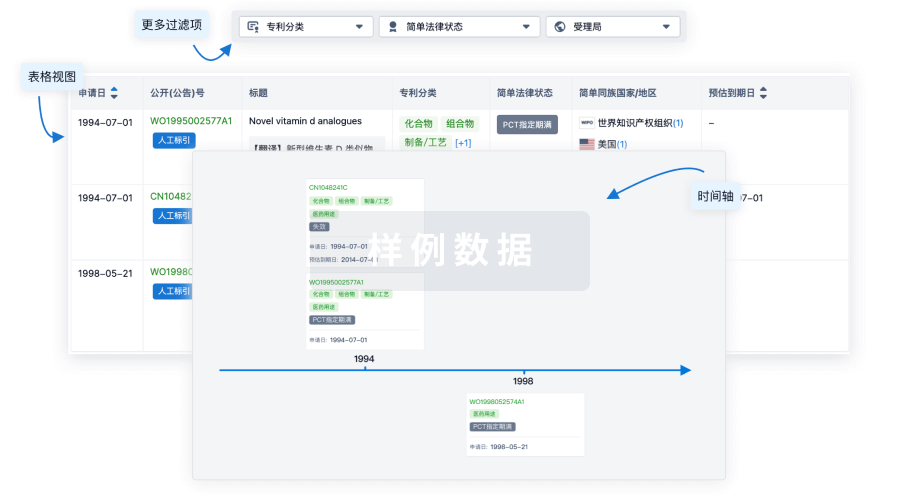
核心专利
使用我们的核心专利数据促进您的研究。
登录
或
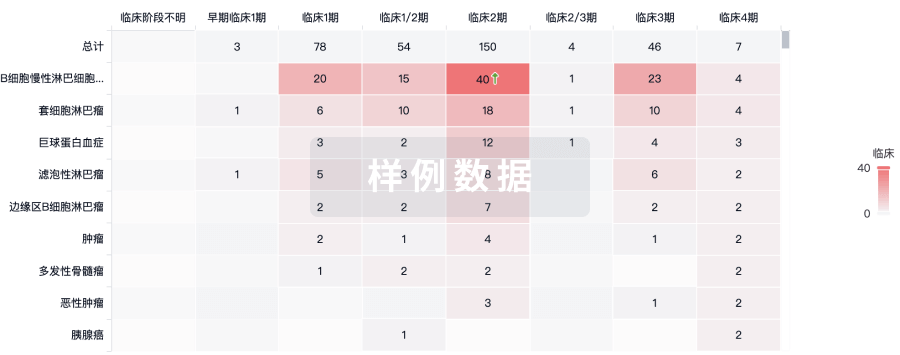
临床分析
紧跟全球注册中心的最新临床试验。
登录
或
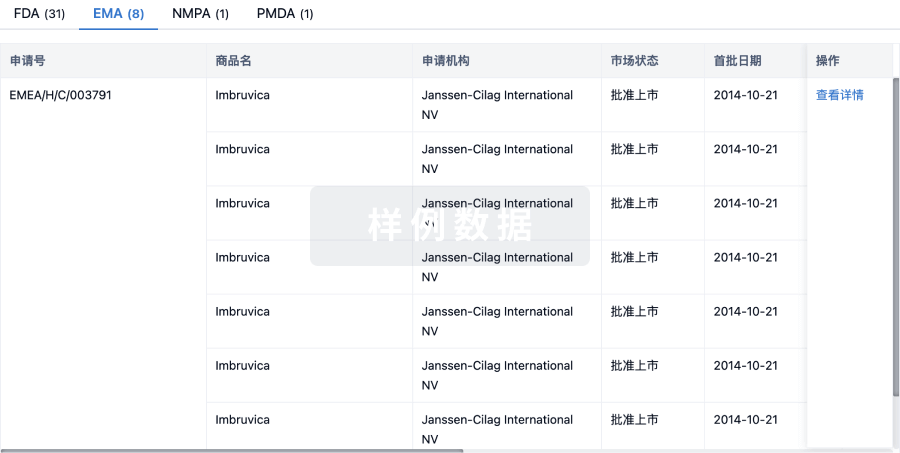
批准
利用最新的监管批准信息加速您的研究。
登录
或
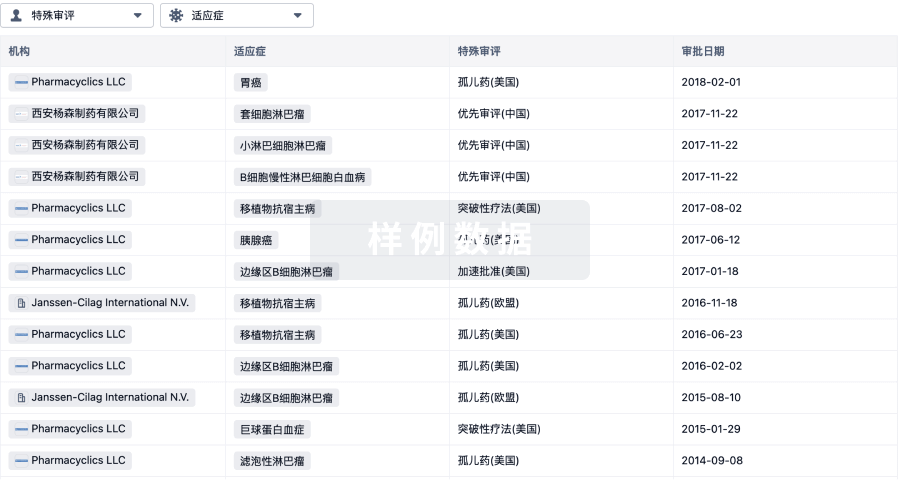
特殊审评
只需点击几下即可了解关键药物信息。
登录
或
生物医药百科问答
全新生物医药AI Agent 覆盖科研全链路,让突破性发现快人一步
立即开始免费试用!
智慧芽新药情报库是智慧芽专为生命科学人士构建的基于AI的创新药情报平台,助您全方位提升您的研发与决策效率。
立即开始数据试用!
智慧芽新药库数据也通过智慧芽数据服务平台,以API或者数据包形式对外开放,助您更加充分利用智慧芽新药情报信息。
生物序列数据库
生物药研发创新
免费使用
化学结构数据库
小分子化药研发创新
免费使用