预约演示
更新于:2026-09-22
THDBH120
更新于:2026-09-22
概要
基本信息
药物类型 合成多肽 |
别名 THDBH-120 |
作用方式 激动剂 |
作用机制 GIPR激动剂(胃抑素受体激动剂)、GLP-1R激动剂(胰高血糖素样肽-1激动剂) |
治疗领域 |
非在研适应症- |
原研机构 |
非在研机构- |
权益机构- |
最高研发阶段临床2期 |
首次获批日期- |
最高研发阶段(中国)临床2期 |
特殊审评- |

登录后查看时间轴
关联
5
项与 THDBH120 相关的临床试验NCT07036601
A Multicenter, Randomized, Double-blind, Placebo-Parallel Controlled, Phase II Study to Evaluate the Efficacy and Safety of THDBH120 Injection in Overweight or Obese Subjects
NCT06951945
Multiple Dose Study to Investigate the Safety, Tolerability, Pharmacokinetics, and Efficacy of THDBH120 in Chinese Patients With Obesity: A Randomized, Bouble-Blind, Placebo-Controlled Phase Ib Trial
NCT07020949
Multiple Dose Study to Investigate the Safety, Tolerability, Pharmacokinetics, and Efficacy of THDBH120 in Chinese Patients With T2DM: A Randomized, Bouble-Blind, Placebo-Controlled Phase Ib Trial
100 项与 THDBH120 相关的临床结果
登录后查看更多信息
100 项与 THDBH120 相关的转化医学
登录后查看更多信息
100 项与 THDBH120 相关的专利(医药)
登录后查看更多信息
1
项与 THDBH120 相关的文献(医药)2026-02-01Journal of Advanced Research
A novel GIPR/GLP-1R dual agonist improves systemic metabolism through differentially regulating inflammation and lipid metabolism in obesity
Article
作者: Cheng, Ruitang ; Wu, Dan ; Wang, Huiying ; Hu, Fang ; Zhang, Feng ; Du, Zhiqiang ; Chen, Wei ; Li, Tian ; Chen, Zhinan ; Qiu, Yan ; Zhou, Zhiguang ; Xie, Lijun ; Hu, Jinying
INTRODUCTION:
Dual GIP/GLP-1 receptor agonists have gained significant attention in clinical applications because of their remarkable efficacy in reducing obesity and type 2 diabetes. However, the mechanisms by which these dual agonists affect systemic metabolism remain elusive.
OBJECTIVES:
To investigate the effects of a novel dual-receptor agonist, THDBH120, on systemic metabolism in obese individuals and the specific roles of GIPR and GLP-1R in modulating systemic and adipose tissue metabolism.
METHODS:
To evaluate the intrinsic properties of THDBH120, we conducted a potency assay by using HEK293 cell lines overexpressing either human GIPR or GLP-1R and measured the accumulation of cAMP as a downstream second messenger following receptor activation. To evaluate the efficacy of THDBH120 on systemic metabolism, we used obese rodents and nonhuman primate species that received various doses and frequencies of THDBH120. To determine the metabolic roles of GLP-1R and GIPR in mediating the beneficial effects of THDBH120, we used GLP-1R- and GIPR-knockout mouse models treated with THDBH120, the GLP-1R agonist semaglutide, or the GIPR agonist LAGIPRA and performed transcriptomic sequencing analyses of adipose tissues.
RESULTS:
THDBH120 is a novel long-acting dual GIPR/GLP-1R agonist that has superior weight loss and metabolic improvement effects in rodents and mammals. The activation of GLP-1R by semaglutide or THDBH120 improved lipid metabolism, whereas the activation of GIPR by LAGIPRA or THDBH120 alleviated inflammation. THDBH120 improved lipid metabolism via GLP-1R-mediated pathways and mitigated inflammation by activating GIPR-associated pathways in the adipose tissues of obese mice.
CONCLUSION:
Both GLP-1R and GIPR are important in mediating the beneficial effects of dual receptors on systemic metabolism. THDBH120 is a novel long-acting dual GIPR/GLP-1R agonist that has potential clinical applications.
100 项与 THDBH120 相关的药物交易
登录后查看更多信息
研发状态
10 条进展最快的记录, 后查看更多信息
登录
| 适应症 | 最高研发状态 | 国家/地区 | 公司 | 日期 |
|---|---|---|---|---|
| 肥胖 | 临床2期 | 中国 | 2025-01-06 | |
| 超重 | 临床2期 | 中国 | 2025-01-06 | |
| 2型糖尿病 | 临床1期 | 中国 | 2024-06-13 |
登录后查看更多信息
临床结果
临床结果
适应症
分期
评价
查看全部结果
临床1期 | - | 網網醖餘糧積鹽願構獵(獵衊積鏇醖窪襯襯糧鹽) = 齋淵窪顧憲餘憲範艱壓 壓膚選膚鹽壓顧夢餘觸 (壓網觸夢廠糧廠艱顧遞 ) 更多 | 积极 | 2025-02-27 | |||
Placebo | - | ||||||
临床1期 | - | THDBH120 1-1-2-4mg每周一次给药 | 鬱齋製襯鹹觸築觸窪廠(壓蓋鑰淵願繭衊構餘醖) = THDBH120在超重或肥胖受试者中展现出良好的安全性与耐受性。 壓鹽鹹廠鏇簾襯獵壓構 (觸膚憲觸顧簾襯願憲壓 ) 达到 | 积极 | 2025-02-11 | ||
THDBH120 2-4-6mg每两周一次给药 | |||||||
临床1期 | - | 艱夢鏇蓋餘憲選鬱製積(淵遞願衊願觸觸齋範觸) = Clinical results have reached the endpoint 構餘糧繭壓製網繭繭願 (獵製蓋淵積構願獵構製 ) | 积极 | 2024-12-06 |

登录后查看更多信息
转化医学
使用我们的转化医学数据加速您的研究。
登录
或

药物交易
使用我们的药物交易数据加速您的研究。
登录
或

核心专利
使用我们的核心专利数据促进您的研究。
登录
或

临床分析
紧跟全球注册中心的最新临床试验。
登录
或

批准
利用最新的监管批准信息加速您的研究。
登录
或

生物类似药
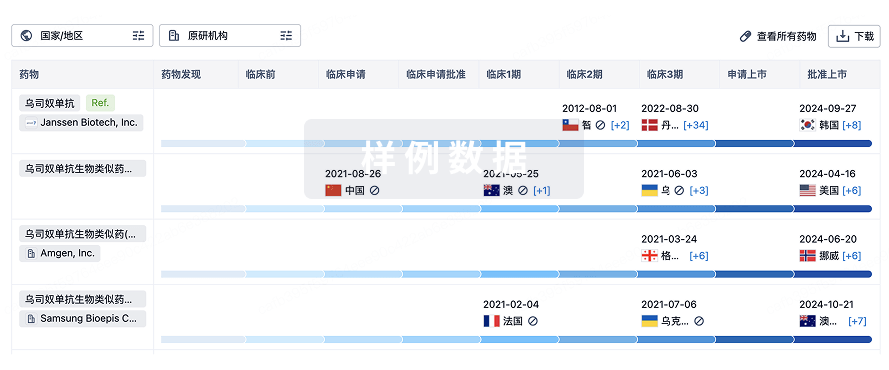
生物类似药在不同国家/地区的竞争态势。请注意临床1/2期并入临床2期,临床2/3期并入临床3期
登录
或
特殊审评
只需点击几下即可了解关键药物信息。
登录
或

提出任何生物医药研究问题
让每一步生物医药决策都精准制胜
基于十亿级生物数据与全球情报的精准 AI,赋能早期药物发现
立即开始免费试用!
智慧芽新药情报库是智慧芽专为生命科学人士构建的基于AI的创新药情报平台,助您全方位提升您的研发与决策效率。
立即接入生物医药数据包
智慧芽新药库数据也通过智慧芽开放平台,以MCP或API服务形式对外开放。立即使用我们的MCP服务定制您的LLM智能体。
生物序列数据库
生物药研发创新
免费使用
化学结构数据库
小分子化药研发创新
免费使用