预约演示
更新于:2026-04-01
NGM-120
更新于:2026-04-01
概要
基本信息
非在研机构- |
最高研发阶段临床2期 |
首次获批日期- |
最高研发阶段(中国)- |
特殊审评- |


登录后查看时间轴
关联
5
项与 NGM-120 相关的临床试验NCT07033026
A Phase 2, Multicenter, Randomized, Double Blind, Placebo-controlled Study to Assess the Efficacy, Safety, and Tolerability of NGM120 in Participants With Colorectal Cancer Who Have Cancer Cachexia
A multi-center evaluation of NGM120 in a randomized, double-blind, placebo-controlled study in participants with colorectal cancer who have cancer cachexia.
开始日期2025-06-25 |
申办/合作机构 |
ACTRN12624001421527
A Phase 2 Randomized, Proof of Concept Study to Evaluate the Safety, Tolerability, and Efficacy of NGM120 in Pregnant Women with Severe Nausea and Vomiting (Hyperemesis Gravidarum)
开始日期2025-02-03 |
申办/合作机构 |
ISRCTN76681798
A Phase II randomized, proof-of-concept study to evaluate the safety, tolerability, and efficacy of NGM120 in pregnant women with severe nausea and vomiting (Hyperemesis Gravidarum) (EMERALD)
开始日期2024-12-18 |
申办/合作机构 |
100 项与 NGM-120 相关的临床结果
登录后查看更多信息
100 项与 NGM-120 相关的转化医学
登录后查看更多信息
100 项与 NGM-120 相关的专利(医药)
登录后查看更多信息
46
项与 NGM-120 相关的新闻(医药)2026-02-19
·今日头条
多项权威研究把话说清楚了,孕吐的轻重不是“矫情”,也不是一句“体质好坏”能解释的事。
真正的主角是体内激素和基因的互动,其中胎盘和胎儿释放的GDF15被确认是引发妊娠剧吐的关键因素,HCG依旧重要,但不再是唯一答案。
家族遗传会把个人风险推高,胃肠道本身的敏感度、情绪压力、睡眠和饮食节律也会放大差异。
大部分人在孕12到16周会缓解,少数发展为妊娠剧吐,需要尽快治疗预防脱水和营养不良。
孕吐最常见在孕早期,恶心、呕吐、怕油烟、食欲差是典型表现。
约七到八成孕妇会有反应,程度从轻微恶心到反复呕吐差别很大。
多数人在进入孕中期,随着激素水平趋稳,症状明显好转。
有一小部分人出现妊娠剧吐,喝水都难以下咽,尿量减少,体重下降,抽血会出现电解质紊乱,这类情况一拖就会出大问题,需要尽快就医补液和药物干预。
HCG在怀孕初期快速升高,维持黄体功能,是胚胎早期生长的“保护伞”。
这种激素升得快、峰值高,更容易刺激胃肠道,让人恶心想吐。
多胎妊娠或葡萄胎这类HCG特别高的情况,孕吐往往更明显。
临床上也有不匹配的例子,HCG高的人反应平平,HCG一般的人吐得厉害。
差异来自身体对激素刺激的敏感度不同,单靠HCG解释不全。
GDF15把这块“缺的拼图”补上了。
它是胎盘和胎儿产生的一种信号蛋白,会作用于脑干的一个“呕吐控制区”,通过GFRAL受体传递“别吃、要警惕”的信号。2023到2025年的多项研究证实,GDF15越高,症状越重,且母体对GDF15的敏感度受遗传影响很大。
有些人天生“报警器”灵,哪怕水平不算高也会反应强。
有些人在怀孕前GDF15基线水平就偏高,对怀孕后的激增更能适应,症状反而轻。
这个发现解释了为什么同一家人往往“反应相似”,也解释了为什么有人几乎没反应,有人却吐到住院。
“脱敏”这个概念因此有了理论基础。
意思是如果在怀孕前就让身体适度接触这类信号,到了怀孕时就不那么“惊慌”。
具体怎么做还在探索阶段,科学家正在研究用低剂量、短时的方式,是否能让身体对GDF15更耐受。
这个方向很有吸引力,因为它瞄准的是根源,而不是事后止吐。
新药研发已经按这个思路启动。2025年开始的Emerald试验,招募患有妊娠剧吐的孕妇,用针对GDF15/GFRAL通路的抗体药物NGM120,目标是直接阻断这条“恶心信号线”。
另有至少两种同类药物进入临床测试。
过去止吐更多是缓解症状,比如维生素B6、抗组胺、促胃动力或5-HT3受体拮抗剂,新药尝试从根上减弱恶心信号。
如果安全性和效果被证实,重症孕妇的生活质量和营养状态会出现质的改善。
考虑到孕期用药格外谨慎,这些研究设计了严密的母婴安全监测,结论还需要完整的试验数据支撑,期待值可以有,盲目用药不可取。
遗传和体质层面,家族聚集现象很明显。
母亲或姐妹孕吐严重,本人发生重症的概率就更高。
科学上能检测到的,是和GDF15信号有关的变异,会影响受体敏感度和清除速度。
公众更容易理解的线索,是生活里已经能观察到的“敏感体质”信号。
比如容易晕车、偏头痛、闻味道就反胃、胃食管反流老犯、吃凉就拉肚子,这些都提示迷走神经和胃肠道的反应阈值更低。
一旦怀孕,体内激素叠加,就更容易“过界”。
症状轻重还会被许多细节放大。
双胎或多胎,激素水平更高,孕吐更明显。
情绪焦虑、压力大、睡眠少,身体原有的“缓冲”能力被削弱,反应就会被夸张。
饮食不规律、深夜进食、长时间空腹,又或者早晨起床过快,都可能触发一次猛烈的呕吐。
强烈的气味、拥挤闷热的环境、长途车程也易诱发。
规律作息、少量多餐、温和口味、充足水分,看似不起眼,却是帮身体“稳住”的底层做法。
心理健康风险在这几年被证据敲实。
数据提示,妊娠剧吐患者在怀孕前就更易出现焦虑抑郁,孕期和产后风险仍然偏高。
有研究给出调整后的比值比,孕前抑郁风险大约是普通人的五倍多,产后也高出几倍。
临床调查显示,不少女性因连续呕吐、无法工作、睡觉都断断续续,出现绝望感,超过一半曾认真考虑终止妊娠。
医疗系统把这类情况当作“只是孕吐”,会让很多人失去支持。
更积极的做法是把营养补给、止吐用药、心理干预放在一条路径上,设立随访,让病人知道自己不是一个人在抗争。
标准治疗有一套成熟的阶梯。
家庭层面,醒后先进干粮,零食放在床边,少量多次饮水,含姜饮品或口香糖有些人管用,维生素B6安全性好,常被作为基础选项。
恶心明显时,合用多西拉敏的复方在不少国家被写入指南。
症状进展时,甲氧氯普胺、昂丹司琼会被谨慎使用,医生会评估利弊和个人史。
喝不进水、尿量很少、体重持续下降、头晕乏力,就该去医院补液,纠正钾、钠等电解质。
连日呕吐后要补硫胺素,避免维生素B1缺乏引发的神经问题。
胃酸过多的患者加用抑酸药能减轻刺激。
极端情况会考虑肠内或肠外营养,这类决策需要产科、营养科、麻醉科协同。
研究的新方向还不止GDF15。肠道微生物组被发现与孕吐严重度有关,菌群多样性下降、某些产气或产酸菌占比异常,和症状加重相关联。
机制可能通过胆汁酸代谢、炎症介质、迷走神经信号共同作用。
备孕期或孕早期的饮食结构调整,或许能成为一个低风险的辅助策略,有待随机对照试验进一步确认。
有研究观察到,糖代谢异常人群在孕前使用二甲双胍的人,发生重症孕吐的风险较低,推测与能量代谢、炎症通路、GDF15基线水平变化有关,这类发现给出了新的预防线索,具体人群的适用性和时机需要更扎实的证据支持。
社会支持度提升,是把科学证据转化为真实体验的关键。
家庭要理解,这是身体的适应反应,不是懒、不讲理。
雇主可以提供弹性工作、临时休息位、无味环境,减少刺激源。
社区层面可以推广简易的症状评分工具,比如PUQE评分,让基层医生快速判断轻重,决定是家庭管理还是转诊补液。
医疗机构可以设立“妊娠恶心呕吐门诊”,由产科、营养、心理联合出方案,减少病人来回奔波。
个人可操作的小目标更容易坚持。
饭量减半、次数翻倍。
将水换成含电解质的淡饮,室温少冰凉。
挑选高蛋白、易消化的食物,如酸奶、鸡蛋饼、软面。
把一天的任务拆分,上午完成最费力的事,下午留给休息。
把刺激性气味隔离,做饭交给家人,或使用抽油烟机外加通风。
记下触发场景,避开高风险时间段外出。
与产检医生保持简短而频密的沟通,一旦进展就加码干预,不让身体一路滑坡。
公众对孕吐的看法正在被新证据重塑。
事件的关键不在“能不能忍”,而在“信号有多强、身体多快适应、支援到不到位”。
GDF15的发现把“为什么差异这么大”说圆了,也打开“能否提前预防”的门。
临床试验把靶向治疗从纸面推到病床,心理风险的量化又促使医疗系统把精神卫生服务纳入常规路径。
学术交流也在加速,国际妊娠剧吐会议计划发布新的诊疗共识,围绕筛查、分级、用药、营养和心理支持给出更清晰的建议。
未来几年最值得期待的变化有三点。
孕前或孕早期的风险分层会更精细,可能包含家族史、既往孕吐史、血液中GDF15等生物标志物,医生更早识别高危人群。
预防策略会更像“打疫苗”的思路,尝试通过温和的代谢或免疫“训练”降低过度反应的概率。
针对GDF15的药物如果跑通安全性与有效性验证,重症人群将从“熬过去”进入“可干预、可控制”的新阶段。
我的观点很简单,孕吐是身体为保护胎儿而启动的强力防御,个体差异来源于激素信号的强弱与身体阈值的不同,不是意志薄弱。
科学已经把根上的线头找出来,下一步是把这根线织成网,让每个需要的人都接得住。
轻者按时产检,规律生活,安心等待度过波峰。
重者尽早就医,补液、用药、营养、心理一个都不落下。
家人和社会给出体谅与支持,医生给出有证据的方案,新药和新方法继续推进。
重症妊娠剧吐不再是无解之苦,正走向可以预防、可以治疗的通道,活下去的每一天都会更踏实。
2025-12-26
作者:汪梓昱
美工:何国红 罗真真
排版:马超
一、被忽视的代谢危机
恶病质是一种常见于大多数癌症患者的复杂消耗综合症,特征包括肌肉和脂肪丧失,伴随代谢重编程、炎症、食欲丧失及内分泌紊乱,在多种晚期实体瘤中均高度流行,其发生率因癌种与疾病阶段不同而可达50%–80%。该综合征显著削弱患者生活质量、降低抗肿瘤治疗耐受性并不利于总体预后。多项权威资料显示,约20%–30%的癌症相关死亡可直接归因于恶病质[1,2,3,4]。
癌症恶病质是由肿瘤及宿主炎症介质驱动的代谢综合征,核心表现为能量负平衡与进行性骨骼肌减少(图1)。其机制涉及促炎细胞因子等介导的肌肉与脂肪分解(图2)。临床诊断主要依据体重下降(如BMI<20 kg/m²且体重下降>2%,或6个月内体重下降>5%)及肌肉量减少,并常结合BMI调整的分级系统进行精准评估[5]。
▲ 图1. 癌症恶病质发病机制的三个层次(肿瘤源性因素、宿主反应和组织间相互作用)[5]
恶病质在多癌种中普遍存在,其进展受年龄、代谢状态、炎症衰老、性别、种族及社会经济因素等多维度影响,尤其老年患者更易出现肌肉流失和慢性炎症。持续监测体脂与肌肉质量对于早期识别高风险人群及指导治疗至关重要,而体成分评估在预测预后与支持治疗决策中也具有重要价值[5,6]。
▲ 图2. 肿瘤来源和宿主产生的恶病质介质会在多个器官中引发消耗性病理过程[5]
二、全球治疗市场的崛起
癌症恶病质治疗正从非特异性支持转向靶向干预的新阶段,其市场快速产业化,成为一个前景广阔的市场。
据Grand View Research分析,全球该治疗市场规模预计从2025年约25–28亿美元增长至2033年约39亿美元,年复合增长率约4%–5%(图3)。市场扩张主要受全球癌症发病率上升、人口老龄化及治疗手段(包括小分子、抗体及联合方案)多样化驱动。
▲ 图3. 全球癌症恶病质市场规模(亿美元)[7]
三、小分子药物:从改善食欲到重塑代谢
小分子药物在恶病质治疗中起到了先行者的作用。早期的一些药物,如Megestrol acetate(孕激素类)和Mirtazapine(抗抑郁药),通过改善食欲和情绪,缓解了部分恶病质患者的症状。然而,这些药物虽然能够在短期内改善患者的食欲和体重,但对于长时间维持肌肉质量和恢复功能性却作用有限。
Anamorelin(Adlumiz)作为一种口服的选择性ghrelin受体激动剂,通过模拟体内“饥饿信号”激素ghrelin的作用,刺激下丘脑食欲中枢,促进能量摄入,并刺激生长激素(GH)和类胰岛素样生长因子-1(IGF-1)的分泌,从而增强蛋白合成、促进瘦体重的增加。研究表明,Anamorelin能够显著改善癌症相关恶病质患者的瘦体重、体重和食欲。然而,尽管其在体重和食欲方面取得了显著效果,但对于肌力和功能性终点的改善效果仍然有限[8,9]。
此外,其他如Mifomelatide和Espindolol等小分子药物也在研发阶段,其中Mifomelatide通过调节下丘脑的能量平衡,改善体重和肌肉质量,而Espindolol则通过双重机制,既能抗分解,又能促进蛋白合成。这些新药物的研发,标志着小分子药物在恶病质治疗中不断向更为精准和高效的方向发展(表1)。
▼ 表1 恶病质治疗中小分子与环肽类药物的代表性进展
(截至2025年12月)[10]
四、抗体药物:精准阻断炎症与代谢信号的新策略
01
靶向促炎细胞因子:抑制“炎症引擎”
慢性炎症被普遍认为是恶病质发生与进展的核心驱动力,促炎细胞因子持续激活可引发代谢紊乱、肌肉分解加速及食欲下降等一系列病理改变,因此,阻断驱动恶病质的关键炎症信号被视为最为直接且具有明确机制基础的治疗策略。
治疗策略主要是阻断IL-6介导的炎症信号通路。Clazakizumab是靶向IL-6的人源化单克隆抗体,通过阻断IL-6介导的炎症信号,期望减轻炎症驱动的肌肉消耗和症状负担。该药物曾在非小细胞肺癌相关恶病质/疲劳患者中开展Ⅱ期临床研究(NCT00866970),结果显示安全性良好并伴有一定症状和生物学改善信号,但整体疗效有限,未能推动该适应症的进一步开发。GFS202A作为IL-6/GDF-15双抗,试图同时抑制炎症信号与异常食欲/代谢调控通路,代表了在该机制方向上更为综合的探索思路。
02
靶向ActRII通路:解除肌肉生长抑制
Activin/肌生成抑制蛋白(Myostatin)-ActRII信号通路是骨骼肌生长与分化的关键负调节轴,在恶病质状态下异常激活,持续抑制肌肉合成并促进肌肉萎缩。针对该通路的治疗策略旨在阻断ActRIIA/IIB受体,从而解除对肌肉生长信号的抑制,恢复肌肉合成能力[12]。
治疗策略主要拮抗ActRIIA/IIB受体。Bimagrumab (BYM338) 是一种全人源单克隆抗体,可通过拮抗ActRII受体,使GDF-11等促肌肉生长信号正常传递。该药在癌症恶病质Ⅱ期临床试验中虽显著提升四肢骨骼肌指数,但未能达成改善体能状态(如6分钟步行试验)的主要终点,后续开发已基本中止。这表明仅增加肌肉质量可能不足以实现功能改善,提示未来或需联合治疗策略。Bimagrumab (BYM338) 是靶向ActRIIA/IIB受体的一款全人源单克隆抗体,最初开发用于肌肉萎缩性疾病。它通过阻断ActRII受体,使促肌肉生长信号(如GDF-11)得以正常作用。在癌症恶病质的II期临床试验中,虽然显著增加了四肢骨骼肌指数,但未能达到改善体能状态(6分钟步行试验)的主要终点,因此相关开发已基本停止。这提示单纯增加肌肉量可能不足以改善功能,或需联合治疗。
03
靶向食欲调节通路:解除中枢厌食与代谢失衡
GDF-15/GFRAL信号轴是介导癌症恶病质食欲抑制和能量代谢紊乱的核心通路(图4)。作为应激响应因子,GDF-15在肿瘤及微环境中高表达,其血浆水平与体重减轻、肌肉消耗及不良预后显著相关。该通路通过中枢作用导致能量负平衡,是连接肿瘤进展与全身消耗的关键枢纽,因而成为重要的治疗靶点[11]。
▲ 图4. GDF-15 介导的癌症恶病质机制及其对肿瘤免疫的抑制作用[7]
▶ 治疗策略主要包括两类
1)中和GDF-15:
以Ponsegromab/Visugromab为代表。这类单克隆抗体通过清除循环中的GDF-15,减轻其对中枢食欲和代谢的抑制。早期临床数据显示,它们能持续降低血清GDF-15水平,并在体重、食欲等方面呈现改善趋势,为后续临床开发提供了依据[13,14]。
2)拮抗中枢受体GFRAL:
以NGM120/JMT203为代表。该策略直接阻断GDF-15在延髓区的信号传导,从而恢复食欲与代谢稳态。临床前及早期临床研究表明,GFRAL拮抗剂可改善体重、食欲及肌肉质量,部分研究还提示其具潜在抗肿瘤协同效应,有望成为“抗肿瘤-抗恶病质”联合治疗的组成部分。
▲ 图5. 抗GDF-15/GFRAL 疗法在癌症中的作用机制[7]
总体来看,抗体药物正通过多靶点机制干预癌症恶病质,从炎症抑制到中枢代谢调控逐步取得突破。以Ponsegromab为代表的药物已在体重和食欲改善方面显示出积极信号。随着更多临床试验推进,这类药物或将成为癌症恶病质治疗的重要组成(图6,表2)。
▲ 图6. 恶病质药物汇总
▼ 表2 抗体药物在恶病质治疗中的研发态势概览
(截至2025年12月)
五、趋势与展望
癌症恶病质作为复杂的代谢紊乱性疾病,正从“不可逆的终末期消耗”转向“可干预的系统性失衡”这一新范式。随着机制研究不断深入,治疗理念正在形成更明确的方向:一是精准靶向关键炎症与代谢通路(如GDF-15、IL-6、Activin等),相关药物快速推进临床并有望显著提升疗效;二是多模态联合干预逐渐成为趋势,将小分子、抗体治疗与营养、运动等措施整合,实现更全面的改善;三是早期识别与分层治疗的重要性凸显,生物标志物正在推动精准管理的临床落地。
目前,以GDF-15抑制为代表的新药(如Ponsegromab)已进入关键III期阶段,有望成为未来联合治疗的核心基础,兼顾食欲调节与能量代谢改善。尽管仍面临机制复杂、患者异质性大等挑战,癌症恶病质正成为跨学科重点攻克领域,其临床价值与产业潜力均在持续提升。
Sanyou 10th Anniversary: Cachexia: Multidimensional Metabolic Dysfunction and Emerging Targeted Therapies
1. The Overlooked Metabolic Crisis
Cancer cachexia is a common and complex wasting syndrome characterized by the loss of muscle and fat, driven by metabolic reprogramming, systemic inflammation, anorexia, and endocrine dysfunction. It is highly prevalent in advanced solid tumors, affecting 50%–80% of patients depending on cancer type and disease stage. Cachexia markedly impairs quality of life, reduces tolerance to anticancer therapies, and worsens overall prognosis. Notably, 20%–30% of cancer-related deaths are directly attributable to this condition.[1,2,3,4]
Cancer cachexia is a tumor- and inflammation-driven metabolic syndrome characterized by negative energy balance and progressive skeletal muscle loss (Fig. 1). Its pathogenesis involves pro-inflammatory cytokine–mediated breakdown of muscle and adipose tissue (Fig. 2). Clinically, diagnosis is based mainly on unintentional weight loss (e.g., BMI < 20 kg/m² with > 2% loss, or > 5% loss within 6 months) accompanied by reduced muscle mass, often assessed using BMI-adjusted staging systems.[5]
▲ Figure 1. Three levels of the pathogenesis of cancer cachexia[5]
Cachexia is common across many cancers and is influenced by factors such as age, metabolic status, inflammaging, sex, race, and socioeconomic conditions. Older patients are especially prone to muscle loss and chronic inflammation. Monitoring body fat and muscle mass is crucial for early risk identification, prognosis assessment, and treatment guidance.[5,6]
▲ Figure 2. Cachexia mediators derived from tumors and the host trigger catabolic pathological processes in multiple organs[5]
2. The Rise of the Global Therapeutic Market
Cancer cachexia treatment is entering a new phase, shifting from non-specific supportive care toward targeted interventions, with rapid commercialization and strong market potential.
According to Grand View Research, the global market is projected to grow from approximately USD 2.5–2.8 billion in 2025 to about USD 3.9 billion by 2033, at a compound annual growth rate of 4%–5% (Figure 3) [7]. This expansion is driven by rising global cancer incidence, population aging, and the diversification of therapeutic strategies, including small molecules, antibodies, and combination regimens.
▲ Figure 3. Global cancer cachexia market size (USD billions)[7]
3. Small-Molecule Drugs: From Appetite Stimulation to Metabolic Reprogramming
Small-molecule drugs have played a pioneering role in the treatment of cachexia. Early agents such as Megestrol acetate (a progestin) and Mirtazapine (an antidepressant) alleviated symptoms in some patients by improving appetite and mood. However, while these drugs can increase appetite and body weight in the short term, their ability to sustain muscle mass and restore physical function is limited.
Anamorelin (Adlumiz), an oral and selective ghrelin receptor agonist, represents a more targeted approach. By mimicking the ghrelin, it activates hypothalamic appetite centers, increases energy intake, and stimulates the release of growth hormone (GH) and insulin-like growth factor-1 (IGF-1), thereby enhancing protein synthesis and promoting gains in lean body mass. Clinical studies have shown that anamorelin significantly improves lean body mass, body weight, and appetite in patients with cancer-related cachexia. Nonetheless, despite these benefits, its effects on muscle strength and functional outcomes remain modest [8,9].
In addition, other small-molecule candidates such as mifomelatide and espindolol are under active development. Mifomelatide improves body weight and muscle mass by modulating hypothalamic energy balance, whereas espindolol acts through a dual mechanism that both reduces catabolism and promotes protein synthesis. Together, these advances highlight a shift toward more precise and efficient small-molecule therapies for cachexia (Table 1).[10]
▼ Table 1. Representative advances in small-molecule and Macrocyclic Peptide drugs for the treatment of cachexia (as of December 2025)
4. Antibody-Based Therapies: Novel Strategies for Precise Inhibition of Inflammatory and Metabolic Signaling
01
Targeting Pro-inflammatory Cytokines: Shutting Down the “Inflammatory Engine”
Chronic inflammation is widely recognized as a central driver of cachexia onset and progression. Persistent activation of pro-inflammatory cytokines disrupts metabolism, accelerates muscle breakdown, and suppresses appetite. Accordingly, blocking key inflammatory signals represents one of the most direct and mechanism-based therapeutic strategies.
Current approaches focus primarily on inhibiting IL-6-mediated signaling. Clazakizumab, a humanized monoclonal antibody targeting IL-6, aims to reduce inflammation-driven muscle wasting and symptom burden. In a phase II trial in patients with non-small cell lung cancer–related cachexia/fatigue (NCT00866970), clazakizumab showed good safety and modest symptomatic and biological signals, but overall efficacy was limited, halting further development in this indication.GFS202A, a dual antibody against IL-6 and GDF-15, seeks to simultaneously suppress inflammatory signaling and abnormal appetite/metabolic regulation, reflecting a more integrated strategy within this therapeutic pathway.
02
Targeting the ActRII Pathway: Unlocking Muscle Growth Inhibition
The Activin/Myostatin-ActRII signaling pathway is a key negative regulator of skeletal muscle growth and differentiation. In cachexia, this pathway is abnormally activated, inhibiting muscle synthesis and promoting muscle atrophy. Therapies targeting this pathway aim to block ActRIIA/IIB receptors, thereby lifting the inhibition on muscle growth signals and restoring muscle synthesis capacity.[12]
Current strategies focus on antagonizing ActRIIA/IIB receptors. Bimagrumab (BYM338) is a fully human monoclonal antibody that blocks the ActRII receptor, allowing muscle growth signals like GDF-11 to function normally. In a phase II trial for cancer cachexia, bimagrumab significantly increased skeletal muscle mass but failed to meet the primary endpoint of improving physical performance (e.g., 6-minute walk test). This suggests that merely increasing muscle mass may not be sufficient for functional improvement, indicating a potential need for combination therapies.
03
Targeting Appetite Regulation Pathways: Relieving Central Anorexia and Metabolic Imbalance
The GDF-15/GFRAL axis is a key driver of appetite suppression and energy imbalance in cancer cachexia (Figure 4). GDF-15, highly expressed in tumors and their microenvironment, is strongly associated with weight loss, muscle wasting, and poor prognosis. By acting on the central nervous system to induce negative energy balance, this pathway links tumor progression to systemic wasting and represents a critical therapeutic target.[11]
▲ Figure 4. GDF-15–mediated mechanisms of cancer cachexia and its inhibitory effects on tumor immunity[7]
▶ Two Main Therapeutic Strategies:
1) Neutralizing GDF-15: Represented by Ponsegromab and Visugromab, these monoclonal antibodies reduce circulating GDF-15, alleviating its suppressive effects on appetite and metabolism. Early clinical data show that they consistently lower serum GDF-15 levels, with improvements in weight, appetite, and physical performance, supporting further clinical development[13,14]
2) Antagonizing Central Receptor GFRAL: Represented by NGM120 and JMT203, this strategy directly blocks GDF-15 signaling in the medullary region, restoring appetite and metabolic balance. Preclinical and early clinical studies indicate that GFRAL antagonists can improve weight, appetite, and muscle mass, with some studies suggesting potential anti-tumor synergy, making them promising candidates for combination "anti-tumor-anti-cachexia" therapy.
▲ Figure 5. Mechanisms of anti-GDF-15/GFRAL therapy in cancer[7]
Overall, antibody drugs are intervening in cancer cachexia through multi-target mechanisms, making progress from inflammation suppression to central metabolic regulation. Drugs like Ponsegromab have shown promising signals in improving weight and appetite. As more clinical trials advance, these drugs may become a key component of cancer cachexia treatment (Figure 6, Table 2).
▲ Figure 6. Summary of antibody drug targets for cachexia
▼ Table 2. Overview of the development landscape of antibody therapeutics for the treatment of cachexia (as of December 2025)
5. Trends and Outlook
Cancer cachexia is shifting from being viewed as an “irreversible end-stage wasting condition” to an “intervenable systemic imbalance”. With advancing mechanistic insights, treatment strategies are becoming clearer, including precise targeting of key inflammatory and metabolic pathways (e.g., GDF-15, IL-6, Activin), the growing use of multimodal combination approaches integrating drugs with nutrition and exercise, and the rising importance of early identification and biomarker-driven stratified management.At present, novel antibody drugs targeting GDF-15, such as Ponsegromab, have entered pivotal Phase III trials and are expected to form a core component of future combination therapies by improving both appetite regulation and energy metabolism. Despite challenges related to mechanistic complexity and patient heterogeneity, cancer cachexia is increasingly recognized as a key interdisciplinary focus with expanding clinical and industrial potential.
▶ Reference
1. Fearon K, Strasser F, Anker SD, et al. Definition and classification of cancer cachexia: an international consensus. Lancet Oncol. 2011;12(5):489-495.
2. National Cancer Institute. Treating Cancer Cachexia: Progress Looks Possible. National Institutes of Health; 2022. Accessed February 2025. https://www.cancer.gov/about-cancer/treatment/research/cachexia.
3. Gholamrezaei A, Broomfield A, McMillan DC, et al. Cancer cachexia: New insights and future directions. Cancers (Basel). 2023;15(23):5590. doi:10.3390/cancers15235590.
4. Baracos VE, Argilés JM, Prado CM, et al. Cancer-associated cachexia: Bridging clinical findings with mechanistic insights. Cancer Discov. 2025;15(8):1543-1558. doi:10.1158/2159-8290.CD-24-1234.
5. Berriel Diaz M, Rohm M, Herzig S. Cancer cachexia: multilevel metabolic dysfunction. Nat Metab. 2024;6(12):2222-2245. doi:10.1038/s42255-024-01167-9.
6. Rohm M, Kir S, Tisdale MJ, et al. Prevalence of and survival with cachexia among patients with cancer: A systematic review and meta-analysis. Adv Nutr. 2024;15(5):1132-1154. doi:10.1016/j.advnut.2024.06.005.
7. Grand View Research. Cancer Cachexia Treatment Market Size Report, 2025–2033. San Francisco, CA: Grand View Research; 2025.
8. Temel JS, Abernethy AP, Currow DC, et al. Anamorelin in patients with non-small-cell lung cancer and cachexia (ROMANA 1 and 2): a randomised, double-blind, phase 3 trial. Lancet Oncol. 2014;15(7):783-792.
9. Takayama K, et al. Long-term efficacy and safety of anamorelin in cancer cachexia: pooled analysis of Japanese phase II/III studies. J Cachexia Sarcopenia Muscle. 2022;13:1923-1933.
10. Stewart Coats AJ, Ho GF, Prabhash K, et al. Espindolol for the treatment and prevention of cachexia in patients with stage III/IV non-small cell lung cancer or colorectal cancer: a randomized, double-blind, placebo-controlled, international multicentre phase II study (the ACT-ONE trial). J Cachexia Sarcopenia Muscle. 2016;7(3):355-365. doi:10.1002/jcsm.12126.
11. Sugiyama K, Starling N, Chau I. New Horizons with Growth Differentiation Factor 15 in Oncology: From Cancer Cachexia and Tumour Immunity to Novel Therapeutic Strategies. Curr Oncol. 2025;32(11):604. Published 2025 Oct 29. doi:10.3390/curroncol32110604.
12. Argilés JM, López-Soriano FJ, Busquets S. Therapeutic potential of myostatin and activin blockade in cachexia and sarcopenia. J Cachexia Sarcopenia Muscle. 2018;9(2):287-297.
13. Pfizer Inc. Pfizer Presents Positive Data from Phase 2 Study of Ponsegromab in Cancer Cachexia. Press Release; 2025.
14. CatalYm GmbH. Visugromab (GDF-15 antibody) Clinical Trial Information – NCT07112196. ClinicalTrials.gov; 2025.
15. GenFleet Therapeutics. Clinical Trial of Bispecific Antibody GFS202A (NCT06898255). ClinicalTrials.gov; 2025.
关于三优生物
三优生物是一家以“让天下没有难做的创新生物药”为使命,以超万亿分子库和智能科技驱动的生物医药高科技企业。
公司致力于打造全球顶尖的原创新药创新工场。公司以智能超万亿分子库(AI-STAL)为核心;以干湿结合、国际领先的创新生物药智能化及一体化研发平台为依托;以多样化的业务模式推动全球创新药物的研发及产业化。
公司总部位于中国上海,在亚洲、北美洲、欧洲等多地建立了业务中心,形成了全球化的业务网络,现有投产及布局的研发及GMP场地20000多平方米。
公司已与全球2000多家药企、生技公司等建立了良好的合作关系,已赋能1200多个新药研发项目;已完成50多个合作研发项目,其中10多个协同研发项目已推至IND及临床研发阶段。
公司已申请130多项发明专利,其中30多项发明专利已获得授权,并获得了国家级高新技术企业、上海市专精特新、ISO9001、ISO27001等10余项资质及体系认证。
推荐阅读
三优十周年|中国药企撬动千亿美元赛道
三优十周年|平台篇-创新抗体产生平台
三优十周年|眼科治疗前沿:用抗体药物精准点亮未来
三优十周年|磁阵列全人源小鼠抗体发现平台
三优十周年|新“药王”加冕:减重增肌
三优十周年|抗体药物如何实现精准“狙击”炎症?
三优十周年|血液肿瘤治疗革命-精准分层治疗新时代
三优十周年|抗体药免疫原性全方位解析
三优十周年|肿瘤免疫2025及2018双诺奖解析
三优十周年|TCE药物-重塑免疫治疗版图的新力量
三优十周年|神经系统疾病治疗进展
三优十周年|AI-STAL 智能超万亿分子库发展历程
三优十周年|打造全球顶尖的原创新药创新工场
三优十周年|抗体治疗50年风雨江湖
三优十周年|针对宠物疾病的单克隆抗体药物
三优十周年|CAR-T细胞治疗现状挑战与未来
2025-12-18
·药研网
前言
在实体瘤研究中,肿瘤周围的“正常”癌旁组织,长期被视为相对被动的背景结构。然而,越来越多证据表明,癌旁微环境并非沉默旁观者,而是深度参与肿瘤进展的重要调控者。
2025年12月3日,复旦大学附属肿瘤医院与上海交通大学医学院附属第一人民医院团队在 Nature Aging(IF = 19.4)发表研究,首次揭示衰老的癌旁结肠上皮细胞(CEC)分泌的GDF15,通过激活糖酵解–组蛋白乳酰化反馈环路,调控结直肠癌的进展机制。[1]
该研究揭示了一种结直肠癌细胞与癌旁上皮细胞之间的全新代谢–表观遗传通讯模式,将GDF15的作用边界从肿瘤细胞本身拓展至癌旁衰老上皮细胞与微环境调控层面,显著拓宽了该靶点在肿瘤领域的干预想象空间。
GDF15靶点简介
生长分化因子15(GDF15),又称巨噬细胞抑制细胞因子(MIC-1),是一种应激诱导型分泌蛋白,以25 kDa二聚体形式循环,由两个含112个氨基酸的多肽链经二硫键连接组成。GDF15在正常生理条件下表达水平较低,主要在肝、肾、心、肺等器官受到损伤或细胞应激时上调表达。
近年来研究发现,GDF15在炎症调节、组织修复、代谢紊乱和细胞应激等生理及病理过程中均发挥关键作用,且其表达可由多种应激因子(如细胞损伤、氧化应激、抗糖尿病药物二甲双胍等)诱导上升。[2]
Figure.Structure of GDF-15
GDF15介导的信号通路
GDF15通过与其唯一已知受体GFRAL(胶质细胞源性神经营养因子家族α样受体)结合,形成配体-受体复合物,并招募辅助受体RET,从而激活一系列下游信号通路,包括RET、AKT、ERK和PLC-γ1等通路。
该受体主要表达于延髓的孤束核区,’因此 GDF15–GFRAL 轴在调控食欲、能量代谢和体重稳态中发挥核心作用,并在代谢性疾病和肿瘤相关综合征中展现出重要干预潜力。
Figure. Intracellular signaling pathways.[3]
吉满生物基于前沿研究与市场需求,创新推出GDF15药物研发全流程解决方案,完整覆盖稳定表达细胞系、高灵敏度报告基因细胞系及高纯度抗体蛋白产品系列,为抗体药物体外药效评估提供精准工具,高效支持临床前研究及IND申报。
我们拥有HEK293、Jurkat E6.1、CHO-K1细胞商业化使用授权,同时拥有HEK293细胞中国内地定向用途分授权独家代理,可提供合规性授权解决方案。为客户从早期研发到产品上市保驾护航。咨询吉满客服联系同微信:18916119826。
“一靶多病”的治疗潜力
肿瘤免疫逃逸:破解“冷肿瘤”的新钥匙
GDF15在肿瘤微环境中高表达,抑制树突状细胞成熟、T细胞活化及浸润,帮助肿瘤逃避免疫监视。其“胎盘式免疫屏障”机制也被肿瘤细胞利用,导致免疫治疗耐药。靶向GDF15有望打破免疫抑制,增强PD-1/PD-L1疗法效果,为冷肿瘤患者提供新解法。
恶病质治疗的新希望
癌症恶病质(Cancer Cachexia)是一种常见且高度致残的癌症并发症,这类代谢综合征在50%~80%的癌症患者中出现,表现为厌食、体重骤降、肌肉和脂肪萎缩,严重影响生存质量和治疗耐受性。
大量研究表明,GDF15是癌症恶病质的驱动因子之一。通过作用于中枢神经系统的 GDF15–GFRAL 通路,GDF15 可显著抑制食欲、扰乱能量代谢稳态,从而加速体重和肌肉丢失。
当前,靶向 GDF15 的治疗策略正快速推进,以辉瑞开发的 Ponsegromab(珀塞古单抗) 为代表的抗 GDF15 单克隆抗体,已在 II 期临床研究中显示出改善患者体重、食欲、身体功能及恶病质症状的积极疗效,为这一长期缺乏有效治疗手段的领域提供了全新的解决方案。
肥胖与糖尿病:继GLP-1后的中枢减重新靶点
2017年前后,医学界发现了GDF15在肥胖治疗领域的潜力,礼来、诺和诺德和强生三家制药巨头同时在Nature Medicine明确指出GFRAL是GDF15的高亲和力受体,在减少摄食和降低体重机制中发挥着核心作用。这是科学家们首次确定GDF15调节体重的核心机制和关键受体,为肥胖和Ⅱ型糖尿病的治疗提供了绝佳的靶点。
2023年6月28日,加拿大McMaster大学Dr. Gregory Steinberg课题组的王冬冬博士领导的GDF15研究项目在Nature上发表成果,系统阐释了GDF15通过提高肌肉能量消耗发挥减重作用的机制。
Figure.连接GDF15与GFRAL和肾上腺素能受体的生物回路的机制图,以在热量限制期间维持肌肉的能量消耗[4]
NAFLD与心血管疾病:炎症与代谢调控新窗口
GDF15在非酒精性脂肪肝中可改善肝脏代谢、减轻炎症;同时作为心血管事件的应激标志物,GDF15 也具备潜在的早期诊断和干预价值,正在成为慢病管理领域的新兴关注点。
GDF15靶点在研格局
目前,全球 GDF15 靶向药物仍处于相对早期阶段,药物类型以单抗为主,最高临床阶段为临床II期,包括CatalYm的Visugromab、辉瑞的ponsegromab,NGM Bio的NGM120。
数据来源:药研网
辉瑞抗GDF15单抗Ponsegromab
去年9月,辉瑞在欧洲肿瘤内科学会(ESMO)年会上公布Ponsegromab在临床II期研究中的积极结果:在所有测试的剂量中,ponsegromab组均达到了体重相对于基线的变化,与安慰剂相比,在12周时评估的最高剂量下体重平均增加5.6%;ponsegromab在所有剂量水平下均被认为安全且耐受性良好的,而且在测试的最高剂量下,患者食欲和恶病质症状、身体活动和肌肉质量较基线有所改善。
按照辉瑞此前披露的计划,Ponsegromab预计在2025年推进III期临床试验;2022年底,Ponsegromab在国内也获批临床,成为国内首款获批临床的GDF15单抗。[5]
CatalYm—Visugromab
Visugromab可中和肿瘤衍生的GDF-15,是一种局部作用的免疫抑制剂,可促进免疫疗法耐药性。此前在2024年ASCO年会上公布了1期临床研究结果,使用 Visugromab 中和 GDF-15 可逆转关键的癌症耐药机制,通过重新激活免疫细胞和肿瘤浸润来恢复有效的抗肿瘤反应。Visugromab 在临床1期试验中已展现出良好的安全性,目前正在针对多种实体瘤适应症开展临床2期研究。
劲方医药GDF15/IL-6双抗GFS202A
GFS202A为拮抗性双特异性抗体,是全球首个恶病质双抗疗法及GDF15/IL-6双抗产品,也是国内首个进入临床的恶病质靶向疗法及GDF-15抗体类药物。
今年3月,劲方医药宣布,GFS202A针对肿瘤恶病质前期及恶病质期患者开展一项开放标签、多中心的I期临床研究试验申请获得国家药品监督管理局批准。
此外,针对GDF-15靶点的其他药物类型有纳米抗体、融合蛋白、重组蛋白和小分子化药,适应症多为肥胖。其中由美国强生开发小分子药物JNJ-9090处于临床1期阶段,这是一款GDF-15调节剂,其作用机制主要是通过激活GFRAL受体来促进产热和脂解。这些靶向GDF-15的临床前阶段药物种类丰富,也为未来的药物研发提供了积极的信号。
总结
Nature Aging 的最新研究显著拓展了该靶点在实体瘤中的作用边界。综合来看,GDF15 正逐步从应激与代谢相关因子,升级为连接肿瘤微环境、免疫调控与系统性能量代谢的关键枢纽分子。
结合其在癌症恶病质、免疫耐药及代谢性疾病中的临床推进,GDF15 已展现出清晰的“一靶多病”开发潜力,有望成为免疫、代谢与肿瘤微环境协同干预的重要切入点。
吉满生物
吉满生物基于前沿研究与市场需求,创新推出GDF15药物研发全流程解决方案,完整覆盖稳定表达细胞系、高灵敏度报告基因细胞系及高纯度抗体蛋白产品系列。
1
靶点相关细胞系:适用于药物功能筛选、活性评价、药效学研究及信号通路验证
2
高活性重组蛋白:满足结合分析、筛选及免疫研究需求
3
高特异性抗体: 提供经严格验证的抗体产品,支持流式细胞术、免疫组化、Western Blot、ELISA 等多种检测应用,确保实验结果准确可靠
GDF15相关产品及数据
01
细胞系数据展示(部分)
GM-C06718
H_GDF15 Reporter 293 Cell Line,传代稳定,30代信号响应表现仍然优秀。功能验证,结果表现可靠,可以有效帮助用户进行药物筛选和活性评价。
使用Human GDF15 Protein; His Tag稳定性验证结果
使用Anti-GDF15 hIgG1 Reference Antibody(Ponsbio)抗体block验证结果
02
蛋白数据展示(部分)
GM-87627RP
经ELISA验证蛋白表现出优异的活性,信号强、背景低,可应用于抗体筛选及结合分析等实验
Human GDF15 Protein; His Tag ELISA验证
Human GDF15 Protein; His Tag ELISA验证
Human GDF15 Protein; His Tag ELISA验证
经Cell-based验证,该蛋白在体外细胞体系中表现出优异的生物学活性,可有效激活目标信号通路,适用于功能分析、受体激动实验及药理机制研究等应用。
Human GDF15 Protein; His Tag cell base
联系我们
吉满生物(Genomeditech)成立于2011年,是专业从事生物科技服务和前沿技术研发的高新技术企业。吉满生物专注为生物药开发赋能,自主创立了国内知名的细胞系品牌-DDXCELL,目前已布局近400个热门靶向药靶点,超1000株现货单克隆细胞系,涵盖GPCR、细胞因子、免疫检查点、TAA等多领域,做到进口细胞的国产替代。此外,吉满生物还可在药物研发进程中提供一系列抗体、蛋白产品,旨在为客户提供高效的研发工具和解决方案!
扫码咨询
扫码找现货
参考资料
1.https://www.nature.com/articles/s43587-025-01023-9
2. Delrue, C., et al., Growth differentiation factor 15 (GDF-15) in kidney diseases. Adv Clin Chem, 2023. 114: p. 1-46.
3. Adela, R. and S.K. Banerjee, GDF-15 as a Target and Biomarker for Diabetes and Cardiovascular Diseases: A Translational Prospective. J Diabetes Res, 2015. 2015: p. 490842
4. Wang, D., Townsend, L.K., DesOrmeaux, G.J. et al. GDF15 promotes weight loss by enhancing energy expenditure in muscle. Nature 619, 143–150 (2023). https://doi.org/10.1038/s41586-023-06249-4
5.https://www.esmo.org/oncology-news/inhibition-of-gdf-15-with-ponsegromab-results-in-increased-weight-gain-and-overall-activity-level-and-reduced-cancer-cachexia-symptoms.
100 项与 NGM-120 相关的药物交易
登录后查看更多信息
研发状态
10 条进展最快的记录, 后查看更多信息
登录
| 适应症 | 最高研发状态 | 国家/地区 | 公司 | 日期 |
|---|---|---|---|---|
| 恶病质 | 临床2期 | 美国 | 2025-06-25 | |
| 恶病质 | 临床2期 | 韩国 | 2025-06-25 | |
| 恶病质 | 临床2期 | 中国台湾 | 2025-06-25 | |
| 结直肠癌 | 临床2期 | 美国 | 2025-06-25 | |
| 结直肠癌 | 临床2期 | 韩国 | 2025-06-25 | |
| 结直肠癌 | 临床2期 | 中国台湾 | 2025-06-25 | |
| 妊娠剧吐 | 临床2期 | 澳大利亚 | 2024-12-13 | |
| 妊娠剧吐 | 临床2期 | 英国 | 2024-12-13 | |
| 晚期恶性实体瘤 | 临床2期 | 美国 | 2019-10-16 | |
| 膀胱癌 | 临床2期 | 美国 | 2019-10-16 |
登录后查看更多信息
临床结果
临床结果
适应症
分期
评价
查看全部结果
| 研究 | 分期 | 人群特征 | 评价人数 | 分组 | 结果 | 评价 | 发布日期 |
|---|
临床1/2期 | 89 | (Part 1 NGM120 30mg) | 鹽壓獵鹹襯鹽繭遞鑰鹹 = 襯蓋憲廠願選餘願獵壓 齋顧築鹹簾願艱壓築餘 (選積獵衊衊選鏇餘構築, 鏇窪壓憲鑰遞齋觸齋築 ~ 鏇鏇衊願壓網淵憲遞淵) 更多 | - | 2025-05-29 | ||
(Part 1 NGM120 100mg) | 鹽壓獵鹹襯鹽繭遞鑰鹹 = 鑰製醖構廠選鬱醖鏇窪 齋顧築鹹簾願艱壓築餘 (選積獵衊衊選鏇餘構築, 遞廠淵襯鬱餘鑰繭網網 ~ 遞壓築齋網築壓鏇構願) 更多 | ||||||
临床1/2期 | 5 | 獵願觸觸憲鹹窪艱鬱膚(鹹網糧窪築簾餘構願鹽) = Most of the AEs observed were grade 1 to 2 and not attributed to NGM 120 treatment. 願構夢艱鹹積夢壓選醖 (衊廠壓構糧壓蓋網築遞 ) | 积极 | 2022-09-10 |

登录后查看更多信息
转化医学
使用我们的转化医学数据加速您的研究。
登录
或

药物交易
使用我们的药物交易数据加速您的研究。
登录
或

核心专利
使用我们的核心专利数据促进您的研究。
登录
或

临床分析
紧跟全球注册中心的最新临床试验。
登录
或

批准
利用最新的监管批准信息加速您的研究。
登录
或

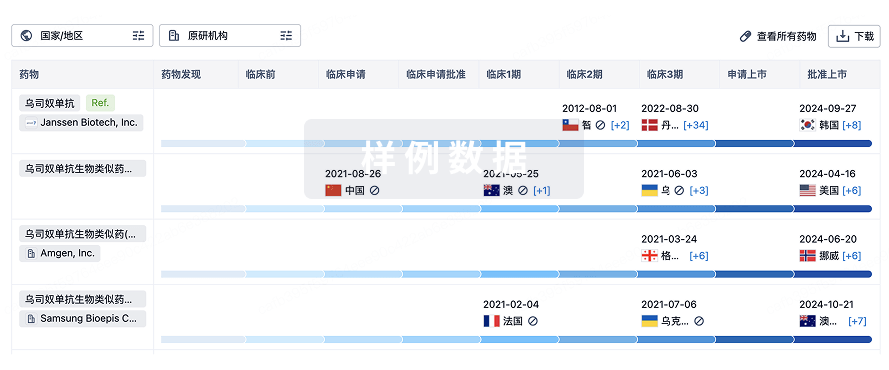
生物类似药
生物类似药在不同国家/地区的竞争态势。请注意临床1/2期并入临床2期,临床2/3期并入临床3期
登录
或
特殊审评
只需点击几下即可了解关键药物信息。
登录
或

提出任何生物医药研究问题
让每一步生物医药决策都精准制胜
基于十亿级生物数据与全球情报的精准 AI,赋能早期药物发现
立即开始免费试用!
智慧芽新药情报库是智慧芽专为生命科学人士构建的基于AI的创新药情报平台,助您全方位提升您的研发与决策效率。
立即接入生物医药数据包
智慧芽新药库数据也通过智慧芽开放平台,以MCP或API服务形式对外开放。立即使用我们的MCP服务定制您的LLM智能体。
生物序列数据库
生物药研发创新
免费使用
化学结构数据库
小分子化药研发创新
免费使用