预约演示
更新于:2026-09-26
[203Pb]VMT-α-NET
更新于:2026-09-26
概要
基本信息
药物类型 多肽偶联核素、诊断用放射药物 |
别名 [203Pb]Pb-VMT-α-NET、203Pb VMT-α-NET |
靶点 |
作用方式 激动剂、增强剂 |
作用机制 SSTR2激动剂(生长抑素受体2激动剂)、SPECT(单光子发射计算机断层成像术增强剂) |
在研适应症 |
非在研适应症- |
原研机构- |
非在研机构- |
权益机构- |
最高研发阶段临床1/2期 |
首次获批日期- |
最高研发阶段(中国)- |
特殊审评- |



登录后查看时间轴
结构/序列
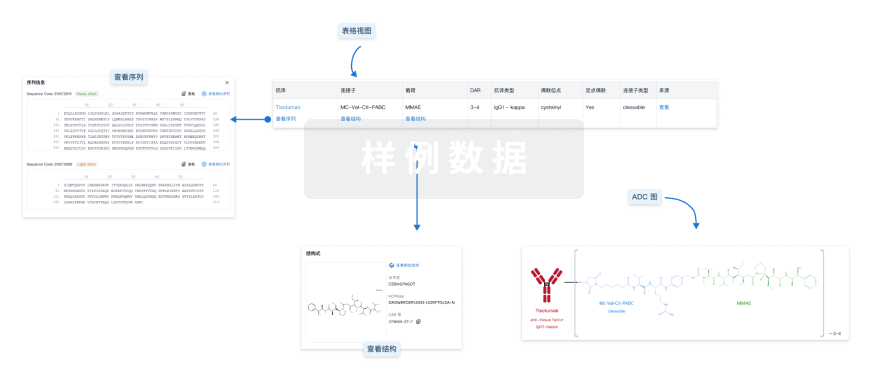
使用我们的ADC技术数据为新药研发加速。
登录
或
关联
4
项与 [203Pb]VMT-α-NET 相关的临床试验NCT06479811
Phase I Trial of [212Pb]VMT-Alpha-NET in Metastatic or Inoperable Somatostatin-Receptor Positive Gastrointestinal Neuroendocrine Tumors, Pheochromocytoma/Paragangliomas, Small Cell Lung, Renal Cell, and Head and Neck Cancers
NCT06427798
Phase I/II Trial of Systemic Targeted Radioligand Therapy (TRT) With Somatostatin-Receptors (SSTR)-Agonist [212Pb]VMT-alpha-NET in Metastatic or Inoperable SSTR Positive (SSTR+) Gastrointestinal (GI) Neuroendocrine Tumors (NET) and Pheochromocytoma/Paragangliomas Previously Treated With Systemic Radioligand Therapy
NCT05636618
A Phase I/IIa First-in-Human Study of [212Pb]VMT-α-NET Targeted Alpha-Particle Therapy for Advanced SSTR2 Positive Tumors
100 项与 [203Pb]VMT-α-NET 相关的临床结果
登录后查看更多信息
100 项与 [203Pb]VMT-α-NET 相关的转化医学
登录后查看更多信息
100 项与 [203Pb]VMT-α-NET 相关的专利(医药)
登录后查看更多信息
1
项与 [203Pb]VMT-α-NET 相关的文献(医药)2026-04-01JOURNAL OF NUCLEAR MEDICINE
A Phase 0 Imaging Trial of [
203
Pb]Pb-VMT-a-NET to Enable Dosimetry and Treatment Planning for Refractory or Relapsed Metastatic Neuroendocrine Tumors with [
212
Pb]Pb-VMT-a-NET
Article
作者: Jain, Sanchay ; Menda, Yusuf ; Graves, Stephen A ; Bodeker, Kellie L ; Bushnell, David L ; Schultz, Michael K
Peptide receptor radionuclide therapy (PRRT) using α-particle emitters has potential to provide improved patient outcomes over those achieved with β-particle PRRT. A promising candidate radiopharmaceutical pair, PSC-PEG2-TOC (VMT-α-NET) conjugated to 203Pb for SPECT/CT imaging or 212Pb for α-PRRT, is currently in early-phase clinical trials for patients with neuroendocrine tumors (NETs). Here, we present the imaging and dosimetry characteristics of this theranostic approach. Methods: A phase 0 imaging trial of [203Pb]Pb-VMT-α-NET was conducted between January and December of 2023. Ten participants with somatostatin receptor type 2 (SSTR2)-positive NETs underwent SPECT/CT and blood sampling at 1, 4, 24, and 48 h after intravenous infusion of approximately 185 MBq of [203Pb]Pb-VMT-α-NET. The diagnostic performance of [203Pb]Pb-VMT-α-NET was evaluated through lesion-by-lesion comparison against baseline SSTR2 PET/CT. A subset of lesions was further analyzed for signal-to-noise ratio to determine the optimal diagnostic imaging time point after [203Pb]Pb-VMT-α-NET administration. Patient-specific dosimetry of [212Pb]Pb-VMT-α-NET was derived from 203Pb imaging and performed assuming local α- and β-particle energy deposition in tumors and normal organs. Effects of daughter ion relocation were considered using a whole-body pharmacokinetic model on the basis of parameters published by the International Commission on Radiological Protection. Results: Of the 162 total lesions identified on SSTR2 PET/CT scans, only 97 were detected on [203Pb]Pb-VMT-α-NET SPECT/CT. The highest signal-to-noise ratio for lesions occurred 4 h after [203Pb]Pb-VMT-α-NET administration. Sensitivity was 94% for lesions larger than 1 cm versus 35% for lesions no larger than 1 cm or nonmeasurable lesions. The effective dose associated with [203Pb]Pb-VMT-α-NET administration was 0.038 mSv/MBq (1.40 mSv/mCi). Estimated dosimetry for [212Pb]Pb-VMT-α-NET (mean ± SD, not adjusted for relative biologic effectiveness) based on [203Pb]Pb-VMT-α-NET SPECT/CT was 15 ± 4.7 mGy/MBq for the kidneys, 8.4 ± 4.1 mGy/MBq for the spleen, 2.5 ± 0.8 mGy/MBq for the liver, 0.324 ± 0.108 mGy/MBq for the blood, 0.270 ± 0.081 mGy/MBq for the whole body, and 29.6 ± 25.8 mGy/MBq for tumors. Renal absorbed dose projections for 212Pb were estimated to carry an overall standard uncertainty (k = 1) of 15.3%. Conclusion: [203Pb]Pb-VMT-α-NET appears to be a safe and effective SPECT/CT tracer for imaging NETs larger than 1 cm and for normal organ and tumor radiation dosimetry. The chemically matched 203/212Pb theranostic pair offers the potential for a dosimetry-driven personalized treatment paradigm.
8
项与 [203Pb]VMT-α-NET 相关的新闻(医药)2025-04-13
2025-04-10
2025-01-08
放射疗法临床结果
100 项与 [203Pb]VMT-α-NET 相关的药物交易
登录后查看更多信息
研发状态
10 条进展最快的记录, 后查看更多信息
登录
| 适应症 | 最高研发状态 | 国家/地区 | 公司 | 日期 |
|---|---|---|---|---|
| 胃肠道神经内分泌肿瘤 | 临床2期 | 美国 | 2025-02-07 | |
| 嗜铬细胞瘤 | 临床2期 | 美国 | 2025-02-07 | |
| SSTR阳性胃肠胰神经内分泌肿瘤 | 临床2期 | 美国 | 2025-02-07 | |
| 小细胞肺癌 | 临床1期 | 美国 | 2023-09-27 | |
| 神经内分泌肿瘤 | 临床1期 | 美国 | 2023-03-14 |
登录后查看更多信息
临床结果
临床结果
适应症
分期
评价
查看全部结果
登录后查看更多信息
转化医学
使用我们的转化医学数据加速您的研究。
登录
或

药物交易
使用我们的药物交易数据加速您的研究。
登录
或

核心专利
使用我们的核心专利数据促进您的研究。
登录
或

临床分析
紧跟全球注册中心的最新临床试验。
登录
或

批准
利用最新的监管批准信息加速您的研究。
登录
或

特殊审评
只需点击几下即可了解关键药物信息。
登录
或

提出任何生物医药研究问题
让每一步生物医药决策都精准制胜
基于十亿级生物数据与全球情报的精准 AI,赋能早期药物发现
立即开始免费试用!
智慧芽新药情报库是智慧芽专为生命科学人士构建的基于AI的创新药情报平台,助您全方位提升您的研发与决策效率。
立即接入生物医药数据包
智慧芽新药库数据也通过智慧芽开放平台,以MCP或API服务形式对外开放。立即使用我们的MCP服务定制您的LLM智能体。
生物序列数据库
生物药研发创新
免费使用
化学结构数据库
小分子化药研发创新
免费使用