预约演示
更新于:2026-09-19
PC-01
更新于:2026-09-19
概要
基本信息
在研机构- |
权益机构- |
最高研发阶段终止临床2期 |
首次获批日期- |
最高研发阶段(中国)- |
特殊审评- |



登录后查看时间轴
关联
1
项与 PC-01 相关的临床试验ChiCTR2500097868
Research project on the role and mechanism of Lactobacillus paracasei PC-01 in promoting digestion in children
开始日期2025-03-01 |
申办/合作机构- |
100 项与 PC-01 相关的临床结果
登录后查看更多信息
100 项与 PC-01 相关的转化医学
登录后查看更多信息
100 项与 PC-01 相关的专利(医药)
登录后查看更多信息
52
项与 PC-01 相关的文献(医药)2026-09-01·CANCER CELL
Tumor-infiltrating plasma cell profiling after PD-1 blockade reveals tumor-specific antibodies
Article
作者: Carrion-Estrada, Dayan ; Weinhold, Kent ; O'Brien, Jenny ; Kemeny, Gabor ; Meyerhoff, R Ryan ; Acharya, Priyamvada ; Anadon, Carmen M ; Sinha, Alok ; Park, Chan Soo ; Lyniv, Liliana ; Jain, Vaibjav ; Plappert, Noah ; Ready, Neal ; Antonia, Scott J ; Gregory, Simon ; Poysungnoen, Koravit ; Oduah, Eziafa ; Conejo-Garcia, Jose R ; Lindenberger, Jared ; Glass, Carolyn ; Hickey, John W ; Evangelous, Tyler ; Lopez Bailon, Luis Uriel ; Williams, Wilton B ; Chaurio, Ricardo ; Chen, Alan
The role of tumor-infiltrating B cells (TIL-Bs) in shaping anti-tumor responses in the context of immune checkpoint blockade remains incompletely understood. Here, we interrogate the humoral response in resected lung tumors from patients with non-small cell lung cancer (NSCLC) treated with neoadjuvant PD-1 blockade. We find that tumors orchestrate tertiary lymphoid structures with CD138+ plasma cells, from which we clone recombinant monoclonal antibodies (mAbs) using B cell receptors (BCRs) exhibiting somatic hypermutation and class switching. Several mAbs bind cell-surface citrullinated proteins, characteristic of cancer cells. Chimeric antigen receptor (CAR) T redirected with the soluble chain fragment variable (scFv) of our lead candidate antibody (PC-1) specifically target tumor cells and tumor-promoting myeloid cells in vivo without off-target activity. Moreover, ablation of the citrullination enzyme PADI2 in tumor-bearing mice eliminates reactivity to PC-1 and cytotoxic killing by the CAR. Our results implicate a therapeutic potential for tumor-infiltrating plasma cells that may be harnessed for cancer treatment.
2026-05-01·BIOCHIMIE
Global lysine 2-hydroxyisobutyrylation profiling reveals the growth mechanism of Lactobacillus paracasei PC-01 in high-density cultures
Article
作者: Zhou, Runzhi ; Wang, Hua ; Gao, Shuaisen ; Li, Hongyang ; Yu, Jie ; Shen, Shijia
The importance of lysine 2-hydroxyisobutyrylation (Khib) in regulating biological processes has become increasingly apparent, but its functional significance in prokaryotes, especially in the Lactobacillus paracasei PC-01, is poorly understood. In this study, the regulatory mechanism of Khib in high-density fermentation of L. paracasei PC-01 was investigated using mass spectrometry proteomics. In total, 6783 Khib sites on 1361 proteins were identified, with 73.48% proteins containing multiple sites. GO and KEGG enrichment analysis showed Khib affected cellular functions and metabolic pathways, especially those involved in ribosomal activity and protein biosynthesis. Subsequently, a Khib-mediated regulatory network of L. paracasei PC-01 revealed most of the significantly upregulated enzymes in the glycolysis, TCA cycle, purine metabolism, amino acid metabolism, and fatty acid biosynthesis pathways were modified by Khib. This study elucidated the biological function of Khib modification in L. paracasei during high-density cultures and provides theoretical basis for the preparation of highly active probiotic preparations.
2025-08-01·ChemPlusChem
Green Photooxidation of 1‐Naphthol Using a Zinc Phthalocyanine‐Loaded MCM‐41 Heterogeneous Catalyst
Article
作者: Soner Donmez ; Yaşar Gök ; Halil Zeki Gök ; Recep Erdem
Developing sustainable methods for organic synthesis is a key goal in modern chemistry. Herein, a novel heterogeneous photocatalyst, Pc‐1@MCM‐41, is synthesized by immobilizing a zinc(II) phthalocyanine photosensitizer onto mesoporous silica (MCM‐41) through a simple mixing process. The material is thoroughly characterized by fourier‐transform infrared spectroscopy, solid‐state UV–vis, thermogravimetric analysis, scanning electron microscopy–energy dispersive X‐ray spectroscopy, X‐ray diffraction, trasmission electron microscopy, and N2 sorption analyses, confirming the successful incorporation of Pc‐1 without compromising the structural features of the support. The photocatalytic efficiency of Pc‐1@MCM‐41 is evaluated in the selective oxidation of 1‐naphthol to 1,4‐naphthoquinone under visible light, using a custom‐built, low‐cost 3D‐printed photoreactor with red LEDs. Under ambient conditions and air as the oxidant, the catalyst achieves 89% conversion and >99% selectivity in just 15 min. Control experiments confirm the essential roles of light, oxygen, and the phthalocyanine moiety. The catalyst shows high stability and reusability over multiple cycles and performs well in various solvents, with acetonitrile being the most effective. The use of MCM‐41 as a support effectively minimizes aggregation issues and enhances catalyst dispersion, thereby increasing the photocatalytic efficiency. This work highlights the potential of low‐cost heterogeneous systems combined with custom photoreactors as practical and scalable solutions for green chemical synthesis.
1
项与 PC-01 相关的新闻(医药)2025-10-29
编者按:代谢相关脂肪性肝病(MAFLD)是全球高发的慢性肝病,而代谢相关脂肪性肝炎(MASH)作为MAFLD的严重类型,以肝细胞损伤、小叶炎症及肝纤维化为核心特征[1, 2],不仅显著增加肝硬化、肝癌风险,且全球患病率持续上升[3],而现有治疗手段有限,难以满足临床需求。在这一背景下,MASH的全球药物研发管线日趋丰富,涌现出包括基于胰高血糖素样肽-1(GLP-1)的单/多靶点药物、甲状腺激素受体β(THR-β)在内的多类在研新药。其中,胰高血糖素受体(GCGR)/GLP-1受体(GLP-1R)双靶点药物因兼具代谢与肝脏调节而受到广泛关注。在近期召开的中华医学会第二十五次消化系病学术会议(CGC 2025)上,GCGR/GLP-1R双激动剂Survodutide公布了一系列研究成果,展现出MASH治疗的潜力。为及时传递前沿动态、助力临床实践与科研探索,本刊特对Survodutide的相关研究进展予以整理。作为MASH治疗领域的潜力创新药物,Survodutide不断积累的积极新证,为未来突破MASH治疗瓶颈、改善患者长期预后带来新的可能。机制解码 Survodutide如何直击MASH核心Survodutide作为创新GCGR/GLP-1R双激动剂,通过协同激活两种受体,在机制上区别于单一GLP-1R激动剂[4, 5]。具体表现为,GLP-1R可促进葡萄糖依赖性胰岛素分泌、延缓胃排空、抑制食欲,通过改善糖代谢与减少食物摄入间接改善肝脏代谢;GCGR可直接促进肝细胞内脂肪酸氧化、减少肝脏脂肪合成、促进肝脏脂肪分解;间接促进脂肪组织的脂肪分解;直接促进糖原分解、糖异生(图1)。 GCGR/GLP-1R双激动剂可直接靶向肝脏,通过GLP-1R激动作用(减少能量摄入)与GCGR激动作用(增加能量消耗)相结合,为改善肥胖和MASH患者的代谢健康提供了一种新的治疗策略。图1. GCGR/GLP-1R的双重激动作用Survodutide是由内源性激素胰高血糖素(GCG)与GLP-1优化得到的29个氨基酸肽段,通过两项结构优化设计延长半衰期并确保药效[6]:一是引入可抵抗二肽基肽酶-4(DPP-4)水解的合成氨基酸,同时添加增强溶解度与稳定性的氨基酸;二是通过含C18二酸的甘氨酸-丝氨酸连接子介导白蛋白结合,显著降低肾脏清除率。研究数据新探 Survodutide在MASH治疗中的潜力本次会上,Survodutide有多项针对性研究同步释放亮眼成果。这些研究具体涵盖减重之外的肝脏直接效应解析、无创生物标志物的持续改善追踪以及体外肝球体模型的机制验证,多维度最新证据进一步揭示其治疗潜力。1、减重之外的直接肝脏影响一项多中心、随机、双盲、剂量探索Ⅱ期临床试验,探讨了Survodutide在MASH伴肝纤维化(F1-F3期)患者中的有效性和安全性。针对其中170例F2/F3期肝纤维化患者的中介分析显示,Survodutide对肝脏终点的治疗效应分为体重依赖与非依赖两部分[7]。对于PRO-C3、ELF评分、AST、ALT等炎症和纤维化相关指标,Survodutide不依赖于体重减轻,主要通过GCG效应实现对肝脏直接获益;而MASH消退/缓解、磁共振质子密度脂肪分数(MRI-PDFF)、受控衰减参数(CAP)等指标的改善则部分依赖体重减轻(图2)。这一结果提示,Survodutide可通过GCGR直接作用于肝脏,而非仅通过减重间接改善。图2. 由体重减轻介导的各项指标百分比2、无创生物标志物的持续改善Ⅱ期试验的一项纵向分析显示,Survodutide治疗48周可持续改善多类无创生物标志物[8]。肝纤维化相关标志物中,ELF评分较基线水平的绝对降幅(0.57-0.61)显著高于安慰剂组(0.05,均P<0.0001;图3),其组分透明质酸、Ⅲ型前胶原前肽(PⅢNP)、金属基质蛋白酶组织抑制因子1(TIMP-1)均显著降低(P<0.01;表1)。图3. ELF评分自基线起随时间的估计绝对变化表1. 第4、28和48周时,透明质酸、PⅢNP和TIMP-1水平的估计几何均数Survodutide组的PRO-C3相对降幅为0.71-0.74(安慰剂组1.01,P<0.0001),FIB-4指数相对降幅为0.80-0.85(安慰剂组1.04,P<0.001),AST与血小板比率指数(APRI)相对降幅为0.49-0.53(安慰剂组0.94,P<0.0001)。肝细胞存活相关的CK18-M30、CK18-M65相对降幅分别为0.25-0.34、0.3-0.4(安慰剂组分别为0.78、0.9,P<0.0001),提示肝细胞损伤减少。3、无创检测对肝活检结局的预测价值一项纳入95例Survodutide治疗的F2/F3期患者的探索性分析显示,部分非侵入性检测(NIT)变化可有效预测肝活检结局[9]。对于“MASH消退且纤维化无恶化”,MRI-PDFF相对变化、ELF评分绝对变化、FAST评分相对变化为主要预测因子(表2),全数据集AUC为0.854(95%CI:0.777-0.932,P<0.0001;图4)。表2. NIT对预测“MASH消退且纤维化未恶化”结局的相对重要性图4. 预测MASH消退且纤维化未恶化的ROC曲线对于“纤维化改善且MASH无恶化”,ELF评分绝对变化、ALT相对变化、PRO-C3相对变化、MRI-PDFF相对变化、FAST评分相对变化为关键预测因子(表3),全数据集AUC为0.811(95%CI:0.727-0.895,P<0.0001;图5)。这表明,NIT应在临床试验及临床实践中发挥重要的作用。表3. NIT对预测“纤维化改善且MASH未恶化”结局的相对重要性图5. 预测纤维化改善且MASH未恶化的ROC曲线4、获益机制探究在模拟健康人和MASH患者肝脏表型的肝球体模型中,观察到Survodutide可升高环磷酸腺苷(cAMP)水平,而司美格鲁肽、替尔泊肽未升高cAMP[10]。同时,Survodutide在MAFLD肝球体中升高cAMP水平的绝对增加幅度是瘦体重对照组的3倍[10]。提示其通过GCGR-cAMP通路发挥肝脏保护作用。此外,Survodutide展现出抗脂肪变性与抗纤维化作用[10]。与对照肝球体相比,MASH肝球体甘油三酯含量显著增加9.8倍,PC-1分泌量显著增加10.3倍(P<0.0001);Survodutide 0.3μmol/L可使细胞内甘油三酯含量显著降低23.8%(P<0.05),1μmol/L可使PC-1分泌量降低35.0%。图6. Survodutide对肝球体的浓度-效应关系:a)PC-1分泌量;b)甘油三酯含量[均值±标准误];c)为多种候选药物(圆点)与Survodutide(方形)PC-1分泌量相较甘油三酯水平百分比的散点图(以MASH溶剂对照进行标准化);LDH值以氯丙嗪依赖性LDH释放百分比的颜色密度热图呈现写在最后Survodutide的多项最新研究进展在MASH伴肝纤维化治疗领域展现出多重临床价值。研究显示,Survodutide具有独立于体重的直接肝脏效应,其或可对于非肥胖MASH患者也具潜力。Survodutide可持续改善多项无创生物标志物,无创检测指标的变化可有效预测肝活检结局。体外研究也进一步探究了GCGR-cAMP通路的肝脏获益机制,为药物的临床获益提供了理论支持。参考文献:[1] Rinella ME, Lazarus JV, Ratziu V, et al. A multisociety Delphi consensus statement on new fatty liver disease nomenclature. Hepatology. 2023;78(6):1966-1986. doi:10.1097/HEP.0000000000000520[2] European Association for the Study of the Liver (EASL); European Association for the Study of Diabetes (EASD); European Association for the Study of Obesity (EASO). EASL-EASD-EASO Clinical Practice Guidelines on the management of metabolic dysfunction-associated steatotic liver disease (MASLD). J Hepatol. 2024;81(3):492-542. doi:10.1016/j.jhep.2024.04.031[3] Dong X, Li JM, Lu XL, et al. Global burden of adult non-alcoholic fatty liver disease (NAFLD) and non-alcoholic steatohepatitis (NASH) has been steadily increasing over the past decades and is expected to persist in the future. Transl Gastroenterol Hepatol. 2024;9:33. Published 2024 Jun 24. doi:10.21037/tgh-23-118[4] Del Prato S, Gallwitz B, Holst JJ, Meier JJ. The incretin/glucagon system as a target for pharmacotherapy of obesity. Obes Rev. 2022;23(2):e13372. doi:10.1111/obr.13372[5] Sánchez-Garrido MA, Brandt SJ, Clemmensen C, Müller TD, DiMarchi RD, Tschöp MH. GLP-1/glucagon receptor co-agonism for treatment of obesity. Diabetologia. 2017;60(10):1851-1861. doi:10.1007/s00125-017-4354-8[6] Zimmermann T, Thomas L, Baader-Pagler T, et al. BI 456906: Discovery and preclinical pharmacology of a novel GCGR/GLP-1R dual agonist with robust anti-obesity efficacy. Mol Metab. 2022;66:101633. doi:10.1016/j.molmet.2022.101633[7] Noureddin M, et al. 胰高血糖素受体/胰高血糖素样肽-1受体双激动剂Survodutide在减重之外对肝脏终点的直接影响:来自II期试验的启示. 中华医学会第二十五次消化系病学术会议(CGC2025).[8] Noureddin M, et al. 新型胰高血糖素受体/胰高血糖素样肽-1受体双激动剂Survodutide对无创生物标志物的持续改善:一项针对代谢相关脂肪性肝炎合并纤维化患者II期试验的纵向分析. 中华医学会第二十五次消化系病学术会议(CGC2025).[9] Noureddin M, et al. 用于预测Survodutide治疗后肝活检结果的非侵入性检测:II期试验探索性分析[EB/OL]. 中华医学会第二十五次消化系病学术会议(CGC2025).[10] Vonschallen P, et al. Survodutide在人肝细胞球模型中通过胰高血糖素组分激活cAMP信号通路并减少脂肪变性和纤维化. 中华医学会第二十五次消化系病学术会议(CGC 2025).SC-CN-18167,有效期至2026.10.28
临床结果
100 项与 PC-01 相关的药物交易
登录后查看更多信息
研发状态
10 条进展最快的记录, 后查看更多信息
登录
| 适应症 | 最高研发状态 | 国家/地区 | 公司 | 日期 |
|---|---|---|---|---|
| 肌萎缩侧索硬化 | 临床2期 | 日本 | - | |
| 肌萎缩侧索硬化 | 临床2期 | 日本 | - | |
| 肌萎缩侧索硬化 | 临床2期 | 日本 | - | |
| 肌萎缩侧索硬化 | 临床2期 | 日本 | - | |
| 溃疡性结肠炎 | 临床2期 | 日本 | - | |
| 溃疡性结肠炎 | 临床2期 | 日本 | - | |
| 溃疡性结肠炎 | 临床2期 | 日本 | - | |
| 溃疡性结肠炎 | 临床2期 | 日本 | - |
登录后查看更多信息
临床结果
临床结果
适应症
分期
评价
查看全部结果
| 研究 | 分期 | 人群特征 | 评价人数 | 分组 | 结果 | 评价 | 发布日期 |
|---|
No Data | |||||||
登录后查看更多信息
转化医学
使用我们的转化医学数据加速您的研究。
登录
或

药物交易
使用我们的药物交易数据加速您的研究。
登录
或

核心专利
使用我们的核心专利数据促进您的研究。
登录
或

临床分析
紧跟全球注册中心的最新临床试验。
登录
或

批准
利用最新的监管批准信息加速您的研究。
登录
或

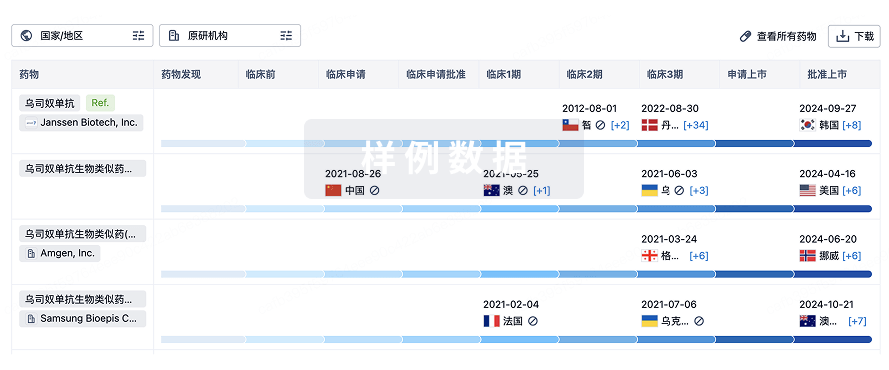
生物类似药
生物类似药在不同国家/地区的竞争态势。请注意临床1/2期并入临床2期,临床2/3期并入临床3期
登录
或
特殊审评
只需点击几下即可了解关键药物信息。
登录
或

提出任何生物医药研究问题
让每一步生物医药决策都精准制胜
基于十亿级生物数据与全球情报的精准 AI,赋能早期药物发现
立即开始免费试用!
智慧芽新药情报库是智慧芽专为生命科学人士构建的基于AI的创新药情报平台,助您全方位提升您的研发与决策效率。
立即接入生物医药数据包
智慧芽新药库数据也通过智慧芽开放平台,以MCP或API服务形式对外开放。立即使用我们的MCP服务定制您的LLM智能体。
生物序列数据库
生物药研发创新
免费使用
化学结构数据库
小分子化药研发创新
免费使用