预约演示
更新于:2026-01-03
J-104129
更新于:2026-01-03
概要
基本信息
药物类型 小分子化药 |
别名 J 104129 |
作用方式 拮抗剂 |
作用机制 M3 receptor拮抗剂(毒蕈碱型乙酰胆碱受体M3拮抗剂) |
在研适应症- |
在研机构- |
权益机构- |
最高研发阶段无进展临床前 |
首次获批日期- |
最高研发阶段(中国)- |
特殊审评- |

关联
100 项与 J-104129 相关的临床结果
登录后查看更多信息
100 项与 J-104129 相关的转化医学
登录后查看更多信息
100 项与 J-104129 相关的专利(医药)
登录后查看更多信息
10
项与 J-104129 相关的文献(医药)2025-11-01·FASEB BioAdvances
Mechanisms of Pilocarpine‐Induced Nitric Oxide and Prostaglandin Production in Porcine Ciliary Muscle
Article
作者: Benozzi, Giovanna ; Zuluaga, Andrés F. ; Quinteros Villarruel, Emmanuel ; Orman, Betina
ABSTRACT:
Pilocarpine, a muscarinic receptor agonist, is clinically used to reduce intraocular pressure via ciliary muscle contraction. However, the intracellular signaling pathways mediating pilocarpine‐induced nitric oxide (
NO
) and prostaglandin E
2
(
PGE
2
) synthesis in the ciliary muscle are not fully understood. This study aimed to characterize the muscarinic receptor subtypes and intracellular mechanisms involved in pilocarpine‐induced
NO
and
PGE
2
production in porcine ciliary muscle and to explore the potential implications of these pathways in age‐related ocular changes, including presbyopia. Ciliary muscle strips from adult porcine eyes were incubated in Krebs‐Ringer buffer with pharmacological agents. Nitrate levels were measured using a Griess reaction‐based colorimetric assay, and
PGE
2
concentrations were quantified via
ELISA
. Selective receptor antagonists and enzyme inhibitors were used to investigate receptor involvement and signaling cascades. Statistical significance was determined using unpaired
t
‐tests (
p
< 0.05). Pilocarpine elicited a concentration‐dependent increase in nitrate and
PGE
2
production, peaking at 1 × 10
−7
M. This effect was inhibited by atropine, pirenzepine (
M
1
antagonist), and
J104129
(
M
3
antagonist), but not by the
M
2
antagonist
AFDX
116. Inhibitors of nitric oxide synthase (L‐
NMMA
, L‐
NIO
), phospholipase C (U‐73122), cyclooxygenase (diclofenac), and calcium signaling (verapamil,
TFP
) all reduced mediator production, while calcium ionophore
A23187
enhanced it. Pilocarpine activates
M
1
and
M
3
muscarinic receptors in the porcine ciliary muscle, stimulating
NO
and
PGE2
production via calcium‐dependent
PLC
–
NOS
–
COX
signaling. These pathways may influence ciliary muscle function and lens physiology, offering potential therapeutic targets for glaucoma and presbyopia.
2022-06-01·Neuroscience letters
Activation of M3-AChR and IP3/Ca2+/PKC signaling pathways by pilocarpine increases glycine-induced currents in ventral horn neurons of the spinal cord
Article
作者: Zhen, Cheng ; Wang, Meng-Ya ; Xu, Ai-Ping ; Zheng, Chao ; Li, Yan ; Chu, Wan-Yu ; Zhu, Su-Yue ; Jin, Na ; Yang, Xin-Yu ; Wu, Jie ; Zhang, Huan-Huan
Our study aimed to determine the effects of pilocarpine and the mechanisms involving muscarinic acetylcholine receptors (mAChRs) on glycine receptors (GlyRs) in neurons of the spinal cord ventral horn. An enzymatic digestion combined with acute mechanical separation was applied to isolate neurons from the spinal cord ventral horn. Patch-clamp recording was then used to investigate the outcomes of pilocarpine. Our results indicate that pilocarpine increased the glycine currents in a concentration-dependent manner, which was blocked by the M3-AChR selective antagonists 4-DAMP and J104129. Pilocarpine also enhanced the glycine currents in nominally Ca2+-free extracellular solution. Conversely, the enhancement of glycine currents by pilocarpine disappeared when intracellular Ca2+ was chelated by BAPTA. Heparin and Xe-C, which are IP3 receptor antagonists, also totally abolished the pilocarpine effect. Furthermore, Bis-IV, a PKC inhibitor, eliminated the pilocarpine effect. Additionally, PMA, a PKC activator, mimicked the pilocarpine effect. These results indicate that pilocarpine may increase the glycine currents by activating the M3-AChRs and IP3/Ca2+/PKC pathways.
2021-12-01·Pflugers Archiv : European journal of physiology4区 · 医学
Differential regulation of medium spiny and cholinergic neurons in the nucleus accumbens core by the insular and medial prefrontal cortices in the rat
4区 · 医学
Article
作者: Yanagawa, Yuchio ; Nakaya, Yuka ; Kobayashi, Masayuki ; Kitano, Kohei ; Yamamoto, Kiyofumi ; Saito, Yasuhiko ; Shirakawa, Tetsuo ; Kaneko, Ryosuke ; Hirose, Kensuke
The nucleus accumbens (NAc) receives cortical projections principally from the insular cortex (IC) and medial prefrontal cortex (mPFC). Among NAc neurons, cholinergic interneurons (ChNs) regulate the activities of medium spiny neurons (MSNs), which make up ~ 95% of NAc neurons, by modulating their firing and synaptic properties. However, little is known about the synaptic mechanisms, including their cell-type-dependent corticoaccumbal projection properties and cholinergic effects on the NAc core. Here, we performed whole-cell patch-clamp recordings from NAc MSNs and ChNs in acute brain slice preparations obtained from rats that received an AAV5-hSyn-ChR2(H134R)-mCherry injection into the IC or mPFC. Light stimulation of IC or mPFC axons induced comparable phase-locked excitatory postsynaptic currents (EPSCs) in MSNs. On the other hand, ChNs showed consistent EPSCs evoked by light stimulation of mPFC axons, whereas light stimulation of IC axons evoked much smaller EPSCs, which often showed failure in ChNs. Light-evoked EPSCs were abolished by tetrodotoxin and were recovered by 4-aminopyridine, suggesting that corticoaccumbal projections monosynaptically induce EPSCs in MSNs and ChNs. Carbachol effectively suppressed the amplitude of EPSCs in MSNs and ChNs evoked by light stimulation of IC or mPFC axons and in ChNs evoked by stimulating mPFC axons. The carbachol-induced suppression was recovered by atropine or pirenzepine, while preapplication of gallamine, J104129, PD102807, or AF-DX384 did not block the carbachol-induced EPSC suppression. These results suggest that NAc MSNs and ChNs are differentially regulated by excitatory projections from the IC and mPFC and that these corticoaccumbal excitatory inputs are modulated by M1 receptor activation.
100 项与 J-104129 相关的药物交易
登录后查看更多信息
研发状态
10 条进展最快的记录, 后查看更多信息
登录
| 适应症 | 最高研发状态 | 国家/地区 | 公司 | 日期 |
|---|---|---|---|---|
| 急性支气管炎 | 临床前 | 日本 | - | |
| 慢性阻塞性肺疾病 | 临床前 | 日本 | - |
登录后查看更多信息
临床结果
临床结果
适应症
分期
评价
查看全部结果
| 研究 | 分期 | 人群特征 | 评价人数 | 分组 | 结果 | 评价 | 发布日期 |
|---|
No Data | |||||||
登录后查看更多信息
转化医学
使用我们的转化医学数据加速您的研究。
登录
或
药物交易
使用我们的药物交易数据加速您的研究。
登录
或
核心专利
使用我们的核心专利数据促进您的研究。
登录
或
临床分析
紧跟全球注册中心的最新临床试验。
登录
或
批准
利用最新的监管批准信息加速您的研究。
登录
或
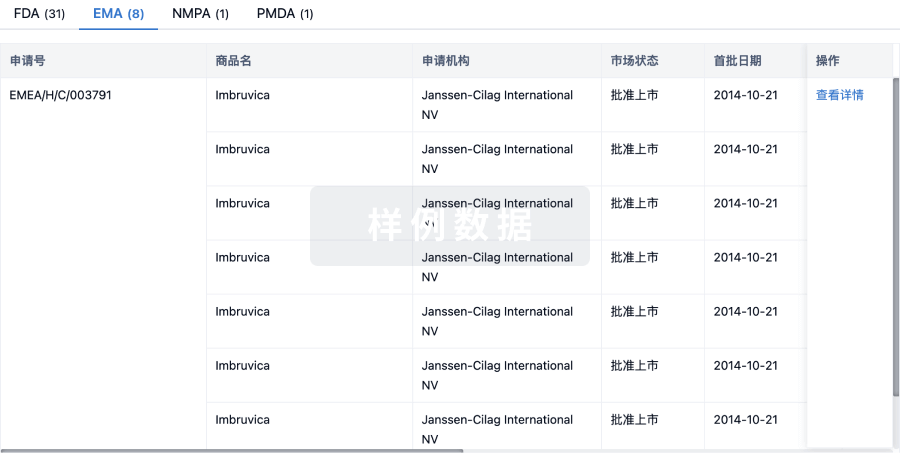
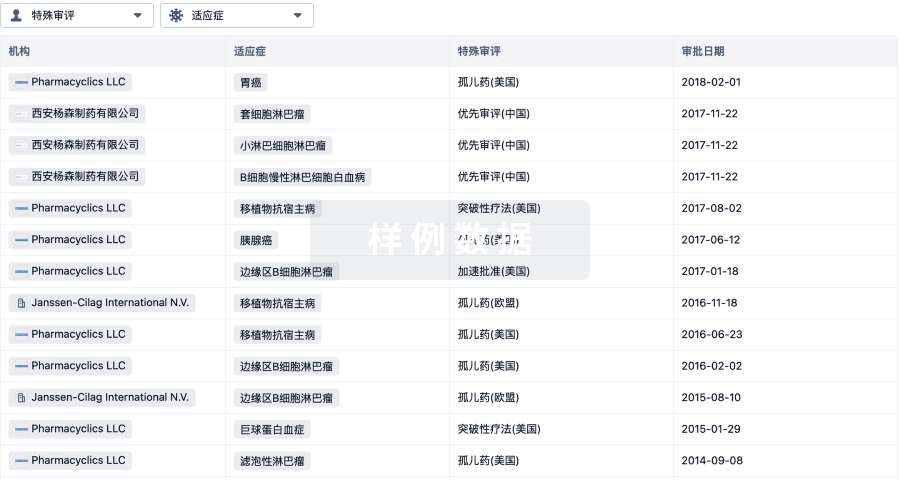
特殊审评
只需点击几下即可了解关键药物信息。
登录
或
生物医药百科问答
全新生物医药AI Agent 覆盖科研全链路,让突破性发现快人一步
立即开始免费试用!
智慧芽新药情报库是智慧芽专为生命科学人士构建的基于AI的创新药情报平台,助您全方位提升您的研发与决策效率。
立即开始数据试用!
智慧芽新药库数据也通过智慧芽数据服务平台,以API或者数据包形式对外开放,助您更加充分利用智慧芽新药情报信息。
生物序列数据库
生物药研发创新
免费使用
化学结构数据库
小分子化药研发创新
免费使用