预约演示
更新于:2026-10-21
Telikibart
泰利奇拜单抗
更新于:2026-10-21
概要
基本信息
原研机构 |
在研机构 |
非在研机构- |
权益机构- |
最高研发阶段申请上市 |
首次获批日期- |
最高研发阶段(中国)申请上市 |
特殊审评- |


登录后查看时间轴
结构/序列
Sequence Code 708763916L
来源: *****
Sequence Code 708764553H
来源: *****
关联
19
项与 泰利奇拜单抗 相关的临床试验NCT07199257
A Multicenter Clinical Trial Evaluating the Efficacy, Safety, Pharmacokinetics, and Immunogenicity of GR1802 Injection in Combination With Background Therapy in Patients With Seasonal Allergic Rhinitis.
NCT07154342
A Randomized, Double-Blind, Placebo-Controlled, Multicenter Phase III Clinical Trial to Evaluate the Efficacy and Safety of GR1802 Injection in Combination With Background Therapy in Patients With SAR
ChiCTR2600127383
A phase I clinical trial evaluating the pharmacokinetics of a single dose of GR1802 injection in healthy adult subjects
100 项与 泰利奇拜单抗 相关的临床结果
登录后查看更多信息
100 项与 泰利奇拜单抗 相关的转化医学
登录后查看更多信息
100 项与 泰利奇拜单抗 相关的专利(医药)
登录后查看更多信息
3
项与 泰利奇拜单抗 相关的文献(医药)2025-12-01CURRENT ALLERGY AND ASTHMA REPORTS
RETRACTED ARTICLE: Restoring the Sense of Smell: A Systematic Review and Meta-Analysis of Biologic Therapies for Chronic Rhinosinusitis with Nasal Polyps
Review
作者: Aanæs, Kasper ; von Buchwald, Christian ; Homøe, Anne-Sophie ; Høxbro, Marie ; Pedersen, Christian K ; Høj, Simon ; Backer, Vibeke ; Tidemandsen, Jens Even
PURPOSE OF REVIEW:
Smell loss is among the most debilitating symptoms of chronic rhinosinusitis with nasal polyps (CRSwNP). We aimed to synthesize current evidence on the smell-restoring efficacy of biologics, focusing on outcomes measured by psychophysical tests.
RECENT FINDINGS:
Biologics mark a paradigm shift in the management of refractory CRSwNP, offering targeted, effective and safe treatment options. However, their relative impact on psychophysical smell outcomes remains uncertain. With several biologics now approved and real-world evidence emerging, a comprehensive evaluation is needed. This is a systematic review and meta-analysis of 8 RCTs (n = 2,024) and an additional review of 20 cohorts (n = 1,685). Among RCTs, biologic treatment produced a moderate to large pooled improvement in psychophysical smell scores (standardized mean difference, [SMD] = 0.72 (95% CI 0.32-1.13), p = 0.0004). The effect differed between drugs (χ² = 23.95, p < 0.0002). Dupilumab showed the largest improvements across four RCTs (SMD = 1.16, 95% CI = 0.35-1.97). In single RCTs, benralizumab showed large effect (1.03, 0.55-1.51), tezepelumab (0.56, 0.46-0.67), telikibart (0.35, 0.11-0.59), and omalizumab (0.27, 0.15-0.40) yielded modest but significant improvements. Mepolizumab showed no effect (0.1330 (95% CI -0.2490-0.5150). Blood-eosinophil level correlated with treatment response (p < 0.001). The cohort studies supported the findings (SMD = 1.20, 95% CI = 0.99-1.42), though most data were derived from studies of dupilumab. Overall, biologics substantially improve psychophysically measured olfactory function in CRSwNP. Future head-to-head trials are warranted to delineate comparative efficacy of smell recovery.
2025-05-01JOURNAL OF ALLERGY AND CLINICAL IMMUNOLOGY
Efficacy and safety of GR1802 in uncontrolled chronic rhinosinusitis with nasal polyps: Placebo-controlled phase 2 trial
Article
作者: Piao, Yingshi ; Zhang, Luo ; Wan, Lijia ; Guan, Bing ; Yu, Hongmeng ; Zheng, Ming ; Yang, Yucheng ; He, Gang ; Quan, Fang ; Tang, Jun ; Wang, Chengshuo ; Zhang, Xiaowen ; Song, Xicheng ; Li, Xuezhong ; Lan, Feng ; Xu, Yu ; Chen, Jianjun ; Wang, Wei ; Liu, Wen ; Du, Yuxiao ; Ye, Jing ; Xu, Zhendong ; Wu, Di
BACKGROUND:
Anti-IL-4 receptor subunit alpha (IL-4Rα) treatments can effectively treat eosinophilic chronic rhinosinusitis with nasal polyps (ECRSwNP). However, their impact on the overall population of patients with uncontrolled CRSwNP remains unclear.
OBJECTIVES:
We evaluated the safety and efficacy of GR1802, a novel anti-IL-4Rα monoclonal antibody, in patients with uncontrolled CRSwNP.
METHODS:
Seventy patients with uncontrolled CRSwNP were randomized (1:1) to receive either GR1802 (300 mg with an initial doubled dose) or placebo every 2 weeks. Primary end points were the changes from baseline in nasal polyp score and nasal congestion score at week 16. Secondary end points mainly included change from baseline in Total Nasal Symptom Score (TNSS), 22-item Sino-Nasal Outcome Test (SNOT-22) score, and Lund-Mackay score. Efficacy (exploratory) was also analyzed in ECRSwNP and non-ECRSwNP subgroups. Safety was evaluated throughout the study.
RESULTS:
In uncontrolled CRSwNP participants, GR1802 significantly improved nasal polyp score and nasal congestion score compared with placebo, with least squares mean differences of -2.1 (95% confidence interval, -2.6, -1.5) and -0.8 (95% confidence interval, -1.1, -0.4), respectively. Participants treated with GR1802 had significantly decreased TNSS, SNOT-22 score, and Lund-Mackay score. The subgroup analysis demonstrated that GR1802 improved the symptoms and quality of life in both ECRSwNP and non-ECRSwNP participants, as evidenced by changes in nasal polyp score, University of Pennsylvania Smell Identification Test score, and Lund-Mackay score. Treatment-related adverse events occurred in 19.4% of the GR1802 group and 17.6% of the placebo group.
CONCLUSION:
GR1802 is well tolerated and effective in treating the overall population with uncontrolled CRSwNP.
RHINOLOGY
Targeted biologics for chronic rhinosinusitis with nasal polyps: efficacy and safety comparison of eight monoclonal antibodies via network meta-analysis
Article
作者: Zhao, J ; Wang, H ; Chen, J ; Ren, X ; Zhu, K ; Wang, X ; Ren, P ; He, H ; Xin, Y
Background: Biologics targeting key type 2 inflammatory mediators (e.g., IL-4Rα, IgE, IL-5, TSLP) represent a novel therapeutic approach for chronic rhinosinusitis with nasal polyps (CRSwNP). This network meta-analysis (NMA) aimed to compare the efficacy and safety of eight monoclonal antibodies for CRSwNP.
Methodology: We systematically searched PubMed, Embase, Web of Science, CENTRAL Cochrane, and MEDLINE for randomized controlled trials (RCTs) comparing monoclonal antibodies with placebo CRSwNP. A Bayesian Network meta-analysis (NMA) was performed using the R gemtc package.
Results: Sixteen RCTs (n=2,034) evaluating eight monoclonal antibodies were included. All biologics significantly reduced Nasal Polyp Score (NPS); stapokibart (anti-IL-4Rα) ranked first. Both dupilumab and stapokibart improved the University of Pennsylvania Smell Identification Test (UPSIT) score, indicating a recovery of olfactory function. Dupilumab led in improving Sino-Nasal Outcome Test-22 (SNOT-22) scores, whereas stapokibart was most effective in relieving nasal congestion score (NCS). The risk of adverse events was comparable to placebo across all biologics, with GR1802 exhibiting the most favorable safety.
Conclusions: All evaluated biological agents demonstrated efficacy superior to placebo, with IL-4 receptor alpha inhibitors showing the largest and most consistent benefits. All treatments exhibited favorable safety profiles, supporting their use for long-term management of CRSwNP.
100 项与 泰利奇拜单抗 相关的药物交易
登录后查看更多信息
研发状态
10 条进展最快的记录, 后查看更多信息
登录
| 适应症 | 最高研发状态 | 国家/地区 | 公司 | 日期 |
|---|---|---|---|---|
| 慢性鼻窦炎伴鼻息肉 | 申请上市 | 中国 | 2026-10-14 | |
| 季节性过敏性鼻炎 | 申请上市 | 中国 | 2026-02-26 | |
| 中度特应性皮炎 | 申请上市 | 中国 | 2025-09-11 | |
| 重度特应性皮炎 | 申请上市 | 中国 | 2025-09-11 | |
| 慢性荨麻疹 | 临床3期 | 中国 | 2025-03-05 | |
| 重度哮喘 | 临床2期 | 中国 | 2022-06-06 |
登录后查看更多信息
临床结果
临床结果
适应症
分期
评价
查看全部结果
登录后查看更多信息
转化医学
使用我们的转化医学数据加速您的研究。
登录
或

药物交易
使用我们的药物交易数据加速您的研究。
登录
或

核心专利
使用我们的核心专利数据促进您的研究。
登录
或

临床分析
紧跟全球注册中心的最新临床试验。
登录
或

批准
利用最新的监管批准信息加速您的研究。
登录
或

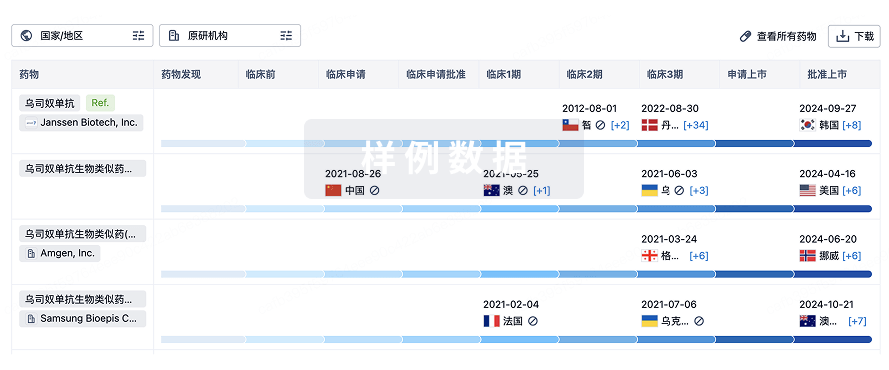
生物类似药
生物类似药在不同国家/地区的竞争态势。请注意临床1/2期并入临床2期,临床2/3期并入临床3期
登录
或
特殊审评
只需点击几下即可了解关键药物信息。
登录
或

提出任何生物医药研究问题
让每一步生物医药决策都精准制胜
基于十亿级生物数据与全球情报的精准 AI,赋能早期药物发现
立即开始免费试用!
智慧芽新药情报库是智慧芽专为生命科学人士构建的基于AI的创新药情报平台,助您全方位提升您的研发与决策效率。
立即接入生物医药数据包
智慧芽新药库数据也通过智慧芽开放平台,以MCP或API服务形式对外开放。立即使用我们的MCP服务定制您的LLM智能体。
生物序列数据库
生物药研发创新
免费使用
化学结构数据库
小分子化药研发创新
免费使用