预约演示
更新于:2026-07-18
Recombinant Human Platelet-derived Growth Factor (Beijing Huaren Biotechnology)
重组人血小板源生长因子(北京华芢生物)
更新于:2026-07-18
概要
基本信息
原研机构 |
非在研机构- |
权益机构- |
最高研发阶段临床2期 |
首次获批日期- |
最高研发阶段(中国)临床2期 |
特殊审评- |


登录后查看时间轴
关联
4
项与 重组人血小板源生长因子(北京华芢生物) 相关的临床试验CTR20220638
一项评价重组人血小板源生长因子凝胶(rhPDGF-BB)在糖尿病足溃疡患者中的初步有效性和安全性的、多中心、随机、双盲、安慰剂对照的Ⅱ期临床研究
ChiCTR2300078312
A multicenter, randomized, double-blind, placebo-controlled Phase Ⅱb clinical study evaluating the efficacy and safety of recombinant human platelet-derived growth factor (rhPDGF-BB) gel in patients with localized (shallow/deep) second-degree burns on the skin
CTR20212051
单中心、随机、双盲、单次给药、剂量递增、安慰剂对照评价重组人血小板源生长因子凝胶(PDGF)在中国健康成年受试者中的安全性、耐受性Ⅰ期临床试验
100 项与 重组人血小板源生长因子(北京华芢生物) 相关的临床结果
登录后查看更多信息
100 项与 重组人血小板源生长因子(北京华芢生物) 相关的转化医学
登录后查看更多信息
100 项与 重组人血小板源生长因子(北京华芢生物) 相关的专利(医药)
登录后查看更多信息
163
项与 重组人血小板源生长因子(北京华芢生物) 相关的文献(医药)2026-07-01PROTEIN EXPRESSION AND PURIFICATION
Refolding-free, tag-free production of functional platelet-derived growth factor-BB at gram-per-liter scale in Escherichia coli
Article
作者: Jeong, Hwabong ; Kim, Young Su ; Won, Minho ; Jeung, Kwangjin ; Ahn, Jungoh ; Lee, Hye-Jeong ; Lee, Hyejin ; Kim, Yunyeong
Platelet-derived growth factor-BB (PDGF-BB) is a homodimeric growth factor essential for angiogenesis, wound healing, and tissue regeneration with well-established therapeutic potential. However, scalable microbial production of bioactive PDGF-BB is hindered by its structural complexity, requiring precise folding and disulfide bond formation. In the present study, we developed a recombinant Escherichia coli expression and purification strategy to obtain soluble PDGF-BB. Fusion with 6HFh8 increased solubility and streamlined purification. After TEV protease cleavage, a two-step process involving immobilized metal affinity and cation-exchange chromatography yielded tag-free PDGF-BB with >95% purity, as confirmed using sodium dodecyl sulfate poly acrylamide gel electrophoresis (SDS-PAGE) and reverse-phase high-performance liquid chromatography (RP-HPLC). High-cell-density fed-batch fermentation further increased productivity, achieving gram-per-liter-scale production of recombinant protein. Functional assays, including cell migration and wound-healing assays, revealed that the recombinant protein retained comparable biological activity to that of a commercial standard. This workflow eliminates the need for refolding, simplifies production, and enables the reproducible, scalable preparation of bioactive rhPDGF-BB. The approach may be applicable to the microbial production of other disulfide-rich growth factors, thereby expanding opportunities for therapeutic and biotechnological applications.
2026-04-01Journal of Foot & Ankle Surgery
Comparative outcomes of autograft versus rhPDGF-BB in rearfoot and ankle arthrodesis: A propensity-matched TriNetX analysis
Article
作者: Fuller, Zachary ; Lin, Sheldon S ; Fisher, Mark ; Jones, Tuckerman ; Chopra, Avani ; Dawar, Abhiram ; Ahn, David ; Chundi, Gnaneswar ; Tucker, Scott ; Aynardi, Michael
BACKGROUND:
Recent evidence suggests that recombinant human platelet-derived growth factor (rhPDGF-BB) may enhance fusion and reduce donor-site morbidity in foot and ankle arthrodesis. However, direct large-scale comparisons between those receiving autograft and rhPDGF-BB remain limited, particularly for high-risk or revision procedures.
PURPOSE:
To address this gap, we utilized the TriNetX research database to compare fusion outcomes and complication profiles between rhPDGF-BB and autograft in tibiotalocalcaneal (TTC), pantalar, or triple arthrodesis.
METHODS:
The TriNetX database for patients who underwent tibiotalocalcaneal, pantalar, or triple arthrodesis from 2003 to 2023, with at least one-year follow-up. A 1:1 propensity score match controlled for age, sex, body mass index, nicotine dependence, and comorbidities. Postoperative complications included implant-related infection, surgical site infection, superficial skin infection, infection-related reoperation, wound disruption, osteolysis, nonunion, and hardware removal. Statistical analyses were conducted on TriNetX using Z-tests for pairwise comparisons, with significance set at p < 0.05.
RESULTS:
A total of 209 patients in the rhPDGF-BB cohort and 7,109 in the autograft cohort were identified. The rhPDGF-BB cohort was older and had higher rates of diabetes, HIV, and several other comorbidities (all p < 0.05). After propensity matching (n = 208 per cohort), the rhPDGF-BB cohort had a lower nonunion rate (OR 0.36; 95% CI 0.19-0.69; p = 0.001) with no other significant outcome differences.
CONCLUSION:
Our findings suggest that rhPDGF-BB may be associated with lower nonunion rates compared with autograft without increased complications. Given the observational design, these results should be considered hypothesis-generating and warrant validation in prospective randomized studies.
2026-01-14Aesthetic surgery journal. Open forum
Recombinant Platelet-Derived Growth Factor BB vs Autologous Nanofat to Enhance Recovery After CO2 Laser and Microneedling: A Split-Face, Randomized Controlled Trial
Article
作者: Fuentes, Patricia M ; Quigley, Robert ; Claytor, R Brannon ; Durairaj, Kay ; Lynch, Samuel E ; Tolan, Grace
Abstract:
Nanofat has been used as a “rescue” modality to support healing after CO2 laser resurfacing with microneedling. Because demand grows for less invasive facial rejuvenation options, recombinant platelet-derived growth factor (rhPDGF-BB) has emerged as a popular adjunct to enhance postresurfacing recovery. The aim of this study was to compare autologous Nanofat to rhPDGF-BB as rescue treatments for pain and skin recovery following combined thermal and mechanical injury for improvement of facial rhytids. Five patients underwent full-face CO2 laser treatment followed by microneedling. Each patient received split-face randomization: one side was treated with Nanofat and the contralateral side with rhPDGF-BB (300 µg/mL). Patients were blinded to allocation. Standardized 3 mm biopsies were obtained at baseline and at postprocedure Day 4, 1 month, 3 months, and 6 months and evaluated by a blinded board-certified histopathologist. Outcomes included practitioner- and patient-reported Perioral Rhytid Severity Rating Scale (PR-SRS), Global Aesthetic Improvement Scale (GAIS), and patient satisfaction. Both treatments improved patient/practitioner PR-SRS and GAIS beginning on Day 4 and continuing through 6 months. There were no significant differences between treatment groups (P > .05). Patients reported high satisfaction with both treatment groups. Overall, histopathology assessments demonstrated that both Nanofat and rhPDGF-BB supported normal wound healing and produced comparable tissue remodeling over time. Differences between treatments were subtle and confined to the early inflammatory interval, with Nanofat showing a consistently milder inflammatory response. This is the first human histologic split-face study of rhPDGF-BB in facial rejuvenation. This preliminary study found that either Nanofat or rhPDGF-BB treatment following full-face CO2 laser treatment and microneedling resulted in improved clinical and histologic outcomes. Nanofat showed milder early inflammatory changes, but both treatments produced normal wound healing and robust extracellular matrix formation and comparable tissue remodeling by 1, 3, and 6 months.Level of Evidence: 2 (Therapeutic)
129
项与 重组人血小板源生长因子(北京华芢生物) 相关的新闻(医药)2026-07-14
·尔康药说
2026-05-13
·今日头条
IPO优先审批申请上市临床3期临床2期
2026-05-12
·新浪看点
100 项与 重组人血小板源生长因子(北京华芢生物) 相关的药物交易
登录后查看更多信息
研发状态
10 条进展最快的记录, 后查看更多信息
登录
| 适应症 | 最高研发状态 | 国家/地区 | 公司 | 日期 |
|---|---|---|---|---|
| 糖尿病足溃疡 | 临床2期 | 中国 | 2024-10-31 | |
| 糖尿病足溃疡 | 临床2期 | 中国 | 2024-10-31 |
登录后查看更多信息
临床结果
临床结果
适应症
分期
评价
查看全部结果
登录后查看更多信息
转化医学
使用我们的转化医学数据加速您的研究。
登录
或

药物交易
使用我们的药物交易数据加速您的研究。
登录
或

核心专利
使用我们的核心专利数据促进您的研究。
登录
或

临床分析
紧跟全球注册中心的最新临床试验。
登录
或

批准
利用最新的监管批准信息加速您的研究。
登录
或

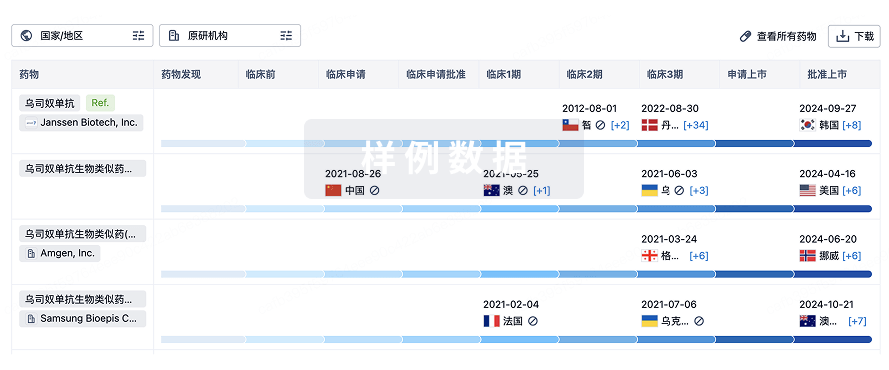
生物类似药
生物类似药在不同国家/地区的竞争态势。请注意临床1/2期并入临床2期,临床2/3期并入临床3期
登录
或
特殊审评
只需点击几下即可了解关键药物信息。
登录
或

提出任何生物医药研究问题
让每一步生物医药决策都精准制胜
基于十亿级生物数据与全球情报的精准 AI,赋能早期药物发现
立即开始免费试用!
智慧芽新药情报库是智慧芽专为生命科学人士构建的基于AI的创新药情报平台,助您全方位提升您的研发与决策效率。
立即接入生物医药数据包
智慧芽新药库数据也通过智慧芽开放平台,以MCP或API服务形式对外开放。立即使用我们的MCP服务定制您的LLM智能体。
生物序列数据库
生物药研发创新
免费使用
化学结构数据库
小分子化药研发创新
免费使用