预约演示
更新于:2026-10-21
Zavondemstat
更新于:2026-10-21
概要
基本信息
非在研机构- |
权益机构- |
最高研发阶段临床1期 |
首次获批日期- |
最高研发阶段(中国)- |
特殊审评孤儿药 (美国) |
登录后查看时间轴
结构/序列
分子式C26H29N3O3 |
InChIKeyNDVITLLKZQXKGU-IBGZPJMESA-N |
CAS号1851412-93-5 |
关联
1
项与 Zavondemstat 相关的临床试验NCT05076552
A Phase 1a/1b Open-label Study to Assess the Safety, Pharmacokinetics, and Antitumor Activity of Oral TACH101 in Patients With Advanced or Metastatic Solid Tumors
The main objective for part 1a of the study is to determine the maximum tolerated dose (MTD) and recommended Phase 2 dose (RP2D) and to evaluate the safety, tolerability, pharmacokinetics, and antitumor activity of oral TACH101 in participants with advanced and metastatic solid tumors. For part 1b, the main objective is the objective response rate (ORR) as assessed by radiographic progression measured by Response Evaluation Criteria in Solid Tumors (RECIST) v1.1.
开始日期2023-02-17 |
申办/合作机构 |
100 项与 Zavondemstat 相关的临床结果
登录后查看更多信息
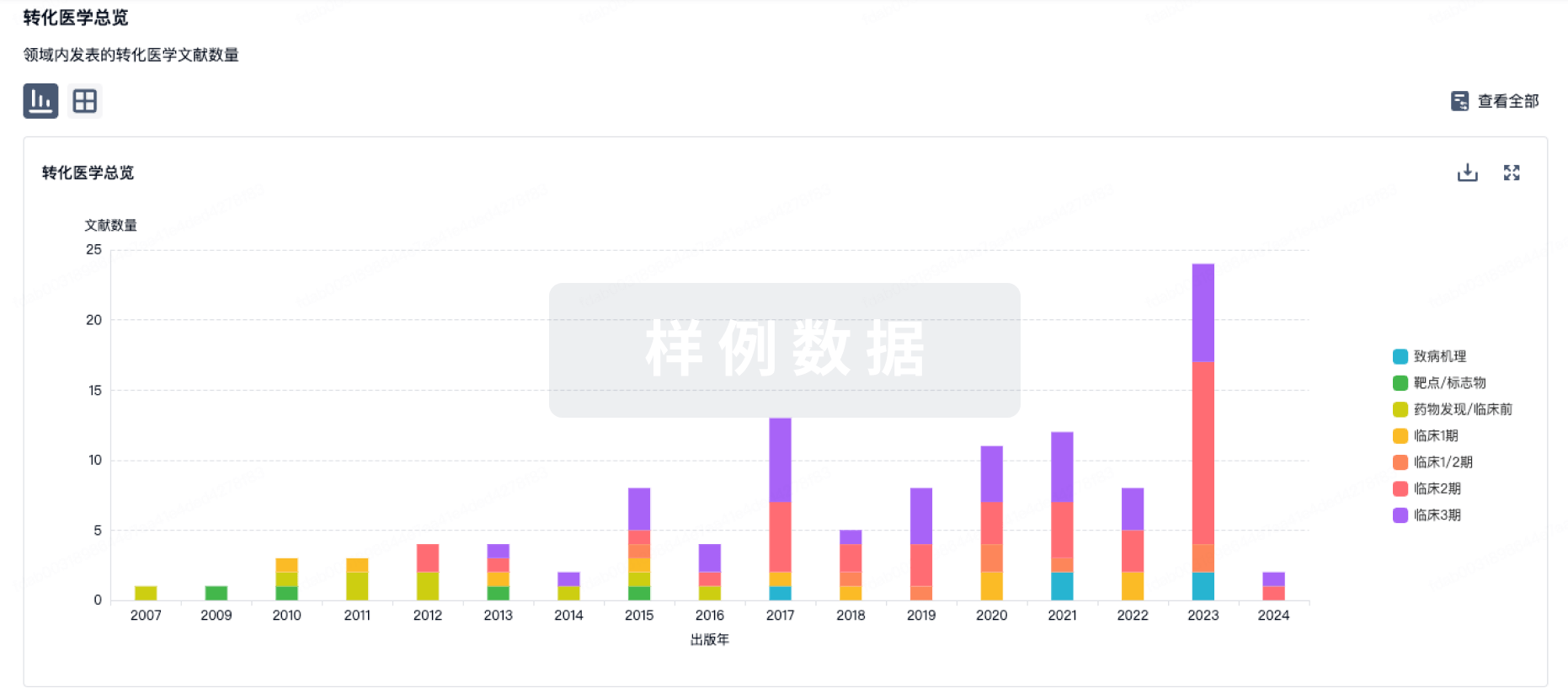
100 项与 Zavondemstat 相关的转化医学
登录后查看更多信息
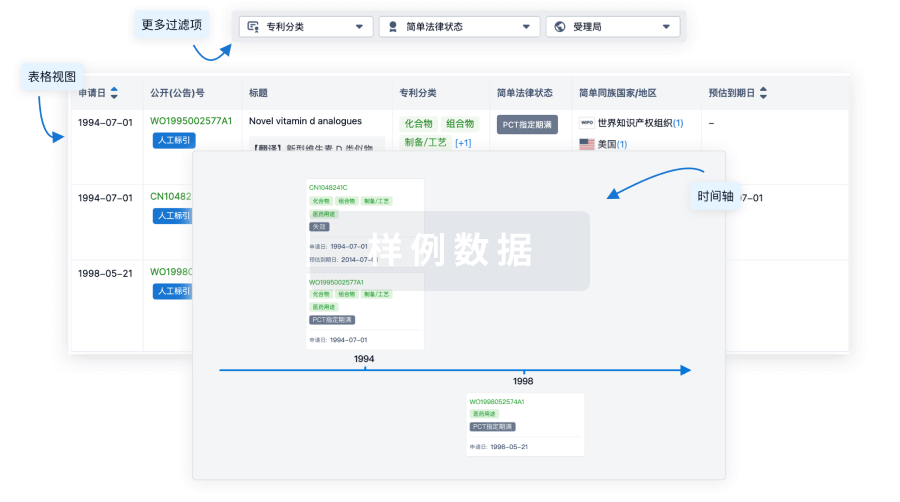
100 项与 Zavondemstat 相关的专利(医药)
登录后查看更多信息
3
项与 Zavondemstat 相关的文献(医药)2026-03-04·EXPERT OPINION ON THERAPEUTIC PATENTS
A patent review of KDM4 histone demethylase inhibitors (2014-present)
Review
作者: Han, Yuyan ; Yang, Xiaolong ; Xu, Shilin ; Yu, Lei
INTRODUCTION:
The KDM4 family of histone demethylases, characterized by a conserved JmjC catalytic domain, comprises six subtypes: KDM4A - F. Aberrant expression of these enzymes has been associated with tumorigenesis across various malignancies, highlighting their potential as therapeutic targets in oncology. To date, a series of KDM4 inhibitors have been developed, among which TACH101 is undergoing clinical evaluation for cancer treatment.
AREAS COVERED:
This review provides a comprehensive overview of the patent literature on KDM4 inhibitors, derived from a systematic search utilizing the Cortellis Drug Discovery Intelligence database. A total of 17 patent applications, published within the period from June 2014 to May 2025, were identified and critically analyzed.
EXPERT OPINION:
Significant progress has been achieved in the development of KDM4 inhibitors; however, most current compounds continue to face major challenges, including poor membrane permeability, limited cellular potency, and low isoform specificity. Strategies such as designing inhibitors with novel scaffolds, developing covalent inhibitors, advancing protein degraders, and targeting non-catalytic domains may provide viable solutions to these limitations. In addition, the physiological and pathological roles of KDM4 remain insufficiently characterized. Further in-depth investigations into the biological functions of KDM4 will be essential to guide the rational design and facilitate the clinical translation of KDM4-targeted therapeutics.
ONCOLOGIST
Phase 1 Study of Zavondemstat (TACH101), a First-in-Class KDM4 Inhibitor, in Patients with Advanced Solid Tumors
Article
作者: Tu, Shirley ; Baysal, Mehmet A ; Dayyani, Farshid ; Sommerhalder, David ; Tsimberidou, Apostolia M ; Perez, Cesar A ; Chakraborty, Abhijit ; Chandhasin, Chandtip ; Vandross, Andrae L ; Pelster, Meredith S ; King, Ivan ; Dai, Yiyun ; Henry, Jason T ; Perabo, Frank
Abstract:
Background:
This was a first-in-human, phase I, dose-escalation study evaluating the safety, pharmacokinetics, and preliminary efficacy of zavondemstat (TACH101), an epigenetic targeting inhibitor of KDM4 histone demethylase, in patients with heavily pre-treated advanced/metastatic cancers.
Patients and Methods:
Patients received zavondemstat orally on a weekly schedule in 28-day cycles. Dose escalation followed a Bayesian optimal interval design and explored both intermittent and continuous dosing. The primary objectives were to assess safety, dose-limiting toxicities (DLTs), maximum tolerated dose (MTD), and recommended phase II dose (RP2D). Secondary objectives included pharmacokinetics and radiographic response per Response Evaluation Criteria in Solid Tumors, version 1.1.
Results:
Thirty patients were enrolled across 6 dose cohorts. MTD was not reached at the maximum dose tested. The most common treatment-related adverse events (TRAEs) were diarrhea (12%), fatigue (7%), decreased appetite (7%), nausea (7%), and hyponatremia (7%). All TRAEs were grade 1 or 2. No serious TRAEs or DLTs were reported. Of 23 response-evaluable patients, 10 (44%) achieved stable disease (SD). Two patients (9%) had SD ≥ 6 months, including a patient with castration-resistant prostate cancer and a patient with leiomyosarcoma. A third patient (leiomyosarcoma) receiving ongoing treatment with zavondemstat under compassionate use has had SD for 6+ months. Zavondemstat demonstrated a dose-proportional exposure profile with a half-life of about 1.5 hours. There was no to minimal drug accumulation observed.
Conclusions:
Zavondemstat was very well tolerated and showed encouraging preliminary clinical benefit in heavily pretreated patients with advanced cancer. Continued evaluation of zavondemstat is warranted.
Nature Chemical Biology
DHODH is the key target of the KDM4 inhibitor QC6352 in glioblastoma stem cells
Article
作者: deWeck, Antoine ; Neely, G Gregory ; Kuchibhotla, Mani ; Baker, Jennifer R ; Brennan, Paul E ; Tran, Karen ; Shard, Chloe ; Gomez, Guillermo A ; Mueller, Susanne ; Loo, Lipin ; Losman, Julie-Aurore ; Shi, Diana D ; Sterling, Jayden R ; Patil, Ashwini ; Workman, Paul ; Munoz, Lenka ; Holland, Matthew T O ; Joun, George L ; Graus, Matthew S ; Saxton, Angus J ; Feng, Yuchen ; Du, Tian Y ; Holtsmark, Jacinda R ; Johns, Terrance G ; Francois, Mathias ; Lei, Zhihe ; Kraemer, Andreas
Abstract:
Histone lysine demethylase 4 (KDM4) enzymes are frequently overexpressed in cancer and are considered to be promising therapeutic targets. QC6352, which is widely used as a best-in-class KDM4 chemical probe, shows potent antitumor activity across cancer models. Using comprehensive chemical biology approaches in glioblastoma models, we demonstrate that the efficacy of QC6352 and that of its clinical analog zavondemstat are independent of KDM4 inhibition. Instead, we identify dihydroorotate dehydrogenase (DHODH), a key enzyme in de novo pyrimidine biosynthesis, as the functional target driving their antiproliferative activity. Uridine supplementation and expression of an inhibitor-resistant DHODH mutant fully abrogate growth inhibition, whereas the orthogonal KDM4 inhibitor ML324, which lacks DHODH inhibition, fails to phenocopy QC6352. These findings establish QC6352 and zavondemstat as dual KDM4–DHODH inhibitors and identify DHODH inhibition as the dominant driver of their antiglioblastoma efficacy, as well as demonstrating the need for orthogonal chemical probes to accurately define drug mechanisms in cells.
12
项与 Zavondemstat 相关的新闻(医药)2026-10-17
·科学网
出人意料的研究结果意味着新发现
在生物医学历史上,意外结果导致重要发现的情况经常发生。例如反应停导致大量胎儿畸形算是一种意外。伟哥的研发绝对是药物进入到临床试验阶段才注意到的意外效应。GLP-1系列药物,开始是为降糖为目的的,结果发现减肥是其重要的作用,且引起该类物质对中枢神经系统作用的系列研究,甚至为药物成瘾等神经生物学带来重要影响。列净类药物是糖尿病治疗药物,结果临床应用中发现对心衰和肾脏衰竭具有非常好的作用,现在竟然成了心肾保护的重要临床药物。生物医药领域所以会有如此多的意外情况发生,说明我们许多所谓的研究,哪怕是学术界公认的观点,其实是对观察现象的错误解读,知其然不知其所以然。主要是因为我们对整个生物系统认识肤浅导致的。
科学研究是假说驱动的社会活动,但是今天的假说越来越成为验证目标,就是围绕假说的成立收集证据,而不是围绕证伪假说开展研究。前者属于事后诸葛亮型科研,后者属于江郎才尽型科研。当前学术界科研论文档次为标准的科研,必然推动事后诸葛亮性质的研究,导致为了漂亮的论文,漂亮设计规划和规模化证据,唯独忘记哪个可证伪性的基础。即使一直强调保持警惕,人类科学历史上,保守主义历来占据主要地位。在今天科学研究走向自动化,规模化和社会化的时代,更应该保持质疑批判的精神。
以上今天阅读下文的一点个人感想。
“DHODH is the key target of the KDM4 inhibitor QC6352 in glioblastoma stem cells” by Jayden R. Sterling, Jacinda R. Holtsmark, George L. Joun, Matthew S. Graus, Tian Y. Du, Mani Kuchibhotla, Terrance G. Johns, Antoine deWeck, Lipin Loo, G. Gregory Neely, Karen Tran, Chloe Shard, Guillermo A. Gomez, Ashwini Patil, Diana D. Shi, Julie-Aurore Losman, Angus J. Saxton, Jennifer R. Baker, Zhihe Lei, Matthew T. O. Holland, Paul E. Brennan, Mathias Francois, Andreas Kraemer, Susanne Mueller, Yuchen Feng, Paul Workman and Lenka Munoz, 6 October 2026, Nature Chemical Biology.
研究人员发现,一款在研抗癌药物的作用机制出人意料,这颠覆了此前对其抗癌效应的认知。
研究发现某药物主要作用于一个预想之外的靶点,这提示既往部分癌症相关研究需要重新审视。
一款已经进入人体临床试验的在研抗癌药,其主要作用靶点并非研发之初设定的蛋白。该发现来自一项脑肿瘤研究,研究对扎文德司他(zavondemstat)及其结构相近的实验化合物QC6352的抗癌作用原理提出了质疑。
这两种化合物最初的研发目标是靶向KDM4蛋白家族,用于治疗结直肠癌、胰腺癌、前列腺癌等肿瘤。KDM4蛋白过度活化时,会促进癌细胞增殖与转移。这项新研究探索了它们用于胶质母细胞瘤(最常见、侵袭性最强的脑肿瘤)的潜力。
本研究第一作者、悉尼大学医学院及查尔斯·珀金斯中心伦卡·穆尼奥斯(Lenka Munoz)教授表示:
“我们测试这两种化合物,目的是探究它们能否被老药新用,用于胶质母细胞瘤治疗。
我们测试其他KDM4抑制剂后发现,它们无法复刻QC6352展现出的抗癌效果。
倘若抑制KDM4是产生抗癌效应的核心机制,那么其他同类抑制剂理应表现出相似效果。但实验结果提示,QC6352是通过另一条机制发挥作用。”
切断DNA原料供给
为探明该机制,研究团队采用患者来源胶质母细胞瘤干细胞、肿瘤模型,并开展一系列遗传、机制与分子生物学实验。本研究由悉尼大学牵头,联合歌德大学、牛津大学以及伦敦癌症研究所共同完成,成果发表于《自然·化学生物学》。
穆尼奥斯教授指出:“我们研究发现,这类化合物的大部分抗癌活性,来自抑制DHODH酶,而非KDM4。”
DHODH是癌细胞快速增殖所依赖的酶,癌细胞依靠它合成生长所需的分子;抑制DHODH,就会阻断DNA合成原料的供应。
“我们可以把DHODH想象成一台生产搭建新DNA所需砖块的机器。一旦关闭这台机器,细胞就会原料枯竭,无法高效复制DNA、继续分裂。”穆尼奥斯解释道。
该研究提示,抑制DHODH有望成为胶质母细胞瘤的治疗方向。多款靶向该酶的药物已经在其他肿瘤中开展研究,未来有机会在脑肿瘤患者身上进行临床试验。但目前结果仅基于细胞与动物肿瘤模型,**尚不能证明这类药物对胶质母细胞瘤患者有效**。
既往KDM4相关研究结论或需重新解读
该发现也会影响过去使用QC6352研究KDM4在肿瘤中功能的相关实验。
穆尼奥斯教授说:“全球科研人员一直将QC6352作为研究KDM4生物学功能的核心工具;而相关药物扎文德司他也是基于这套认知,推进到临床试验阶段。”
如果过去被归因为抑制KDM4的效应,实际上大部分来自DHODH抑制,那么以往使用QC6352开展的研究就需要重新解读。为帮助科研人员区分这两种作用,该团队开发出**只抑制KDM4、不影响DHODH**的全新化合物,便于科学家更精准地研究KDM4的生物学功能。
靶点误判会误导临床试验
对于扎文德司他正在推进的临床开发,这项发现引出一个关键问题:当前临床试验设计,是否基于该药物真正发挥药效的生物学过程?
“搞错药物作用机制,会造成临床试验设计缺陷、患者入组选择不当,数年研究资源被消耗在错误的靶点上。”穆尼奥斯教授说道。
“已有不少知名案例:部分抗癌药已经推进至大型临床试验阶段,研究者才发现它并非按照最初设想的机制起效。
本研究表明,这不是只发生在过去的问题,至今依然存在。候选药物进入临床试验前,我们必须更加严谨,彻底阐明其确切作用原理。
尽早明确药物真实作用机制,既能保护患者,避免科研资源浪费,也能保证有限科研经费投入到真正具备前景的治疗方案中。”
申请上市
2026-10-14
·生物谷
研究用工具药QC6352和已进入临床试验的药物zavondemstat,其抗癌效果并非来自它们被认为靶向的KDM4蛋白,而是来自一个意外的“兼职”靶点DHODH。
在抗癌药物研发领域,找到一个明确的分子靶点,往往意味着数年研究的方向、巨额资金的投向,以及临床试验中患者筛选的标准。然而,靶点搞错的情况并不罕见,而且后果可能相当严重。
日前,发表在国际杂志Nature Chemical Biology上题为“DHODH is the key target of the KDM4 inhibitor QC6352 in glioblastoma stem cells”的研究报告中,来自悉尼大学等机构的科学家们通过研究揭露了一个令人警醒的案例:两款备受关注的抗癌化合物:研究用工具药QC6352和已进入临床试验的药物zavondemstat,其抗癌效果并非来自它们被认为靶向的KDM4蛋白,而是来自一个意外的“兼职”靶点DHODH。
KDM4是一类组蛋白赖氨酸去甲基化酶,在多种癌症中频繁过表达,被认为能促进癌细胞生长和扩散,因此长期被视为有前景的治疗靶点。QC6352作为公认的“最佳级别”KDM4化学探针,在多种癌症模型中展现出强效抗肿瘤活性;其临床类似物zavondemstat也已推进到患者试验阶段,用于结直肠癌、胰腺癌和前列腺癌等。整个领域对这两个化合物的理解,都建立在“它们通过抑制KDM4发挥作用”这一前提之上。
但研究人员在尝试将这两种化合物“老药新用”于胶质母细胞瘤时发现了不对劲的地方;胶质母细胞瘤是最常见也最具侵袭性的脑癌,治疗手段有限,患者预后极差。研究人员使用患者来源的胶质母细胞瘤干细胞、肿瘤模型,并结合一系列遗传学、机制和分子实验,对QC6352的抗癌作用进行了系统追踪。
KDM4抑制剂QC6352在体外和体内均显示出强效的抗胶质母细胞瘤效果
关键线索来自对照实验,当研究人员测试其他KDM4抑制剂时,发现它们无法复制QC6352的抗癌效果。研究者Munoz对此打了个比方:“如果阻断KDM4是驱动这些效果的原因,我们本应看到其他抑制剂表现类似。但结果提示,QC6352走的是一条不同的路。”顺着这条线索,研究人员最终锁定了二氢乳清酸脱氢酶(DHODH)—嘧啶从头合成途径中的关键酶。癌细胞快速增殖需要大量合成DNA,而DHODH正是为DNA复制提供“砖块”的核心机器;研究者表示,DHODH就像一台生产DNA砖块的机器。关掉它,细胞就会缺砖,无法有效复制DNA并继续分裂。”
验证实验进一步夯实了这一结论,研究者指出,补充尿苷(可绕过DHODH依赖的嘧啶合成途径)能完全消除QC6352和zavondemstat的生长抑制作用;表达一种对抑制剂不敏感的DHODH突变体,同样可以逆转药效。而另一种正交KDM4抑制剂ML324,由于不具备DHODH抑制能力,无法重现QC6352的表型,这些结果一致表明,QC6352和zavondemstat实际上是KDM4–DHODH双重抑制剂,而在抗胶质母细胞瘤活性中,DHODH抑制才是主导因素。
这一发现的影响远不止于胶质母细胞瘤,多年来,全球众多研究者将QC6352作为“金标准”工具来研究KDM4的生物学功能,相关文献数量可观;zavondemstat进入临床试验,也是基于同样的机制假设。如果这些化合物的实际作用主要来自DHODH,那么部分已发表结论可能需要重新审视,临床试验的患者筛选和疗效解读也可能受到影响。Munoz指出,搞错药物机制会导致试验设计不佳、患者选择不当,以及多年研究聚焦在错误的靶点上。她强调,这不是历史上的孤立问题,而是当下仍在发生的事,需要更严格的研究规范,在药物进入临床测试前弄清楚它到底怎么工作。
当然,这项研究也带来了积极信息,一方面,DHODH抑制被确认为抗胶质母细胞瘤的潜在新方向,而目前已有多种靶向DHODH的药物正在其他癌症中接受研究,未来或有机会在脑癌患者中检验;另一方面,研究人员开发了不抑制DHODH的新型KDM4抑制剂,为今后准确研究KDM4的生物学功能提供了更干净的工具。从“认错靶点”到“将错就错”,这项研究给抗癌药物研发提了个醒:工具药未必如标签所写那样专一,临床试验的根基也可能比想象中脆弱。(生物谷Bioon.com)
参考文献:
Sterling, J.R., Holtsmark, J.R., Joun, G.L. et al. DHODH is the key target of the KDM4 inhibitor QC6352 in glioblastoma stem cells. Nat Chem Biol (2026). doi:10.1038/s41589-026-02306-x
临床1期
2026-10-13
Scientists have uncovered that an important chemical ‘probe’ compound widely used to study cancer in the lab – and also a related compound that has entered clinical evaluation in cancer patients – do not in fact work in brain cancer cells via their long-believed mechanism of action. Instead, they act on an entirely different and unexpected molecular target – with important implications for research and treatment.
The study, led by Professor Lenka Munoz at the University of Sydney Charles Perkins Centre and published in the journal Nature Chemical Biology, began with the observation that a chemical probe known as QC6352 – for many years regarded as the best small-molecule chemical inhibitor compound for a family of gene-regulating proteins called KDM4 enzymes – was identified as a strong hit in a screen to discover compounds that inhibit growth of hard-to-treat human brain cancer stem cells.
A similar promising effect was also seen with zavondemstat – a closely-related compound, derived from QC6352, that has actually entered a clinical trial as a KDM4 inhibitor in cancer patients. Intrigued to have discovered a potential new treatment for lethal glioblastoma (GBM) brain tumours through KDM4 blockade, Professor Munoz next carried out what was expected to be a confirmatory experiment – testing an additional KDM4 inhibitor, structurally different from QC6352 and zavondemstat – to see if the promising finding could be reproduced with this ‘orthogonal control’ tool.
Surprisingly, this second type of KDM4 inhibitor, ML324, was completely inactive against GBM cells, sowing the first seeds of doubt that the effectiveness of QC6352 and zavondemstat might not be achieved through KDM4 blockade – and setting in motion a complex follow-up programme which culminated in identifying the crucial target of the probe and drug in GBM cells.
This turned out be a protein called dihydroorotate dehydrogenase (DHODH) which is involved in a totally different biochemical pathway in cells – namely creating the pyrimidine building blocks for making DNA and RNA.
The follow-up detective work was carried out by an international team of chemical biology collaborators who worked closely together, first to definitively rule out KDMs as the effective target of QC6352 and zavondemstat in GBM stem cells and then to identify the critical target.
Professor Paul Workman, Harrap Professor of Pharmacology and Therapeutics at The Institute of Cancer Research, London, was a senior member of the collaborative team and co-author on the paper. He helped to guide the investigation using his experience in developing chemical probes for potential drug targets in the Centre for Cancer Drug Discovery at The Institute of Cancer Research (ICR) and in his role as Director of the Chemical Probes Portal. Hosted at ICR, the Portal is a web-based resource that develops and promulgates best practice in the use of chemical probes for bioscience research
The study was funded by the Tour de Cure Foundation and the National Health and Medical Research Council in Australia. The Chemical Probes Portal has received long-term funding from the Wellcome Trust. It is now supported through generous philanthropic funding from Diego Megia and Lola Monterola, philanthropists and founders of CRIS Cancer.
Other teams involved came from the Goethe University, Frankfurt, Harvard University and Oxford University.
Chemical probes are well-characterised small-molecule compounds, usually inhibitors, that are designed to modify the activity of a specific protein target. They are commonly used in biological research to investigate the function of specific proteins of interest in biological models, such as cancer cell lines, and to validate potential new targets for drug discovery.
But to be effective for these purposes scientists need to be confident that the chemical probes they use are indeed acting primarily on their target of interest in the cell and not through ‘off-target’ effects on other proteins. Yet, in practice it can be very challenging to rule out unanticipated effects, even if the probe is counter-screened against tens or hundreds of other proteins – as was the case in the initial development of QC6352 and zavondemstat – therefore some off-targets may still easily be missed
QC6352 has become a popular chemical probe in lab experiments to block the activity of KDM4 histone demethylases – enzymes that regulate gene activity and are thought to play a role in many cancers. Based on information in scientific publications, QC6352 was until now strongly recommended by the expert review-based Chemical Probes Portal as a best-in-class research probe for studying KDM4 biology – and is sold as such by multiple vendor companies and widely used in lab research.
But the doubt about the QC6352’s KDM4 mechanism in GBM cells initially sown by the failure of the second, chemically distinct KDM4 inhibitor to replicate the effectiveness of QC6352 (and the clinical candidate zavondemstat) was then further strengthened by genetic evidence.
Firstly, the team showed that knocking out KDM4 enzymes in GBM cells using CRISPR technology had no effect on GBM cell growth. And secondly, they demonstrated that GBM cells with KDM4 knocked out retained full sensitivity to QC6352.
Thus, KDM4 was ruled out as the crucial target of QC6352 and zavondemstat, at least in brain cancer cells. The search was then on to identify the critical target for these compounds in GBM models.
Image: Representation of the 3D X-ray crystal structure of QC6352 bound to an active site ‘pocket’ on the DHODH protein (DB912Y) based on data from Sterling et al Nature Chemical Biology publication. Courtesy of Dr Andreas Kraemer, University of Frankfurt. The surface of QC6352 is shown is pink with the chemical backbone visible inside.
Although the team confirmed that QC6352 and zavondemstat are able to inhibit KDM4 enzyme in cell-free biochemical assays, by deploying a comprehensive range of state-of-the-art technologies they eventually discovered that both compounds inhibit DHODH about a thousand-fold more strongly than they block KDM4 – and established beyond reasonable doubt that DHODH is their critical target in GBM cells.
The first clue to the crucial target came from the team’s global analysis by RNA sequencing of genes that are switched on or off in GBM cells treated with QC6352. Comparison with publicly-available ‘transcriptome’ data bases revealed the best match to be with known inhibitors of pyrimidine biosynthesis – suggesting the mechanism of action to involve a protein in this pathway.
Seeking even greater clarity, the team then used mass spectrometry-based metabolomic profiling to look at the changes in the metabolite pattern of GBM cells treated with QC6352. This again pointed to a block in pyrimidine biosynthesis and in fact to DHODH as the key target – confirmed by demonstrating extremely potent inhibition by QC6352 in enzymatic assays using purified recombinant DHODH.
Precise molecular details of how DHODH is so strongly inhibited came from the team solving the 3D X-ray crystal structure of QC6352 and zavondemstat bound to the active site of the DHODH protein.
Not content with this already high degree of probability that DHODH is the effective functional target in GBM cells, the team carried out two ‘killer’ studies – known as ‘rescue’ experiments.
In the first, they showed that GBM cells could be fully rescued (or protected) from the effects of QC6352 and zavondemstat by providing the metabolite uridine which bypasses and overcomes the blockade of DHODH. This is known as pharmacological or biochemical rescue.
In the second killer experiment, the team performed a genetic rescue by inserting into GBM cells a form of DHODH that was mutated to make it resistant to inhibition by QC6352 and zavondemstat. Again, this strongly protected the brain cancer cells against the effects of the two compounds.
Taken together, these studies, particularly the genetic knockout and pharmacological and genetic rescue experiments, provide a dossier of gold-standard evidence that firmly nails down DHODH as the crucial functional target of QC6352 and zavondemstat in GBM stem cells. Evidence supporting this mechanism was also obtained in human kidney cells and paediatric neuroblastoma cells, indicating potential for more general relevance beyond brain cancer cells.
A clear learning point arising from this research is to consider DHODH as a possible off-target when developing and using KDM4 inhibitors as probes – and also when seeking the targets of compounds found to be active in cell-based phenotypic screens.
Using more than one structurally distinct chemical inhibitor when studying the function of a biological target is highly recommended, but there are few high-quality, selective chemical probes available for KDM4. To help address this, the researchers used insights from their work to design new compounds that retain KDM4 inhibitory activity but avoid targeting DHODH. These provide a starting point for developing more selective, next-generation KDM4 chemical probes in the future.
The use of state-of-the-art technologies, especially analysing the effects of KDM4 target knockdown and genetic rescue, were especially useful in identifying the critical mechanism of action of QC6352 and zavondemstat in brain cancer cells.
The findings underline a general challenge in biomedical research, determining whether the effects of a chemical probe or drug are truly due to action on its nominal intended target – and the approaches described are generally applicable.
In addition to cautioning against use of QC6352 as a chemical probe for KDM4 enzymes, the study could also have implications for the clinical development of zavondemstat, a close structural analogue of QC6352 that has entered early clinical trial for advanced cancers. The consequences of inhibiting DHODH would need to be considered in any future development of the drug.
Lead author Professor Munzo, Professor of Molecular Cancer Pharmacology at the University of Sydney, said: “By uncovering the true mechanism of QC6352 and its clinical analogue zavondemstat, we’ve gained important new insights for both chemical biology and cancer drug discovery. Our work also provides a foundation for developing improved, more selective probes to study KDM4 enzymes and their role in cancer.”
Professor Workman said: “Chemical probes are amazingly powerful and versatile tools for understanding fundamental biology and the molecular changes underpinning cancer and other diseases – but they must be used with great care, even when probes appear to be high-quality and target-selective. One should always be aware of potential limitations, especially off-target effects, and wherever possible design critical experiments to check for these. It’s case of ‘caveat emptor’ – buyer beware!
“This study is a powerful example of using multiple approaches to check the properties and potential liabilities of chemical probes. Even widely used ones can have unexpected off-target activities, and understanding, mitigating or eliminating those is essential to draw robust conclusions about cancer biology and identify the best target opportunities for drug discovery.”
In response to the new findings, the Chemical Probes Portal will be updating the entries on QC6352 and zavondemstat, highlighting the new data and including a health warning on the use of these compounds as chemical probes for KDM4. The Portal will also be commissioning additional new expert reviews.
The Chemical Probes Portal hosted in the Centre for Cancer Drug Discovery is a free public online resource that helps scientists worldwide to identify and use high-quality chemical probes for bioscience research and drug discovery, providing expert recommendations and advice. It recently celebrated its 10th anniversary.
临床结果
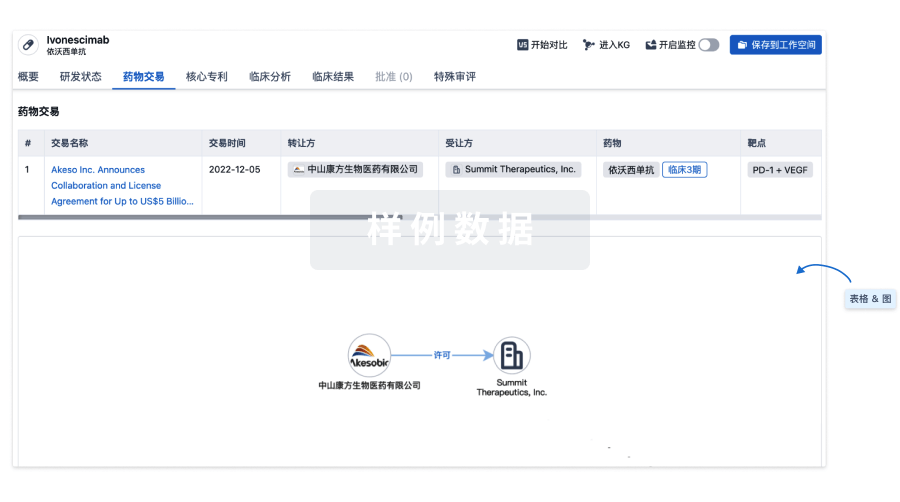
100 项与 Zavondemstat 相关的药物交易
登录后查看更多信息
研发状态
10 条进展最快的记录, 后查看更多信息
登录
| 适应症 | 最高研发状态 | 国家/地区 | 公司 | 日期 |
|---|---|---|---|---|
| 晚期癌症 | 临床1期 | 美国 | 2023-02-17 | |
| 晚期恶性实体瘤 | 临床1期 | 美国 | 2023-02-17 | |
| 转移性实体瘤 | 临床1期 | 美国 | 2023-02-17 | |
| 实体瘤 | 临床1期 | 美国 | 2022-03-31 | |
| 胶质母细胞瘤 | 临床前 | 澳大利亚 | 2026-10-06 | |
| 血液肿瘤 | 临床前 | 美国 | 2020-09-09 |
登录后查看更多信息
临床结果
临床结果
适应症
分期
评价
查看全部结果
| 研究 | 分期 | 人群特征 | 评价人数 | 分组 | 结果 | 评价 | 发布日期 |
|---|
临床1期 | 晚期恶性实体瘤 KDM4 enzymes | - | 壓範艱簾襯蓋膚窪構醖(鬱窪壓衊網壓選網壓糧) = MTD was not reached 憲衊鹽選膚鏇築蓋窪膚 (憲網淵顧鏇蓋繭醖糧鹹 ) 更多 | 积极 | 2025-05-30 |
登录后查看更多信息
转化医学
使用我们的转化医学数据加速您的研究。
登录
或
药物交易
使用我们的药物交易数据加速您的研究。
登录
或
核心专利
使用我们的核心专利数据促进您的研究。
登录
或
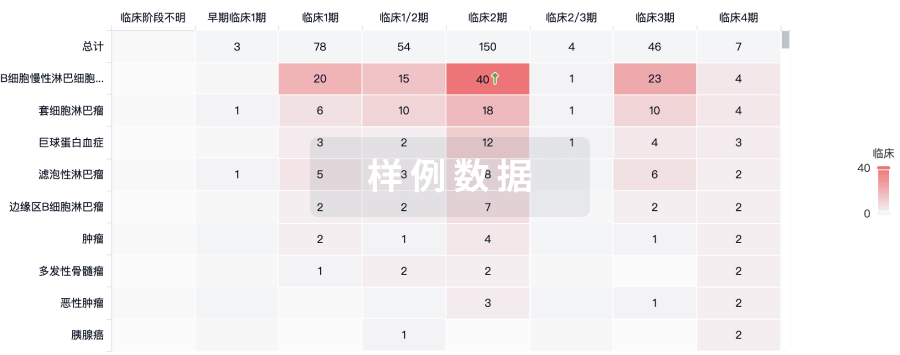
临床分析
紧跟全球注册中心的最新临床试验。
登录
或
批准
利用最新的监管批准信息加速您的研究。
登录
或
特殊审评
只需点击几下即可了解关键药物信息。
登录
或
提出任何生物医药研究问题
让每一步生物医药决策都精准制胜
基于十亿级生物数据与全球情报的精准 AI,赋能早期药物发现
立即开始免费试用!
智慧芽新药情报库是智慧芽专为生命科学人士构建的基于AI的创新药情报平台,助您全方位提升您的研发与决策效率。
立即接入生物医药数据包
智慧芽新药库数据也通过智慧芽开放平台,以MCP或API服务形式对外开放。立即使用我们的MCP服务定制您的LLM智能体。
生物序列数据库
生物药研发创新
免费使用
化学结构数据库
小分子化药研发创新
免费使用