预约演示
更新于:2026-08-29
IL-6 trap (Regeneron)
更新于:2026-08-29
概要
基本信息
在研机构- |
权益机构- |
最高研发阶段无进展药物发现 |
首次获批日期- |
最高研发阶段(中国)- |
特殊审评- |

关联
100 项与 IL-6 trap (Regeneron) 相关的临床结果
登录后查看更多信息
100 项与 IL-6 trap (Regeneron) 相关的转化医学
登录后查看更多信息
100 项与 IL-6 trap (Regeneron) 相关的专利(医药)
登录后查看更多信息
25
项与 IL-6 trap (Regeneron) 相关的新闻(医药)2026-08-21
·医药笔记
▎Armstrong
2026年8月20日,信达生物IBI3038的临床试验申请获得NMPA受理。
IBI3038为一款IGF-1R/IL-6双抗,是信达生物在眼科领域的重要布局之一。信达生物IGF-1R单抗已经获批上市,后续布局了两款迭代的双抗IGF-1R/TSHR(IBI3031)、IGF-1R/IL-6(IBI3038)。
IBI3038、IBI3031都将在今年下半年启动临床试验。
总结
安进Tepezza为全球首款IGF-1R抗体,今年上半年销售额10.66亿美元。甲状腺眼病药物的迭代研发以双抗为主,信达生物布局了IGF-1R/TSHR双抗、IGF-1R/IL-6双抗,橙帆医药研发了IGF-1R/TSHR双抗,并授权给Ollin Biosciences。
Armstrong技术全梳理系列
GPRC5D靶点全梳理;
CD40靶点全梳理;
CD47靶点全梳理;
补体靶向药物技术全梳理;
补体药物:眼科治疗的重要方向;
Claudin 6靶点全梳理;
Claudin 18.2靶点全梳理;
靶点冷暖,行业自知;
中国大分子新药研发格局;
被炮轰的“me too”;
佐剂百年史;
胰岛素百年传奇;
CUSBEA:风雨四十载;
中国新药研发的焦虑;
中国生物医药企业的研发竞争;
中国双抗竞争格局;
中国ADC竞争格局;
中国双抗技术全梳理;
中国ADC技术全梳理;
Ambrx技术全梳理;
Vir Biotech技术全梳理;
Immune-Onc技术全梳理;
亘喜生物技术全梳理;
康哲药业技术全梳理;
科济药业技术全梳理;
恺佧生物技术全梳理;
同宜医药技术全梳理;
百奥赛图技术全梳理;
腾盛博药技术全梳理;
创胜集团技术全梳理;
永泰生物技术全梳理;
中国抗体技术全梳理;
德琪医药技术全梳理;
德琪医药技术全梳理2.0;
和铂医药技术全梳理;
荣昌生物技术全梳理;
再鼎医药技术全梳理;
药明生物技术全梳理;
恒瑞医药技术全梳理;
豪森药业技术全梳理;
正大天晴技术全梳理;
吉凯基因技术全梳理;
基石药业技术全梳理;
百济神州技术全梳理;
百济神州技术全梳理第2版;
信达生物技术全梳理;
信达生物技术全梳理第2版;
中山康方技术全梳理;
复宏汉霖技术全梳理;
先声药业技术全梳理;
君实生物技术全梳理;
嘉和生物技术全梳理;
志道生物技术全梳理;
道尔生物技术全梳理;
尚健生物技术全梳理;
康宁杰瑞技术全梳理;
科望医药技术全梳理;
岸迈生物技术全梳理;
礼进生物技术全梳理;
康桥资本技术全梳理;
余国良的抗体药布局;
荃信生物技术全梳理;
安源医药技术全梳理;
三生国健技术全梳理;
仁会生物技术全梳理;
乐普生物技术全梳理;
同润生物技术全梳理;
宜明昂科技术全梳理;
派格生物技术全梳理;
迈威生物技术全梳理;
Momenta技术全梳理;
NGM技术全梳理;
普米斯生物技术全梳理;
普米斯生物技术全梳理2.0;
三叶草生物技术全梳理;
贝达药业抗体药全梳理;
泽璟制药抗体药全梳理;
恒瑞医药抗体药全梳理;
齐鲁制药抗体药全梳理;
石药集团抗体药全梳理;
豪森药业抗体药全梳理;
华海药业抗体药全梳理;
科伦药业抗体药全梳理;
百奥泰技术全梳理;
凡恩世技术全梳理。
2026-08-17
标题:Microbiota and immune-related adverse events in cancer immunotherapy
DOI:10.1038/s41568-026-00921-3
日期:2026.7(如需PDF文件、公众号投稿、科研服务、进本硕博单身交流群,见文末)
这篇文章是一篇发表在《Nature Reviews Cancer》上的权威综述,系统性地探讨了癌症免疫治疗中,微生物群(特别是肠道微生物)与免疫相关不良事件(irAEs)之间的关系,尤其以免疫检查点抑制剂(ICI)结肠炎为核心。
文章的核心内容和观点可以概括为以下几点:
1. 核心问题:免疫治疗的“双刃剑”免疫检查点抑制剂(如抗CTLA-4、抗PD-1/PD-L1药物)能有效激活T细胞攻击肿瘤,但同时也可能引发过度免疫反应,攻击正常组织,导致irAEs。其中,胃肠道(ICI结肠炎)是常见的受累器官,严重时可导致治疗中断甚至死亡。
2. 核心论点:微生物群是关键调节因子文章强调,肠道微生物群的组成和功能与ICI结肠炎的发生、严重程度及转归密切相关。具体证据包括:
关联性:多项临床研究发现,肠道细菌多样性降低、特定菌群失调(如某些拟杆菌属增多、双歧杆菌属减少),以及使用抗生素或质子泵抑制剂(PPI),都会增加ICI结肠炎的风险。
因果性:通过粪便微生物移植(FMT)或特定菌株(如Faecalibacterium prausnitzii、Bifidobacterium spp.)的干预实验,已在动物模型和初步临床研究中证明,调节微生物群可以缓解或诱导ICI结肠炎的缓解。
作用机制:微生物群可能通过影响肠道上皮屏障功能、调节促炎或抗炎的T细胞(如Th1、Th17、Treg细胞)平衡、以及影响先天免疫细胞(如巨噬细胞、中性粒细胞)的活性,来驱动或抑制炎症。
3. 研究现状与方法文章综述了现有的临床研究(寻找与irAE相关的特定菌种)和临床前小鼠模型(用于验证因果机制)。特别指出,传统SPF级实验室小鼠因免疫系统不成熟,难以自发产生ICI结肠炎,因此近年来发展出多种新模型,如使用“野化”小鼠微生物群、遗传易感小鼠(如CD11c-Cre Stat3⁽ᶠˡ/ᶠˡ⁾小鼠)或特定致病菌(如Citrobacter rodentium)感染模型。
4. 治疗策略的启示文章不仅讨论了传统的激素和生物制剂(如英夫利昔单抗、维多珠单抗)治疗,更着重指出微生物群靶向治疗(如FMT)在治疗难治性ICI结肠炎中的巨大潜力,并展望了使用特定菌群组合或代谢产物的更精准干预策略。
5. 关键图表与信息文章引用了大量数据,尤其是表2,详细列出了多种与ICI结肠炎相关的细菌属和种(如与疾病相关的Bacteroides intestinalis,与保护或缓解相关的Bifidobacterium、Faecalibacterium prausnitzii、Akkermansia muciniphila等),一目了然地展示了当前研究的复杂性和不一致性(同一菌种在不同研究中结果可能矛盾)。
总结来说,这篇文章全面论证了微生物群是ICI结肠炎发生和治疗响应的核心因素,提出调节微生物群是未来解耦抗肿瘤疗效与免疫毒性的关键方向,并呼吁开展更多机制研究以推动精准治疗。
ICI结肠炎病理生理学
主要从临床特征、组织病理学、以及与炎症性肠病(IBD)的异同三个方面,全面描绘了ICI结肠炎的疾病全貌。
具体内容可以归纳为以下几点:
1. 临床特征与分级这部分描述了ICI结肠炎发病的时间规律和症状严重程度分级:
发病时间:通常在ICI治疗开始后5-10周出现。
症状分级(按CTCAE标准):
I级(轻度):每日排便次数比基线增加少于4次,基本无症状。
II级(中度):每日排便增加4-6次,伴有腹痛、粘液或血便。
III-IV级(重度):每日排便增加≥7次,剧烈腹痛,腹部有腹膜刺激征(如肌紧张、反跳痛),需要紧急住院干预。
不同ICI药物的风险差异:
抗CTLA-4单药:结肠炎风险最高(任何级别约9%,重度6.8-7.9%),且呈剂量依赖性。
抗PD-1/PD-L1单药:风险较低(任何级别0.9-11.2%,重度0.3-1.3%)。
联合治疗:风险显著增加(任何级别可达7.3-28%,重度4.8-9.4%)。
2. 内镜与组织病理学特征这部分描述了通过内镜和显微镜观察到的肠道损伤模式:
内镜下表现:多数重度患者可见大肠炎症,约14%的患者累及回肠(小肠末端)。少数患者内镜下看似正常,但显微镜下已有病变。
组织学模式(肠镜活检):呈现多样性,主要包括:
急性炎症:最常见,特征为隐窝炎(Cryptitis)、细胞凋亡(Apoptosis)、中性粒细胞和/或嗜酸性粒细胞浸润。
慢性炎症:可见隐窝结构扭曲、基底浆细胞增多(Basal lymphoplasmocytosis)、上皮下胶原带沉积等。
显微镜下结肠炎:内镜正常但组织学异常,常与既往使用非甾体抗炎药(NSAIDs)或质子泵抑制剂(PPIs)有关。
3. 治疗反应与难治性问题这部分概述了当前的治疗阶梯和挑战:
一线治疗:糖皮质激素对60-70%的II-IV级患者有效。
二线治疗:对激素无效(难治性)的患者,会借用IBD的治疗药物,如抗TNF单抗(英夫利昔单抗)或抗α4β7整合素单抗(维多珠单抗)。但它们在ICI结肠炎中的安全性和有效性尚未完全明确。
复发与风险因素:结肠炎缓解后若重启ICI治疗,仍可能复发。尤其对于有IBD病史的患者,使用抗CTLA-4药物发生结肠炎的风险极高。
4. 与IBD的异同(重要鉴别点)这篇文章特别对比了ICI结肠炎和传统炎症性肠病(IBD,如克罗恩病和溃疡性结肠炎):
相似之处:内镜下可见溃疡、红斑、渗出等,均有中性粒细胞浸润和全身炎症反应(如血小板、白细胞升高)。
核心差异:
ICI结肠炎中,镜下可见更多的凋亡小体,而基底浆细胞增多和隐窝扭曲相对较少,提示其损伤更偏向急性。
ICI结肠炎通常可逆(停药或治疗后多能恢复),而IBD多为慢性、复发性,病因复杂。
尽管难治性ICI结肠炎会借用IBD的治疗方案,但ICI结肠炎对治疗的反应往往更快,甚至可以实现临床和组织学的双重逆转。
简单总结:这部分内容告诉你,ICI结肠炎不是一种单一的疾病,它的表现从轻微腹泻到危及生命的肠穿孔不等,风险因药物类型而异,病理模式多样,且与经典的IBD虽相似但有区别。这些特征为后续探讨微生物群和免疫机制奠定了临床基础。
ICI结肠炎小鼠模型的开发
这一部分系统阐述了建立这些模型的必要性、面临的主要挑战,以及近年来取得的关键进展。
其核心内容是:由于常规实验小鼠无法自发产生ICI结肠炎,科学家们通过多种策略(遗传、化学、微生物干预)成功建立了多种小鼠模型,为研究该疾病的免疫机制和微生物作用提供了重要工具。
具体内容可以归纳为以下几个层次:
1. 建立模型的难点与原因这部分首先解释了为什么建立模型如此困难:
常规小鼠不适用:在无特定病原体(SPF)条件下饲养的实验室小鼠,其免疫系统较为“幼稚”(经历微生物挑战少),因此使用ICI治疗不会引起明显的结肠炎。
基因敲除小鼠也不完全适用:虽然敲除CTLA-4或PD-1基因的小鼠会出现致命性多器官炎症,但它们通常不发展出结肠炎,说明ICI结肠炎的发生需要比单纯阻断单一免疫检查点更复杂的机制。
2. 现有的四种主要建模策略文章详细介绍了近年来开发的几类模型,并指出了各自的优缺点:
化学诱导模型(DSS模型):使用葡聚糖硫酸钠(DSS)破坏肠道上皮屏障,再给予ICI(尤其是抗CTLA-4)治疗。该方法能加重肠道炎症,但缺点是DSS本身对上皮的直接损害过于剧烈,无法真实模拟人体中免疫系统被激活后的初始病理过程,且炎症是继发于化学损伤而非纯粹的免疫反应。
遗传易感模型:使用具有特定基因缺陷、在SPF环境下就易发肠道炎症的小鼠,如CD11c-Cre Stat3^(fl/fl)小鼠(抗原呈递细胞中STAT3被敲除,导致APC过度活化)。给予抗CTLA-4治疗后,其肠道炎症会显著加重。该模型揭示了过度活化的抗原呈递细胞(APCs)在驱动ICI结肠炎中的作用,但缺陷在于STAT3缺陷并非人类ICI结肠炎的普遍病因。
微生物干预模型(重点):这是当前更受推崇的方向,通过改变小鼠的肠道菌群来“致敏”其免疫系统,使其对ICI产生结肠炎反应。包括:
野化小鼠模型(WildR):将自由生活的野生小鼠的菌群移植给实验室小鼠,这些小鼠在接受抗CTLA-4+抗PD-1联合治疗后会发生结肠炎。
菌群移植模型(FMT):将具有“生态失调”菌群的小鼠(如上述的Stat3缺陷小鼠或TRUC小鼠)的粪便移植给正常小鼠,随后给予ICI治疗,也会诱导出结肠炎。这有力地证明了肠道菌群的改变是ICI结肠炎发生的驱动因素之一。
特定病原体或菌株定植模型:为了寻找具体的致病或保护菌种,研究者会使用特定细菌来感染或定植小鼠。
致病菌感染:例如,感染鼠类肠道病原体Citrobacter rodentium后给予抗CTLA-4,会加剧肠道炎症,提示急性肠道感染可能是诱因。
特定共生菌定植:将从患者体内分离出的Bacteroides intestinalis定植到小鼠体内,会使其在ICI治疗后发生回肠炎症,直接证明了该菌种的致病作用。
3. 模型的现状与展望文章最后总结了当前模型的价值和局限:
进步:这些模型(尤其是基于微生物干预的模型)相较于早期的化学或遗传模型,更贴近人体疾病中“宿主-微生物-免疫”三者互作的真实情况。
局限:目前多数模型使用的微生物群与人类仍有较大差异。未来的方向是利用移植了人类ICI结肠炎患者菌群的小鼠,来更精确地鉴定关键的人类致病菌种和相应的免疫应答机制。
补充工具:除了动物模型,肠道类器官与免疫细胞共培养系统等体外模型也能帮助研究微生物产物对上皮损伤的直接作用。
简单总结:这部分内容的核心在于回答了“如何研究ICI结肠炎”这一问题。它告诉我们,通过巧妙地操控小鼠的基因背景或肠道微生物组成,可以“制造”出模拟人类疾病的动物模型。这些模型是研究疾病机制和筛选潜在靶向药物的关键平台。
ICI结肠炎中的宿主反应
这一部分系统阐述了在ICI结肠炎发生过程中,宿主(患者/小鼠)体内肠道局部多种细胞类型、细胞因子和信号通路的动态变化及其功能。
其核心论点是:ICI结肠炎是由上皮屏障破坏、多种淋巴细胞亚群失衡、以及髓系细胞驱动的炎症放大共同介导的复杂免疫病理过程,而微生物群则通过这些宿主反应发挥其影响。
具体内容可以从以下四个层面来理解:
1. 屏障组织与上皮重塑这部分描述了肠道“城墙”(上皮屏障)在疾病中的损伤:
上皮损伤特征:来自患者的单细胞测序数据显示,肠上皮细胞中干扰素刺激基因(ISGs) 表达上调,而上皮干细胞标志物减少,提示上皮修复能力受损。同时,紧密连接蛋白(如ZO-1和Occludin)减少,而促进肌动蛋白收缩的MLCK1增加,导致肠道通透性增加。
功能意义:屏障破坏使得更多微生物产物和细菌可以侵入肠壁组织(固有层),从而加剧炎症。研究还证明,在小鼠中抑制MLCK1可以预防屏障功能障碍和ICI结肠炎,这直接说明了上皮屏障完整性在抑制疾病中的关键保护作用。
2. 淋巴细胞反应(T细胞和ILC)这部分分析了免疫“士兵”(淋巴细胞)在疾病中的角色,其中T细胞是绝对焦点:
T细胞亚群的变化:患者活检组织中普遍发现CD8+组织驻留记忆T细胞(T_RM)、表达颗粒酶的细胞毒性T细胞、以及CD4+辅助T细胞(Th1和Th17) 的扩增。
Th17细胞的复杂角色:虽然Th17细胞及其分泌的IL-17A在疾病中增加,但它们在结肠炎中的作用存在争议。一方面它们可能促炎,但另一方面,Th17细胞也产生IL-22,该因子具有促进上皮再生和抗菌肽产生的保护作用。因此,简单地阻断IL-17A并未在小鼠模型中显示出治疗效果。
致病性T细胞亚群:研究发现,在ICI结肠炎中,同时产生IL-17A和IFNγ的“双阳性”CD4+ T细胞显著增加。阻断促进Th17分化的IL-23,可以减少这群细胞并减轻结肠炎,提示这群“致病性Th17细胞”是关键的驱动者。
Treg细胞的保护作用:调节性T细胞(Treg)通过分泌IL-10和TGF-β维持肠道免疫耐受。由于Treg细胞高表达CTLA-4,抗CTLA-4治疗可能导致其被耗竭,从而打破对微生物的耐受。在小鼠模型中,某些双歧杆菌(Bifidobacteria)就是通过支持Treg细胞功能来发挥保护作用的。
固有淋巴样细胞(ILCs):一些研究发现,ILC1(1型固有淋巴样细胞)的转录本在患者中升高,而ILC3与小鼠模型中的结肠炎相关。但它们在疾病中的确切功能尚不明确。
3. 髓系细胞的作用(巨噬细胞和中性粒细胞)这部分强调了“后勤支援部队”(髓系细胞)在炎症放大中的核心地位:
髓系细胞浸润:在多种小鼠模型和患者活检中,均观察到中性粒细胞、单核细胞和巨噬细胞在肠道组织中的大量浸润。粪便中的钙卫蛋白(Calprotectin,中性粒细胞标志物)已成为临床常用的疾病活动度生物标志物。
细胞相互作用机制:通过单细胞测序和计算预测,研究者发现肠道中的巨噬细胞通过分泌CXCL9和CXCL10,招募表达CXCR3的T细胞进入组织。在小鼠模型中,阻断CXCL9/CXCL10-CXCR3信号轴或清除巨噬细胞,均可显著减轻结肠炎。这明确指出了巨噬细胞通过趋化因子招募T细胞来驱动炎症的关键路径。
4. 细胞因子与趋化因子的网络这部分汇总了在疾病中被发现升高的众多可溶性因子,它们构成了复杂的炎症网络:
升高的因子包括:促髓系生成因子(G-CSF、IL-6)、髓系趋化因子(CXCL1、CXCL28)、淋巴细胞趋化因子(CXCL9、CXCL10)、淋巴细胞效应分子(IFNγ、颗粒酶)、以及髓系细胞产生的促炎因子(IL-1α、IL-1β、TNF)等。
功能验证:小鼠模型验证了部分因子的关键作用。例如,阻断IL-6可减少炎症细胞因子的产生;阻断IL-1受体(IL-1R) 可减轻肠道炎症。这些细胞因子通常是在微生物刺激下由髓系细胞产生的,这再次将微生物群、髓系细胞活化和T细胞反应紧密联系在一起。
简单总结:这部分内容为你描绘了一幅ICI结肠炎免疫病理的“作战地图”:微生物突破受损的上皮屏障 -> 激活髓系细胞(巨噬细胞、中性粒细胞) -> 髓系细胞释放大量细胞因子和趋化因子 -> 招募并激活致病性T细胞(尤其是产IFNγ和IL-17A的T细胞) -> 这些细胞反过来又进一步破坏上皮,形成一个自我放大的炎症循环。同时,Treg细胞的保护功能被削弱,无法抑制这个循环。
微生物群在irAEs中的作用
这一部分是全文的核心,系统阐述了肠道微生物群与ICI结肠炎之间复杂且因果明确的关系。它不仅列举了大量关联性证据,更通过干预性研究(如粪菌移植和特定菌株定植)揭示了微生物群既是“驱动者”也是“保护者”的双重角色,并探讨了微生物群在其他器官(皮肤、肺、心脏)irAEs中的初步证据。
具体内容可以从以下四个层面来理解:
1. 微生物群影响ICI结肠炎的临床证据(关联性与干预)这部分从宏观角度建立了微生物群与疾病之间的桥梁:
风险因素:近期腹部手术(已知会扰乱菌群)、抗生素使用(尤其是抗厌氧菌抗生素)和质子泵抑制剂(PPI) 的使用,均与ICI结肠炎更高的发生率、严重程度或复发率相关。同时,这些药物的使用也与ICI治疗更差的生存结局相关,提示其负面影响可能部分通过菌群介导。
保护因素:高纤维饮食和地中海饮食(已知可塑造有益菌群)与ICI结肠炎风险降低相关。维生素D补充(可增加菌群多样性和双歧杆菌丰度)也与更低的风险相关。
最强的干预证据——粪菌移植(FMT):在临床实践中,使用健康供体的FMT来治疗对激素和二线生物制剂均无效的难治性ICI结肠炎,取得了约90% 的疾病缓解率。这直接证明了替换整个肠道菌群可以逆转疾病,是目前最有力的因果证据。基于此,已有临床试验正在探索将FMT作为一线治疗方案(NCT04038619)。
2. 菌群多样性与特定菌种的作用(表2的详细解读)这部分深入到具体菌种层面,文章通过表2详细列出了与ICI结肠炎相关的细菌,但其核心结论是:目前尚未找到普遍一致的“致病菌”或“保护菌”,不同研究结果常存在矛盾。不过,一些趋势和经动物实验验证的菌种值得关注:
保护性菌群(与缓解或低风险相关):
双歧杆菌属(Bifidobacterium):多项研究显示其在FMT后富集,且在DSS小鼠模型中,定植B. bifidum, B. longum等菌种可减轻ICI结肠炎,其作用部分依赖于Treg细胞。
乳杆菌属(Lactobacillus):如L. reuteri和L. rhamnosus在小鼠模型中显示保护作用,可改善结肠炎症状。
粪杆菌属(Faecalibacterium):F. prausnitzii在多项研究中与不发生结肠炎相关,并在小鼠模型中显示可减轻肠道毒性。但矛盾的是,也有研究报道其在结肠炎中富集。
阿克曼氏菌(Akkermansia muciniphila):主要与结肠炎的缓解相关,并可改善实验性结肠炎的肠道屏障功能。
致病性菌群(与疾病发生或严重程度相关):
肠道拟杆菌(Bacteroides intestinalis):是目前唯一经过因果验证的致病菌。研究发现其在发生重度irAE的患者基线期富集,且将其定植到小鼠体内可直接诱导回肠炎症。
埃希氏菌属(Escherichia)和克雷伯氏菌属(Klebsiella) 等,在活动性ICI结肠炎中富集,并在FMT缓解后减少。
3. 微生物群的作用机制假说这部分探讨了菌群如何影响宿主的可能路径,虽然很多尚在假设阶段:
影响上皮屏障:特定微生物及其代谢产物(如短链脂肪酸SCFAs)对维持上皮紧密连接至关重要。生态失调可能导致屏障减弱,使细菌侵入组织,触发炎症。
调节免疫细胞平衡:菌群可影响促炎的Th17细胞和保护性的Treg细胞之间的平衡。例如,双歧杆菌通过支持Treg细胞功能来抑制炎症,而某些菌群失调可能促进致病性Th17细胞的分化。
代谢产物介导:菌群产生的代谢物(如丁酸盐、色氨酸代谢物、胆汁酸)可直接调节免疫细胞的功能,但它们在ICI结肠炎中的具体作用仍有待深入探索。
4. 微生物群在其他irAEs中的初步探索这部分简要拓宽了视野,指出微生物群的影响可能不局限于肠道:
皮肤irAEs:在小鼠模型中,皮肤定植表皮葡萄球菌(Staphylococcus epidermidis) 可诱发依赖IL-17的皮肤炎症,提示局部皮肤菌群可能参与。
肺炎(ICI pneumonitis):对患者支气管肺泡灌洗液的分析显示,发生肺炎的患者与未发生的患者肺菌群组成存在差异,但研究尚处于早期阶段。
心肌炎(ICI myocarditis):这是一个令人兴奋的发现。虽然心脏没有常驻菌群,但肠道菌群可能通过代谢产物影响心脏。一项小鼠研究发现,FMT和细菌代谢产物吲哚-3-丙酸可改善抗PD-1诱导的心肌炎,表明“肠-心轴”可能在调节此高致死性irAE中发挥作用。
简单总结:这部分内容为你描绘了一幅动态图景:微生物群的组成(多样性和特定菌种)与ICI结肠炎的发生和转归密切相关。通过FMT等干预手段直接改变菌群可以治疗该疾病,而特定菌种(如B. intestinalis)已被证明是致病原因之一。同时,菌群的影响可能超越了肠道,延伸到皮肤甚至心脏等器官的irAEs。
ICI结肠炎的治疗
这一部分系统概述了当前管理ICI结肠炎的临床实践路径、各类药物的作用机制、以及新兴的微生物群靶向疗法的研究进展。
其核心内容是:ICI结肠炎的治疗遵循从对症支持、糖皮质激素、到二线生物制剂的阶梯式策略,而粪菌移植(FMT)等微生物疗法作为新兴手段在难治性病例中显示出巨大潜力,但如何平衡抑制炎症与保留抗肿瘤免疫仍是所有疗法面临的共同挑战。
具体内容可以从以下三个层面来理解:
1. 标准阶梯式治疗方案(临床实践路径)这部分描述了从轻到重的临床处理流程:
排除其他病因:在启动治疗前,必须首先排除感染性病因(如艰难梭菌、大肠杆菌、巨细胞病毒等),因为其症状与ICI结肠炎相似。
分级管理策略:
I级(轻度):以电解质纠正、饮食调整和止泻药等对症支持治疗为主,通常不需停用ICI。
II级(中度):暂停ICI。可先试用美沙拉秦(一种用于IBD的5-氨基水杨酸类药物)。若无改善,启动口服糖皮质激素。
III-IV级(重度):需要住院,使用静脉注射大剂量糖皮质激素,并可能需要永久停用ICI。
激素难治性患者的二线治疗:约12-15% 的患者对激素无效。此时会借用IBD的先进疗法,主要是英夫利昔单抗(抗TNF单抗) 和维多珠单抗(抗α4β7整合素单抗)。在大规模队列研究中,这两种药物的有效率可达85-89%。此外,一些针对IL-23(乌司奴单抗)、IL-6(托珠单抗)和JAK激酶(托法替布、乌帕替尼) 的抑制剂也在小规模病例报告或早期临床试验中显示出治疗潜力。
2. 免疫调节药物的作用机制(图2的详解)这部分配合文章图2,详细解释了上述药物的作用靶点:
维多珠单抗:阻断淋巴细胞表面的α4β7整合素与肠道血管内皮上的MadCAM-1结合,从而阻止炎症淋巴细胞向肠道组织特异性迁移,起到“关闸门”的作用。
英夫利昔单抗:结合并中和可溶性和跨膜型TNF,阻断其促炎信号通路(NF-κB),并可通过抗体依赖性细胞介导的细胞毒性(ADCC)清除产生TNF的细胞,起到广谱抗炎作用。
乌司奴单抗:靶向IL-12和IL-23共有的p40亚基,从而抑制Th1和Th17细胞的分化,这两类细胞是驱动肠道炎症的关键T细胞亚群。
托珠单抗:阻断IL-6受体(IL-6R),抑制IL-6介导的促炎信号。
JAK抑制剂(托法替布、乌帕替尼):通过抑制细胞内JAK激酶的活性,阻断多种促炎细胞因子(如IL-6、IFNγ等)的下游信号传导(STAT通路)。乌帕替尼作为选择性JAK1抑制剂,理论上可能比非选择性的托法替布更具特异性,对全身免疫影响更小。
3. 微生物群靶向疗法(新兴前沿)这部分重点讨论了基于微生物的治疗策略,这是文章的核心亮点:
粪菌移植(FMT):目前最主要的方法。多项病例研究和病例系列报告显示,对于对激素和生物制剂均无效的难治性ICI结肠炎,使用健康供体的FMT可使约90% 的患者达到临床缓解。其伴随的菌群变化包括:α多样性增加、双歧杆菌属(Bifidobacterium) 和柯林斯菌属(Collinsella) 富集,以及结肠组织中细胞毒性T细胞减少。
FMT的局限与挑战:尽管疗效显著,但FMT目前仍是研究性疗法,未获监管批准。其局限性包括:样本量小、安全性数据不充分(如感染风险)、对供体菌群“定植”的持久性了解不足,以及最关键的是——FMT对ICI抗肿瘤疗效的影响尚不明确。因为肠道菌群同样深刻影响着ICI的抗癌效果。
其他微生物干预方向:文章提到,使用特定菌群组合、益生元或益生菌等更可控的疗法尚未经严格验证,且现有证据提示普通益生菌可能与ICI疗效降低有关,因此应谨慎使用。而特定菌株(如F. prausnitzii)或代谢产物的干预,是未来更有前景的研究方向。
简单总结:这部分内容为你梳理了ICI结肠炎的“治疗武器库”:从基础的糖皮质激素,到靶向炎症细胞迁移或细胞因子的生物制剂,再到重塑整个肠道生态的粪菌移植。它清晰地指出,现有疗法的核心难题在于如何在抑制致命炎症的同时,不削弱ICI的抗癌战斗力。而基于特定菌株或代谢物的精准微生物疗法,被认为是破解这一难题的未来方向。
想(获取原文或广告合作、公众号投稿、进入临床知识交流群、微生物交流群、本硕博单身群),请加小编,认证通过后可邀请进群,加请备注:专业+相关群
我们可以提供的服务如下:
1、临床实验方案设计;
2、SCI、本硕博毕业论文润色;
3、国、省、院基金申报;
4、生信分析;
2026-08-12
感谢您一直以来对华美生物CUSABIO的支持! 2026年7月,CUSABIO产品发表文献新增200篇!总文献数量已达 31600篇!感谢您在科研旅程中,选择了CUSABIO科研试剂,再次感谢您对我们的信任与支持,我们将不断努力,为您提供更好的产品和服务!下面就让我们一起来分享一下大家精彩的研究成果吧~
2026
CUSABIO月度文献盘点
01
标题:Mapping cell type-resolved transcriptomic profiles to patient survival in pancreatic cancer
影响因子:44.5
发表期刊:Cancer Cell
CUSABIO助力产品:
Recombinant Human Procollagen-lysine,2-oxoglutarate 5-dioxygenase 2 (PLOD2); CSB-MP018200HU
研究亮点
本研究通过152例胰腺癌患者snRNA-seq构建细胞类型分辨率的预后图谱,发现数千个细胞类型特异性预后相关基因,揭示同一基因在不同细胞类型中可呈相反预后效应。结合Xenium空间转录组分析预后分层细胞类型的空间分布与治疗响应关系,并验证PLOD2为跨八种细胞类型的泛预后不良靶点,开发的PROTAC-G3降解剂在体内有效抑制肿瘤进展。CUSABIO产品用于提供重组PLOD2蛋白用于SPR结合亲和力测定。
02
标题:Gut pathobionts translocate into liver and reshape intrahepatic microbiome to facilitate hepatocellular carcinoma
影响因子:33.3
发表期刊:Cancer Discovery
CUSABIO助力产品:
Mouse Lipopolysaccharides(LPS) ELISA Kit; CSB-E13066m
研究亮点
本研究揭示肝细胞癌患者肠道与肝内微生物组存在共同失调,肠-肝轴菌群相似性增加,致病共生菌(如脆弱拟杆菌)通过受损肠屏障易位至肝脏。脆弱拟杆菌表面蛋白烯醇酶结合肝细胞波形蛋白,激活促炎及致癌信号通路,加速肝癌发生。CUSABIO小鼠LPS ELISA试剂盒用于检测血清脂多糖水平。
03
标题:Decidual macrophage‐mediated ferroptosis in trophoblasts leads to recurrent spontaneous abortion
影响因子:33.2
发表期刊:iMeta
CUSABIO助力产品:
Human Interleukin 6,IL-6 ELISA KIT; CSB-E04638h
研究亮点
复发性自然流产患者蜕膜巨噬细胞通过CXCL2/NF-κB/HMOX1轴诱导滋养层细胞铁死亡,抑制其增殖、迁移与侵袭,并促进凋亡;同时滋养层细胞通过IL-6/JAK2/STAT3轴驱动巨噬细胞M1极化。Eriodictyol靶向CXCL2通路在流产小鼠中减轻铁死亡。CUSABIO IL-6 ELISA试剂盒用于检测细胞培养上清中IL-6水平。
04
标题:AARS1 promotes tumor progression and immune evasion via ATF6 lactylation-mediated tryptophan metabolism in hepatocellular carcinoma
影响因子:30.9
发表期刊:Cell Metabolism
CUSABIO助力产品:
Human Kynurenine (KYN)ELISA Kit; CSB-E13659h
研究亮点
本研究揭示AARS1作为乳酰转移酶,在肝细胞癌中催化ATF6蛋白K424位点乳酰化,阻止其泛素化降解,稳定ATF6并转录激活TDO2,增强色氨酸代谢和L-犬尿氨酸产生,从而驱动Treg分化与免疫抑制功能。同时,Treg通过分泌eNAMPT增强肿瘤糖酵解和乳酸生成,形成AARS1-ATF6-Treg正反馈回路。靶向AARS1乳酰化活性可增敏PD-1/PD-L1免疫治疗,为肝癌联合治疗提供新策略。CUSABIO提供人犬尿氨酸(KYN)酶联免疫试剂盒。
05
标题:Macrophages drive ferroptosis resistance after radiotherapy
影响因子:24.9
发表期刊:Cancer Communications
CUSABIO助力产品:
Mouse Cathepsin S(CTSS) ELISA kit; CSB-EL006204MO
研究亮点
放疗后,巨噬细胞通过接触依赖机制上调肿瘤细胞Ephb4,激活Ephb4-ephrinb2双向信号:肿瘤细胞内Slc7a11/Slc3a2/Gpx4等抗铁死亡基因上调,同时分泌Cathepsin S促进巨噬细胞TLR2-NF-κB通路活化产生IL-6,形成正反馈环路抑制脂质过氧化,使肿瘤细胞逃逸铁死亡并获得放疗抵抗。靶向Ephb4可恢复铁死亡敏感性。CUSABIO Mouse CTSS ELISA kit用于检测Cathepsin S分泌水平。
06
标题:NPY-Y2R driven neuroimmune signaling as a potential therapeutic target for trigeminal neuralgia: clinical and experimental evidence
影响因子:21.1
发表期刊:Science Bulletin
CUSABIO助力产品:
Human neuropeptide Y (NPY) ELISA kit; CSB-E08168h
研究亮点
本研究揭示三叉神经痛中受损TG神经元上调并释放NPY,通过Y2R激活邻近痛觉神经元,同时招募并活化TG巨噬细胞,后者释放TNF-α增强神经元兴奋性,形成自我放大的神经-免疫正反馈环路,维持局部神经炎症和机械性痛觉过敏。靶向Y2R(BIIE0246)、基因敲除Npy2r或巨噬细胞清除均可显著逆转已建立的疼痛行为。临床数据显示TN患者CSF(而非血浆)NPY显著升高且与疼痛强度正相关。CUSABIO NPY ELISA试剂盒(CSB-E08168h)用于定量检测人血浆和脑脊液NPY浓度。
07
标题:GPR161 contributes to macrophage glycolytic reprogramming via targeting C5aR1 in acute lung injury
影响因子:10.2
发表期刊:Cellular & Molecular Biology Letters
CUSABIO助力产品:
Recombinant Human C5a anaphylatoxin chemotactic receptor 1 (C5AR1)-VLPs (Active); CSB-MP003996HU
研究亮点
本研究发现ARDS患者PBMC中GPR161表达升高,与氧合指数负相关、与炎症指标正相关。巨噬细胞特异性GPR161敲除可减轻LPS及脓毒症相关ALI小鼠的肺损伤和炎症。机制上,GPR161直接结合并负调控C5aR1,C5aR1再与PKM2互作促进巨噬细胞糖酵解重编程和炎症反应。CUSABIO重组人C5aR1蛋白用于SPR实验验证GPR161-C5aR1直接结合。
08
标题:Modulating IL-11-dependent matrix stiffness to delay ovarian aging
影响因子:19.4
发表期刊:Nature Aging
CUSABIO助力产品:
Human Interleukin 11,IL-11 ELISA KIT; CSB-E04596hMouse anti-Mullerian hormone (AMH) ELISA kit; CSB-E13156mMouse estrogen,E ELISA Kit; CSB-E07280mMouse follicle-stimulating hormone,FSH ELISA Kit; CSB-E06871mMouse free testosterone (F-TESTO) ELISA kit; CSB-E05098m
研究亮点
本研究利用原子力显微镜首次量化显示人类卵巢基质硬度随年龄及化疗后卵巢早衰、多囊卵巢综合征、子宫内膜异位症等病理状态显著增加,且高硬度基质抑制卵泡发育和激素分泌。机制上,卵巢衰老进程中TGFβ1诱导成纤维细胞高表达IL-11,IL-11通过ERK1/2通路促进胶原分泌和基质硬化;敲除Il11ra1可减少活化成纤维细胞比例,降低基质硬度,改善卵泡储备和生育力。siRNA脂质纳米颗粒靶向IL-11可有效降低老龄小鼠和大鼠卵巢硬度并恢复生育能力。CUSABIO人/小鼠/大鼠IL-11、AMH、E2、FSH及睾酮ELISA试剂盒用于定量检测相关指标。
09
标题:Bacteroides fragilis toxin promotes gall bladder cancer in mice
影响因子:19.4
发表期刊:Nature Microbiology
CUSABIO助力产品:
btfP Antibody; CSB-PA346537LA01BDP
研究亮点
产毒素脆弱拟杆菌在胆囊癌组织中富集,通过双重机制促进肿瘤进展:表面蛋白MltD结合宿主TMPRSS13激活JAK2-STAT3信号;毒素BFT激活NF-κB-CXCL1轴招募髓系抑制细胞并促血管生成。毒素缺失或阻断MltD-TMPRSS13互作可消除促瘤效应。CUSABIO BFT抗体用于Western blot检测毒素蛋白。
10
标题:Shape Memory Microneedle to Prevent Risks of Reproductive Hormone Therapy by Switching Sustained to Burst Release Under a Single Transdermal Insertion
影响因子:19
发表期刊:Advanced Functional Materials
CUSABIO助力产品:
Rabbit Interleukin 6,IL-6 ELISA Kit; CSB-E06903Rb
研究亮点
本研究开发了一种形状记忆微针(SMN),可通过温和加热从X形恢复为O形,在单次透皮插入后实现从缓释向突释的切换。SMN将促卵泡激素(FSH)和促黄体激素(hCG)分层装载于X形针槽的明胶水凝胶中:外层FSH通过凝胶降解实现72小时缓释,加热后针体恢复O形,内层hCG随凝胶破裂在24小时内突释。在兔模型中,单次SMN超剂量给药达到与多次注射相当的排卵效果,同时避免注射引起的激素峰刺激,显著降低血管渗漏、腹水、血液浓缩及多器官炎症。CUSABIO兔IL-6 ELISA试剂盒(CSB-E06903Rb)用于检测血清炎症因子水平。
➔➔点击查看更多引用文献
--END--
关于我们
武汉华美生物工程有限公司成立于2007年12月,是一家以科研试剂生产、诊断试剂原料供应为核心,集自主研发、生产、营销为一体的生物高新技术企业。华美生物拥有多项先进的核心技术,致力于为全球高等院校、政府研究机构、诊断试剂生产厂家以及生物制药公司提供高质量产品与高水平的技术服务。经过18年的不懈努力,华美生物旗下现拥有两大子品牌,CUSABIO与科赛格(CUSAg)。其中,CUSABIO主要经营科研试剂产品,包括重组蛋白、抗体、基因、试剂盒等产品。目前,CUSABIO已开发15000+重组蛋白,涵盖了从人类到其他常见物种的疾病相关的药物靶点抗原和生物标志物。此外,为鼎力相助抗体药研发,针对多次跨膜蛋白,华美生物还搭建了病毒样颗粒 (VLPs)、去垢剂和Nanodisc三大技术平台,较大程度上解决了全长跨膜蛋白制备难的问题。
在看你就赞赞我!
100 项与 IL-6 trap (Regeneron) 相关的药物交易
登录后查看更多信息
研发状态
10 条进展最快的记录, 后查看更多信息
登录
| 适应症 | 最高研发状态 | 国家/地区 | 公司 | 日期 |
|---|---|---|---|---|
| 恶病质 | 药物发现 | 美国 | - | |
| 多发性骨髓瘤 | 药物发现 | 美国 | - | |
| 骨质疏松症 | 药物发现 | 美国 | - | |
| 实体瘤 | 药物发现 | 美国 | - |
登录后查看更多信息
临床结果
临床结果
适应症
分期
评价
查看全部结果
| 研究 | 分期 | 人群特征 | 评价人数 | 分组 | 结果 | 评价 | 发布日期 |
|---|
No Data | |||||||
登录后查看更多信息
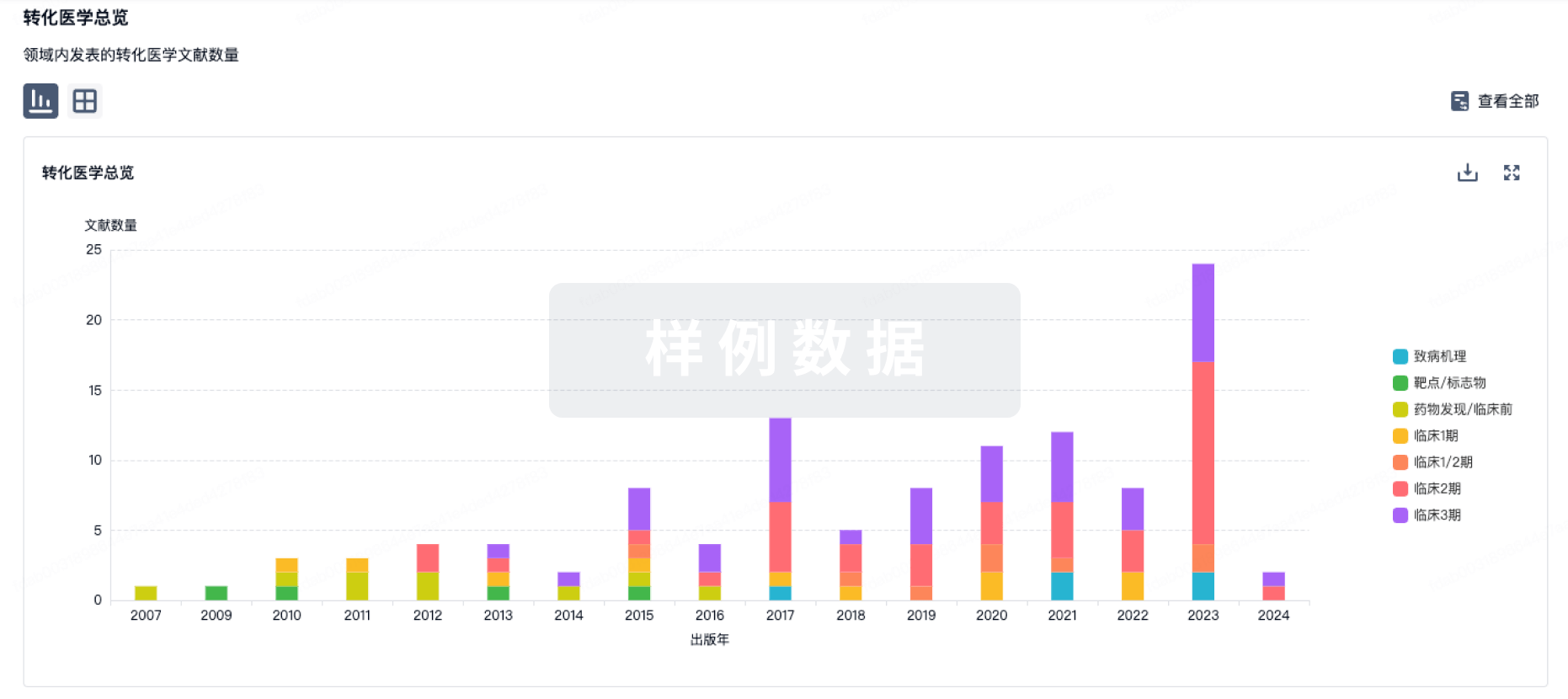
转化医学
使用我们的转化医学数据加速您的研究。
登录
或
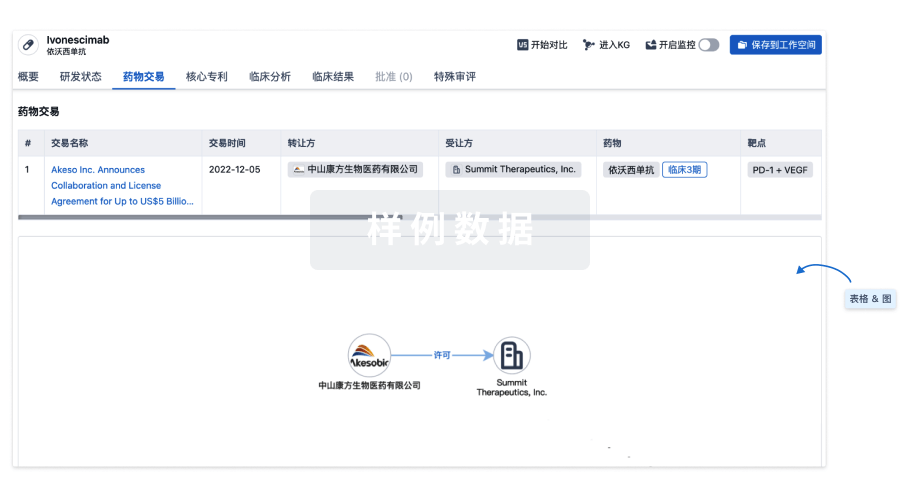
药物交易
使用我们的药物交易数据加速您的研究。
登录
或
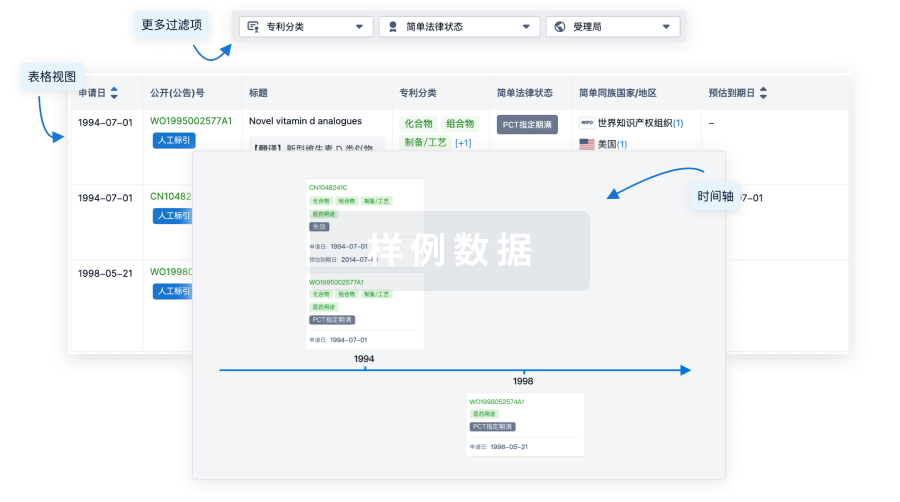
核心专利
使用我们的核心专利数据促进您的研究。
登录
或
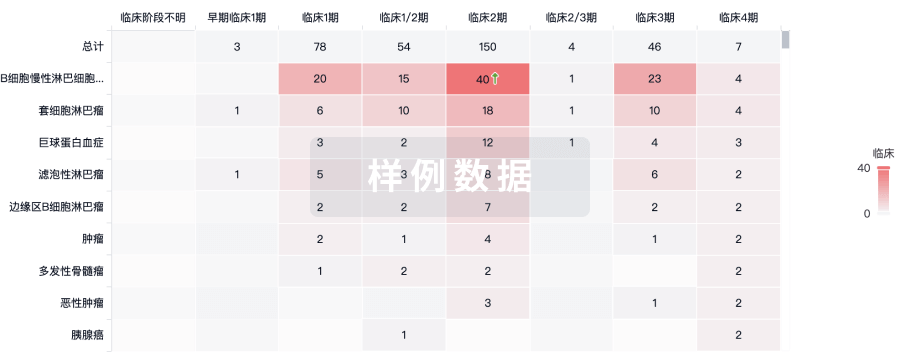
临床分析
紧跟全球注册中心的最新临床试验。
登录
或
批准
利用最新的监管批准信息加速您的研究。
登录
或
特殊审评
只需点击几下即可了解关键药物信息。
登录
或
提出任何生物医药研究问题
让每一步生物医药决策都精准制胜
基于十亿级生物数据与全球情报的精准 AI,赋能早期药物发现
立即开始免费试用!
智慧芽新药情报库是智慧芽专为生命科学人士构建的基于AI的创新药情报平台,助您全方位提升您的研发与决策效率。
立即接入生物医药数据包
智慧芽新药库数据也通过智慧芽开放平台,以MCP或API服务形式对外开放。立即使用我们的MCP服务定制您的LLM智能体。
生物序列数据库
生物药研发创新
免费使用
化学结构数据库
小分子化药研发创新
免费使用