预约演示
更新于:2026-10-03
177Lu-AP-01
更新于:2026-10-03
概要
基本信息
药物类型 核素偶联药物、治疗用放射药物 |
别名- |
靶点 |
作用方式 抑制剂 |
作用机制 PSMA抑制剂(前列腺癌特异性膜抗原抑制剂) |
在研适应症 |
非在研适应症- |
原研机构 |
在研机构 |
非在研机构- |
权益机构- |
最高研发阶段临床前 |
首次获批日期- |
最高研发阶段(中国)临床前 |
特殊审评- |


结构/序列
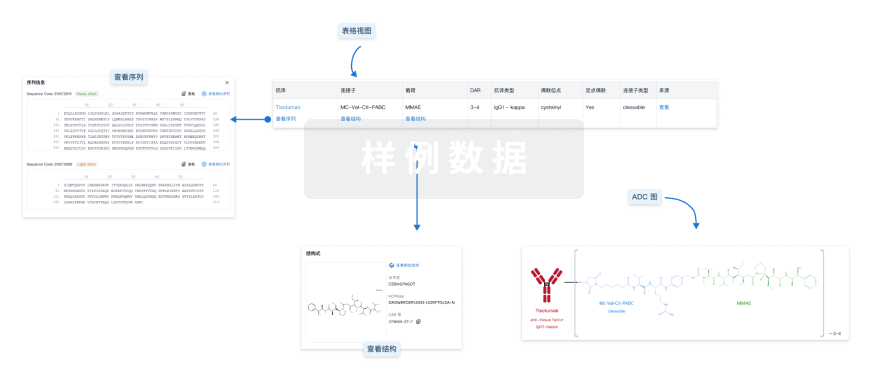
使用我们的ADC技术数据为新药研发加速。
登录
或
关联
100 项与 177Lu-AP-01 相关的临床结果
登录后查看更多信息
100 项与 177Lu-AP-01 相关的转化医学
登录后查看更多信息
100 项与 177Lu-AP-01 相关的专利(医药)
登录后查看更多信息
1
项与 177Lu-AP-01 相关的文献(医药)2026-05-01·European Journal of Nuclear Medicine and Molecular Imaging
Preclinical evaluation of 68Ga- and 177Lu-Labeled AP-01 for the targeted treatment of prostate cancer with moderate PSMA expression
Article
作者: Zhang, Jianping ; He, Simin ; Huang, Xuan ; Pan, Xiaoyu ; Song, Shaoli ; Xu, Xiaoping ; Liu, Yi ; Wang, Xiao
PURPOSE:
AG10 is a molecule that can bind to the thyroxine (T4) binding pocket of transthyretin (TTR). The reversible association between the hydrophilic peptides and TTR using AG10 could increase the circulation half-life (t1/2). We hypothesized that modifying PSMA-617 with AG10 could extend the t1/2 of PSMA-617 and mitigate the limitations caused by insufficient uptake. The aim of this study was to develop an optimal AG10-modified radiotherapeutic agent that could maximize both tumor uptake and absorbed dose, thereby enhancing therapeutic efficacy for the treatment of tumors, even with moderate PSMA expression.
METHODS:
Lysine was used as a linker for the conjugation of PSMA-617 and AG10 to synthesize AG10-PSMA-617 (AP-01). AP-01 was labeled with 68Ga to image prostate carcinoma xenografts with moderate PSMA expression, serving as a reference for PSMA radio-ligand therapy (PRLT) based treatments. AP-01 was labeled with 177Lu for the treatment of prostate carcinoma xenografts with moderate PSMA expression. The binding properties and biodistribution of 68Ga-AP-01 and 177Lu-AP-01 were studied both in vitro and in vivo. The cytotoxic effects of the 177Lu-AP-01 were evaluated in prostate carcinoma xenografts.
RESULTS:
PSMA-617 was successfully conjugated with AG10 using lysine as the linker and labeled with 177Lu to produce PRLT radiopharmaceuticals-177Lu-AP-01. AP-01 was labeled with 68Ga for imaging prostate carcinoma with moderate PSMA expression. AP-01 demonstrated a high binding affinity (IC50 = 3.42 nM) for PSMA in vitro, comparable to that of PSMA-617 (IC50 = 3.38 nM) (P = 0.324). PET/CT imaging of 68Ga-AP-01 demonstrated significantly improved tumor uptake and retention as compared with 68Ga-PSMA-617. The maximum uptake of 68Ga-AP-01 and 68Ga-PSMA-617 by 22Rv1 tumors was 18.07 ± 1.19%ID/g and 9.27 ± 1.20%ID/g at 4 h pi, respectively (P < 0.05). The in vivo targeting abilities of 177Lu-AP-01 were evaluated through SPECT/CT imaging. The tumor (maximum)-to-muscle (maximum) (T/Mmax) ratio of 177Lu-AP-01 was 49.28 ± 7.18 at 72 h pi. However, the T/Mmax ratio of 177Lu-PSMA-617 was 8.39 ± 8.57 at 48 h pi. Biodistribution studies further confirmed the significantly higher tumor uptake of 177Lu-AP-01 (4.87 ± 0.91%ID/g) compared to 177Lu-PSMA-617 (1.12 ± 0.01%ID/g) at 96 h post-injection (P < 0.05). The inhibitory efficiency of 177Lu-AP-01 on 22Rv1 tumor xenografts was 88.36%, which was superior to that of 177Lu-PSMA-617 (73.36%) (P < 0.05). 177Lu-AP-01 demonstrated no toxic effects on hepatorenal function, routine blood tests, or major organs in mice when compared to the control group.
CONCLUSION:
In this study, AP-01 was successfully synthesized. 68Ga-AP-01 and 177Lu-AP-01 were obtained with high radiochemical purity and stability. High binding affinity and PSMA targeting specificity were identified in vitro and in vivo. With significantly enhanced tumor uptake and retention, 177Lu-AP-01 has the potential to improve therapeutic efficacy for the treatment of prostate cancer with moderate PSMA expression.
1
项与 177Lu-AP-01 相关的新闻(医药)2026-02-06
源于:肿瘤核医学 2026年1月9日 15:22 上海
复旦大学附属肿瘤医院核医学科是“上海分子影像探针工程技术研究中心”及市科委新型放射性药物研发与应用评价平台,具备放射性药品IV类资质,已推动50余种新型分子影像探针临床转化。科室聚焦肿瘤精准诊疗的迫切需要,借助核医学分子探针的优势,已经形成鲜明的核医学分子探针研发与转化的优势与特色。近年来在人才梯队、国家级/省部级科研项目、GCP临床研究、国际高水平论文、专利与成果转化方面持续取得进展,学科影响力稳步提升。继往开来,深耕不辍。2025年,我科在分子影像与精准诊疗领域再结硕果,多项研究实现从基础到临床的关键突破。特此遴选十篇代表性工作,以飨读者。
一:J Nucl Med|Nectin-4靶向PET新探针Ga-68-FZ-NR-1实现TNBC的“首次人体”评价。
Nectin-4 是三阴性乳腺癌(TNBC)的新兴诊疗生物标志物。复旦肿瘤医院团队基于环肽结构设计并合成了多种 Nectin-4 靶向Ga-68 标记PET示踪剂(Ga-68-FZ-NR-1/2/3),经体外与动物模型系统筛选后确定Ga-68-FZ-NR-1作为候选探针,表现出更优的靶向效率、良好的药代与安全性;进一步在 9 例 TNBC 的首次人体探索中,Ga-68-FZ-NR-1 PET/CT 可稳定显示肿瘤病灶,与 F-18-FDG 的病灶检出相互印证,并与活检免疫组化的 Nectin-4 高表达相一致,为 TNBC 的 Nectin-4 无创分层评估及靶向治疗人群筛选提供了可转化的分子影像工具依据。
第一作者:孙犁,2023级博士后。
原文链接:https://pubmed.ncbi.nlm.nih.gov/39947908/
二:EJNMMI|Nectin-4靶向放射性配体[Ga-68]Ga-FZNR-1在胰腺导管腺癌(PDAC)中完成头对头PET/CT验证,实现Nectin-4表达的无创定量与分期增益
本研究针对PDAC患者开展Nectin-4 靶向PET探针 [Ga-68]Ga-FZNR-1 的前瞻性临床探索。结果显示,[Ga-68]Ga-FZNR-1 在远处转移诊断上呈现更高的特异度与准确度。更重要的是,该探针还能够定量评估Nectin-4表达。因此,[Ga-68]Ga-FZNR-1 PET显像既可以作为PDAC患者重要的伴随诊断工具,又可以对Nectin-4 表达进行全身无创定量监测,用于患者分层与疗效/预后评估。
第一作者:姜春娟,博士,复旦大学附属肿瘤医院核医学科副主任医师。
原文链接:https://pubmed.ncbi.nlm.nih.gov/41134323/
三:Granzyme B PET/CT预测微卫星稳定型胃癌患者化疗联合免疫治疗疗效的临床价值
近年来,颗粒酶B(Granzyme B,GzmB)靶向成像已成为监测免疫治疗疗效的前沿方向。复旦肿瘤医院在该领域有深厚积累,前期首创研发有自主知识产权的专利(GZB),并初步探讨其应用价值,成果发表在权威期刊(Adv Sci.2021;8:e2102500,Eur J Nucl Med Mol Imaging. 2023;50:275-286)。在免疫监测疗效领域,团队的新型GzmB靶向探针[68Ga]Ga-NOTA-GSI,在胃癌患者中初步证实了其临床价值(J Nucl Med. 2024,65(11):1695-1701)。本次研究深度验证[68Ga]Ga-NOTA-GSI PET/CT在胃癌精准诊疗中的作用,系统评估其在微卫星稳定型胃癌患者化疗联合免疫治疗中的预测价值。研究结果表明,治疗后肿瘤[68Ga]Ga-NOTA-GSI的摄取水平与治疗应答呈正相关,摄取越高,疗效越好;其中,SUVmax ≥ 2.6可作为独立预测指标,提示患者无进展生存期显著延长。此外,该探针在新辅助、辅助及姑息治疗多种临床场景中均表现出良好的稳定性与可靠性,为个体化疗效评估与治疗策略的动态调整提供了有力的影像学依据,具有广阔的临床转化前景。
第一作者,刘秋芳,博士,复旦大学附属肿瘤医院核医学科主治医师。
四:J Med Chem|首个CTSD靶向Ga-68 PET示踪剂用于乳腺癌分子影像
本研究针对肿瘤进展关键生物标志物——溶酶体天冬氨酸蛋白酶Cathepsin D(CTSD),开发了首款靶向放射性示踪剂。优选化合物[Ga-68]Ga-NOTA-FZCD-3具有以下特性:高亲和力(KD=0.65μM)与快速代谢(t1/2=16.61min);肿瘤特异性摄取(乳腺癌MDA-MB-175VII模型1h摄取3.63%ID/g,T/NT=7.65);稳定性与安全性(血液>2h稳定,无毒性信号)。该示踪剂展现出肿瘤早期检测、分层及疗效监测的转化价值。
第一作者:席悦,2025届博士毕业生。
原文链接:https://doi.org/10.1021/acs.jmedchem.5c02151
五:J Med Chem|CDK4/6靶向PET示踪剂用于乳腺癌CDK4/6抑制剂敏感性无创评估
本研究针对乳腺癌 CDK4/6 抑制剂(palbociclib 为代表)临床应答 / 耐药痛点,开发验证 PET 示踪剂 [Ga-68] Ga-DOTA-Bua-CDKi,用于无创筛选敏感患者、指导个体化治疗。采用 “构象非限制” 设计,通过柔性烷基链连接 DOTA-Ga-68 与药物母核以尽量保留与靶蛋白结合并优化体内理化性质;在敏感性递减乳腺癌细胞系及移植瘤模型中验证。结果显示探针可 PET/CT 区分高敏感模型(MCF-7 移植瘤 60min 摄取 8.40±0.85 % D/g,三模型摄取差异显著),摄取具特异性并完成了初步生物安全性评估,支持其作为疗效敏感评估型分子影像工具的转化潜力。
第一作者:吉梦静,2025届硕士毕业生。
原文链接:https://doi.org/10.1021/acs.jmedchem.4c02672
六:Theranostics|CCK2R靶向新型诊疗探针推动NET核素诊疗转化
本团队针对神经内分泌肿瘤高表达靶点CCK2R,原创设计了二聚体诊疗探针DOTA-CCK2R-dimer,实现了“一探针双核素”诊疗一体化(Ga-68用于PET显像、Lu-177用于核素治疗)。相比单体探针,该二聚体在体内具有更优的肿瘤靶向性与滞留能力。治疗上,Lu-177标记的二聚体能选择性清除高增殖、低分化肿瘤亚群;联合mTOR抑制剂RAD001后,通过抑制谷胱甘肽解毒通路、增强氧化应激,进一步协同增效,并提示GSTK1为潜在放射敏感性调控分子。该研究为CCK2R阳性难治性神经内分泌肿瘤提供了新的精准诊疗联合策略。
第一作者:卞琳杰,2023级在读博士。
原文链接:https://www.thno.org/v15p9306.htm
七:EJNMMI|新型AR靶向PET探针([Ga-68]Ga-DOTA-FZAR-2)完成从动物到首次人体验证
本研究成功开发了基于恩杂鲁胺的系列Ga-68标记PET探针,用于前列腺癌雄激素受体(AR)显像。临床前研究证实了其对AR的特异性靶向。其中,优选探针[Ga-68]Ga-DOTA-FZAR-2在首次人体试验(8例前列腺癌患者)中表现出良好的安全性,并于给药后1h达到较优显像窗口(SUVmean约2.84,肿瘤/肌肉比约7.97),展现了其在无创监测与评估前列腺癌AR表达中的临床转化潜力。
第一作者:林纾怡,2023级在读硕士。
原文链接:https://pubmed.ncbi.nlm.nih.gov/40986091/
八:EJNMMI|AG10改造PSMA-617(AP-01)显著延长循环半衰期并提升中等PSMA表达肿瘤的诊疗效能
该研究围绕“如何提高核素治疗药物对PSMA中度阳性肿瘤的治疗效果”这一科学问题展开。AG10通过赖氨酸连接臂偶联PSMA-617,获得AP-01。AP-01与PSMA-617具有相当的体外亲和力(IC50≈3.42 nM)。但是经过AG10优化后,AP-01的体内循环半衰期明显延长(55.03 min vs 16.00 min),68Ga-AP-01与68Ga-PSMA-617经尾静脉注射4h后,PSMA中度阳性的22Rv1皮下瘤模型对二者的摄取分别为(18.07 %ID/g vs 9.27 %ID/g),Lu-177-AP-01与Lu-177-PSMA-617经尾静脉注射后,22Rv1皮下瘤模型中,最高靶本比分别为(49.28 vs 8.39)。由于肿瘤摄取的提高,177Lu-AP-01的肿瘤抑制效率明显高于Lu-177-PSMA-617(88.63% vs 73.36%)。
第一作者:刘毅,博士,复旦大学附属肿瘤医院核医学科规培医生。
原文链接:https://link.springer.com/article/10.1007/s00259-025-07704-2
九:EJNMMI|ENT1靶向尿苷转运PET/NIR-II双模态平台用于精准诊断与术中导航
针对ENT1(SLC29A1)介导的尿苷转运缺乏高灵敏度成像工具的问题,研究构建了双探针平台:[Ga-68]Ga-DOTA-FZUD 用于PET代谢成像,ICG-FZUD 用于NIR-II荧光术中导航。该平台在多种肿瘤模型中表现出与ENT1表达一致的摄取差异(如ENT1较高的胰腺癌模型AsPC-1/Panc-1摄取更高),肿瘤/肌肉比稳定>3.5;NIR-II成像可清晰勾勒肿瘤边界,并展示穿越血脑屏障实现原位胶母瘤可视化;同时在人胃癌切除标本离体成像中也验证了选择性摄取与病理一致性,提示具备“诊断—导航”一体化转化潜力。
第一作者:卞琳杰,2023级在读博士。
原文链接:https://pubmed.ncbi.nlm.nih.gov/40991020/
十:J Med Chem|Linker驱动的FAPI三聚体突破——Ga-68/Lu-177-DOTA-FAPI-FUSCC-Tri 显著提升肿瘤摄取与滞留,实现FAP阳性肿瘤诊疗一体化
围绕FAP靶向探针“多价化”策略的关键瓶颈(空间位阻与药代学),研究原创设计新型三聚体linker(FUSCC),构建 Ga-68/Lu-177-DOTA-FAPI-FUSCC-Tri 并系统评估。该三聚体相较单体表现出更强FAP结合亲和力(0.621 vs 3.5 nM)、肿瘤摄取提升约3.5倍且肿瘤滞留显著延长;同时作为首批Ga-68标记FAPI三聚体完成体内验证,并进一步探索Lu-177标记的放射性配体治疗,在FAP阳性模型中显示明确的抗肿瘤效应,为FAP靶向“显像+治疗”一体化提供了可推广的新范式。
第一作者:程华,2023级博士后。
原文链接:https://doi.org/10.1021/acs.jmedchem.5c01873
END
编辑:唐亦睿
初审:杨忠毅
审核:宋少莉
核医学科简介
复旦大学附属肿瘤医院核医学科是上海分子影像探针工程技术研究中心,上海市科委新型放射性药物研发和应用评价技术平台。拥有放射性药品使用许可证IV类证书,科室已临床转化30多种新型分子影像探针。多种分子影像探针临床转化,在肿瘤精准诊断、分期、疗效评估和活体内靶点表达的评估方面发挥着重要作用,已成为复旦肿瘤的特色品牌之一。近年来,科室人才队伍建设日益提升,一批获得上海市领军人才、上海市优秀技术带头人、上海市青年拔尖人才、上海市「浦江人才计划」、上海市「医苑新星」、上海市「扬帆计划」及「雏鹰计划」等中青年医学人才脱颖而出。近五年科室获得包括国自然重点、科技部重点等在内的国家级项目19项、省部级项目12项,承担GCP项目33项。多项研究成果发表于JCI、Advanced Science、JNM、EJNMMI、Clinical Cancer Research、 ACS Nano等国际权威期刊,申请专利20余项,成功实现5项高达数千万元的商业转化。科室的学科地位与学术声誉不断提升。
相关链接:万马奔腾,核聚光华——复旦大学附属肿瘤医院核医学科年终总结大会顺利召开
《中国核医学医师》微信公众号
主办单位
编审:李春林
关注人数:55000+人
总第3616期
2026年2月6日
关注中国核医学医师
依法行医、依法维权
欢迎转发、欢迎转载
欢迎关注
《中国医师协会核医学医师分会官方网》
http://www.caonmp.com/
声明:
本文著作权属原创者所有,不代表本微信公众号立场。
如涉著作权事宜,请联系删除
放射疗法免疫疗法
100 项与 177Lu-AP-01 相关的药物交易
登录后查看更多信息
研发状态
10 条进展最快的记录, 后查看更多信息
登录
| 适应症 | 最高研发状态 | 国家/地区 | 公司 | 日期 |
|---|---|---|---|---|
| PSMA阳性前列腺癌 | 临床前 | 中国 | 2025-12-18 | |
| PSMA阳性前列腺癌 | 临床前 | 中国 | 2025-12-18 |
登录后查看更多信息
临床结果
临床结果
适应症
分期
评价
查看全部结果
| 研究 | 分期 | 人群特征 | 评价人数 | 分组 | 结果 | 评价 | 发布日期 |
|---|
No Data | |||||||
登录后查看更多信息
转化医学
使用我们的转化医学数据加速您的研究。
登录
或

药物交易
使用我们的药物交易数据加速您的研究。
登录
或

核心专利
使用我们的核心专利数据促进您的研究。
登录
或

临床分析
紧跟全球注册中心的最新临床试验。
登录
或

批准
利用最新的监管批准信息加速您的研究。
登录
或

特殊审评
只需点击几下即可了解关键药物信息。
登录
或

提出任何生物医药研究问题
让每一步生物医药决策都精准制胜
基于十亿级生物数据与全球情报的精准 AI,赋能早期药物发现
立即开始免费试用!
智慧芽新药情报库是智慧芽专为生命科学人士构建的基于AI的创新药情报平台,助您全方位提升您的研发与决策效率。
立即接入生物医药数据包
智慧芽新药库数据也通过智慧芽开放平台,以MCP或API服务形式对外开放。立即使用我们的MCP服务定制您的LLM智能体。
生物序列数据库
生物药研发创新
免费使用
化学结构数据库
小分子化药研发创新
免费使用