预约演示
更新于:2026-06-04
CKBA
赛克乳香酸
更新于:2026-06-04
概要
基本信息
药物类型 小分子化药 |
别名 3-O-cyclohexane carbonyl-11-keto-β-boswellic acid |
作用方式 调节剂、激动剂、抑制剂 |
作用机制 ACC1 modulators(Acetyl-CoA carboxylase 1 modulators)、HSD17B4 agonists(hydroxysteroid 17-beta dehydrogenase 4 agonists)、NF-κB抑制剂(核因子NF-κB复合体抑制剂) |
非在研适应症 |
原研机构 |
非在研机构- |
权益机构- |
最高研发阶段临床3期 |
首次获批日期- |
最高研发阶段(中国)临床3期 |
特殊审评- |


登录后查看时间轴
结构/序列
分子式C37H56O5 |
InChIKeyCLZORHOZJZADHJ-DCPXLJCJSA-N |
CAS号1786406-66-3 |
关联
7
项与 赛克乳香酸 相关的临床试验ChiCTR2600119496
A multicenter, open-label, single-arm Phase IIa clinical trial evaluating the efficacy and safety of Ciklentanilic acid (CKBA) cream in the treatment of papulopustular rosacea
CTR20233352
在非节段型白癜风受试者中评估赛克乳香酸(CKBA)软膏安全性、有效性的多中心、随机、双盲、平行、溶媒对照、剂量探索Ⅱ期临床试验
CTR20220656
在轻中度斑块状银屑病受试者中评估赛克乳香酸(CKBA)软膏的安全耐受性、疗效和药代动力学特征的多中心、随机、双盲、安慰剂对照Ⅱa 期临床研究
100 项与 赛克乳香酸 相关的临床结果
登录后查看更多信息
100 项与 赛克乳香酸 相关的转化医学
登录后查看更多信息
100 项与 赛克乳香酸 相关的专利(医药)
登录后查看更多信息
2
项与 赛克乳香酸 相关的文献(医药)2024-04-01British Journal of Pharmacology
Identification and pre‐clinical investigation of 3‐O‐cyclohexanecarbonyl‐11‐keto‐β‐boswellic acid as a drug for external use to treat psoriasis
Article
作者: Jing Bai ; Zhenyao Xu ; Xing'e Zhao ; Honglin Wang ; Fangzhou Lou ; Qun Li ; Linlin Cui
Abstract:
Background and Purpose:
Psoriasis vulgaris is a refractory skin inflammatory disorder with 80% of the cases belonging to the mild‐to‐moderate type, which can be controlled by topical treatment. Nevertheless, the drugs for external use have not been upgraded for decades. We modified acetyl‐11‐keto‐beta‐boswellic acid (ABKA), a natural compound shown to treat psoriasis animal models, to improve efficacy and solubility for topical use.
Experimental Approach:
Eleven compounds were synthesized using AKBA as a lead compound, and their effects on Th17 cell differentiation were screened. 3‐O‐cyclohexanecarbonyl‐11‐keto‐β‐boswellic acid (CKBA) potently inhibited Th17 cell differentiation. Its efficacy in a mouse model of psoriasis was assessed along with its pharmacology and safety profile when topically or systemically delivered to several animal species.
Key Results:
CKBA inhibited mouse and human Th17 cell differentiation with an IC50 of 3.28 and 3.61 μM, respectively, and directly targeted acetyl‐CoA carboxylase 1 (ACC1). Safety evaluation and toxicity tests suggested that systemically delivered high‐dose CKBA for 14 days had no dose‐associated adverse effects on the CNS, haematopoietic, cardiovascular, respiratory and digestive systems of cynomolgus monkeys. CKBA ointment permeated the skin and did not irritate or sensitize intact skin. CKBA ointment mediated dose‐dependent suppression of imiquimod‐induced psoriasis‐like skin inflammation with slow absorption and limited bioavailability (<10% in rats and <1% in minipigs).
Conclusions and Implications:
CKBA is safe when topically or systemically delivered to animals. The beneficial effects of CKBA ointment in a mouse model of psoriasis indicate that this is a promising drug candidate for further development as a treatment for psoriasis.
2023-09-01European journal of immunology
CKBA suppresses mast cell activation via ERK signaling pathway in murine atopic dermatitis
Article
作者: Ziyang Zhang ; Zhikai Wang ; Xiaoyin Niu ; Xiaojie Cai ; Wenxiang Ding ; Honglin Wang ; Jiajia Tong ; Zilong Fang ; Zhenyao Xu ; Siyu Deng ; Hong Zhou ; Yan Li ; Fangzhou Lou ; Xichen Zheng ; Yang Sun
Abstract:
Atopic dermatitis (AD) is a common inflammatory skin disorder. Mast cells play an important role in AD because they regulate allergic reactions and inflammatory responses. However, whether and how the modulation of mast cell activity affects AD has not been determined. In this study, we aimed to determine the effects and mechanisms of 3‐O‐cyclohexanecarbonyl‐11‐keto‐β‐boswellic acid (CKBA). This natural compound derivative alleviates skin inflammation by inhibiting mast cell activation and maintaining skin barrier homeostasis in AD. CKBA markedly reduced serum IgE levels and alleviated skin inflammation in calcipotriol (MC903)‐induced AD mouse model. CKBA also restrained mast cell degranulation both in vitro and in vivo. RNA‐seq analysis revealed that CKBA downregulated the extracellular signal‐regulated kinase (ERK) signaling in BM‐derived mast cells activated by anti‐2,4‐dinitrophenol/2,4‐dinitrophenol‐human serum albumin. We proved that CKBA suppressed mast cell activation via ERK signaling using the ERK activator (t‐butyl hydroquinone) and inhibitor (selumetinib; AZD6244) in AD. Thus, CKBA suppressed mast cell activation in AD via the ERK signaling pathway and could be a therapeutic candidate drug for AD.
100 项与 赛克乳香酸 相关的药物交易
登录后查看更多信息
研发状态
10 条进展最快的记录, 后查看更多信息
登录
| 适应症 | 最高研发状态 | 国家/地区 | 公司 | 日期 |
|---|---|---|---|---|
| 非节段型白癜风 | 临床3期 | 中国 | 2026-04-16 | |
| 玫瑰痤疮 | 临床2期 | 中国 | 2026-02-26 | |
| 斑块状银屑病 | 临床2期 | 中国 | 2022-05-23 | |
| 阿尔茨海默症 | 临床前 | 中国 | 2025-10-29 |
登录后查看更多信息
临床结果
临床结果

转化医学
使用我们的转化医学数据加速您的研究。
登录
或
药物交易
使用我们的药物交易数据加速您的研究。
登录
或
核心专利
使用我们的核心专利数据促进您的研究。
登录
或
临床分析
紧跟全球注册中心的最新临床试验。
登录
或
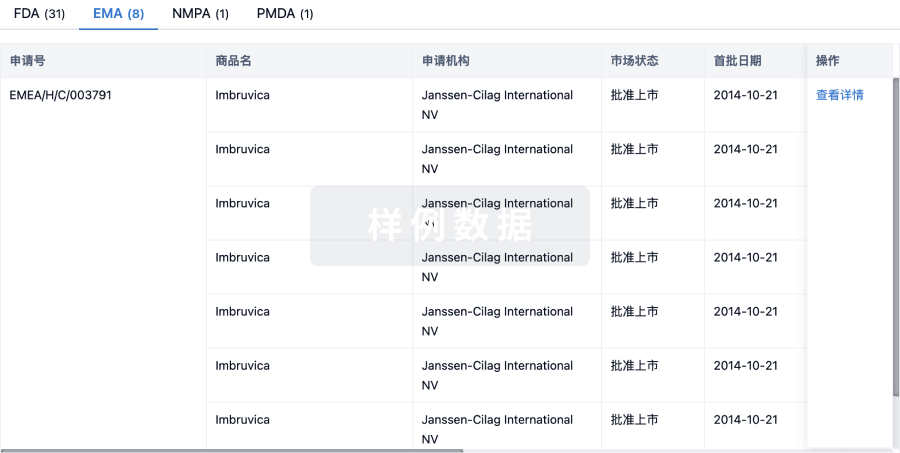
批准
利用最新的监管批准信息加速您的研究。
登录
或
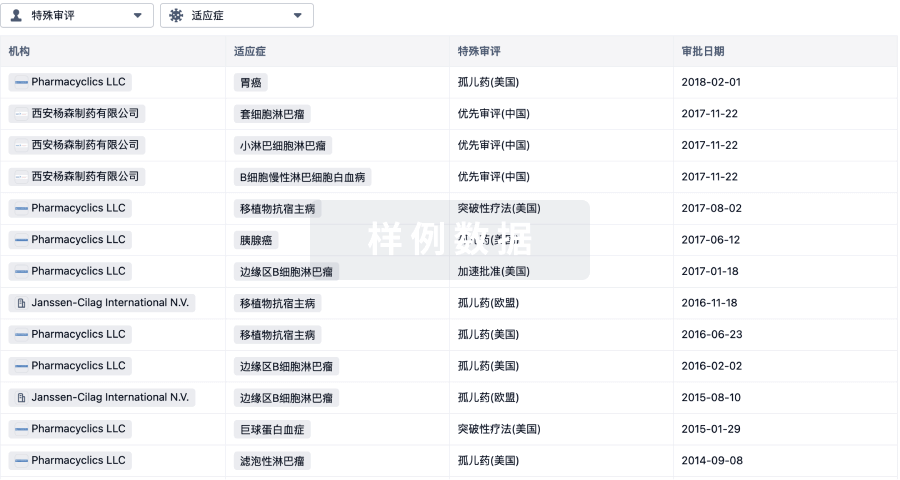
特殊审评
只需点击几下即可了解关键药物信息。
登录
或
提出任何生物医药研究问题
让每一步生物医药决策都精准制胜
基于十亿级生物数据与全球情报的精准 AI,赋能早期药物发现
立即开始免费试用!
智慧芽新药情报库是智慧芽专为生命科学人士构建的基于AI的创新药情报平台,助您全方位提升您的研发与决策效率。
立即接入生物医药数据包
智慧芽新药库数据也通过智慧芽开放平台,以MCP或API服务形式对外开放。立即使用我们的MCP服务定制您的LLM智能体。
生物序列数据库
生物药研发创新
免费使用
化学结构数据库
小分子化药研发创新
免费使用