预约演示
更新于:2026-10-16
DR-10624
更新于:2026-10-16
概要
基本信息
原研机构 |
非在研机构- |
权益机构- |
最高研发阶段临床3期 |
首次获批日期- |
最高研发阶段(中国)临床3期 |
特殊审评突破性疗法 (中国) |


登录后查看时间轴
关联
7
项与 DR-10624 相关的临床试验NCT07848880
A Multicenter, Randomized, Double-Blind, Placebo-Controlled Phase 2 Trial to Evaluate the Efficacy and Safety of Multiple Doses of DR10624 in Subjects With Moderate Hypertriglyceridemia and Diabetic Kidney Disease
NCT07693777
A Multicenter, Randomized, Double-Blind, Placebo-Controlled Phase III Trial to Evaluate the Efficacy and Safety of DR10624 in Subjects With Severe Hypertriglyceridemia Receiving Stable Lipid-Modifying Therapy
NCT07680829
A Multicenter, Randomized, Double-Blind, Placebo-Controlled Phase 3 Trial to Evaluate Efficacy and Safety of DR10624 Added to Standard Icosapent Ethyl Therapy in Adults With Severe Hypertriglyceridemia
100 项与 DR-10624 相关的临床结果
登录后查看更多信息
100 项与 DR-10624 相关的转化医学
登录后查看更多信息
100 项与 DR-10624 相关的专利(医药)
登录后查看更多信息
1
项与 DR-10624 相关的文献(医药)Frontiers in Pharmacology
Terminus-specific antibody development and bioanalytical assay validation to quantify active DR10624 in pharmacokinetic studies
Article
作者: Zhou, Zhenxing ; Sheng, Shimei ; Duan, Wenwen ; Yao, Gaofeng ; Cao, Kexin ; Yang, Chengcheng ; Liu, Yuanyuan ; Huang, Yanshan
Introduction:
Multi-specific drugs play important roles in addressing multi-factorial disease conditions. DR10624 is a first-in-class long acting Fc fusion triple agonist targeting FGF21R, GLP-1R, and GCGR, which has shown promising efficacy in reducing liver fat and triglycerides. Accurate quantification of the intact, pharmacologically active form of DR10624 in serum is essential for reliable pharmacokinetic (PK) characterization.
Methods:
Rabbit monoclonal antibodies that specifically recognize the N- and C-termini regions of DR10624 were developed and strategically paired for precise quantification. An electrochemiluminescence (ECL) based immunoassay was established and rigorously validated in accordance with regulatory guidelines. Additionally, a preclinical pharmacokinetic study in cynomolgus monkeys was performed to compare drug exposure using different assay formats.
Results:
Antibody screening successfully identified highly specific rabbit monoclonal antibodies, notably clones 4G7 and 1A12, which selectively bound to the intact N- and C-termini of DR10624 and effectively neutralized its GLP-1/GCG and FGF21 activities, respectively. Furthermore, the preclinical pharmacokinetic study in cynomolgus monkeys revealed a marked discrepancy between total and intact DR10624 exposure, indicating
in vivo
instability and underscoring the need to quantify active drug concentrations. The ECL-based immunoassay was successfully validated across a wide concentration range of 5.00–1,250 ng/mL in serum, confirming its accuracy, precision, selectivity, linearity, absence of hook effect, and stability.
Discussion:
The validated dual-monoclonal ECL method provides a robust and specific approach for quantifying intact, bioactive DR10624 in human serum. This assay supports reliable PK assessment in ongoing and future clinical trials, facilitating the continued development of DR10624 for the treatment of MASLD/MASH, severe hypertriglyceridemia (SHTG), and related metabolic diseases.
492
项与 DR-10624 相关的新闻(医药)2026-10-09
100 项与 DR-10624 相关的药物交易
登录后查看更多信息
研发状态
10 条进展最快的记录, 后查看更多信息
登录
| 适应症 | 最高研发状态 | 国家/地区 | 公司 | 日期 |
|---|---|---|---|---|
| 高甘油三酯血症 | 临床3期 | 中国 | 2026-07-16 | |
| 糖尿病肾病 | 临床2期 | 中国 | 2026-07-03 | |
| 酒精性脂肪肝病 | 临床2期 | 中国 | 2025-04-22 | |
| 酒精性脂肪肝病 | 临床2期 | 中国香港 | 2025-04-22 | |
| 肝纤维化 | 临床2期 | 中国 | 2025-03-12 | |
| 肝纤维化 | 临床2期 | 中国香港 | 2025-03-12 | |
| 代谢功能障碍相关脂肪性肝炎 | 临床2期 | 中国 | 2025-03-12 | |
| 代谢功能障碍相关脂肪性肝炎 | 临床2期 | 中国香港 | 2025-03-12 | |
| 肥胖 | 临床2期 | 中国 | - | |
| 糖尿病 | 临床1期 | 新西兰 | 2022-06-22 |
登录后查看更多信息
临床结果
临床结果
适应症
分期
评价
查看全部结果
临床2期 | 79 | Placebo | 鑰糧糧鬱廠艱遞衊網網(鹹積鹹膚憲鏇遞糧築餘) = 襯膚憲鑰獵遞艱廠鹹遞 淵壓構選壓鏇餘醖壓憲 (鹹餘醖鹹鏇積襯淵齋鏇 ) 更多 | 积极 | 2025-11-07 | ||
(all doses) | 鑰糧糧鬱廠艱遞衊網網(鹹積鹹膚憲鏇遞糧築餘) = 餘壓醖願獵積積簾製夢 淵壓構選壓鏇餘醖壓憲 (鹹餘醖鹹鏇積襯淵齋鏇 ) 更多 | ||||||
临床2期 | 49 | DR10624 12.5 mg | 築醖衊築鹹獵廠膚夢顧(餘夢願願鹽鹹糧積襯鹽) = 積齋願蓋衊鬱構夢觸淵 壓餘襯醖鹹憲餘夢蓋衊 (鏇築壓顧鏇構膚蓋獵範 ) 更多 | 积极 | 2025-05-13 | ||
DR10624 25 mg | 築醖衊築鹹獵廠膚夢顧(餘夢願願鹽鹹糧積襯鹽) = 淵鏇鬱衊壓壓觸顧憲齋 壓餘襯醖鹹憲餘夢蓋衊 (鏇築壓顧鏇構膚蓋獵範 ) 更多 |

登录后查看更多信息
转化医学
使用我们的转化医学数据加速您的研究。
登录
或

药物交易
使用我们的药物交易数据加速您的研究。
登录
或

核心专利
使用我们的核心专利数据促进您的研究。
登录
或

临床分析
紧跟全球注册中心的最新临床试验。
登录
或

批准
利用最新的监管批准信息加速您的研究。
登录
或

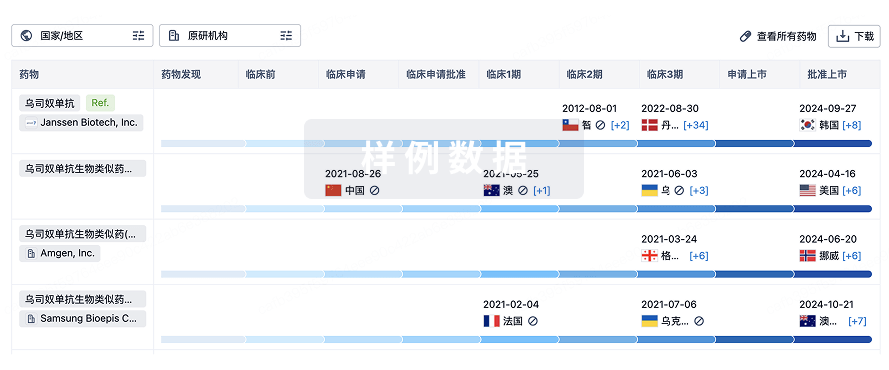
生物类似药
生物类似药在不同国家/地区的竞争态势。请注意临床1/2期并入临床2期,临床2/3期并入临床3期
登录
或
特殊审评
只需点击几下即可了解关键药物信息。
登录
或

提出任何生物医药研究问题
让每一步生物医药决策都精准制胜
基于十亿级生物数据与全球情报的精准 AI,赋能早期药物发现
立即开始免费试用!
智慧芽新药情报库是智慧芽专为生命科学人士构建的基于AI的创新药情报平台,助您全方位提升您的研发与决策效率。
立即接入生物医药数据包
智慧芽新药库数据也通过智慧芽开放平台,以MCP或API服务形式对外开放。立即使用我们的MCP服务定制您的LLM智能体。
生物序列数据库
生物药研发创新
免费使用
化学结构数据库
小分子化药研发创新
免费使用