预约演示
更新于:2026-09-26
Mirvetuximab
更新于:2026-09-26
概要
基本信息
原研机构 |
在研机构 |
非在研机构- |
权益机构- |
最高研发阶段临床阶段不明 |
首次获批日期- |
最高研发阶段(中国)- |
特殊审评- |

结构/序列
Sequence Code 213022L
来源: *****
Sequence Code 10079093H
来源: *****
关联
100 项与 Mirvetuximab 相关的临床结果
登录后查看更多信息
100 项与 Mirvetuximab 相关的转化医学
登录后查看更多信息
100 项与 Mirvetuximab 相关的专利(医药)
登录后查看更多信息
21
项与 Mirvetuximab 相关的文献(医药)2026-06-01·INTERNATIONAL JOURNAL OF GYNECOLOGICAL CANCER
Improved progression-free survival with mirvetuximab and bevacizumab in platinum-resistant ovarian cancer: a retrospective real-world analysis
Article
作者: Schlumbrecht, Matthew P ; Roberts, Jill N T ; Courel, Steve ; Sinno, Abdulrahman K ; Nair, Navya
OBJECTIVE:
Mirvetuximab soravtansine-gynx, a FRα-targeting antibody-drug conjugate, is effective in treating FRα-expressing platinum-resistant ovarian cancer. Bevacizumab, a vascular endothelial growth factor inhibitor, may potentiate antibody-drug conjugates through vascular normalization and improved intra-tumoral delivery. This study evaluated real-world outcomes of mirvetuximab with or without bevacizumab in platinum-resistant ovarian cancer.
METHODS:
We conducted a single-institution retrospective review of patients with platinum-resistant ovarian cancer treated with mirvetuximab between November 2022 and April 2025. Demographic, clinical, and survival data were abstracted from electronic medical records. Standard statistical analyses were performed using SPSS version 29.
RESULTS:
A total of 51 patients who initiated mirvetuximab were included in the analysis; 20 (39.2%) received combination mirvetuximab plus bevacizumab. Most patients (86.3%) had previous bevacizumab exposure. Patients received a median of 3 previous lines of therapy; 3 patients (5.9%) had platinum-refractory disease. The median FRα expression level was 75% (25% to 100%). Despite lower median FRα expression in the combination group than mirvetuximab alone (57.5% vs 80%, p<.001), combination therapy was associated with significantly improved median progression-free survival (8.5 vs 4.8 months, hazard ratio 0.34, 95% confidence interval 0.16 to 0.72, p=.003). No difference in overall survival was observed. The overall objective response was 37.3% (7.8% complete, 29.4% partial), consistent with previously published prospective data.
CONCLUSIONS:
In this real-world cohort, the addition of bevacizumab to mirvetuximab was associated with improved progression-free survival despite lower FRα expression, supporting potential synergy between these agents. Combination therapy may be considered for appropriately selected patients with FRα-expressing platinum-resistant ovarian cancer.
2026-05-01·Journal of Pathology Clinical Research
Reduced folate receptor alpha (
FOLR1
) protein expression in fallopian tubes from premenopausal women: implications for the
FOLR1 CDx
assay for mirvetuximab‐soravtansine therapy
Article
作者: Malte Gronewold ; Pia Hillmann ; Nora Schaumann ; Matthias Christgen ; Elna Kuehnle ; Martin Radner ; Henriette Christgen ; Jens Hachenberg ; Annika Nasdala ; Leonie D Kandt ; Christian Hartmann
Abstract:
Mirvetuximab‐soravtansine (MIRV‐S) is an antibody‐drug conjugate targeting folate receptor alpha (FOLR1). MIRV‐S is approved for the treatment of FOLR1‐positive, platinum‐resistant ovarian carcinoma. Patient eligibility is determined by immunohistochemistry (IHC) using a companion diagnostic (CDx) assay (FOLR1‐2.1, Ventana). This assay requires on‐slide positive controls (OPCs) to aid FOLR1 evaluation. The manufacturer recommends normal fallopian tube (NFT) tissue for OPCs. Estrogen receptor signaling represses FOLR1 in cell culture models. It is unknown whether hormonal factors, such as menopausal status, also impact on FOLR1 immunoreactivity in NFTs used as OPCs. To address this question, we studied FOLR1 protein expression in NFTs (n = 51) from women aged 26–83 years. IHC was performed with the FOLR1‐2.1 CDx assay. Immunoreactivity at apical and basolateral cell membranes was assessed using H‐scores (aH‐score and bH‐score respectively). Overall FOLR1 expression was evaluated using a combined H‐score (cH‐score; i.e. aH‐ and bH‐scores added together). Immunoreactivity scores in pre‐, peri‐, and postmenopausal age groups were compared with the chi‐square test for trends. NFTs showed variable FOLR1 protein expression [median aH‐score: 152.5, interquartile range (IQR): 120–175; median bH‐score: 35, IQR: 7–85; median cH‐score: 195, IQR: 140–245]. Apical immunoreactivity was age‐independent (
p
= 0.619), but low or absent basolateral immunoreactivity (bH‐score <35) was associated with premenopausal age (
p
= 0.018). Low overall FOLR1 expression (cH‐score <195) was also associated with premenopausal age (
p
= 0.037). In conclusion, NFTs show an age‐dependent FOLR1 expression pattern, which likely reflects hormonal repression of FOLR1 in premenopausal women. NFT tissue from postmenopausal women is appropriate and meets the requirements for the current FOLR1 CDx assay.
2026-04-27·Chemical & biomedical imaging
Folate Receptor Alpha Targeted Immuno-Positron Emission Tomography Probe for Noninvasive Imaging in Triple-Negative Breast Cancer
Article
作者: Zhu, Hua ; Ma, Xiuli ; Liu, Yiqiang ; Guo, Xiaoyi ; Yang, Nan ; Liu, Jiayue ; Yang, Zhi ; Zhang, Yan
Triple-negative breast cancer (TNBC) is characterized by considerable heterogeneity and a poor response to chemotherapy. While folate receptor alpha (FRα) has attracted growing interest as a therapeutic target due to its frequent overexpression in numerous epithelial-derived tumors, we sought to visually evaluate its specific expression profile in TNBC. Therefore, we first evaluated FRα expression in 176 clinical TNBC specimens. The vast majority (84%) of samples showed no FRα expression, with the remainder showing low to moderate positivity (1+ to 3+), and no significant correlation was found with standard clinicopathological features. Given the low and variable FRα expression in TNBC, we developed an immunoPET probe, 89Zr-DFO-Mirvetuximab, for noninvasive quantification. This probe was synthesized by conjugating the anti-FRα antibody Mirvetuximab with the chelator desferrioxamine (DFO), followed by 89Zr-labeling, exhibiting high radiochemical purity (>95%) and exceptional stability. Cell uptake assays revealed time-dependent accumulation, which was blocked by excess Mirvetuximab, demonstrating FRα-specific targeting. Binding affinity measurement confirmed high affinity for FRα, with a dissociation constant (K d) of 27.46 nM. We further validated the probe in vivo using micro-PET/CT imaging and biodistribution studies in mice bearing CAL51 (FRα-high) and MDA-MB-231 (FRα-low) tumors. The results demonstrated significantly higher uptake in CAL51 models compared to MDA-MB-231 models (17.17 ± 2.24%ID/g vs 3.79 ± 1.15%ID/g, P < 0.001), which was further confirmed by subsequent immunohistochemical analysis. In conclusion, 89Zr-DFO-Mirvetuximab holds significant potential for noninvasively identifying TNBC patients with sufficient FRα expression for targeted therapies like Mirvetuximab soravtansine, thereby supporting improved patient stratification and treatment response monitoring.
91
项与 Mirvetuximab 相关的新闻(医药)2026-08-11
ADC 药物的基本结构可以理解为一个“抗体 + 连接子 + 载荷”的三段式系统。抗体负责识别肿瘤细胞表面的抗原,相当于导航模块;连接子把药物载荷固定在抗体上,并决定它在血液中是否稳定、进入细胞后能否释放;payload 则是被递送进去的高活性药物分子,真正承担杀伤肿瘤细胞的任务。快读要点
第一,payload 必须足够强,但不是越毒越好。 ADC 到达肿瘤并进入细胞的比例有限,因此 payload 通常需要纳摩尔甚至皮摩尔级活性;但毒性越强,正常组织暴露后的安全窗越难控制。
第二,payload 类型决定杀伤机制。 已上市 ADC 的主流 payload 大致包括微管抑制剂、拓扑异构酶 I 抑制剂和 DNA 损伤类 payload。近几年最活跃的是 DXd、SN-38 等 Topo I payload,尤其是在实体瘤中快速扩展。
第三,旁观者效应不是简单的优点。 膜通透性较好的 payload 可以扩散到邻近肿瘤细胞,对抗肿瘤异质性;但如果释放位置、剂量和组织分布控制不好,也会扩大正常组织毒性。
第四,payload 必须和连接子、DAR、抗原表达共同设计。 同一个 payload 换一个连接子、换一个 DAR、换一个靶点,临床表现可能完全不同。
第五,下一代 payload 正在从“更强杀伤”走向“更可控、更可解释”。 未来的竞争不只是找更毒的分子,而是寻找更适合特定靶点、特定肿瘤微环境和特定耐药背景的 payload-linker 组合。一、Payload到底是什么
ADC 由三部分构成:抗体、连接子和 payload。抗体识别肿瘤相关抗原,连接子把 payload 挂在抗体上并控制释放,payload 则在细胞内或细胞周围发挥杀伤作用。
payload 的特殊之处在于:它不是普通化疗药的简单“升级版”。传统化疗药可以依靠全身暴露达到有效浓度,而 ADC 的 payload 需要经过血液循环、肿瘤组织渗透、抗原结合、内吞、溶酶体加工、连接子裂解等多个步骤,最终真正进入肿瘤细胞的只是很小一部分。
因此,ADC payload 通常要满足几个苛刻条件:
足够高的细胞毒性。 如果 payload 活性不够强,即使抗体成功递送,也可能杀不死肿瘤细胞。
可被连接子稳定携带。 在血液中过早释放会造成系统毒性;在肿瘤细胞内释放不足又会降低疗效。
合适的理化性质。 过度疏水会增加聚集、加快清除、影响药代;过度亲水又可能降低细胞膜通透性,削弱旁观者效应。
可接受的毒性谱。 ADC 的剂量上限常常不是由抗体决定,而是由 payload 相关毒性决定,例如骨髓抑制、周围神经病变、肝毒性、眼毒性或间质性肺病风险。ADC Payload分类地图
二、第一类主流payload:微管抑制剂
微管抑制剂是早期 ADC 成功的重要基础,代表包括 auristatin 类和 maytansinoid 类。
Auristatin 类中最常见的是 MMAE 和 MMAF。MMAE 具有较好的细胞膜通透性,常见于 brentuximab vedotin、enfortumab vedotin、polatuzumab vedotin 和 telisotuzumab vedotin 等药物。MMAF 更亲水、膜通透性更弱,旁观者效应通常较弱,但也可能带来不同的安全性特征。
Maytansinoid 类代表包括 DM1 和 DM4。T-DM1 使用 DM1,是 HER2 阳性乳腺癌 ADC 发展史上的标志性药物。Mirvetuximab soravtansine 使用 DM4,靶向叶酸受体 α,在叶酸受体 α 阳性的铂耐药卵巢癌中体现出临床价值。
微管抑制剂的核心机制是阻断微管动态,干扰有丝分裂,使细胞停滞并走向凋亡。它们适合快速增殖肿瘤,但也容易带来与细胞分裂和神经微管相关的毒性风险,例如中性粒细胞减少和周围神经病变。不同药物的具体毒性还会受到靶点分布、连接子、DAR、给药方案和患者人群影响。三、第二类主流payload:Topo I抑制剂
近几年 ADC 领域最明显的变化,是 Topo I 抑制剂类 payload 的快速崛起。代表分子包括 DXd 和 SN-38。
Topo I 负责缓解 DNA 复制和转录过程中的拓扑张力。Topo I 抑制剂会稳定 Topo I-DNA 裂解复合物,使 DNA 单链断裂不能顺利修复,并在复制压力下转化为更严重的 DNA 损伤。对于增殖活跃的肿瘤细胞,这种损伤可以触发细胞死亡。
DXd 是 trastuzumab deruxtecan 和 datopotamab deruxtecan 的关键 payload。它的特点是效力高、连接子可切割、释放后具有一定膜通透性,因此可形成旁观者效应。Enhertu 的成功让 HER2 低表达、异质性实体瘤中的 ADC 治疗逻辑发生改变,也推动了 TROP2、HER3、B7-H3 等多个靶点上的 deruxtecan 类 ADC 开发。
SN-38 是 irinotecan 的活性代谢物,也是 sacituzumab govitecan 的 payload。Trodelvy 靶向 TROP2,已在乳腺癌和尿路上皮癌等适应症中使用。它提示我们:payload 不一定必须是全新的毒素,关键在于如何通过抗体和连接子改变组织分布、肿瘤暴露和安全窗。
Topo I payload 的优势在于对实体瘤异质性更友好,旁观者效应更明显,也更适合抗原表达不完全均一的肿瘤。但它的毒性管理同样重要。DXd 家族药物需要特别关注间质性肺病/肺炎风险;SN-38 相关药物则常见骨髓抑制和胃肠道毒性。ADC载荷释放与旁观者效应四、第三类payload:DNA损伤类分子
DNA 损伤类 payload 通常活性极强,能够通过 DNA 断裂、交联或烷基化样损伤直接破坏遗传物质。代表包括 calicheamicin 和 PBD 二聚体;duocarmycin 类分子也曾被广泛探索,但在已上市主流 ADC 中并不是核心类别。
Calicheamicin 是早期血液肿瘤 ADC 的代表性 payload。Gemtuzumab ozogamicin 靶向 CD33,inotuzumab ozogamicin 靶向 CD22,二者都利用 calicheamicin 诱导 DNA 断裂。因为血液系统肿瘤更容易接触循环中的抗体,且靶细胞可及性较好,DNA 损伤类 payload 在部分血液肿瘤中有清晰应用价值。
PBD 二聚体通过结合 DNA 小沟并形成交联样损伤,活性非常强。Loncastuximab tesirine 靶向 CD19,是 PBD payload 在已上市 ADC 中的代表。PBD 的问题也很典型:效力越强,治疗窗越窄,对连接子稳定性、剂量控制和患者选择的要求越高。
这类 payload 的启发是:ADC 的“精准”并不会自动抵消 payload 的本征毒性。越是高效 DNA 损伤分子,越需要严密控制释放位置、释放速度和系统暴露。五、为什么旁观者效应这么重要
所谓旁观者效应,是指 ADC 在抗原阳性的肿瘤细胞内释放 payload 后,部分 payload 能够穿过细胞膜,扩散到邻近的抗原低表达或抗原阴性肿瘤细胞,从而扩大杀伤范围。
这个机制对实体瘤尤其重要,因为实体瘤常常不是每个细胞都均一表达同一个抗原。以 HER2 为例,HER2 高表达、HER2 低表达和局部异质表达可能同时存在。如果 payload 完全不能扩散,ADC 主要杀伤抗原高表达细胞;如果 payload 具有合适的膜通透性,就可能覆盖一部分抗原较低的邻近细胞。
但旁观者效应是一把双刃剑。
它有利于对抗肿瘤异质性。 抗原表达不均一、肿瘤组织内部渗透不足、细胞间距离较近时,旁观者效应可以提高总体杀伤。
它也可能扩大毒性。 如果 payload 在血液中过早释放,或者在正常组织抗原低水平表达区域释放,膜通透性强的 payload 可能带来更广泛损伤。
因此,旁观者效应不能简单理解为“越强越好”。真正重要的是:在肿瘤组织内足够强,在正常组织中足够可控。六、Payload选择不是只看毒性强弱ADC Payload选择权衡
一个合格的 ADC payload 设计,至少要同时回答七个问题。
它的效力是否匹配抗原表达量? 高表达、内吞快的靶点可以容忍相对温和的 payload;低表达或内吞较慢的靶点可能需要更强 payload 或更高 DAR,但安全窗会变窄。
它是否需要旁观者效应? 血液肿瘤或抗原表达均一的场景,旁观者效应未必越强越好;实体瘤异质性强时,膜通透性 payload 更有价值。
它的疏水性是否会影响成药性? 过度疏水 payload 会增加 ADC 聚集和肝脾清除,可能降低血药暴露并增加毒性。现代 ADC 设计常通过亲水连接子、位点特异性偶联和 DAR 控制来改善这个问题。
它和连接子的释放逻辑是否匹配? 可切割连接子适合在溶酶体、低 pH、蛋白酶或还原环境中释放 payload;不可切割连接子通常需要抗体完全降解后释放带有氨基酸残基的 payload-catabolite。两种模式没有绝对优劣,关键是和 payload 及适应症匹配。
DAR 应该是多少? DAR 越高,单个抗体携带 payload 越多,理论杀伤越强;但 DAR 太高会影响稳定性、均一性、药代和安全性。经典 ADC 常在 DAR 3-4 左右,部分新平台通过更亲水连接子或位点特异性偶联支持更高 DAR。
耐药风险是什么? 肿瘤可能通过抗原下调、内吞改变、溶酶体加工异常、外排泵上调、DNA 修复增强或靶通路适应来逃逸。payload 选择应尽量考虑既往治疗背景和可能的交叉耐药。
主要剂量限制毒性是否可管理? 微管抑制类常需关注神经毒性和骨髓抑制;Topo I 类常需关注骨髓抑制、胃肠道毒性和特定平台的肺毒性;DNA 损伤类则更需要警惕治疗窗过窄和迟发毒性。
七、用已上市药物看payload逻辑
Adcetris:CD30 + MMAE。 Brentuximab vedotin 是经典 MMAE ADC,主要用于 CD30 阳性淋巴瘤。它说明了一个早期 ADC 成功路径:选择表达相对清晰、可内吞的血液肿瘤靶点,再用强效微管抑制 payload 实现细胞杀伤。
Kadcyla:HER2 + DM1。 T-DM1 使用不可切割连接子和 DM1 payload,主要用于 HER2 阳性乳腺癌。它的旁观者效应相对有限,更依赖 HER2 高表达细胞的抗原结合和内吞。
Enhertu:HER2 + DXd。 Trastuzumab deruxtecan 使用可切割连接子和 DXd payload,具有较高 DAR 和旁观者效应。它的临床影响不只在 HER2 阳性乳腺癌,也扩展到 HER2 低表达乳腺癌、HER2 阳性胃/胃食管结合部腺癌、HER2 突变 NSCLC 以及 HER2 阳性实体瘤等更广人群。它同时提醒临床必须严肃管理间质性肺病/肺炎风险。
Trodelvy:TROP2 + SN-38。 Sacituzumab govitecan 把 SN-38 通过抗体递送到 TROP2 表达肿瘤中,体现了 Topo I payload 在实体瘤中的价值。它的关键不是“SN-38 本身新”,而是通过 ADC 改变了暴露方式和治疗场景。
Padcev:Nectin-4 + MMAE。 Enfortumab vedotin 使用 MMAE payload,主要用于尿路上皮癌。它说明微管抑制 payload 并未过时,只要靶点、适应症和连接子策略匹配,仍然可以形成强临床价值。
Elahere:FRα + DM4。 Mirvetuximab soravtansine 靶向叶酸受体 α,使用 DM4 payload,适用于 FRα 阳性的铂耐药卵巢癌。它强调了患者筛选和抗原表达阈值对 ADC 疗效的重要性。
Mylotarg 和 Besponsa:CD33/CD22 + calicheamicin。 这两类药物都使用 DNA 损伤型 payload,主要用于血液系统肿瘤。它们提示 DNA 损伤类 payload 很强,但也必须严密平衡疗效和毒性。
Zynlonta:CD19 + PBD。 Loncastuximab tesirine 使用 PBD 二聚体 payload,靶向 CD19,用于部分复发或难治性大 B 细胞淋巴瘤。PBD 的高效力让它有机会在低递送量下发挥作用,但安全窗管理同样关键。
Datroway:TROP2 + DXd。 Datopotamab deruxtecan 是 TROP2-DXd ADC,体现了 deruxtecan 平台从 HER2 扩展到其他实体瘤靶点的趋势。它已用于经治 HR 阳性/HER2 阴性不可切除或转移性乳腺癌,并在 2025 年扩展到经治 EGFR 突变局部晚期或转移性 NSCLC。它的意义在于:同一 payload-linker 平台可以围绕不同抗原建立产品族,但不同靶点的疗效和毒性仍需分别验证。
Emrelis:c-Met + MMAE。 Telisotuzumab vedotin 靶向 c-Met,使用 MMAE payload,获得加速批准用于既往接受过系统治疗、EGFR 野生型、非鳞状 NSCLC 且 c-Met 蛋白高表达的人群。它提醒我们,微管抑制 payload 与精准生物标志物筛选结合后,仍可能在实体瘤中找到明确位置。八、为什么payload开发这么难
Payload 开发难,不在于找不到“毒性强”的分子,而在于很难把强毒性变成可控治疗窗。
第一,肿瘤递送效率有限。 ADC 体积大,穿透实体瘤并不容易。payload 再强,如果抗体不能进入肿瘤深部,疗效也会受限。
第二,正常组织暴露无法完全避免。 抗体在血液中循环,连接子可能缓慢裂解,抗原也可能在正常组织低水平表达。payload 的系统释放和正常组织摄取,是 ADC 毒性的关键来源。
第三,payload-linker 改变整个 ADC 的药代。 同一个抗体,换不同 payload 和连接子后,疏水性、聚集、清除率、组织分布和免疫原性都可能改变。
第四,肿瘤耐药会反向选择 payload。 如果肿瘤对微管抑制剂耐药,换用 Topo I payload 可能更有意义;如果 DNA 修复增强,DNA 损伤类 payload 的优势可能下降。未来 ADC 开发会越来越依赖耐药机制分层。
第五,生产和质控要求高。 Payload 通常是高活性细胞毒分子,生产需要特殊防护;偶联反应还要控制 DAR 分布、游离 payload、聚集体、残留溶剂和稳定性。payload 越复杂,CMC 难度越高。九、未来payload会往哪里走
ADC payload 的下一阶段,不会只是“更毒”。更可能出现五个方向。
更精准的 Topo I payload。 DXd 和 SN-38 已经证明 Topo I payload 在实体瘤中的价值,未来会围绕释放速度、膜通透性、耐药谱和肺毒性风险做更细的分子优化。
非传统细胞毒 payload。 免疫激动剂、STING/TLR 激动剂、靶向蛋白降解分子、放射性载荷等方向正在探索。它们的目标不是直接复制化疗毒性,而是把 ADC 变成局部免疫调节或靶向功能递送平台。
双 payload 或可调 payload 组合。 一些平台尝试在同一 ADC 上携带不同机制 payload,以应对异质性和耐药。但这会显著增加设计、分析和生产复杂度。
与生物标志物共同开发。 未来 payload 选择会更依赖抗原密度、内吞速率、肿瘤异质性、DNA 修复状态、外排泵表达和既往治疗史,而不是只按肿瘤类型选择。
计算辅助设计前移。 结构建模、分子动力学和机器学习正在被用于预测 payload-linker 对抗体构象、疏水斑块、聚集倾向、DAR 可控性和细胞活性的影响。它们不能替代实验,但会让 ADC 从“经验拼装”逐步走向“可解释设计”。结语
ADC 的真正难点,不是把抗体和毒素连在一起,而是让 payload 在正确的细胞、正确的时间、以正确的浓度释放。
一个优秀的 ADC payload,需要足够强,才能弥补递送效率有限;又必须足够可控,才能保留安全窗。它要能穿透肿瘤异质性,也不能在正常组织中失控扩散。它要匹配连接子、DAR、靶点和适应症,还要能被稳定生产和准确质控。
所以,读 ADC 药物时不要只问“靶点是什么”。还要继续问:payload 是什么?它怎么释放?能不能产生旁观者效应?主要毒性来自哪里?这个 payload 适合这个靶点和这个患者人群吗?
这些问题,才是真正理解 ADC 药物的入口。缩略词表
ADC:Antibody-Drug Conjugate,抗体偶联药物。由抗体、连接子和 payload 组成,用抗体递送高活性药物。
Payload:载荷、小分子毒素或功能性药物模块。本文主要指 ADC 中真正执行杀伤的药物分子。
Linker:连接子。负责把 payload 连接到抗体上,并影响血液稳定性、细胞内释放和旁观者效应。
DAR:Drug-to-Antibody Ratio,药物抗体比。表示平均每个抗体上连接多少个 payload,是影响效力、均一性、药代和毒性的关键参数。
PK:Pharmacokinetics,药代动力学。描述药物在体内吸收、分布、代谢和清除的过程。
CMC:Chemistry, Manufacturing and Controls,化学、生产和质量控制。ADC 中常涉及偶联工艺、DAR 分布、游离 payload、聚集体和稳定性控制。
MMAE / MMAF:Auristatin 类微管抑制 payload。MMAE 膜通透性较强,MMAF 通常更亲水、扩散能力较弱。
DM1 / DM4:Maytansinoid 类微管抑制 payload。DM1 见于 T-DM1,DM4 见于 mirvetuximab soravtansine。
DXd:Deruxtecan 平台中的 Topo I 抑制 payload,见于 Enhertu 和 Datroway 等药物。
SN-38:Irinotecan 的活性代谢物,也可作为 ADC payload,代表药物为 sacituzumab govitecan。
Topo I:Topoisomerase I,拓扑异构酶 I。Topo I 抑制剂会干扰 DNA 拓扑结构修复,导致复制相关 DNA 损伤。
PBD:Pyrrolobenzodiazepine,吡咯并苯二氮卓类 DNA 损伤 payload,活性很强,代表药物包括 loncastuximab tesirine。
FRα:Folate Receptor alpha,叶酸受体 α,是 mirvetuximab soravtansine 的靶点。
TROP2:Trophoblast Cell-Surface Antigen 2,多种实体瘤中表达的 ADC 靶点,代表药物包括 Trodelvy 和 Datroway。
HER2:Human Epidermal Growth Factor Receptor 2,人表皮生长因子受体 2,是 T-DM1 和 Enhertu 等药物的重要靶点。
ILD / Pneumonitis:间质性肺病/肺炎。DXd 类 ADC 需要重点管理的严重不良反应风险之一。
DLBCL:Diffuse Large B-Cell Lymphoma,弥漫性大 B 细胞淋巴瘤。
NSCLC:Non-Small Cell Lung Cancer,非小细胞肺癌。参考资料
FDA. Resources for Information on Approved Drugs. https://www.fda.gov/drugs/resources-information-approved-drugs
DailyMed. Drug label database. https://dailymed.nlm.nih.gov/dailymed/
Fu Z, Li S, Han S, Shi C, Zhang Y. Antibody drug conjugate: the biological missile for targeted cancer therapy. Signal Transduction and Targeted Therapy. 2022. https://www.nature.com/articles/s41392-022-00947-7
ADC payload/linker design review, Molecules. https://www.mdpi.com/1420-3049/26/10/2943
FDA approval summary for mirvetuximab soravtansine-gynx. https://www.fda.gov/drugs/resources-information-approved-drugs/fda-approves-mirvetuximab-soravtansine-gynx-fra-positive-platinum-resistant-epithelial-ovarian
FDA approval summaries and prescribing information for Adcetris, Kadcyla, Enhertu, Trodelvy, Padcev, Elahere, Mylotarg, Besponsa, Zynlonta, Datroway and Emrelis.
Recent ADC design literature on structure, conjugation site, linker-payload coupling and computational/biophysical developability assessment.
免责声明:本文仅用于科学传播和行业学习,不构成医疗建议、诊断建议或用药推荐。具体诊疗和用药请遵循医生意见及当地获批说明书。
抗体药物偶联物
2026-08-08
本周抗体临床进展精选 | 2026 W32(8.3–8.9)
编辑导语本周全球抗体管线呈现"靶点集群爆发"与"模态边界消融"两大特征。B7-H3 ADC赛道在中美欧三地同时迸发——翰森HS-20093拿下全球首个III期OS阳性,默沙东/第一三共I-DXd瞄准10月FDA批件,BioNTech/映恩Elfe-D跨入千例给药里程碑;与此同时,康宁杰瑞TROP2/HER3双抗ADC以22亿美元出海刷新纪录,默沙东TL1A单抗tulisokibart在HS II期成功但SSc-ILD折戟、诺和诺德IL-6单抗在心血管III期折戟,共同揭示非肿瘤抗体的适应症边界。一句话:B7-H3正成为ADC领域的下一个HER2,而中国源头资产正在定义这个靶点的全球竞争节奏。本周要点13 款药、8 种模态
:单抗、双抗、双抗ADC、TROP2 ADC、HER2 ADC、EGFR/HER3双抗ADC、PD-1/IL-2α融合蛋白、三抗TCE5 项全球/国内首创
:首个B7-H3 ADC III期OS阳性、首个TROP2/HER3双抗ADC出海、首个HER2 ADC CRC适应症、首个皮下ADC+免疫复方制剂III期、首个三抗TCE进入自免人体试验头条
:翰森HS-20093 B7-H3 ADC——全球首个报告III期OS阳性结果的B7-H3靶向药物全球分布
:7 中国 / 3 美国 / 2 欧洲 / 1 日本(含1个中德合作项目)本周靶点焦点
:B7-H3 ADC三国杀——翰森 vs 默沙东/第一三共 vs BioNTech/映恩非肿瘤抗体双警钟
:TL1A单抗SSc-ILD II期失败 + IL-6单抗心血管III期折戟,"免疫纤维化"理论面临适应症边界考验01. HS-20093:全球首个B7-H3 ADC III期OS阳性
B7-H3 ADC| 翰森制药(03692.HK)| 中国
机制与立题
B7-H3(CD276)是B7免疫球蛋白超家族成员,在SCLC、骨肉瘤、头颈癌等多种实体瘤中高表达,正常组织表达极低,是理想的ADC靶点。长期以来B7-H3 ADC停留在I/II期,缺乏III期生存获益验证。HS-20093采用拓扑异构酶I抑制剂载荷,通过可裂解连接子偶联,是翰森自主开发的FIC B7-H3 ADC。
关键数据ARTEMIS-001(SCLC III期)
:对比化疗二线ES-SCLC,达到OS主要终点阳性(具体HR待大会公布)ARTEMIS-002(骨肉瘤III期)
:达到PFS主要终点阳性
来源:翰森制药公告(2026年8月);CDE临床试验登记
解读:这是全球首个报告III期OS阳性结果的B7-H3 ADC,具有里程碑意义。同期竞争中,默沙东/第一三共的I-DXd基于II期IDeate-Lung01数据(ORR 48.2%,mOS 10.3个月)已递交FDA BLA,PDUFA定于10月10日;BioNTech/映恩的Elfe-D也在mCRPC开展III期。翰森的优势在于率先拿到III期OS数据,但SCLC适应症上与I-DXd存在直接竞争——谁能率先获批二线ES-SCLC将决定全球市场格局。骨肉瘤则是差异化亮点,该适应症竞争极少。核心待解问题:HS-20093的OS获益幅度是否足以支持全球注册申报?02. I-DXd(ifinatamab deruxtecan):瞄准全球首个B7-H3 ADC批件
B7-H3 ADC| 默沙东/第一三共(MRK / 4568.T)| 美国/日本
机制与立题
I-DXd由第一三共发现,与默沙东联合开发,采用与Enhertu相同的DXd平台(拓扑异构酶I抑制剂载荷+可裂解连接子)。B7-H3在ES-SCLC中高表达率超过65%,而二线SCLC自拓扑替康以来缺乏突破,临床需求迫切。
关键数据IDeate-Lung01(II期,n=137)
:12 mg/kg剂量扩展队列确认ORR 48.2%(3 CR + 63 PR),DCR 87.6%,mDOR 5.3个月,mPFS 4.9个月,mOS 10.3个月
既往一线治疗亚组(n=32):ORR 56.3%,mPFS 5.6个月,mOS 12.0个月
基线脑转移患者(n=65):颅内ORR 46.2%监管
:FDA BLA优先审评 + 突破性疗法 + 孤儿药;PDUFA日期2026年10月10日;RTOR + Project Orbis
来源:Merck.com新闻稿(2026年4月13日);JCO发表
解读:I-DXd若10月获批,将成为全球首个上市的B7-H3 ADC,抢占"first-in-class"标签。但翰森HS-20093已先一步拿到III期OS阳性数据,形成了"II期先行者 vs III期后发者"的格局。I-DXd的颅内ORR 46.2%是亮点——SCLC脑转移高发,这一数据可能成为差异化卖点。第一三共的DXd平台已在Enhertu和Datroway上证明可重复性,I-DXd是同一技术栈的第三落点。核心判断:I-DXd大概率10月获批,但与HS-20093的头对头III期之战不可避免。03. Elfe-D(elfetabart drozuntecan):千例给药后的B7-H3 ADC全球III期
B7-H3 ADC| BioNTech / 映恩生物(BNTX / 9606.HK)| 德国/中国
机制与立题
Elfe-D由映恩生物基于自主DITAC平台开发,与BioNTech联合开发。与I-DXd同为B7-H3 ADC+拓扑异构酶I抑制剂载荷,但采用了映恩专有的连接子-载荷设计。BioNTech在Q2财报中将其列为ADC管线核心资产之一。
关键数据给药规模
:已在10+瘤种中累计治疗超过1000例患者(含400例与pumitamig联合给药)III期(NCT07365995)
:对比多西他赛,用于mCRPC一线/后线,2026年5月启动ESMO 2026
:两项摘要被接收——PROC II期剂量优化队列 + 与pumitamig联合的全球II期首次结果监管认定
:FDA快速通道(mCRPC)+ 孤儿药(食管癌、SCLC);NMPA突破性疗法(mCRPC,2026年7月28日)
来源:BioNTech Q2 2026财报(8月4日);映恩生物公告(7月28日);ESMO 2026摘要
解读:Elfe-D的独特优势在于"跨瘤种广度+联合策略"——1000+例给药覆盖10个瘤种,且在探索与PD-L1×VEGF双抗pumitamig的联合,这是I-DXd和HS-20093尚未涉及的维度。mCRPC适应症避开了SCLC红海,与翰森的骨肉瘤策略异曲同工。中国Biotech(映恩)提供分子、德国Biotech(BioNTech)提供全球开发能力的"中德合作"模式值得关注。核心判断:B7-H3 ADC的竞争不仅是单药疗效之争,更是适应症选择和联合策略之争。04. JSKN016:22亿美元刷新双抗ADC出海纪录
TROP2/HER3 双抗ADC| 康宁杰瑞(09966.HK)| 中国
机制与立题
JSKN016是全球首创(FIC)的TROP2/HER3双特异性ADC,同时靶向两个在乳腺癌、肺癌中高表达的受体,理论上可克服单靶点耐药。采用康宁杰瑞的糖基定点偶联技术,载荷为拓扑异构酶I抑制剂。
关键数据ASCO 2026 I期数据
:TNBC RP2D剂量下研究者评估ORR 64.5%,mPFS 7.6个月;HR+/HER2-乳腺癌ORR 51.7%
安全性:≥3级TRAE 24.6%,无4/5级事件BD交易(8月4日)
:Pathos AI获全球(除大中华区)权益;首付款1.25亿美元 + 里程碑20.93亿美元 + 高个位数至低双位数分成;另附6250万美元认股权证III期
:TNBC III期已启动,同步推进肺癌、乳腺癌多项临床
来源:康宁杰瑞公告(8月4日);ASCO 2026年会
解读:22亿美元的交易金额刷新了中国双抗ADC出海纪录,买方Pathos AI是用AI平台筛选资产的美国biotech,代表了一种新型BD模式。对照国际竞品:AZ/第一三共的Datroway(TROP2单抗ADC)已在EU获批1L mTNBC(本周同步报道),Gilead的Trodelvy(TROP2 ADC)也在全球拓展——JSKN016的双靶点设计是对单靶点TROP2 ADC的"升级迭代",但需III期数据验证双靶点是否真能转化为生存优势。核心判断:双抗ADC的BD溢价已超过传统单靶点ADC,但临床验证仍是关键变量。05. Datroway:EU批准首个1L mTNBC的TROP2 ADC
TROP2 ADC| 阿斯利康/第一三共(AZN / 4568.T)| 英国/日本
机制与立题
Datroway是DXd平台的第三款上市ADC(继Enhertu之后),靶向TROP2——在TNBC中高表达的跨膜糖蛋白。此次EU批准的适应症是不适合PD-1/PD-L1治疗的1L转移性TNBC,覆盖了约70%的mTNBC患者群体。
关键数据TROPION-Breast02(III期,n=644)
:
mOS 23.7个月 vs 化疗18.7个月(HR 0.79,95% CI 0.64-0.98,p=0.0291)——首个在1L mTNBC中显示OS获益的TROP2 ADC
mPFS 10.8个月 vs 5.6个月(HR 0.57,p<0.0001)
ORR 62.5% vs 29.3%监管
:EU EC批准(7月31日);美国FDA已于2026年5月批准同适应症;中国/日本审评中
来源:AstraZeneca RNS公告(7月31日);Annals of Oncology发表
解读:Datroway在1L mTNBC的OS获益使其成为该适应症的新标准方案,直接冲击Gilead Trodelvy的市场地位。对照中国:康宁杰瑞JSKN016的TNBC ORR 64.5%与Datroway的62.5%相当,但JSKN016是双靶点设计且仍在I/III期——如果双靶点能在PFS/OS上超越单靶点Datroway,将改变格局。Datroway同时获批HR+/HER2-乳腺癌,已成为第一三共DXd平台的多适应症支柱。核心判断:TROP2 ADC的1L TNBC标准已确立,后来者需在生存获益或安全性上实现超越。06. 瑞康曲妥珠单抗:国内首个HER2 ADC结直肠癌适应症获批
HER2 ADC| 恒瑞医药(600276.SH)| 中国
机制与立题
HER2在结直肠癌中阳性率约5%(IHC3+约2%),既往缺乏靶向治疗选择。瑞康曲妥珠单抗是恒瑞自主开发的HER2 ADC,此前已获批HER2+乳腺癌和HER2突变NSCLC适应症,此次拓展至CRC是其第三个适应症。
关键数据HORIZON-CRC01(III期)
:对比标准治疗,用于经奥沙利铂+氟尿嘧啶+伊立替康治疗后失败的HER2+ CRC
mPFS 5.5个月 vs 2.8个月(HR=0.33)
ORR 40.7% vs 4.5%
死亡风险降低23%(OS数据待成熟)监管
:NMPA批准(8月6日),国内首个HER2 ADC CRC适应症
来源:恒瑞医药公告(8月6日);NMPA批件
解读:这是HER2 ADC首次成功拓展至结直肠癌——国际竞品中,Enhertu的HER2+ CRC探索(DESTINY-CRC02)仍在进行,而Jazz/Zymeworks的zanidatamab(HER2双抗,FDA PDUFA 8月25日)瞄准的是1L胃癌。恒瑞在CRC上的先行获批体现了"适应症差异化"策略:避开乳腺癌红海,抢占小适应症首发。HR=0.33的PFS获益在难治性CRC中具有临床意义。核心待解问题:OS数据成熟后能否支持全球注册申报?07. iza-bren:JCO发表SCLC数据,双抗ADC再添证据
EGFR/HER3 双抗ADC| 百利天恒(688506.SH)| 中国
机制与立题
iza-bren是全球首创的EGFR/HER3双特异性ADC,同时靶向两个EGFR家族受体,旨在克服单靶点耐药。SCLC虽不以EGFR/HER3突变为主,但HER3在SCLC神经内分泌分化中高表达,提供了治疗窗口。
关键数据I期SCLC队列
(JCO发表):
二线ES-SCLC ORR 72.7%
mOS 15.0个月
来源:Journal of Clinical Oncology(2026年8月在线发表)
解读:iza-bren在SCLC的mOS 15.0个月显著优于I-DXd的10.3个月和HS-20093的待公布数据,但需注意跨试验比较的局限性(I期vs III期、入组人群差异)。作为EGFR/HER3双抗ADC,iza-bren在SCLC的活性为其管线增加了第三个潜在适应症(此前主攻EGFR突变NSCLC和乳腺癌)。百利天恒已启动全球III期BL-M14D1-SCLC-301。核心判断:双抗ADC在SCLC的ORR数据亮眼,但需III期OS验证才能与I-DXd/HS-20093正面竞争。08. IBI363(TAK-928):PD-1/IL-2α双抗融合蛋白第三项III期启动
PD-1/IL-2α 双抗融合蛋白| 信达生物 / 武田(1801.HK / TAK)| 中国/日本
机制与立题
IBI363是全球首创的PD-1/IL-2α双特异性融合蛋白——IL-2经工程化改造偏向结合IL-2Rα(CD25),在激活Teff的同时减少Treg扩增,与PD-1阻断形成协同。武田以授权方式获得海外权益(TAK-928)。
关键数据第三项III期
:CRC适应症首例给药完成(2026年8月)
此前已启动:黑色素瘤III期、NSCLC III期
I期数据:在免疫经治IO耐药患者中显示ORR和PFS获益(具体数据待大会公布)
来源:信达生物公告(8月)
解读:IBI363是中国源头创新进入全球III期的又一案例,其"PD-1+偏向性IL-2"双功能设计在国际上尚无直接竞品。对照国际:Roche的PD-1/IL-2v(RG6279)仍在I期,BMS的RELATIL-2(anti-IL-2+anti-PD-1联合)已终止。信达在三个适应症并行III期的策略激进但合理——IO耐药是肿瘤免疫最大的未满足需求。核心判断:IBI363若在CRC III期阳性,将验证"免疫双功能"这一全新模态的临床价值。09. 依沃西(ivonescimab):IO 2.0+ADC 2.0战略首个全球III期启动
PD-1/VEGF 双抗| 康方生物 / Summit(9926.HK / SMMT)| 中国/美国
机制与立题
依沃西是全球首创的PD-1/VEGF双抗,通过一分子同时阻断免疫检查点和肿瘤血管生成。此前HARMONi-2 III期已在NSCLC中头对头击败帕博利珠单抗。此次启动的HARMONi-GU1将依沃西与Nectin-4 ADC(EV)联合,挑战PD-1+ADC联合方案。
关键数据HARMONi-GU1 / AK112-3008(II/III期,8月5日启动)
:
依沃西 + EV vs 帕博利珠单抗 + EV
一线局部晚期/转移性尿路上皮癌(LA/mUC)
全球多中心(中国由康方推进,海外由Summit推进)
依沃西第16项III期、第6项国际多中心III期
来源:康方生物/Summit Therapeutics公告(8月5日)
解读:这是"IO 2.0+ADC 2.0"战略的标志性试验——用双抗替代单抗与ADC联合,试图在一线UC超越当前SOC(帕博+EV)。帕博+EV是2024年FDA批准的最新一线UC方案,依沃西敢于头对头挑战,基于的是HARMONi-2中击败帕博单药的数据。对照国际:Merck正推进PD-1/VEGF双抗M7824,但进展落后于依沃西。核心判断:如果HARMONi-GU1阳性,双抗+ADC将成为新一代联合方案范式。10. JSKN033:全球首个皮下注射ADC+免疫复方制剂进入III期
HER2双抗ADC + PD-L1单域抗体复方| 康宁杰瑞(09966.HK)| 中国
机制与立题
JSKN033是全球首创的复方制剂,由HER2双表位ADC(JSKN003)和PD-L1单域抗体(恩沃利单抗)组成,采用高浓度皮下注射剂型。将ADC的精准杀伤与免疫检查点阻断结合,同时通过皮下给药提升可及性。
关键数据III期(JSKN033-301,8月3日CDE同意)
:
对比研究者选择化疗,用于含铂化疗+PD-1/PD-L1治疗失败的复发/转移性宫颈癌
随机、对照、开放、多中心
JSKN003:基于KN026(HER2双抗)+ 糖基定点偶联拓扑异构酶I抑制剂
恩沃利单抗:全球首个皮下注射PD-L1抑制剂,2021年获NMPA批准
来源:康宁杰瑞港交所公告(8月3日)
解读:JSKN033开创了"ADC+IO+皮下"的三重创新组合——这在抗体药物中尚无先例。宫颈癌适应症竞争较少(现有方案多为化疗+贝伐珠单抗),且HER2在宫颈癌中有一定表达率。对照国际:尚无ADC+IO复方制剂进入III期,ImmunoGen/AbbVie的mirvetuximab(FRα ADC)+IO联合仍在II期。核心待解问题:ADC与IO在同一制剂中的药代动力学协同性如何验证?11. ziltivekimab:IL-6单抗心血管III期折戟
anti-IL-6 单抗| 诺和诺德(NVO / NOVO-B.CO)| 丹麦
机制与立题
ziltivekimab是全人源抗IL-6单抗,旨在通过抑制IL-6通路降低心血管炎症,减少ASCVD/CKD患者的MACE事件。II期RESCUE研究中hsCRP降幅达92%,生物标志物信号强烈,分析师预期峰值销售额约30亿美元。
关键数据ZEUS(III期,n=6385)
:
主要终点3点MACE(心血管死亡+非致死性心梗+非致死性卒中):HR 0.99(95% CI 0.88-1.11)——未达终点
生物标志物:free IL-6和hsCRP均显著下降,确认靶点结合
安全性:AE/SAE与安慰剂相当;严重感染率高于安慰剂(符合IL-6抑制预期)后续
:HERMES(心衰)和ARTEMIS(急性心梗后)两项III期继续,预计2027上半年读出
财务影响:Q3 2026非现金减值,不影响2026年营业利润指引
来源:Novo Nordisk公告(7月31日);FierceBiotech报道
解读:这是"生物标志物有效≠临床获益"的经典案例——hsCRP降92%却未转化为MACE获益,对IL-6心血管理论是重大打击。对照中国:我武生物、荃信生物等也在布局IL-6/IL-6R自免适应症,但均为自身免疫疾病(如SLE、皮肌炎),未涉足心血管。诺和诺德在心血管领域的挫折与其GLP-1的成功形成反差,HERMES/ARTEMIS成为ziltivekimab最后的希望。核心判断:IL-6在心血管的失败可能重塑非肿瘤抗体的靶点选择逻辑——炎症生物标志物不一定是可靠的临床替代终点。12. tulisokibart(MK-7240):抗TL1A单抗"一胜一负",免疫纤维化赛道冰火两重天
anti-TL1A 单抗| 默沙东(MRK)| 美国
机制与立题
TL1A(TNF样配体1A)是TNF超家族新成员,同时驱动肠道炎症和纤维化("免疫纤维化"),被认为是IBD等免疫介导炎症性疾病的下一代核心靶点。tulisokibart是默沙东2023年以108亿美元收购Prometheus Biosciences获得的核心资产,也是Keytruda专利到期后默沙东最重要的管线之一。
关键数据HS Phase 2b(NCT06956235,n=147)
:中重度化脓性汗腺炎,达到主要终点(脓肿+炎性结节计数≥50%下降)及关键次要终点(生活质量改善),详细数据待医学会议公布SSc-ILD Phase 2(ATHENA-SSc-ILD,NCT05270668,n=154)
:未达主要终点,默沙东已终止该适应症开发;无新增安全性信号UC Phase 3(ATLAS-UC Study 2,NCT06052059)
:2026年6月已宣布达到主要终点——首个在III期实现UC临床缓解(MMS 12周)的anti-TL1A生物制剂
来源:默沙东Q2 2026财报(8月4日);BioSpace;FirstWord Pharma
解读:tulisokibart的"一胜一负"揭示了TL1A靶点的适应症边界——在HS和UC中有效,但在SSc-ILD这种"难治性纤维化疾病"中折戟,默沙东R&D负责人Dean Li直言"目前没有任何抗细胞因子在SSc-ILD中成功"。对照国际竞品:罗氏以71亿美元收购Telavant获得的afimkibart(anti-TL1A,SC给药)正在推进UC III期,给药途径上可能优于tulisokibart的IV剂型;Teva/Sanofi的TEV-48574也在UC Phase 2b中阳性。中国药企在TL1A赛道尚处早期,这条赛道目前由美国MNC主导。核心判断:TL1A的UC适应症大概率改变IBD治疗格局,但"免疫纤维化"理论的适应症外延需要更谨慎的验证。13. LBL-051:全球首个三抗TCE进入自免人体试验
CD19×BCMA×CD3 三抗TCE| Oblenio Bio / 维立志博(9887.HK)| 美国/中国
机制与立题
LBL-051是三特异性T细胞衔接器,同时靶向CD19(B细胞)、BCMA(浆细胞)和CD3(T细胞),旨在通过完全清除B细胞和浆细胞实现免疫系统"重置",追求自免疾病的持久无药缓解。由维立志博LeadsBody平台发现,通过与Aditum Bio合资的Oblenio Bio推进。
关键数据Ia期首次人体(8月4日首批给药)
:
欧洲多中心,皮下给药
入组多种难治性自免疾病
评估安全性、B细胞/浆细胞清除、生物标志物临床前数据
(EULAR 2026):食蟹猴中实现外周和组织B细胞+骨髓浆细胞完全清除,无CRS;外周血免疫球蛋白剂量依赖性下降
来源:Oblenio Bio公告(8月4日);维立志博港交所公告(8月4日)
解读:LBL-051代表了TCE从肿瘤向自免拓展的前沿趋势。对照国际:CAR-T在SLE等自免疾病中已显示持久缓解的proof of concept,但TCE作为"现货型"替代方案具有可及性优势。CD19×BCMA双靶点设计比单靶点TCE更激进——同时清除B细胞和浆细胞可能实现更深度的免疫重置,但也伴随更高的感染风险。中国Biotech(维立志博)发现分子、美国Biotech(Oblenio/Aditum)推进临床的"NewCo"模式正在成为中国创新出海的主流路径之一。核心判断:三抗TCE在自免的I期安全性数据将是整个赛道的风向标。趋势与格局
趋势 1|B7-H3正成为ADC领域的"下一个HER2"
本周三条B7-H3 ADC进展(翰森III期OS阳性、默沙东/第一三共10月PDUFA、BioNTech/映恩千例给药+III期)集中释放,标志着B7-H3从"潜力靶点"升级为"确定性靶点"。全球至少4款B7-H3 ADC进入III期(HS-20093、I-DXd、Elfe-D、MacroGenics MGC026),竞争烈度已超过当前TROP2 ADC赛道。与HER2 ADC类似,B7-H3 ADC的竞争将沿"适应症选择→载荷差异化→联合策略"三个维度展开。
趋势 2|双抗ADC的BD溢价已超过传统单靶点ADC
康宁杰瑞JSKN016(TROP2/HER3双抗ADC)以22亿美元出海,百利天恒iza-bren(EGFR/HER3双抗ADC)此前与BMS达成84亿美元交易——双抗ADC的BD交易金额已系统性超越单靶点ADC。这反映了产业界对"双靶点克服耐药"机制的信心,但III期临床验证仍是关键变量。
趋势 3|中国源头资产正定义全球ADC竞争节奏
本周13条进展中7条来自中国药企,但更重要的是中国资产正在"定义节奏"而非"跟随节奏"——翰森率先拿到B7-H3 III期OS数据、康宁杰瑞首创双抗ADC+IO复方制剂III期、百利天恒iza-bren的SCLC mOS数据优于国际竞品。对照国际:Datroway的EU获批和I-DXd的PDUFA代表的是MNC的"平台优势",而中国Biotech代表的是"分子创新优势"。
趋势 4|非肿瘤抗体的临床转化风险被重新审视
本周两条非肿瘤抗体失败案例同时释放:诺和诺德ziltivekimab在心血管III期的失败(hsCRP降92%但MACE HR=0.99)和默沙东tulisokibart在SSc-ILD II期的失败,共同为非肿瘤抗体领域敲响警钟。IL-6通路在自身免疫疾病中的有效性已由托珠单抗验证,但心血管炎症的病理机制更为复杂;TL1A在UC和HS中有效,但默沙东R&D负责人直言"目前没有任何抗细胞因子在SSc-ILD中成功"。两条失败案例的共同启示是:炎症生物标志物与临床终点之间的因果链可能不如预期,"免疫纤维化"理论的适应症外延需要更谨慎的验证。这一结果可能影响argenx、UCB等公司在非肿瘤抗体领域的策略调整。
趋势 5|TCE从肿瘤向自免的模态迁移加速
LBL-051(三抗TCE)进入自免I期,与CAR-T在SLE中的proof of concept形成呼应。全球至少5款CD19/BCMA靶向TCE正在向自免适应症拓展。这一趋势的核心逻辑是:自免疾病的"治愈"(而非"控制")需要深度免疫重置,而TCE的现货型特征比CAR-T更具可及性。附录|本周完整进展池
药物
模态
企业
地域
阶段
重要性
HS-20093
B7-H3 ADC
翰森制药
中国
III期OS阳性
★★★★★
I-DXd
B7-H3 ADC
默沙东/第一三共
美国/日本
FDA BLA审评中
★★★★★
Elfe-D
B7-H3 ADC
BioNTech/映恩
德国/中国
III期进行中
★★★★☆
JSKN016
TROP2/HER3双抗ADC
康宁杰瑞
中国
III期+BD
★★★★★
Datroway
TROP2 ADC
阿斯利康/第一三共
英国/日本
EU获批
★★★★☆
瑞康曲妥珠单抗
HER2 ADC
恒瑞医药
中国
NMPA获批
★★★★☆
iza-bren
EGFR/HER3双抗ADC
百利天恒
中国
JCO发表
★★★★☆
IBI363
PD-1/IL-2α融合蛋白
信达/武田
中国/日本
III期启动
★★★★☆
依沃西
PD-1/VEGF双抗
康方/Summit
中国/美国
III期启动
★★★★☆
JSKN033
HER2双抗ADC+PD-L1复方
康宁杰瑞
中国
III期启动
★★★★☆
ziltivekimab
anti-IL-6单抗
诺和诺德
丹麦
III期失败
★★★★☆
tulisokibart
anti-TL1A单抗
默沙东
美国
II期HS阳性/SSc-ILD失败
★★★★☆
LBL-051
CD19×BCMA×CD3三抗TCE
Oblenio/维立志博
美国/中国
I期首批给药
★★★☆☆
MGC026
B7-H3 ADC
MacroGenics
美国
I期ESMO展示
★★★☆☆
zanidatamab
HER2双抗
Jazz/Zymeworks
美国
FDA PDUFA 8/25
★★★★☆
epcoritamab
CD20×CD3双抗
Genmab/AbbVie
丹麦/美国
III期PFS阳性
★★★☆☆
opamtistomig
PD-L1/4-1BB双抗
维立志博
中国
IND获批
★★★☆☆下周值得关注
药物/事件
企业
类型
预期事件
日期
zanidatamab FDA批件
Jazz/Zymeworks
HER2双抗
1L GEA FDA PDUFA
8月25日
I-DXd FDA批件
默沙东/第一三共
B7-H3 ADC
ES-SCLC FDA PDUFA
10月10日
Datroway中国审评
阿斯利康/第一三共
TROP2 ADC
NMPA审评中
待定
ESMO 2026摘要公开
多家
多模态
Elfe-D/MGC026等摘要
10月前
HS-20093 III期详细数据
翰森制药
B7-H3 ADC
OS/PFS详细数据大会公布
待定
tulisokibart UC Study 1数据
默沙东
anti-TL1A单抗
ATLAS-UC诱导+维持III期完整数据大会公布
待定
本文基于公开来源整理,仅供科研与行业交流参考,不构成临床、监管或投资建议。部分试验 topline 新闻稿未披露确切 HR,均标注"待大会公布",本文不估算或编造数值。
本周抗体临床进展精选 | 关注我们,跟踪抗体临床前沿
周期: 2026 W32(8.3–8.9) | 生成时间: 2026-08-08
2026-07-21
·拓派生命
本期从公开学术论文、临床试验注册和产业信息中遴选 10 条重要进展。以下导读聚焦研究问题、关键发现、转化价值与证据边界,帮助读者快速建立本周生物医药前沿的整体脉络。
本期中文导读
本期收录 10 条经人工审核的肿瘤与生物医药前沿进展,包含完整研究要点、转化前景、行业影响和原始出处。
01Sacituzumab Tirumotecan(MK-2870)联合 Pembrolizumab(MK-3475)一线维持治疗宫颈癌的临床研究(MK-2870-036/TroFuse-036/GOG-3123/ENGOT-cx22)
02Sacituzumab Tirumotecan(Sac-TMT,MK-2870)单药及联合 Pembrolizumab(MK-3475)治疗三阴性乳腺癌的临床研究(MK-2870-011/TroFuse-011)
03BNT324 对比多西他赛治疗转移性去势抵抗性前列腺癌的 III 期临床试验
04Disitamab Vedotin 联合BCG治疗HER2表达高危非肌层浸润性膀胱癌的I期临床试验
05Gocatamig (MK-6070) 和 Ifinatamab Deruxtecan (MK-2400) 治疗广泛期小细胞肺癌的I期临床试验 (MK-6070-003)
06静脉注射卡铂联合Mirvetuximab Soravtansine治疗新诊断叶酸受体α阳性晚期浆液性上皮性卵巢癌、输卵管癌或原发性腹膜癌的I期临床试验
07Epcoritamab联合Pola-R-mini-CHP治疗老年或不适合化疗的弥漫性大B细胞淋巴瘤的I期临床试验
08Pembrolizumab联合Sacituzumab Govitecan-hziy对比标准疗法治疗晚期尿路上皮癌的III期研究
09Sacituzumab Tirumotecan联合Pembrolizumab对比Pembrolizumab单药治疗错配修复功能正常型子宫内膜癌的III期研究
10标准疗法加用Brentuximab Vedotin联合Nivolumab对比单独标准疗法治疗早期经典霍奇金淋巴瘤的III期研究
#cancer immunotherapy#single-cell cancer#spatial transcriptomics cancer#antibody-drug conjugate#cancer genomics#artificial intelligence drug discovery
NO. 01热度 28尚未公布试验结果Sacituzumab Tirumotecan(MK-2870)联合 Pembrolizumab(MK-3475)一线维持治疗宫颈癌的临床研究(MK-2870-036/TroFuse-036/GOG-3123/ENGOT-cx22)
核心内容
本研究旨在评估 sacituzumab tirumotecan(Sac-TMT,MK-2870)联合 pembrolizumab 及 bevacizumab 一线维持治疗转移性宫颈癌的安全性和疗效。主要目标是比较 Sac-TMT 联合 pembrolizumab(加或不加 bevacizumab)与标准治疗在总生存期(OS)和无进展生存期(PFS)方面的差异。来源摘要未说明具体结果;ClinicalTrials.gov 尚未公布试验结果。
应用前景
若联合方案能改善 OS 或 PFS,将为转移性宫颈癌的一线维持治疗提供新的有效组合,尤其对于 PD-L1 阳性患者。安全性数据将决定该方案的可耐受性。
行业影响
宫颈癌维持治疗选择有限,该研究探索 ADC 联合免疫及抗血管治疗,若成功将改变临床实践,并可能影响后续宫颈癌治疗指南。
证据边界
本研究为 II/III 期临床试验,结果尚未公布。来源摘要未提供安全性或疗效数据,无法评估联合方案的风险获益比。结论需基于完整数据。
来源信息 · 临床试验注册
来源:ClinicalTrials.gov
发表/更新日期:2026年7月20日
来源编号:NCT07216703
作者:Medical Director
结果状态:尚未公布试验结果
阅读原文 →
NO. 02热度 28尚未公布试验结果Sacituzumab Tirumotecan(Sac-TMT,MK-2870)单药及联合 Pembrolizumab(MK-3475)治疗三阴性乳腺癌的临床研究(MK-2870-011/TroFuse-011)
核心内容
本临床研究旨在评估 sacituzumab tirumotecan(Sac-TMT,MK-2870)单药或联合 pembrolizumab 治疗三阴性乳腺癌(TNBC)的疗效。主要目标是比较治疗组与化疗组在总生存期(OS)和无进展生存期(PFS)方面的差异。来源摘要未说明具体结果;ClinicalTrials.gov 尚未公布试验结果。
应用前景
若 Sac-TMT 单药或联合方案显示出优于化疗的 OS 或 PFS 获益,将为 TNBC 患者提供新的靶向治疗选择,尤其对于既往治疗有限的人群。联合免疫检查点抑制剂可能增强疗效。
行业影响
TNBC 治疗手段有限,该研究探索 ADC 联合免疫治疗的新模式,若成功将拓宽 TNBC 的治疗策略,并可能推动 Sac-TMT 在该适应症中的注册审批。
证据边界
本研究为 II/III 期临床试验,结果尚未公布。来源摘要未提供任何疗效数据,无法评估 Sac-TMT 单药或联合方案的获益。证据级别待定,需等待完整结果。
来源信息 · 临床试验注册
来源:ClinicalTrials.gov
发表/更新日期:2026年7月20日
来源编号:NCT06841354
作者:Medical Director
结果状态:尚未公布试验结果
阅读原文 →
NO. 03热度 28尚未公布试验结果BNT324 对比多西他赛治疗转移性去势抵抗性前列腺癌的 III 期临床试验
核心内容
这是一项 III 期临床试验,旨在评估 BNT324 相较于标准化疗药物多西他赛(联合泼尼松或泼尼松龙)治疗转移性去势抵抗性前列腺癌(mCRPC)的疗效与安全性。研究对象为既往接受过雄激素受体通路抑制剂治疗但未接受过紫杉烷类化疗的 mCRPC 患者。主要终点为放射学无进展生存期(rPFS)和总生存期(OS)。来源摘要未说明具体结果;ClinicalTrials.gov 尚未公布试验结果。
应用前景
若 BNT324 在 rPFS 和 OS 方面优于多西他赛,将为 mCRPC 患者提供一种新的有效治疗选择,可能改变目前标准化疗的格局。后续需等待 III 期结果公布,并关注安全性数据。
行业影响
该试验若取得成功,将填补 mCRPC 患者在 ARPI 治疗后无紫杉烷化疗史这一线治疗的空白,有望成为新标准疗法。BNT324 作为新型药物,其机制可能与免疫治疗相关,对前列腺癌治疗领域具有重要影响。
证据边界
本研究为 III 期临床试验,结果尚未公布。来源摘要未提供任何疗效或安全性数据,因此无法评估 BNT324 的实际获益与风险。结论需基于完整发表的临床数据。
来源信息 · 临床试验注册
来源:ClinicalTrials.gov
发表/更新日期:2026年7月20日
来源编号:NCT07365995
作者:BioNTech Responsible Person
结果状态:尚未公布试验结果
阅读原文 →
NO. 04热度 28尚未公布试验结果Disitamab Vedotin 联合BCG治疗HER2表达高危非肌层浸润性膀胱癌的I期临床试验
核心内容
这是一项前瞻性、开放、单中心临床研究,评估抗HER2抗体偶联药物Disitamab Vedotin联合卡介苗(BCG)治疗HER2表达(IHC 1+/2+/3+)的极高危非肌层浸润性膀胱癌(NMIBC)患者的疗效和安全性。计划纳入约20名受试者,Disitamab Vedotin剂量为2.0 mg/kg,每三周静脉给药一次。研究遵循药物临床试验质量管理规范(GCP)。来源摘要未说明关键发现或结论。ClinicalTrials.gov尚未公布试验结果。
应用前景
若联合方案能降低复发或进展风险,可能为HER2阳性高危NMIBC患者提供保留膀胱的新疗法,减少根治性膀胱切除需求。
行业影响
高危NMIBC目前标准治疗有限,ADC联合免疫治疗若能提高完全缓解率和无复发生存,可能改变治疗指南。
证据边界
临床I期试验,单中心、小样本,尚未报告结果,证据限于安全性和初步疗效探索,结论受限于样本量。
来源信息 · 临床试验注册
来源:ClinicalTrials.gov
发表/更新日期:2026年7月20日
来源编号:NCT06187506
作者:Dingwei Ye
结果状态:尚未公布试验结果
阅读原文 →
NO. 05热度 28尚未公布试验结果Gocatamig (MK-6070) 和 Ifinatamab Deruxtecan (MK-2400) 治疗广泛期小细胞肺癌的I期临床试验 (MK-6070-003)
核心内容
本研究旨在探索治疗广泛期小细胞肺癌(ES-SCLC)的新方法。ES-SCLC是一种已广泛扩散的肺癌,标准治疗包括化疗和免疫治疗。Gocatamig是一种T细胞衔接疗法,Ifinatamab deruxtecan(I-DXd)是一种抗体偶联药物(ADC)。研究目标是评估Gocatamig联合I-DXd的安全性、耐受性以及抗肿瘤活性,包括联合或不联合标准治疗。来源摘要未说明关键发现或结论。ClinicalTrials.gov尚未公布试验结果。
应用前景
若T细胞衔接疗法联合ADC在ES-SCLC中显示协同效应,可能突破现有治疗瓶颈,为耐药患者提供新选择。
行业影响
ES-SCLC治疗选择有限,双重靶向免疫治疗和ADC的组合若能改善客观缓解率,可能改变治疗标准,延长生存期。
证据边界
临床I期试验,尚未报告结果,证据限于剂量探索和安全性评估,无疗效数据。
来源信息 · 临床试验注册
来源:ClinicalTrials.gov
发表/更新日期:2026年7月20日
来源编号:NCT07227597
作者:Medical Director
结果状态:尚未公布试验结果
阅读原文 →
NO. 06热度 28尚未公布试验结果静脉注射卡铂联合Mirvetuximab Soravtansine治疗新诊断叶酸受体α阳性晚期浆液性上皮性卵巢癌、输卵管癌或原发性腹膜癌的I期临床试验
核心内容
本研究旨在评估新辅助卡铂联合mirvetuximab soravtansine(MIRV)在叶酸受体α(FRα)表达的晚期浆液性上皮性卵巢癌、输卵管癌或原发性腹膜癌(EOC)患者中的安全性和疗效。MIRV是一种研究性抗体偶联药物,通过抗体部分靶向FRα阳性癌细胞并递送细胞毒性药物。这是一项单臂研究,计划在美国约80个中心招募约140名FIGO III-IV期FRα阳性浆液性EOC成人患者。参与者将在每个21天周期的第1天接受MIRV联合卡铂静脉输注,最多6-9个周期。总研究时长约3年。来源摘要未说明关键发现或结论。ClinicalTrials.gov尚未公布试验结果。
应用前景
若MIRV联合卡铂在新辅助治疗中显示良好疗效和安全性,可能为FRα阳性晚期EOC患者提供新的治疗策略,改善手术结局和长期生存。
行业影响
FRα靶向ADC联合化疗若能提高病理完全缓解率,有望改变晚期EOC的治疗格局,尤其适用于FRα高表达患者。
证据边界
临床I期试验,单臂设计,尚未报告结果,证据限于安全性和初步疗效探索,无对照比较。
来源信息 · 临床试验注册
来源:ClinicalTrials.gov
发表/更新日期:2026年7月20日
来源编号:NCT06890338
作者:ABBVIE INC.
结果状态:尚未公布试验结果
阅读原文 →
NO. 07热度 28尚未公布试验结果Epcoritamab联合Pola-R-mini-CHP治疗老年或不适合化疗的弥漫性大B细胞淋巴瘤的I期临床试验
核心内容
该I期试验旨在评估Epcoritamab单药及其联合polatuzumab vedotin、利妥昔单抗、环磷酰胺、多柔比星和泼尼松(Pola-R-mini-CHP)在老年或不适合化疗的弥漫性大B细胞淋巴瘤(DLBCL)患者中的安全性、副作用和最佳剂量。Epcoritamab是一种单克隆抗体,可能干扰癌细胞生长和扩散。Polatuzumab vedotin是一种抗体偶联药物,通过靶向B细胞受体递送化疗药物。研究将确定联合方案的安全性和耐受性。来源摘要未说明关键发现或结论。ClinicalTrials.gov尚未公布试验结果。
应用前景
若联合方案安全且有效,可能为老年或不适合标准治疗的患者提供新的治疗选择,平衡疗效与毒性。后续需扩大样本量验证。
行业影响
针对老年或不适合化疗的DLBCL患者群体,Epcoritamab联合减剂量化疗若能显示良好耐受性,可能改变临床实践,减少治疗相关死亡。
证据边界
临床I期试验,尚未报告结果,证据限于剂量探索和安全性初步观察,无疗效结论。
来源信息 · 临床试验注册
来源:ClinicalTrials.gov
发表/更新日期:2026年7月20日
来源编号:NCT07714421
作者:Sven De Vos
结果状态:尚未公布试验结果
阅读原文 →
NO. 08热度 28尚未公布试验结果Pembrolizumab联合Sacituzumab Govitecan-hziy对比标准疗法治疗晚期尿路上皮癌的III期研究
核心内容
这项III期试验比较了pembrolizumab和sacituzumab govitecan-hziy联合治疗与标准疗法对局部晚期或转移性尿路上皮癌患者的疗效。Pembrolizumab是一种免疫检查点抑制剂,可帮助免疫系统攻击癌症;sacituzumab govitecan-hziy是一种ADC,通过特异性结合TROP2阳性肿瘤细胞并递送化疗药物govitecan-hziy来杀死癌细胞。标准治疗包括以顺铂或卡铂为基础的化疗联合吉西他滨、多西他赛或紫杉醇等药物。研究假设联合治疗可能比标准治疗更有效。来源摘要未说明主要终点或具体样本量。
应用前景
该试验有望确定ADC联合免疫治疗在尿路上皮癌中的优势,若结果积极,可提供一种新的去铂方案或替代当前含铂化疗的新选择,尤其适用于不能耐受铂类的患者。
行业影响
若联合治疗改善生存或安全性,将改变晚期尿路上皮癌一线治疗格局,推动TROP2靶向ADC在泌尿系统肿瘤中的广泛应用,并可能影响后续治疗路径。
证据边界
该临床试验(NCT06524544)尚未公布结果。研究为III期开放标签随机对照试验,结论需待主要终点数据公布后方可评估,当前存在结果不确定性。
来源信息 · 临床试验注册
来源:ClinicalTrials.gov
发表/更新日期:2026年7月20日
来源编号:NCT06524544
作者:Monika Joshi
结果状态:尚未公布试验结果
阅读原文 →
NO. 09热度 28尚未公布试验结果Sacituzumab Tirumotecan联合Pembrolizumab对比Pembrolizumab单药治疗错配修复功能正常型子宫内膜癌的III期研究
核心内容
研究人员正在寻求治疗晚期或复发性错配修复功能正常型(pMMR)子宫内膜癌(EC)的新方法。EC是一种始于子宫内部组织的癌症,pMMR表示癌细胞中存在某些正常蛋白。Sacituzumab tirumotecan(sac-TMT)是一种抗体药物偶联物(ADC),可特异性结合癌细胞上的靶点并递送治疗药物以破坏癌细胞。本研究的目的是评估接受sac-TMT联合pembrolizumab治疗的患者是否在生存期和延缓癌症进展方面优于接受pembrolizumab单药治疗的患者。来源摘要未说明研究的具体设计细节或患者数量。
应用前景
该试验旨在为pMMR子宫内膜癌患者提供一种新的联合治疗方案。若结果阳性,可能改变此类患者的治疗标准,为ADC联合免疫检查点抑制剂在子宫内膜癌中的应用提供有力证据。
行业影响
该研究直接针对pMMR子宫内膜癌患者这一特定亚群,若证明联合治疗优于单药,将填补该领域治疗空白,可能影响临床实践指南,并推动ADC药物在妇科肿瘤中的进一步开发。
证据边界
该临床试验(NCT06952504)尚未公布结果。研究为III期开放标签随机对照试验,因此当前无法评估其疗效或安全性,证据级别待结果发布后确定。
来源信息 · 临床试验注册
来源:ClinicalTrials.gov
发表/更新日期:2026年7月20日
来源编号:NCT06952504
作者:Medical Director
结果状态:尚未公布试验结果
阅读原文 →
NO. 10热度 28尚未公布试验结果标准疗法加用Brentuximab Vedotin联合Nivolumab对比单独标准疗法治疗早期经典霍奇金淋巴瘤的III期研究
核心内容
这项III期试验比较了在标准治疗(化疗±放疗)基础上加用brentuximab vedotin和nivolumab联合免疫治疗与单独标准治疗对I、II期经典霍奇金淋巴瘤患者生存的改善效果。Brentuximab vedotin是一种ADC,靶向CD30阳性细胞并递送vedotin;nivolumab是一种免疫检查点抑制剂。标准化疗药物包括多柔比星、博来霉素、长春碱、达卡巴嗪等,放疗使用高能X射线。假设联合免疫治疗可提高生存率并减少短期或长期副作用。来源摘要未说明具体主要终点或样本量。
应用前景
该研究旨在优化早期经典霍奇金淋巴瘤的治疗策略,通过加入靶向和免疫治疗可能减少对传统化疗和放疗的依赖,从而降低远期毒性。
行业影响
若联合方案优于标准治疗,可能改变早期霍奇金淋巴瘤的指南推荐,推动ADC联合免疫检查点抑制剂成为一线新标准,并为儿童及年轻患者提供更优选择。
证据边界
该临床试验(NCT05675410)尚未公布结果。研究为III期随机对照试验,疗效和安全性未知,证据限于试验设计阶段,需等待数据公布。
来源信息 · 临床试验注册
来源:ClinicalTrials.gov
发表/更新日期:2026年7月20日
来源编号:NCT05675410
作者:Kara M Kelly
结果状态:尚未公布试验结果
阅读原文 →
100 项与 Mirvetuximab 相关的药物交易
登录后查看更多信息
外链
| KEGG | Wiki | ATC | Drug Bank |
|---|---|---|---|
| D10953 | - | - | - |
研发状态
10 条进展最快的记录, 后查看更多信息
登录
| 适应症 | 最高研发状态 | 国家/地区 | 公司 | 日期 |
|---|---|---|---|---|
| 肿瘤 | 临床阶段不明 | 美国 | - |
登录后查看更多信息
临床结果
临床结果
适应症
分期
评价
查看全部结果
| 研究 | 分期 | 人群特征 | 评价人数 | 分组 | 结果 | 评价 | 发布日期 |
|---|
No Data | |||||||
登录后查看更多信息
转化医学
使用我们的转化医学数据加速您的研究。
登录
或

药物交易
使用我们的药物交易数据加速您的研究。
登录
或

核心专利
使用我们的核心专利数据促进您的研究。
登录
或

临床分析
紧跟全球注册中心的最新临床试验。
登录
或

批准
利用最新的监管批准信息加速您的研究。
登录
或

生物类似药
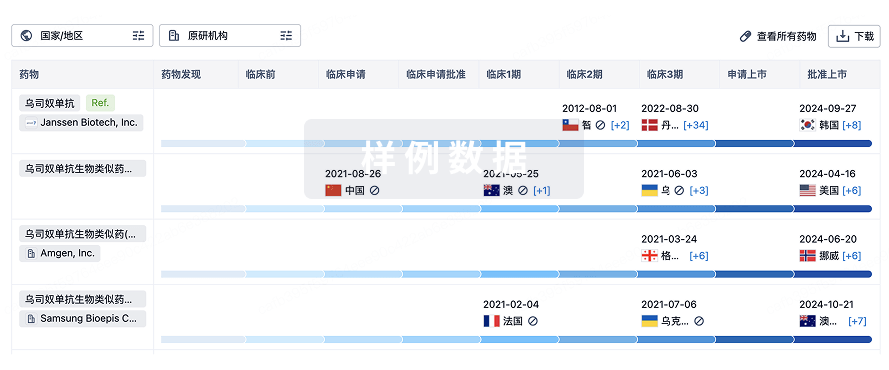
生物类似药在不同国家/地区的竞争态势。请注意临床1/2期并入临床2期,临床2/3期并入临床3期
登录
或
特殊审评
只需点击几下即可了解关键药物信息。
登录
或

提出任何生物医药研究问题
让每一步生物医药决策都精准制胜
基于十亿级生物数据与全球情报的精准 AI,赋能早期药物发现
立即开始免费试用!
智慧芽新药情报库是智慧芽专为生命科学人士构建的基于AI的创新药情报平台,助您全方位提升您的研发与决策效率。
立即接入生物医药数据包
智慧芽新药库数据也通过智慧芽开放平台,以MCP或API服务形式对外开放。立即使用我们的MCP服务定制您的LLM智能体。
生物序列数据库
生物药研发创新
免费使用
化学结构数据库
小分子化药研发创新
免费使用