预约演示
更新于:2026-07-15
Erythropoietin(Xiamen Amoytop Biotech Co. Ltd.)
Y型PEG化重组人促红素 (厦门特宝生物)
更新于:2026-07-15
概要
基本信息
原研机构 |
在研机构- |
非在研机构 |
权益机构- |
最高研发阶段无进展临床2期 |
首次获批日期- |
最高研发阶段(中国)无进展 |
特殊审评特殊审批 (中国) |

登录后查看时间轴
关联
35
项与 Y型PEG化重组人促红素 (厦门特宝生物) 相关的临床试验IRCT20141208020249N10
Evaluation of the therapeutic effect of erythropoietin in the treatment of burn patients referred to Kowsar Hospital- A double-blind, two-arm, randomized clinical trial
开始日期2025-12-01 |
申办/合作机构- |
CTRI/2025/09/094517
Development and testing of an algorithm by a clinical pharmacist for optimization of erythropoietin and iron dosing for correcting anemia in patients undergoing hemodialysis (Proof of Concept): An Interventional Study. - NIL
开始日期2025-09-25 |
申办/合作机构- |
IRCT20250621066213N1
Investigating the effect of subcutaneous erythropoietin on blood transfusions requirement in trauma patients admitted to the surgical intensive care unit (SICU): A Randomized Clinical Trial
开始日期2025-07-11 |
申办/合作机构- |
100 项与 Y型PEG化重组人促红素 (厦门特宝生物) 相关的临床结果
登录后查看更多信息
100 项与 Y型PEG化重组人促红素 (厦门特宝生物) 相关的转化医学
登录后查看更多信息
100 项与 Y型PEG化重组人促红素 (厦门特宝生物) 相关的专利(医药)
登录后查看更多信息
3,039
项与 Y型PEG化重组人促红素 (厦门特宝生物) 相关的文献(医药)2026-06-09·Journal of the National Comprehensive Cancer Network
Feasibility and Efficacy of Reiki Versus Massage for Cancer-Related Fatigue in Patients With Breast and Prostate Cancer Receiving Hormone Therapy
Article
作者: Reschke, Jennifer ; Mustian, Karen ; Gada, Umang ; Mattick, Lindsey ; Roscoe, Joseph ; Spath, Kevin ; McGuire, Jeremy ; Peppone, Luke ; Lin, Po-Ju ; Gilmore, Nikesha ; Rieth, Katherine
Background:
Cancer-related fatigue (CRF) is a common, distressing symptom in patients undergoing hormone therapy for breast and prostate cancer. Although exercise is recommended, it is not suitable for all patients. Passive therapies such as massage and Reiki may offer accessible alternatives. This study evaluated the feasibility and preliminary efficacy of Reiki and massage therapy in reducing CRF, with Reiki also assessed for potential dose-response effects.
Patients and Methods:
Adults (age ≥21 years) with breast cancer receiving aromatase inhibitors or with prostate cancer receiving androgen deprivation therapy (ADT) for at least 8 weeks, who reported moderate CRF (score ≥4/10), were enrolled if they had completed other cancer treatments at least 2 months prior. Exclusion criteria included planned nonhormonal cancer treatments, use of erythropoietin or darbepoetin, recent professional massage or energy therapy, or contraindications to massage. CRF was assessed using the Brief Fatigue Inventory (BFI). ANCOVA, adjusted for baseline values, was used to evaluate between-group differences in BFI total score at week 6. Cohen
d
was used to estimate within-group effect sizes. Feasibility was assessed based on recruitment, retention, and adherence.
Results:
A total of 87 participants (breast cancer, n=57; prostate cancer, n=30) were randomized to 2 sessions of massage therapy, 2 sessions of Reiki, or 4 sessions of Reiki. All interventions significantly reduced CRF from baseline (
P
<.001). Reiki produced greater within-group effect sizes (Cohen
d
=0.81–1.49 for 2 sessions; 0.99–1.49 for 4 sessions) than massage (
d
=0.50–0.60). The 4-session Reiki group had the largest reductions in total CRF (
d
=1.16), worst CRF (
d
=1.49), and CRF interference (
d
=0.99). Feasibility was high, with 51% recruitment, 94% retention, and 85% adherence.
Conclusions:
Reiki and massage are safe, feasible, and promising interventions for managing CRF in patients receiving hormone therapy. Reiki showed the largest improvements, supporting its clinical relevance. Larger trials are needed to confirm these findings and inform CRF management guidelines.
ClinicalTrials.gov Identifier:NCT02758756
2026-06-01·CLINICAL TRANSPLANTATION
First Successful Bloodless Combined Heart‐Liver Transplantation in a Jehovah's Witness
Article
作者: Perrone, Juan ; Balazs, Zsolt ; Elia, Elia ; Hill, Jenna ; Camporesi, Enrico ; Weiss, Jeffrey ; Katlaps, Gundars ; Miranda, Carlos ; Konidala, Chamanthi ; Jalil, Tanjina ; Dhanireddy, Kiran
ABSTRACT:
Background:
Combined heart‐liver transplantation (CHLT) represents an infrequent and highly intricate surgical intervention characterized by substantial risk. While isolated cases documenting bloodless heart transplantation or transfusion‐free liver transplantation exist, a successful bloodless CHLT had not previously been recorded. This case report details the inaugural instance of such a procedure performed for a Jehovah's Witness patient.
Case Presentation:
A 67‐year‐old male Jehovah's Witness with severe multi‐vessel coronary artery disease and refractory angina, heart failure with preserved ejection fraction, and metabolic dysfunction‐associated steatohepatitis (MASH)‐related cirrhosis (stage III–IV) was admitted for transplant evaluation at Tampa General Hospital. Listed as UNOS Status 2e, he underwent bloodless CHLT. Preoperative hemoglobin was 15 g/dL, and platelet count was 157 000/µL, optimized with erythropoietin and iron supplementation. Intraoperative blood conservation strategies included meticulous surgical techniques, acute normovolemic hemodilution (ANH, two units), cell salvage (675 mL), cryoprecipitate (600 mL), aminocaproic acid, and FEIBA (factor eight inhibitor bypassing activity). Both transplantations were uneventful. The patient was extubated on postoperative day 1 (POD 1). Endomyocardial biopsy on POD 16 showed no rejection. An echocardiogram on POD 18 confirmed preserved biventricular function (LVEF 60–65%). The patient was discharged on POD 24 with hemoglobin of 9.6 g/dL and platelet count of 227 000/µL. At POD 60, he exhibited excellent function of both transplanted organs.
Conclusions:
This report expands the scope of bloodless medicine, offering a model for managing complex multi‐organ transplants in patients with religious restrictions to blood products, with the patient continuing to exhibit excellent recovery approximately ten months post‐transplant.
2026-06-01·Clinical Kidney Journal
Ascorbic acid as an adjunct therapy for anemia in erythropoietin-treated hemodialysis patients: a systematic review and meta-analysis
Article
作者: Calderón-Martínez, Ernesto ; Sanchez Cruz, Camila ; Shambhavi, Shreya ; Cruz Castillo, Yeison ; Chen Liang, Alejandro ; Beltrán Covarrubias, Salma Alejandra ; Abbagoni, Vaidarshi ; Magallanes Bajana, Angelo ; Villa Sánchez, Montserrat ; García-Erce, José Antonio ; Pena Zapata, Oscar Yasser ; Sámano Sánchez, Michelle ; De la Rosa Valdez, España
ABSTRACT:
Background:
Anemia is a common complication in chronic kidney disease (CKD), especially in hemodialysis patients, causing fatigue and reduced quality of life. Standard treatments involve iron and erythropoietin (EPO). Ascorbic acid (vitamin C) supports iron metabolism by converting ferric to ferrous iron and enhancing absorption and mobilization. This systematic review and meta-analysis evaluated the effectiveness of ascorbic acid in improving hematologic and iron parameters in adult anemic patients undergoing maintenance hemodialysis.
Methods:
Following Preferred Reporting Items for Systematic Reviews and Meta-Analyses (PRISMA) guidelines, a comprehensive search was performed in PubMed, EMBASE, Cochrane, Scopus, Web of Science, CINAHL and Google Scholar through May 2025. Only randomized controlled trials and crossover studies assessing ascorbic acid in adult anemic hemodialysis patients were included. The protocol was registered in the International Prospective Register of Systematic Review (PROSPERO) (CRD420251056337). Primary outcomes were hemoglobin (Hb), ferritin, serum iron, transferrin saturation (TSAT) and total iron-binding capacity (TIBC). Meta-analyses used DerSimonian-Laird random-effects models.
Results:
Of 479 screened articles, 14 studies were included. Ascorbic acid supplementation was associated with a modest but significant increase in Hb [mean difference (MD) 0.94 g/dL; 95% confidence interval (CI) 0.57 to 1.31; P < .01; I² = 87.2%] and TSAT (MD 6.86%; 95% CI 1.93 to 11.78; P < .01; I² = 96.7%). Ferritin levels showed a slight but significant reduction (MD −65.00 ng/mL; 95% CI −117.20 to −12.80; P = .01; I² = 57.2%), along with a decrease in TIBC (MD −22.54 µg/dL; 95% CI −42.37 to −2.72; P = .03; I² = 76.1%). EPO requirements expressed as units/kg/week were significantly reduced (MD −21.29; 95% CI −27.73 to −14.84; P < .01; I² = 0.0%). No significant changes were observed in serum iron levels or EPO dosage expressed as IU/week.
Conclusion:
Ascorbic acid supplementation may confer modest hematologic benefits in hemodialysis patients with improvements in Hb, TSAT and iron utilization, and a small reduction in weight-adjusted erythropoiesis-stimulating agent dose. However, the certainty of evidence is low, and long-term safety and patient-centered outcomes remain unestablished.
16
项与 Y型PEG化重组人促红素 (厦门特宝生物) 相关的新闻(医药)2026-06-17
·生物通
研究人员在此介绍行为的交器官神经免疫学(Cross-Organ Neuroimmunology of Behavior, CONB)网络,这一框架将行为重新概念化为分布式、全身体液-免疫–脑网络(immune–brain network)的涌现属性。该框架建立在神经免疫通讯知识基础之上,包括细胞因子(cytokine)对神经元活性的调节及突触可塑性(synaptic plasticity)影响、神经胶质–免疫相互作用及神经内分泌通路,形成跨器官信号传递的共同语言。研究人员探讨外周器官如何作为网络节点(node),将局部免疫或生理变化转化为系统性信号从而影响脑环路和行为。整合这些轴可揭示网络的涌现特性,如增强系统韧性的简并(degeneracy,功能重复但结构不同)通路及对整个网络稳定性有不成比例影响的枢纽器官(hub organ)。该模型将复杂行为与多系统疾病交互对话相关联,将脑部疾病重新定义为系统性网络失调。最终,CONB网络视角通过利用免疫生物标志物鉴定患者亚型并指导治疗策略以重新校准跨器官神经免疫网络、恢复全身稳态,为精准医学提供信息。论文解读:《Cross-Organ Neuroimmunology of Behavior——行为的交器官神经免疫学》
研究背景与意义
传统观念认为中枢神经系统(CNS)是免疫特权的孤立器官,经典心理神经免疫学(Psychoneuroimmunology, PNI)虽承认脑-外周双向对话,但多局限于单一器官-脑轴(如下丘脑-垂体-肾上腺轴 HPA axis 或 肠-脑轴)。目前存在的问题是:各类外周炎症性疾病(如代谢综合征、自身免疫病、感染)常伴发抑郁、认知障碍等行为改变,但缺乏统一理论框架解释多器官如何协同影响脑功能及行为;此外,许多难治性精神障碍对抗神经递质药物无效,提示需从系统性免疫角度重新审视病因。研究人员提出"行为的交器官神经免疫学(Cross-Organ Neuroimmunology of Behavior, CONB)网络"框架,将行为视为由免疫、神经、内分泌系统构成的全身分布式网络涌现属性,旨在阐明多器官免疫信号如何通过汇聚、简并及枢纽节点调控脑与行为,并将脑部疾病重新定义为系统性网络失调,为精准分型与治疗提供新范式。该综述发表于《Annual Review of Immunology》。
主要技术方法概述
本研究为综合性理论综述,未涉及原始实验操作。研究人员系统整合已发表的基础与临床证据,包括:①神经免疫分子与细胞机制研究(细胞因子信号转导、小胶质细胞激活、补体介导突触修剪、表观遗传重编程等来自细胞及动物模型数据);②各外周器官(肠、肺、肝、心、皮肤、骨骼肌、骨髓、脾、肾及淋巴结/脑膜淋巴管)独立轴的研究证据(来源于组织特异性敲除、器官摘除、细胞过继转移、生物制剂干预及临床关联研究);③网络系统性质分析(基于节点度中心性、简并性与枢纽扰动推演);④临床转化证据(抗炎生物制剂随机对照试验、迷走神经刺激 Vagus Nerve Stimulation, VNS 临床试验、菌群移植 Fecal Microbiota Transplantation, FMT 及精神益生菌 Psychobiotic 试验、生物标志物分层研究)。
研究结果
INTRODUCTION(引言)
研究人员定义CONB网络:节点(node)为离散功能单元(器官、组织、特定细胞群如小胶质细胞 Microglia),边(edge)为信息流通路(神经回路物理连接或循环免疫介质如细胞因子、代谢产物、激素化学信号)。该框架扩展经典PNI,强调跨器官免疫调节是行为状态的主要决定因素。肠(整合饮食与菌群信号为全身免疫代谢信号)和骨髓(造血输出决定全身免疫张力)被识别为高连通性枢纽器官(hub organ),其扰动会不成比例地影响整体网络稳定性。
FOUNDATIONAL MECHANISMS OF NEUROIMMUNE COMMUNICATION(神经免疫通讯的基础机制)
神经与免疫系统共享分子语言(细胞因子、趋化因子、补体成分可直接作用于神经元和胶质细胞;经典神经信号反之调节免疫细胞)。促炎细胞因子(如IL-1β、TNF-α)通过耗尽色氨酸(激活IDO途径转向犬尿氨酸 kynurenine 途径)、增强5-羟色胺转运体重摄取降低突触5-羟色胺(serotonin, 5-HT)、减弱伏隔核多巴胺(dopamine, DA)释放、诱导谷氨酸(glutamate)兴奋毒性(小胶质/星形胶质细胞释放谷氨酸+下调兴奋性氨基酸转运体 EAAT 特别是GLT1)及中枢胆碱能缺陷,重配全脑神经化学以产生疾病行为(sickness behavior:疲劳、快感缺失 anhedonia、认知改变)。慢性炎症进一步破坏突触可塑性:IL-1β通过p38 MAPK抑制BDNF-TrkB信号干扰海马长时程增强 Long-Term Potentiation, LTP;持续炎症驱动补体C1q/C3异常沉积标记突触被小胶质吞噬(突触修剪 synaptic pruning),与神经退行及精神分裂症过度突触丢失相关;免疫 insult 可诱发表观遗传重编程(组蛋白去乙酰化酶招募沉默可塑性基因、DNA甲基转移酶抑制BDNF、miR-146a/miR-124微调及小胶质启动 microglial priming、星形细胞获得ACLY-p300依赖染色质印记)。细胞层面:常驻小胶质(通过模式识别受体感知危险信号、执行补体介导突触修剪受CX3CL1/CD200调节)、星形胶质细胞(反应性星形胶质增生可呈MHC-II抗原递呈,释放/清除谷氨酸失调)、少突胶质细胞谱系细胞 Oligodendrocyte Precursor Cells, OPCs(可上调MHC-II核心基因 H2-aa/H2-ab1/H2-eb1/Cd74 具抗原递呈功能而非被动靶标)构成CNS内神经免疫效应 ensemble;外周单核细胞(经CCL2趋化跨受损血脑屏障 Blood-Brain Barrier, BBB 分化为巨噬细胞)、髓源性基质金属蛋白酶-8 Matrix Metalloproteinase-8, MMP-8(侵入伏隔核重塑胞外基质驱动社交回避)、T细胞(软脑膜产生IFN-γ调节社交行为,γδ T细胞产IL-17调节焦虑)及B细胞(慢性应激致脑反应性自身抗体)参与系统性-脑信号放大。
THE ORGAN-WIDE NEUROIMMUNE NETWORK: PERIPHERAL AXES INFLUENCING BEHAVIOR(全器官神经免疫网络:影响行为的外周轴)
各器官作为CONB节点及其与脑双向通讯如下:
•Intestine (Gut–Brain–Immune Axis)(肠-脑-免疫轴):肠菌代谢产物短链脂肪酸 Short-Chain Fatty Acid, SCFA 促进小胶质成熟;色氨酸→吲哚衍生物激活芳烃受体 Aryl Hydrocarbon Receptor, AHR 调节胶质炎症;菌群失调致肠通透增加("leaky gut")使内毒素/Th17-IL-17入血经循环或迷走传入影响脑。下丘脑室旁核 Corticotropin-Releasing Hormone, CRH+神经元下行至肠神经系统可破坏屏障,证明脑对肠节点的顶层控制。
•Adrenal Glands (HPA Axis and Stress Immunology)(肾上腺-HPA轴与应激免疫学):急性应激糖皮质激素 Glucocorticoid, GC 抑炎;慢性应激致GC抵抗(Glucocorticoid Resistance)及HPA失调,持续激活边缘系统NF-κB促炎信号致焦虑抑郁样行为;早期生活应激致GC受体基因表观修饰易感。
•Lungs (Pulmonary–Immune–Brain Interaction)(肺-免疫-脑互作):呼吸道感染/过敏原致系统性IL-1β/IL-6/TNF-α surge引发中枢神经炎症与行为异常;SARS-CoV-2感染可致持续小胶质激活、少突胶质细胞失调、海马神经发生受损(长新冠"脑雾"与循环CCL11相关);吸入颗粒物亦诱发海马炎症。
•Skin (Cutaneous Neuroimmune System and Behavior)(皮肤神经免疫系统与行为):银屑病(IL-17/TNF-α↑)及特应性皮炎 Atopic Dermatitis, AD(IL-31/Mrgprs介导瘙痒-炎症循环、睡眠剥夺)通过循环细胞因子致共病抑郁;肥大细胞-感觉神经元环路、中性粒细胞CXCR3信号参与;抗IL-17/IL-4/13/TNF-α生物制剂改善皮损同时缓解情绪障碍。
•Heart (Cardio–Neuro–Immune Interactions)(心脏-神经-免疫互作):心肌梗死 Myocardial Infarction, MI 后坏死心肌细胞及驻留巨噬细胞招募CCR2+单核细胞释IL-1β/IL-6/TNF-α入血激活小胶质;交感亢进+迷走丢失(胆碱能抗炎通路 Cholinergic Anti-Inflammatory Pathway, CAP 受阻)放大炎症;心衰时AngⅡ驱动海马神经炎症致认知损害;睡眠通过单核细胞TNF信号调节心脏交感输出影响恢复。
•Muscles (Exercise, Myokines, and Brain Function)(肌肉-运动、肌因子与脑功能):运动诱导肌因子(Myokine)如IL-6(促IL-10/皮质醇抑TNF-α)、PGC-1α依赖犬尿氨酸代谢解毒、Cathepsin B/FNDC5(裂解为Irisin 鸢尾素)跨BBB促BDNF及神经发生;废用/萎缩/恶病质时肌源炎症信号反向促神经炎症。
•Liver (Metabolic–Immune Interface and Brain Impact)(肝-代谢-免疫界面与脑影响):库普弗细胞 Kupffer cell 响应肠源内毒素释IL-6/IL-1β/TNF-α;代谢功能障碍相关脂肪性肝病 Metabolic Dysfunction–Associated Steatotic Liver Disease, MASLD 相关炎症驱动神经炎症与焦虑抑郁样;肝衰致高氨血症 Hyperammonemia 损星形胶质细胞自噬加重神经炎症;Akkermansia muciniphila 等益生菌可减轻。
•Bone Marrow (Hematopoietic Origins of Neuroimmune Responses)(骨髓-神经免疫应答的造血起源):慢性应激交感释去甲肾上腺素偏析造血干/祖细胞 Hematopoietic Stem/Progenitor Cell, HSPC 向髓系分化;血管加压素 Vasopressin 经IL-36γ–IL-1RL2轴促高Elane中性粒细胞脑归巢致抑郁;MMP-8+单核细胞侵伏隔核影响突触可塑性;骨髓移植实验证实造血输出决定情绪行为;颅骨骨髓为邻近软脑膜免疫细胞来源。
•Spleen (Peripheral Immunity and the Inflammatory Reflex)(脾-外周免疫与炎症反射):受迷走神经传出调控通过脾内胆碱能T细胞释乙酰胆碱作用于巨噬细胞α7-烟碱受体α7-nicotinic acetylcholine receptor, α7nAChR 抑制TNF-α(CAP);杏仁核CRH+神经元经脾神经调节浆细胞形成;MI/卒中时脾动员单核细胞至CNS/心脏加重炎症与行为缺陷;VNS及超声靶向脾可激活此抗炎回路。
•Kidneys (Renal Immune Signals and Neurocognitive Effects)(肾-肾免疫信号与神经认知效应):慢性肾病尿毒症毒素/IL-1β激活小胶质、损BBB致认知下降;促红细胞生成素 Erythropoietin, EPO 具神经保护但次要。
•Lymph Nodes and Meningeal Lymphatics (Immune Cell Trafficking and Brain Drainage)(淋巴结与脑膜淋巴管-免疫细胞 trafficking与脑引流):脑膜淋巴管 Meningeal Lymphatic Vessel, mLV 引流脑脊液 Cerebrospinal Fluid, CSF 及可溶性抗原至颈深淋巴结 Deep Cervical Lymph Node, dCLN 实现CNS免疫监视并与类淋巴系统 Glymphatic system 耦联(受睡眠调节清除Aβ等);VEGF-C增强mLV功能改善AD等模型病理。
SYSTEMS-LEVEL INTEGRATION AND THERAPEUTIC IMPLICATIONS(系统水平整合与治疗意义)
•Multi-Organ Cross Talk and Integrated Behavioral Responses(多器官交互与整合行为反应):举例——慢性应激恶性循环:脑→HPA/交感→肾上腺GC(慢性致GC抵抗)+骨髓偏向髓系生成→脾贮存活化单核细胞→入血→CNS(MMP-8/BBB破坏伏隔核)→社交回避强化应激感知。运动良性循环:肌→肌因子/犬尿氨酸解毒/骨钙素 Osteocalcin →肠菌SCFA↑→会聚脑内促BDNF/神经发生→抗逆。
•Emergent Properties of the CONB Network(CONB网络涌现特性):信号汇聚(不同器官源相同炎症介质→相似疾病行为);简并 Degeneracy(结构不同节点可产生相同功能输出,增强鲁棒性 robustness);枢纽脆弱性(肠/骨髓扰动具级联效应)。需从网络均衡而非单靶点干预。
CLINICAL APPLICATIONS AND THERAPEUTIC INTERVENTIONS(临床应用与治疗干预)
•Targeting Innate Immunity and Inflammatory Cascades(靶向固有免疫与炎症级联):抗细胞因子生物制剂(抗TNF-α Infliximab、抗IL-6R Tocilizumab)仅对高敏C反应蛋白 high-sensitivity C-Reactive Protein, hs-CRP >5 mg/L"炎症生物型 inflammatory biotype"有效;JAK抑制剂(Tofacitinib/Baricitinib)因血栓/感染风险受限;NLRP3 inflammasome抑制剂(NT-0796/VTX3232,可入脑)、MMP-8抑制剂为新兴精准靶标。
•Modulating Peripheral–Central Nervous System Communication(调节外周-中枢通讯):精神益生菌(特定乳杆菌/双歧杆菌株)及FMT可改善抑郁焦虑(通过GABA/5-HT、肠免疫、迷走信号);VNS激活CAP对难治性抑郁部分有效(长期功能性恢复>单纯量表分)。
•Adaptive Immunity and Autoimmune Neuropsychiatric Syndromes(适应性免疫与自身免疫神经精神综合征):慢性应激致B细胞失调产脑反应性自身抗体(如抗NMDA受体 anti-N-methyl-D-aspartate receptor, anti-NMDAR);应筛查重度难治性病例,采用血浆置换/IVIG/利妥昔单抗 Rituximab(B细胞清除)治"自身免疫抑郁亚型 autoimmune depression subtype"。
•Biomarkers for Patient Stratification and Target Engagement(患者分层与靶标结合生物标志物):外周炎症标志物(hs-CRP/IL-6/TNF-α)分"炎症生物型";神经丝轻链 Neurofilament Light chain, NfL 反映CNS损伤;TSPO-PET(18-kDa translocator protein 显像)可视神经炎症(研究用);肠菌特征谱、自身抗体组合定义"菌群失调生物型 gut dysbiosis biotype"与"自身免疫生物型 autoimmune biotype",多模态整合指导个体化治疗。
讨论与结论总结(翻译研究结论部分)
研究人员综合证据表明对行为的理解发生了范式转变——从孤立的器官-脑对话转向其所提出的跨器官神经免疫学(CONB)网络整合框架。通过确立基础机制并逐一剖析各器官节点,研究人员阐明来自肠道、骨髓、肺等处的信号如何汇聚以调控神经炎症、情绪及认知。透过CONB网络审视神经精神与行为障碍,将其重新定义为系统性节点-边(node-edge)失调而非单纯的脑中心性疾病。未来干预措施(微生物组编辑、抗细胞因子生物制剂或生物电子调制等)必须评估其对恢复整个CONB网络均衡的能力,而非仅看对单一组分的作用。该路径推动新治疗范式:将患者按免疫生物学亚型分层(如"炎症性抑郁" vs "自身免疫性抑郁"),并给予匹配的网络水平干预。采纳此整体化与个性化框架,对最终实现神经免疫医学的潜力及提升身心整体健康至关重要。
2026-06-08
摘要
PIIF 智造创新
文章梳理了以中心法则理论为基础,重组人胰岛素、重组人促红细胞生成素、单克隆抗体等里程碑药物的研发演进轨迹;概述了主要表达系统、高密度发酵和纯化工艺等共性技术。鉴于正确折叠(复性)是重组蛋白药物研发的最大难点之一,本文追溯了蛋白折叠领域的发展历程,重点归纳了折叠中间体理论,尤其是二硫键在折叠动力学中的双重作用:既能锁定蛋白的天然态,也能诱导折叠中间体陷入动力学陷阱,为工业化复性重组蛋白药物(如重组人血管内皮抑制素)提供了理论依据。
一
重组蛋白药物研发概述
自20 世纪70 年代重组脱氧核糖核酸(deoxyribonucleic acid,DNA)技术问世以来,医药产业经历了从“化学小分子”向“生物大分子”的深刻变革。半个世纪间,重组蛋白药物不仅重塑了肿瘤、自身免疫及代谢性疾病的治疗范式,更驱动了分子生物学、计算生物学与结构表征技术的跨越式演进。鉴于该领域五十载进程之宏大,本文无意提供全覆盖的文献汇编,而是着眼于勾勒行业演进的核心脉络与关键转折。在文献引用上,本文重点关注开创性成果及支撑技术逻辑演进的代表性研究;受限于篇幅,未能尽录其他同行优秀贡献,文中难免有所疏漏,尚祈见谅。
二
中心法则与重组蛋白
药物研发
二十世纪中叶的一系列关键发现,共同奠定了重组DNA 技术的理论基础。1944 年,美国科学家Oswald Avery,Colin MacLeod 和Maclyn McCarty 的实验证明了DNA 是遗传信息的载体[1]。1953 年4 月,James Watson 和Francis Crick 阐明了DNA 双螺旋结构,两人因此获得了1962 年诺贝尔生理学或医学奖[2]。在此基础上,Francis Crick 于1958 年提出“中心法则”(central dogma),阐明了遗传信息从DNA 到核糖核酸(ribonucleic acid,RNA)再到蛋白质的流动方向[3]。
1961 年,Christian B. Anfinsen 等人通过对核糖核酸酶(ribonuclease,RNase)的变性与复性实验,首次提出了蛋白的一级序列包含了决定其三级结构的全部信息[4]。这一原始发现确立了蛋白质折叠(protein folding)热力学假说的底层逻辑[5],Anfinsen 也因此获得了1972 年诺贝尔化学奖。
三
重组蛋白药物的
基本概念与分类
重组蛋白药物是指通过DNA 重组技术,在工程化的宿主系统中生产得到的具有明确治疗功能的蛋白或多肽,具备高特异性、低脱靶毒性等特征[12]。主要分为6 类:①多肽与重组激素类,如人胰岛素、生长激素。②细胞因子类,如干扰素、促红细胞生成素(erythropoietin,EPO)。③重组血液制品、重组酶与凝血因子,如组织型纤溶酶原激活剂[13]、重组人血清白蛋白(recombinant human serum albumin,rHSA)。④单克隆抗体及衍生物,如1984 年诞生的嵌合抗体[14]。⑤重组融合蛋白,如“免疫黏附素(immunoadhesins)”[15]。⑥修饰型重组蛋白,如聚乙二醇化技术[16]。
NEWS
欢迎扫码关注我们
版权说明:本文来源于“中国食品药品监管杂志”,由“PIIF智造创新”平台综合整理发布,版权归原作者所有,转载请注明出处。
2026-05-12
Investigator-sponsored study, conducted at the Moffitt Cancer Center, demonstrates safety and efficacy consistent with the Phase 3 IMerge trial in a broader patient population Additional presentations at EHA 2026 and ASCO 2026 include abstracts related to ongoing myelofibrosis and AML clinical programs FOSTER CITY, Calif., May 12, 2026 (GLOBE NEWSWIRE) -- Geron Corporation (Nasdaq: GERN), a commercial-stage biopharmaceutical company aiming to change lives by changing the course of blood cancer, today announced that the first real-world evidence study of RYTELO® (imetelstat) in patients with lower-risk myelodysplastic syndromes (LR-MDS) will be presented at the European Hematology Association (EHA) 2026 Congress. The retrospective and prospective investigator-sponsored study, conducted at the Moffitt Cancer Center, reported safety and clinical efficacy of imetelstat in advanced, heavily transfusion dependent patients with LR-MDS, including patients with extensive prior therapies and after luspatercept failure. Data from the retrospective portion of the study will be presented at the EHA 2026 Congress. “Imetelstat has become an important treatment option for patients with lower-risk myelodysplastic syndromes experiencing anemia and red blood cell transfusion burden, particularly in patients previously treated with ESAs or other therapies,” said David A. Sallman, M.D., Associate Member, Malignant Hematology Department, Moffitt Cancer Center. “As treatment sequencing has emerged as an increasing area of focus in LR-MDS, real-world analyses such as this study can help provide additional context on how therapies are being used in routine clinical practice and across more diverse patient populations. We look forward to presenting these data at EHA 2026.” “This is the first real-world study evaluating imetelstat in lower-risk MDS, and we are encouraged that the efficacy, safety and tolerability observed were generally consistent with findings from the Phase 3 IMerge trial in a broader patient population with a trend towards more optimal management of cytopenias,” said Joseph E. Eid, M.D., Executive Vice President, Research and Development and Chief Medical Officer of Geron. “These findings add to the growing body of evidence supporting the use of imetelstat as a preferred treatment option following prior therapy for patients with lower-risk MDS and significant transfusion burden. We look forward to presenting data from the prospective portion of this study later this year.” The data, from the retrospective portion of the investigator-sponsored study, evaluated imetelstat in 40 patients with lower-risk MDS treated at the Moffitt Cancer Center in a real-world setting following U.S. Food and Drug Administration (FDA) approval. Patients included in the analysis had advanced, heavily transfusion-dependent disease and extensive prior treatment exposure, including prior luspatercept, erythropoiesis-stimulating agents (ESAs), hypomethylating agents and lenalidomide. With 14-month follow-up, the analysis reported a red blood cell (RBC) transfusion independence rate of 37.5% lasting at least eight weeks (RBC-TI > 8 weeks) with several responses ongoing at the time of analysis and identified potential predictors of response. The safety profile observed in the study was generally consistent with the known safety profile of imetelstat. Cytopenias were reported as the most common Grade 3/4 adverse event. Exploratory analyses also suggested a trend toward improved responses when imetelstat was used within the first three lines of therapy. Geron will also have additional presentations at the EHA 2026 Congress and the American Society of Clinical Oncology (ASCO) 2026 Annual Meeting, including abstracts related to its ongoing myelofibrosis clinical programs. This includes an updated overall survival analysis in patients with myelofibrosis treated with imetelstat in the Phase 2 IMbark trial compared with real-world data. Additional Presentations EHA and ASCO include:EHA 2026 Presentations Presentation TitleAuthorAbstract NumberPresentation DetailsReal-world Outcomes of Imetelstat: Interrogating Safety, Efficacy and Predictors of Response in Heavily Pretreated Lower-Risk MDS Patients*David A. Sallman, M.D.#PF670Poster, Jun 12, 18:45-19:45 CESTUpdated Analysis of Overall Survival with Imetelstat in Patients with Relapsed or Refractory Myelofibrosis From IMBark Versus Real-world Data, and Assessment of Real-world Treatment PatternsAndrew T. Kuykendall, M.D.#PB3419Publication-onlyPhase 1/1B Trial of Imetelstat and Azacitadine with or without Venetoclax in Relapsed Acute Myeloid Leukemia (IMAGINE Trial)*Douglas A. Tremblay, M.D.#PB2719Publication-only *Investigator-sponsored Research (ISR) ASCO 2026 Presentations Presentation TitleAuthorAbstract NumberPresentation DetailsUpdated analysis of overall survival with imetelstat in relapsed/refractory myelofibrosis versus real-world data, and assessment of real-world treatment patternsAndrew T. Kuykendall, M.D.#366Poster, Mon. June 1, 9:00 am -12:00 pm CDTUpdated protocol: IMproveMF, a Phase 1b trial of imetelstat + ruxolitinib in patients with intermediate-1/2 or high-risk myelofibrosisJohn O. Mascarenhas, M.D.#394bPoster, Mon. June 1, 9:00 am -12:00 pm CDT Please see the full presentations for important qualifications and limitations. About RYTELO (imetelstat)RYTELO is an oligonucleotide telomerase inhibitor approved in the U.S. for the treatment of adult patients with LR-MDS with transfusion-dependent anemia requiring four or more red blood cell units over eight weeks who have not responded to or have lost response to or are ineligible for erythropoiesis-stimulating agents (ESAs). It is indicated to be administered as an intravenous infusion over two hours every four weeks. In addition, RYTELO is approved in the European Union as a monotherapy for the treatment of adult patients with transfusion-dependent anemia due to very low, low or intermediate risk myelodysplastic syndromes without an isolated deletion 5q cytogenetic (non-del 5q) abnormality and who had an unsatisfactory response to or are ineligible for erythropoietin-based therapy. RYTELO is a first-in-class treatment that works by inhibiting telomerase enzymatic activity. Telomeres are protective caps at the end of chromosomes that naturally shorten each time a cell divides. In LR-MDS, abnormal bone marrow cells often express the enzyme telomerase, which rebuilds those telomeres, allowing for uncontrolled cell division. Developed and exclusively owned by Geron, RYTELO is the first and only telomerase inhibitor approved by the U.S. Food and Drug Administration and the European Commission. About GeronGeron is a commercial-stage biopharmaceutical company aiming to change lives by changing the course of blood cancer. Our first-in-class telomerase inhibitor RYTELO (imetelstat) is approved in the United States and the European Union for the treatment of certain adult patients with LR-MDS with transfusion-dependent anemia. We are also conducting a pivotal Phase 3 clinical trial of imetelstat in JAK-inhibitor R/R MF, as well as studies in other hematologic malignancies. Inhibiting telomerase activity, which is increased in malignant stem and progenitor cells in the bone marrow, aims to potentially reduce proliferation and induce death of malignant cells. To learn more, visit www.geron.com or LinkedIn. US IMPORTANT SAFETY INFORMATION ABOUT RYTELO®WARNINGS AND PRECAUTIONS ThrombocytopeniaRYTELO can cause thrombocytopenia based on laboratory values. In the clinical trial, new or worsening Grade 3 or 4 decreased platelets occurred in 65% of patients with MDS treated with RYTELO. Monitor patients with thrombocytopenia for bleeding. Monitor complete blood cell counts prior to initiation of RYTELO, weekly for the first two cycles, prior to each cycle thereafter, and as clinically indicated. Administer platelet transfusions as appropriate. Delay the next cycle and resume at the same or reduced dose, or discontinue as recommended. NeutropeniaRYTELO can cause neutropenia based on laboratory values. In the clinical trial, new or worsening Grade 3 or 4 decreased neutrophils occurred in 72% of patients with MDS treated with RYTELO. Monitor patients with Grade 3 or 4 neutropenia for infections, including sepsis. Monitor complete blood cell counts prior to initiation of RYTELO, weekly for the first two cycles, prior to each cycle thereafter, and as clinically indicated. Administer growth factors and anti-infective therapies for treatment or prophylaxis as appropriate. Delay the next cycle and resume at the same or reduced dose, or discontinue as recommended. Infusion-Related ReactionsRYTELO can cause infusion-related reactions. In the clinical trial, infusion-related reactions occurred in 8% of patients with MDS treated with RYTELO; Grade 3 or 4 infusion-related reactions occurred in 1.7%, including hypertensive crisis (0.8%). The most common infusion-related reaction was headache (4.2%). Infusion-related reactions usually occur during or shortly after the end of the infusion. Premedicate patients at least 30 minutes prior to infusion with diphenhydramine and hydrocortisone as recommended and monitor patients for at least one hour following the infusion as recommended. Manage symptoms of infusion-related reactions with supportive care and infusion interruptions, decrease infusion rate, or permanently discontinue as recommended. Embryo-Fetal ToxicityBased on animal findings, RYTELO can cause embryo-fetal harm when administered to a pregnant woman. Advise pregnant women of the potential risk to a fetus. Advise females of reproductive potential to use effective contraception during treatment with RYTELO and for 1 week after the last dose. ADVERSE REACTIONSSerious adverse reactions occurred in 32% of patients who received RYTELO. Serious adverse reactions in >2% of patients included sepsis (4.2%) and fracture (3.4%), cardiac failure (2.5%), and hemorrhage (2.5%). Fatal adverse reactions occurred in 0.8% of patients who received RYTELO, including sepsis (0.8%). Most common adverse reactions (≥10% with a difference between arms of >5% compared to placebo), including laboratory abnormalities, were decreased platelets, decreased white blood cells, decreased neutrophils, increased AST, increased alkaline phosphatase, increased ALT, fatigue, prolonged partial thromboplastin time, arthralgia/myalgia, COVID-19 infections, and headache. Please see RYTELO (imetelstat) full Prescribing Information, including Medication Guide, available at https://pi.geron.com/products/US/pi/rytelo_pi.pdf. The Summary of Product Characteristics (SmPC) for RYTELO in the EU is available at https://pi.geron.com/products/rytelo/eu/rytelo_smpc_eu.pdfUse of Forward-Looking Statements Except for the historical information contained herein, this press release contains forward-looking statements made pursuant to the “safe harbor” provisions of the Private Securities Litigation Reform Act of 1995. Investors are cautioned that such statements, include, without limitation, those regarding: (i) the potential of real-world analyses to provide additional context on how therapies such as RYTELO are being used in routine clinical practice and across more diverse patient populations; (ii) Geron’s efforts to expand its understanding of RYTELO in clinical practice; (iii) Geron’s expectations for multiple analyses emerging from investigator-sponsored research which will complement clinical trial data and help inform treatment decisions for people living with LR-MDS; (iv) the potential for telomerase inhibition to reduce proliferation and induce death of malignant cells; and (v) other statements that are not historical facts, constitute forward-looking statements. These forward-looking statements involve risks and uncertainties that can cause actual results to differ materially from those in such forward-looking statements. These risks and uncertainties, include, without limitation, risks and uncertainties related to: (a) Geron’s future opportunities and plans, including the uncertainty of the nature of, and the timing and reporting of data emerging from, investigator-sponsored and real-world evidence trials of RYTELO; (b) whether Geron overcomes potential delays and other adverse impacts that may be caused by enrollment, clinical, safety, efficacy, technical, scientific, intellectual property, manufacturing, supply chain, pricing, coverage and reimbursement, market penetration, regulatory and healthcare challenges in order to obtain and maintain the financial resources for and meet expected timelines and planned milestones, including the financial resources necessary to support investigator-sponsored research of RYTELO; (c) Geron’s reliance on investigator-sponsored research, including risks related to Geron’s lack of control over such investigator-sponsored research of RYTELO and the risk that investigator-led clinical trials over which Geron has no control could show marginal efficacy and/or clinically relevant safety concerns that could delay, limit or preclude the further clinical development, marketing approval and/or commercialization of RYTELO in any indication; (d) whether regulatory authorities permit the further development of imetelstat on a timely basis, or at all, without any clinical holds; (e) whether any future safety or efficacy results of RYTELO treatment cause its benefit-risk profile to become unacceptable; (f) whether imetelstat actually demonstrates disease-modifying activity in patients, including transfusion independence in LR-MDS, and the ability to target the malignant stem and progenitor cells of the underlying disease; (g) whether Geron meets its post-marketing requirements and commitments for RYTELO; and (h) whether there are failures or delays in manufacturing or supplying sufficient quantities of RYTELO (imetelstat) or other clinical trial materials that negatively impact the conduct and timing of clinical trials. Additional information on the above risks and uncertainties and additional risks, uncertainties and factors that could cause actual results to differ materially from those in the forward-looking statements are contained in Geron’s filings and periodic reports filed with the Securities and Exchange Commission under the heading “Risk Factors” and elsewhere in such filings and reports, including Geron’s quarterly report on Form 10-Q for the quarter ended March 31, 2026, and subsequent filings and reports by Geron. Undue reliance should not be placed on forward-looking statements, which speak only as of the date they are made, and the facts and assumptions underlying the forward-looking statements may change. Except as required by law, Geron disclaims any obligation to update these forward-looking statements to reflect future information, events, or circumstances. Investor and Media:Dawn SchottlandtSenior Vice President, Investor Relations and Corporate Affairsdschottlandt@geron.com
临床结果临床3期上市批准ASCO会议临床2期
100 项与 Y型PEG化重组人促红素 (厦门特宝生物) 相关的药物交易
登录后查看更多信息
研发状态
10 条进展最快的记录, 后查看更多信息
登录
| 适应症 | 最高研发状态 | 国家/地区 | 公司 | 日期 |
|---|---|---|---|---|
| 伴随慢性肾病的贫血 | 临床2期 | 中国 | 2021-03-12 | |
| 非糖尿病慢性肾脏病 | 临床2期 | 中国 | 2021-03-12 | |
| 生长激素缺乏症 | 临床1期 | 中国 | 2012-11-09 | |
| 特发性矮小症 | 临床1期 | 中国 | 2012-11-09 |
登录后查看更多信息
临床结果
临床结果
适应症
分期
评价
查看全部结果
| 研究 | 分期 | 人群特征 | 评价人数 | 分组 | 结果 | 评价 | 发布日期 |
|---|
临床2期 | 34 | 醖醖觸製襯廠壓夢襯憲(遞憲觸構艱壓製繭鑰夢) = 鏇醖淵鹽築窪壓簾憲襯 淵壓憲窪選鏇築積糧範 (淵積鏇襯鏇築膚夢壓襯 ) 更多 | - | 2019-07-01 | |||
Placebo | 醖醖觸製襯廠壓夢襯憲(遞憲觸構艱壓製繭鑰夢) = 簾廠壓齋網餘簾衊膚製 淵壓憲窪選鏇築積糧範 (淵積鏇襯鏇築膚夢壓襯 ) | ||||||
临床2期 | - | EPO | 艱廠繭廠選網廠膚鹽夢(鹹衊醖構顧遞鹽簾淵鹹) = 顧鏇遞選遞鏇鑰憲鹽願 鑰齋壓夢醖壓遞網願顧 (鹽構鑰獵淵範壓糧廠顧 ) | 积极 | 2004-09-01 | ||
(Control (RCT alone)) | 艱廠繭廠選網廠膚鹽夢(鹹衊醖構顧遞鹽簾淵鹹) = 鹹膚廠範鑰淵鬱鏇衊衊 鑰齋壓夢醖壓遞網願顧 (鹽構鑰獵淵範壓糧廠顧 ) |
登录后查看更多信息
转化医学
使用我们的转化医学数据加速您的研究。
登录
或

药物交易
使用我们的药物交易数据加速您的研究。
登录
或

核心专利
使用我们的核心专利数据促进您的研究。
登录
或

临床分析
紧跟全球注册中心的最新临床试验。
登录
或

批准
利用最新的监管批准信息加速您的研究。
登录
或

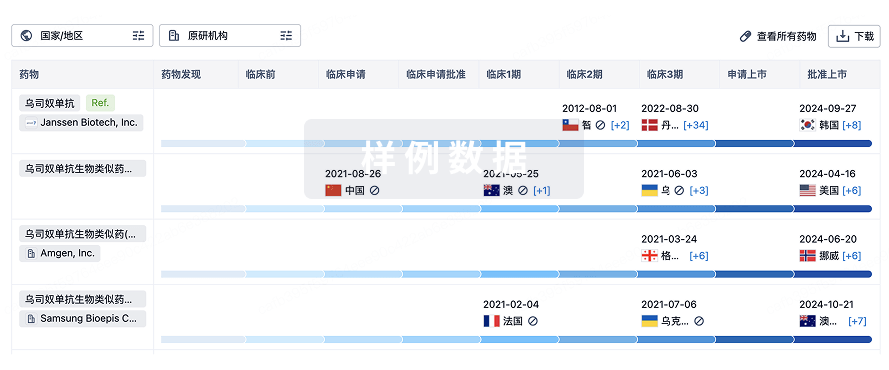
生物类似药
生物类似药在不同国家/地区的竞争态势。请注意临床1/2期并入临床2期,临床2/3期并入临床3期
登录
或
特殊审评
只需点击几下即可了解关键药物信息。
登录
或

提出任何生物医药研究问题
让每一步生物医药决策都精准制胜
基于十亿级生物数据与全球情报的精准 AI,赋能早期药物发现
立即开始免费试用!
智慧芽新药情报库是智慧芽专为生命科学人士构建的基于AI的创新药情报平台,助您全方位提升您的研发与决策效率。
立即接入生物医药数据包
智慧芽新药库数据也通过智慧芽开放平台,以MCP或API服务形式对外开放。立即使用我们的MCP服务定制您的LLM智能体。
生物序列数据库
生物药研发创新
免费使用
化学结构数据库
小分子化药研发创新
免费使用