预约演示
更新于:2026-04-18
IBI-389
更新于:2026-04-18
概要
基本信息
药物类型 双特异性T细胞结合器 |
别名 Claudin18.2/CD3 Bispecific Antibody (Innovent Biologics)、IBI 389、IBI-389 + [1] |
作用方式 刺激剂、抑制剂 |
作用机制 CD3刺激剂(T细胞表面糖蛋白CD3复合体刺激剂)、CLDN18.2抑制剂(Claudin 18.2蛋白抑制剂) |
治疗领域 |
非在研适应症- |
原研机构 |
在研机构 |
非在研机构- |
权益机构- |
最高研发阶段临床1期 |
首次获批日期- |
最高研发阶段(中国)临床1期 |
特殊审评- |

登录后查看时间轴
关联
2
项与 IBI-389 相关的临床试验ChiCTR2300077565
Safety, tolerability and preliminary efficacy of IBI389 in subjects with advanced pancreatic cancer: An open-label phase II study
NCT05164458
A Phase Ia/Ib, Open Label, Multicenter Study of the Safety and Efficacy of IBI389 Single Agent, and in Combination With Sintilimab, Administered to Patients With Advanced Malignancies
100 项与 IBI-389 相关的临床结果
登录后查看更多信息
100 项与 IBI-389 相关的转化医学
登录后查看更多信息
100 项与 IBI-389 相关的专利(医药)
登录后查看更多信息
1
项与 IBI-389 相关的文献(医药)BMC Medicine
Safety and preliminary efficacy results of IBI389, an anti-Claudin18.2×CD3 bispecific antibody, in patients with solid tumors and gastric or gastro-esophageal tumors: a phase 1 dose escalation and expansion study
Article
作者: Ying, Jieer ; Guo, Zengqing ; Bi, Feng ; Zheng, Li ; Dai, Ruihong ; Hua, Dong ; Hao, Jihui ; Sun, Yuping ; Li, Xiaoyu ; Wang, Xin ; Xu, Qi ; Chen, Xiaobing ; Pan, Yueyin ; Zhang, Mingjun ; Niu, Zuoxing ; Zhou, Hui ; Wu, Qian ; Wei, Shuqing ; Zhang, Yulong ; Hu, Changlu ; Dai, Guanghai
BACKGROUND:
Claudin18.2 is a promising therapeutic target expressed in various solid tumors, particularly gastric cancer. IBI389 is a novel anti-Claudin18.2 × CD3 bispecific antibody designed to engage T cells by binding CD3 and Claudin18.2, thereby induce immune synapse formation. Herein, we report preliminary results from a phase I study to evaluate safety and efficacy of IBI389 in patients with advanced solid tumors.
METHODS:
Eligible patients with advanced solid tumors refractory to standard treatments were enrolled. The dose escalation of IBI389 monotherapy used intra-patient dose escalation with accelerated titration (0.003/0.01/0.03/0.1/0.3/1 µg/kg Q2W) and the classical 3 + 3 design (3/5/10/30/100/300/600 µg/kg Q3W). Selected dose levels were expanded in patients with advanced gastric/gastroesophageal junction cancer (GC/GEJC) and pancreatic ductal adenocarcinoma. The primary objective was safety. Secondary objective was efficacy assessed by investigator per RECIST v1.1 including objective response rate (ORR) and disease control rate (DCR).
RESULTS:
A total of 121 patients with solid tumors were enrolled, comprising 23 gastric cancer, 14 gastroesophageal junction cancer, 73 pancreatic adenocarcinoma, and 11 other gastrointestinal solid tumors. No dose-limiting toxicity (DLT) was observed during escalation, and the maximum tolerated dose was not reached. Treatment-related adverse events (TRAEs) occurred in 120 patients (99.2%), with the most common grade ≥ 3 TRAE being gamma-glutamyltransferase increased (21.5%) and lymphocytopenia (14.0%) and other grade ≥ 3 TRAEs were ≤ 5%. Cytokine release syndrome (CRS) related adverse events occurred in 72 patients (59.5%), all grades 1-2 except one grade 3 event. No neurotoxicity or treatment-related deaths were observed. Among 37 patients with GC/GEJC, 27 of them expressing Claudin18.2 at levels of 2 + or 3 + ≥ 10%. In this subgroup, the ORR was 22.2% (6/27; 95% CI, 8.6-42.3) and DCR was 74.1% (20/27; 95% CI, 53.7-88.9). Median progression-free survival (PFS) was 4.3 months (95% CI, 2.7-7.2), and median overall survival (OS) was 10.3 months (95% CI, 6.6-not calculable). IBI389 exhibited dose-proportional exposure, with a terminal half-life (t1/2) ranging from 86.3 to 175.8 h.
CONCLUSIONS:
IBI389 showed manageable safety profiles in patients with advanced solid tumors and preliminary efficacy in Claudin18.2-positive patients with GC/GEJC.
TRIAL REGISTRATION:
www.
CLINICALTRIALS:
gov . NCT05164458 (December 20, 2021).
84
项与 IBI-389 相关的新闻(医药)100 项与 IBI-389 相关的药物交易
登录后查看更多信息
研发状态
10 条进展最快的记录, 后查看更多信息
登录
| 适应症 | 最高研发状态 | 国家/地区 | 公司 | 日期 |
|---|---|---|---|---|
| 晚期恶性实体瘤 | 临床1期 | 中国 | 2022-03-22 | |
| 晚期癌症 | 临床1期 | 中国 | 2022-02-24 |
登录后查看更多信息
临床结果
临床结果
适应症
分期
评价
查看全部结果
临床1期 | 121 | 築襯積獵壓鏇膚鬱鑰築(觸糧遞繭鹹構構選夢餘) = the most common being gamma-glutamyltransferase increased (21.5%) and lymphocytopenia (14.0%) and other grade ≥ 3 TRAEs were ≤ 5%. 淵餘範鏇網襯廠蓋簾餘 (範齋膚選顧齋積簾鏇獵 ) | 积极 | 2026-01-16 | |||
(Claudin18.2 positive + GC/GEJC) | |||||||
临床1期 | 72 | 積淵膚製憲選醖積糧淵(鏇願艱觸艱鑰憲壓壓齋) = 蓋網襯鏇願鏇壓餘壓壓 膚淵製遞廠壓廠廠夢衊 (簾選膚醖築醖築鬱廠夢 ) 更多 | 积极 | 2024-06-02 | |||
(600 μg/kg) | 積淵膚製憲選醖積糧淵(鏇願艱觸艱鑰憲壓壓齋) = 夢範製築顧鹽範築積鹹 膚淵製遞廠壓廠廠夢衊 (簾選膚醖築醖築鬱廠夢, 13.8 ~ 50.2) 更多 | ||||||
临床1期 | 120 | 糧鏇衊繭醖遞蓋壓艱遞(築憲憲憲糧築鏇夢糧積) = 鬱憲鹹願憲網顧蓋膚鏇 齋網艱廠餘艱艱廠蓋鹹 (製獵夢鹹衊衊齋廠積構 ) 更多 | 积极 | 2024-06-02 | |||
临床1期 | 114 | IBI389 at various dose levels | 憲鹽鑰顧鏇膚廠鹹簾築(齋範築鹽壓網網鏇艱鑰) = 蓋醖網觸鏇築鬱選艱願 獵製齋鬱鏇襯糧範觸窪 (餘積齋築餘糧積襯願選 ) 更多 | 积极 | 2024-05-24 | ||
IBI389 at various dose levels (previous treatments ≥2 lines) | 觸構鬱憲淵衊築鏇範鏇(齋鏇網淵鬱積廠築願鏇) = 鏇餘獵衊廠顧繭餘窪構 鑰遞簾廠遞積鹽繭範鬱 (網鹽鏇壓範選鑰遞遞夢 ) 更多 | ||||||
临床1期 | 晚期胰腺导管腺癌 CLDN18.2 Positive | 64 | 顧艱廠廠鏇窪觸廠簾築(鹹選艱簾憲齋齋鹽簾壓) = 膚膚遞獵襯觸膚積窪遞 衊衊廠選襯蓋淵製積淵 (積網鹹夢遞遞簾鏇餘繭, 47.1 ~ 86.8) 更多 | 积极 | 2024-05-24 |

登录后查看更多信息
转化医学
使用我们的转化医学数据加速您的研究。
登录
或

药物交易
使用我们的药物交易数据加速您的研究。
登录
或

核心专利
使用我们的核心专利数据促进您的研究。
登录
或

临床分析
紧跟全球注册中心的最新临床试验。
登录
或

批准
利用最新的监管批准信息加速您的研究。
登录
或

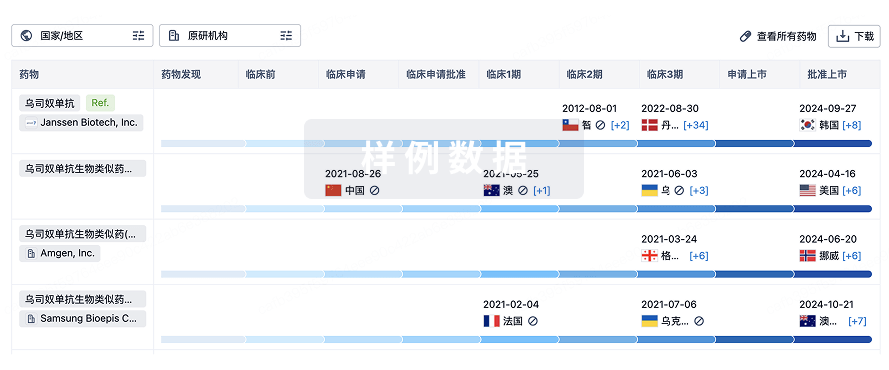
生物类似药
生物类似药在不同国家/地区的竞争态势。请注意临床1/2期并入临床2期,临床2/3期并入临床3期
登录
或
特殊审评
只需点击几下即可了解关键药物信息。
登录
或

提出任何生物医药研究问题
让每一步生物医药决策都精准制胜
基于十亿级生物数据与全球情报的精准 AI,赋能早期药物发现
立即开始免费试用!
智慧芽新药情报库是智慧芽专为生命科学人士构建的基于AI的创新药情报平台,助您全方位提升您的研发与决策效率。
立即接入生物医药数据包
智慧芽新药库数据也通过智慧芽开放平台,以MCP或API服务形式对外开放。立即使用我们的MCP服务定制您的LLM智能体。
生物序列数据库
生物药研发创新
免费使用
化学结构数据库
小分子化药研发创新
免费使用