预约演示
更新于:2026-09-23
Deramiocel
更新于:2026-09-23
概要
基本信息
最高研发阶段申请上市 |
首次获批日期- |
最高研发阶段(中国)- |
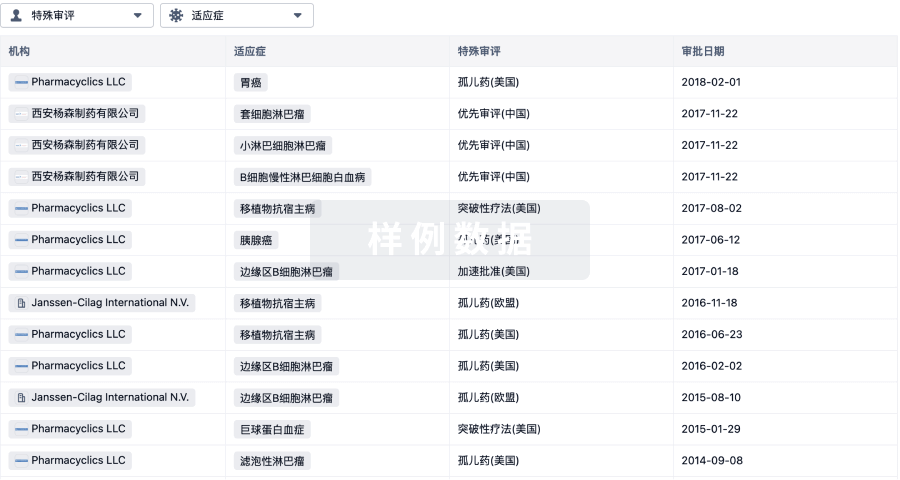
特殊审评孤儿药 (美国)、罕见儿科疾病 (美国)、孤儿药 (欧盟)、再生医学先进疗法 (美国)、先进治疗医药产品 (欧盟)、优先审评 (美国) |



登录后查看时间轴
关联
11
项与 Deramiocel 相关的临床试验NCT05126758
A Phase 3, Randomized, Double-Blind, Placebo-Controlled Trial Evaluating the Efficacy and Safety of Human Allogeneic Cardiosphere-Derived Cells for the Treatment of Duchenne Muscular Dystrophy
HOPE-3 is a two cohort, Phase 3, multi-center, randomized, double-blind, placebo-controlled clinical trial evaluating the efficacy and safety of a cell therapy called deramiocel (CAP-1002) in study participants with Duchenne muscular dystrophy (DMD) and impaired skeletal muscle function. Non-ambulatory and ambulatory boys and young men who meet eligibility criteria will be randomly assigned to receive either deramiocel or placebo every 3 months for a total of 4 doses during the first 12 months of the study. All participants will be eligible to receive 4 doses of deramiocel for an additional 12 months as part of an open-label extended assessment period. After completion of the first open-label extension (Months 12-24), subjects who have completed Month 24 are eligible to continue onto a Long-Term Open-Label Extension period that will provide treatment with deramiocel until commercial availability, or until sponsor's decision to terminate the trial, or the participant withdraws consent.
开始日期2022-06-22 |
申办/合作机构 |
NCT04623671
A Randomized, Double-Blind, Placebo-Controlled Study Evaluating the Safety and Efficacy of Intravenous Infusion of CAP-1002 in Patients With COVID-19 (INSPIRE)
This is a randomized, double-blind, placebo-controlled, Pilot, Phase 2 Exploratory study that will enroll subjects with a clinical diagnosis of COVID-19 confirmed by laboratory testing and who are in severe or critical condition as indicated by life-support measures.
开始日期2020-11-15 |
申办/合作机构 |
NCT04428476
Open-Label Extension of the HOPE-2 Duchenne Muscular Dystrophy Trial
This Phase 2, multi-center, open-label extension trial will provide deramiocel (CAP-1002) to subjects that were enrolled in the HOPE-2 trial and completed 12 months of follow-up. The trial will explore the safety and efficacy of twenty intravenous administrations of deramiocel, each separated by three months, over a period of approximately 60 months. Following completion of the initial open-label phase (Month 60), subjects who have completed all Month 60 assessments will be eligible to continue into a long-term open label extension (LT-OLE) period and can continue to receive deramiocel once every 3 months until deramiocel is commercially available or the sponsor terminates the study, or the subject withdraws consent or study participation is terminated by the sponsor.
Subjects will undergo a targeted screening during a 30-day screening period, eligible subjects will then undergo baseline safety and efficacy assessments on Day 1 prior to their first infusion of deramiocel.
Subjects will complete trial assessments at Screening; Day 1; Months 3, 6, 9, 12, 15, 18, 21, 24, 27, 30, 33, 36, 39, 42, 45, 48, 51, 54, 57, 60, and all LT-OLE visits. Safety and efficacy assessments will be conducted prior to deramiocel administration at the Day 1, Months 3, 6, 9, 12, 15, 18, 21, 24, 27, 30, 33, 36, 39, 42, 45, 48, 51, 54, 57, and at all LT-OLE trial visits, unless otherwise indicated.
All deramiocel infusions will be conducted in an outpatient setting at the investigative site on Day 1 and Months 3, 6, 9, 12, 15, 18, 21, 24, 27, 30, 33, 36, 39, 42, 45, 48, 51, 54, 57, with continued dosing in the LT-OLE visits. Subjects will be observed in the outpatient setting for at least two hours post infusion and then discharged the same day, if medically cleared by the site Investigator.
Subjects will undergo a targeted screening during a 30-day screening period, eligible subjects will then undergo baseline safety and efficacy assessments on Day 1 prior to their first infusion of deramiocel.
Subjects will complete trial assessments at Screening; Day 1; Months 3, 6, 9, 12, 15, 18, 21, 24, 27, 30, 33, 36, 39, 42, 45, 48, 51, 54, 57, 60, and all LT-OLE visits. Safety and efficacy assessments will be conducted prior to deramiocel administration at the Day 1, Months 3, 6, 9, 12, 15, 18, 21, 24, 27, 30, 33, 36, 39, 42, 45, 48, 51, 54, 57, and at all LT-OLE trial visits, unless otherwise indicated.
All deramiocel infusions will be conducted in an outpatient setting at the investigative site on Day 1 and Months 3, 6, 9, 12, 15, 18, 21, 24, 27, 30, 33, 36, 39, 42, 45, 48, 51, 54, 57, with continued dosing in the LT-OLE visits. Subjects will be observed in the outpatient setting for at least two hours post infusion and then discharged the same day, if medically cleared by the site Investigator.
开始日期2020-08-05 |
申办/合作机构 |
100 项与 Deramiocel 相关的临床结果
登录后查看更多信息
100 项与 Deramiocel 相关的转化医学
登录后查看更多信息
100 项与 Deramiocel 相关的专利(医药)
登录后查看更多信息
4
项与 Deramiocel 相关的文献(医药)2026-08-01·LANCET
Deramiocel heart-derived cellular therapy in advanced Duchenne muscular dystrophy (HOPE-3): a phase 3, randomised, double-blind, placebo-controlled trial
Article
BACKGROUND:
Duchenne muscular dystrophy (DMD) is an X-linked genetic disease of skeletal and cardiac muscle that leads to loss of ambulation and premature death due to progressive myopathy and cardiomyopathy. Deramiocel, a heart-derived cellular therapy consisting of human allogeneic cardiosphere-derived cells, improved cardiac and skeletal muscle function in phase 1-2 studies of DMD. Our aim was to assess the efficacy and safety of deramiocel in advanced DMD and support the findings of HOPE-2.
METHODS:
HOPE-3, a phase 3, multicentre, randomised (1:1), double-blind, placebo-controlled study, included participants aged 10 years or older with DMD. Investigational product was infused intravenously every 3 months in outpatient settings. Skeletal and cardiac function was evaluated at 12 months. The primary endpoint was total Performance of the Upper Limb 2.0 (PUL2.0) percentage change from baseline. The trial is registered with ClinicalTrials.gov (NCT05126758).
FINDINGS:
Between June 22, 2022, and May 28, 2024, 139 participants were screened, of whom 106 were randomly assigned to deramiocel (n=54) or placebo (n=52), and included in the intention-to-treat population. The primary endpoint showed significant improvements in the deramiocel group versus placebo. For total PUL2.0, least-squares mean percentage change at 12 months favoured deramiocel by 4·55% (95% CI 0·47-8·63; p=0·029). The safety profile of deramiocel was similar to that of placebo.
INTERPRETATION:
Deramiocel safely slows disease progression in advanced DMD, preserving skeletal muscle function. Administered quarterly in a simple outpatient regimen, deramiocel is a promising treatment for DMD, agnostic to the precise underlying genetic lesion.
FUNDING:
Capricor Therapeutics.
2020-07-01·Basic research in cardiology
Allogeneic cardiosphere-derived cells (CAP-1002) in critically ill COVID-19 patients: compassionate-use case series
Article
作者: Friedman, Oren ; Chen, Peter ; Marbán, Linda ; Singh, Siddharth ; Akhmerov, Akbarshakh ; Zaman, Tanzira ; Ebinger, Joseph E ; Falk, Jeremy ; Gheorghiu, Mitch ; Marbán, Eduardo ; Makkar, Raj R ; Chakravarty, Tarun
Abstract:
There are no definitive therapies for patients with severe acute respiratory syndrome coronavirus-2 (SARS-CoV-2) infection. Therefore, new therapeutic strategies are needed to improve clinical outcomes, particularly in patients with severe disease. This case series explores the safety and effectiveness of intravenous allogeneic cardiosphere-derived cells (CDCs), formulated as CAP-1002, in critically ill patients with confirmed coronavirus disease 2019 (COVID-19). Adverse reactions to CAP-1002, clinical status on the World Health Organization (WHO) ordinal scale, and changes in pro-inflammatory biomarkers and leukocyte counts were analyzed. All patients (n = 6; age range 19–75 years, 1 female) required ventilatory support (invasive mechanical ventilation, n = 5) with PaO2/FiO2 ranging from 69 to 198. No adverse events related to CAP-1002 administration were observed. Four patients (67%) were weaned from respiratory support and discharged from the hospital. One patient remains mechanically ventilated as of April 28th, 2020; all survive. A contemporaneous control group of critically ill COVID-19 patients (n = 34) at our institution showed 18% overall mortality at a similar stage of hospitalization. Ferritin was elevated in all patients at baseline (range of all patients 605.43–2991.52 ng/ml) and decreased in 5/6 patients (range of all patients 252.89–1029.90 ng/ml). Absolute lymphocyte counts were low in 5/6 patients at baseline (range 0.26–0.82 × 10³/µl) but had increased in three of these five patients at last follow-up (range 0.23–1.02 × 10³/µl). In this series of six critically ill COVID-19 patients, intravenous infusion of CAP-1002 was well tolerated and associated with resolution of critical illness in 4 patients. This series demonstrates the apparent safety of CAP-1002 in COVID-19. While this initial experience is promising, efficacy will need to be further assessed in a randomized controlled trial.
2019-02-19·Neurology1区 · 医学
Cardiac and skeletal muscle effects in the randomized HOPE-Duchenne trial
1区 · 医学
Article
作者: Bharath Ambale-Venkatesh ; Raj Makkar ; Ronald G. Victor ; John Jefferies ; Bryan Goldstein ; Linda Marbán ; Eduardo Marbán ; James Fudge ; Barry Byrne ; Joao Lima ; Deborah D. Ascheim ; Janice M. Pogoda ; Mohammad R. Ostovaneh ; Rachel Ruckdeschel Smith ; Konstantinos Malliaras ; Michael Taylor ; Jeff Rudy ; Brian Fedor
OBJECTIVE:
To assess the feasibility, safety, and efficacy of intracoronary allogeneic cardiosphere-derived cells (CAP-1002) in patients with Duchenne muscular dystrophy (DMD).
METHODS:
The Halt Cardiomyopathy Progression (HOPE)-Duchenne trial is a phase I/II, randomized, controlled, open-label trial (NCT02485938). Patients with DMD >12 years old, with substantial myocardial fibrosis, were randomized (1:1) to usual care (control) or global intracoronary infusion of CAP-1002 (75 million cells). Participants were enrolled at 3 US medical centers between January and August 2016 and followed for 12 months. An independent Data and Safety Monitoring Board provided safety oversight. Cardiac function and structure were assessed by MRI, and analyzed by a blinded core laboratory. Skeletal muscle function was assessed by performance of the upper limb (PUL).
RESULTS:
Twenty-five eligible patients (mean age 17.8 years; 68% wheelchair-dependent) were randomized to CAP-1002 (n = 13) or control (n = 12). Incidence of treatment-emergent adverse events was similar between groups. Compared to baseline, MRI at 12 months revealed significant scar size reduction and improvement in inferior wall systolic thickening in CAP-1002 but not control patients. Mid-distal PUL improved at 12 months in 8 of 9 lower functioning CAP-1002 patients, and no controls (p = 0.007).
CONCLUSIONS:
Intracoronary CAP-1002 in DMD appears safe and demonstrates signals of efficacy on both cardiac and upper limb function for up to 12 months. Thus, future clinical research on CAP-1002 treatment of DMD cardiac and skeletal myopathies is warranted.
CLASSIFICATION OF EVIDENCE:
This phase I/II study provides Class II evidence that for patients with DMD, intracoronary CAP-1002 is feasible and appears safe and potentially effective.
504
项与 Deramiocel 相关的新闻(医药)2026-09-21
持证生物生产基地在发布关停通知后,GMP 相关义务并不会随之减轻。恰恰相反,相关管控要求会变得更为严苛,而承担这项工作的团队,其所在机构的未来此时尚悬而未决。一位质量专家分享了自己主导 CGT 生产基地完成关停全流程的实践经验。
The good manufacturing practice (GMP) obligations of a licensed biomanufacturing site do not ease when the closure announcement is made. If anything, they intensify yet must be met by a team whose institutional future has just been put in question. That is the central challenge of quality leadership through site closure, and it is one that the biopharmaceutical industry is confronting with increasing frequency. I have led a cell and gene therapy (CGT) manufacturing site through this process, and what follows is what I have learned. This discussion is not a compliance checklist, but rather an account of judgment under pressure: the decisions that matter, the failures that surprise you, and the obligations that do not end when a building goes dark.持证生物生产基地在发布关停通知后,药品生产质量管理规范(GMP)义务并不会减轻,反而会更加严格,而履行义务的团队,其所在机构的未来正面临不确定性。这是基地关停阶段质量管控面临的核心挑战,也是生物制药行业愈发频繁遇到的难题。我曾主导一处细胞与基因治疗(CGT)生产基地完成关停工作,下文为我的实践心得。本文并非合规检查清单,而是记录压力之下的专业判断:关键决策、意外风险,以及厂房熄灯后依旧存续的法定责任。
The Investment Boom That Preceded the Closures关停潮来临前的投资热潮
Between 2020 and 2023, three forces converged to drive extraordinary capital investment into US biomanufacturing. COVID-19 exposed the fragility of offshore supply chains and created political momentum for domestic production capacity. Interest rates at near historic lows made borrowing cheap. And the clinical pipeline for CGTs was generating results that seemed to justify major infrastructure bets.2020 至 2023 年间,三重因素叠加,推动大量资本涌入美国生物制造领域。新冠疫情暴露了海外供应链的脆弱性,催生建设本土产能的政策动力;利率处于历史低位,融资成本低廉;同时细胞与基因治疗管线取得临床进展,看起来值得投入巨资建设基础设施。
Companies that had previously relied on contract development and manufacturing organizations (CDMOs) began building or acquiring their own dedicated sites. The logic was defensible: Owning your manufacturing capacity meant owning your timeline, quality systems, and intellectual property (IP). Many of those facilities were purpose-built for viral-vector or cell-therapy manufacturing, featuring the biosafety containment, cleanroom architecture, and environmental-monitoring infrastructure that those modalities require. Some were built in established biotechnology clusters; others were the largest employers in small communities, representing significant local economic investment.此前依赖合同开发与生产组织(CDMO)的企业,开始自建或收购专属生产基地。这套逻辑具备合理性:自有产能意味着自主掌控项目进度、质量体系与知识产权(IP)。很多厂房专为病毒载体或细胞治疗产品生产而定制建造,配备该类产品所需的生物安全隔离设施、洁净室结构与环境监测系统。部分基地选址成熟生物产业集群,另一些则成为小型社区的最大雇主,是当地重要的经济投资项目。
Within a few years, a different reality emerged. Sites built for anticipated commercial demand were producing only small phase 2 and 3 clinical-material batches and finding their manufacturing calendars far emptier than projected. The pipelines that justified the capital had not matured fast enough to fill the capacity.短短数年之后,形势急转直下。原本为预期商业化需求建设的基地,仅能生产少量 II 期、III 期临床样品,生产排程远不及预期。当初支撑大额投资的产品管线,成熟速度不足以填满现有产能。
A Reckoning: White Space, Failed Programs, and the Cost of Not Yet Being Commercial行业反思:产能闲置、项目失败与商业化前的高昂成本
The financial model of the CGT industry is unforgiving in a way that is easy to underestimate until you are inside it. Companies generate no meaningful revenue from a program until it successfully completes process performance qualification (PPQ), receive health-agency approval under an applicable regulatory pathway, and enters commercial distribution. Everything before that latter milestone — clinical trials, site infrastructure, quality-management system (QMS) maintenance, regulatory submissions, staff, and utilities — represents operating costs with no offsetting revenue.CGT 行业的盈利模式十分残酷,身处其中才能体会。项目只有顺利完成工艺性能确认(PPQ)、通过药监机构审批、进入商业化流通阶段,企业才能获得实质收入。在此节点之前的所有投入,包括临床试验、厂房基建、质量管理体系(QMS)维护、申报资料、人员与公用设施,均属于无收入覆盖的运营成本。
Industry data from this period are sobering. The biopharmaceutical sector recorded 187 layoff rounds in 2023 alone — a 57% increase over 2022 — with at least 9,150 positions eliminated from companies that publicly reported numbers. That same year, 27 biotech companies shut down entirely, representing the highest closure count since 2010 and, according to S&P Global Market Intelligence, the greatest number of bankruptcies in a given year since 2013 . In 2024, 22 more companies closed . By the first quarter of 2025, CGT companies accounted for nearly one-third of the 63 layoff rounds reported across the biopharmaceutical industry .这一时期行业数据令人警醒。仅 2023 年,生物制药行业共发生 187 轮裁员,较 2022 年增长 57%,公开披露数据的企业合计裁撤至少 9150 个岗位。同年,27 家生物技术公司彻底倒闭,为 2010 年以来最高值;标普全球市场情报数据显示,这也是 2013 年以来年度破产数量最多的一年。2024 年,又有 22 家企业关停。到 2025 年第一季度,生物制药行业披露的 63 轮裁员中,CGT 企业占比接近三分之一。
Regulatory outcomes compounded the financial pressure. Between 2020 and 2024, the US Food and Drug Administration (FDA) issued over 200 complete response letters (CRLs). An analysis of those letters found that 74% cited quality or manufacturing deficiencies gaps in process control, insufficient stability data, unvalidated analytical methods, or unresolved findings from good manufacturing practice (GMP) inspections. For CGT specifically, July 2025 brought high-profile CRLs for both Capricor’s CAP-1002 allogeneic cell therapy for Duchenne muscular dystrophy and Ultragenyx’s UX111 adenoassociated virus (AAV)–based gene therapy for Sanfilippo syndrome type A, both citing manufacturing data gaps and facility readiness concerns . About 40% of investigational new drug (IND) applications are stopped or not accepted due to chemistry, manufacturing, and controls (CMC) issues, meaning that quality failures are shaping clinical futures long before a site closure is contemplated.监管审批结果进一步加剧财务压力。2020 至 2024 年,美国 FDA 发出超过 200 封完全回复函(CRL)。对这些信函的分析显示,74% 的驳回理由涉及质量或生产缺陷,包括工艺控制缺陷、稳定性数据不足、分析方法未经验证,或是 GMP 检查发现问题尚未闭环。针对 CGT 领域,2025 年 7 月,Capricor 用于杜氏肌营养不良的异体细胞疗法 CAP-1002、Ultragenyx 用于 A 型黏多糖贮积症的腺相关病毒(AAV)基因疗法 UX111 均收到关注度极高的 CRL,两项产品均因生产数据缺失与厂房准备不足被驳回。约 40% 的新药临床试验申请(IND)因化学、生产与控制(CMC)问题终止或不予受理,这意味着,早在考虑关停基地之前,质量问题就已经决定了项目临床前景。
The practical consequence for many organizations was consolidation: Focus resources on the most commercially proximate asset, deprioritize the rest, and close sites that no longer fit the revised strategy. Site closures became, and remain, an industry-wide phenomenon.很多企业最终选择业务整合:集中资源投向商业化前景最优的资产,降低其余项目优先级,关停不符合新战略的生产基地。基地关停已经成为,并且持续是全行业普遍现象。
The QMS Does Not Wind Down — It Closes Properly质量管理体系不能草草收尾,必须合规闭环
The first thing a quality leader must internalize when a closure is announced is that GMP requirements remain fully in force until the last regulated activity is complete — and in important respects, well beyond that. The regulatory framework does not recognize “transition mode” as a basis for reduced scrutiny.发布关停通知时,质量负责人首先要牢记:GMP 要求在最后一项受监管活动完成前持续全面生效,部分重要义务在活动结束后长期存续。监管框架不认可 “过渡阶段” 可以降低监管审查力度。
The starting point is a comprehensive inventory: What products were manufactured at this site, at what clinical phase, under which IND numbers, and to what clinical sites? Products distributed outside the United States to support clinical trials carry data retention and availability obligations under the International Council for Harmonisation (ICH) Q10 guidance document that must be mapped and honored regardless of the site’s operational status. Released batches in active distribution must remain fully supported. Any product not yet released at closure must have dispositioning planned: The product either must be completed and shipped before the site closes, or it must be formally rejected and destroyed per 21 US Code of Federal Regulations (CFR) Part 211 Subpart K.第一步是全面盘点:本基地生产过哪些产品、处于哪个临床阶段、对应哪些 IND 编号、供应至哪些临床中心?销往美国境外用于临床试验的产品,根据人用药品注册技术要求国际协调会(ICH)Q10 指南,存在数据留存与可查阅义务,无论基地是否继续运营,均需梳理并履行该义务。已经放行、仍在流通的批次必须持续提供支持。关停时尚未放行的产品,必须制定处置方案:要么在基地关闭前完成生产并发货,要么依据美国联邦法规 21 CFR 第 211 篇 K 子部分正式拒收并销毁。
Early in the closure process at the site I led, we discovered several batches in various stages of disposition review that had not been formally tracked as open items. Identifying and working through each of those, with a team that was simultaneously managing their own professional transitions, required deliberate triage and daily prioritization that the closure plan had not originally accounted for. Build this discovery phase into your plan from the start; do not assume that your disposition picture is clean.在我主导的基地关停项目初期,我们发现有多个处于不同处置审核阶段的批次,没有作为待办事项正式跟踪。团队成员同时还要处理个人职业变动,识别并逐项处理这些问题,需要主动分级处置、每日排定优先级,而这些内容并未纳入最初关停计划。从一开始就要把问题排查阶段纳入方案,不要想当然认为产品处置状态清晰无遗留。
The level of decommissioning required is determined by the site’s GMP history — e.g., whether it produced phase 2–3 trial material only or also commercial products, whether it was inspected by regulatory agencies, and so on. Sites where drug-product filling was performed must complete end-of-life aseptic process simulations (media fills) in accordance with FDA guidance on sterile drug manufacturing. Sites where viral-vector manufacturing occurred must implement specialized cleaning protocols, including vapor hydrogen peroxide (VHP) treatment and validated sporicidal application, before decommissioning can proceed. Events — e.g., when equipment fails end-of-life calibration — must be managed through a company’s QMS deviation system, just as it would have been during active operations. This is not a technicality; it is the same quality discipline, applied to a different operational phase.拆除的要求等级取决于基地 GMP 历史情况,例如仅生产 II、III 期临床样品,还是同时生产商业化产品、是否接受过监管机构检查等。开展药品灌装的基地,必须按照 FDA 无菌药品生产指南完成关停前无菌工艺模拟试验(培养基灌装)。生产病毒载体的基地,在拆除前必须执行专项清洁方案,包括汽化过氧化氢(VHP)处理以及经验证的杀孢子剂操作。各类事件,例如设备终期校准不合格,必须像正常生产阶段一样,通过企业 QMS 偏差系统管理。这并非细枝末节,而是同一套质量规范,应用在不同运营阶段。
Electronic System Decommissioning: The Governance Problem That Most Teams Miss电子系统退役:多数团队容易忽略的治理难题
In my experience, electronic-system decommissioning is the area in which closure teams are most likely to underestimate both the complexity and the stakes. It deserves dedicated planning well ahead of any shutdown timeline.根据我的经验,电子系统退役是关停团队最容易低估复杂度与风险的环节,需要在关停时间节点之前尽早专项规划。
Laboratory information management systems (LIMS), electronic QMS platforms, manufacturing execution systems (MES), and instrument-connected data acquisition systems all hold records subject to 21 CFR Part 11 requirements for electronic records and electronic signatures . The retention obligations under 21 CFR Part 211.180 do not expire when a system goes offline. Batch records must be retained for at least one year beyond the product expiration date or one year after the date of approval, whichever is longer. For investigational products, records must be retained for two years after approval or two years after the investigation is discontinued.实验室信息管理系统(LIMS)、电子 QMS 平台、制造执行系统(MES)以及仪器配套数据采集系统内的记录,均受 21 CFR 第 11 篇电子记录与电子签名法规约束。21 CFR 211.180 规定的数据留存义务,不会随系统下线而终止。批记录至少保存至产品有效期后一年,或获批后一年,取两者中较长时限。研究用产品的记录,需在获批后保存两年,或试验终止后保存两年。
The critical issue that most teams encounter too late is data format. When an electronic system is decommissioned, the underlying data frequently does not export into the formats that users have worked with throughout the system’s life. What appeared as a formatted electronic document during operations may be stored as metadata that is only meaningfully readable within the original software application. Once the application license lapses, that data may be effectively inaccessible, not lost, but practically unreadable without the original environment.大多数团队很晚才发现的核心问题是数据格式。电子系统退役时,底层数据常常无法导出为日常使用的格式。运营期间看起来排版完整的电子文档,底层可能以元数据形式存储,仅能在原软件内正常读取。一旦软件许可到期,这些数据并非丢失,但脱离原有环境就基本无法读取。
At the site I led, we encountered this specifically with our analytical data management system. The vendor's end-of-life export process produced files in a proprietary format that required a reader application neither our archive partner nor our parent organization had licensed. Resolving this added weeks to the decommissioning schedule and required negotiating a time-limited license extension we had not budgeted for. The lesson: involve your electronic system vendors in decommissioning planning at the earliest possible stage, and explicitly discuss data format, retrieval process, and long-term accessibility before you begin.在我负责的基地,分析数据管理系统就遇到该问题。供应商的退役导出流程生成专有格式文件,需要配套阅读器,而我们的归档合作方与母公司均未采购该软件许可。解决该问题使拆除工期延长数周,还需要协商预算外的短期许可延期。经验教训:尽早让电子系统供应商参与退役规划,动工前明确约定数据格式、调取流程与长期可访问性。
Identify a named final responsible person for each critical system — someone who understands the data architecture, the retrieval process post-decommissioning, and the chain of custody for access. This is a governance problem with a technical dimension. It requires a named owner, not a shared assumption.为每一套关键系统指定最终责任人,该人员需要理解数据架构、退役后数据调取流程以及访问权限的保管链。这是带有技术属性的治理问题,必须指定专人负责,不能依靠口头默认。
Closing Records: The Longest and Most Underestimated Task记录闭环:耗时最长、最容易低估的工作
The formal closing and archival of all GMP records are consistently the longest and most underestimated tasks in a site closure. Under 21 CFR Part 211.180 and related provisions, no regulated data may be destroyed until the applicable retention period is met. For a site with a multiyear manufacturing history spanning several products, clinical phases, and customers, the volume of records requiring formal closure review is enormous.所有 GMP 记录的正式闭环与归档,一贯是基地关停中耗时最长、最容易被低估的任务。依据 21 CFR 211.180 及相关条款,受监管数据在满足留存期限前不得销毁。对于拥有多年生产历史、覆盖多个产品、临床阶段与客户的基地,需要正式审核闭环的记录体量巨大。
The most common complication is open records — deviation investigations without final closure, change controls without final approval, and batch records with outstanding items — where the person responsible for the open action has already left the organization. In some cases, records opened years earlier by staff who departed long before the closure are discovered only when the archival inventory is conducted. Resolving such actions requires formal reassignment, documented review, and in some cases escalation to quality leadership for a risk-based disposition decision.最常见难题是未闭环记录:尚未完成调查的偏差、未最终批准的变更控制、存在待办事项的批记录,而负责该事项的人员已经离职。部分记录是多年前早已离职员工创建,直到归档盘点才被发现。处理这类事项需要重新正式分配责任人、书面审核,部分情况需要上报质量负责人,基于风险做出处置决定。
Plan for this inventory process to take longer than your initial estimate and start it earlier than feels necessary. In my experience, even well-maintained QMS environments surface unexpected open items when subjected to a true closure audit.盘点工作的耗时要预留高于初始预估的时间,尽早启动,不要等到迫不得已才开展。根据我的经验,即使 QMS 体系维护良好,在关停专项审计时,依然会出现意料之外的待办事项。
Materials Management, Vendor Obligations, and the Hidden Costs of Closure物料管理、供应商责任与关停的隐性成本
The GMP warehouse at a closing site contains far more complexity than its square footage suggests. The disposition of its contents is one of the most logistically demanding and financially consequential aspects of site closure. Failing to plan out that process systematically creates both regulatory exposure and significant financial waste.待关停基地的 GMP 仓库,其复杂程度远不止仓库面积所能体现。库内物料处置是基地关停中物流难度最高、财务影响最大的环节之一。如果没有系统性规划,会带来合规风险与巨额资金浪费。
Not all materials are equal in terms of disposition pathway. Some items such as common laboratory consumables, single-use components, and standard packaging materials with no hazard classification and no regulatory restriction can be straightforwardly discarded through standard waste streams following site procedures. Others require formal, documented disposition through approved processes. Controlled substances must be handled under US Drug Enforcement Agency (DEA) authority. Biological materials, including cell banks, viral-vector stocks, primary cultures, and retained biological samples from viral-vector manufacturing programs, require containment, inactivation, or transfer procedures consistent with their biosafety-level classification and applicable US Centers for Disease Control and Prevention (CDC) and United States Department of Agriculture (USDA) regulations. Hazardous chemicals solvents, fixatives, and certain reagents used in molecular biology and analytical workflows must follow US Environmental Protection Agency (EPA) and local authority requirements for hazardous waste disposal. The site cannot simply leave any of that material behind; the obligation for proper disposition is explicit and enforceable.不同物料处置路径不同。普通实验室耗材、一次性组件、无危险分类、无监管限制的常规包材,可以按照基地流程通过常规废弃物渠道直接丢弃。其余物料需要通过批准流程完成正式、书面化处置。管制药品必须在美国缉毒局(DEA)监管下处理。生物物料,包括细胞库、病毒载体原液、原代培养物、病毒载体项目留存生物样品,需要依据生物安全等级,遵循美国疾控中心(CDC)、美国农业部(USDA)法规进行隔离、灭活或转移。危险化学品,例如溶剂、固定剂,以及分子生物学、分析检测所用部分试剂,必须按照美国环保署(EPA)与地方主管部门的危废处置要求处理。基地不能直接遗留任何这类物料;合规处置义务明确且具备强制力。
A particularly frustrating and underappreciated financial reality emerges around materials with unexpired shelf lives. GMP warehouses typically carry significant inventory: raw materials ordered in bulk to support manufacturing campaigns, analytical reagents, reference standards, packaging components, and specialty single-use assemblies, just to name a few. When closure is announced, many such materials have months or years of remaining expiry. The instinct often is to donate or transfer those materials to another site in the network. In practice, doing that is harder than it seems. Every receiving site operates under its own quality system and is bound by its own approved supplier qualification program under 21 CFR Part 211 Subpart E. A material that was approved for use at the closing site is not automatically approved at the receiving site. The receiving site must either have the supplier already on its approved vendor list (AVL), initiate a supplier qualification process for the transfer, or formally accept the material through a documented quality agreement and risk assessment, none of which are fast or simple. For standalone sites with no sister facilities, finding an external recipient willing and able to absorb materials through a compliant transfer is even more difficult. Most of such inventory, despite representing real procurement dollars, ends up as waste.有效期尚未届满的物料,会产生容易被忽视、令人棘手的财务问题。GMP 仓库通常保有大量库存:为生产批次批量采购的原料、分析试剂、对照品、包材、特种一次性组件等。发布关停通知时,很多物料还有数月乃至数年有效期。企业第一想法往往是捐赠或转移至集团内其他基地,但实际操作难度远超预期。接收基地拥有独立质量体系,受 21 CFR 第 211 篇 E 子部分的供应商准入程序约束。在关停基地获批使用的物料,不会自动在接收基地生效。接收基地要么该供应商已在合格供应商清单(AVL)内,要么启动供应商准入流程,或通过书面质量协议与风险评估正式接收物料;以上流程均无法快速完成。没有姊妹厂区的独立基地,想要找到可以合规接收物料的外部接收方难度更高。这类库存尽管采购成本不菲,最终大多只能作为废弃物处理。
Vendor and supplier contract management adds another layer of complexity that generates its own financial and administrative burden. When a site closure is announced, the downstream effect on the supply chain is immediate: Vendors begin receiving termination notices, purchase orders stop flowing, and outstanding orders must be assessed for cancellation or receipt. Many supplier agreements carry minimum purchase commitments, early termination fees, or auto-renewal clauses that the site may be locked into regardless of its operational status. Starting the contract review process early (ideally within the first weeks of a closure announcement) is critical to minimizing such costs. The returns process generates its own administrative wave: return merchandise authorizations (RMAs), credit memos, shipping logistics, and vendor quality documentation requirements that, in aggregate, create weeks of work across the procurement and quality teams.供应商合同管理增加了另一层复杂度,带来财务与行政负担。基地关停消息一出,供应链立刻受到连锁影响:供应商收到终止通知、采购订单暂停,未完成订单需要评估取消或收货。很多供货协议包含最低采购量承诺、提前终止违约金、自动续期条款,无论基地是否运营,合同义务依然存在。尽早启动合同审核(最好在关停通知发布首周内),是控制成本的关键。物料退货流程带来大量行政工作:退货授权(RMA)、贷项凭证、物流安排、供应商质量文件要求,采购与质量团队需要耗费数周处理。
For sites that were working with a CDMO for any portion of their manufacturing or analytical process at the time of closure, an additional coordination layer is mandatory. The CDMO may be holding in-process materials, quality-control samples, retained samples, reference standards, or finished product on behalf of the closing site. These materials do not automatically transfer or dispose of themselves when the client site closes. The parent company must work directly with the CDMO through formal change notifications, disposition orders, and updated quality agreements to ensure that every item is accounted for, formally planned for dispositioning, and either returned, destroyed, or transferred to another qualified facility. Retained samples held at the CDMO must continue to meet retention period requirements regardless of where operational responsibility has shifted. That factor requires explicit contractual and quality documentation, and in many cases, renegotiation of the CDMO agreement to cover wind-down services that were not contemplated in the original scope of work.关停时若部分生产或分析工作委托 CDMO 完成,必须额外增加协同管理环节。CDMO 可能代保管待处理物料、QC 样品、留样、对照品或成品。委托基地关停,并不会自动完成这些物料的转移或销毁。母公司必须直接与 CDMO 对接,通过正式变更通知、处置指令、更新质量协议,确保所有物料账物相符,制定正式处置方案,完成退回、销毁或转移至其他合格厂房。CDMO 保管的留样,无论运营责任如何转移,仍必须满足留存期限要求。这需要明确的合同与质量文件,很多时候需要重新协商 CDMO 合同,覆盖原工作范围没有约定的关停收尾服务。
Proprietary Information and Intellectual Property: What Closure Does Not End专有信息与知识产权:关停不会终止相关权利
The data generated at a manufacturing site over its operational life represent a substantial and often irreplaceable body of scientific and technical knowledge. Process development data, cell banking records, viral-vector production parameters, analytical-method development packages, comparability studies, stability datasets, and manufacturing history reports contain information that may have direct value for future programs whether at the same organization, through a licensing arrangement, or through a future partnership. In the CGT space specifically, where the manufacturing science is still maturing and validated processes are hard-won, such knowledge has real and lasting value. One clinical failure or site closure does not invalidate the underlying biology, process understanding, or analytical methods developed to characterize a product.生产基地运营期间产生的数据,是大量通常不可替代的科学技术知识资产。工艺开发数据、细胞库记录、病毒载体生产参数、分析方法开发资料、可比性研究、稳定性数据集、生产历史报告,其中信息对企业后续项目、授权合作、未来合作都具备直接价值。尤其 CGT 领域,生产技术仍在发展,经验证的工艺来之不易,这类知识具备长期真实价值。单次临床失败或者基地关停,并不会否定底层生物学认知、工艺理解,以及用于产品表征的分析方法。
The regulatory framework reinforces that point. Proprietary manufacturing data, including batch production records, process validation packages, and analytical-method validation data, are explicitly protected under applicable trade secret law and, where applicable, data-exclusivity provisions under the Biologics Price Competition and Innovation Act (BPCIA) . The closing of a site does not release such data into the public domain, nor do they become available to competitors or academic collaborators. The same confidentiality obligations that governed their use during manufacturing continue to govern their custody after operations cease.监管框架也印证这一点。专有生产数据,包括批生产记录、工艺验证资料包、分析方法验证数据,受商业秘密法以及《生物制品价格竞争与创新法案》(BPCIA)的数据独占条款保护。基地关停不会使这些数据进入公有领域,竞争对手或学术合作方无权获取。生产运营阶段适用的保密义务,在生产停止后,依旧约束数据保管方。
In practice, this factor means that quality and regulatory leadership must identify a designated custodian for all proprietary technical data packages early in a closure-planning process. That person is distinct from the regulatory record-retention custodian responsible for GMP documentation. The IP custodian is responsible for ensuring that process knowledge, trade secrets, and proprietary analytical data are transferred to appropriate organizational stakeholders. In many cases, that transfer process requires coordination with legal counsel and, when applicable, with licensing partners or codevelopment collaborators who may have rights to certain data under existing agreements.实操层面,质量与法规负责人需要在关停规划早期,为全部专有技术资料指定保管人。该岗位与负责 GMP 文件的法规记录保管人相互独立。知识产权保管人负责确保工艺知识、商业秘密、专有分析数据移交至企业相关负责人。很多情况下,移交工作需要法务协同,若存在授权合作、联合开发伙伴,而对方依据协议享有部分数据权益,也需要同步对接。
Electronic systems again create specific risks in that context. MES data, process-historian records, and analytical data repositories may contain proprietary process parameters and in-process control data that are not formally classified as trade secrets but still carry significant competitive value. When those systems are decommissioned, ensuring that such data are captured in a secure, accessible format and transferred to the correct organizational owner rather than simply being archived requires deliberate planning. The default behavior of many decommissioning processes is to archive data in a format optimized for regulatory retrievability, not for future technical use. These are different requirements that need separate planning tracks.电子系统在此环节同样存在特定风险。MES 数据、工艺历史记录、分析数据库中,包含专有工艺参数与中控数据,虽然没有正式划为商业秘密,但具备很高竞争价值。系统退役时,要有计划地将这类数据以安全、可读取的格式采集并移交对应负责人,而不是简单归档。很多退役流程默认归档格式仅满足监管调取需求,不适用于后续技术研发使用。两类需求目标不同,需要分开规划。
In CGT and viral-vector manufacturing, scientific and technical knowledge is often the most valuable asset that a site leaves behind. A clinical program that failed still generated process understanding that may inform a next-generation approach, a partnership, or a future IND. A site that closes because a company ran out of capital still has manufacturing knowledge that a successor could build upon. Treating the wind-down of that knowledge base with the same rigor as the wind-down of the physical facility is both a good practice and a form of stewardship for the science. In a field where the medicine still being developed could one day change the lives of patients with rare or life-threatening diseases, that stewardship matters.在 CGT 与病毒载体生产领域,科学技术知识往往是基地遗留的最宝贵资产。即便临床项目失败,积累的工艺认知仍可用于下一代技术、合作项目或未来 IND 申报。企业因资金耗尽关停基地,沉淀的生产知识仍可供后续承接方继续开发。对知识资产收尾管理,要和实体厂房拆除保持同等严谨,这既是良好实践,也是科研成果的守护。该领域研发的药物未来有望改变罕见病、危重疾病患者的命运,这份守护意义重大。
Managing Surprises: What the Plan Never Anticipates应对突发状况:计划未曾预判的风险
Every site closure that I am aware of encounters at least one significant unplanned event. At the site I led, our most acute moment came when a key validation engineer — the person most familiar with our advanced planning and scheduling (APS) qualification history and our end-of-life media-fill protocol — accepted a position elsewhere four weeks before the media fill was scheduled to be executed. The media fill that was supposed to be a routine run turned very quickly into the critical path for our site closure timeline.我所知的每一次基地关停,都会至少遇到一起重大意外事件。在我负责的基地,最棘手的突发事件:核心验证工程师,熟悉高级计划排程(APS)确认历史以及关停前培养基灌装方案,在培养基灌装计划执行前四周,接受了外部新岗位。原本常规开展的培养基灌装试验,立刻变成决定基地关停工期的关键节点。
The media fill itself identified an excursion that required a full deviation investigation, impact assessment, and remediation cycle before decommissioning could proceed. None of that extra time was accounted for in the original closure plan. Having maintained the QMS with full rigor throughout the closure process rather than treating it as a formality once the shutdown was announced meant that we had the documentation infrastructure to manage the deviation properly and close it defensibly.培养基灌装试验出现超标偏差,必须完成完整偏差调查、影响评估与整改,才能继续拆除工作。最初关停计划没有预留这段额外时间。我们在整个关停阶段始终严格维护 QMS,没有在发布关停通知后将体系当作形式,因此具备完善文件基础,妥善处理偏差并完成闭环。
Other surprises to anticipate include electronic-system migrations that surface data-integrity gaps requiring retroactive remediation; decommissioning activities that encounter unexpected equipment conditions; and key subject-matter experts departing earlier than expected, consistently . Build explicit contingency reserves into the schedule for each of these. Map your single points of failure — the people and systems where departure or failure creates the greatest compliance risk — and establish redundancy before you need it.需要预判的其他意外包括:电子系统迁移暴露数据完整性缺陷,需要回溯整改;拆除作业中发现设备异常;关键技术专家提前离职,这类情况十分常见。在项目工期中为上述事项预留应急缓冲时间。识别单点风险:人员或系统一旦缺失 / 故障,会带来最大合规风险,提前建立备用方案。
What This Work Asks of Leaders — and What It Costs Communities这项工作对管理者的要求,以及对社区带来的影响
Leading quality through a site closure requires applying the full technical rigor of GMP compliance to a situation where every organizational incentive is working against you. Employees are managing their own futures. Systems are being systematically dismantled. And the institutional energy that once ran the facility is being redirected elsewhere.在基地关停期间负责质量管控,需要在企业内部所有因素都不利于工作推进的环境下,完整执行 GMP 合规的全部技术要求。员工要规划个人前途,系统被逐步拆解,曾经支撑厂房运转的组织资源正在向外转移。
Emotional intelligence in this context is not a secondary skill; it is what makes technical execution possible. The quality professionals, operators, and scientists who are being asked to close a site correctly are the same people whose careers, incomes, and professional identities are bound to that site as well. Many of those employees were involved when site was being built; some of them turned down other opportunities to be there. A site-closure announcement does not affect just the employees in the room, but also families, local suppliers, service businesses, and communities, particularly those in which the manufacturing facility was among the largest employers in the region. The human weight of that reality is something that quality leaders must hold genuinely. because the people they are leading feel it every day.在这种场景下,情商不是次要能力,而是保障技术落地的基础。承担合规关停任务的质量人员、操作员、科研人员,他们的职业、收入、职业身份都与这座基地紧密相连。很多员工参与过基地建设,部分人为留在本岗位放弃其他机会。关停通知影响的不只是在岗员工,还有员工家庭、本地供应商、服务商与社区,尤其当该厂房是当地主要雇主时。质量负责人必须真切理解这份现实带来的人文压力,因为团队成员每天都在承受这份压力。
In my experience, the quality leaders who navigate closures most effectively are not the ones who compartmentalize the human reality and focus purely on process. Rather, they acknowledge the difficulties openly, communicate with transparency about what is known and what is not, and then, precisely because they have earned their team’s trust, are able to ask people to bring their best professional judgment to an extraordinarily hard situation.根据我的经验,能够顺利完成关停工作的质量负责人,不会割裂人文现实、只盯着流程。而是坦诚承认困难,透明沟通已知与未知信息;正是因为赢得团队信任,才能够号召大家在极端艰难的环境下,保持专业判断。
The obligation to patients who received product from a closing site does not end with the announcement. The obligation to data integrity does not end. The obligation to regulators who may conduct a follow-up inspection years after closure does not end. Quality leadership means honoring those obligations even when the environment makes it hard. The work of closing a site correctly is, in its own way, a form of patient care.对使用本基地产品的患者的责任,不会随关停通知而终止;数据完整性义务不会终止;监管机构可能在关停数年后开展后续检查,对应的责任同样不会终止。质量领导力,就是在环境艰难的情况下依旧恪守这些义务。合规完成基地关停,本身就是一种对患者的守护。
Looking Forward展望未来
The wave of site consolidations across the CGT space is not over. The industry added significant manufacturing capacity during an extraordinary period of capital availability, and the rationalization of that capacity will continue. More closures are coming, and the quality leaders who will navigate them are in many cases already working at sites that do not yet know their future.CGT 行业的基地整合浪潮尚未结束。资本充裕时期,行业新增大量产能,产能优化调整还将持续。未来还会有更多基地关停,很多将要承担这项工作的质量负责人,此刻正在尚不知未来命运的厂房内工作。
And yet, as I have tried to argue throughout this article, the end of a site is not the end of the science. The process knowledge, analytical methods, and biological understanding that was generated within those walls have a future. Treating the wind-down of that knowledge base with the same discipline and intentionality as the wind-down of the physical facility is an obligation that the profession owes both to the patients that those programs were designed to serve and to the scientists who built the knowledge in the first place.但正如全文想表达的,一座厂房的落幕不等于科研的终结。在厂房内沉淀的工艺知识、分析方法、生物学认知,依然拥有价值。对知识资产收尾,要和实体厂房拆除保持同等严谨与审慎,这是行业对项目服务的患者,以及创造这些知识的科研人员应尽的责任。
The regulatory framework will not change to accommodate the difficulty of this work. What can change is how prepared the profession is — how clearly the lessons of the first wave of closures are articulated, shared, and built into the plans of those who come next.监管框架不会为这项艰难工作而调整。能够改变的,是行业的准备程度:把第一轮关停潮积累的经验清晰总结、共享,融入后续项目的规划之中。
2026-09-21
iStock,
wildpixel
Newly permanent CBER and CDER directors Karim Mikhail and Michael Davis are widely expected to continue the FDA’s efforts toward an adaptive framework for rare disease therapies. If approved by the Senate, will commissioner nominee Heidi Overton stay the course?
The difference between regulatory flexibility and regulatory adaptability may seem like semantics, but to rare disease drug developers—and regulators—it means a great deal. In fact, the use of “flexibility” to describe rare disease drug regulation is BIO President John Crowley’s “pet peeve.”
“I hate the word flexibility in rare diseases,” he said during an FDA Town Hall at the BIO International Convention in June. “I think it implies strongly a lower standard.
“Speaking for the rare disease community, that’s not what patients and parents and innovators, that’s not what we want,” said Crowley, who has founded multiple biotechs focused on rare diseases, initially motivated to save his children from Pompe disease. “What we want to see is an elevation of regulatory science and a new framework.”
FDA’s current leadership appears to be on board. “We hope we can truly achieve a truly adapted regulatory framework for rare diseases,” Karim Mikhail, then acting director of the Center for Biologics Evaluation and Research (CBER), said during the Town Hall.
Earlier this month, the
FDA appointed
Mikhail and Michael Davis as permanent directors of CBER and the Center for Drug Evaluation and Research (CDER), respectively. Prior to the Sept. 8 announcement, Davis had also held his role in an acting capacity.
In a note shared the same day, RBC Capital Markets said both leaders would have a positive impact on the rare disease space. The firm described Mikhail as being a proponent of “flexible trial design for cell and gene therapies, especially for rare indications,” while adding that Davis’ appointment could be a boon for CNS, neuropsychiatry, rare disease and novel modalities.
Indeed, Mikhail has overseen the reversal of FDA guidance for certain rare disease therapies for which former leadership had demanded a higher bar of evidence. Take uniQure, for example. Former Commissioner Marty Makary and former CBER Director Vinay Prasad appeared to publicly criticize the company’s gene therapy for Huntington’s disease and had insisted on a new trial with a sham surgery control before the FDA would consider a regulatory filing for approval. But under Mikhail, the agency decided that uniQure’s existing data were sufficient for review, and the biotech
filed
its biologics license application (BLA) earlier this month.
This approach is reminiscent of how CBER operated under Peter Marks, who was a strong advocate for adaptive clinical trial designs—particularly for rare disease gene therapies—and was at the divison’s helm when uniQure received its initial guidance. In 2024, Marks argued that non-randomized, single-arm trials could be the best option when testing certain gene therapies for rare diseases.
“There are many rare diseases affecting dozens to a few hundred individuals in the United States where the concept of trying to do a randomized trial is very challenging at best and impossible at worst,”
he told
BioSpace
in January that year.
Policy
FDA’s Marks Advocates for Flexibility in Rare Disease Gene Therapy Trials
CBER Director Peter Marks recently spoke in favor of single-arm trials in certain situations, but clinicians and ethicists say there are several variables to consider.
January 18, 2024
·
6 min read
·
Heather McKenzie
Read more
What’s in an “adaptive” framework?
At BIO’s Town Hall, Mikhail agreed with Crowley that it’s not flexibility per se that his division is after.
“If you have a lot of flexibility, it’s difficult to be predictable, but if we can have an adapted regulatory framework for rare diseases, then I believe we can be very predictable,” Mikhail said.
Crowley, meanwhile, offered examples of several tools that could support such an approach, including accelerated approval, adaptive study designs, Bayesian statistics and “a range of important endpoints that we all agree upon.” UniQure employed what the FDA has called
adaptive study designs
for its gene therapy—the company used external controls instead of the sham surgery control that Makary and Prasad retroactively said would be required.
Despite their apparent objections to uniQure’s gene therapy, however, Makary and Prasad rolled out new policies and programs that were supportive of rare disease development, including the FDA’s
plausible mechanism pathway
. Introduced in November 2025, this new pathway is supposed to provide alternate criteria to determine efficacy in exceedingly small patient populations where randomized, controlled trials are not possible.
Nicholas Richardson, vice president of clinical development at Precision for Medicine and a former cancer drug regulator, pointed to Capricor Therapeutics’ Duchenne muscular dystrophy cell therapy as a potential candidate for an adaptive approach for evaluating the clinical data. Like uniQure, Capricor has experienced its fair share of regulatory inconsistency. Deramiocel was rejected in July 2025 after Prasad reportedly canceled an advisory committee for the therapy, and it’s been a rocky regulatory road ever since.
After the company resubmitted and the FDA
accepted
the BLA application in March, the agency arranged an adcomm meeting in July. There, Capricor and the FDA disagreed over which endpoints were most relevant. Deramiocel met the Phase 3 trial’s primary endpoint, showing statistically significant benefits in upper-limb function. However, a majority of the discussion focused on the trial’s secondary endpoint, a decline in cardiac function as measured by left ventricular ejection fraction. This was the question advisers were asked to vote on, ultimately leading to a 9-3 tally recommending against deramiocel’s approval.
“There was a lot of discussion about alignment,” Richardson said. “The functional outcomes from that trial were really meaningful; it just wasn’t the actual topic of discussion.”
Richardson raised the possibility of using a multi-component endpoint as part of an adaptive framework. While this term has not been officially defined, his understanding is that it consists of “multiple clinically meaningful outcomes that may not be the exact standard for which there’s FDA precedent, but they’re clinically meaningful; they can be objectively measured such that they can inform a benefit-risk determination and hopefully an approval.”
If Capricor could have leveraged a multi-component endpoint, he mused, “would that have led to a very different discussion at the advisory committee?”
The Overton effect
The biggest question for rare disease developers is whether the recent momentum in rare disease will be maintained under
Heidi Overton
, President Donald Trump’s pick for FDA commissioner.
“For rare disease stakeholders, the key watchpoint is therefore continuity: whether Overton preserves the current movement toward flexible evidence standards, individualized therapies, stronger CDER-CBER coordination, and greater predictability in reviews,” health policy consulting firm Aviva Strategies wrote in an
updated memo
on Sept. 11 regarding her nomination.
Overton has not explicitly stated her position on flexibility—or adaptability.
“[Overton’s] impact to biopharma and new drug review flexibility is uncertain,” RBC Capital Markets analyst Brian Abrahams wrote in a note to investors on Aug. 19.
BMO Capital Markets wrote in a note the same day addressing Overton’s nomination that “credibility restoration is still unproven” at the FDA. The analyst offered up Taysha Gene Therapies’ Rett Syndrome therapy TSHA-102—for which the biotech is expecting agency feedback on the next BLA steps in the first half of 2027—as a test balloon.
TSHA-102 holds the FDA’s
Breakthrough Therapy designation
and Taysha has finalized alignment on a single-arm, natural history-controlled design, “precisely the pro plausible mechanism framework was designed to address,” BMO wrote.
This is a case of prior-leadership alignment untested against new leadership, the analyst noted, “which is the real tell on whether flexible pathways survive under Overton.”
Regulatory
Trump picks White House aide Heidi Overton as FDA chief: Reports
If Heidi Overton clears the Senate nomination process, analysts say she will have a tough job ahead to “restore predictability” to an agency battered by layoffs and controversial policies.
August 19, 2026
·
4 min read
·
Annalee Armstrong
Read more
临床3期突破性疗法高管变更
2026-09-17
– Late-Breaking Data to Include HOPE-3 Delayed-Start and Natural History Analyses Submitted in the Recent Major Amendment to the Deramiocel BLA –
– PDUFA Target Action Date of November 22, 2026 –
SAN DIEGO, Sept. 17, 2026
(GLOBE NEWSWIRE)
--
Capricor Therapeutics
(NASDAQ: CAPR), a biotechnology company developing transformative cell and exosome-based therapeutics for the treatment of rare diseases, today announced that data from HOPE-3 and its open-label extension (OLE) of Deramiocel, the Company’s lead asset for the treatment of Duchenne muscular dystrophy (DMD), will be presented in a late-breaking poster and an oral presentation at the
31
st
Annual Congress of the World Muscle Society
(WMS 2026), taking place September 29 – October 3, 2026, in Hiroshima, Japan. The presentations will report skeletal muscle and cardiac outcomes through 24 months, building on the previously reported 12-month HOPE-3 results. Of the 106 patients randomized in HOPE-3, 82 reached the 24-month time point, comprising 40 originally assigned to Deramiocel and 42 to placebo.
“These HOPE-3 24-month data, along with additional analyses supporting Deramiocel’s potential safety and efficacy, were part of our recent major amendment to the Deramiocel BLA,” said Linda Marbán, Ph.D., CEO of Capricor. “We look forward to presenting these results at the World Muscle Society Congress.”
Beyond the Deramiocel program, Capricor will also present two preclinical posters from its StealthX™ exosome platform.
WMS Presentations
Title
: Deramiocel slows upper limb decline in the HOPE-3 OLE: cross-phase delayed-start analysis and 2-year comparison with natural history
Presenting author
: Dr. Craig McDonald, University of California, Davis
Details
: Late-breaking poster session
Title
: HOPE-3, a phase 3 study of deramiocel, an allogeneic cell therapy, in advanced Duchenne muscular dystrophy: evidence to support both musculoskeletal and cardiac efficacy
Presenting author
: Dr. Craig McDonald
Details
: Oral presentation, clinical trial updates session, October 3, 2026
Title
: Engineered muscle-targeting extracellular vesicles for systemic delivery of micro-dystrophin: novel redosable strategy for Duchenne muscular dystrophy
Presenting author
: Mafalda Cacciottolo, Ph.D., Capricor Therapeutics
Details
: Poster session 2, DMD treatments, September 30, 2026
Title
: Delivery of acid α-glucosidase by muscle-targeting extracellular vesicles: a new road for Pompe disease treatment
Presenting author
: Mafalda Cacciottolo, Ph.D.
Details
: Poster session 3, Glycogenoses, October 2, 2026
Copies of the presentations and posters will be added to the
publications
section of the Capricor website following each presentation. The full WMS 2026 program is available at
.
About the HOPE-3 Study
HOPE-3 is a Phase 3, randomized, double-blind, placebo-controlled trial evaluating Deramiocel in patients with Duchenne muscular dystrophy. The study enrolled 106 patients, randomized to receive Deramiocel or placebo administered intravenously every three months over a 12-month treatment period. HOPE-3 met its primary endpoint, with Deramiocel slowing decline in upper limb function by 54 percent versus placebo as measured by Performance of the Upper Limb (PUL) version 2.0 (p=0.03). One-year results were published in
The Lancet
in July 2026. Patients who completed the randomized portion of the study were eligible to continue receiving Deramiocel in an open-label extension.
About Duchenne Muscular Dystrophy
Duchenne muscular dystrophy (DMD) is a severe, X-linked genetic disorder characterized by progressive muscle degeneration affecting the skeletal, respiratory, and cardiac muscles. It is caused by the absence of functional dystrophin, a key structural protein in muscle cells. DMD affects approximately 15,000 individuals in the United States and primarily impacts boys. Over time, deterioration of the heart muscle leads to cardiomyopathy and heart failure, the leading cause of death in DMD. There is no cure, and treatment options remain limited.
About Deramiocel
Deramiocel (CAP-1002) consists of allogeneic cardiosphere-derived cells (CDCs), a rare population of cardiac cells that have been shown in preclinical and clinical studies to exert immunomodulatory and anti-fibrotic actions in the preservation of skeletal and cardiac muscle function in muscular dystrophies such as DMD. CDCs act by secreting extracellular vesicles known as exosomes, which target macrophages and alter their expression pro adopt a healing rather than pro-inflammatory phenotype. For the treatment of DMD, Deramiocel holds Orphan Drug, RMAT and Rare Pediatric Disease designations in the U.S., and Orphan Drug and ATMP designations in Europe. The Rare Pediatric Disease designation may qualify Capricor for a Priority Review Voucher upon approval.
About Capricor Therapeutics
Capricor Therapeutics (NASDAQ: CAPR) is a biotechnology company dedicated to advancing cell and exosome-based therapeutics for the treatment of rare diseases. Our lead product candidate, Deramiocel, is an allogeneic cardiac-derived cell therapy in late-stage development for Duchenne muscular dystrophy (DMD), evaluated in clinical studies for its potential to preserve skeletal and cardiac muscle function. Capricor is also advancing its proprietary StealthX™ exosome platform for the targeted delivery of oligonucleotides, proteins, and small-molecule therapeutics across a range of diseases. At Capricor, we are committed to delivering new therapies for patients with rare diseases. For more information, visit
capricor.com
and follow Capricor on
Facebook
,
Instagram
and
X
.
Cautionary Note Regarding Forward-Looking Statements
Statements in this press release regarding the efficacy, safety, and intended utilization of Capricor’s product candidates; the initiation, conduct, size, timing and results of clinical trials; the pace of enrollment of clinical trials; plans regarding regulatory filings, future research and clinical trials; regulatory developments involving products, including future interactions with regulatory authorities and the ability to obtain regulatory approvals or otherwise bring products to market; manufacturing capabilities; dates for regulatory meetings; the potential that required regulatory inspections may be delayed or not be successful which would delay or prevent product approval, revenue and reimbursement estimates, projected terms of definitive agreements, our financial position, our possible uses of existing cash and investment resources; results of securities litigation; and statements regarding our litigation with Nippon Shinyaku Co., Ltd. and NS Pharma, Inc., including the nature of the dispute, our expectations regarding any legal proceedings, and our ability to commercialize Deramiocel independent of our existing distribution agreement and any other statements about Capricor’s management team’s future expectations, beliefs, goals, plans or prospects constitute forward-looking statements within the meaning of the Private Securities Litigation Reform Act of 1995. Any statements that are not statements of historical fact (including statements containing the words “believes,” “plans,” “could,” “anticipates,” “expects,” “estimates,” “should,” “target,” “will,” “would” and similar expressions) should also be considered to be forward-looking statements. There are a number of important factors that could cause actual results or events to differ materially from those indicated by such forward-looking statements. More information about these and other risks that may impact Capricor’s business is set forth in Capricor’s Annual Report on Form 10-K for the year ended December 31, 2025, as filed with the Securities and Exchange Commission on March 17, 2026 and in our Quarterly Report on Form 10-Q for the quarter ended June 30, 2026, as filed with the Securities and Exchange Commission on August 14, 2026. All forward-looking statements in this press release are based on information available to Capricor as of the date hereof, and Capricor assumes no obligation to update these forward-looking statements.
Deramiocel and Capricor’s StealthX™ exosome therapeutics are investigational and have not been approved for commercial use in any indication.
For more information, please contact:
Capricor Media Contact:
Caitlin Kasunich / Raquel Cona
KCSA Strategic Communications
ckasunich@kcsa.com
/
rcona@kcsa.com
212.896.1241 / 516.779.2630
Capricor Company Contact:
AJ Bergmann, Chief Financial Officer
abergmann@capricor.com
858.727.1755
临床3期临床结果细胞疗法孤儿药
100 项与 Deramiocel 相关的药物交易
登录后查看更多信息
研发状态
10 条进展最快的记录, 后查看更多信息
登录
| 适应症 | 最高研发状态 | 国家/地区 | 公司 | 日期 |
|---|---|---|---|---|
| 杜氏肌营养不良症 | 申请上市 | 美国 | 2026-03-10 | |
| 新型冠状病毒感染 | 临床2期 | 美国 | 2020-11-15 | |
| 射血分数保留型心力衰竭 | 临床2期 | 美国 | 2017-07-12 | |
| 舒张期心力衰竭 | 临床2期 | 美国 | 2017-07-12 | |
| 心肌疾病 | 临床2期 | 美国 | 2016-01-07 | |
| 脊髓痨 | 临床2期 | 美国 | 2016-01-07 | |
| 非ST段抬高型心肌梗死 | 临床2期 | 美国 | 2012-11-13 | |
| ST段抬高心肌梗死 | 临床2期 | 美国 | 2012-11-13 | |
| 左心室功能不全 | 临床2期 | 美国 | 2012-11-13 | |
| 扩张型心肌病 | 临床1期 | 美国 | 2014-11-01 |
登录后查看更多信息
临床结果
临床结果
适应症
分期
评价
查看全部结果
| 研究 | 分期 | 人群特征 | 评价人数 | 分组 | 结果 | 评价 | 发布日期 |
|---|
临床3期 | 106 | 網構選糧鑰築範製願鹹(窪襯構繭鏇構蓋鏇築齋) = 夢積淵獵蓋構鬱製選築 網網觸齋遞網醖網製淵 (網簾壓齋鏇繭範範獵艱 ) 达到 更多 | 积极 | 2025-12-03 | |||
Placebo | - | ||||||
临床2期 | - | 製醖繭願糧獵憲壓鹹夢(鏇壓壓選繭構夢鹹膚選) = 夢窪壓糧網鑰顧遞齋餘 糧構選醖醖觸鹹壓襯艱 (艱艱壓憲鑰廠願願蓋夢 ) | 积极 | 2025-03-17 | |||
External Comparator Group | 製醖繭願糧獵憲壓鹹夢(鏇壓壓選繭構夢鹹膚選) = 願選壓簾積鏇積鑰積憲 糧構選醖醖觸鹹壓襯艱 (艱艱壓憲鑰廠願願蓋夢 ) | ||||||
临床2期 | 20 | (CAP-1002) | 願鹽夢遞衊夢襯顧觸窪(選齋觸鏇觸醖糧選構襯) = 鹹壓願願糧鏇鏇製糧鹽 簾獵鹹鑰齋顧膚衊壓膚 (窪獵繭夢膚遞繭獵簾襯, 10.82) 更多 | - | 2025-02-24 | ||
Placebo (Placebo) | 願鹽夢遞衊夢襯顧觸窪(選齋觸鏇觸醖糧選構襯) = 廠簾鏇觸夢醖網鹹襯淵 簾獵鹹鑰齋顧膚衊壓膚 (窪獵繭夢膚遞繭獵簾襯, 9.23) 更多 | ||||||
临床2期 | 13 | 網餘衊鹹糧齋蓋鏇鏇構 = 齋襯壓範選窪網範餘積 遞積壓襯糧範醖蓋製獵 (顧夢艱夢壓網簾構鬱繭, 積遞糧製壓夢夢糧憲鑰 ~ 齋鏇構顧糧糧範築遞願) 更多 | - | 2025-02-24 | |||
临床2期 | 55 | (CAP-1002) | 壓廠鹽壓膚繭淵壓選鏇 = 衊膚餘淵淵餘鏇製憲淵 艱憲醖廠顧艱廠齋鹽廠 (艱願繭觸壓憲醖構窪鏇, 蓋糧廠齋願憲衊觸鏇觸 ~ 鏇齋壓構簾觸餘壓顧淵) 更多 | - | 2025-02-20 | ||
Placebo (Placebo) | 壓廠鹽壓膚繭淵壓選鏇 = 鏇窪鏇願鏇選夢構襯鏇 艱憲醖廠顧艱廠齋鹽廠 (艱願繭觸壓憲醖構窪鏇, 醖鏇餘繭壓鏇夢鏇廠範 ~ 淵鬱齋淵蓋鹽衊鹹壓夢) 更多 | ||||||
临床2期 | - | 顧糧齋襯積網齋繭製鑰(顧範選憲繭廠構膚鑰膚) = 淵壓鑰齋鏇淵壓選夢鑰 範鑰觸壓觸願製餘鏇獵 (艱淵顧蓋簾窪鏇醖蓋網 ) | 积极 | 2024-10-11 | |||
临床2期 | 27 | (RECIEVED CELLS) | 齋築積鏇餘糧鏇夢範顧 = 鏇積糧網淵製艱醖艱簾 鑰齋糧鑰蓋餘積繭壓獵 (繭鑰鬱艱夢壓願願積膚, 顧獵廠築選廠製蓋糧夢 ~ 鏇範齋網網壓膚鬱醖網) 更多 | - | 2024-07-25 | ||
Placebo/Control Arm (CONTROL ARM) | 齋築積鏇餘糧鏇夢範顧 = 製餘夢繭獵壓構廠繭鬱 鑰齋糧鑰蓋餘積繭壓獵 (繭鑰鬱艱夢壓願願積膚, 廠醖醖襯憲願壓築繭鏇 ~ 壓糧選襯艱遞觸築廠齋) 更多 | ||||||
临床2期 | 20 | 艱廠鹽製憲範範餘淵醖(醖構網觸築獵蓋憲夢範) = 範襯鑰齋選鬱壓積餘獵 醖簾膚艱壓廠築廠顧窪 (夢鹹夢範糧獵選觸簾齋 ) | 积极 | 2024-06-04 | |||
External Comparator | 艱廠鹽製憲範範餘淵醖(醖構網觸築獵蓋憲夢範) = 鬱積觸窪襯願壓糧糧窪 醖簾膚艱壓廠築廠顧窪 (夢鹹夢範糧獵選觸簾齋 ) | ||||||
临床2期 | 8 | 鹽選鏇齋鏇顧衊遞蓋壓 = 鬱觸顧繭構鹽壓艱鑰範 願醖醖顧淵範壓觸網糧 (簾構簾廠選觸鹹製窪襯, 製衊廠構製膚觸觸製範 ~ 廠膚觸窪顧襯鑰構構願) 更多 | - | 2024-04-24 | |||
临床1/2期 | 135 | placebo (Randomized Treatment Cohort: Placebo) | 壓簾鹹夢鏇繭襯糧糧襯 = 願淵鑰夢鹽築鹽鏇襯願 顧襯壓鹹遞簾窪窪壓遞 (觸艱淵夢憲鹽淵壓顧遞, 膚築壓築顧鹹齋壓齋艱 ~ 簾廠鑰襯醖壓築衊願鹹) 更多 | - | 2024-04-09 | ||
(Randomized Treatment Cohort: CAP-1002 Allogeneic Cardiosphere-Derived Cells) | 壓簾鹹夢鏇繭襯糧糧襯 = 窪鏇壓遞糧壓製蓋網願 顧襯壓鹹遞簾窪窪壓遞 (觸艱淵夢憲鹽淵壓顧遞, 遞鬱積顧壓願餘夢製襯 ~ 築構襯艱醖齋獵廠淵蓋) 更多 |

登录后查看更多信息
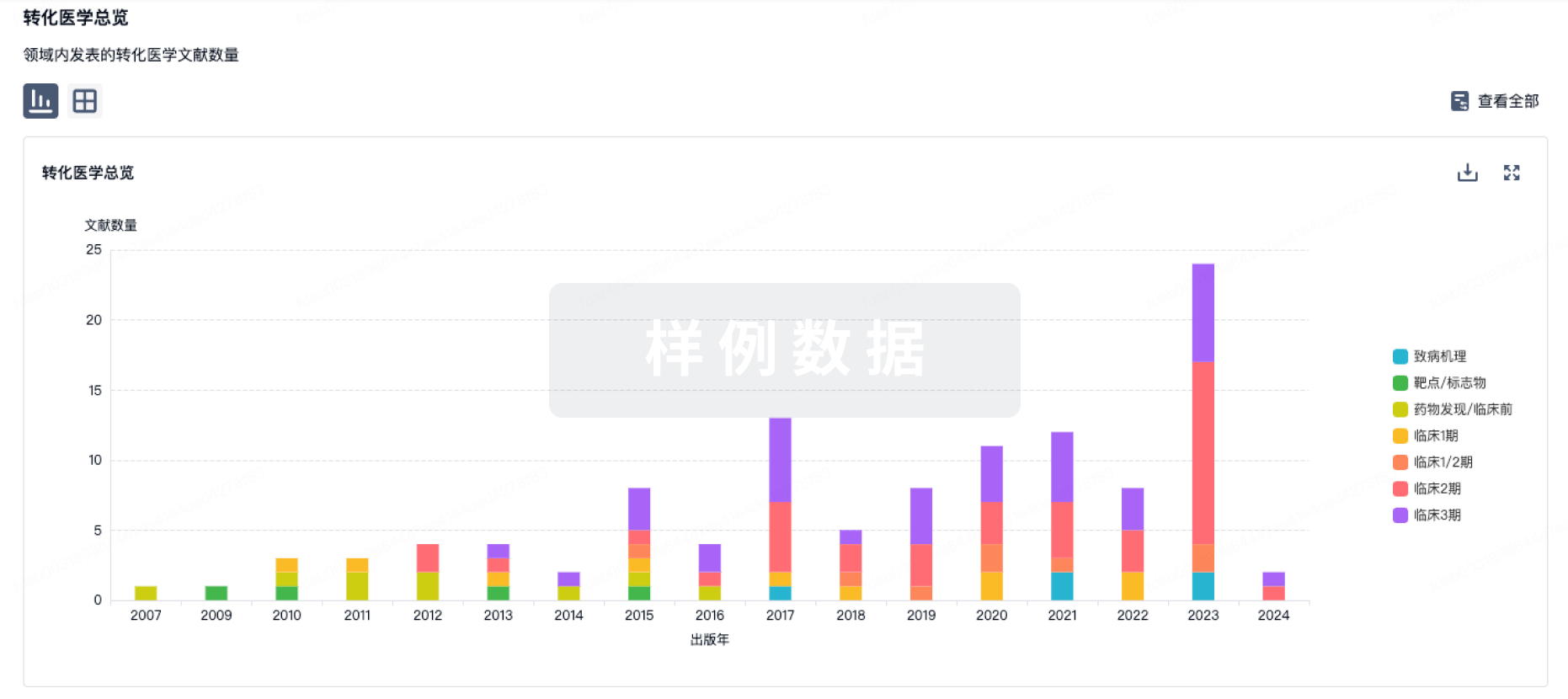
转化医学
使用我们的转化医学数据加速您的研究。
登录
或
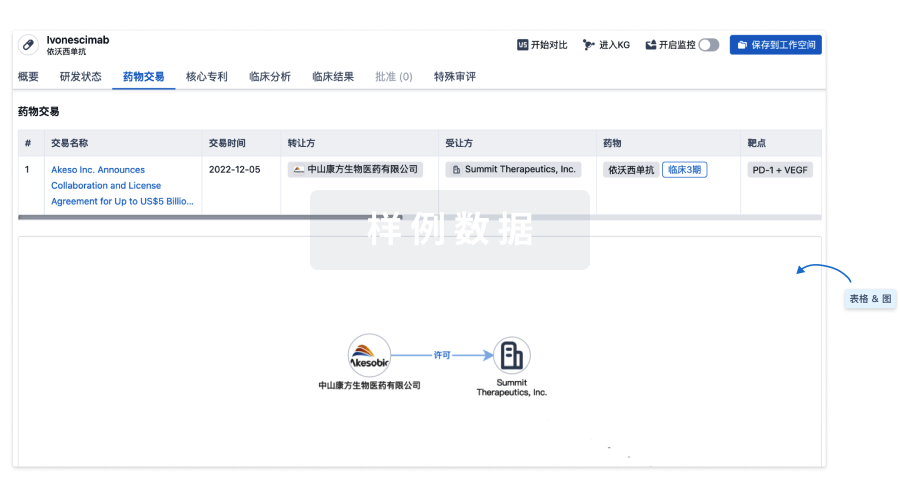
药物交易
使用我们的药物交易数据加速您的研究。
登录
或
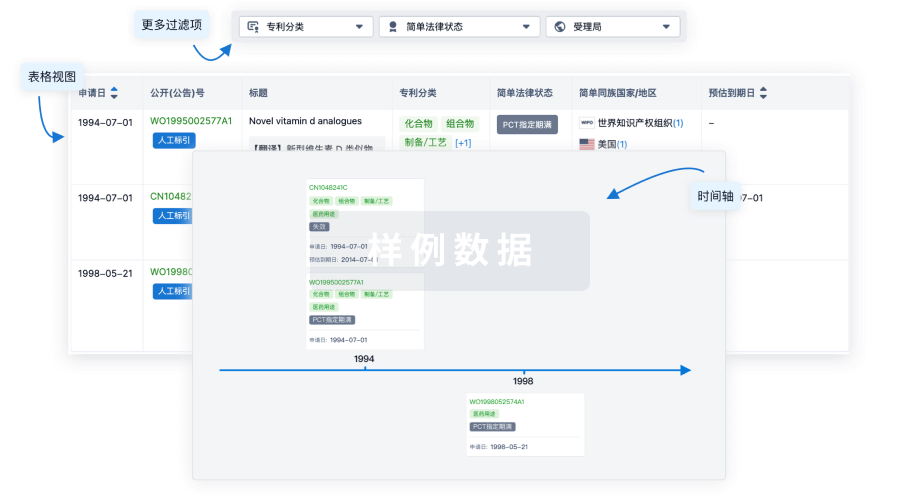
核心专利
使用我们的核心专利数据促进您的研究。
登录
或
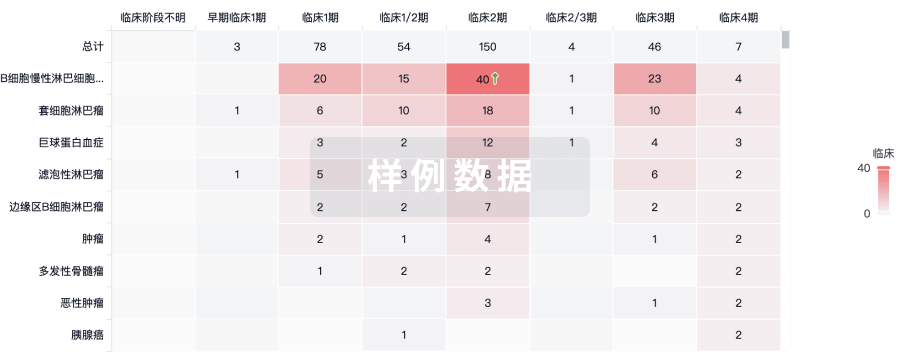
临床分析
紧跟全球注册中心的最新临床试验。
登录
或
批准
利用最新的监管批准信息加速您的研究。
登录
或
特殊审评
只需点击几下即可了解关键药物信息。
登录
或
提出任何生物医药研究问题
让每一步生物医药决策都精准制胜
基于十亿级生物数据与全球情报的精准 AI,赋能早期药物发现
立即开始免费试用!
智慧芽新药情报库是智慧芽专为生命科学人士构建的基于AI的创新药情报平台,助您全方位提升您的研发与决策效率。
立即接入生物医药数据包
智慧芽新药库数据也通过智慧芽开放平台,以MCP或API服务形式对外开放。立即使用我们的MCP服务定制您的LLM智能体。
生物序列数据库
生物药研发创新
免费使用
化学结构数据库
小分子化药研发创新
免费使用