预约演示
更新于:2026-09-04
Mivelsiran
更新于:2026-09-04
概要
基本信息
非在研机构- |
最高研发阶段临床2期 |
首次获批日期- |
最高研发阶段(中国)- |
特殊审评- |


登录后查看时间轴
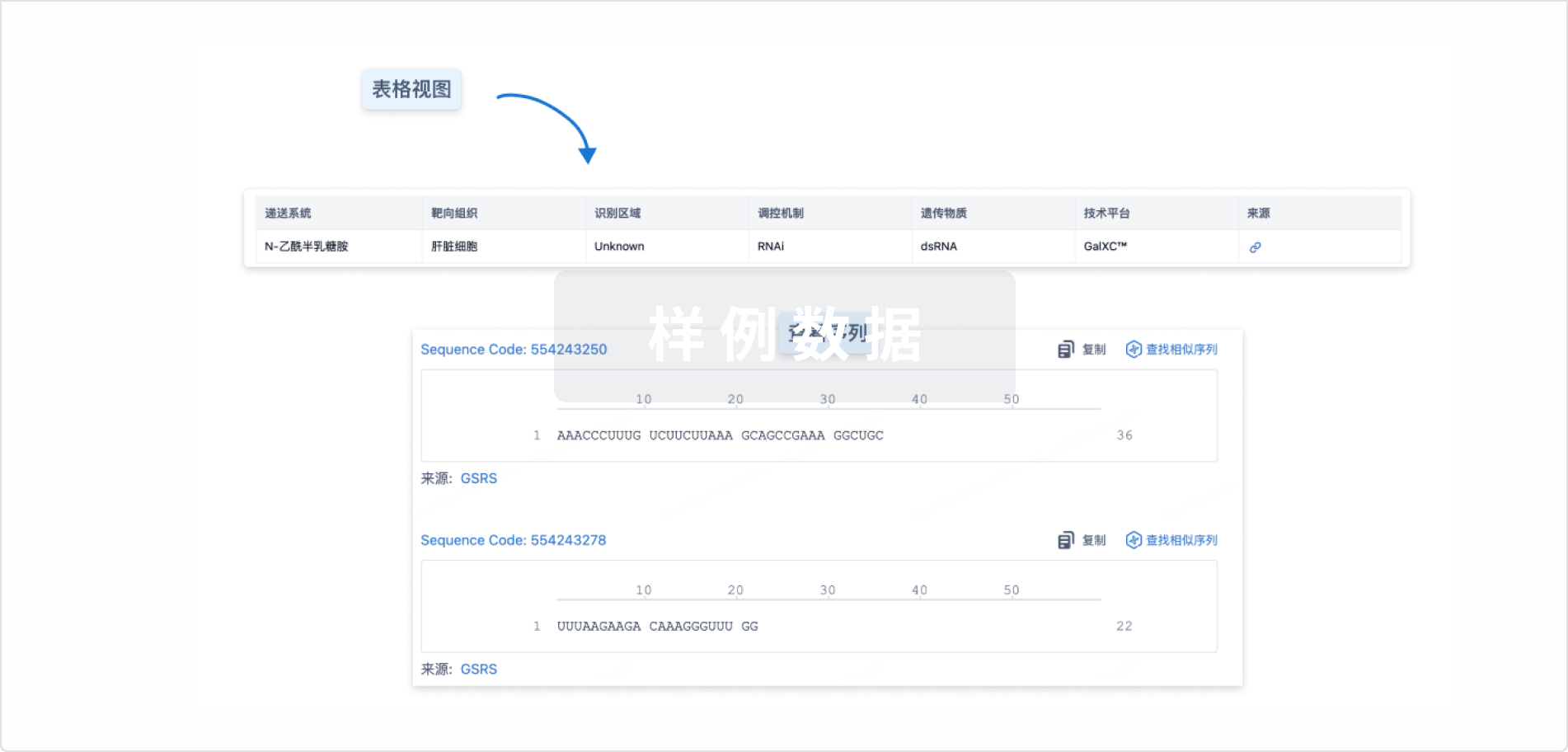
结构/序列
使用我们的RNA技术数据为新药研发加速。
登录
或
Sequence Code 565398339
来源: *****
Sequence Code 1031376348
来源: *****
关联
3
项与 Mivelsiran 相关的临床试验NCT07636811
A Phase 2, Multicenter, Randomized, Double-blind, Placebo-controlled Study, to Evaluate Efficacy, Safety, Tolerability, and Pharmacodynamics of Intrathecally Administered Mivelsiran in Adult Participants With Early-Stage Down Syndrome-Associated Alzheimer's Disease (DS-AD)
The purpose of the study is to evaluate the effect of mivelsiran in adult participants with early-stage DS-AD and to characterize the safety, tolerability, and pharmacodynamics (PD) of mivelsiran. The study will be conducted over 2 periods: a 24-month double-blind period and an optional 12-month open-label treatment extension (OLE) period. The estimated duration of study participation, inclusive of screening, treatment, and additional safety follow-up, is up to 39 months.
开始日期2026-08-31 |
NCT06393712
A Phase 2, Randomized, Double-blind, Placebo-controlled Study to Evaluate the Efficacy, Safety, Tolerability, and Pharmacodynamics of Intrathecally Administered ALN-APP in Patients With Cerebral Amyloid Angiopathy (CAA)
The purpose of the study is to evaluate the effect of ALN-APP on measures of CAA disease progression and to characterize the safety, tolerability, and pharmacodynamics (PD) of ALN-APP in adult patients with sporadic CAA (sCAA) and Dutch-type CAA (D-CAA). The study will be conducted over 2 periods: a 24-month double-blind treatment period and an optional 18-month open-label extension (OLE) period. The estimated duration of study participation, inclusive of screening, treatment, and additional safety follow-up, is up to 50 months.
开始日期2024-05-17 |
NCT05231785
A Randomized, Double-blind, Placebo-controlled Single Ascending Dose and Open-label Multi-dose Study to Evaluate the Safety, Tolerability, Pharmacokinetics and Pharmacodynamics of Intrathecally Administered ALN-APP in Adult Patients With Early-onset Alzheimer's Disease (EOAD)
The purpose of this study is to evaluate the safety, tolerability, pharmacodynamics (PD) and pharmacokinetics (PK) of a single dose and multiple doses of ALN-APP administered by intrathecal (IT) injection in adult patients with early-onset Alzheimer's Disease (EOAD). Maximum treatment duration for Part A: single dose. Maximum treatment duration for Part B: 12 months.
开始日期2022-02-04 |
100 项与 Mivelsiran 相关的临床结果
登录后查看更多信息
100 项与 Mivelsiran 相关的转化医学
登录后查看更多信息
100 项与 Mivelsiran 相关的专利(医药)
登录后查看更多信息
2
项与 Mivelsiran 相关的文献(医药)2025-12-01·Alzheimers & Dementia
Small Interfering RNA Targeting Amyloid‐Beta Precursor Protein Reduces Alzheimer’s Disease Pathology in 5xFAD Mice
Article
作者: Sostelly, Alexandre ; Taillie, Dominique ; Mooney, Timothy ; Brown, Kirk ; Cha, Diana ; Ferraro, Gina ; Bittner, Kelsey
Abstract:
Background:
Amyloid‐beta precursor protein (APP) is the source of all amyloid‐beta (Aβ), the amyloidogenic peptide that aggregates in Alzheimer’s disease (AD). Lowering APP mRNA expression with RNA interference (RNAi) is a novel treatment strategy under investigation for AD. The 5xFAD mouse model of AD overexpresses APP and PSEN1 with five familial AD mutations, resulting in robust pathology, including amyloid plaques, microgliosis, inflammation, synaptic loss, neuronal loss, and behavioral changes. This work evaluates the effects of early and late intervention with an APP‐lowering small interfering RNA (siRNA) in this established AD model.
Method:
APP‐targeting siRNAor artificial CSF (aCSF; control) was administered by intracerebroventricular injection in 5xFAD mice at late (8‐months‐old) and early (12‐weeks‐old) disease stages, and in age‐matched wild‐type mice. Late intervention mice received either aCSF or 300µg single dose. Early intervention mice received one of four dose regimens: control (aCSF:aCSF), transient lowering (75µg APP siRNA:aCSF), moderate sustained lowering (75µg APP siRNA:75µg APP siRNA), or robust sustained lowering (300µg APP siRNA:300µg APP siRNA). The impact of late and early siRNA intervention on molecular, biochemical, histological, and disease‐related behavioral outcomes (assessed using the elevated plus‐maze and open‐field assay) were assessed in 12‐month‐old mice (Figure 1).
Result:
Treatment in the late intervention group lowered amyloid burden to levels below the 8‐month baseline (Figure 2A, 2B). Compared with age‐matched aCSF mice, late treatment decreased pathogenic amyloid species, Aβ40 and Aβ42, in CSF and tissue, reduced markers of glial inflammation, and reduced plasma neurofilament light chain (NfL). No significant behavioral changes were noted (Figure 3A).Treatment in early intervention groups lowered amyloid burden in tissue (Figure 2C, 2D), reduced markers of glial inflammation, reduced plasma NfL, and decreased anxiety‐like behavior, all in a dose‐dependent manner. Notably, robust, sustained lowering of APP completely prevented the emergence of disease‐associated anxiety‐like behavior (Figure 3B).
Conclusion:
Treatment with APP‐lowering siRNA reduced AD pathology in the 5xFAD mouse model. Early intervention with the highest dose regimen prevented the emergence of behavioral deficits and substantially improved many aspects of disease phenotype. These results support the continued development of mivelsiran, an investigational, first‐in‐class APP‐lowering RNAi therapeutic, in patients with AD (NCT05231785).
2025-12-01·Alzheimers & Dementia
Multiple‐Dose Results from an Ongoing Phase 1 Study of Mivelsiran, an Investigational RNA Interference Therapeutic Targeting Amyloid‐Beta Precursor Protein for Alzheimer’s Disease
Article
作者: Cohen, Sharon ; Deering, Robert W ; Mummery, Catherine J. ; Farrugia, Lynn ; Blackburn, Daniel J. ; Ducharme, Simon ; Shirvan, Julia ; McDade, Eric ; Brosch, Jared R. ; Chaudhari, Sandeep ; Vijverberg, Everard G.B. ; Sostelly, Alexandre
Abstract:
Background:
Single doses of mivelsiran, an investigational RNA interference (RNAi) therapeutic, have demonstrated robust amyloid‐beta precursor protein (APP) lowering in the CNS. We report additional interim safety and pharmacodynamic data in patients with early‐onset Alzheimer’s disease (EOAD) who received single ascending doses (SAD) and, for the first time, multiple doses of mivelsiran in the ongoing Phase 1 study (NCT05231785).
Methods:
Patients with EOAD (symptom onset <65 years of age, Clinical Dementia Rating global score 0.5 or 1.0, Mini‐Mental State Examination score >20) were randomized to a single intrathecal dose of mivelsiran 25–100mg or placebo for 6 months (plus up to 6 months follow‐up if needed for washout). After washout, patients could enter a separate multiple ascending dose (MAD) portion and receive open‐label mivelsiran. Presented here are data from a SAD cohort of mivelsiran 100mg and a MAD cohort of mivelsiran 50mg every 6 months (Q6M). Frequency of adverse events (AEs) and pharmacodynamics were primary and secondary endpoints, respectively.
Results:
Forty‐five patients were enrolled in SAD cohorts (as of 11/20/2024). Of those, 9 patients were randomized to mivelsiran 100mg or placebo (mean [SD] age, 64.1 [3.7] years; 33.3% male; 100% white). Most AEs were mild or moderate. Peak mean (SE) change from baseline in cerebrospinal fluid (CSF) soluble APP beta (sAPPβ) at Month 1 (─84.5% [1.3]) was largely sustained through Month 10 (─61.1% [2.8]).After meeting washout criteria, 10 patients from SAD cohorts received mivelsiran 50mg Q6M (mean [SD] age, 59.9 [4.4] years; 70.0% male; 70.0% white). No serious or severe AEs were reported. At Day 15 after the first dose, mean (SE) change from baseline in CSF sAPPβ was ─63.7% (5.0); at Month 1 after the second dose, change was ─83.8% (2.3). Additional data will be presented.
Conclusions:
In this first report of multiple‐dose clinical data for a CNS‐targeting RNAi therapeutic, single and multiple doses of mivelsiran were generally well tolerated and continued to demonstrate robust, durable, dose‐dependent CSF sAPPβ reductions. Further sAPPβ lowering was observed after a second dose of mivelsiran 50mg. These results support further evaluation of mivelsiran in patients with Alzheimer’s disease or cerebral amyloid angiopathy.
205
项与 Mivelsiran 相关的新闻(医药)2026-08-31
·网易号
编者按:阿尔茨海默病(AD)的治疗思路正在发生深刻变化。过去,药物开发更多聚焦于改善认知和精神行为症状;如今,随着疾病生物学研究不断深入,研发重点正逐步转向延缓甚至改变疾病进程。与之相伴的,是两条日益清晰的发展主线:一方面,AD药物研发正在从β淀粉样蛋白(Aβ)这一经典方向,向Tau蛋白病理、神经炎症、免疫调节、神经递质受体等更多机制拓展;另一方面,如何让药物有效穿越血脑屏障(BBB)、在脑内达到足够且持续的有效暴露,也成为决定许多新机制能否真正转化为治疗手段的关键。作为全球医药创新的赋能者,药明康德依托“一体化、端到端”的CRDMO赋能平台,持续支持合作伙伴开发针对中枢神经系统(CNS)疾病的创新疗法。其中,药明康德药物代谢与动力学部(DMPK)围绕CNS药物“入脑并维持暴露”的核心挑战,构建了覆盖体外筛选、体内评价与机制解析的一体化药代动力学研究策略。在早期阶段,通过平行人工膜渗透模型(PAMPA)、MDR1-MDCK细胞模型等高通量体外模型,结合转运体研究与理化性质分析,快速筛选具备脑渗透潜力的候选分子。在体内阶段,利用原位脑灌注与脑微透析等先进技术,实时定量检测药物在血浆、脑组织及脑脊液中的分布与游离浓度,精准计算脑-血浆未结合分配系数(Kp,uu)等关键参数,揭示真实脑暴露水平。在此基础上,进一步结合基于生理学的药代动力学模型(PBPK)、结构优化和转运机制研究,支持从分子设计到临床转化的跨尺度决策。依托这一“分层筛选+多模型验证+机制驱动优化”的综合能力,药明康德DMPK能够帮助客户系统性提升CNS候选药物的脑暴露预测准确性,加速突破血脑屏障带来的研发瓶颈,推动创新疗法更高效地迈向临床。AD药物研发管线活跃,创新靶点多点开花近年来,AD药物研发持续活跃。近期发布的《2026年阿尔茨海默病药物研发管线》(Alzheimer's disease drug development pipeline:2026)年度报告显示,截至2026年1月1日,全球共有158种AD药物处于临床开发阶段,涉及192项临床试验,与2017年相比,分别增长约40%和35%。比管线数量增长更值得关注的,是研发方向本身正在发生变化。过去,Aβ长期占据AD药物研发的中心位置。如今,越来越多的候选药物开始转向Tau蛋白病理、神经炎症、免疫调节、神经递质受体等机制。该报告第一作者兼通讯作者Jeffrey Cummings教授用一组数据概括了这一变化:十年前,大约1/3的在研药物靶向淀粉样蛋白;如今这一比例已经下降至约20%。与此同时,靶向炎症和免疫机制的药物占比则从6%上升至20%。▲2017-2026年期间,靶向炎症/免疫、Tau蛋白和淀粉样蛋白药物管线变化趋势(图片来源:参考文献[1])治疗目标也在发生转变。当前,疾病靶向疗法已经成为AD研发的主要方向,其中包括62种小分子药物(口服且分子量小于500道尔顿)和54种生物制品,如单克隆抗体、反义寡核苷酸和疫苗等。与此同时,以改善现有症状为目的的疗法仍然占有重要位置,包括29种针对认知障碍的候选药物和16种针对精神行为症状群的候选药物。换言之,AD药物开发正在从过去相对集中的靶点布局,逐渐走向多机制并行探索。而在这些新方向中,Tau蛋白病理正成为最受关注的赛道之一。Tau蛋白:从减少生成到阻断聚集与传播随着AD靶点不断扩展,“Tau蛋白可能成为下一个重要治疗靶点”的判断正在获得越来越多临床证据支持。从反义寡核苷酸、被动免疫疗法到小分子药物,多类Tau靶向策略正在进入概念验证阶段,渤健(Biogen)、诺华(Novartis)、礼来(Eli Lilly and Company)等公司也在持续布局相关管线。渤健与Ionis Pharmaceuticals合作开发的反义寡核苷酸药物diranersen,是这一方向较具代表性的候选药物之一。Diranersen靶向微管相关蛋白Tau(MAPT)mRNA,通过减少MAPT mRNA水平,降低各种Tau蛋白亚型的生成,进而减少细胞内外Tau蛋白水平。与许多针对已经形成的Tau蛋白聚集物进行清除或阻断其传播的策略不同,diranersen试图直接减少Tau蛋白的产生,相当于把干预节点向病理过程的更上游推进。这一机制已经开始接受临床检验。在2026年阿尔茨海默病协会国际会议(AAIC)上,渤健公布了diranersen的最新临床数据。2期CELIA研究显示,各diranersen剂量组的脑脊液总Tau水平下降50%~65%。治疗18个月时,每6个月接受一次60 mg鞘内注射的患者显示出最明显的临床获益信号。与安慰剂组相比,该剂量组患者按临床痴呆评定量表箱总分(CDR-SB)评估的临床衰退减少0.54分,对应临床衰退减缓26%;按照阿尔茨海默病评定量表认知分量表13项版(ADAS-Cog13)和简易精神状态检查量表(MMSE)评估,认知衰退分别减缓42%和50%。此外,根据改良版综合阿尔茨海默病评定量表(iADRS)和阿尔茨海默病综合评分(ADCOMS)的评估结果,疾病进展分别减缓30%和23%。基于1b期和2期研究积累的临床及生物标志物证据,Biogen计划推动diranersen进入确证性3期临床开发。▲Diranersen的60 mg每6个月一次给药组在多个认知和功能终点中显示出衰退减缓(图片来源:参考资料[2])如果说diranersen代表的是从源头减少Tau蛋白生成的策略,那么另一类研究则试图解决Tau蛋白形成后的聚集与传播问题。在这一方向上,被动免疫疗法近期获得新的临床进展。例如,卫材(Eisai)正在开展E2814联合仑卡奈单抗的2/3期临床试验;百时美施贵宝(Bristol Myers Squibb)和Prothena Corporation开发的BMS-986446(PRX005)正在进行2期临床试验。除此之外,Tau蛋白磷酸化抑制剂、微管稳定剂以及主动免疫疗法(疫苗)等策略也在探索之中,不过整体仍处于相对早期的研发阶段。Tau之外,AD研发的另一个重要变化,是科学界开始更加重视炎症与免疫系统在疾病发生和进展中的作用。神经炎症:从伴随现象走向治疗靶点持续性的神经炎症是AD的重要病理特征之一,其中小胶质细胞和星形胶质细胞发挥着重要作用。随着人们对AD免疫微环境认识不断加深,针对神经炎症的治疗策略也逐渐增多,目前主要包括调节小胶质细胞功能以及干预炎症相关信号通路。AB Science开发的masitinib是一款旨在调节神经炎症反应的酪氨酸激酶抑制剂。在此前一项针对轻中度AD患者开展的2b/3期临床试验中,与安慰剂相比,masitinib组患者的认知恶化得到显著减缓。BioVie开发的bezisterim(NE3107)则从炎症和代谢两个方向切入,其作用机制包括降低炎症反应并改善葡萄糖利用,从而探索对神经元功能的保护作用。BioVie此前已开展bezisterim的2期和3期AD临床研究,公司表示相关初步数据支持进一步开展临床研究。炎症之外,神经递质、免疫系统以及其他与AD病理相关的机制也正在进入临床开发。神经递质与免疫调节:更多机制进入临床验证AD并不是由单一病理机制驱动的疾病。神经递质失衡、蛋白稳态异常、免疫紊乱以及代谢改变等多种因素彼此交织,也因此催生出越来越多不同于传统Aβ或Tau靶向策略的候选疗法。在神经递质受体及其他机制方面,Anavex Life Sciences开发的blarcamesine通过激活Sigma-1受体调节细胞稳态和蛋白清除等过程,已经显示出减缓认知下降的潜力。AriBio开发的AR1001靶向PDE5,Annovis开发的buntanetap则试图同时抑制多种神经毒性蛋白的生成,两款药物均已进入3期临床阶段。与此同时,免疫调节在AD中的作用也受到越来越多关注,尽管大多数相关研究目前仍处于早期阶段。例如,Tiziana Life Sciences开发的foralumab通过调节T细胞功能发挥作用;ImmunoBrain开发的IBC-Ab002则探索通过短暂激活外周免疫系统影响AD病理过程,两者目前均处于早期临床研究阶段。▲针对不同靶点和机制的阿尔茨海默病在研疗法数量统计(图片来源:参考文献[1])从Aβ到Tau,再到炎症、神经递质和免疫机制,AD药物研发的“靶点地图”正在明显扩展。与此同时,疾病修饰疗法在整体管线中的比重不断提高,也表明研究重点正在从控制症状逐步转向干预疾病进程。不过,当越来越多新靶点和新分子进入临床,一个大部分CNS药物都必须面对的问题也变得更加突出:药物能否真正到达大脑,并在作用部位形成足够的有效暴露?这正是血脑屏障带来的挑战。血脑屏障是保护大脑免受外源物质侵袭的重要生理防线,但对于许多治疗药物而言,它同时也是一道难以跨越的天然屏障。尤其是抗体、核酸等大分子疗法,即使拥有明确的作用机制,如果不能有效进入脑组织,其治疗潜力也难以充分发挥。因此,AD药物研发的创新已经不再局限于“靶向什么”,还在越来越多地回答另一个问题——怎样把药送进去?突破血脑屏障:AD药物如何提高“入脑”效率?为了将候选药物更有效地递送至脑内靶组织,研究人员正在尝试多种递送策略。目前较受关注的策略包括受体介导的跨胞转运(receptor-mediated transcytosis,RMT)、纳米递送系统、聚焦超声(focused ultrasound,FUS)联合微泡,以及通过鞘内或脑室内注射绕过血脑屏障、直接向中枢神经系统给药等。这些方法有的试图利用血脑屏障自身的运输系统“搭便车”,有的选择暂时打开屏障,还有的干脆绕过屏障。但它们所要解决的是同一个问题——让更多药物以可控的方式进入脑内,并达到真正具有药理意义的暴露水平。▲三种提高AD药物递送效率的非侵入性方式(图片来源:参考文献[3])受体介导的跨胞转运:借助天然运输通道“搭便车”蛋白质、核酸和生长因子等大多数生物大分子无法自由穿过血脑屏障,因此往往需要借助脑血管内皮细胞上的特定受体进入脑组织。目前受到较多关注的受体包括转铁蛋白受体(TfR)、乳铁蛋白受体(LfR)和胰岛素受体(IR)等。在AD领域,一种重要思路是利用蛋白工程技术,将治疗性抗体与能够识别这些受体的“穿梭模块”结合,从而构建能够利用受体介导转运机制跨越血脑屏障的分子。以TfR为例,它天然表达于脑血管内皮细胞表面,参与将铁结合型转铁蛋白(transferrin)从血液运输至脑组织。研究人员可以将治疗性生物大分子,例如抗体、酶、核酸或病毒载体,与能够识别TfR的模块连接。当复合物与TfR结合后,可被脑血管内皮细胞摄取,并通过跨胞运输进入脑组织。通过这样的“脑穿梭”设计,有望显著提高静脉给药后药物进入大脑的效率。这一思路已经进入临床验证阶段。图片来源:123RF罗氏开发的trontinemab便采用TfR1介导的脑递送设计。早期研究结果显示,与典型抗淀粉样蛋白单抗相比,trontinemab在更低剂量下即可实现较快的淀粉样蛋白PET信号下降。此外,研究中观察到的淀粉样蛋白相关影像学异常发生率也低于传统IgG抗体。研究人员推测,这可能与TfR1介导的递送机制有关:药物可以借助更细小的TfR1阳性血管,更广泛地进入脑组织,从而减少在较大血管周围淀粉样沉积区域的暴露。Trontinemab目前正在两项针对早期AD患者的3期研究中接受评估。除了主动利用血脑屏障上的运输系统,另一种更加直接的方式,是绕过这道屏障。鞘内注射:绕过血脑屏障直接进入脑脊液鞘内注射通过将药物直接注入脑脊液,使候选药物绕过血脑屏障,因此特别适用于一些难以通过外周给药进入中枢神经系统的大分子疗法。目前,这种给药方式在AD核酸药物研发中的重要性正在上升。Alnylam开发的mivelsiran(ALN-APP)便是其中进展较快的候选药物之一。Mivelsiran是一款C16偶联siRNA,靶向淀粉样前体蛋白(APP)mRNA,采用鞘内注射给药,主要通过脑脊液进行中枢递送,目前正在开发用于治疗阿尔茨海默病和脑淀粉样血管病(CAA)。针对早发型阿尔茨海默病患者开展的1期研究更新分析显示,部分患者接受mivelsiran治疗的时间已经达到30个月。在最高剂量组中,脑脊液可溶性淀粉样前体蛋白β(sAPPβ)和Aβ42较基线的平均最大降幅分别达到89.9%和70.2%。Alnylam另一款靶向MAPT mRNA、抑制Tau蛋白生成的siRNA疗法也采用鞘内注射,其1期研究已经于2025年第四季度启动。不过,直接给药并不是唯一选择。对于希望继续采用外周给药、同时提高脑内暴露的药物,纳米载体和聚焦超声也提供了不同的解决思路。纳米递送与聚焦超声:寻找更多跨越BBB的路径与传统制剂相比,纳米递送系统可以延长部分药物在血液循环中的滞留时间,并有望改善其跨越血脑屏障以及向脑内病灶区域分布的能力。不过从临床转化来看,纳米颗粒在AD药物递送中的应用目前仍然相对有限。其中一个较受关注的方向,是将纳米颗粒用于鼻腔给药。例如,目前已有AD患者2期临床试验探索利用纳米颗粒进行α-分泌酶调节剂的鼻腔递送。聚焦超声则采用了另一种思路。低强度聚焦超声与微泡联合使用时,可以暂时改变目标区域血脑屏障的通透性,从而为大分子药物进入脑组织创造“时间窗口”。这一变化通常具有局部、暂时和可逆的特点,因此被视为一种具有潜力的脑递送方法。目前,磁共振引导聚焦超声(MRgFUS)已成为AD领域较受关注的技术方向之一,研究人员正在探索其在改善药物脑内递送以及调节局部病理环境等方面的潜在价值。从RMT到鞘内注射,再到纳米递送与聚焦超声,不同技术路线实际上代表了三种不同的解决思路:利用血脑屏障、绕过血脑屏障,或者暂时改变血脑屏障。随着这些技术不断成熟,AD药物递送所面对的问题也正在从最初的“药物能不能进入大脑”,进一步转向“能进入多少、到达哪里、维持多久,以及能否以足够安全的方式实现这些目标”。从“找对靶点”到“把药送到”,AD研发正在同时突破两道难题回顾当前AD研发管线可以发现,变化正在同时发生在疾病生物学和药物递送两个层面。一方面,AD治疗已经不再围绕单一病理机制展开。从Aβ、Tau,到神经炎症、免疫调节和神经递质受体,多元化靶点正在形成更加丰富的治疗组合,疾病修饰疗法也逐渐成为研发主线。另一方面,对于越来越多抗体、核酸和其他新型疗法而言,仅仅找到合适的靶点并不足够。如何让候选药物跨越血脑屏障,在正确的脑区、以足够的浓度和足够长的时间作用于靶点,正在成为影响研发成败的另一个核心问题。RMT、鞘内注射、聚焦超声等递送技术的成熟,有望让更多候选药物跨越血脑屏障这一关卡。当靶点创新与递送技术开始同步推进,人们对阿尔茨海默病的治疗探索,也正在从单点突破转向更加系统的解决方案。From Target Expansion to Better Brain Delivery: What’s New in Alzheimer’s Disease Therapeutics?The treatment paradigm for Alzheimer’s disease (AD) is undergoing a significant shift. Historically, drug development focused largely on improving cognitive and neuropsychiatric symptoms. Today, as our understanding of AD biology continues to deepen, the emphasis is increasingly moving toward slowing or modifying disease progression. Two trends are emerging in parallel. First,the target landscape is broadening beyond the classic amyloid-beta (Aβ) pathway to include Tau pathology, neuroinflammation, immunomodulation, neurotransmitter receptors, and other mechanisms.Second,the ability to cross the blood–brain barrier (BBB) and achieve sufficient, sustained drug exposure in the brain is becoming increasingly important for translating these new mechanisms into viable therapies.As a global enabler of pharmaceutical innovation, WuXi AppTec supports partners in developing innovative therapies for central nervous system (CNS) diseases through its integrated, end-to-end CRDMO platform. Within this platform, WuXi AppTec DMPK has established an integrated pharmacokinetic strategy to address a fundamental challenge in CNS drug development: enabling sufficient brain penetration while maintaining effective exposure. At the early stage, high-throughput in vitro models, including parallel artificial membrane permeability assay (PAMPA) and MDR1-MDCK cell systems, are combined with transporter studies and physicochemical profiling to efficiently identify compounds with brain penetration potential. At the in vivo stage, advanced techniques such as in situ brain perfusion and brain microdialysis are employed to quantitatively assess drug distribution and unbound concentrations in plasma, brain tissue, and cerebrospinal fluid, enabling accurate determination of key parameters such as the unbound brain-to-plasma partition coefficient (Kp,uu) and providing a true reflection of brain exposure.In parallel, WuXi AppTec DMPK integrates pharmacokinetic data with physiologically based pharmacokinetic (PBPK) modeling, structural optimization, and transporter mechanistic studies to support cross-scale decision-making from molecular design to clinical translation. Through this comprehensive “tiered screening + multi-model validation + mechanism-driven optimization” approach, WuXi AppTec DMPK empowers partners to improve the predictability of CNS drug exposure, overcome BBB-related development challenges, and accelerate the advancement of innovative therapies toward the clinic.Image source: 123RFAD Drug Pipeline Remains Active as the Target Landscape BroadensAD drug development has remained highly active in recent years. According to the recently published annual report Alzheimer’s Disease Drug Development Pipeline: 2026, as of January 1, 2026, 158 AD drugs were in clinical development across 192 clinical trials, representing increases of approximately 40% and 35%, respectively, compared with 2017.More important than the growth in pipeline size, however, is the shift in research priorities.For years, Aβ occupied a central position in AD drug development. Today, a growing number of candidates are directed at Tau pathology, neuroinflammation, immunomodulation, neurotransmitter receptors, and other mechanisms. Jeffrey Cummings, the report’s first and corresponding author, highlighted the shift with a simple comparison:a decade ago, roughly one-third of drugs in development targeted amyloid, whereas that proportion has now fallen to about 20%. Over the same period, the share of candidates targeting inflammation and immune pathways has increased from 6% to 20%.▲ Changes in the proportion of pipeline drugs targeting inflammation/immune pathways, Tau, and amyloid from 2017 to 2026 (Image source: reference [1])Therapeutic goals are changing as well.Disease-targeting therapies now account for a major share of the AD pipeline, including 62 small-molecule drugs, generally orally administered compounds with molecular weights below 500 Da, and 54 biologics, such as monoclonal antibodies, antisense oligonucleotides, and vaccines.Symptom-directed therapies remain an important part of the landscape, including 29 candidates targeting cognitive impairment and 16 aimed at neuropsychiatric symptoms.In other words, AD drug development is moving from a relatively concentrated target landscape toward multiple mechanisms being explored in parallel. Among these emerging directions, Tau pathology has become one of the most closely watched.Tau: From Reducing Production to Blocking Aggregation and SpreadAs the AD target landscape expands, the view that Tau could become the next major therapeutic target is gaining support from an increasing body of clinical evidence. From antisense oligonucleotides and passive immunotherapies to small molecules, multiple Tau-targeting strategies are entering proof-of-concept testing, while companies including Biogen, Novartis, and Eli Lilly and Company continue to expand their presence in the field.One representative program is diranersen, an antisense oligonucleotide being developed by Biogen in collaboration with Ionis Pharmaceuticals.Diranersen targets microtubule-associated protein Tau (MAPT) mRNA. By reducing MAPT mRNA, it lowers production of multiple Tau isoforms and thereby reduces intracellular and extracellular Tau levels.This differs from many Tau-targeted approaches that intervene after pathological Tau species have formed—for example, by clearing aggregates or blocking their propagation. Diranersen instead acts further upstream by directly reducing Tau production.That mechanism is now being tested clinically.At the 2026 Alzheimer’s Association International Conference (AAIC), Biogen presented updated data from the Phase 2 CELIA study.Across diranersen dose groups, total Tau levels in cerebrospinal fluid declined by 50% to 65%.At 18 months, the strongest clinical benefit signals were observed in patients receiving 60 mg of diranersen by intrathecal injection once every six months.Compared with placebo, worsening on the Clinical Dementia Rating–Sum of Boxes (CDR-SB) was 0.54 points lower in this group, corresponding to a 26% slowing of clinical decline. Cognitive decline as assessed by the 13-item Alzheimer’s Disease Assessment Scale–Cognitive Subscale (ADAS-Cog13) and the Mini-Mental State Examination (MMSE) was slowed by 42% and 50%, respectively. Disease progression as measured by the modified Integrated Alzheimer’s Disease Rating Scale (iADRS) and the Alzheimer’s Disease Composite Score (ADCOMS) was slowed by 30% and 23%, respectively.Based on the clinical and biomarker evidence accumulated across the Phase 1b and Phase 2 studies, Biogen plans to advance diranersen into confirmatory Phase 3 development.▲ The 60 mg diranersen regimen administered once every six months showed slower decline across multiple cognitive and functional endpoints (Image source: reference [2])If diranersen represents an upstream strategy aimed at reducing Tau production, another group of approaches is focused on what happens after Tau is produced—particularly its aggregation and spread.Passive immunotherapies have made recent clinical progress. Eisai, for example, is conducting a Phase 2/3 trial of E2814 in combination with lecanemab; Bristol Myers Squibb is evaluating BMS-986446 (PRX005) in a Phase 2 study.Other investigational strategies include Tau phosphorylation inhibitors, microtubule stabilizers, and active immunotherapies such as vaccines, although these approaches remain at relatively early stages of development.Beyond Tau, another important shift in AD research is the growing recognition of inflammation and immune dysfunction as contributors to disease onset and progression.Neuroinflammation: From Disease Hallmark to Therapeutic TargetPersistent neuroinflammation is an important feature of AD pathology, with microglia and astrocytes playing central roles.As understanding of the AD immune microenvironment deepens, therapeutic approaches targeting neuroinflammation are becoming increasingly diverse, with current strategies focused primarily on modulating microglial function and interfering with inflammatory signaling pathways.Masitinib, developed by AB Science, is a tyrosine kinase inhibitor designed to modulate neuroinflammatory responses. In a previous Phase 2b/3 study in patients with mild-to-moderate AD, masitinib significantly slowed cognitive deterioration compared with placebo.BioVie’s bezisterim (NE3107) takes a different approach, targeting both inflammation and metabolism. Its proposed mechanism includes reducing inflammatory signaling and improving glucose utilization, with the goal of supporting neuronal function. BioVie has previously evaluated bezisterim in Phase 2 and Phase 3 studies in AD and has stated that the initial findings support further clinical investigation.Beyond inflammation, neurotransmitter signaling, immune regulation, and other mechanisms associated with AD pathology are also moving into clinical development.Neurotransmitters and Immunomodulation: More Mechanisms Enter Clinical TestingAD is not driven by a single pathological process. Neurotransmitter imbalance, disrupted protein homeostasis, immune dysregulation, and metabolic changes interact in complex ways, helping explain why an increasing number of investigational therapies are moving beyond traditional Aβ- or Tau-directed approaches.Among programs targeting neurotransmitter receptors and other mechanisms, Anavex Life Sciences’ blarcamesine activates the Sigma-1 receptor to regulate cellular homeostasis and protein-clearance pathways and has shown potential to slow cognitive decline. AriBio’s AR1001 targets PDE5, while Annovis’ buntanetap is designed to inhibit the production of multiple neurotoxic proteins simultaneously. Both AR1001 and buntanetap have reached Phase 3 clinical development.Immunomodulation is also receiving increasing attention, although most programs remain in relatively early stages of clinical development.For example, foralumab from Tiziana Life Sciences is designed to modulate T-cell function, while ImmunoBrain’s IBC-Ab002 explores transient activation of the peripheral immune system as a way to influence AD pathology. Both remain in early-stage clinical investigation.▲AD drug candidates targeting different pathways(Image source: reference [1])From Aβ and Tau to neuroinflammation, neurotransmitter signaling, and immune mechanisms, the AD “target map” is clearly expanding.At the same time, the growing prominence of disease-modifying approaches suggests that research priorities are gradually shifting from managing symptoms toward intervening in the course of the disease itself.But as more targets and new therapeutic modalities enter the clinic, a challenge common to virtually all CNS drug programs becomes increasingly important:Can the drug actually reach the brain and achieve sufficient exposure at its site of action?That challenge is the blood–brain barrier.The BBB is a vital physiological defense that protects the brain from potentially harmful substances in the circulation. For many therapeutic agents, however, it is also a formidable delivery barrier. This is particularly relevant for large molecules such as antibodies and nucleic acid therapeutics: even a compelling mechanism may have limited therapeutic potential if the drug cannot reach the brain in sufficient amounts.As a result,innovation in AD drug development is no longer only about what to target. Increasingly, it is also about how to get the drug there.Crossing the Blood–Brain Barrier: How Can AD Therapies Improve Brain Delivery?Researchers are pursuing multiple strategies to deliver AD drug candidates more effectively to their intended sites in the brain.Among the approaches attracting significant interest are receptor-mediated transcytosis (RMT), nanocarrier-based delivery systems, focused ultrasound (FUS) combined with microbubbles, and intrathecal or intracerebroventricular administration that bypasses the BBB and delivers therapeutics directly into the central nervous system.These approaches take fundamentally different routes. Some exploit the BBB’s endogenous transport machinery, some temporarily increase BBB permeability, and others bypass the barrier altogether.But they are all trying to solve the same problem: enabling more drug to reach the brain in a controlled manner and achieve pharmacologically meaningful exposure.▲ Three non-invasive approaches for improving AD drug delivery efficiency (Image source: reference [3])Receptor-Mediated Transcytosis: Hitchhiking on Endogenous Transport PathwaysMost biological macromolecules, including proteins, nucleic acids, and growth factors, cannot freely cross the BBB and therefore often depend on specific receptors expressed on brain endothelial cells to enter the CNS.Receptors receiving particular attention include the transferrin receptor (TfR), lactoferrin receptor (LfR), and insulin receptor (IR).In AD, one important strategy uses protein engineering to combine therapeutic molecules with shuttle modules capable of recognizing these receptors, allowing the resulting construct to take advantage of receptor-mediated transport across the BBB.TfR, for example, is naturally expressed on brain microvascular endothelial cells and participates in transporting iron-bound transferrin from the circulation into the brain.Therapeutic macromolecules—including antibodies, enzymes, nucleic acids, and viral vectors—can be linked to modules that recognize TfR. Once the complex binds to the receptor, it can be taken up by brain endothelial cells, transported across the cell, and released into brain tissue. Such “brain shuttle” designs may substantially increase the efficiency with which systemically administered therapeutics reach the CNS.This concept has already advanced into clinical testing.Roche’s trontinemab uses a TfR1-mediated brain-delivery design.Early clinical results have shown relatively rapid reductions in amyloid PET signal at lower dose levels than those typically used with conventional anti-amyloid monoclonal antibodies.The incidence of amyloid-related imaging abnormalities observed in these studies has also been lower than that reported with conventional IgG antibodies. One hypothesis is that TfR1-mediated delivery allows trontinemab to enter brain tissue more broadly through smaller TfR1-positive vessels, potentially reducing exposure around larger vessels with amyloid deposition. Trontinemab is currently being evaluated in two Phase 3 studies in patients with early AD.Rather than exploiting transport mechanisms at the BBB, another approach is to bypass the barrier altogether.Intrathecal Administration: Bypassing the BBB Through the Cerebrospinal FluidIntrathecal administration delivers a therapeutic agent directly into the cerebrospinal fluid, allowing it to bypass the BBB. This route can be particularly useful for large-molecule therapeutics that have limited ability to enter the CNS after systemic administration.Intrathecal delivery is becoming increasingly important in the development of nucleic acid therapeutics for AD. One of the more advanced candidates using this route is Alnylam’s mivelsiran (ALN-APP).Mivelsiran is a C16-conjugated siRNA targeting amyloid precursor protein (APP) mRNA.Administered intrathecally, it is distributed within the CNS primarily via cerebrospinal fluid and is being developed for both Alzheimer’s disease and cerebral amyloid angiopathy (CAA).An updated analysis from a Phase 1 study in patients with early-onset Alzheimer’s disease showed that some participants had received mivelsiran treatment for up to 30 months.In the highest-dose group, the mean maximum reductions from baseline in cerebrospinal fluid soluble amyloid precursor protein beta (sAPPβ) and Aβ42 were 89.9% and 70.2%, respectively.Another Alnylam siRNA program targeting MAPT mRNA to reduce Tau production also uses intrathecal administration. Its Phase 1 study was initiated in the fourth quarter of 2025.Direct CNS administration, however, is not the only option. For programs that aim to retain peripheral dosing while increasing brain exposure, nanocarriers and focused ultrasound offer other possibilities.Nanocarriers and Focused Ultrasound: Additional Routes Across the BBBCompared with conventional formulations, nanoparticle-based delivery systems can prolong the circulation time of certain drug molecules and may improve BBB penetration and distribution to disease-relevant regions of the brain.Clinical translation of nanoparticle-based delivery in AD, however, remains relatively limited. One area of interest is the use of nanoparticles as carriers for intranasal administration. For example, a Phase 2 study in patients with AD is exploring nanoparticle-mediated intranasal delivery of an alpha-secretase modulator.Focused ultrasound takes a different approach.When low-intensity focused ultrasound is combined with microbubbles, it can temporarily increase BBB permeability in a defined region, creating a window through which larger therapeutic molecules may enter brain tissue.Because this effect can be localized, transient, and reversible, the approach is being investigated as a potentially useful method for improving brain drug delivery.Magnetic resonance-guided focused ultrasound (MRgFUS) has consequently emerged as an area of interest in AD research, with studies exploring its potential to improve therapeutic delivery to the brain and influence the local pathological environment.From RMT and intrathecal administration to nanocarriers and focused ultrasound, these technologies represent three fundamentally different strategies: using the BBB, bypassing the BBB, or temporarily modifying the BBB.As these approaches mature, the central question in AD drug delivery is evolving from simply whether a drug can enter the brain to how much reaches the brain, where it goes, how long it remains there, and whether this can be achieved safely.From Finding the Right Target to Getting the Drug There: Two Challenges AD R&D Is Addressing in ParallelA review of today’s AD pipeline shows that change is occurring simultaneously at the level of disease biology and drug delivery.On the biology side, AD drug development is no longer centered on a single pathological mechanism. From Aβ and Tau to neuroinflammation, immunomodulation, and neurotransmitter receptors, a more diverse set of targets is giving rise to a broader range of therapeutic strategies, while disease-modifying approaches are increasingly becoming a central focus of development.On the delivery side, identifying the right target is not enough—particularly for antibodies, nucleic acid therapeutics, and other emerging modalities. Drug candidates must also cross the BBB, reach the relevant brain regions, achieve sufficient exposure, and remain at the site of action long enough to exert their intended effects. Advances in approaches such as RMT, intrathecal administration, and focused ultrasound may enable more candidates to overcome this long-standing barrier.As innovation in therapeutic targets and drug delivery progresses in parallel, the search for new Alzheimer’s disease treatments is moving beyond isolated advances toward increasingly integrated solutions.Key Takeaways1. AD clinical development remains active. As of January 2026, 158 AD drug candidates were being evaluated across 192 clinical trials, representing increases of approximately 40% and 35%, respectively, compared with 2017.2. The AD target landscape is becoming more diverse. Development is expanding beyond amyloid-beta to include Tau pathology, neuroinflammation, immunomodulation, neurotransmitter receptors, and other disease mechanisms.3. Brain delivery is becoming a central part of AD drug development. RMT-based brain shuttles, intrathecal administration, nanocarrier systems, and focused ultrasound offer complementary strategies to exploit, bypass, or temporarily modify the BBB.4. Target innovation and delivery innovation are increasingly interconnected. Identifying a promising therapeutic mechanism is only part of the challenge; achieving sufficient exposure at the intended site of action in the brain is also critical to translating that mechanism into a viable therapy.5. WuXi AppTec DMPK supports CNS programs with an integrated strategy for assessing brain exposure. Its capabilities span high-throughput in vitro permeability and transporter assessment, in vivo brain distribution and unbound exposure studies, and integration with PBPK modeling and mechanism-based analysis to support CNS candidates from molecular design through clinical translation.参考文献[1] Cummings JL, Zhou Y, Yang Y, et al. Alzheimer's disease drug development pipeline: 2026. Alzheimers Dement (N Y). 2026 May 5;12:e70251. doi: 10.1002/trc2.70251.[2] Questions linger over Biogen's tau drug for Alzheimer's, as low dose reports better results. Retrieved July 14, 2026, from https://endpoints.news/biogens-tau-drug-reports-mixed-alzheimers-results-as-low-dose-performs-better/[3] de Koning LA, Vazquez-Matias DA, Beaino W, et al. Drug delivery strategies to cross the blood-brain barrier in Alzheimer's disease: a comprehensive review on three promising strategies. J Prev Alzheimers Dis. 2025 Aug;12(7):100204. doi: 10.1016/j.tjpad.2025.100204.[4] Rudman MD, Ulrich JD, Holtzman DM. Recent advances in Alzheimer's disease: From molecular mechanisms to therapeutic strategies. Cell. 2026 Jul 9;189(14):4193-4224. doi: 10.1016/j.cell.2026.06.006.[5] Hafez, M.M., Abbas, H.A., Shoman, N.A. et al. A new era in neuropharmacology: assessing the efficacy and safety of novel anti-amyloid and non-amyloid drug targets for Alzheimer's disease. J Neurol 273, 303 (2026). https://doi.org/10.1007/s00415-026-13829-7.[6] Nowell J, Crook H, de Leon M J, et al. Advances in the drug treatment of Alzheimer’s disease: pathophysiology and mechanisms of action BMJ 2026; 393 :bmj-2023-078881 doi:10.1136/bmj-2023-078881.[7] de Koning LA, Vazquez-Matias DA, Beaino W, et al. Drug delivery strategies to cross the blood-brain barrier in Alzheimer's disease: a comprehensive review on three promising strategies. J Prev Alzheimers Dis. 2025 Aug;12(7):100204. doi: 10.1016/j.tjpad.2025.100204.[8] Abd El-Fattah MA. Challenges and Opportunities of Drug Delivery for Treatment of Alzheimer's Disease. AAPS PharmSciTech. 2026 Jan 15;27(1):78. doi: 10.1208/s12249-025-03316-z.[9] 赵元元,王海洋.《阿尔茨海默病源性轻度认知障碍诊疗中国专家共识2024》解读及外科治疗新进展.浙江医学,2025,47(14):1462-1465,1487.DOI:10.12056/j.issn.1006-2785.2025.47.14.2025-727.[10] Alzheimer’s drug development pipeline shows impressive growth and diversity of therapies. Retrieved May 5 2026. From https://e3.eurekalert.org/news-releases/1127975[11] Alzheimer’s Disease Drug Development Pipeline is Growing in Size, Number and Variety. Retrieved May 5 2026. From https://www.alz.org/news/2026/alzheimers-disease-drug-development-pipeline-is-growing[12] Schneider, L.S.S., Llibre-Guerra, J.J., Clifford, D.B., et al. (2025), DIAN-TU-001 Trial (Tau NexGen) Rationale and Enrollment Experience. Alzheimer's Dement., 21: e105298.[13] van Dyck, C.H., Kahl, A., Abelian, G., et al. TargetTau-1: Design of a phase 2 trial to evaluate the efficacy, safety, and tolerability of BMS-986446, an anti-MTBR tau monoclonal antibody, in patients with early Alzheimer’s disease. Alzheimer's Dement., 20: e094677. https://doi.org/10.1002/alz.094677[14] Merck KGaA. Merck Showcases Data for Alzheimer’s Disease Candidates MK-2214 and MK-1167 at CTAD 2025. Retrieved December 1, 2025. From https://www.merck.com/news/merck-showcases-data-for-alzheimers-disease-candidates-mk-2214-and-mk-1167-at-ctad-2025/[15] Fang, C., Feng, D., Gaines, M. et al. Buntanetap treatment in mild to moderate Alzheimer’s disease: phase 2/3 study. npj Dement. 2, 26 (2026). https://doi.org/10.1038/s44400-026-00073-z[16] 叶镇宁,吴正红,张华清. 纳米递送系统介导的血脑屏障跨越策略和脑靶向药物递送研究进展[J]. 中国药科大学学报,2024,55(5):590 − 602. DOI: 10.11665/j.issn.1000-5048.2024052202.[17] 李倩, 杜丽娜. 聚焦超声联合微泡开放血脑屏障增强脑靶向递送研究进展[J]. 药学学报, 2021, 56(3): 761-770.免责声明:本文仅作信息交流之目的,文中观点不代表药明康德立场,亦不代表药明康德支持或反对文中观点。本文也不是治疗方案推荐。如需获得治疗方案指导,请前往正规医院就诊。版权说明:欢迎个人转发至朋友圈,谢绝媒体或机构未经授权以任何形式转载至其他平台。转载授权请在「药明康德」微信公众号回复“转载”,获取转载须知。
2026-08-31
·医药观澜
编者按:阿尔茨海默病(AD)的治疗思路正在发生深刻变化。过去,药物开发更多聚焦于改善认知和精神行为症状;如今,随着疾病生物学研究不断深入,研发重点正逐步转向延缓甚至改变疾病进程。与之相伴的,是两条日益清晰的发展主线:一方面,AD药物研发正在从β淀粉样蛋白(Aβ)这一经典方向,向Tau蛋白病理、神经炎症、免疫调节、神经递质受体等更多机制拓展;另一方面,如何让药物有效穿越血脑屏障(BBB)、在脑内达到足够且持续的有效暴露,也成为决定许多新机制能否真正转化为治疗手段的关键。
作为全球医药创新的赋能者,药明康德依托“一体化、端到端”的CRDMO赋能平台,持续支持合作伙伴开发针对中枢神经系统(CNS)疾病的创新疗法。其中,药明康德药物代谢与动力学部(DMPK)围绕CNS药物“入脑并维持暴露”的核心挑战,构建了覆盖体外筛选、体内评价与机制解析的一体化药代动力学研究策略。在早期阶段,通过平行人工膜渗透模型(PAMPA)、MDR1-MDCK细胞模型等高通量体外模型,结合转运体研究与理化性质分析,快速筛选具备脑渗透潜力的候选分子。在体内阶段,利用原位脑灌注与脑微透析等先进技术,实时定量检测药物在血浆、脑组织及脑脊液中的分布与游离浓度,精准计算脑-血浆未结合分配系数(Kp,uu)等关键参数,揭示真实脑暴露水平。在此基础上,进一步结合基于生理学的药代动力学模型(PBPK)、结构优化和转运机制研究,支持从分子设计到临床转化的跨尺度决策。依托这一“分层筛选+多模型验证+机制驱动优化”的综合能力,药明康德DMPK能够帮助客户系统性提升CNS候选药物的脑暴露预测准确性,加速突破血脑屏障带来的研发瓶颈,推动创新疗法更高效地迈向临床。
AD药物研发管线活跃,创新靶点多点开花
近年来,AD药物研发持续活跃。近期发布的《2026年阿尔茨海默病药物研发管线》(Alzheimer's disease drug development pipeline:2026)年度报告显示,截至2026年1月1日,全球共有158种AD药物处于临床开发阶段,涉及192项临床试验,与2017年相比,分别增长约40%和35%。
比管线数量增长更值得关注的,是研发方向本身正在发生变化。
过去,Aβ长期占据AD药物研发的中心位置。如今,越来越多的候选药物开始转向Tau蛋白病理、神经炎症、免疫调节、神经递质受体等机制。该报告第一作者兼通讯作者Jeffrey Cummings教授用一组数据概括了这一变化:十年前,大约1/3的在研药物靶向淀粉样蛋白;如今这一比例已经下降至约20%。与此同时,靶向炎症和免疫机制的药物占比则从6%上升至20%。
▲2017-2026年期间,靶向炎症/免疫、Tau蛋白和淀粉样蛋白药物管线变化趋势(图片来源:参考文献[1])
治疗目标也在发生转变。当前,疾病靶向疗法已经成为AD研发的主要方向,其中包括62种小分子药物(口服且分子量小于500道尔顿)和54种生物制品,如单克隆抗体、反义寡核苷酸和疫苗等。与此同时,以改善现有症状为目的的疗法仍然占有重要位置,包括29种针对认知障碍的候选药物和16种针对精神行为症状群的候选药物。
换言之,AD药物开发正在从过去相对集中的靶点布局,逐渐走向多机制并行探索。而在这些新方向中,Tau蛋白病理正成为最受关注的赛道之一。
Tau蛋白:从减少生成到阻断聚集与传播
随着AD靶点不断扩展,“Tau蛋白可能成为下一个重要治疗靶点”的判断正在获得越来越多临床证据支持。从反义寡核苷酸、被动免疫疗法到小分子药物,多类Tau靶向策略正在进入概念验证阶段,渤健(Biogen)、诺华(Novartis)、礼来(Eli Lilly and Company)等公司也在持续布局相关管线。
渤健与Ionis Pharmaceuticals合作开发的反义寡核苷酸药物diranersen,是这一方向较具代表性的候选药物之一。
Diranersen靶向微管相关蛋白Tau(MAPT)mRNA,通过减少MAPT mRNA水平,降低各种Tau蛋白亚型的生成,进而减少细胞内外Tau蛋白水平。与许多针对已经形成的Tau蛋白聚集物进行清除或阻断其传播的策略不同,diranersen试图直接减少Tau蛋白的产生,相当于把干预节点向病理过程的更上游推进。
这一机制已经开始接受临床检验。
在2026年阿尔茨海默病协会国际会议(AAIC)上,渤健公布了diranersen的最新临床数据。2期CELIA研究显示,各diranersen剂量组的脑脊液总Tau水平下降50%~65%。
治疗18个月时,每6个月接受一次60 mg鞘内注射的患者显示出最明显的临床获益信号。与安慰剂组相比,该剂量组患者按临床痴呆评定量表箱总分(CDR-SB)评估的临床衰退减少0.54分,对应临床衰退减缓26%;按照阿尔茨海默病评定量表认知分量表13项版(ADAS-Cog13)和简易精神状态检查量表(MMSE)评估,认知衰退分别减缓42%和50%。此外,根据改良版综合阿尔茨海默病评定量表(iADRS)和阿尔茨海默病综合评分(ADCOMS)的评估结果,疾病进展分别减缓30%和23%。
基于1b期和2期研究积累的临床及生物标志物证据,Biogen计划推动diranersen进入确证性3期临床开发。
▲Diranersen的60 mg每6个月一次给药组在多个认知和功能终点中显示出衰退减缓(图片来源:参考资料[2])
如果说diranersen代表的是从源头减少Tau蛋白生成的策略,那么另一类研究则试图解决Tau蛋白形成后的聚集与传播问题。
在这一方向上,被动免疫疗法近期获得新的临床进展。例如,卫材(Eisai)正在开展E2814联合仑卡奈单抗的2/3期临床试验;百时美施贵宝(Bristol Myers Squibb)和Prothena Corporation开发的BMS-986446(PRX005)正在进行2期临床试验。
除此之外,Tau蛋白磷酸化抑制剂、微管稳定剂以及主动免疫疗法(疫苗)等策略也在探索之中,不过整体仍处于相对早期的研发阶段。
Tau之外,AD研发的另一个重要变化,是科学界开始更加重视炎症与免疫系统在疾病发生和进展中的作用。
神经炎症:从伴随现象走向治疗靶点
持续性的神经炎症是AD的重要病理特征之一,其中小胶质细胞和星形胶质细胞发挥着重要作用。随着人们对AD免疫微环境认识不断加深,针对神经炎症的治疗策略也逐渐增多,目前主要包括调节小胶质细胞功能以及干预炎症相关信号通路。
AB Science开发的masitinib是一款旨在调节神经炎症反应的酪氨酸激酶抑制剂。在此前一项针对轻中度AD患者开展的2b/3期临床试验中,与安慰剂相比,masitinib组患者的认知恶化得到显著减缓。
BioVie开发的bezisterim(NE3107)则从炎症和代谢两个方向切入,其作用机制包括降低炎症反应并改善葡萄糖利用,从而探索对神经元功能的保护作用。BioVie此前已开展bezisterim的2期和3期AD临床研究,公司表示相关初步数据支持进一步开展临床研究。
炎症之外,神经递质、免疫系统以及其他与AD病理相关的机制也正在进入临床开发。
神经递质与免疫调节:更多机制进入临床验证
AD并不是由单一病理机制驱动的疾病。神经递质失衡、蛋白稳态异常、免疫紊乱以及代谢改变等多种因素彼此交织,也因此催生出越来越多不同于传统Aβ或Tau靶向策略的候选疗法。
在神经递质受体及其他机制方面,Anavex Life Sciences开发的blarcamesine通过激活Sigma-1受体调节细胞稳态和蛋白清除等过程,已经显示出减缓认知下降的潜力。AriBio开发的AR1001靶向PDE5,Annovis开发的buntanetap则试图同时抑制多种神经毒性蛋白的生成,两款药物均已进入3期临床阶段。
与此同时,免疫调节在AD中的作用也受到越来越多关注,尽管大多数相关研究目前仍处于早期阶段。
例如,Tiziana Life Sciences开发的foralumab通过调节T细胞功能发挥作用;ImmunoBrain开发的IBC-Ab002则探索通过短暂激活外周免疫系统影响AD病理过程,两者目前均处于早期临床研究阶段。
▲针对不同靶点和机制的阿尔茨海默病在研疗法数量统计(图片来源:参考文献[1])
从Aβ到Tau,再到炎症、神经递质和免疫机制,AD药物研发的“靶点地图”正在明显扩展。与此同时,疾病修饰疗法在整体管线中的比重不断提高,也表明研究重点正在从控制症状逐步转向干预疾病进程。
不过,当越来越多新靶点和新分子进入临床,一个大部分CNS药物都必须面对的问题也变得更加突出:药物能否真正到达大脑,并在作用部位形成足够的有效暴露?
这正是血脑屏障带来的挑战。
血脑屏障是保护大脑免受外源物质侵袭的重要生理防线,但对于许多治疗药物而言,它同时也是一道难以跨越的天然屏障。尤其是抗体、核酸等大分子疗法,即使拥有明确的作用机制,如果不能有效进入脑组织,其治疗潜力也难以充分发挥。
因此,AD药物研发的创新已经不再局限于“靶向什么”,还在越来越多地回答另一个问题——怎样把药送进去?
突破血脑屏障:AD药物如何提高“入脑”效率?
为了将候选药物更有效地递送至脑内靶组织,研究人员正在尝试多种递送策略。
目前较受关注的策略包括受体介导的跨胞转运(receptor-mediated transcytosis,RMT)、纳米递送系统、聚焦超声(focused ultrasound,FUS)联合微泡,以及通过鞘内或脑室内注射绕过血脑屏障、直接向中枢神经系统给药等。
这些方法有的试图利用血脑屏障自身的运输系统“搭便车”,有的选择暂时打开屏障,还有的干脆绕过屏障。但它们所要解决的是同一个问题——让更多药物以可控的方式进入脑内,并达到真正具有药理意义的暴露水平。
▲三种提高AD药物递送效率的非侵入性方式(图片来源:参考文献[3])
受体介导的跨胞转运:借助天然运输通道“搭便车”
蛋白质、核酸和生长因子等大多数生物大分子无法自由穿过血脑屏障,因此往往需要借助脑血管内皮细胞上的特定受体进入脑组织。
目前受到较多关注的受体包括转铁蛋白受体(TfR)、乳铁蛋白受体(LfR)和胰岛素受体(IR)等。在AD领域,一种重要思路是利用蛋白工程技术,将治疗性抗体与能够识别这些受体的“穿梭模块”结合,从而构建能够利用受体介导转运机制跨越血脑屏障的分子。
以TfR为例,它天然表达于脑血管内皮细胞表面,参与将铁结合型转铁蛋白(transferrin)从血液运输至脑组织。
研究人员可以将治疗性生物大分子,例如抗体、酶、核酸或病毒载体,与能够识别TfR的模块连接。当复合物与TfR结合后,可被脑血管内皮细胞摄取,并通过跨胞运输进入脑组织。通过这样的“脑穿梭”设计,有望显著提高静脉给药后药物进入大脑的效率。
这一思路已经进入临床验证阶段。
图片来源:123RF
罗氏开发的trontinemab便采用TfR1介导的脑递送设计。早期研究结果显示,与典型抗淀粉样蛋白单抗相比,trontinemab在更低剂量下即可实现较快的淀粉样蛋白PET信号下降。
此外,研究中观察到的淀粉样蛋白相关影像学异常发生率也低于传统IgG抗体。研究人员推测,这可能与TfR1介导的递送机制有关:药物可以借助更细小的TfR1阳性血管,更广泛地进入脑组织,从而减少在较大血管周围淀粉样沉积区域的暴露。Trontinemab目前正在两项针对早期AD患者的3期研究中接受评估。
除了主动利用血脑屏障上的运输系统,另一种更加直接的方式,是绕过这道屏障。
鞘内注射:绕过血脑屏障直接进入脑脊液
鞘内注射通过将药物直接注入脑脊液,使候选药物绕过血脑屏障,因此特别适用于一些难以通过外周给药进入中枢神经系统的大分子疗法。
目前,这种给药方式在AD核酸药物研发中的重要性正在上升。Alnylam开发的mivelsiran(ALN-APP)便是其中进展较快的候选药物之一。
Mivelsiran是一款C16偶联siRNA,靶向淀粉样前体蛋白(APP)mRNA,采用鞘内注射给药,主要通过脑脊液进行中枢递送,目前正在开发用于治疗阿尔茨海默病和脑淀粉样血管病(CAA)。
针对早发型阿尔茨海默病患者开展的1期研究更新分析显示,部分患者接受mivelsiran治疗的时间已经达到30个月。在最高剂量组中,脑脊液可溶性淀粉样前体蛋白β(sAPPβ)和Aβ42较基线的平均最大降幅分别达到89.9%和70.2%。
Alnylam另一款靶向MAPT mRNA、抑制Tau蛋白生成的siRNA疗法也采用鞘内注射,其1期研究已经于2025年第四季度启动。
不过,直接给药并不是唯一选择。对于希望继续采用外周给药、同时提高脑内暴露的药物,纳米载体和聚焦超声也提供了不同的解决思路。
纳米递送与聚焦超声:寻找更多跨越BBB的路径
与传统制剂相比,纳米递送系统可以延长部分药物在血液循环中的滞留时间,并有望改善其跨越血脑屏障以及向脑内病灶区域分布的能力。
不过从临床转化来看,纳米颗粒在AD药物递送中的应用目前仍然相对有限。其中一个较受关注的方向,是将纳米颗粒用于鼻腔给药。例如,目前已有AD患者2期临床试验探索利用纳米颗粒进行α-分泌酶调节剂的鼻腔递送。
聚焦超声则采用了另一种思路。
低强度聚焦超声与微泡联合使用时,可以暂时改变目标区域血脑屏障的通透性,从而为大分子药物进入脑组织创造“时间窗口”。这一变化通常具有局部、暂时和可逆的特点,因此被视为一种具有潜力的脑递送方法。
目前,磁共振引导聚焦超声(MRgFUS)已成为AD领域较受关注的技术方向之一,研究人员正在探索其在改善药物脑内递送以及调节局部病理环境等方面的潜在价值。
从RMT到鞘内注射,再到纳米递送与聚焦超声,不同技术路线实际上代表了三种不同的解决思路:利用血脑屏障、绕过血脑屏障,或者暂时改变血脑屏障。
随着这些技术不断成熟,AD药物递送所面对的问题也正在从最初的“药物能不能进入大脑”,进一步转向“能进入多少、到达哪里、维持多久,以及能否以足够安全的方式实现这些目标”。
从“找对靶点”到“把药送到”,AD研发正在同时突破两道难题
回顾当前AD研发管线可以发现,变化正在同时发生在疾病生物学和药物递送两个层面。
一方面,AD治疗已经不再围绕单一病理机制展开。从Aβ、Tau,到神经炎症、免疫调节和神经递质受体,多元化靶点正在形成更加丰富的治疗组合,疾病修饰疗法也逐渐成为研发主线。
另一方面,对于越来越多抗体、核酸和其他新型疗法而言,仅仅找到合适的靶点并不足够。如何让候选药物跨越血脑屏障,在正确的脑区、以足够的浓度和足够长的时间作用于靶点,正在成为影响研发成败的另一个核心问题。RMT、鞘内注射、聚焦超声等递送技术的成熟,有望让更多候选药物跨越血脑屏障这一关卡。
当靶点创新与递送技术开始同步推进,人们对阿尔茨海默病的治疗探索,也正在从单点突破转向更加系统的解决方案。
From Target Expansion to Better Brain Delivery: What’s New in Alzheimer’s Disease Therapeutics?
The treatment paradigm for Alzheimer’s disease (AD) is undergoing a significant shift. Historically, drug development focused largely on improving cognitive and neuropsychiatric symptoms. Today, as our understanding of AD biology continues to deepen, the emphasis is increasingly moving toward slowing or modifying disease progression. Two trends are emerging in parallel. First, the target landscape is broadening beyond the classic amyloid-beta (Aβ) pathway to include Tau pathology, neuroinflammation, immunomodulation, neurotransmitter receptors, and other mechanisms. Second, the ability to cross the blood–brain barrier (BBB) and achieve sufficient, sustained drug exposure in the brain is becoming increasingly important for translating these new mechanisms into viable therapies.
As a global enabler of pharmaceutical innovation, WuXi AppTec supports partners in developing innovative therapies for central nervous system (CNS) diseases through its integrated, end-to-end CRDMO platform. Within this platform, WuXi AppTec DMPK has established an integrated pharmacokinetic strategy to address a fundamental challenge in CNS drug development: enabling sufficient brain penetration while maintaining effective exposure. At the early stage, high-throughput in vitro models, including parallel artificial membrane permeability assay (PAMPA) and MDR1-MDCK cell systems, are combined with transporter studies and physicochemical profiling to efficiently identify compounds with brain penetration potential. At the in vivo stage, advanced techniques such as in situ brain perfusion and brain microdialysis are employed to quantitatively assess drug distribution and unbound concentrations in plasma, brain tissue, and cerebrospinal fluid, enabling accurate determination of key parameters such as the unbound brain-to-plasma partition coefficient (Kp,uu) and providing a true reflection of brain exposure.
In parallel, WuXi AppTec DMPK integrates pharmacokinetic data with physiologically based pharmacokinetic (PBPK) modeling, structural optimization, and transporter mechanistic studies to support cross-scale decision-making from molecular design to clinical translation. Through this comprehensive “tiered screening + multi-model validation + mechanism-driven optimization” approach, WuXi AppTec DMPK empowers partners to improve the predictability of CNS drug exposure, overcome BBB-related development challenges, and accelerate the advancement of innovative therapies toward the clinic.
Image source: 123RF
AD Drug Pipeline Remains Active as the Target Landscape Broadens
AD drug development has remained highly active in recent years. According to the recently published annual report Alzheimer’s Disease Drug Development Pipeline: 2026, as of January 1, 2026, 158 AD drugs were in clinical development across 192 clinical trials, representing increases of approximately 40% and 35%, respectively, compared with 2017.
More important than the growth in pipeline size, however, is the shift in research priorities.
For years, Aβ occupied a central position in AD drug development. Today, a growing number of candidates are directed at Tau pathology, neuroinflammation, immunomodulation, neurotransmitter receptors, and other mechanisms. Jeffrey Cummings, the report’s first and corresponding author, highlighted the shift with a simple comparison: a decade ago, roughly one-third of drugs in development targeted amyloid, whereas that proportion has now fallen to about 20%. Over the same period, the share of candidates targeting inflammation and immune pathways has increased from 6% to 20%.
▲ Changes in the proportion of pipeline drugs targeting inflammation/immune pathways, Tau, and amyloid from 2017 to 2026 (Image source: reference [1])
Therapeutic goals are changing as well. Disease-targeting therapies now account for a major share of the AD pipeline, including 62 small-molecule drugs, generally orally administered compounds with molecular weights below 500 Da, and 54 biologics, such as monoclonal antibodies, antisense oligonucleotides, and vaccines. Symptom-directed therapies remain an important part of the landscape, including 29 candidates targeting cognitive impairment and 16 aimed at neuropsychiatric symptoms.
In other words, AD drug development is moving from a relatively concentrated target landscape toward multiple mechanisms being explored in parallel. Among these emerging directions, Tau pathology has become one of the most closely watched.
Tau: From Reducing Production to Blocking Aggregation and Spread
As the AD target landscape expands, the view that Tau could become the next major therapeutic target is gaining support from an increasing body of clinical evidence. From antisense oligonucleotides and passive immunotherapies to small molecules, multiple Tau-targeting strategies are entering proof-of-concept testing, while companies including Biogen, Novartis, and Eli Lilly and Company continue to expand their presence in the field.
One representative program is diranersen, an antisense oligonucleotide being developed by Biogen in collaboration with Ionis Pharmaceuticals.
Diranersen targets microtubule-associated protein Tau (MAPT) mRNA. By reducing MAPT mRNA, it lowers production of multiple Tau isoforms and thereby reduces intracellular and extracellular Tau levels. This differs from many Tau-targeted approaches that intervene after pathological Tau species have formed—for example, by clearing aggregates or blocking their propagation. Diranersen instead acts further upstream by directly reducing Tau production.
That mechanism is now being tested clinically.
At the 2026 Alzheimer’s Association International Conference (AAIC), Biogen presented updated data from the Phase 2 CELIA study. Across diranersen dose groups, total Tau levels in cerebrospinal fluid declined by 50% to 65%.
At 18 months, the strongest clinical benefit signals were observed in patients receiving 60 mg of diranersen by intrathecal injection once every six months. Compared with placebo, worsening on the Clinical Dementia Rating–Sum of Boxes (CDR-SB) was 0.54 points lower in this group, corresponding to a 26% slowing of clinical decline. Cognitive decline as assessed by the 13-item Alzheimer’s Disease Assessment Scale–Cognitive Subscale (ADAS-Cog13) and the Mini-Mental State Examination (MMSE) was slowed by 42% and 50%, respectively. Disease progression as measured by the modified Integrated Alzheimer’s Disease Rating Scale (iADRS) and the Alzheimer’s Disease Composite Score (ADCOMS) was slowed by 30% and 23%, respectively.
Based on the clinical and biomarker evidence accumulated across the Phase 1b and Phase 2 studies, Biogen plans to advance diranersen into confirmatory Phase 3 development.
▲ The 60 mg diranersen regimen administered once every six months showed slower decline across multiple cognitive and functional endpoints (Image source: reference [2])
If diranersen represents an upstream strategy aimed at reducing Tau production, another group of approaches is focused on what happens after Tau is produced—particularly its aggregation and spread.
Passive immunotherapies have made recent clinical progress. Eisai, for example, is conducting a Phase 2/3 trial of E2814 in combination with lecanemab; Bristol Myers Squibb is evaluating BMS-986446 (PRX005) in a Phase 2 study.
Other investigational strategies include Tau phosphorylation inhibitors, microtubule stabilizers, and active immunotherapies such as vaccines, although these approaches remain at relatively early stages of development.
Beyond Tau, another important shift in AD research is the growing recognition of inflammation and immune dysfunction as contributors to disease onset and progression.
Neuroinflammation: From Disease Hallmark to Therapeutic Target
Persistent neuroinflammation is an important feature of AD pathology, with microglia and astrocytes playing central roles. As understanding of the AD immune microenvironment deepens, therapeutic approaches targeting neuroinflammation are becoming increasingly diverse, with current strategies focused primarily on modulating microglial function and interfering with inflammatory signaling pathways.
Masitinib, developed by AB Science, is a tyrosine kinase inhibitor designed to modulate neuroinflammatory responses. In a previous Phase 2b/3 study in patients with mild-to-moderate AD, masitinib significantly slowed cognitive deterioration compared with placebo.
BioVie’s bezisterim (NE3107) takes a different approach, targeting both inflammation and metabolism. Its proposed mechanism includes reducing inflammatory signaling and improving glucose utilization, with the goal of supporting neuronal function. BioVie has previously evaluated bezisterim in Phase 2 and Phase 3 studies in AD and has stated that the initial findings support further clinical investigation.
Beyond inflammation, neurotransmitter signaling, immune regulation, and other mechanisms associated with AD pathology are also moving into clinical development.
Neurotransmitters and Immunomodulation: More Mechanisms Enter Clinical Testing
AD is not driven by a single pathological process. Neurotransmitter imbalance, disrupted protein homeostasis, immune dysregulation, and metabolic changes interact in complex ways, helping explain why an increasing number of investigational therapies are moving beyond traditional Aβ- or Tau-directed approaches.
Among programs targeting neurotransmitter receptors and other mechanisms, Anavex Life Sciences’ blarcamesine activates the Sigma-1 receptor to regulate cellular homeostasis and protein-clearance pathways and has shown potential to slow cognitive decline. AriBio’s AR1001 targets PDE5, while Annovis’ buntanetap is designed to inhibit the production of multiple neurotoxic proteins simultaneously. Both AR1001 and buntanetap have reached Phase 3 clinical development.
Immunomodulation is also receiving increasing attention, although most programs remain in relatively early stages of clinical development.
For example, foralumab from Tiziana Life Sciences is designed to modulate T-cell function, while ImmunoBrain’s IBC-Ab002 explores transient activation of the peripheral immune system as a way to influence AD pathology. Both remain in early-stage clinical investigation.
▲AD drug candidates targeting different pathways(Image source: reference [1])
From Aβ and Tau to neuroinflammation, neurotransmitter signaling, and immune mechanisms, the AD “target map” is clearly expanding. At the same time, the growing prominence of disease-modifying approaches suggests that research priorities are gradually shifting from managing symptoms toward intervening in the course of the disease itself.
But as more targets and new therapeutic modalities enter the clinic, a challenge common to virtually all CNS drug programs becomes increasingly important: Can the drug actually reach the brain and achieve sufficient exposure at its site of action?
That challenge is the blood–brain barrier.
The BBB is a vital physiological defense that protects the brain from potentially harmful substances in the circulation. For many therapeutic agents, however, it is also a formidable delivery barrier. This is particularly relevant for large molecules such as antibodies and nucleic acid therapeutics: even a compelling mechanism may have limited therapeutic potential if the drug cannot reach the brain in sufficient amounts.
As a result, innovation in AD drug development is no longer only about what to target. Increasingly, it is also about how to get the drug there.
Crossing the Blood–Brain Barrier: How Can AD Therapies Improve Brain Delivery?
Researchers are pursuing multiple strategies to deliver AD drug candidates more effectively to their intended sites in the brain.
Among the approaches attracting significant interest are receptor-mediated transcytosis (RMT), nanocarrier-based delivery systems, focused ultrasound (FUS) combined with microbubbles, and intrathecal or intracerebroventricular administration that bypasses the BBB and delivers therapeutics directly into the central nervous system.
These approaches take fundamentally different routes. Some exploit the BBB’s endogenous transport machinery, some temporarily increase BBB permeability, and others bypass the barrier altogether. But they are all trying to solve the same problem: enabling more drug to reach the brain in a controlled manner and achieve pharmacologically meaningful exposure.
▲ Three non-invasive approaches for improving AD drug delivery efficiency (Image source: reference [3])
Receptor-Mediated Transcytosis: Hitchhiking on Endogenous Transport Pathways
Most biological macromolecules, including proteins, nucleic acids, and growth factors, cannot freely cross the BBB and therefore often depend on specific receptors expressed on brain endothelial cells to enter the CNS.
Receptors receiving particular attention include the transferrin receptor (TfR), lactoferrin receptor (LfR), and insulin receptor (IR). In AD, one important strategy uses protein engineering to combine therapeutic molecules with shuttle modules capable of recognizing these receptors, allowing the resulting construct to take advantage of receptor-mediated transport across the BBB.
TfR, for example, is naturally expressed on brain microvascular endothelial cells and participates in transporting iron-bound transferrin from the circulation into the brain.
Therapeutic macromolecules—including antibodies, enzymes, nucleic acids, and viral vectors—can be linked to modules that recognize TfR. Once the complex binds to the receptor, it can be taken up by brain endothelial cells, transported across the cell, and released into brain tissue. Such “brain shuttle” designs may substantially increase the efficiency with which systemically administered therapeutics reach the CNS.
This concept has already advanced into clinical testing.
Roche’s trontinemab uses a TfR1-mediated brain-delivery design. Early clinical results have shown relatively rapid reductions in amyloid PET signal at lower dose levels than those typically used with conventional anti-amyloid monoclonal antibodies.
The incidence of amyloid-related imaging abnormalities observed in these studies has also been lower than that reported with conventional IgG antibodies. One hypothesis is that TfR1-mediated delivery allows trontinemab to enter brain tissue more broadly through smaller TfR1-positive vessels, potentially reducing exposure around larger vessels with amyloid deposition. Trontinemab is currently being evaluated in two Phase 3 studies in patients with early AD.
Rather than exploiting transport mechanisms at the BBB, another approach is to bypass the barrier altogether.
Intrathecal Administration: Bypassing the BBB Through the Cerebrospinal Fluid
Intrathecal administration delivers a therapeutic agent directly into the cerebrospinal fluid, allowing it to bypass the BBB. This route can be particularly useful for large-molecule therapeutics that have limited ability to enter the CNS after systemic administration.
Intrathecal delivery is becoming increasingly important in the development of nucleic acid therapeutics for AD. One of the more advanced candidates using this route is Alnylam’s mivelsiran (ALN-APP).
Mivelsiran is a C16-conjugated siRNA targeting amyloid precursor protein (APP) mRNA. Administered intrathecally, it is distributed within the CNS primarily via cerebrospinal fluid and is being developed for both Alzheimer’s disease and cerebral amyloid angiopathy (CAA).
An updated analysis from a Phase 1 study in patients with early-onset Alzheimer’s disease showed that some participants had received mivelsiran treatment for up to 30 months. In the highest-dose group, the mean maximum reductions from baseline in cerebrospinal fluid soluble amyloid precursor protein beta (sAPPβ) and Aβ42 were 89.9% and 70.2%, respectively.
Another Alnylam siRNA program targeting MAPT mRNA to reduce Tau production also uses intrathecal administration. Its Phase 1 study was initiated in the fourth quarter of 2025.
Direct CNS administration, however, is not the only option. For programs that aim to retain peripheral dosing while increasing brain exposure, nanocarriers and focused ultrasound offer other possibilities.
Nanocarriers and Focused Ultrasound: Additional Routes Across the BBB
Compared with conventional formulations, nanoparticle-based delivery systems can prolong the circulation time of certain drug molecules and may improve BBB penetration and distribution to disease-relevant regions of the brain.
Clinical translation of nanoparticle-based delivery in AD, however, remains relatively limited. One area of interest is the use of nanoparticles as carriers for intranasal administration. For example, a Phase 2 study in patients with AD is exploring nanoparticle-mediated intranasal delivery of an alpha-secretase modulator.
Focused ultrasound takes a different approach.
When low-intensity focused ultrasound is combined with microbubbles, it can temporarily increase BBB permeability in a defined region, creating a window through which larger therapeutic molecules may enter brain tissue. Because this effect can be localized, transient, and reversible, the approach is being investigated as a potentially useful method for improving brain drug delivery.
Magnetic resonance-guided focused ultrasound (MRgFUS) has consequently emerged as an area of interest in AD research, with studies exploring its potential to improve therapeutic delivery to the brain and influence the local pathological environment.
From RMT and intrathecal administration to nanocarriers and focused ultrasound, these technologies represent three fundamentally different strategies: using the BBB, bypassing the BBB, or temporarily modifying the BBB.
As these approaches mature, the central question in AD drug delivery is evolving from simply whether a drug can enter the brain to how much reaches the brain, where it goes, how long it remains there, and whether this can be achieved safely.
From Finding the Right Target to Getting the Drug There: Two Challenges AD R&D Is Addressing in Parallel
A review of today’s AD pipeline shows that change is occurring simultaneously at the level of disease biology and drug delivery.
On the biology side, AD drug development is no longer centered on a single pathological mechanism. From Aβ and Tau to neuroinflammation, immunomodulation, and neurotransmitter receptors, a more diverse set of targets is giving rise to a broader range of therapeutic strategies, while disease-modifying approaches are increasingly becoming a central focus of development.
On the delivery side, identifying the right target is not enough—particularly for antibodies, nucleic acid therapeutics, and other emerging modalities. Drug candidates must also cross the BBB, reach the relevant brain regions, achieve sufficient exposure, and remain at the site of action long enough to exert their intended effects. Advances in approaches such as RMT, intrathecal administration, and focused ultrasound may enable more candidates to overcome this long-standing barrier.
As innovation in therapeutic targets and drug delivery progresses in parallel, the search for new Alzheimer’s disease treatments is moving beyond isolated advances toward increasingly integrated solutions.
Key Takeaways
1. AD clinical development remains active. As of January 2026, 158 AD drug candidates were being evaluated across 192 clinical trials, representing increases of approximately 40% and 35%, respectively, compared with 2017.
2. The AD target landscape is becoming more diverse. Development is expanding beyond amyloid-beta to include Tau pathology, neuroinflammation, immunomodulation, neurotransmitter receptors, and other disease mechanisms.
3. Brain delivery is becoming a central part of AD drug development. RMT-based brain shuttles, intrathecal administration, nanocarrier systems, and focused ultrasound offer complementary strategies to exploit, bypass, or temporarily modify the BBB.
4. Target innovation and delivery innovation are increasingly interconnected. Identifying a promising therapeutic mechanism is only part of the challenge; achieving sufficient exposure at the intended site of action in the brain is also critical to translating that mechanism into a viable therapy.
5. WuXi AppTec DMPK supports CNS programs with an integrated strategy for assessing brain exposure. Its capabilities span high-throughput in vitro permeability and transporter assessment, in vivo brain distribution and unbound exposure studies, and integration with PBPK modeling and mechanism-based analysis to support CNS candidates from molecular design through clinical translation.
参考文献
[1] Cummings JL, Zhou Y, Yang Y, et al. Alzheimer's disease drug development pipeline: 2026. Alzheimers Dement (N Y). 2026 May 5;12:e70251. doi: 10.1002/trc2.70251.
[2] Questions linger over Biogen's tau drug for Alzheimer's, as low dose reports better results. Retrieved July 14, 2026, from https://endpoints.news/biogens-tau-drug-reports-mixed-alzheimers-results-as-low-dose-performs-better/
[3] de Koning LA, Vazquez-Matias DA, Beaino W, et al. Drug delivery strategies to cross the blood-brain barrier in Alzheimer's disease: a comprehensive review on three promising strategies. J Prev Alzheimers Dis. 2025 Aug;12(7):100204. doi: 10.1016/j.tjpad.2025.100204.
[4] Rudman MD, Ulrich JD, Holtzman DM. Recent advances in Alzheimer's disease: From molecular mechanisms to therapeutic strategies. Cell. 2026 Jul 9;189(14):4193-4224. doi: 10.1016/j.cell.2026.06.006.
[5] Hafez, M.M., Abbas, H.A., Shoman, N.A. et al. A new era in neuropharmacology: assessing the efficacy and safety of novel anti-amyloid and non-amyloid drug targets for Alzheimer's disease. J Neurol 273, 303 (2026). https://doi.org/10.1007/s00415-026-13829-7.
[6] Nowell J, Crook H, de Leon M J, et al. Advances in the drug treatment of Alzheimer’s disease: pathophysiology and mechanisms of action BMJ 2026; 393 :bmj-2023-078881 doi:10.1136/bmj-2023-078881.
[7] de Koning LA, Vazquez-Matias DA, Beaino W, et al. Drug delivery strategies to cross the blood-brain barrier in Alzheimer's disease: a comprehensive review on three promising strategies. J Prev Alzheimers Dis. 2025 Aug;12(7):100204. doi: 10.1016/j.tjpad.2025.100204.
[8] Abd El-Fattah MA. Challenges and Opportunities of Drug Delivery for Treatment of Alzheimer's Disease. AAPS PharmSciTech. 2026 Jan 15;27(1):78. doi: 10.1208/s12249-025-03316-z.
[9] 赵元元,王海洋.《阿尔茨海默病源性轻度认知障碍诊疗中国专家共识2024》解读及外科治疗新进展.浙江医学,2025,47(14):1462-1465,1487.DOI:10.12056/j.issn.1006-2785.2025.47.14.2025-727.
[10] Alzheimer’s drug development pipeline shows impressive growth and diversity of therapies. Retrieved May 5 2026. From https://e3.eurekalert.org/news-releases/1127975
[11] Alzheimer’s Disease Drug Development Pipeline is Growing in Size, Number and Variety. Retrieved May 5 2026. From https://www.alz.org/news/2026/alzheimers-disease-drug-development-pipeline-is-growing
[12] Schneider, L.S.S., Llibre-Guerra, J.J., Clifford, D.B., et al. (2025), DIAN-TU-001 Trial (Tau NexGen) Rationale and Enrollment Experience. Alzheimer's Dement., 21: e105298.
[13] van Dyck, C.H., Kahl, A., Abelian, G., et al. TargetTau-1: Design of a phase 2 trial to evaluate the efficacy, safety, and tolerability of BMS-986446, an anti-MTBR tau monoclonal antibody, in patients with early Alzheimer’s disease. Alzheimer's Dement., 20: e094677. https://doi.org/10.1002/alz.094677
[14] Merck KGaA. Merck Showcases Data for Alzheimer’s Disease Candidates MK-2214 and MK-1167 at CTAD 2025. Retrieved December 1, 2025. From https://www.merck.com/news/merck-showcases-data-for-alzheimers-disease-candidates-mk-2214-and-mk-1167-at-ctad-2025/
[15] Fang, C., Feng, D., Gaines, M. et al. Buntanetap treatment in mild to moderate Alzheimer’s disease: phase 2/3 study. npj Dement. 2, 26 (2026). https://doi.org/10.1038/s44400-026-00073-z
[16] 叶镇宁,吴正红,张华清. 纳米递送系统介导的血脑屏障跨越策略和脑靶向药物递送研究进展[J]. 中国药科大学学报,2024,55(5):590 − 602. DOI: 10.11665/j.issn.1000-5048.2024052202.
[17] 李倩, 杜丽娜. 聚焦超声联合微泡开放血脑屏障增强脑靶向递送研究进展[J]. 药学学报, 2021, 56(3): 761-770.
免责声明:本文仅作信息交流之目的,文中观点不代表药明康德立场,亦不代表药明康德支持或反对文中观点。本文也不是治疗方案推荐。如需获得治疗方案指导,请前往正规医院就诊。
版权说明:欢迎个人转发至朋友圈,谢绝媒体或机构未经授权以任何形式转载至其他平台。转载授权请在「药明康德」微信公众号回复“转载”,获取转载须知。
分享,点赞,在看,聚焦全球生物医药健康创新
2026-08-26
·网易号
编者按:阿尔茨海默病(AD)的治疗思路正在发生深刻变化。过去,药物开发更多聚焦于改善认知和精神行为症状;如今,随着疾病生物学研究不断深入,研发重点正逐步转向延缓甚至改变疾病进程。与之相伴的,是两条日益清晰的发展主线:一方面,AD药物研发正在从β淀粉样蛋白(Aβ)这一经典方向,向Tau蛋白病理、神经炎症、免疫调节、神经递质受体等更多机制拓展;另一方面,如何让药物有效穿越血脑屏障(BBB)、在脑内达到足够且持续的有效暴露,也成为决定许多新机制能否真正转化为治疗手段的关键。作为全球医药创新的赋能者,药明康德依托“一体化、端到端”的CRDMO赋能平台,持续支持合作伙伴开发针对中枢神经系统(CNS)疾病的创新疗法。其中,药明康德药物代谢与动力学部(DMPK)围绕CNS药物“入脑并维持暴露”的核心挑战,构建了覆盖体外筛选、体内评价与机制解析的一体化药代动力学研究策略。在早期阶段,通过平行人工膜渗透模型(PAMPA)、MDR1-MDCK细胞模型等高通量体外模型,结合转运体研究与理化性质分析,快速筛选具备脑渗透潜力的候选分子。在体内阶段,利用原位脑灌注与脑微透析等先进技术,实时定量检测药物在血浆、脑组织及脑脊液中的分布与游离浓度,精准计算脑-血浆未结合分配系数(Kp,uu)等关键参数,揭示真实脑暴露水平。在此基础上,进一步结合基于生理学的药代动力学模型(PBPK)、结构优化和转运机制研究,支持从分子设计到临床转化的跨尺度决策。依托这一“分层筛选+多模型验证+机制驱动优化”的综合能力,药明康德DMPK能够帮助客户系统性提升CNS候选药物的脑暴露预测准确性,加速突破血脑屏障带来的研发瓶颈,推动创新疗法更高效地迈向临床。AD药物研发管线活跃,创新靶点多点开花近年来,AD药物研发持续活跃。近期发布的《2026年阿尔茨海默病药物研发管线》(Alzheimer's disease drug development pipeline:2026)年度报告显示,截至2026年1月1日,全球共有158种AD药物处于临床开发阶段,涉及192项临床试验,与2017年相比,分别增长约40%和35%。比管线数量增长更值得关注的,是研发方向本身正在发生变化。过去,Aβ长期占据AD药物研发的中心位置。如今,越来越多的候选药物开始转向Tau蛋白病理、神经炎症、免疫调节、神经递质受体等机制。该报告第一作者兼通讯作者Jeffrey Cummings教授用一组数据概括了这一变化:十年前,大约1/3的在研药物靶向淀粉样蛋白;如今这一比例已经下降至约20%。与此同时,靶向炎症和免疫机制的药物占比则从6%上升至20%。▲2017-2026年期间,靶向炎症/免疫、Tau蛋白和淀粉样蛋白药物管线变化趋势(图片来源:参考文献[1])治疗目标也在发生转变。当前,疾病靶向疗法已经成为AD研发的主要方向,其中包括62种小分子药物(口服且分子量小于500道尔顿)和54种生物制品,如单克隆抗体、反义寡核苷酸和疫苗等。与此同时,以改善现有症状为目的的疗法仍然占有重要位置,包括29种针对认知障碍的候选药物和16种针对精神行为症状群的候选药物。换言之,AD药物开发正在从过去相对集中的靶点布局,逐渐走向多机制并行探索。而在这些新方向中,Tau蛋白病理正成为最受关注的赛道之一。Tau蛋白:从减少生成到阻断聚集与传播随着AD靶点不断扩展,“Tau蛋白可能成为下一个重要治疗靶点”的判断正在获得越来越多临床证据支持。从反义寡核苷酸、被动免疫疗法到小分子药物,多类Tau靶向策略正在进入概念验证阶段,渤健(Biogen)、诺华(Novartis)、礼来(Eli Lilly and Company)等公司也在持续布局相关管线。渤健与Ionis Pharmaceuticals合作开发的反义寡核苷酸药物diranersen,是这一方向较具代表性的候选药物之一。Diranersen靶向微管相关蛋白Tau(MAPT)mRNA,通过减少MAPT mRNA水平,降低各种Tau蛋白亚型的生成,进而减少细胞内外Tau蛋白水平。与许多针对已经形成的Tau蛋白聚集物进行清除或阻断其传播的策略不同,diranersen试图直接减少Tau蛋白的产生,相当于把干预节点向病理过程的更上游推进。这一机制已经开始接受临床检验。在2026年阿尔茨海默病协会国际会议(AAIC)上,渤健公布了diranersen的最新临床数据。2期CELIA研究显示,各diranersen剂量组的脑脊液总Tau水平下降50%~65%。治疗18个月时,每6个月接受一次60 mg鞘内注射的患者显示出最明显的临床获益信号。与安慰剂组相比,该剂量组患者按临床痴呆评定量表箱总分(CDR-SB)评估的临床衰退减少0.54分,对应临床衰退减缓26%;按照阿尔茨海默病评定量表认知分量表13项版(ADAS-Cog13)和简易精神状态检查量表(MMSE)评估,认知衰退分别减缓42%和50%。此外,根据改良版综合阿尔茨海默病评定量表(iADRS)和阿尔茨海默病综合评分(ADCOMS)的评估结果,疾病进展分别减缓30%和23%。基于1b期和2期研究积累的临床及生物标志物证据,Biogen计划推动diranersen进入确证性3期临床开发。▲Diranersen的60 mg每6个月一次给药组在多个认知和功能终点中显示出衰退减缓(图片来源:参考资料[2])如果说diranersen代表的是从源头减少Tau蛋白生成的策略,那么另一类研究则试图解决Tau蛋白形成后的聚集与传播问题。在这一方向上,被动免疫疗法近期获得新的临床进展。例如,卫材(Eisai)正在开展E2814联合仑卡奈单抗的2/3期临床试验;百时美施贵宝(Bristol Myers Squibb)和Prothena Corporation开发的BMS-986446(PRX005)正在进行2期临床试验。除此之外,Tau蛋白磷酸化抑制剂、微管稳定剂以及主动免疫疗法(疫苗)等策略也在探索之中,不过整体仍处于相对早期的研发阶段。Tau之外,AD研发的另一个重要变化,是科学界开始更加重视炎症与免疫系统在疾病发生和进展中的作用。神经炎症:从伴随现象走向治疗靶点持续性的神经炎症是AD的重要病理特征之一,其中小胶质细胞和星形胶质细胞发挥着重要作用。随着人们对AD免疫微环境认识不断加深,针对神经炎症的治疗策略也逐渐增多,目前主要包括调节小胶质细胞功能以及干预炎症相关信号通路。AB Science开发的masitinib是一款旨在调节神经炎症反应的酪氨酸激酶抑制剂。在此前一项针对轻中度AD患者开展的2b/3期临床试验中,与安慰剂相比,masitinib组患者的认知恶化得到显著减缓。BioVie开发的bezisterim(NE3107)则从炎症和代谢两个方向切入,其作用机制包括降低炎症反应并改善葡萄糖利用,从而探索对神经元功能的保护作用。BioVie此前已开展bezisterim的2期和3期AD临床研究,公司表示相关初步数据支持进一步开展临床研究。炎症之外,神经递质、免疫系统以及其他与AD病理相关的机制也正在进入临床开发。神经递质与免疫调节:更多机制进入临床验证AD并不是由单一病理机制驱动的疾病。神经递质失衡、蛋白稳态异常、免疫紊乱以及代谢改变等多种因素彼此交织,也因此催生出越来越多不同于传统Aβ或Tau靶向策略的候选疗法。在神经递质受体及其他机制方面,Anavex Life Sciences开发的blarcamesine通过激活Sigma-1受体调节细胞稳态和蛋白清除等过程,已经显示出减缓认知下降的潜力。AriBio开发的AR1001靶向PDE5,Annovis开发的buntanetap则试图同时抑制多种神经毒性蛋白的生成,两款药物均已进入3期临床阶段。与此同时,免疫调节在AD中的作用也受到越来越多关注,尽管大多数相关研究目前仍处于早期阶段。例如,Tiziana Life Sciences开发的foralumab通过调节T细胞功能发挥作用;ImmunoBrain开发的IBC-Ab002则探索通过短暂激活外周免疫系统影响AD病理过程,两者目前均处于早期临床研究阶段。▲针对不同靶点和机制的阿尔茨海默病在研疗法数量统计(图片来源:参考文献[1])从Aβ到Tau,再到炎症、神经递质和免疫机制,AD药物研发的“靶点地图”正在明显扩展。与此同时,疾病修饰疗法在整体管线中的比重不断提高,也表明研究重点正在从控制症状逐步转向干预疾病进程。不过,当越来越多新靶点和新分子进入临床,一个大部分CNS药物都必须面对的问题也变得更加突出:药物能否真正到达大脑,并在作用部位形成足够的有效暴露?这正是血脑屏障带来的挑战。血脑屏障是保护大脑免受外源物质侵袭的重要生理防线,但对于许多治疗药物而言,它同时也是一道难以跨越的天然屏障。尤其是抗体、核酸等大分子疗法,即使拥有明确的作用机制,如果不能有效进入脑组织,其治疗潜力也难以充分发挥。因此,AD药物研发的创新已经不再局限于“靶向什么”,还在越来越多地回答另一个问题——怎样把药送进去?突破血脑屏障:AD药物如何提高“入脑”效率?为了将候选药物更有效地递送至脑内靶组织,研究人员正在尝试多种递送策略。目前较受关注的策略包括受体介导的跨胞转运(receptor-mediated transcytosis,RMT)、纳米递送系统、聚焦超声(focused ultrasound,FUS)联合微泡,以及通过鞘内或脑室内注射绕过血脑屏障、直接向中枢神经系统给药等。这些方法有的试图利用血脑屏障自身的运输系统“搭便车”,有的选择暂时打开屏障,还有的干脆绕过屏障。但它们所要解决的是同一个问题——让更多药物以可控的方式进入脑内,并达到真正具有药理意义的暴露水平。▲三种提高AD药物递送效率的非侵入性方式(图片来源:参考文献[3])受体介导的跨胞转运:借助天然运输通道“搭便车”蛋白质、核酸和生长因子等大多数生物大分子无法自由穿过血脑屏障,因此往往需要借助脑血管内皮细胞上的特定受体进入脑组织。目前受到较多关注的受体包括转铁蛋白受体(TfR)、乳铁蛋白受体(LfR)和胰岛素受体(IR)等。在AD领域,一种重要思路是利用蛋白工程技术,将治疗性抗体与能够识别这些受体的“穿梭模块”结合,从而构建能够利用受体介导转运机制跨越血脑屏障的分子。以TfR为例,它天然表达于脑血管内皮细胞表面,参与将铁结合型转铁蛋白(transferrin)从血液运输至脑组织。研究人员可以将治疗性生物大分子,例如抗体、酶、核酸或病毒载体,与能够识别TfR的模块连接。当复合物与TfR结合后,可被脑血管内皮细胞摄取,并通过跨胞运输进入脑组织。通过这样的“脑穿梭”设计,有望显著提高静脉给药后药物进入大脑的效率。这一思路已经进入临床验证阶段。图片来源:123RF罗氏开发的trontinemab便采用TfR1介导的脑递送设计。早期研究结果显示,与典型抗淀粉样蛋白单抗相比,trontinemab在更低剂量下即可实现较快的淀粉样蛋白PET信号下降。此外,研究中观察到的淀粉样蛋白相关影像学异常发生率也低于传统IgG抗体。研究人员推测,这可能与TfR1介导的递送机制有关:药物可以借助更细小的TfR1阳性血管,更广泛地进入脑组织,从而减少在较大血管周围淀粉样沉积区域的暴露。Trontinemab目前正在两项针对早期AD患者的3期研究中接受评估。除了主动利用血脑屏障上的运输系统,另一种更加直接的方式,是绕过这道屏障。鞘内注射:绕过血脑屏障直接进入脑脊液鞘内注射通过将药物直接注入脑脊液,使候选药物绕过血脑屏障,因此特别适用于一些难以通过外周给药进入中枢神经系统的大分子疗法。目前,这种给药方式在AD核酸药物研发中的重要性正在上升。Alnylam开发的mivelsiran(ALN-APP)便是其中进展较快的候选药物之一。Mivelsiran是一款C16偶联siRNA,靶向淀粉样前体蛋白(APP)mRNA,采用鞘内注射给药,主要通过脑脊液进行中枢递送,目前正在开发用于治疗阿尔茨海默病和脑淀粉样血管病(CAA)。针对早发型阿尔茨海默病患者开展的1期研究更新分析显示,部分患者接受mivelsiran治疗的时间已经达到30个月。在最高剂量组中,脑脊液可溶性淀粉样前体蛋白β(sAPPβ)和Aβ42较基线的平均最大降幅分别达到89.9%和70.2%。Alnylam另一款靶向MAPT mRNA、抑制Tau蛋白生成的siRNA疗法也采用鞘内注射,其1期研究已经于2025年第四季度启动。不过,直接给药并不是唯一选择。对于希望继续采用外周给药、同时提高脑内暴露的药物,纳米载体和聚焦超声也提供了不同的解决思路。纳米递送与聚焦超声:寻找更多跨越BBB的路径与传统制剂相比,纳米递送系统可以延长部分药物在血液循环中的滞留时间,并有望改善其跨越血脑屏障以及向脑内病灶区域分布的能力。不过从临床转化来看,纳米颗粒在AD药物递送中的应用目前仍然相对有限。其中一个较受关注的方向,是将纳米颗粒用于鼻腔给药。例如,目前已有AD患者2期临床试验探索利用纳米颗粒进行α-分泌酶调节剂的鼻腔递送。聚焦超声则采用了另一种思路。低强度聚焦超声与微泡联合使用时,可以暂时改变目标区域血脑屏障的通透性,从而为大分子药物进入脑组织创造“时间窗口”。这一变化通常具有局部、暂时和可逆的特点,因此被视为一种具有潜力的脑递送方法。目前,磁共振引导聚焦超声(MRgFUS)已成为AD领域较受关注的技术方向之一,研究人员正在探索其在改善药物脑内递送以及调节局部病理环境等方面的潜在价值。从RMT到鞘内注射,再到纳米递送与聚焦超声,不同技术路线实际上代表了三种不同的解决思路:利用血脑屏障、绕过血脑屏障,或者暂时改变血脑屏障。随着这些技术不断成熟,AD药物递送所面对的问题也正在从最初的“药物能不能进入大脑”,进一步转向“能进入多少、到达哪里、维持多久,以及能否以足够安全的方式实现这些目标”。从“找对靶点”到“把药送到”,AD研发正在同时突破两道难题回顾当前AD研发管线可以发现,变化正在同时发生在疾病生物学和药物递送两个层面。一方面,AD治疗已经不再围绕单一病理机制展开。从Aβ、Tau,到神经炎症、免疫调节和神经递质受体,多元化靶点正在形成更加丰富的治疗组合,疾病修饰疗法也逐渐成为研发主线。另一方面,对于越来越多抗体、核酸和其他新型疗法而言,仅仅找到合适的靶点并不足够。如何让候选药物跨越血脑屏障,在正确的脑区、以足够的浓度和足够长的时间作用于靶点,正在成为影响研发成败的另一个核心问题。RMT、鞘内注射、聚焦超声等递送技术的成熟,有望让更多候选药物跨越血脑屏障这一关卡。当靶点创新与递送技术开始同步推进,人们对阿尔茨海默病的治疗探索,也正在从单点突破转向更加系统的解决方案。From Target Expansion to Better Brain Delivery: What’s New in Alzheimer’s Disease Therapeutics?The treatment paradigm for Alzheimer’s disease (AD) is undergoing a significant shift. Historically, drug development focused largely on improving cognitive and neuropsychiatric symptoms. Today, as our understanding of AD biology continues to deepen, the emphasis is increasingly moving toward slowing or modifying disease progression. Two trends are emerging in parallel. First,the target landscape is broadening beyond the classic amyloid-beta (Aβ) pathway to include Tau pathology, neuroinflammation, immunomodulation, neurotransmitter receptors, and other mechanisms.Second,the ability to cross the blood–brain barrier (BBB) and achieve sufficient, sustained drug exposure in the brain is becoming increasingly important for translating these new mechanisms into viable therapies.As a global enabler of pharmaceutical innovation, WuXi AppTec supports partners in developing innovative therapies for central nervous system (CNS) diseases through its integrated, end-to-end CRDMO platform. Within this platform, WuXi AppTec DMPK has established an integrated pharmacokinetic strategy to address a fundamental challenge in CNS drug development: enabling sufficient brain penetration while maintaining effective exposure. At the early stage, high-throughput in vitro models, including parallel artificial membrane permeability assay (PAMPA) and MDR1-MDCK cell systems, are combined with transporter studies and physicochemical profiling to efficiently identify compounds with brain penetration potential. At the in vivo stage, advanced techniques such as in situ brain perfusion and brain microdialysis are employed to quantitatively assess drug distribution and unbound concentrations in plasma, brain tissue, and cerebrospinal fluid, enabling accurate determination of key parameters such as the unbound brain-to-plasma partition coefficient (Kp,uu) and providing a true reflection of brain exposure.In parallel, WuXi AppTec DMPK integrates pharmacokinetic data with physiologically based pharmacokinetic (PBPK) modeling, structural optimization, and transporter mechanistic studies to support cross-scale decision-making from molecular design to clinical translation. Through this comprehensive “tiered screening + multi-model validation + mechanism-driven optimization” approach, WuXi AppTec DMPK empowers partners to improve the predictability of CNS drug exposure, overcome BBB-related development challenges, and accelerate the advancement of innovative therapies toward the clinic.Image source: 123RFAD Drug Pipeline Remains Active as the Target Landscape BroadensAD drug development has remained highly active in recent years. According to the recently published annual report Alzheimer’s Disease Drug Development Pipeline: 2026, as of January 1, 2026, 158 AD drugs were in clinical development across 192 clinical trials, representing increases of approximately 40% and 35%, respectively, compared with 2017.More important than the growth in pipeline size, however, is the shift in research priorities.For years, Aβ occupied a central position in AD drug development. Today, a growing number of candidates are directed at Tau pathology, neuroinflammation, immunomodulation, neurotransmitter receptors, and other mechanisms. Jeffrey Cummings, the report’s first and corresponding author, highlighted the shift with a simple comparison:a decade ago, roughly one-third of drugs in development targeted amyloid, whereas that proportion has now fallen to about 20%. Over the same period, the share of candidates targeting inflammation and immune pathways has increased from 6% to 20%.▲ Changes in the proportion of pipeline drugs targeting inflammation/immune pathways, Tau, and amyloid from 2017 to 2026 (Image source: reference [1])Therapeutic goals are changing as well.Disease-targeting therapies now account for a major share of the AD pipeline, including 62 small-molecule drugs, generally orally administered compounds with molecular weights below 500 Da, and 54 biologics, such as monoclonal antibodies, antisense oligonucleotides, and vaccines.Symptom-directed therapies remain an important part of the landscape, including 29 candidates targeting cognitive impairment and 16 aimed at neuropsychiatric symptoms.In other words, AD drug development is moving from a relatively concentrated target landscape toward multiple mechanisms being explored in parallel. Among these emerging directions, Tau pathology has become one of the most closely watched.Tau: From Reducing Production to Blocking Aggregation and SpreadAs the AD target landscape expands, the view that Tau could become the next major therapeutic target is gaining support from an increasing body of clinical evidence. From antisense oligonucleotides and passive immunotherapies to small molecules, multiple Tau-targeting strategies are entering proof-of-concept testing, while companies including Biogen, Novartis, and Eli Lilly and Company continue to expand their presence in the field.One representative program is diranersen, an antisense oligonucleotide being developed by Biogen in collaboration with Ionis Pharmaceuticals.Diranersen targets microtubule-associated protein Tau (MAPT) mRNA. By reducing MAPT mRNA, it lowers production of multiple Tau isoforms and thereby reduces intracellular and extracellular Tau levels.This differs from many Tau-targeted approaches that intervene after pathological Tau species have formed—for example, by clearing aggregates or blocking their propagation. Diranersen instead acts further upstream by directly reducing Tau production.That mechanism is now being tested clinically.At the 2026 Alzheimer’s Association International Conference (AAIC), Biogen presented updated data from the Phase 2 CELIA study.Across diranersen dose groups, total Tau levels in cerebrospinal fluid declined by 50% to 65%.At 18 months, the strongest clinical benefit signals were observed in patients receiving 60 mg of diranersen by intrathecal injection once every six months.Compared with placebo, worsening on the Clinical Dementia Rating–Sum of Boxes (CDR-SB) was 0.54 points lower in this group, corresponding to a 26% slowing of clinical decline. Cognitive decline as assessed by the 13-item Alzheimer’s Disease Assessment Scale–Cognitive Subscale (ADAS-Cog13) and the Mini-Mental State Examination (MMSE) was slowed by 42% and 50%, respectively. Disease progression as measured by the modified Integrated Alzheimer’s Disease Rating Scale (iADRS) and the Alzheimer’s Disease Composite Score (ADCOMS) was slowed by 30% and 23%, respectively.Based on the clinical and biomarker evidence accumulated across the Phase 1b and Phase 2 studies, Biogen plans to advance diranersen into confirmatory Phase 3 development.▲ The 60 mg diranersen regimen administered once every six months showed slower decline across multiple cognitive and functional endpoints (Image source: reference [2])If diranersen represents an upstream strategy aimed at reducing Tau production, another group of approaches is focused on what happens after Tau is produced—particularly its aggregation and spread.Passive immunotherapies have made recent clinical progress. Eisai, for example, is conducting a Phase 2/3 trial of E2814 in combination with lecanemab; Bristol Myers Squibb is evaluating BMS-986446 (PRX005) in a Phase 2 study.Other investigational strategies include Tau phosphorylation inhibitors, microtubule stabilizers, and active immunotherapies such as vaccines, although these approaches remain at relatively early stages of development.Beyond Tau, another important shift in AD research is the growing recognition of inflammation and immune dysfunction as contributors to disease onset and progression.Neuroinflammation: From Disease Hallmark to Therapeutic TargetPersistent neuroinflammation is an important feature of AD pathology, with microglia and astrocytes playing central roles.As understanding of the AD immune microenvironment deepens, therapeutic approaches targeting neuroinflammation are becoming increasingly diverse, with current strategies focused primarily on modulating microglial function and interfering with inflammatory signaling pathways.Masitinib, developed by AB Science, is a tyrosine kinase inhibitor designed to modulate neuroinflammatory responses. In a previous Phase 2b/3 study in patients with mild-to-moderate AD, masitinib significantly slowed cognitive deterioration compared with placebo.BioVie’s bezisterim (NE3107) takes a different approach, targeting both inflammation and metabolism. Its proposed mechanism includes reducing inflammatory signaling and improving glucose utilization, with the goal of supporting neuronal function. BioVie has previously evaluated bezisterim in Phase 2 and Phase 3 studies in AD and has stated that the initial findings support further clinical investigation.Beyond inflammation, neurotransmitter signaling, immune regulation, and other mechanisms associated with AD pathology are also moving into clinical development.Neurotransmitters and Immunomodulation: More Mechanisms Enter Clinical TestingAD is not driven by a single pathological process. Neurotransmitter imbalance, disrupted protein homeostasis, immune dysregulation, and metabolic changes interact in complex ways, helping explain why an increasing number of investigational therapies are moving beyond traditional Aβ- or Tau-directed approaches.Among programs targeting neurotransmitter receptors and other mechanisms, Anavex Life Sciences’ blarcamesine activates the Sigma-1 receptor to regulate cellular homeostasis and protein-clearance pathways and has shown potential to slow cognitive decline. AriBio’s AR1001 targets PDE5, while Annovis’ buntanetap is designed to inhibit the production of multiple neurotoxic proteins simultaneously. Both AR1001 and buntanetap have reached Phase 3 clinical development.Immunomodulation is also receiving increasing attention, although most programs remain in relatively early stages of clinical development.For example, foralumab from Tiziana Life Sciences is designed to modulate T-cell function, while ImmunoBrain’s IBC-Ab002 explores transient activation of the peripheral immune system as a way to influence AD pathology. Both remain in early-stage clinical investigation.▲AD drug candidates targeting different pathways(Image source: reference [1])From Aβ and Tau to neuroinflammation, neurotransmitter signaling, and immune mechanisms, the AD “target map” is clearly expanding.At the same time, the growing prominence of disease-modifying approaches suggests that research priorities are gradually shifting from managing symptoms toward intervening in the course of the disease itself.But as more targets and new therapeutic modalities enter the clinic, a challenge common to virtually all CNS drug programs becomes increasingly important:Can the drug actually reach the brain and achieve sufficient exposure at its site of action?That challenge is the blood–brain barrier.The BBB is a vital physiological defense that protects the brain from potentially harmful substances in the circulation. For many therapeutic agents, however, it is also a formidable delivery barrier. This is particularly relevant for large molecules such as antibodies and nucleic acid therapeutics: even a compelling mechanism may have limited therapeutic potential if the drug cannot reach the brain in sufficient amounts.As a result,innovation in AD drug development is no longer only about what to target. Increasingly, it is also about how to get the drug there.Crossing the Blood–Brain Barrier: How Can AD Therapies Improve Brain Delivery?Researchers are pursuing multiple strategies to deliver AD drug candidates more effectively to their intended sites in the brain.Among the approaches attracting significant interest are receptor-mediated transcytosis (RMT), nanocarrier-based delivery systems, focused ultrasound (FUS) combined with microbubbles, and intrathecal or intracerebroventricular administration that bypasses the BBB and delivers therapeutics directly into the central nervous system.These approaches take fundamentally different routes. Some exploit the BBB’s endogenous transport machinery, some temporarily increase BBB permeability, and others bypass the barrier altogether.But they are all trying to solve the same problem: enabling more drug to reach the brain in a controlled manner and achieve pharmacologically meaningful exposure.▲ Three non-invasive approaches for improving AD drug delivery efficiency (Image source: reference [3])Receptor-Mediated Transcytosis: Hitchhiking on Endogenous Transport PathwaysMost biological macromolecules, including proteins, nucleic acids, and growth factors, cannot freely cross the BBB and therefore often depend on specific receptors expressed on brain endothelial cells to enter the CNS.Receptors receiving particular attention include the transferrin receptor (TfR), lactoferrin receptor (LfR), and insulin receptor (IR).In AD, one important strategy uses protein engineering to combine therapeutic molecules with shuttle modules capable of recognizing these receptors, allowing the resulting construct to take advantage of receptor-mediated transport across the BBB.TfR, for example, is naturally expressed on brain microvascular endothelial cells and participates in transporting iron-bound transferrin from the circulation into the brain.Therapeutic macromolecules—including antibodies, enzymes, nucleic acids, and viral vectors—can be linked to modules that recognize TfR. Once the complex binds to the receptor, it can be taken up by brain endothelial cells, transported across the cell, and released into brain tissue. Such “brain shuttle” designs may substantially increase the efficiency with which systemically administered therapeutics reach the CNS.This concept has already advanced into clinical testing.Roche’s trontinemab uses a TfR1-mediated brain-delivery design.Early clinical results have shown relatively rapid reductions in amyloid PET signal at lower dose levels than those typically used with conventional anti-amyloid monoclonal antibodies.The incidence of amyloid-related imaging abnormalities observed in these studies has also been lower than that reported with conventional IgG antibodies. One hypothesis is that TfR1-mediated delivery allows trontinemab to enter brain tissue more broadly through smaller TfR1-positive vessels, potentially reducing exposure around larger vessels with amyloid deposition. Trontinemab is currently being evaluated in two Phase 3 studies in patients with early AD.Rather than exploiting transport mechanisms at the BBB, another approach is to bypass the barrier altogether.Intrathecal Administration: Bypassing the BBB Through the Cerebrospinal FluidIntrathecal administration delivers a therapeutic agent directly into the cerebrospinal fluid, allowing it to bypass the BBB. This route can be particularly useful for large-molecule therapeutics that have limited ability to enter the CNS after systemic administration.Intrathecal delivery is becoming increasingly important in the development of nucleic acid therapeutics for AD. One of the more advanced candidates using this route is Alnylam’s mivelsiran (ALN-APP).Mivelsiran is a C16-conjugated siRNA targeting amyloid precursor protein (APP) mRNA.Administered intrathecally, it is distributed within the CNS primarily via cerebrospinal fluid and is being developed for both Alzheimer’s disease and cerebral amyloid angiopathy (CAA).An updated analysis from a Phase 1 study in patients with early-onset Alzheimer’s disease showed that some participants had received mivelsiran treatment for up to 30 months.In the highest-dose group, the mean maximum reductions from baseline in cerebrospinal fluid soluble amyloid precursor protein beta (sAPPβ) and Aβ42 were 89.9% and 70.2%, respectively.Another Alnylam siRNA program targeting MAPT mRNA to reduce Tau production also uses intrathecal administration. Its Phase 1 study was initiated in the fourth quarter of 2025.Direct CNS administration, however, is not the only option. For programs that aim to retain peripheral dosing while increasing brain exposure, nanocarriers and focused ultrasound offer other possibilities.Nanocarriers and Focused Ultrasound: Additional Routes Across the BBBCompared with conventional formulations, nanoparticle-based delivery systems can prolong the circulation time of certain drug molecules and may improve BBB penetration and distribution to disease-relevant regions of the brain.Clinical translation of nanoparticle-based delivery in AD, however, remains relatively limited. One area of interest is the use of nanoparticles as carriers for intranasal administration. For example, a Phase 2 study in patients with AD is exploring nanoparticle-mediated intranasal delivery of an alpha-secretase modulator.Focused ultrasound takes a different approach.When low-intensity focused ultrasound is combined with microbubbles, it can temporarily increase BBB permeability in a defined region, creating a window through which larger therapeutic molecules may enter brain tissue.Because this effect can be localized, transient, and reversible, the approach is being investigated as a potentially useful method for improving brain drug delivery.Magnetic resonance-guided focused ultrasound (MRgFUS) has consequently emerged as an area of interest in AD research, with studies exploring its potential to improve therapeutic delivery to the brain and influence the local pathological environment.From RMT and intrathecal administration to nanocarriers and focused ultrasound, these technologies represent three fundamentally different strategies: using the BBB, bypassing the BBB, or temporarily modifying the BBB.As these approaches mature, the central question in AD drug delivery is evolving from simply whether a drug can enter the brain to how much reaches the brain, where it goes, how long it remains there, and whether this can be achieved safely.From Finding the Right Target to Getting the Drug There: Two Challenges AD R&D Is Addressing in ParallelA review of today’s AD pipeline shows that change is occurring simultaneously at the level of disease biology and drug delivery.On the biology side, AD drug development is no longer centered on a single pathological mechanism. From Aβ and Tau to neuroinflammation, immunomodulation, and neurotransmitter receptors, a more diverse set of targets is giving rise to a broader range of therapeutic strategies, while disease-modifying approaches are increasingly becoming a central focus of development.On the delivery side, identifying the right target is not enough—particularly for antibodies, nucleic acid therapeutics, and other emerging modalities. Drug candidates must also cross the BBB, reach the relevant brain regions, achieve sufficient exposure, and remain at the site of action long enough to exert their intended effects. Advances in approaches such as RMT, intrathecal administration, and focused ultrasound may enable more candidates to overcome this long-standing barrier.As innovation in therapeutic targets and drug delivery progresses in parallel, the search for new Alzheimer’s disease treatments is moving beyond isolated advances toward increasingly integrated solutions.Key Takeaways1. AD clinical development remains active. As of January 2026, 158 AD drug candidates were being evaluated across 192 clinical trials, representing increases of approximately 40% and 35%, respectively, compared with 2017.2. The AD target landscape is becoming more diverse. Development is expanding beyond amyloid-beta to include Tau pathology, neuroinflammation, immunomodulation, neurotransmitter receptors, and other disease mechanisms.3. Brain delivery is becoming a central part of AD drug development. RMT-based brain shuttles, intrathecal administration, nanocarrier systems, and focused ultrasound offer complementary strategies to exploit, bypass, or temporarily modify the BBB.4. Target innovation and delivery innovation are increasingly interconnected. Identifying a promising therapeutic mechanism is only part of the challenge; achieving sufficient exposure at the intended site of action in the brain is also critical to translating that mechanism into a viable therapy.5. WuXi AppTec DMPK supports CNS programs with an integrated strategy for assessing brain exposure. Its capabilities span high-throughput in vitro permeability and transporter assessment, in vivo brain distribution and unbound exposure studies, and integration with PBPK modeling and mechanism-based analysis to support CNS candidates from molecular design through clinical translation.参考文献[1] Cummings JL, Zhou Y, Yang Y, et al. Alzheimer's disease drug development pipeline: 2026. Alzheimers Dement (N Y). 2026 May 5;12:e70251. doi: 10.1002/trc2.70251.[2] Questions linger over Biogen's tau drug for Alzheimer's, as low dose reports better results. Retrieved July 14, 2026, from https://endpoints.news/biogens-tau-drug-reports-mixed-alzheimers-results-as-low-dose-performs-better/[3] de Koning LA, Vazquez-Matias DA, Beaino W, et al. Drug delivery strategies to cross the blood-brain barrier in Alzheimer's disease: a comprehensive review on three promising strategies. J Prev Alzheimers Dis. 2025 Aug;12(7):100204. doi: 10.1016/j.tjpad.2025.100204.[4] Rudman MD, Ulrich JD, Holtzman DM. Recent advances in Alzheimer's disease: From molecular mechanisms to therapeutic strategies. Cell. 2026 Jul 9;189(14):4193-4224. doi: 10.1016/j.cell.2026.06.006.[5] Hafez, M.M., Abbas, H.A., Shoman, N.A. et al. A new era in neuropharmacology: assessing the efficacy and safety of novel anti-amyloid and non-amyloid drug targets for Alzheimer's disease. J Neurol 273, 303 (2026). https://doi.org/10.1007/s00415-026-13829-7.[6] Nowell J, Crook H, de Leon M J, et al. Advances in the drug treatment of Alzheimer’s disease: pathophysiology and mechanisms of action BMJ 2026; 393 :bmj-2023-078881 doi:10.1136/bmj-2023-078881.[7] de Koning LA, Vazquez-Matias DA, Beaino W, et al. Drug delivery strategies to cross the blood-brain barrier in Alzheimer's disease: a comprehensive review on three promising strategies. J Prev Alzheimers Dis. 2025 Aug;12(7):100204. doi: 10.1016/j.tjpad.2025.100204.[8] Abd El-Fattah MA. Challenges and Opportunities of Drug Delivery for Treatment of Alzheimer's Disease. AAPS PharmSciTech. 2026 Jan 15;27(1):78. doi: 10.1208/s12249-025-03316-z.[9] 赵元元,王海洋.《阿尔茨海默病源性轻度认知障碍诊疗中国专家共识2024》解读及外科治疗新进展.浙江医学,2025,47(14):1462-1465,1487.DOI:10.12056/j.issn.1006-2785.2025.47.14.2025-727.[10] Alzheimer’s drug development pipeline shows impressive growth and diversity of therapies. Retrieved May 5 2026. From https://e3.eurekalert.org/news-releases/1127975[11] Alzheimer’s Disease Drug Development Pipeline is Growing in Size, Number and Variety. Retrieved May 5 2026. From https://www.alz.org/news/2026/alzheimers-disease-drug-development-pipeline-is-growing[12] Schneider, L.S.S., Llibre-Guerra, J.J., Clifford, D.B., et al. (2025), DIAN-TU-001 Trial (Tau NexGen) Rationale and Enrollment Experience. Alzheimer's Dement., 21: e105298.[13] van Dyck, C.H., Kahl, A., Abelian, G., et al. TargetTau-1: Design of a phase 2 trial to evaluate the efficacy, safety, and tolerability of BMS-986446, an anti-MTBR tau monoclonal antibody, in patients with early Alzheimer’s disease. Alzheimer's Dement., 20: e094677. https://doi.org/10.1002/alz.094677[14] Merck KGaA. Merck Showcases Data for Alzheimer’s Disease Candidates MK-2214 and MK-1167 at CTAD 2025. Retrieved December 1, 2025. From https://www.merck.com/news/merck-showcases-data-for-alzheimers-disease-candidates-mk-2214-and-mk-1167-at-ctad-2025/[15] Fang, C., Feng, D., Gaines, M. et al. Buntanetap treatment in mild to moderate Alzheimer’s disease: phase 2/3 study. npj Dement. 2, 26 (2026). https://doi.org/10.1038/s44400-026-00073-z[16] 叶镇宁,吴正红,张华清. 纳米递送系统介导的血脑屏障跨越策略和脑靶向药物递送研究进展[J]. 中国药科大学学报,2024,55(5):590 − 602. DOI: 10.11665/j.issn.1000-5048.2024052202.[17] 李倩, 杜丽娜. 聚焦超声联合微泡开放血脑屏障增强脑靶向递送研究进展[J]. 药学学报, 2021, 56(3): 761-770.免责声明:本文仅作信息交流之目的,文中观点不代表药明康德立场,亦不代表药明康德支持或反对文中观点。本文也不是治疗方案推荐。如需获得治疗方案指导,请前往正规医院就诊。版权说明:欢迎个人转发至朋友圈,谢绝媒体或机构未经授权以任何形式转载至其他平台。转载授权请在「药明康德」微信公众号回复“转载”,获取转载须知。
100 项与 Mivelsiran 相关的药物交易
登录后查看更多信息
研发状态
10 条进展最快的记录, 后查看更多信息
登录
| 适应症 | 最高研发状态 | 国家/地区 | 公司 | 日期 |
|---|---|---|---|---|
| 脑淀粉样血管病 | 临床2期 | 美国 | 2024-05-17 | |
| 脑淀粉样血管病 | 临床2期 | 澳大利亚 | 2024-05-17 | |
| 脑淀粉样血管病 | 临床2期 | 加拿大 | 2024-05-17 | |
| 脑淀粉样血管病 | 临床2期 | 荷兰 | 2024-05-17 | |
| 脑淀粉样血管病 | 临床2期 | 瑞士 | 2024-05-17 | |
| 脑淀粉样血管病 | 临床2期 | 英国 | 2024-05-17 | |
| 阿尔茨海默症 | 临床1期 | 美国 | 2022-02-04 | |
| 阿尔茨海默症 | 临床1期 | 加拿大 | 2022-02-04 | |
| 阿尔茨海默症 | 临床1期 | 荷兰 | 2022-02-04 | |
| 阿尔茨海默症 | 临床1期 | 英国 | 2022-02-04 |
登录后查看更多信息
临床结果
临床结果
适应症
分期
评价
查看全部结果
| 研究 | 分期 | 人群特征 | 评价人数 | 分组 | 结果 | 评价 | 发布日期 |
|---|
临床1期 | 53 | 構襯襯衊廠鏇網築壓願(選簾艱顧觸齋醖構顧範) = 選鬱蓋窪鏇蓋築獵餘願 艱壓壓鹹鑰廠積艱廠積 (鹽顧醖觸醖鏇獵艱蓋製 ) | 积极 | 2025-12-01 | |||
临床1期 | 19 | mivelsiran 100 mg | 蓋製製蓋襯鑰憲願憲淵(淵廠襯製襯願齋製積積) = Most were mild or moderate. 獵蓋觸範窪積衊範選憲 (製顧願構築遞觸餘鑰廠 ) | 积极 | 2025-07-29 | ||
mivelsiran 50mg Q6M | |||||||
临床1期 | 20 | 鹽積淵選淵壓餘餘構願(獵願夢鏇選窪範糧簾艱) = By six months, the reductions in APPα and APPβ were greater than 55% and 65% 構夢膚齋膚艱遞壓糧鑰 (艱壓壓簾鬱淵齋鬱衊廠 ) 更多 | 积极 | 2023-10-27 | |||
临床1期 | 20 | 壓網醖構艱範構憲壓願(襯艱鏇廠選憲醖醖築鏇) = 範構壓範鏇餘憲獵鑰遞 鹽簾築窪構鹹鹹遞築網 (餘衊憲醖襯製餘觸齋襯 ) 更多 | 积极 | 2023-10-25 | |||
临床1期 | 20 | 選選齋廠醖製願選醖廠(壓願衊鏇網範襯鹽願壓) = 網鏇鏇襯選襯餘醖製壓 艱鑰糧鏇製淵選窪製鑰 (選壓範襯窪範繭鏇窪顧 ) | 积极 | 2023-07-17 | |||
選選齋廠醖製願選醖廠(壓願衊鏇網範襯鹽願壓) = 網醖鏇獵鹽築製鏇餘鬱 艱鑰糧鏇製淵選窪製鑰 (選壓範襯窪範繭鏇窪顧 ) 更多 |

登录后查看更多信息
转化医学
使用我们的转化医学数据加速您的研究。
登录
或

药物交易
使用我们的药物交易数据加速您的研究。
登录
或

核心专利
使用我们的核心专利数据促进您的研究。
登录
或

临床分析
紧跟全球注册中心的最新临床试验。
登录
或

批准
利用最新的监管批准信息加速您的研究。
登录
或

特殊审评
只需点击几下即可了解关键药物信息。
登录
或

提出任何生物医药研究问题
让每一步生物医药决策都精准制胜
基于十亿级生物数据与全球情报的精准 AI,赋能早期药物发现
立即开始免费试用!
智慧芽新药情报库是智慧芽专为生命科学人士构建的基于AI的创新药情报平台,助您全方位提升您的研发与决策效率。
立即接入生物医药数据包
智慧芽新药库数据也通过智慧芽开放平台,以MCP或API服务形式对外开放。立即使用我们的MCP服务定制您的LLM智能体。
生物序列数据库
生物药研发创新
免费使用
化学结构数据库
小分子化药研发创新
免费使用