预约演示
更新于:2025-05-24
3A11
更新于:2025-05-24
概要
基本信息
非在研机构- |
权益机构- |
最高研发阶段临床前 |
首次获批日期- |
最高研发阶段(中国)- |
特殊审评- |


关联
100 项与 3A11 相关的临床结果
登录后查看更多信息
100 项与 3A11 相关的转化医学
登录后查看更多信息
100 项与 3A11 相关的专利(医药)
登录后查看更多信息
4
项与 3A11 相关的文献(医药)2024-05-01·Cell Reports Medicine
Preclinical development of a chimeric antigen receptor T cell therapy targeting FGFR4 in rhabdomyosarcoma
作者: Mackall, Crystal L. ; Milewski, David ; Chou, Hsien-Chao ; Wu, Jerry T. ; Linardic, Corinne M. ; Orentas, Rimas J. ; Cheuk, Adam T. ; Shivaprasad, Nityashree ; Rahmy, Abdelrahman ; Moses, Larry ; Gryder, Berkley E. ; Maris, John M. ; Kumar, Jeetendra ; Azorsa, Peter ; Dimitrov, Dimiter S. ; Schneider, Dina ; Khan, Javed ; Tian, Meijie ; Sorensen, Poul H. ; Highfill, Steven L. ; Masih, Katherine E. ; Brown, G. Tom ; Belyea, Brian ; Kim, Yong Yean ; Song, Hannah ; Wei, Jun S. ; Dropulic, Boro ; Song, Young K. ; Sullivan, Peter M.
Pediatric patients with relapsed or refractory rhabdomyosarcoma (RMS) have dismal cure rates, and effective therapy is urgently needed.The oncogenic receptor tyrosine kinase fibroblast growth factor receptor 4 (FGFR4) is highly expressed in RMS and lowly expressed in healthy tissues.Here, we describe a second-generation FGFR4-targeting chimeric antigen receptor (CAR), based on an anti-human FGFR4-specific murine monoclonal antibody 3A11, as an adoptive T cell treatment for RMS.The 3A11 CAR T cells induced robust cytokine production and cytotoxicity against RMS cell lines in vitro.In contrast, a panel of healthy human primary cells failed to activate 3A11 CAR T cells, confirming the selectivity of 3A11 CAR T cells against tumors with high FGFR4 expression.Finally, we demonstrate that 3A11 CAR T cells are persistent in vivo and can effectively eliminate RMS tumors in two metastatic and two orthotopic models.Therefore, our study credentials CAR T cell therapy targeting FGFR4 to treat patients with RMS.
2023-10-01·Cell reports. Medicine
Preclinical development of a chimeric antigen receptor T cell therapy targeting FGFR4 in rhabdomyosarcoma
Article
作者: Milewski, David ; Sullivan, Peter M ; Wu, Jerry T ; Chou, Hsien-Chao ; Orentas, Rimas J ; Rahmy, Abdelrahman ; Shivaprasad, Nityashree ; Dimitrov, Dimiter S ; Highfill, Steven L ; Song, Young K ; Moses, Larry ; Mackall, Crystal L ; Gryder, Berkley E ; Maris, John M ; Kumar, Jeetendra ; Wei, Jun S ; Azorsa, Peter ; Schneider, Dina ; Khan, Javed ; Tian, Meijie ; Cheuk, Adam T ; Belyea, Brian ; Brown, G Tom ; Kim, Yong Yean ; Linardic, Corinne M ; Sorensen, Poul H ; Song, Hannah ; Masih, Katherine E ; Dropulic, Boro
Pediatric patients with relapsed or refractory rhabdomyosarcoma (RMS) have dismal cure rates, and effective therapy is urgently needed. The oncogenic receptor tyrosine kinase fibroblast growth factor receptor 4 (FGFR4) is highly expressed in RMS and lowly expressed in healthy tissues. Here, we describe a second-generation FGFR4-targeting chimeric antigen receptor (CAR), based on an anti-human FGFR4-specific murine monoclonal antibody 3A11, as an adoptive T cell treatment for RMS. The 3A11 CAR T cells induced robust cytokine production and cytotoxicity against RMS cell lines in vitro. In contrast, a panel of healthy human primary cells failed to activate 3A11 CAR T cells, confirming the selectivity of 3A11 CAR T cells against tumors with high FGFR4 expression. Finally, we demonstrate that 3A11 CAR T cells are persistent in vivo and can effectively eliminate RMS tumors in two metastatic and two orthotopic models. Therefore, our study credentials CAR T cell therapy targeting FGFR4 to treat patients with RMS.
1996-09-01·The Journal of eukaryotic microbiology3区 · 生物学
Protective Monoclonal Antibodies Define a Distinct, Conserved Epitope on an Apical Complex Exoantigen of Cryptosporidium parvum Sporozoites
3区 · 生物学
Article
作者: Alice L. Stone ; Michael W. Riggs ; Rebecca C. Langer ; Phaedra A. Yount
Binding inhibition data, identical epitope composition, and antigen specificity in western blots, and lack of an additive in vivo protective effect, suggest that monoclonal antibodies 3E2, 3B12, 3E6, 3A12, and 3A11 recognize the same epitope, or similar/overlapping epitopes on a high-mol.-weight antigen of C. parvum, CSL, mechanistically involved in the circumsporozoite precipitate-like reaction.It is thus concluded that CSL has a critical role in sporozoite infectivity, and may be a suitable mol. target for passive or active immunization against cryptosporidiosis.
1
项与 3A11 相关的新闻(医药)2024-05-07
·精准药物
成纤维细胞生长因子 (FGF) 信号通过 FGF 受体 (FGFR1-4) 协调胎儿发育,有助于组织和全身稳态,但也可以促进肿瘤发生。各种药物已被开发出来,包括泛 FGFR 抑制剂(erdafitinib 和 futibatinib)、FGFR1/2/3 抑制剂(infigratinib 和 pemigatinib)以及一系列更具特异性的药物,其中一些已进入临床使用。Erdafitinib 被批准用于患有FGFR2/3改变的尿路上皮癌患者,futibatinib 和 pemigatinib 被批准用于患有FGFR2融合和/或重排的胆管癌患者。这些药物的临床益处部分受到高磷酸盐血症的限制,这是由于 FGFR1 的脱靶抑制以及 FGFR 基因中耐药突变的出现、旁路信号通路的激活、同时发生的TP53改变以及可能的上皮-间质转化相关的亚型转换。下一代小分子抑制剂,如lirafugratinib和LOXO-435,以及FGFR2特异性抗体bemarituzumab,预计将降低高磷酸血症的风险,并能够克服某些耐药突变。近日,日本国立癌症中心的Masaru Katoh研究团队概述了 FGFR 抑制剂的发展和当前的临床作用(图1),并提供了对未来研究方向的展望。Nature Reviews Clinical Oncology ( IF 78.8 )01FGFR的结构与异常信号FGFs由具有球状或非典型β三叶结构的保守核心结构域组成,可分为典型FGFs(FGF1-10、FGF16-18、FGF20和FGF22)、内分泌型FGF(FGF19/FGF15、FGF21和FGF23)以及FGF同源因子(FGF11-14)。全长FGF受体(FGFR1-4)是I型跨膜蛋白,具有三个细胞外免疫球蛋白样结构域和一个胞内酪氨酸激酶结构域。典型的FGF与硫酸乙酰肝素辅因子一起通过FGFR传递信号,而内分泌型FGF与klotho共受体(KLA和KLB)和硫酸乙酰肝素辅助因子一起通过FGFR传递信号。FGF–FGFR信号传导参与细胞存活、增殖、代谢、迁移和分化,包括生理作用,如协调胎儿发育和维持组织和/或全身稳态。这些受体也可以驱动肿瘤的发展。图1.FGFR信号传导和致癌激活机制概述癌症患者的FGFR改变通过异常的FGFR信号传导促进肿瘤发生:FGFR扩增导致FGFR过度表达和下游信号通路过度激活;FGFR融合或重排导致融合伴侣介导的FGFR二聚化、磷酸化改变和异常的下游信号传导;细胞外区或跨膜结构域中的FGFR突变通过改变对FGF配体的特异性或亲和力,以及配体非依赖性二聚化来激活FGFR;酪氨酸激酶结构域中的FGFR突变由于自身抑制机制的破坏而结构性性地激活FGFR(图1)。02小分子FGFR抑制剂一些小分子FGFR抑制剂已被开发用于治疗含有FGFR改变的癌症患者,如尿路上皮癌、脑癌、乳腺癌、CCA、胃癌、肝癌、肺癌、卵巢癌和宫颈癌。能够结合酪氨酸激酶结构域ATP结合位点的FGFR抑制剂通常分为多激酶FGFR抑制剂或选择性FGFR抑制剂。Derazatinib、dovitinib、tasurgratinib、lenvatinib、lucitanib、nintedanib和ponatinib都是多激酶FGFR抑制剂,对除FGFR外的多种RTK具有活性。然而,由于其广泛的活性,与选择性FGFR抑制剂相比,多激酶FGFR抑制剂的作用机制和不良反应都很复杂(图2)。图2.FGFR抑制剂和药物结合03FGFR靶向治疗的临床活性目前,根据在II期试验中观察到的疗效和耐受性,美国食品药品监督管理局(FDA)在这些适应症的二线或更后线的治疗中加速批准erdafitinib、futibatinib、infigratinib和pemiginib。在erdafitinib的临床研究(BLC2001)中,根据FGFR3或FGFR2/FGFR3融合物中至少一种突变的存在,选择局部晚期和/或不可切除的尿路上皮癌患者。整体队列的ORR为40%,中位无进展生存期(mPFS)和中位总生存期(mOS)分别为5.5个月和13.8个月。46%的患者出现≥3级不良事件,在初步分析中包括低钠血症(11%)、口腔炎(10%)和乏力(7%),以及长期随访的指甲(15%)、口炎(14%)和皮肤事件(8%)。任何级别的高磷血症都发生在大多数接受泛FGFR抑制剂或FGFR1/2/3抑制剂的患者中。这种不良反应很可能反映了泛FGFR或FGFR1/2/3抑制剂对FGF23信号传导的抑制,因为这种分泌蛋白依赖于与近端小管上皮细胞膜上的FGFR1和klotho的结合。该复合物通过抑制磷酸钠协同转运蛋白(NPT2a/c)调节肾脏中的磷酸盐吸收。FGFR1在这一过程中的作用得到证实,因此,开发FGFR2特异性和FGFR3特异性抑制剂有望避免或降低这种不良反应的发生率。04FGFR抑制剂的耐药机制对FGFR抑制剂的耐药可以反映额外的体细胞FGFR突变的存在,包括一些原发性肿瘤中的先天突变和治疗后肿瘤中的获得性耐药突变。一项系统分析了12项研究的数据,这些研究涉及82例FGFR2改变的肝内CCA患者,这些患者使用FGFR抑制剂治疗后疾病进展,报告称60%(49/82)的患者发生FGFR2激酶结构域的继发性突变。新生发生的FGFR改变通常会促进肿瘤发生,而在某些选择压力下,可以获得额外的突变,从而使生存和进化成为可能。05靶向fgfr新疗法进展异功能蛋白降解物(HPDs)、嵌合抗原受体(CAR)T细胞、抗体偶联药物(ADC)、放射免疫偶联物(RICs)和可溶性受体是能够靶向FGF–FGFR信号级联的潜在新治疗模式,其中一些已经或正在临床试验中进行测试。5.1异功能蛋白降解物(HPDs)HPDs具有双片段,使其能够与靶蛋白和E3泛素连接酶相互作用,从而诱导靶蛋白的泛素化介导的蛋白酶体降解。LC-MB12是一种基于infigratinib的CRBN型HPD,能够优先降解FGFR2,并抑制表达TEL–FGFR2融合的Ba/F3细胞和FGFR2扩增的SNU16胃癌细胞的增殖。相比之下,DGY-09-192是另一种基于 infigratinib的HPD,旨在募集VHL,从而优先降解FGFR1和FGFR2。这些药物目前仍处于临床前开发阶段。5.2 CAR-T细胞疗法由于PAX3–FOXO1的下游作用,FGFR4在儿科横纹肌肉瘤中普遍过表达。然而,N535K和V550L等耐药性突变通常在治疗前出现,这可能会限制小分子抑制剂的有效性。因此,研究人员开发了靶向FGFR4的CAR-T细胞,如RJ154-HL和3A11,具有不同的靶向FGFR4的scFv。目前,靶向FGFR的CAR-T细胞也仍处于临床前开发阶段。5.3 基于抗体的药物Aprutumab是一种全人源抗FGFR2抗体,它识别FGFR2b和FGFR2c亚型共同N末端区域P23、L27和E29周围的表位,并已被证明能诱导这些变体的内化和运输至溶酶体降解。 Aprutumab和bemarituzumab在I期临床试验中均显示出良好的安全性和耐受性。目前,bemarituzumab已作为联合疗法进行II期和III期临床试验,而Aprutumab用于开发ADCs和RICs。5.3.1基于Aprutumab开发的ADCsAprutumab ixadotin(前身为BAY-1187982)是具有不可裂解连接子的抗FGFR2 ADC,LY3076226是具有可裂解连接子的抗FGFR3 ADC。然而,测试这两种药物的第一阶段试验(nct22368951)由于耐受性差和活性有限而终止。5.3.2基于Aprutumab开发的RICs此外,Aprutumab和抗FGFR3抗体vofatamab分别用于FGFR2靶向的RIC(227Th-Aprutumab,BAY 2304058)和FGFR3靶向的RIC,225Ac-vofatamab(FPI-1966)和111In vofatamab(FPI-1967)。BAY 2304058仍处于临床前开发阶段,而FPI-1966(用于放射免疫疗法)和FPI-1967(用于放射成像)目前正在I/II期试验(NCT05363605)中进行测试,用于表达FGFR3的晚期实体瘤患者。5.4可溶性FGFR受体可溶性FGFR受体,如衍生自FGFR1c的细胞外结构域的FP-1039和衍生自FGFR 3c的细胞外区域的Recifecept,是另一类通过充当诱饵受体来捕获FGFR配体的重组蛋白药物。FP-1039已显示对促有丝分裂FGF配体具有高亲和力,并且在FGFR1扩增的肺癌和FGFR2突变的子宫内膜癌的小鼠异种移植模型中具有抗肿瘤作用。FP-1039在一期试验中具有可接受的耐受性。测试FP-1039与各种化疗联合用药的Ib期试验(NCT01868022))显示同时接受紫杉醇和卡铂治疗的鳞状非小细胞肺癌患者的ORR为47%,同时接受培美曲塞和顺铂治疗的恶性胸膜间皮瘤患者的ORR为39%。06全文总结当前阶段,小分子FGFR抑制剂和靶向FGFR的生物制剂已经开发出来并在后期试验中进行了测试,其中几种小分子FGFR抑制剂已被批准用于含有FGFR改变的癌症患者。然而,某些不良事件,如FGFR1脱靶抑制导致的高磷酸盐血症和获得性耐药,继续限制了这些药物的临床益处。选择性第三代抑制剂,如那些特异性靶向FGFR2或FGFR3的抑制剂,正在临床开发中,这些药物可能避免或大大降低高磷血症的风险,并可能克服其他突变介导的耐药性。针对FGFR2扩增或过表达的GEA患者测试抗FGFR2b单克隆抗体bemarituzumab的III期临床试验--正在进行中。参考文献FGFR-targeted therapeutics: clinical activity, mechanisms of resistance and new directions作者:YWH声明:发表/转载本文仅仅是出于传播信息的需要,并不意味着代表本公众号观点或证实其内容的真实性。据此内容作出的任何判断,后果自负。若有侵权,告知必删!长按关注本公众号 粉丝群/投稿/授权/广告等请联系公众号助手 觉得本文好看,请点这里↓
临床结果临床2期申请上市引进/卖出
100 项与 3A11 相关的药物交易
登录后查看更多信息
研发状态
10 条进展最快的记录, 后查看更多信息
登录
| 适应症 | 最高研发状态 | 国家/地区 | 公司 | 日期 |
|---|---|---|---|---|
| 横纹肌肉瘤 | 临床前 | 美国 | 2023-09-28 |
登录后查看更多信息
临床结果
临床结果
适应症
分期
评价
查看全部结果
| 研究 | 分期 | 人群特征 | 评价人数 | 分组 | 结果 | 评价 | 发布日期 |
|---|
No Data | |||||||
登录后查看更多信息
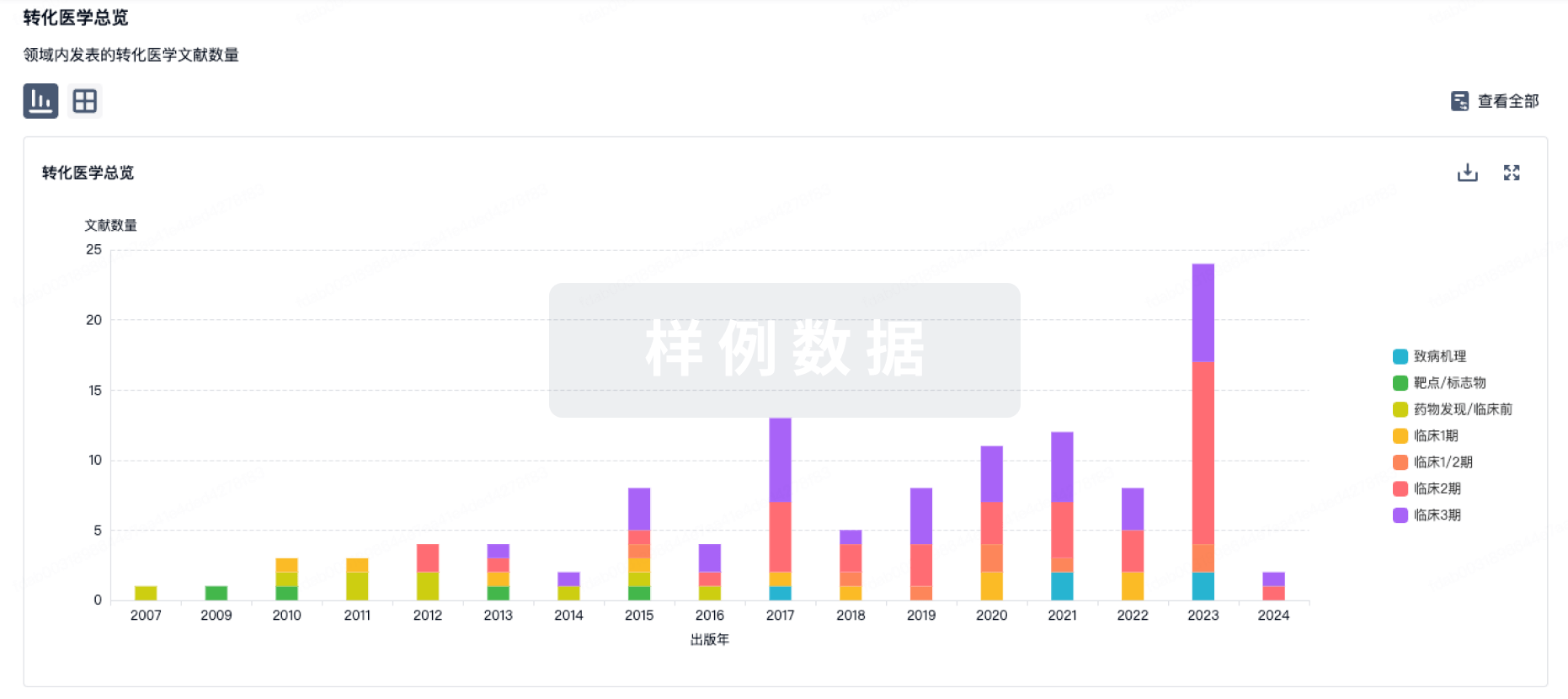
转化医学
使用我们的转化医学数据加速您的研究。
登录
或
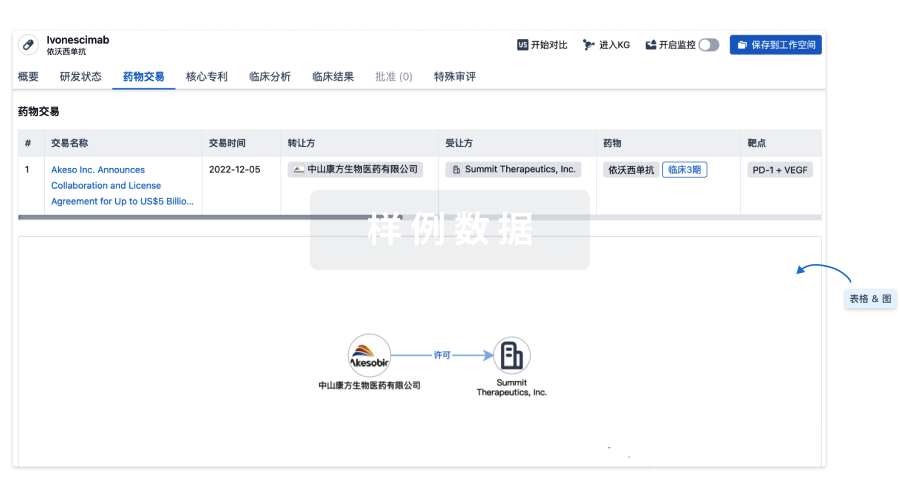
药物交易
使用我们的药物交易数据加速您的研究。
登录
或
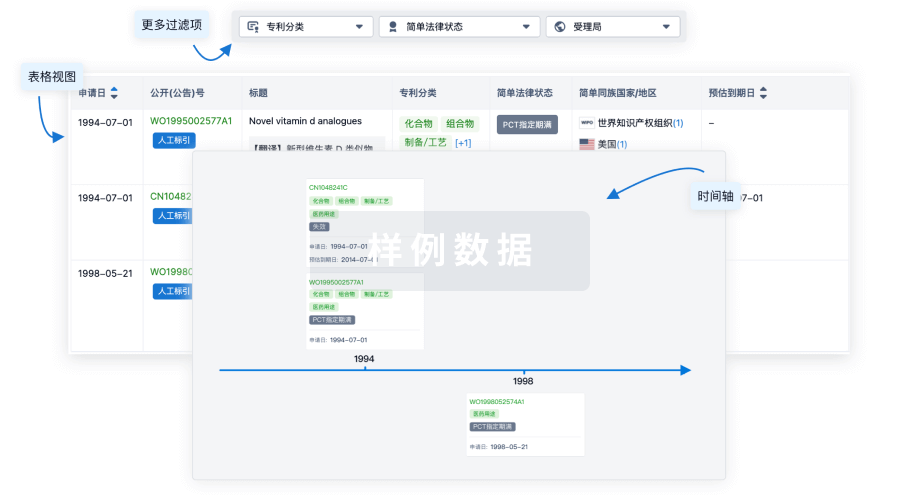
核心专利
使用我们的核心专利数据促进您的研究。
登录
或
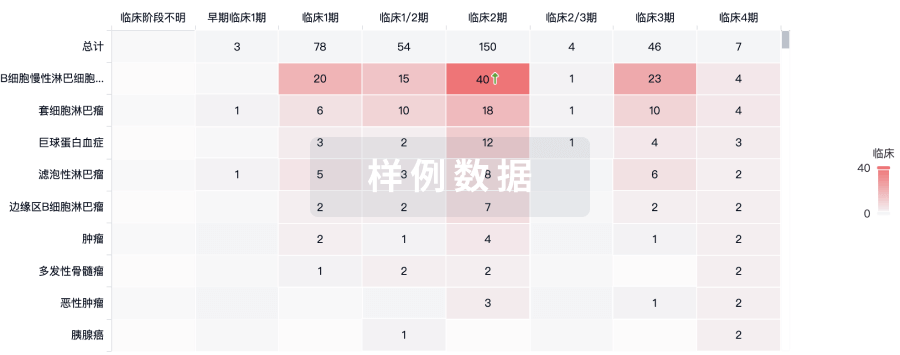
临床分析
紧跟全球注册中心的最新临床试验。
登录
或
批准
利用最新的监管批准信息加速您的研究。
登录
或
特殊审评
只需点击几下即可了解关键药物信息。
登录
或
生物医药百科问答
全新生物医药AI Agent 覆盖科研全链路,让突破性发现快人一步
立即开始免费试用!
智慧芽新药情报库是智慧芽专为生命科学人士构建的基于AI的创新药情报平台,助您全方位提升您的研发与决策效率。
立即开始数据试用!
智慧芽新药库数据也通过智慧芽数据服务平台,以API或者数据包形式对外开放,助您更加充分利用智慧芽新药情报信息。
生物序列数据库
生物药研发创新
免费使用
化学结构数据库
小分子化药研发创新
免费使用