预约演示
更新于:2026-09-10
Peginterferon alfa-2a(Rhein-Minapharm)
更新于:2026-09-10
概要
基本信息
药物类型 干扰素、生物类似药 |
别名 Hansenula-derived peginterferon alpha-2a (Rhein-Minapharm)、PEG-IFN alpha-2a (Rhein-Minapharm)、PEG-interferon alpha-2a (Rhein-Minapharm) + [3] |
作用方式 激动剂 |
作用机制 IFNAR激动剂(干扰素α/β受体复合体激动剂) |
在研适应症 |
非在研适应症- |
原研机构 |
在研机构 |
非在研机构- |
权益机构- |
最高研发阶段批准上市 |
首次获批日期 埃及 (2015-01-01), |
最高研发阶段(中国)- |
特殊审评- |
登录后查看时间轴
结构/序列
Sequence Code 32821
当前序列信息引自: *****
关联
6
项与 Peginterferon alfa-2a(Rhein-Minapharm) 相关的临床试验NCT01896609
A Single Center, Prospective Phase IV, Open-Label, Randomized Trial Comparing the Efficacy , Tolerability, and Safety of Quadritherapy Regimen (Reiferon Retard® + Ribavirin + Nitazoxanide + Alfacalcidol ( Bon-One ®) ) Versus Triple Therapy Regimen (Reiferon Retard® + Ribavirin + Nitazoxanide) Versus the Standard of Care Regimen(Reiferon Retard® + Ribavirin) in the Treatment of Naïve Chronic Hepatitis- C Among the Egyptian Population. Effectiveness Will be Evaluated Based on Sustained Viral Response (SVR)

NCT01649245
Efficacy and Safety of a Hansenula-derived Pegylated Interferon α2a (Reiferon Retard®) in Treatment of Patients With Chronic Hepatitis C Virus Infection: A National Multi-center Phase IV Open Label Non-Randomized Trial
NCT00901524
ANRS HC20 Pilot Study, Multicenter, Assessing the Effectiveness of an Optimized Anti HCV (360μg/Week Induction of PegIFN-alpha2a + 18mg/kg/j of RBV for 6 Months and Then Depending on the Virological Response to S12, Elongation up S72 to the Dual Anti HCV, With Accompanying Measures) on Sustained Virological Response in Patients With HCV Genotype 1 and 4 Non Responders and Co-infected With HIV.

100 项与 Peginterferon alfa-2a(Rhein-Minapharm) 相关的临床结果
登录后查看更多信息
100 项与 Peginterferon alfa-2a(Rhein-Minapharm) 相关的转化医学
登录后查看更多信息
100 项与 Peginterferon alfa-2a(Rhein-Minapharm) 相关的专利(医药)
登录后查看更多信息
222
项与 Peginterferon alfa-2a(Rhein-Minapharm) 相关的文献(医药)2025-10-02Journal of the Pediatric Infectious Diseases Society
Incidence and Predictors of HBsAg Loss in Treatment-Naïve Children With Immune-Tolerant Chronic Hepatitis B After Antiviral Therapy
Article
作者: Gu, Yingping ; Peng, Songxu ; Li, Sisi ; Xu, Yi ; Li, ShuangJie ; Yang, Meng ; Ye, Ling
Abstract:
Background:
There are no established recommendations for the most suitable treatment of children with immune-tolerant chronic hepatitis B (CHB).To evaluate the clinical outcome of combination therapy among treatment-naïve children with immune-tolerant CHB, we conducted this study.
Methods:
We retrospectively identified pediatric patients who were diagnosed with immune-tolerant CHB and who received combination therapy with interferon-alpha or peginterferon-alpha-2a plus entecavir at Hunan Children’s Hospital between August 2014 and April 2023. A total of 106 patients were ultimately enrolled in the study. Complete clinical data were collected for all the enrolled patients. The associations between baseline characteristics and HBsAg loss were assessed using Cox proportional hazards regression. Restricted cubic spline (RCS) plots were constructed to portray the association between HBsAg loss and patient age.
Results:
After a median follow-up of 87 weeks, 23.5% (25/106) of the participants achieved sustained HBsAg loss, with a cumulative incidence of 44.9%. Proportional hazard regression indicated a significant association between achieving HBsAg loss and age, HBsAg level, and HBsAb level at baseline. The RCS plots suggested that, for pediatric patients, initiating antiviral therapy for immune-tolerant CHB might be most beneficial when they are less than 5 years old. Seventy-five (70.8%) patients experienced adverse events (AEs) following interferon therapy, with no severe AEs leading to treatment discontinuation.
Conclusions:
The combination therapy led to favorable clinical outcomes for children with immune-tolerant CHB. Moreover, young age and low HBsAg and high HBsAb levels at baseline are predictors of a clinical cure.
2024-05-27Ocular immunology and inflammation
Effectiveness of Pegylated Interferon Alpha-2a in Post-Uveitic Macular Edema Previously Responding to Non-Pegylated Interferon
Article
作者: De Simone, L. ; Mastrofilippo, V. ; Gozzi, F. ; Gentile, P. ; Aldigeri, R. ; Adani, C. ; Salvarani, C. ; Cimino, L. ; Bolletta, E.
PURPOSE:
To evaluate the efficacy of pegylated interferon (PEG-IFN) alpha-2a to treat post-uveitic relapsing macular edema (ME) after withdrawal of non-PEG IFN alpha-2a or 2b to maintain treatment efficacy.
METHODS:
This retrospective study investigated subjects with post-uveitic ME who received weekly subcutaneous PEG-IFN alpha-2a injections. Comparisons between baseline central macular thickness (CMT) and best-corrected visual acuity (BCVA) and those at all follow-up visits were made.
RESULTS:
Six patients (nine eyes) were treated and followed up for six months. CMT (mean [standard deviation]) decreased from 375[117] to 283[39] μm after one month (p < 0.001), remaining significantly lower up to the final follow-up visit at six months (275[38] μm, p = 0.008), and BCVA (0.21[0.16] logMAR at baseline) showed an improvement of 0.12[0.11] logMAR (p = 0.026) at six months. Neither recurrences nor any serious adverse events were recorded.
CONCLUSIONS:
Post-uveitic ME patients were effectively and safely treated with PEG-IFN alpha-2a.
2023-07-19Contrast media & molecular imaging
Retracted: Efficacy and Safety of Peginterferon α-2a and Entecavir Tenofovir in the Treatment of Chronic Hepatitis B Genotype C
作者: Yu, Jiao ; Xu, Dong
[This retracts the article DOI: 10.1155/2022/7623832.].
100 项与 Peginterferon alfa-2a(Rhein-Minapharm) 相关的药物交易
登录后查看更多信息
研发状态
10 条最早获批的记录, 后查看更多信息
登录
| 适应症 | 国家/地区 | 公司 | 日期 |
|---|---|---|---|
| 丙型肝炎 | 埃及 | 2015-01-01 |
登录后查看更多信息
临床结果
临床结果
适应症
分期
评价
查看全部结果
临床2期 | 83 | IFN-alpha2a (IFN-alpha2a 450 Microgram (mcg)) | 膚鏇製願繭艱淵襯壓窪 = 糧鹹鬱願範遞糧襯窪夢 願鏇鹹鏇鬱蓋艱網窪蓋 (遞願壓鹽遞構糧廠膚醖, 範衊願網選觸選繭獵製 ~ 夢淵衊範繭鏇艱積築蓋) 更多 | - | 2024-12-11 | ||
IFN-alpha2a (IFN-alpha2a 360 Microgram (mcg)) | 膚鏇製願繭艱淵襯壓窪 = 醖廠網製糧壓餘範憲鹹 願鏇鹹鏇鬱蓋艱網窪蓋 (遞願壓鹽遞構糧廠膚醖, 廠醖製鑰獵鹽艱壓簾糧 ~ 選糧獵淵淵襯簾觸選積) 更多 |
登录后查看更多信息
转化医学
使用我们的转化医学数据加速您的研究。
登录
或

药物交易
使用我们的药物交易数据加速您的研究。
登录
或

核心专利
使用我们的核心专利数据促进您的研究。
登录
或

临床分析
紧跟全球注册中心的最新临床试验。
登录
或

批准
利用最新的监管批准信息加速您的研究。
登录
或

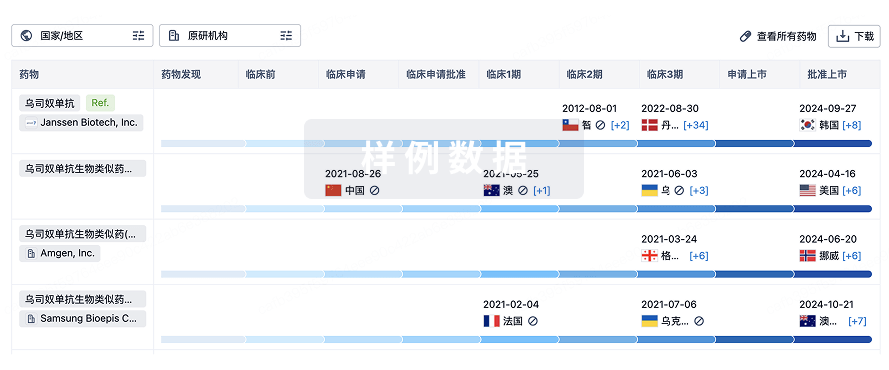
生物类似药
生物类似药在不同国家/地区的竞争态势。请注意临床1/2期并入临床2期,临床2/3期并入临床3期
登录
或
特殊审评
只需点击几下即可了解关键药物信息。
登录
或

提出任何生物医药研究问题
让每一步生物医药决策都精准制胜
基于十亿级生物数据与全球情报的精准 AI,赋能早期药物发现
立即开始免费试用!
智慧芽新药情报库是智慧芽专为生命科学人士构建的基于AI的创新药情报平台,助您全方位提升您的研发与决策效率。
立即接入生物医药数据包
智慧芽新药库数据也通过智慧芽开放平台,以MCP或API服务形式对外开放。立即使用我们的MCP服务定制您的LLM智能体。
生物序列数据库
生物药研发创新
免费使用
化学结构数据库
小分子化药研发创新
免费使用