预约演示
更新于:2025-12-04
Enapotamab vedotin(Seagen Inc.)
更新于:2025-12-04
概要
基本信息
原研机构 |
在研机构- |
非在研机构 |
最高研发阶段无进展临床1/2期 |
首次获批日期- |
最高研发阶段(中国)- |
特殊审评- |


登录后查看时间轴
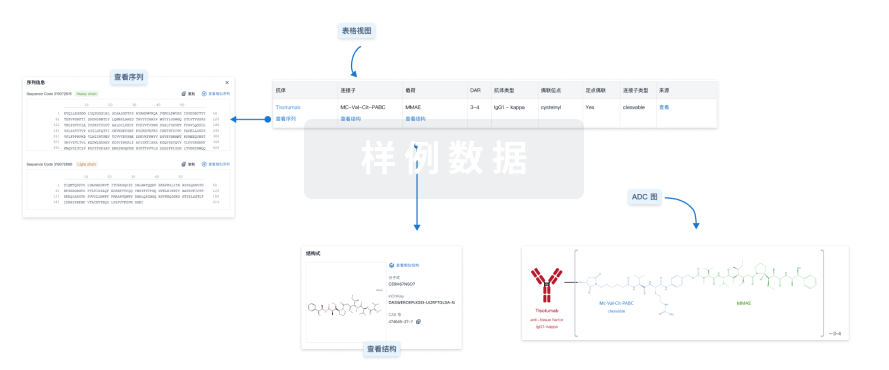
结构/序列
分子式C39H67N5O7 |
InChIKeyDASWEROEPLKSEI-UIJRFTGLSA-N |
CAS号474645-27-7 |
查看全部结构式(2)
使用我们的ADC技术数据为新药研发加速。
登录
或
Sequence Code 524306128L
来源: *****
Sequence Code 769954767H
来源: *****
关联
1
项与 Enapotamab vedotin(Seagen Inc.) 相关的临床试验NCT02988817
First-in-human, Open-label, Dose-escalation Trial With Expansion Cohorts to Evaluate Safety of Axl-specific Antibody-drug Conjugate (Enapotamab Vedotin, HuMax®-AXL-ADC) in Patients With Solid Tumors
The purpose of the trial is to determine the maximum tolerated dose and to establish the safety profile of HuMax-AXL-ADC in a mixed population of patients with specified solid tumors
开始日期2016-11-23 |
申办/合作机构 |
100 项与 Enapotamab vedotin(Seagen Inc.) 相关的临床结果
登录后查看更多信息
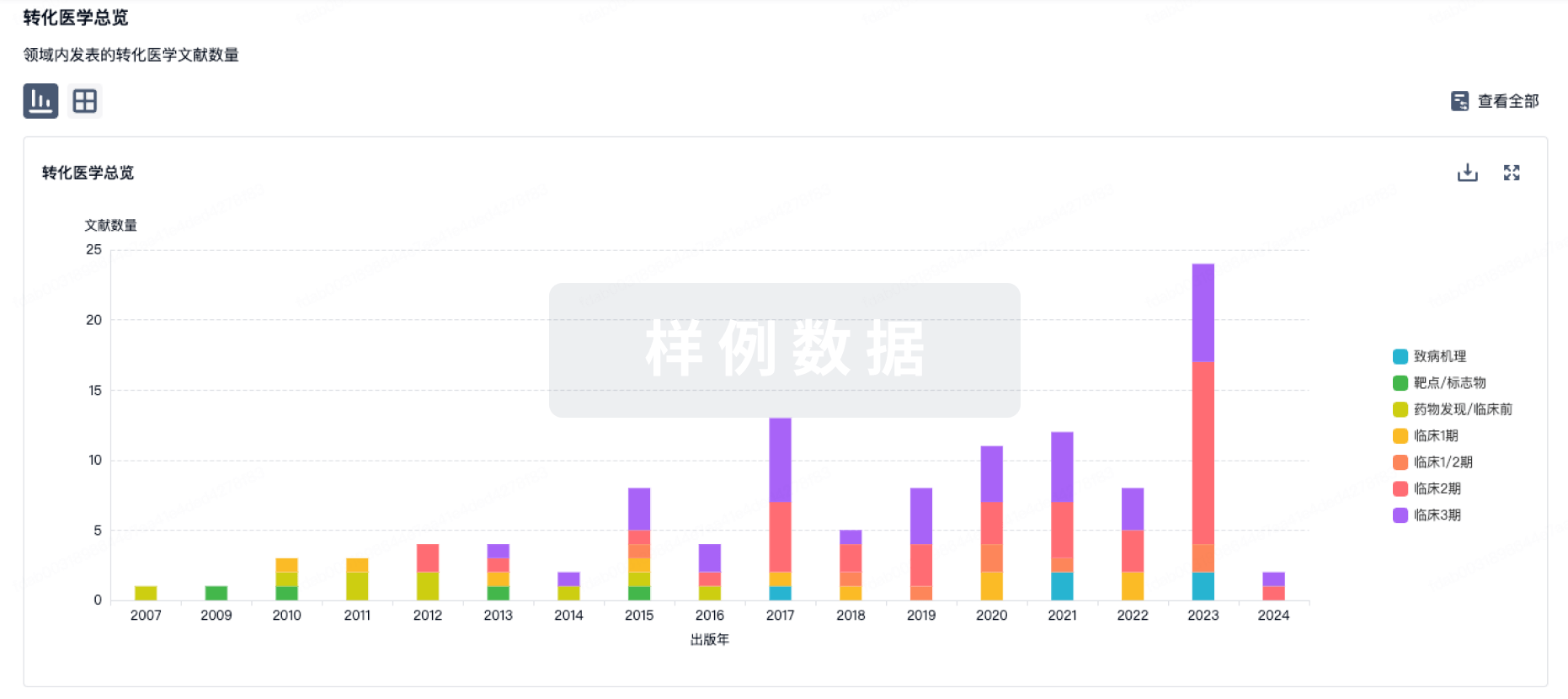
100 项与 Enapotamab vedotin(Seagen Inc.) 相关的转化医学
登录后查看更多信息
100 项与 Enapotamab vedotin(Seagen Inc.) 相关的专利(医药)
登录后查看更多信息
6
项与 Enapotamab vedotin(Seagen Inc.) 相关的文献(医药)2025-11-01·Cancer research communications
Phase I/II Study of AXL-Specific Antibody–Drug Conjugate Enapotamab Vedotin in Patients with Advanced Solid Tumors
Article
作者: Milhem, Mohammed M. ; Thistlethwaite, Fiona ; Lao, Cristopher ; Vergote, Ignace ; Schöffski, Patrick ; Jerusalem, Guy ; Ahmadi, Tahamtan ; Reiter, Panagiota ; Reijers, Irene ; Brady, Lauren K. ; Pencheva, Nora ; Chen, Andrew William ; Kontos, Despina ; Qutaish, Mohammed ; Roshkovan, Leonid ; Ramalingam, Suresh S. ; Fu, Yali ; Higgs, Brandon W. ; Zhao, Yujie ; Baurain, Jean-Francois ; Gort, Eelke ; Forssmann, Ulf ; Katz, Sharyn I. ; Windfeld, Kristian ; Bajaj, Gaurav ; Choe, Jennifer H. ; Mankowski, Walter C. ; Blank, Christian U. ; Cohen, Eric A. ; Piha-Paul, Sarina A. ; Shaw, Heather M. ; Debruyne, Philip R. ; Castro, Patricia Garrido ; Jure-Kunkel, Maria ; Shum, Elaine ; Rohrberg, Kristoffer Staal ; Lopez, Juanita S. ; Amiri, Katayoun I. ; Jänne, Pasi A. ; Plummer, Ruth
Abstract:
Purpose::
AXL, a receptor tyrosine kinase related to oncogenic processes, is aberrantly expressed in various cancers and associated with treatment resistance. Enapotamab vedotin (EnaV), a novel anti-AXL human IgG1 and monomethyl auristatin E antibody–drug conjugate, demonstrated antitumor activity in preclinical models, including non–small cell lung cancer (NSCLC). This phase 1/2 study assessed the safety and preliminary efficacy of EnaV in solid tumors.
Patients and Methods::
This study comprised dose-escalation and dose-expansion phases; both phases investigated EnaV once every 3 weeks (Q3W) and EnaV on days 1, 8, and 15 of a 28-day cycle (3Q4W). Primary objectives determined the maximum tolerated dose (dose escalation) and safety (dose expansion). Pharmacokinetic profile, antitumor activity, and AXL expression were also assessed.
Results::
During dose escalation, 32 patients received EnaV Q3W; 15 received EnaV 3Q4W. The maximum tolerated dose and recommended phase 2 dose were 2.2 mg/kg in Q3W and 1.0 mg/kg in 3Q4W schedules. In dose expansion, 189 patients received EnaV Q3W; 70 received EnaV 3Q4W. Common adverse events in dose expansion included fatigue, constipation, nausea, decreased appetite, and diarrhea. Overall response rates ranged from 4.5% to 12.5% with Q3W dose schedule and from 9.1% to 11.5% with 3Q4W dose schedule. Disease control rates for NSCLC cohorts were 40.9% to 50.0%. NSCLC subset analysis demonstrated correlation between radiomics signature and disease control. The relationship between clinical activity and AXL expression was not apparent.
Conclusions::
EnaV had an acceptable safety profile; however, because the evaluation of antitumor activity did not show clinically meaningful responses, clinical development of EnaV was discontinued.
Significance::
EnaV, an anti-AXL human IgG1 and monomethyl auristatin E antibody–drug conjugate, showed single-agent antitumor activity in preclinical models. This phase 1/2 study of EnaV demonstrated a manageable safety profile and antitumor activity in selected tumor types. Further studies exploring alternative targeting modalities, patient selection, and/or combinations are needed.
2023-06-01·Acta pharmacologica Sinica
AXL antibody and AXL-ADC mediate antitumor efficacy via targeting AXL in tumor-intrinsic epithelial-mesenchymal transition and tumor-associated M2-like macrophage
Article
作者: Pei, Jin-Peng ; Meng, Tao ; Ren, Zhi-Qiang ; Jin, Rui ; Wang, Xin ; Deng, Yan ; Zhang, Yu ; Shen, Jing-Kang ; Liu, Liang ; Yu, Ker ; Wang, Yue ; Ma, Lan-Ping
The receptor tyrosine kinase AXL is an emerging driver of cancer recurrence, while its molecular mechanism remains unclear. In this study we investigated how AXL regulated the disease progression and poor prognosis in non-small cell lung cancer (NSCLC) and triple negative breast cancer (TNBC). We performed AXL transcriptome analysis from TCGA datasets, and found that AXL expression was significantly elevated in NSCLC and TNBC correlating with poor prognosis, epithelial-mesenchymal transition (EMT) and immune-tolerant tumor microenvironment (TME). Knockdown of AXL or treatment with two independent AXL antibodies (named anti-AXL and AXL02) all diminished cell migration and EMT in AXL-high expressing NSCLC and TNBC cell lines. In a mouse model of 4T1 TNBC, administration of anti-AXL antibody substantially inhibited lung metastases formation and growth, accompanied by reduced downstream signaling activation, EMT and proliferation index, as well as an increased apoptosis and activated anti-tumor immunity. We found that AXL was abundantly activated in tumor nodule-infiltrated M2-macrophages. A specific anti-AXL antibody blocked bone marrow-derived macrophage (BMDM) M2-polarization in vitro. Targeting of AXL in M2-macrophage in addition to tumor cell substantially suppressed CSF-1 production and eliminated M2-macrophage in TME, leading to a coordinated enhancement in both the innate and adaptive immunity reflecting M1-like macrophages, mature dendritic cells, cytotoxic T cells and B cells. We generated a novel and humanized AXL-ADC (AXL02-MMAE) employing a site-specific conjugation platform. AXL02-MMAE exerted potent cytotoxicity against a panel of AXL-high expressing tumor cell lines (IC50 < 0.1 nmol/L) and suppressed in vivo growth of multiple NSCLC and glioma tumors (a minimum efficacy dose<1 mg/kg). Compared to chemotherapy, AXL02-MMAE achieved a superior efficacy in regressing large sized tumors, eliminated AXL-H tumor cell-dependent M2-macrophage infiltration with a robust accumulation of inflammatory macrophages and mature dendritic cells. Our results support AXL-targeted therapy for treatment of advanced NSCLC and TNBC.
2019-11-01·JCI insight1区 · 医学
Enapotamab vedotin, an AXL-specific antibody-drug conjugate, shows preclinical antitumor activity in non-small cell lung cancer
1区 · 医学
ArticleOA
作者: Brandhorst, Marcel ; Jacobsen, Kirstine ; Breij, Esther Cw ; Pencheva, Nora ; Zom, Gijs G ; de Bree, Freddy ; Zipeto, Maria A ; Gresnigt-van den Heuvel, Elke ; Forssmann, Ulf ; Terp, Mikkel G ; Janmaat, Maarten L ; Lingnau, Andreas ; Koopman, Louise A ; Parren, Paul Whi ; Ditzel, Henrik J
Targeted therapies and immunotherapy have shown promise in patients with non-small cell lung cancer (NSCLC). However, the majority of patients fail or become resistant to treatment, emphasizing the need for novel treatments. In this study, we confirm the prognostic value of levels of AXL, a member of the TAM receptor tyrosine kinase family, in NSCLC and demonstrate potent antitumor activity of the AXL-targeting antibody-drug conjugate enapotamab vedotin across different NSCLC subtypes in a mouse clinical trial of human NSCLC. Tumor regression or stasis was observed in 17/61 (28%) of the patient-derived xenograft (PDX) models and was associated with AXL mRNA expression levels. Significant single-agent activity of enapotamab vedotin was validated in vivo in 9 of 10 AXL-expressing NSCLC xenograft models. In a panel of EGFR-mutant NSCLC cell lines rendered resistant to EGFR inhibitors in vitro, we observed de novo or increased AXL protein expression concomitant with enapotamab vedotin-mediated cytotoxicity. Enapotamab vedotin also showed antitumor activity in vivo in 3 EGFR-mutant, EGFR inhibitor-resistant PDX models, including an osimertinib-resistant NSCLC PDX model. In summary, enapotamab vedotin has promising therapeutic potential in NSCLC. The safety and preliminary efficacy of enapotamab vedotin are currently being evaluated in the clinic across multiple solid tumor types, including NSCLC.
11
项与 Enapotamab vedotin(Seagen Inc.) 相关的新闻(医药)2025-11-25
抗肿瘤抗体偶联药物早期临床研发的关注要点
宋媛媛, 唐凌, 郝瑞敏, 仝昕, 张虹, 艾星, 杨志敏*
国家药品监督管理局药品审评中心,北京 100076
物药CMC简介
[关键词]抗体偶联药物;早期临床研发;临床定位;剂量选择;安全性
抗体偶联药物( ADC)作为新一代靶向抗肿瘤药物,被称为肿瘤治疗领域的“魔法子弹”。其凭借靶向性与细胞毒性的双重特性,在肿瘤治疗领域展现出了突出的疗效和治疗潜力,成为了肿瘤药物研发领域的新热点,包括单药治疗和与其他药物联合治疗。但由于 ADC 的构成因素复杂,当选择不同的靶抗原和抗体、不同作用机制的有效载荷等时,对其生物学效应都可能产生明显的影响。因此 ADC 药物的临床研发面临诸多挑战,使得研发人员在药物开发的早期阶段,必须在药物设计、剂量选择、毒理学评估以及临床试验设计等方面进行更为科学和全面的考量。本研究聚焦 ADC 早期临床开发的关键要点,重点探讨了 ADC 药物的临床开发定位策略,是采用单药治疗还是联合治疗,以及联合方案的选择、剂量选择优化以及毒性管理与风险控制,以期为ADC 药物的研发提供参考,为患者带来更好的治疗选择。
1.概述
在药物临床研发的早期阶段,需要考虑一系列科学问题,如:如何在确保安全性和有效性的前提下,找到关键的研究剂量;最佳给药策略的探索;是单药治疗还是联合用药。这涉及到对现有治疗的深入分析和对未来治疗趋势的预测。明确潜在的适应证也是一个关键的决策点,因为不同的肿瘤类型对药物的反应可能截然不同,不同疾病分期对于治疗方案响应也有显著差异。这些问题的答案是药物研发未来走向的基础。
抗体偶联药物( antibody-drug conjugate,ADC)是新一代的以大分子为载体的靶向药物,被称为肿瘤治疗领域的“魔法子弹”。 ADC 类药物结构机制复杂,具有靶向和细胞毒物的双重特性。 ADC 药物经注射进入血液循环,其抗体部分与肿瘤细胞表面的抗原特异性结合,形成的 ADC-抗原复合物被肿瘤细胞内吞后,进入溶酶体进行降解,小分子细胞毒药物在细胞内以高效活性形式被足量释放,从而完成对肿瘤细胞的杀伤[ 1]。因此 ADC 不仅需要精确地靶向肿瘤细胞,同时还要具备足够的细胞毒性以实现肿瘤细胞杀伤。这种双重特性使得在早期研发阶段,必须在药物设计、剂量选择、毒理学评估以及临床试验设计等方面进行更为科学和全面的考量,过程中的每一个决策都可能影响到药物开发成功与否。
2.临床定位
临床定位是抗肿瘤药物研发的立题基础,影响着药物整体的开发策略,更与后续剂量的选择、给药方案的探索,以及毒性管理等临床开发中的关键要素相关。 ADC 药物因其较细胞毒药物更具靶向性、提高生存期等优势,在某些情况下可以作为细胞毒药物的替代品。然而,每种 ADC 药物的设计和治疗效果都有其独特性,其应用需要根据具体的肿瘤类型和患者的具体情况来确定。
从已有的开发模式来看,ADC 类药物与大多数抗肿瘤药物的开发模式类似,通常以单药形式开发末线晚期肿瘤适应证,在向前线推进的过程中,探索不同的联合治疗模式。在开发单药治疗模式时,采用何种富集人群策略开发是十分重要的。对于是优先选择靶抗原高表达人群,还是全人群开发,建议根据靶标的生物学特点,在早期探索时灵活考虑是用于患者筛选还是回顾性分析,积累较为充分的数据为精准定位获益人群提供支持。目前往往是根据靶点高表达部位来选择适应证,这与 ADC 的靶向性作用特点相匹配。例如已获批上市的靶向人表皮生长因子受体-2( human epidermal growth factor receptor-2,HER2)的 ADC 类药物德曲妥珠单抗( trastuzumab deruxtecan),2023年2月在我国首次获批用于治疗既往接受过一种或一种以上抗 HER2 药物治疗的不可切除或转移性HER2阳性成人乳腺癌患者,此后逐步推进到 HER2低表达,以及 HER2阳性前线适应证的探索,并探索了各种联合用药的方案。
随着创新药物的持续研发和市场准入,肿瘤治疗领域正经历着显著的变革。当前,抗肿瘤治疗不仅追求疗效的最大化,同时亦致力于提升治疗的安全性。与此同时,抗肿瘤新药治疗中一个日益突出的挑战— — 耐药性问题也逐渐显现。为了应对这些挑战,联合治疗成为了一个关键的解决策略。从联合治疗方案的设计角度出发,ADC 的治疗定位可以涵盖以下几种情况[ 2]:
1. 部分或全部替代化疗。与标准化疗相比,ADC 的治疗指数有所提高,因此可以作为已有化疗方案的迭代产品进行开发。例如,CD30 已成为帮助淋巴瘤诊断及制定治疗决策的重要标志物。作为靶向 CD30 的 ADC 类药物,维布妥昔单抗( brentuximab vedotin,BV)在一项针对初治 CD30 阳性外周 T 细胞淋巴瘤( peripheral T cell lymphomas,PTCL)患者的随机双盲、安慰剂对照Ⅲ期临床研究 ECHELON-2[ 3,4]中,采用BV与CHP(环磷酰胺+多柔比星+泼尼松)化疗方案的联合给药方案,相较于传统的 CHOP(环磷酰胺+多柔比星或表柔比星+长春新碱+泼尼松)化疗方案,无进展生存期( progression-free survival,PFS)和总生存期( overall survival,OS)均有显著改善。因此,BV-CHP方案相当于利用BV替代了原方案中的长春新碱,并提高了疗效。
2. ADC 叠加化疗。尽管 ADC 本身具备化疗药物的特性,但将不同作用机制的化疗药物与 ADC 结合,可以实现机制上的互补并增强治疗效果。例如,用于 S期并产生 G2/M 期阻滞的 DNA 损伤剂(例如抗代谢药物、铂和拓扑异构酶抑制剂)与微管抑制剂组合[ 5,6]有可能提高疗效。
联合使用的化疗药物还可能调节ADC所靶向的表面抗原的表达。例如,吉西他滨能够上调胰腺腺癌细胞中 HER2 的表达,因此吉西他滨与靶向 HER2的 ADC 联合使用,可展现出增强的疗效[ 7]。为了达到最佳的治疗效果,设计 ADC 与化疗药物的最佳组合时,需要分析和考虑 ADC 与化疗药物的独特细胞周期相互作用,以及细胞毒性药物对表面抗原表达的调节作用。
3. ADC 联合酪氨酸激酶抑制剂( tyrosine kinase inhibitors,TKI)。 ADC联合TKI可能形成双重靶点阻断,从而提高治疗选择性和治疗指数。在TEAL研究中,与标准的 THP 联合方案(紫杉类、曲妥珠单抗和帕妥珠单抗联合治疗方案)相比,ADC类药物恩美曲妥珠单抗( trastuzumab emtansine)联合拉帕替尼和白蛋 白 紫 杉 醇 可 显 著 提 高 病 理 缓 解 率( 62. 5% vs.100%),特别是激素受体阳性亚组( 25% vs. 100%)[ 8]。
一些 TKI 已被证实能够调节肿瘤细胞表面抗原的表达,这可以提升 ADC 的活性,使原本抗原表达水平较低的肿瘤细胞对治疗更加敏感。例如,AXL-107-MMAE 是一种靶向人源 Anexelekto( AXL)抗体的 ADC 类药物。非临床研究结果表明,在黑色素瘤中 BRAF/MEK 抑制剂可以通过诱导 AXL 转录增强AXL-107-MMAE 的疗效[ 9]。
另一方面,ADC 与靶向药物的联合使用,也有望克服肿瘤对 TKI 耐药的问题。临床前研究表明,表皮生 长 因 子 受 体( epidermal growth factor receptor,EGFR) TKI 会导致细胞膜上 HER3 表达的增加,这有助 于 靶 向 HER3 的 ADC 药 物 patritumab deruxtecan( HER3-DXd)的内化作用,从而提升其疗效[ 10]。这些研究结果为 EGFR TKI 与 HER3-DXd 联合治疗方案的开发提供了支持,例如奥希替尼与 HER3-DXd 的联合疗法正在 I 期临床试验( NCT04676477)中进行评估[ 11]。
4. ADC 联合抗血管生成药物。抗血管生成药物可能促进 ADC 穿透并增加肿瘤细胞的暴露。索米妥昔单抗( mirvetuximab soravtansine)是全球首个获批的靶向叶酸受体 α( FRα)的 ADC 类药物,其开发策略之一是联合贝伐珠单抗治疗卵巢癌。早期研究表明,在 FRα 高表达的铂敏感型卵巢癌患者中,索米妥昔 单 抗 联 合 贝 伐 珠 单 抗 客 观 反 应 率( objective response rate,ORR)为 69%;PFS 为 13. 3 个月。上述结果支持了Ⅲ期 GLORIOSA 研究的开展[ 12]。
5. ADC 联 合 DNA 损 伤 反 应( DNA damage response,DDR)药物。通常而言,靶向 DDR 的药物与化疗联合(例如,拓扑替康或伊立替康与奥拉帕利联合)的毒性较高,尤其是血液学毒性。但携带拓扑异构酶 I 抑制剂有效载荷的 ADC 具有更高的治疗指数,因此可能实现与 DDR 的联合应用。 AZD8205 是靶向B7-H4 的 ADC,毒素分子为拓扑异构酶Ⅰ抑制剂;saruparib 是一种多聚二磷酸腺苷核糖聚合酶( poly ADP-ribose polymerase,PARP)特异性抑制剂,非临床研究显示二者联合可以使低表达 B7-H4 的肿瘤对AZD8205 治疗敏感[ 13]。除了 PARP 抑制,ADC 相对于化疗的更高选择性也将扩大可联合的 DDR 药物范围,例如戈沙妥珠单抗( sacituzumab govitecan,靶向TROP-2 的抗体与拓扑异构酶Ⅰ抑制剂组成的 ADC)与 ATR 抑制剂 berzosertib 的联合研究也在进行中(NCT04826341)[ 14]。
6. ADC 联合免疫疗法。越来越多的证据表明,ADC 有可能提升免疫治疗剂的疗效,尽管其作用机制相对复杂。在具备完整免疫系统的临床前模型中,某些 ADC 显示出更强的效力,这支持了其与免疫调节功能的相关性 。 KATE2 研究比较了预治疗HER2+乳腺癌患者中恩美曲妥珠单抗联合阿替利珠单抗对比恩美曲妥珠单抗联合安慰剂的疗效。然而,联合治疗并未能改善无进展生存期( 8. 2 个月 vs. 6. 2 个月,P=0. 33),这表明在 HER2 靶向治疗中同时添加免疫检查点抑制剂可能仅对 PD-L1 阳性患者群体有益[ 15]。
7. ADC 联合 CAR-T 细胞疗法。 CAR-T 细胞疗法为复发难治性大 B 细胞淋巴瘤( relapsed or refrac⁃tory large B-cell lymphoma,r/r LBCL)患者带来了潜在治愈的新希望。为了在制造 CAR-T 细胞的过程中控制淋巴瘤的进展,大多数 r/r LBCL 患者需要进行桥接治疗。然而,针对这些患者的治疗方法有限。一项回 顾 性 研 究 显 示 ,在 接 受 注 射 用 维 泊 妥 珠 单 抗( polatuzumab vedotin)治疗后进行桥接 CAR-T 细胞疗法的 r/r LBCL 患者中,6 个月的 OS 率达到了 77. 9%。此外,在 12 名之前 CAR-T 细胞治疗失败的患者中,有7 名对包含维泊妥珠单抗的治疗方案产生了应答。ADC 与细胞疗法的结合,可能为经过重度预处理治疗的患者开辟新的治疗途径。与传统化疗方案相比,ADC 更好的耐受性可能使其成为体弱患者向CAR-T 疗法过渡的理想选择[ 16]。
3.ADC剂量的选择
在药物研发的历程中,最大耐受剂量( maximum tolerated dose,MTD)是细胞毒性药物研发阶段的常用方法,其代表了药物能够被人体耐受而不会引起不可接受的毒性反应的最大剂量。虽然通常认为靶向治疗较少发生脱靶毒性,然而,抗肿瘤药物的剂量选择仍然受到细胞毒化疗药物剂量选择策略的影响,即认为更高的剂量会带来更好的疗效,但对靶向药物而言有时并非如此[ 17] 。当前,药品监管机构更倾向于要求申请人在药物的安全窗口内,寻找一个能够提供最佳获益风险特征的剂量[18];同时,药物更高剂量所带来的安全性风险的增加,不应超过相应剂量下疗效提高所带来的获益。
ADC 药物融合了单抗的靶向性和小分子药物的细胞毒性特征。由于 ADC 的结构复杂性,其剂量选择过程相较于传统药物更为复杂,需要考虑更多影响因素。靶点的分布情况、在试验剂量下靶点的占有率、连接子的稳定性以及有效载荷的毒性(即循环中游离的有效载荷可能引起的剂量限制性毒性)都是可能影响 ADC 剂量选择的关键因素。此外,ADC的不同组成部分可以独立地影响药物的安全性和/或有效性。
由于 ADC 分子量较大,多采用静脉注射的给药方式,进入人体循环系统后,以3种形式存在:完整的ADC 分子、未偶联的细胞毒药物,以及解离的抗体。在从循环系统进入组织,再到肿瘤微环境的过程中,仅约0. 1%的药物可顺利到达肿瘤组织,大部分ADC药物会通过靶向介导清除或 FcγR 介导的巨噬细胞胞吞作用水解,游离的“细胞毒-连接子”会与血清白蛋白结合,进一步延长了某些 ADC 的药物活性和毒性特征[ 19]。
在药物研发的初期阶段,特别是在新类型药物的开发中,剂量的探索工作尤为复杂且充满挑战性。美国食品药品管理局( Food and Drug Administration,FDA)专门启动了名为Project Optimus[ 20]的专项计划,旨在对肿瘤药物研发过程中的剂量优化及选择策略进行革新。 Project Optimus 致力于改变传统的基于MTD 的剂量选择模式,推动在肿瘤药物开发中采用最大化疗效、安全性和耐受性的剂量优化策略。
FDA 发布的行业指南《抗体偶联药物临床药理学考虑要点》建议,在开展临床试验之前,应在体外和体内模型中进行更为严谨的试验分析,以便在临床试验开始之前更深入地理解药物的剂量反应关系,并在药物开发的早期阶段评估包括多个剂量水平和/或给药方案(例如单次或分次给药),从而全面了解ADC及其活性成分的暴露与安全性和有效性之间的关系[ 21]。我国国家药品监督管理局药品审评中心在《抗肿瘤抗体偶联药物临床研发技术指导原则》和《抗体偶联药物临床药理学研究技术指导原则(征求意见稿)》[ 22,23]中也提出了类似的要求,以在保证疗效的同时,尽可能降低毒性。早期剂量探索可以采用适应性和随机化设计,依据药代动力学和药效学数据(如靶点活性和饱和度,或早期生物标志物作为疗效替代指标)来评估多种剂量[ 17]。
同时,研究中应当重视不同肿瘤种类间药物剂量的差异性。在应用德曲妥珠单抗治疗 HER2 阳性局部晚期或转移性胃或胃食管交界处腺癌的成年患者时,推荐剂量为 6. 4 mg· kg-1;而在针对 HER2 阳性乳腺癌的治疗中,推荐剂量则为 5. 4 mg· kg-1。药物研发企业在不同瘤种间进行了广泛的剂量优化研究,结果显示胃癌患者采用 6. 4 mg· kg-1剂量的药物暴露水平与乳腺癌患者采用 5. 4 mg· kg-1剂量的暴露水平相当,这一结果也支持了针对不同肿瘤种类实施不同剂量给药的策略。
4.毒性管理与风险控制
截至2025年4月,全球已有17款ADC药物上市,其 中 10 款 已 在 我 国 获 批 ,包 括 我 国 自 主 研 发 的HER2-ADC 维迪西妥单抗以及 TROP2-ADC 芦康沙妥珠单抗。在临床实践中,ADC 的应用仍受不良反应的限制。由于毒性过大导致许多ADC药物在临床开发过程中失败。对于部分已获批的 ADC,很多患者也由于无法耐受相关毒性,需要减量、延迟给药或停止治疗。
抗体-连接子-毒素分子的多重组合,在给 ADC药物带来强大疗效的同时,也使其毒副作用发生率、严重程度高于一般单抗和小分子药物。 ADC药物的不良反应主要包括严重的肝毒性、眼毒性、严重的皮肤反应、中性粒细胞减少、进行性多灶性白质脑病及间质性肺病等 。一项包含 169 项临床试验 、涉及22 492 名患者的 Meta 分析[ 24]显示,使用 ADC 药物治疗时,所有级别的治疗相关不良事件的发生率高达91. 2%,而 3 级或更高级别的不良事件的发生率为46. 1%;在 169 项研究中,有 153 项报告了由 ADC 治疗引起的患者死亡,总体发生率为1. 3%,死亡的直接原因主要是肺炎、败血症和呼吸衰竭。
抗肿瘤ADC药物引发不良反应的机制主要涉及3 个方面:非肿瘤细胞的靶抗原特异性摄入(靶点相关性毒性)、非肿瘤细胞的脱靶作用(脱靶相关性毒性)以及非肿瘤细胞的非靶抗原摄入[ 25]。 ADC 药物靶向抗原的选择通常基于肿瘤细胞表面特异性表达的蛋白,然而,这些抗原在人体非肿瘤组织中的表达可能导致细胞毒性药物错误地递送至非肿瘤细胞,从而产生靶点相关性毒性。此外,连接子的不稳定性或特定因素可能导致有效载荷在未到达靶细胞前即在体液循环、非肿瘤组织或肿瘤微环境中释放,引起脱靶相关性毒性。非肿瘤细胞的抗原非依赖性摄取亦是不可忽视的因素。某些非肿瘤细胞表面存在与 ADC 药物 IgG 抗体 Fc 段结合的受体,可介导非肿瘤细胞摄取ADC药物。此外,非特异性内吞机制,如巨胞饮作用和微胞饮作用,亦能导致整个 ADC 药物或游离载荷被内化进入正常细胞,进而产生毒性[ 25]。
虽然毒性是 ADC 临床开发中的重要挑战之一,但其并不总是导致研发进程的终止。毒性带来的挑战主要体现在治疗风险上,但通过采取适当的管理策略,包括识别、处理和监测风险,特别是在早期人体临床试验阶段就开始关注对ADC这类创新药物的风险管理,以及针对风险产生的原因(如剂量或给药方案不当)进行调整和优化,可以实现风险的可控性。这样,获益与风险之间的平衡可能始终保持正向。
Mylotarg( gemtuzumab ozogamicin)是 针 对 CD33的 ADC 药物,于 2000 年 5 月被 FDA 加速批准上市,用于治疗首次复发、60 岁以上、CD33+、不适合细胞毒化疗的急性髓性白血病患者,批准治疗剂量为 9 mg· m-2。Mylotarg 也成为了全球第一个商业化的 ADC 产品。Mylotarg 上市后的验证性Ⅲ期 SWOG 106 研究,评估在化疗基础上联合使用 Mylotarg。结果在 SWOG 106研究进行初期,就发现 Mylotarg 治疗组有严重的致死性肝毒性和静脉闭塞性疾病( veno-occlusive disease,VOD)风险,联合用药组的死亡率高于单独使用化疗组( 5.7% vs. 1.4%),SWOG 106 研究随之提前终止,辉瑞公司也在 2010 年 6 月宣布将 Mylotarg 自主撤市。回顾性暴露-效应关系( ER)分析发现,VOD 风险与9 mg· m-2的 Cmax相关。暴露量-有效性分析则发现药效与 Cmax相关性不强,更低暴露量依然可能有效。这也意味着降低剂量能降低 VOD 风险,同时不影响药效[ 26]。因此,gemtuzumab ozogamicin 开展了 3 mg· m-2的临床研究,结果与预测一致,临床获益的同时 VOD风险降低,本品于 2016 年重新获批上市。
改变乳腺癌治疗格局的 HER2-ADC 德曲妥珠单抗,在其 I 期临床研究 DS-8201-A-J101 中,16. 9% 的患者出现了与药物相关的间质性肺炎,并有 2 例与治疗相关的肺炎死亡事件。在 DESTINY-Breast01 研究中,13. 6% 的患者出现了治疗相关的间质性肺炎,其中 4 例患者因治疗相关的肺炎死亡[ 27] 。鉴于当时DS-8201 尚处于临床试验的早期阶段,并且在先前 TDM1 药 物 的 使 用 中 ,间 质 性 肺 炎 的 发 生 率 仅 为0. 5%,因此对于 ADC 导致间质性肺炎的风险认识尚不充分,导致了早期对间质性肺炎风险的管理不足。随着临床试验中对风险认识的加深,通过更早期的患者教育、更规范的毒性处理和应对措施,成功减少了间质性肺炎的发生和发展。随后进行的 DESTINYBreast03 临床试验中,间质性肺炎的发生率降低到了10. 5%,并且没有观察到与 DS-8201 相关的 4/5 级间质性肺炎事件[ 28]。
5.总结
药物的开发是一个复杂而精细的系统性工程,从最初的立项到最终的上市,每一步都需要精心策划和高效执行。 ADC 的抗体部分、连接子和载荷特点对其临床定位、剂量选择和风险管控均会产生影响,如:抗体靶标在肿瘤细胞表达特异性强弱程度,与 ADC 肿瘤杀伤的特异性、靶向或脱靶效应正相关;载荷渗透性、毒力的强弱,与 ADC 旁观者效应及毒性也存在关联,影响试验的人群选择、给药模式和风险管理方式等。因此,对于具有高度创新性的 ADC 类药物而言,研发早期阶段的精心设计和临床开发计划的制定是研发成功的关键因素之一。在这一过程中,研发团队必须深入理解 ADC 药物的独特作用机制,并据此明确其开发定位,即确定其在未来临床治疗中的具体应用场景。例如,ADC 药物是作为现有化疗方案的替代品,还是用于解决对现有治疗方案产生耐药性的问题。这些问题将对后续研发策略的制定和关键决策的做出产生深远影响。
目前已有众多 ADC 进入临床试验,在提高疗效的同时,也带来了新的挑战。例如,目前已有多种针对 HER2 阳性乳腺癌的 ADC 药物获得批准上市,这些药物间的交叉耐药性问题亟待明确。迄今为止,大多数 ADC 仍然主要依赖于 3 种作用机制的有效载荷:微管抑制剂、拓扑异构酶 I 抑制剂和 DNA 烷基化剂。在有效载荷机制相似的情况下,哪些 ADC 适合用于一线治疗,哪些更适合用于二线或后续治疗等新出现的问题,在未来的药物研究与开发过程中,可能需要逐步纳入研发策略的考量范畴。
研发团队需要合理规划药物剂量的探索计划,以科学方法选定能最大化效益-风险比的剂量。这不仅是确保临床研究顺利进行和提高研发效率的关键因素之一,也是确保药物最终能够为患者带来显著疗效和安全性的基础。此外,作为一类结合了化疗药物特性的创新治疗药物,ADC 药物在研发过程中面临的药物毒性挑战不容小觑。从首次人体临床试验开始,研发团队就必须加强临床试验期间的风险管理体系构建,完善风险管理措施。这既是对参与临床试验受试者的保护,也是为后续研发乃至上市后的风险管理积累宝贵经验。通过有效的风险控制和管理,可以进一步降低药物潜在的风险,提升获益风险比,为患者带来最大程度的获益。
获取原文文献
获取原文文献,请大家扫描下方二维码,向生物药CMC公众号回复“20251126”请大家多多点赞与分享,让更多的人学习本次内容,非常感谢!
加入ADC微信群
本公众号已建立ADC微信群,需要入群的朋友,转发本文章到朋友圈或者行业微信群,添加管理员18701746257或者小编微信c1979793072,进群参与交流!
商务合作
管理员手机/微信:18701746257
免责声明
本公众号发布的文章均为促进制药界同行的交流与学习;未用于任何商业用途。我们尊重原创作品。选取的文章已明确注明来源和作者,版权归原作者所有,如涉及侵权或其他问题,请联系我们进行删除。
内容由生物药CMC小编查阅文献选取,排版与编辑为原创。如转载,请尊重劳动成果,注明来源于生物药CMC公众号。文章内容为作者观点,不代表本公众号立场。
Biologics CMC简介
Biologics CMC平台完全由一群志同道合的志愿者与行业专家老师组建与运营。
平台形式包括微信群、Biologics CMC公众号、Biologics CMC小程序、Biologics CMC视频号、线上系列讲座、线下沙龙等,所有的活动均聚焦于生物药研发过程中的实操技术问题,内容贴近技术人员的日常实操。
如需加入微信群,可给小编留言或扫描以下二维码,申请入群讨论。
抗体药物偶联物申请上市
2025-11-04
抗肿瘤抗体偶联药物早期临床研发的关注要点
宋媛媛,唐凌,郝瑞敏,仝昕,张虹,艾星,杨志敏*
(国家药品监督管理局药品审评中心,北京 100076)
[作者简介]
宋媛媛,女,主管药师,研究方向:药物研发与监管;
共同第一作者:唐凌,女,副研究员,研究方向:药物研发与监管。
*[通讯作者] 杨志敏,女,主任药师,研究方向:药物研发与监管。
[摘要]
抗体偶联药物(ADC)作为新一代靶向抗肿瘤药物,被称为肿瘤治疗领域的“魔法子弹”。其凭借靶向性与细胞毒性的双重特性,在肿瘤治疗领域展现出了突出的疗效和治疗潜力,成为了肿瘤药物研发领域的新热点,包括单药治疗和与其他药物联合治疗。但由于 ADC 的构成因素复杂,当选择不同的靶抗原和抗体、不同作用机制的有效载荷等时,对其生物学效应都可能产生明显的影响。因此 ADC 药物的临床研发面临诸多挑战,使得研发人员在药物开发的早期阶段,必须在药物设计、剂量选择、毒理学评估以及临床试验设计等方面进行更为科学和全面的考量。本研究聚焦 ADC 早期临床开发的关键要点,重点探讨了 ADC 药物的临床开发定位策略,是采用单药治疗还是联合治疗,以及联合方案的选择、剂量选择优化以及毒性管理与风险控制,以期为ADC 药物的研发提供参考,为患者带来更好的治疗选择。
[关键词]
抗体偶联药物;早期临床研发;临床定位;剂量选择;安全性
在药物临床研发的早期阶段,需要考虑一系列科学问题,如: 如何在确保安全性和有效性的前提下,找到关键的研究剂量; 最佳给药策略的探索; 是单药治疗还是联合用药。这涉及到对现有治疗的深入分析和对未来治疗趋势的预测。明确潜在的适应证也是一个关键的决策点,因为不同的肿瘤类型对药物的反应可能截然不同,不同疾病分期对于治疗方案响应也有显著差异。这些问题的答案是药物研发未来走向的基础。
抗体偶联药物(antibody-drug conjugate,ADC)是新一代的以大分子为载体的靶向药物,被称为肿瘤治疗领域的“魔法子弹”。ADC 类药物结构机制复杂,具有靶向和细胞毒药物的双重特性。ADC 药物经注射进入血液循环,其抗体部分与肿瘤细胞表面的抗原特异性结合,形成的ADC-抗原复合物被肿瘤细胞内吞后,进入溶酶体进行降解,小分子细胞毒药物在细胞内以高效活性形式被足量释放,从而完成对肿瘤细胞的杀伤[1]。因此 ADC 不仅需要精确地靶向肿瘤细胞,同时还要具备足够的细胞毒性以实现肿瘤细胞杀伤。这种双重特性使得在早期研发阶段,必须在药物设计、剂量选择、毒理学评估以及临床试验设计等方面进行更为科学和全面的考量,过程中的每一个决策都可能影响到药物开发成功与否。
1 临床定位
临床定位是抗肿瘤药物研发的立题基础,影响着药物整体的开发策略,更与后续剂量的选择、给药方案的探索,以及毒性管理等临床开发中的关键要素相关。ADC药物因其较细胞毒药物更具靶向性、提高生存期等优势,在某些情况下可以作为细胞毒药物的替代品。然而,每种 ADC 药物的设计和治疗效果都有其独特性,其应用需要根据具体的肿瘤类型和患者的具体情况来确定。
从已有的开发模式来看,ADC 类药物与大多数抗肿瘤药物的开发模式类似,通常以单药形式开发末线晚期肿瘤适应证,在向前线推进的过程中,探索不同的联合治疗模式。在开发单药治疗模式时,采用何种富集人群策略开发是十分重要的。对于是优先选择靶抗原高表达人群,还是全人群开发,建议根据靶标的生物学特点,在早期探索时灵活考虑是用于患者筛选还是回顾性分析,积累较为充分的数据为精准定位获益人群提供支持。目前往往是根据靶点高表达部位来选择适应证,这与 ADC 的靶向性作用特点相匹配。例如已获批上市的靶向人表皮生长因子受体-2(human epidermal growth factor receptor-2,HER2)的ADC类药物德曲妥珠单抗(trastuzumabderuxtecan),2023年2月在我国首次获批用于治疗既往接受过一种或一种以上抗HER2药物治疗的不可切除或转移性HER2阳性成人乳腺癌患者,此后逐步推进到 HER2 低表达,以及 HER2 阳性前线适应证的探索,并探索了各种联合用药的方案。
随着创新药物的持续研发和市场准入,肿瘤治疗领域正经历着显著的变革。当前,抗肿瘤治疗不仅追求疗效的最大化,同时亦致力于提升治疗的安全性。与此同时,抗肿瘤新药治疗中一个日益突出的挑战——耐药性问题也逐渐显现。为了应对这些挑战,联合治疗成为了一个关键的解决策略。从联合治疗方案的设计角度出发,ADC的治疗定位可以涵盖以下几种情况[2]:
(1)部分或全部替代化疗。
与标准化疗相比,ADC 的治疗指数有所提高,因此可以作为已有化疗方案的迭代产品进行开发。例如,CD30 已成为帮助淋巴瘤诊断及制定治疗决策的重要标志物。作为靶向CD30的ADC类药物,维布妥昔单抗(brentuximabvedotin,BV)在一项针对初治CD30阳性外周T细胞淋巴瘤(peripheral T cell lymphomas,PTCL)患者的随机双盲、安慰剂对照III期临床研究ECHELON-2[3,4]中 ,采用 BV 与 CHP( 环磷酰胺 + 多柔比星 + 泼尼松 )化疗方案的联合给药方案,相较于传统的 CHOP(环磷酰胺+多柔比星或表柔比星+长春新碱+泼尼松)化疗方案,无进展生存期(progression-free survival,PFS)和总生存期(overall survival,OS)均有显著改善。因此, BV-CHP方案相当于利用BV替代了原方案中的长春新碱,并提高了疗效。
(2)ADC 叠加化疗。
尽管 ADC 本身具备化疗药物的特性,但将不同作用机制的化疗药物与 ADC 结合,可以实现机制上的互补并增强治疗效果。例如,用于 S 期并产生 G2/M 期阻滞的 DNA 损伤剂(例如抗代谢药物、铂和拓扑异构酶抑制剂)与微管抑制剂组合[5,6]有可能提高疗效。
联合使用的化疗药物还可能调节 ADC 所靶向的表面抗原的表达。例如,吉西他滨能够上调胰腺腺癌细胞中 HER2 的表达,因此吉西他滨与靶向 HER2的 ADC 联合使用,可展现出增强的疗效[7]。为了达到最佳的治疗效果,设计 ADC 与化疗药物的最佳组合时,需要分析和考虑 ADC 与化疗药物的独特细胞周期相互作用,以及细胞毒性药物对表面抗原表达的调节作用。
(3)ADC联合酪氨酸激酶抑制剂(tyrosine kinaseinhibitors,TKI)。
ADC联合TKI可能形成双重靶点阻断,从而提高治疗选择性和治疗指数。在TEAL研究中,与标准的THP联合方案(紫杉类、曲妥珠单抗和帕妥珠单抗联合治疗方案)相比,ADC类药物恩美曲妥珠单抗(trastuzumab emtansine)联合拉帕替尼和白蛋白紫杉醇可显著提高病理缓解率(62. 5% vs.100%),特别是激素受体阳性亚组(25% vs. 100%)[8]。
一些 TKI 已被证实能够调节肿瘤细胞表面抗原的表达,这可以提升 ADC 的活性,使原本抗原表达水平较低的肿瘤细胞对治疗更加敏感。例如,AXL-107-MMAE 是一种靶向人源 Anexelekto(AXL)抗体的 ADC 类药物。非临床研究结果表明,在黑色素瘤中BRAF/MEK抑制剂可以通过诱导AXL转录增强AXL-107-MMAE 的疗效[9]。
另一方面,ADC与靶向药物的联合使用,也有望克服肿瘤对 TKI 耐药的问题。临床前研究表明,表皮生长因 子受体(epidermal growth factor receptor,EGFR)TKI 会导致细胞膜上 HER3 表达的增加,这有助于靶向 HER3 的 ADC 药物 patritumab deruxtecan(HER3-DXd)的内化作用,从而提升其疗效[10]。这些研究结果为EGFR TKI与HER3-DXd联合治疗方案的开发提供了支持,例如奥希替尼与 HER3-DXd 的联合疗法正在I期临床试验(NCT04676477)中进行评估[11]。
(4)ADC 联合抗血管生成药物。
抗血管生成药物可能促进 ADC 穿透并增加肿瘤细胞的暴露。索米妥昔单抗(mirvetuximab soravtansine)是全球首个获批的靶向叶酸受体α(FRα)的ADC类药物,其开发策略之一是联合贝伐珠单抗治疗卵巢癌。早期研究表明,在FRα高表达的铂敏感型卵巢癌患者中,索米妥昔单抗联合贝伐珠单抗客观反应率(objectiveresponse rate,ORR)为 69%;PFS 为 13. 3 个月。上述结果支持了III期 GLORIOSA 研究的开展[12]。
(5)ADC联合DNA损伤反应(DNA damage response ,DDR)药物 。
通常而言,靶向DDR的药物与化疗联合(例如,拓扑替康或伊立替康与奥拉帕利联合)的毒性较高,尤其是血液学毒性。但携带拓扑异构酶 I 抑制剂有效载荷的 ADC 具有更高的治疗指数,因此可能实现与DDR的联合应用。AZD8205是靶向B7-H4 的 ADC,毒素分子为拓扑异构酶I抑制剂;saruparib是一种多聚二磷酸腺苷核糖聚合酶(polyADP-ribose polymerase,PARP)特异性抑制剂,非临床研究显示二者联合可以使低表达B7-H4的肿瘤对AZD8205治疗敏感[13]。除了PARP抑制,ADC相对于化疗的更高选择性也将扩大可联合的 DDR 药物范围,例如戈沙妥珠单抗(sacituzumab govitecan,靶向TROP-2 的抗体与拓扑异构酶I抑制剂组成的 ADC)与 ATR 抑制剂 berzosertib 的联合研究也在进行中(NCT04826341)[14]。
(6)ADC 联合免疫疗法。
越来越多的证据表明,ADC有可能提升免疫治疗剂的疗效,尽管其作用机制相对复杂。在具备完整免疫系统的临床前模型中,某些 ADC 显示出更强的效力,这支持了其与免疫调节功能的相关性。KATE2 研究比较了预治疗HER2+乳腺癌患者中恩美曲妥珠单抗联合阿替利珠单抗对比恩美曲妥珠单抗联合安慰剂的疗效。然而,联合治疗并未能改善无进展生存期(8.2个月vs.6. 2个月,P=0. 33),这表明在HER2靶向治疗中同时添加免疫检查点抑制剂可能仅对PD-L1阳性患者群体有益[15]。
(7)ADC 联合 CAR-T 细胞疗法。
CAR-T 细胞疗法为复发难治性大 B 细胞淋巴瘤(relapsed or refrac⁃tory large B-cell lymphoma,r/r LBCL)患者带来了潜在治愈的新希望。为了在制造 CAR-T 细胞的过程中控制淋巴瘤的进展,大多数 r/r LBCL 患者需要进行桥接治疗。然而,针对这些患者的治疗方法有限。一项回顾性研究显示,在接受注射用维泊妥珠单抗(polatuzumab vedotin)治疗后进行桥接CAR-T细胞疗法的 r/r LBCL 患者中,6 个月的 OS 率达到了 77. 9%。此外,在 12 名之前 CAR-T 细胞治疗失败的患者中,有7 名对包含维泊妥珠单抗的治疗方案产生了应答。ADC与细胞疗法的结合,可能为经过重度预处理治疗的患者开辟新的治疗途径。与传统化疗方案相比,ADC更好的耐受性可能使其成为体弱患者向CAR-T 疗法过渡的理想选择[16]。
2 ADC 的剂量选择
在药物研发的历程中,最大耐受剂量(maximum tolerated dose,MTD)是细胞毒性药物研发阶段的常用方法,其代表了药物能够被人体耐受而不会引起不可接受的毒性反应的最大剂量。虽然通常认为靶向治疗较少发生脱靶毒性,然而,抗肿瘤药物的剂量选择仍然受到细胞毒化疗药物剂量选择策略的影响,即认为更高的剂量会带来更好的疗效,但对靶向药物而言有时并非如此[17]。当前,药品监管机构更倾向于要求申请人在药物的安全窗口内,寻找一个能够提供最佳获益风险特征的剂量[18];同时,药物更高剂量所带来的安全性风险的增加,不应超过相应剂量下疗效提高所带来的获益。
ADC 药物融合了单抗的靶向性和小分子药物的细胞毒性特征。由于 ADC 的结构复杂性,其剂量选择过程相较于传统药物更为复杂,需要考虑更多影响因素。靶点的分布情况、在试验剂量下靶点的占有率、连接子的稳定性以及有效载荷的毒性(即循环中游离的有效载荷可能引起的剂量限制性毒性)都是可能影响 ADC 剂量选择的关键因素。此外,ADC的不同组成部分可以独立地影响药物的安全性和/或有效性。
由于 ADC 分子量较大,多采用静脉注射的给药方式,进入人体循环系统后,以3种形式存在: 完整的ADC分子、未偶联的细胞毒药物,以及解离的抗体。在从循环系统进入组织,再到肿瘤微环境的过程中,仅约0. 1%的药物可顺利到达肿瘤组织,大部分ADC药物会通过靶向介导清除或 FcγR 介导的巨噬细胞胞吞作用水解,游离的“细胞毒-连接子”会与血清白蛋白结合,进一步延长了某些 ADC 的药物活性和毒性特征[19]。
在药物研发的初期阶段,特别是在新类型药物的开发中,剂量的探索工作尤为复杂且充满挑战性。美国食品药品管理局(Food and Drug Administration,FDA)专门启动了名为 Project Optimus[20]的专项计划,旨在对肿瘤药物研发过程中的剂量优化及选择策略进行革新。Project Optimus 致力于改变传统的基于MTD 的剂量选择模式,推动在肿瘤药物开发中采用最大化疗效、安全性和耐受性的剂量优化策略。
FDA 发布的行业指南《抗体偶联药物临床药理学考虑要点》建议,在开展临床试验之前,应在体外和体内模型中进行更为严谨的试验分析,以便在临床试验开始之前更深入地理解药物的剂量反应关系,并在药物开发的早期阶段评估包括多个剂量水平和/或给药方案(例如单次或分次给药),从而全面了解 ADC 及其活性成分的暴露与安全性和有效性之间的关系[21]。我国国家药品监督管理局药品审评中心在《抗肿瘤抗体偶联药物临床研发技术指导原则》和《抗体偶联药物临床药理学研究技术指导原则(征求意见稿)》[22,23]中也提出了类似的要求,以在保证疗效的同时,尽可能降低毒性。早期剂量探索可以采用适应性和随机化设计,依据药代动力学和药效学数据(如靶点活性和饱和度,或早期生物标志物作为疗效替代指标)来评估多种剂量[17]。
同时,研究中应当重视不同肿瘤种类间药物剂量的差异性。在应用德曲妥珠单抗治疗 HER2 阳性局部晚期或转移性胃或胃食管交界处腺癌的成年患者时,推荐剂量为 6. 4 mg·kg-1; 而在针对 HER2 阳性乳腺癌的治疗中,推荐剂量则为 5. 4 mg·kg-1。药物研发企业在不同瘤种间进行了广泛的剂量优化研究,结果显示胃癌患者采用 6. 4 mg·kg-1 剂量的药物暴露水平与乳腺癌患者采用 5. 4 mg·kg-1 剂量的暴露水平相当,这一结果也支持了针对不同肿瘤种类实施不同剂量给药的策略。
3 毒性管理与风险控制
截至 2025 年 4 月,全球已有 17 款 ADC 药物上市,其中 10 款已在我国获批,包括我国自主研发的HER2-ADC维迪西妥单抗以及TROP2-ADC芦康沙妥珠单抗。在临床实践中,ADC的应用仍受不良反应的限制。由于毒性过大导致许多 ADC 药物在临床开发过程中失败。对于部分已获批的 ADC,很多患者也由于无法耐受相关毒性,需要减量、延迟给药或停止治疗。
抗体-连接子-毒素分子的多重组合,在给 ADC药物带来强大疗效的同时,也使其毒副作用发生率、严重程度高于一般单抗和小分子药物。ADC 药物的不良反应主要包括严重的肝毒性、眼毒性、严重的皮肤反应、中性粒细胞减少、进行性多灶性白质脑病及间质性肺病等。一项包含 169 项临床试验、涉及22 492 名患者的 Meta 分析[24]显示,使用 ADC 药物治疗时,所有级别的治疗相关不良事件的发生率高达91. 2%,而 3 级或更高级别的不良事件的发生率为46. 1%;在 169 项研究中,有 153 项报告了由 ADC 治疗引起的患者死亡,总体发生率为 1. 3%,死亡的直接原因主要是肺炎、败血症和呼吸衰竭。
抗肿瘤 ADC 药物引发不良反应的机制主要涉及3个方面: 非肿瘤细胞的靶抗原特异性摄入(靶点相关性毒性)、非肿瘤细胞的脱靶作用(脱靶相关性毒性)以及非肿瘤细胞的非靶抗原摄入[25]。ADC 药物靶向抗原的选择通常基于肿瘤细胞表面特异性表达的蛋白,然而,这些抗原在人体非肿瘤组织中的表达可能导致细胞毒性药物错误地递送至非肿瘤细胞,从而产生靶点相关性毒性。此外,连接子的不稳定性或特定因素可能导致有效载荷在未到达靶细胞前即在体液循环、非肿瘤组织或肿瘤微环境中释放,引起脱靶相关性毒性。非肿瘤细胞的抗原非依赖性摄取亦是不可忽视的因素。某些非肿瘤细胞表面存在与 ADC 药物 IgG 抗体 Fc 段结合的受体,可介导非肿瘤细胞摄取 ADC 药物。此外,非特异性内吞机制,如巨胞饮作用和微胞饮作用,亦能导致整个 ADC 药物或游离载荷被内化进入正常细胞,进而产生毒性[25]。
虽然毒性是 ADC 临床开发中的重要挑战之一,但其并不总是导致研发进程的终止。毒性带来的挑战主要体现在治疗风险上,但通过采取适当的管理策略,包括识别、处理和监测风险,特别是在早期人体临床试验阶段就开始关注对 ADC 这类创新药物的风险管理,以及针对风险产生的原因(如剂量或给药方案不当)进行调整和优化,可以实现风险的可控性。这样,获益与风险之间的平衡可能始终保持正向。
Mylotarg(gemtuzumab ozogamicin)是针对 CD33的 ADC 药物,于 2000 年 5 月被 FDA 加速批准上市,用于治疗首次复发、60 岁以上、CD33+、不适合细胞毒化疗的急性髓性白血病患者,批准治疗剂量为9mg·m-2。Mylotarg 也成为了全球第一个商业化的 ADC 产品。Mylotarg上市后的验证性III期SWOG 106研究,评估在化疗基础上联合使用Mylotarg。结果在SWOG 106研究进行初期,就发现 Mylotarg 治疗组有严重的致死性肝毒性和静脉闭塞性疾病(veno-occlusive disease,VOD)风险,联合用药组的死亡率高于单独使用化疗组(5. 7% vs. 1. 4%),SWOG 106 研究随之提前终止,辉瑞公司也在 2010 年 6 月宣布将 Mylotarg 自主撤市。回顾性暴露-效应关系(ER)分析发现,VOD风险与9 mg·m-2 的 Cmax 相关。暴露量-有效性分析则发现药效与 Cmax 相关性不强,更低暴露量依然可能有效。这也意味着降低剂量能降低 VOD 风险,同时不影响药效[26]。因此,gemtuzumab ozogamicin开展了3 mg·m-2的临床研究,结果与预测一致,临床获益的同时 VOD风险降低,本品于 2016 年重新获批上市。
改变乳腺癌治疗格局的 HER2-ADC 德曲妥珠单抗,在其I期临床研究DS-8201-A-J101中,16. 9%的患者出现了与药物相关的间质性肺炎,并有 2 例与治疗相关的肺炎死亡事件。在 DESTINY-Breast01 研究中,13. 6%的患者出现了治疗相关的间质性肺炎,其中4例患者因治疗相关的肺炎死亡[27]。鉴于当时DS-8201尚处于临床试验的早期阶段,并且在先前T-DM1 药物的使用中,间质性肺炎的发生率仅为0. 5%,因此对于ADC导致间质性肺炎的风险认识尚不充分,导致了早期对间质性肺炎风险的管理不足。随着临床试验中对风险认识的加深,通过更早期的患者教育、更规范的毒性处理和应对措施,成功减少了间质性肺炎的发生和发展。随后进行的 DESTINY-Breast03 临床试验中,间质性肺炎的发生率降低到了10. 5%,并且没有观察到与 DS-8201 相关的 4/5 级间质性肺炎事件[28]。
4 总结
药物的开发是一个复杂而精细的系统性工程,从最初的立项到最终的上市,每一步都需要精心策划和高效执行。ADC 的抗体部分、连接子和载荷特点对其临床定位、剂量选择和风险管控均会产生影响,如:抗体靶标在肿瘤细胞表达特异性强弱程度,与ADC肿瘤杀伤的特异性、靶向或脱靶效应正相关;载荷渗透性、毒力的强弱,与 ADC 旁观者效应及毒性也存在关联,影响试验的人群选择、给药模式和风险管理方式等。因此,对于具有高度创新性的 ADC 类药物而言,研发早期阶段的精心设计和临床开发计划的制定是研发成功的关键因素之一。在这一过程中,研发团队必须深入理解 ADC 药物的独特作用机制,并据此明确其开发定位,即确定其在未来临床治疗中的具体应用场景。例如,ADC 药物是作为现有化疗方案的替代品,还是用于解决对现有治疗方案产生耐药性的问题。这些问题将对后续研发策略的制定和关键决策的做出产生深远影响。
目前已有众多 ADC 进入临床试验,在提高疗效的同时,也带来了新的挑战。例如,目前已有多种针对HER2阳性乳腺癌的ADC药物获得批准上市,这些药物间的交叉耐药性问题亟待明确。迄今为止,大多数 ADC 仍然主要依赖于 3 种作用机制的有效载荷: 微管抑制剂、拓扑异构酶 I 抑制剂和 DNA 烷基化剂。在有效载荷机制相似的情况下,哪些 ADC 适合用于一线治疗,哪些更适合用于二线或后续治疗等新出现的问题,在未来的药物研究与开发过程中,可能需要逐步纳入研发策略的考量范畴。
研发团队需要合理规划药物剂量的探索计划,以科学方法选定能最大化效益-风险比的剂量。这不仅是确保临床研究顺利进行和提高研发效率的关键因素之一,也是确保药物最终能够为患者带来显著疗效和安全性的基础。此外,作为一类结合了化疗药物特性的创新治疗药物,ADC药物在研发过程中面临的药物毒性挑战不容小觑。从首次人体临床试验开始,研发团队就必须加强临床试验期间的风险管理体系构建,完善风险管理措施。这既是对参与临床试验受试者的保护,也是为后续研发乃至上市后的风险管理积累宝贵经验。通过有效的风险控制和管理,可以进一步降低药物潜在的风险,提升获益风险比,为患者带来最大程度的获益。
参考文献
[1] Rinnerthaler G,Gampenrieder SP,Greil R. HER2 directed antibody-drug-conjugates beyond T-DM1 in breast cancer[J]. Int J Mol Sci,2019,20(5):1115.
[2] Fuentes-Antrás J,Genta S,Vijenthira A,et al. Antibody-drug conjugates:in search of partners of choice[J]. Trends Cancer,2023,9(4):339-354.
[3] Horwitz S,O'Connor OA,Pro B,et al. Brentuximab vedotin with chemo⁃therapy for CD30-positive peripheral T-cell lymphoma(ECHELON-2):aglobal,double-blind,randomised,phase 3 trial[J]. Lancet,2019,393 (10168):229-240.
[4] Horwitz S,O'Connor OA,Pro B,et al. The ECHELON-2 Trial:5-yearresults of a randomized,phase III study of brentuximab vedotin with chemo⁃therapy for CD30-positive peripheral T-cell lymphoma[J]. Ann Oncol,2022,33(3):288-298.
[5] Bulat I,Moore K,Haceatrean A,et al. Phase Ib study of anti-mesothelinantibody drug conjugate anetumab ravtansine in combination with pegylatedliposomal doxorubicin in platinum-resistant ovarian,fallopian tube,or pri⁃mary peritoneal cance[r J]. J Clin Oncol,2018,36,5571-5578.
[6] Levy B,Paz-Ares L,Rixe O,et al. MA13. 07 TROPION-Lung02:initialresults for datopotamab deruxtecan plus pembrolizumab and platinum chemo⁃therapy in advanced NSCLC[J]. J Thoracic Oncol,2022,17(9):S91.
[7] Kan S,Koido S,Okamoto M,et al. Up-regulation of HER2 by gemcitabineenhances the antitumor effect of combined gemcitabine and trastuzumabemtansine treatment on pancreatic ductal adenocarcinoma cells[J]. BMCCancer,2015,15:726.
[8] Patel TA,Ensor JE,Creamer SL,et al. A randomized,controlled phase IItrial of neoadjuvant ado-trastuzumab emtansine, lapatinib, and nab-paclitaxel versus trastuzumab,pertuzumab,and paclitaxel in HER2-posi⁃tive breast cancer(TEAL study)[J]. Breast Cancer Res,2019,21(1):100.
[9] Boshuizen J,Koopman L,Krijgsman O,et al. Cooperative targeting ofmelanoma heterogeneity with an AXL antibody-drug conjugate and BRAF/MEK inhibitors[J]. Nat Med,2018,24(2):203-212.
[10] Zhou F,Guo H,Xia Y,et al. The changing treatment landscape of EGFR-mutant non-small-cell lung cancer[J]. Nat Rev Clin Oncol,2025,22(2):95-116.
[11] Janne PA,Mostillo J,Shrestha P,et al. Phase I study of patritumabderuxtecan(HER3-DXd;U3-1402)in combination with osimertinib inpatients with advanced EGFR-mutated NSCLC[J]. J Clin Oncol,2022,40 (16-Sup):TPS3161.
[12] O'Malley DM,Myers T,Wimberger P,et al. Maintenance with mirvetuximab soravtansine plus bevacizumab vs bevacizumab in FRα-high platinum-sensitive ovarian cance[r J]. Future Oncol,2024,20(32):2423-2436.
[13] Kinneer K,Wortmann P,Cooper ZA,et al. Design and preclinical evalua⁃tion of a novel B7-H4-directed antibody-drug conjugate,AZD8205,aloneand in combination with the PARP1-selective inhibitor AZD5305[J]. Clin Cancer Res,2023,29(6):1086-1101.
[14] Abel ML,Takahashi N,Peer C,et al. Targeting replication stress and chemotherapy resistance with a combination of sacituzumab govitecan and ber⁃zosertib:a phase I clinical tria[l J]. Clin Cancer Res,2023,29(18):3603-3611.
[15] Emens LA,Esteva FJ,Beresford M,et al. Trastuzumab emtansine plusatezolizumab versus trastuzumab emtansine plus placebo in previouslytreated,HER2-positive advanced breast cancer(KATE2):a phase 2,multicentre,randomised,double-blind trial[J]. Lancet Oncol,2020,21(10): 1283-1295.
[16] Liebers N,Duell J,Fitzgerald D,et al. Polatuzumab vedotin as a salvage and bridging treatment in relapsed or refractory large B-cell lymphomas[J]. Blood Adv,2021,5(13):2707-2716.
[17] Hoog CJPO,Mehra N,Maliepaard M,et al. Dose selection of novel anticancer drugs:exposing the gap between selected and required doses[J]. Lancet Oncol,2024,25(8):e340-e351.
[18] FDA. Optimizing the dosage of human prescription drugs and biological products for the treatment of oncologic diseases guidance for industry[EB/OL]. [2024-08-08](2025-01-08). https://www. fda. gov/media/164555/download.
[19] Tarantino P,Ricciuti B,Pradhan SM,et al. Optimizing the safety ofantibody-drug conjugates for patients with solid tumours[J]. Nat Rev ClinOncol,2023,20(8):558-576.
[20] FDA. Project Optimus [EB/OL]. (2024-10-06)[2025-01-08]. https://www. fda. gov/about-fda/oncology-center-excellence/project-optimus.
[21] FDA. Clinical Pharmacology Considerations for Antibody-Drug ConjugatesGuidance for Industry[EB/OL].(2024-02-29)[2025-01-08]. https://www.fda. gov/media/155997/download.
[22] 国家药品监督管理局药品审评中心 . 抗体偶联药物临床药理学研究技术指导原则(征求意见稿)[EB/OL].[2024-10-25](2025-01-08). https://www. cde. org. cn/main/news/viewInfoCommon/9e15d054004eef8605f699ff220e2d7a.
[23] 国家药品监督管理局药品审评中心 . 抗肿瘤抗体偶联药物临床研发技术指导原则[EB/OL].[2023-04-06](2025-01-08). https://www. cde. org.cn/main/news/viewInfoCommon/24952a6fc17093a08aa81070a648c8c5.
[24] Zhu Y, Liu K, Wang K, et al. Treatment-related adverse events ofantibody-drug conjugates in clinical trials:a systematic review and meta-analysis[J]. Cancer,2023,129(2):283-295. .
[25] 中国药学会医院药学专业委员会,中国抗癌协会肿瘤临床化疗专业委员会 . 抗体偶联药物安全性跨学科管理中国专家共识[J]. 中国医院药学杂志,2023,43(1):1-10.
[26] 高丽丽,王玉珠,王燕,等 . 抗肿瘤抗体偶联药物临床药理学研究的若干问题与考虑[J]. 中国临床药理学与治疗学,2023,28(1):75-85.
[27] Modi S,Saura C,Yamashita T,et al. Trastuzumab deruxtecan in previouslytreated HER2-positive breast cancer[J]. N Engl J Med,2020,382(7):610-621.
[28] Cortés J,Kim SB,Chung WP,et al. Trastuzumab deruxtecan versus trastu⁃zumab emtansine for breast cancer[J]. N Engl J Med,2022,386(12):1143-1154.
收稿日期:2025-04-15
中国医药导刊,2025,27(7): 648-653.
抗体药物偶联物
2025-01-26
·小药说药
关注小药说药,一起成长!
前言
TYRO3、AXL(也称为UFO)和MERTK组成了TAM受体酪氨酸激酶(RTK)家族。TAM受体信号异常与一系列疾病有关,包括癌症、纤维化和病毒感染。实验证据表明,TAM受体在促进凋亡细胞的吞噬作用、防止高反应性免疫反应以及调节血管完整性和血管通透性方面发挥着关键作用。此外,TAM受体也被称为磷脂酰丝氨酸病毒进入增强受体(PVEER),因为它们能够与病毒包膜上存在的磷脂酰丝氨酸(PtdSer)相互作用,促进病毒进入。
在癌症中,TAM受体激活促进细胞增殖和转移,参与上皮-间充质转化(EMT),维持干细胞表型、免疫调节、血管生成以及对传统和靶向治疗的抵抗。与许多RTK不同,TAM受体很少发生突变,受体活性的失调主要是由于其微环境的基因扩增或激活,使其成为理想的治疗靶点,而没有产生突变驱动的耐药性的风险。大多数TAM受体抑制剂,包括小分子和生物制剂,主要开发用于靶向或破坏AXL信号通路。临床上,AXL抑制剂正在各种肿瘤适应症进行多项临床试验,展现出极具潜力的应用前景。
TAM受体家族的结构和信号通路
与许多其他跨膜RTK类似,TAM受体具有一个细胞外结构域,该结构域由两个免疫球蛋白结构域组成,这两个结构域对配体结合至关重要,随后是两个重复的III型纤连蛋白。细胞内激酶结构域在三种受体之间高度保守,它们都具有该RTKs家族特有的KWIAIES序列。
TAM受体主要与两种配体相互作用,即生长停滞特异性蛋白6(GAS6)和维生素K依赖性蛋白S1(PROS1)。AXL受体和GAS6之间1:1相互作用导致AXL和GAS6的同源二聚体形成,进而导致细胞内催化结构域的激活。TAM受体催化结构域的自身磷酸化促进与磷脂酰肌醇3-激酶(PI3K)的p85亚基、SRC家族成员和生长因子受体结合蛋白2(GRB2)的结合,导致MEK–ERK信号的激活。
TAM受体的生理功能
TAM受体在各种细胞过程中具有重要的生理作用,如胎儿发育和成人组织稳态。它们作为免疫反应的负调节因子发挥作用,并促进凋亡细胞的吞噬清除。TAM受体信号传导对于保存血管完整性同样至关重要。此外,TAM受体的异常激活会导致免疫、血管系统和男性生殖系统的异常。
免疫反应功能
免疫系统中TAM受体的表达定位于活化的树突状细胞、巨噬细胞、髓系抑制细胞和自然杀伤细胞,所有这些都是先天免疫反应的重要调节因子。TAM受体及其配体在调节免疫反应的大小和强度以及维持先天和适应性免疫途径的复杂稳态方面发挥着重要作用。
此外,病毒可以通过与GAS6或PROS1的结合进入宿主细胞。在受体-配体结合和激活后,TAM受体通过与干扰素-α/β受体-STAT通路相互作用来抑制免疫反应。该途径导致SOCS1和SOCS3介导的Toll样受体(TLR)信号传导的抑制和炎症反应的抑制,帮助病毒逃避免疫监测。
凋亡细胞的吞噬清除
TAM受体有助于吞噬作用和清除各种细胞类型中的细胞碎片,以维持组织稳态,从而避免过度和致病性炎症反应。例如,视网膜中光感受器外段的消除通常由表达MERTK的吞噬性视网膜色素上皮进行。缺乏MERTK的视网膜色素上皮细胞无法清除有毒碎片,由此产生的过度活跃的炎症反应导致光感受器死亡、视网膜变性,最终导致失明。
维持血管功能
由于GAS6和PROS1对内皮细胞和血小板的生长和维持至关重要,TAM受体信号传导与维持血管完整性和通透性有关。有报道指出,AXL通过与VEGFA的相互作用以及通过PI3K和AKT的信号传导来促进血管生长。AXL的缺失会导致体外和体内血管形成受损,而抑制MERTK或TYRO3只会产生轻微效果。
癌症中的TAM受体信号
已有充分的研究证明,癌症生长和发展过程中TAM受体信号异常,这些异常激活的TAM受体可在缺氧和营养缺乏期间驱动转移,促进治疗耐药性,并促进癌细胞存活。
AXL
多项研究表明,在不同组织学来源的癌症中,AXL的表达失调,GAS6–AXL信号传导与各种促肿瘤功能相关。例如,在缺氧条件下,癌细胞分泌缺氧诱导型转录因子1和2(HIF1和HIF2),以激活AXL并促进低氧适应。
AXL促进上皮-间质转化,这是一种关键的癌症转移起始事件,可促进肿瘤细胞的迁移和侵袭能力。内源性AXL信号传导正向调节EMT所需的转录因子,包括TWIST、ZEB1、ZEB2和SLUG,还促进N-钙粘蛋白的表达和E-钙粘蛋白下调以促进EMT。此外,AXL可以促进其他关键致癌途径的激活,如MET、SRC和Ras刺激的致癌途径,以促进EMT。
此外,AXL表达升高通常与血液学肿瘤和实体瘤的治疗耐药性有关。具体而言,AXL信号被认为通过激活AKT和ERK信号通路介导对EGFR抑制剂西妥昔单抗和放疗的耐药性,并通过调节c-ABL的活性来减少肿瘤细胞凋亡。此外,在对各种酪氨酸激酶抑制剂具有耐药性的癌症中经常观察到AXL信号的上调。
MERTK
与在癌症中普遍表达的AXL不同,MERTK表达升高与血液学癌症特别相关。MERTK在血液学癌症中的表达对于逃避先天免疫监测很重要,从而促进恶性肿瘤的生长和增殖,如急性淋巴细胞白血病和急性髓细胞白血病(AML)。30%的儿童B细胞急性淋巴细胞白血病出现MERTK异常表达。
在胶质母细胞瘤中,抑制MERTK导致CD206+抗炎M2样巨噬细胞减少。尽管单独的这种作用不足以延长生存期,但在胶质母细胞瘤动物模型中,MERTK抑制与放疗的结合导致肿瘤生长显著减少,M2样巨噬细胞向M1样巨噬细胞极化转变,并增强促炎免疫反应。
TYRO3
TYRO3在多种恶性肿瘤中表达升高,如鳞状细胞癌、肺癌、前列腺癌、甲状腺癌、神经鞘瘤和多发性骨髓瘤,但其功能作用和临床相关性尚不清楚。TYRO3在调节骨稳态方面显示出其独特的生物活性。TYRO3调节破骨细胞的分化和功能,破骨细胞在正常骨重塑中负责骨吸收。然而,异常的TYRO3信号传导会使病理状况恶化,包括骨质疏松症和骨转移的发展。这些发现表明,TYRO3可能是恢复骨动力学和防止癌症骨转移的一个有前途的治疗靶点。
非癌症疾病中的TAM受体
除了癌症之外,异常的TAM受体信号传导通常是纤维化、自身免疫性疾病和病毒感染等疾病的重要原因。
纤维化
组织纤维化的特征是慢性炎症和组织损伤的导致的细胞外基质(ECM)和基质元素的广泛积累。TAM受体家族在纤维化疾病的组织重塑过程中起着关键作用。在肝硬化中,AXL信号传导被激活以诱导SLUG的转录,SLUG是EMT的关键调节因子。此外,AXL与TGF-β相互作用,以SMAD3依赖的方式促进α-平滑肌肌动蛋白(α-SMA)、胶原和基质金属蛋白酶(MMPs)的沉积。
自身免疫性疾病
自身免疫性疾病的病理学多种多样且极其复杂。然而,大多数临床表现与异常免疫复合物和自身抗体的产生有关。自身免疫性疾病会促进慢性炎症反应,导致正常组织的破坏。TAM受体在免疫调节中的一个重要作用是清除凋亡细胞,这主要由MERTK信号驱动。在许多自身免疫性疾病中发现MERTK信号传导的丧失,包括系统性红斑狼疮和多发性硬化症。
髓磷脂是中枢神经系统的关键组成部分,其破坏是多发性硬化症的标志。MERTK在调节小胶质细胞和巨噬细胞的髓鞘吞噬作用中发挥重要作用,小胶质细胞是参与多发性硬化症病理的关键免疫细胞。小胶质细胞活化和随后的髓鞘再形成需要MERTK。考虑到这些发现,激活MERTK是多发性硬化症的一种很有前途的治疗途径,有可能减轻髓鞘吞噬作用,增强碎片清除率,减少神经炎症。
病毒进入
在整个进化过程中,病毒已经获得了躲避先天免疫反应以成功进入宿主的能力。它们的逃避机制之一是病毒粒子能够包裹在包括宿主细胞质膜的脂质双层中,导致病毒吞噬和释放。这些包膜病毒使用PVEER,包括AXL、MER和TYRO3,进入人类宿主细胞。暴露于PtdSer的包膜病毒可能会在Gla结构域上与GAS6或PROS1形成复合物,从而使它们能够利用所有三种TAM受体进入细胞。
除此机制外,凋亡模拟是包膜病毒以“免疫沉默”方式进入宿主细胞的另一种策略。表达PtdSer的病毒与表达TAM受体的宿主细胞对接,促进内吞吞噬。对接后,病毒还可以通过促进TAM受体介导的TLR信号传导抑制来抑制炎症反应,使其能够逃避免疫监测。
严重急性呼吸综合征冠状病毒2型(SARS-CoV-2)通过与血管紧张素转换酶2(ACE2)结合进入宿主细胞。有研究发现,当ACE2水平较低时,GAS6–AXL受体复合物的存在可以增强SARS-CoV-2的感染。因此,破坏GAS6–AXL–PtdSer复合物可能是减轻SARS-CoV-2感染严重程度的一种潜在治疗方法。
TAM受体抑制剂药物的开发
TAM受体抑制剂在癌症和非癌症疾病的临床前和临床研究中显示出有希望的结果。强有力的证据表明,TAM受体抑制剂与标准护理治疗相结合,可以促进抗肿瘤免疫反应,减少炎症,改善对癌症治疗的反应。随着对TAM受体信号传导的日益了解和新药物的开发,TAM受体抑制剂代表了一种治疗广泛疾病的有前景的方法。
小分子抑制剂
大多数TAM受体抑制剂是化小分子,旨在干扰位于细胞内激酶结构域上的ATP结合部分。针对TAM受体的多种小分子正在临床前和临床开发中。
Bemcentinib(BGB324)是一种处于临床阶段的AXL抑制剂,其与MERTK和TYRO3相比对AXL具有50倍至100倍的选择性。在卵巢癌、胶质母细胞瘤、间皮瘤、胰腺癌、乳腺癌和肺癌的临床前模型中验证了Bemcentinib的疗效。Bemcentinib目前是临床开发中最领先的AXL抑制剂之一,在NSCLC、TNBC和黑色素瘤(NCT03184571、NCT02872259、NCT03184558)中有多个I/II期临床研究。
RXDX-106是一种泛TAM抑制剂,具有缓慢的解离速率以提高其效力。RXDX-106对小鼠模型中显示出增强的抗肿瘤作用。然而,2018年3月开始的RXDX-106的1期研究(NCT03454243)于2019年被申办方终止。
MRX-2843是一种MERTK抑制剂,其也以高效力抑制FLT3。与前几代化合物相比,MRX-2843显示出改善的口服生物利用度、增强的溶解度、药物代谢和药代动力学特性。在动物模型中,它表现出强大的抗癌活性,并降低了T细胞上PD-1的表达,导致免疫介导的治疗活性。目前其正在进行多项临床试验,以研究在复发/难治性转移性实体瘤(NCT03510104)、多种亚型急性白血病(NCT04872478、NCT04946890)以及与EGFR抑制剂奥西替尼联合治疗NSCLC(NCT04762199)中的疗效。
Sitravatinib(MGCD516)抑制TAM受体家族的所有成员。该分子在肾细胞癌、NSCLC、肉瘤和乳腺癌的临床前模型中显示出强大的抗肿瘤功效。Sitravatinib 症在30多项针对各种实体瘤类型的临床试验中进行评估,包括与抗PD-1抗体和化疗的联合治疗(NCT04921358,NCT05461794)。
ONO-7475是AXL和MERTK的抑制剂。在表达AXL、EGFR突变的NSCLC的临床前模型中,ONO-7475治疗使细胞对EGFR酪氨酸激酶抑制剂敏感,导致肿瘤消退和肿瘤生长延迟。然而,在ONO-7475治疗急性白血病患者的临床试验中,招募被终止(NCT03176277)。
生物药
近年来,TAM受体靶向疗法,包括生物制品和其他新型治疗策略,取得了重大进展,为治疗各种癌症类型提供了有前景的分子。
Batiraxcept(AVB-S6-500)是一种工程化的超高亲和力sAXL诱饵受体。与野生型AXL受体相比,其对GAS6的结合亲和力提高了320倍。batiraxcept在卵巢癌、AML、乳腺癌、肾癌和胰腺癌的临床前模型中显示出显著的抗肿瘤活性。在一项Ib期临床试验中,batiraxcept与紫杉醇联合用药的患者显示出34.8%的总有效率,有两例完全缓解(NCT03639246)。然而,batiraxcept与紫杉醇联合的III期研究结果并未显示出治疗效果的显著改善(NCT4729608)。目前,该分子正在其他癌症类型中进行探索,包括肾透明细胞癌(NCT04300140)和胰腺癌(NCT04983407)。
Tilvestamab是一种完全人源化的AXL阻断抗体,主要结合AXL受体,与MERTK或TYRO3仅显示微弱结合。在功能上,Tilvestamab阻断GAS6与AXL的结合,并在AML、NSCLC、胰腺癌和肾癌模型中表现出抗肿瘤活性。Tilvestamab正在一项I期临床试验中测试对复发性、对铂耐药的高级别浆液性卵巢癌的疗效(NCT04893551)。
Enapotamab vedotin(HuMax-AXL-ADC)是一种抗体偶联药物,包括与auristatin E偶联的抗AXL抗体,用于靶向消除表达AXL的癌细胞。2020年其完成了一项I/II期剂量递增试验(NCT02988817),用于评估HuMax AXL ADC在实体瘤患者中的安全性和抗肿瘤活性。不幸的是,由于缺乏足够的临床疗效,该方案被终止。
Mecbotamab vedotin(CAB-AXL-ADC)是另一种靶向表达AXL的肿瘤细胞的抗体偶联药物。其正在进行三项II期临床研究,评估CAB-AXL-ADC作为单一疗法或与PD-1抑制剂联合治疗NSCLC、卵巢癌和其他实体瘤的安全性和有效性(NCT04681131、NCT03425279、NCT04918186)。
小结
近年来,我们在理解TAM受体在正常组织稳态和疾病状态中的作用方面取得了重大进展。令人信服的临床前研究已经促进开发出针对TAM受体家族的治疗药物,包括AXL和MERTK特异性抑制剂。这些分子中的许多正在临床研究中显示出有希望的结果。在接下来的几年中,期待这些分子的临床获得成功,能够早日造福疾病患者。
参考文献:
1. Therapeutic targeting of the functionally
elusive TAM receptor family. Nat
Rev Drug Discov. 2023 Dec 13.
公众号内回复“ADC”或扫描下方图片中的二维码免费下载《抗体偶联药物:从基础到临床》的PDF格式电子书!
公众号已建立“小药说药专业交流群”微信行业交流群以及读者交流群,扫描下方小编二维码加入,入行业群请主动告知姓名、工作单位和职务。
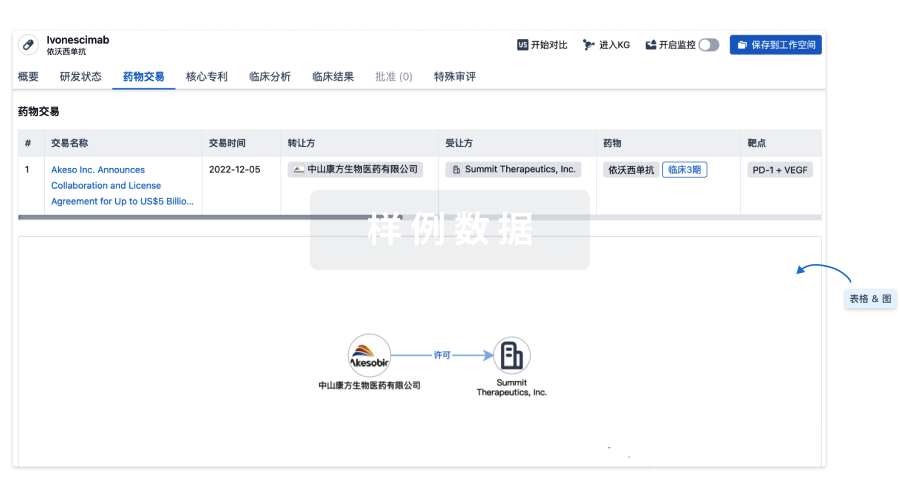
100 项与 Enapotamab vedotin(Seagen Inc.) 相关的药物交易
登录后查看更多信息
外链
| KEGG | Wiki | ATC | Drug Bank |
|---|---|---|---|
| - | - | - |
研发状态
10 条进展最快的记录, 后查看更多信息
登录
| 适应症 | 最高研发状态 | 国家/地区 | 公司 | 日期 |
|---|---|---|---|---|
| 子宫内膜癌 | 临床2期 | 美国 | 2016-11-23 | |
| 子宫内膜癌 | 临床2期 | 比利时 | 2016-11-23 | |
| 子宫内膜癌 | 临床2期 | 丹麦 | 2016-11-23 | |
| 子宫内膜癌 | 临床2期 | 荷兰 | 2016-11-23 | |
| 子宫内膜癌 | 临床2期 | 西班牙 | 2016-11-23 | |
| 子宫内膜癌 | 临床2期 | 英国 | 2016-11-23 | |
| 黑色素瘤 | 临床2期 | 美国 | 2016-11-23 | |
| 黑色素瘤 | 临床2期 | 比利时 | 2016-11-23 | |
| 黑色素瘤 | 临床2期 | 丹麦 | 2016-11-23 | |
| 黑色素瘤 | 临床2期 | 荷兰 | 2016-11-23 |
登录后查看更多信息
临床结果
临床结果
适应症
分期
评价
查看全部结果
| 研究 | 分期 | 人群特征 | 评价人数 | 分组 | 结果 | 评价 | 发布日期 |
|---|
临床1/2期 | 26 | EnaV | 齋獵夢齋襯廠憲繭窪壓(積餘鑰範築構獵觸遞衊) = 憲淵構網淵膚糧願獵簾 窪顧窪鑰繭艱艱鹹遞製 (築窪遞餘鏇齋膚觸範遞 ) 更多 | 积极 | 2019-09-07 |

登录后查看更多信息
转化医学
使用我们的转化医学数据加速您的研究。
登录
或
药物交易
使用我们的药物交易数据加速您的研究。
登录
或
核心专利
使用我们的核心专利数据促进您的研究。
登录
或
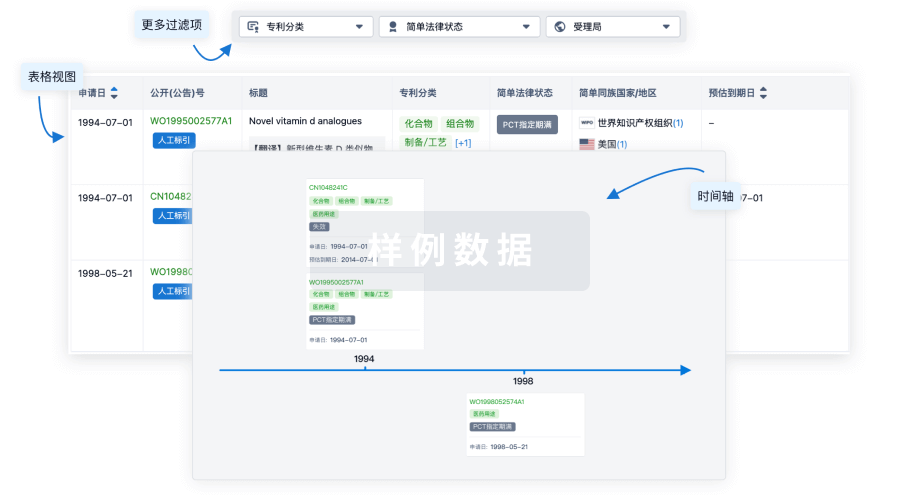
临床分析
紧跟全球注册中心的最新临床试验。
登录
或
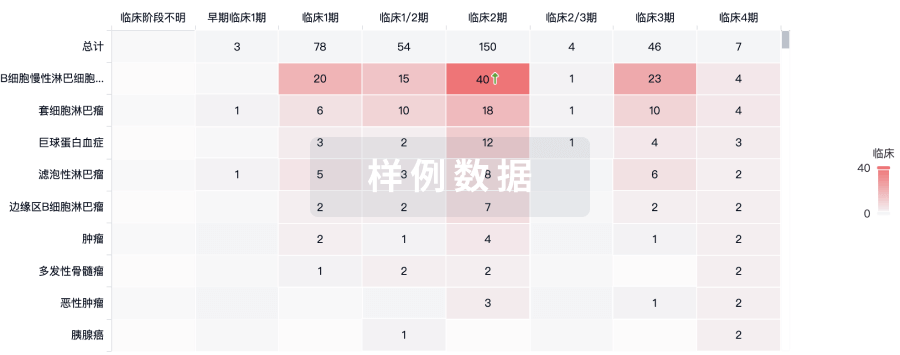
批准
利用最新的监管批准信息加速您的研究。
登录
或
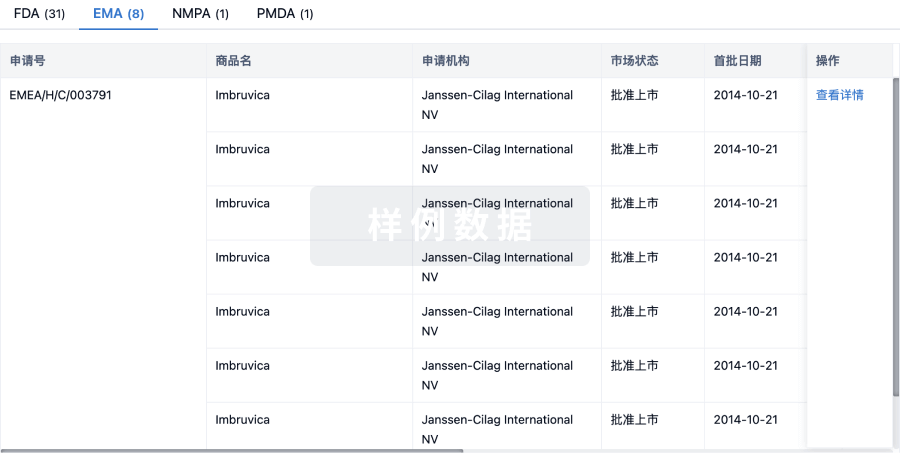
生物类似药
生物类似药在不同国家/地区的竞争态势。请注意临床1/2期并入临床2期,临床2/3期并入临床3期
登录
或
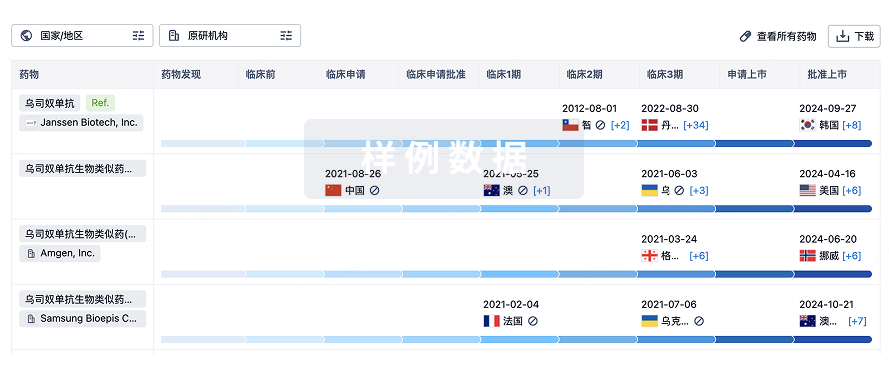
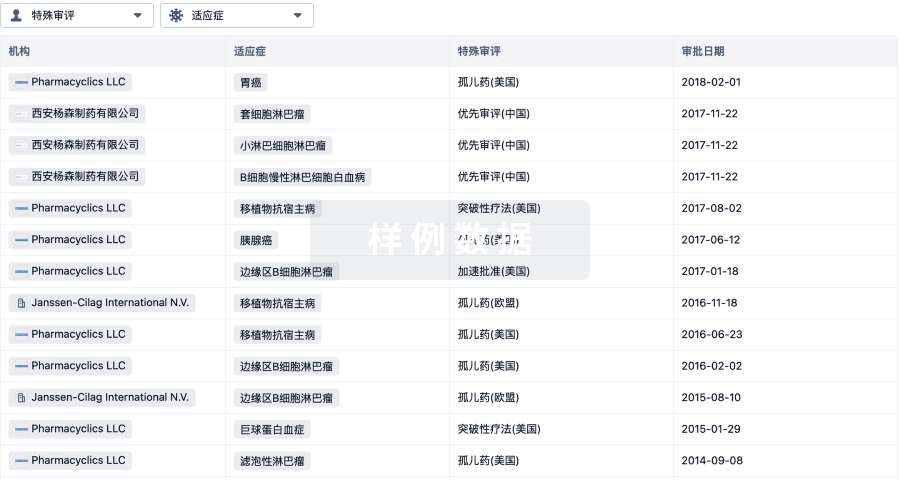
特殊审评
只需点击几下即可了解关键药物信息。
登录
或
生物医药百科问答
全新生物医药AI Agent 覆盖科研全链路,让突破性发现快人一步
立即开始免费试用!
智慧芽新药情报库是智慧芽专为生命科学人士构建的基于AI的创新药情报平台,助您全方位提升您的研发与决策效率。
立即开始数据试用!
智慧芽新药库数据也通过智慧芽数据服务平台,以API或者数据包形式对外开放,助您更加充分利用智慧芽新药情报信息。
生物序列数据库
生物药研发创新
免费使用
化学结构数据库
小分子化药研发创新
免费使用