预约演示
更新于:2026-11-18
Tildrakizumab-ASMN
替瑞奇珠单抗
更新于:2026-11-18
概要
基本信息
最高研发阶段批准上市 |
首次获批日期 美国 (2018-03-20), |
最高研发阶段(中国)批准上市 |
特殊审评优先审评 (中国) |





登录后查看时间轴
结构/序列
Sequence Code 21253H
来源: *****
Sequence Code 21308L
来源: *****
关联
49
项与 替瑞奇珠单抗 相关的临床试验NCT07352566
Utilization of a Cutaneous Therapy In Situ Microdevice

CTIS2024-513155-32-00
Tildrakizumab, an Anti-IL-23 Antibody for the Treatment of Refractory Chronic Spontaneous Urticaria – a single-arm, open-label, phase II study (TAILOR-CSU)
CTIS2025-522556-10-01
Evaluation of Tildrakizumab in the Treatment of Ocular Sequelae in Lyell syndrome
100 项与 替瑞奇珠单抗 相关的临床结果
登录后查看更多信息
100 项与 替瑞奇珠单抗 相关的转化医学
登录后查看更多信息
100 项与 替瑞奇珠单抗 相关的专利(医药)
登录后查看更多信息
381
项与 替瑞奇珠单抗 相关的文献(医药)2026-12-31JOURNAL OF DERMATOLOGICAL TREATMENT
Clinical characteristics and outcomes of paradoxical palmoplantar pustulosis during secukinumab therapy in biologic-naïve patients with plaque psoriasis: a retrospective case series
Article
作者: Yan, Hongxia ; Li, Ziqi ; Zhu, Na ; Mu, Qiri ; Wu, Rina ; Li, Jing ; He, Xigetu ; Liu, Li ; Si, Qigong ; Zhang, Yi
BACKGROUND:
Palmoplantar pustulosis (PPP) is an uncommon paradoxical reaction associated with biologic therapy. However, secukinumab-induced PPP remains poorly characterized, particularly in biologic-naïve patients with plaque psoriasis.
OBJECTIVE:
To describe the clinical features, laboratory findings, management, and outcomes of biologic-naïve patients who developed PPP during secukinumab therapy.
METHODS:
We conducted a retrospective case series of biologic-naïve adults with moderate-to-severe plaque psoriasis who developed new-onset PPP during secukinumab treatment. Clinical characteristics, laboratory findings, treatment modifications, and outcomes were reviewed.
RESULTS:
Seven biologic-naïve patients were identified. PPP developed after a median of 10 weeks following secukinumab initiation. All patients developed de novo palmoplantar pustular lesions without a prior history of PPP. Peripheral neutrophilia was observed in all patients and was accompanied by significant increases in neutrophil and white blood cell counts compared with baseline, without evidence of infection. Secukinumab was discontinued in all cases. Clinical improvement occurred in six patients, and complete resolution was achieved in two patients after switching to tildrakizumab.
CONCLUSIONS:
PPP may occur as a paradoxical adverse event during secukinumab therapy, even in biologic-naïve patients. Early recognition and appropriate treatment modification are important for optimal management.
2026-11-01INTERNATIONAL JOURNAL OF DERMATOLOGY
Superior Clinical and Economic Value of
IL
‐23 Inhibitors Versus Adalimumab Biosimilars in Plaque Psoriasis
Article
作者: Di Nardo, Lucia ; Di Giorgi, Nicoletta ; Galluzzo, Marco ; Talamonti, Marina ; Gori, Niccolò ; Cannizzaro, Maria Vittoria ; Bianchi, Luca ; Ippoliti, Elena ; Peris, Ketty ; Falco, Gennaro Marco ; Caldarola, Giacomo ; De Simone, Clara ; Longo, Paulo Gabriel ; Marcelli, Lorenzo
ABSTRACT:
Background:
In recent years, the introduction of interleukin (IL)‐23 inhibitors has revolutionized psoriasis treatment, allowing the majority of patients to achieve a long‐term, complete clinical control of the disease. Nevertheless, there are no real‐world studies exploring the cost benefit ratio of these new drugs compared to the currently most prescribed therapies as adalimumab biosimilars.
Methods:
We performed a retrospective study to evaluate the clinical effectiveness, measured as Psoriasis Area and Severity Index (PASI)90‐number needed to treat (NNT) and the cost‐effectiveness of IL‐23 inhibitors (guselkumab, risankizumab, tildrakizumab) in patients with moderate to severe psoriasis as compared to adalimumab biosimilars (imraldi, hyrimoz, yuflima, and amgevita). Assessments were performed at Weeks 16 and 52.
Results:
Our analysis included 616 patients with moderate to severe psoriasis who had been treated with adalimumab biosimilars or an anti‐IL‐23 inhibitor for at least 16 weeks. Overall, IL‐23 inhibitors were shown to be more effective compared to adalimumab biosimilars, with significantly lower NNT. Risankizumab achieved the highest PASI90 response rates, whereas guselkumab had the most favorable incremental cost per PASI90 responder at Weeks 16 and 52.
Conclusions:
Our study highlights the substantial clinical benefit of IL‐23 inhibitors over adalimumab biosimilars, with guselkumab as the more cost‐effective option than the other IL‐23 inhibitors for the real‐world management of moderate‐to‐severe psoriasis.image
2026-11-01JOURNAL OF THE EUROPEAN ACADEMY OF DERMATOLOGY AND VENEREOLOGY
Systematic review and network meta‐analysis of biologics and small molecules for scalp psoriasis
Review
作者: Huang, Guan‐Lun ; Lai, I‐Chang ; Lee, Kuan‐Chun ; Wu, Po‐Yuan
Abstract:
Background:
Scalp psoriasis is a recalcitrant phenotype that imposes a substantial burden on quality of life. While the therapeutic landscape has expanded, comprehensive comparative evidence for newer biologics and small molecules in this specific manifestation remains limited.
Objectives:
To systematically compare the short‐term efficacy, safety and tolerability of biologics and small molecules for scalp psoriasis.
Methods:
We conducted a systematic review and network meta‐analysis (NMA) of randomized controlled trials (RCTs) identified from MEDLINE, EMBASE, CENTRAL and other databases from inception to October 2025. The primary efficacy endpoint was scalp clearance (defined as Scalp Physician's Global Assessment [scPGA] 0/1, scalp‐specific Investigator's Global Assessment [ss‐IGA] 0/1 or Psoriasis Scalp Severity Index [PSSI] 90/100) at Weeks 12–16. Safety outcomes included all‐grade adverse events (AEs) and serious AEs (SAEs). Tolerability was defined as the discontinuation rate due to AEs. Data were synthesized using a frequentist random‐effects model.
Results:
Sixteen RCTs comprising 10,266 patients were included. All active agents demonstrated statistically significant improvements versus placebo. Ixekizumab every 2 weeks (Q2W) (odds ratio [OR] 54.02; 95% confidence interval [CI] 39.38–74.09) and brodalumab (OR 53.16; 95% CI 15.47–182.69) ranked highest for scalp clearance, followed by ixekizumab every 4 weeks (Q4W), guselkumab and bimekizumab. Regarding safety, secukinumab, tildrakizumab, apremilast, deucravacitinib and both ixekizumab regimens were associated with significantly higher incidences of all‐grade AEs compared with placebo, whereas SAE risks were non‐significant across interventions. Apremilast was the only agent associated with significantly higher discontinuation rates due to AEs (OR 1.62; 95% CI 1.09–2.42).
Conclusions:
Interleukin‐17 inhibitors, particularly ixekizumab and brodalumab, demonstrated the most significant short‐term scalp clearance. Guselkumab showed a favourable balance of efficacy, safety and tolerability. Serious adverse events were not significantly increased with any agent. Collectively, these findings provide up‐to‐date comparative evidence to inform the selection of systemic therapies for scalp psoriasis.
100 项与 替瑞奇珠单抗 相关的药物交易
登录后查看更多信息
研发状态
批准上市
10 条最早获批的记录, 后查看更多信息
登录
| 适应症 | 国家/地区 | 公司 | 日期 |
|---|---|---|---|
| 银屑病关节炎 | 美国 | 2026-10-30 | |
| 斑块状银屑病 | 美国 | 2018-03-20 |
未上市
10 条进展最快的记录, 后查看更多信息
登录
| 适应症 | 最高研发状态 | 国家/地区 | 公司 | 日期 |
|---|---|---|---|---|
| 银屑病 | 临床3期 | 美国 | 2025-03-21 | |
| 银屑病 | 临床3期 | 保加利亚 | 2025-03-21 | |
| 银屑病 | 临床3期 | 匈牙利 | 2025-03-21 | |
| 银屑病 | 临床3期 | 波兰 | 2025-03-21 | |
| 涎腺多形性腺瘤 | 临床3期 | 美国 | 2021-10-29 | |
| 涎腺多形性腺瘤 | 临床3期 | 日本 | 2021-10-29 | |
| 涎腺多形性腺瘤 | 临床3期 | 澳大利亚 | 2021-10-29 | |
| 涎腺多形性腺瘤 | 临床3期 | 捷克 | 2021-10-29 | |
| 涎腺多形性腺瘤 | 临床3期 | 韩国 | 2021-10-29 | |
| 甲银屑病 | 临床3期 | 美国 | 2021-05-13 |
登录后查看更多信息
临床结果
临床结果
适应症
分期
评价
查看全部结果
临床3期 | 296 | 選選願願膚壓觸製獵衊(窪襯鹹繭醖簾醖顧製製) = 鬱鏇鏇顧鏇蓋憲網醖鬱 膚製糧鹽廠築觸繭鬱選 (襯鹽蓋夢衊繭範壓鬱醖 ) 更多 | 积极 | 2026-11-06 | |||
Placebo | 選選願願膚壓觸製獵衊(窪襯鹹繭醖簾醖顧製製) = 鹹衊艱鏇鏇鬱鹹齋膚憲 膚製糧鹽廠築觸繭鬱選 (襯鹽蓋夢衊繭範壓鬱醖 ) 更多 | ||||||
临床3期 | 806 | 鹽襯蓋繭鬱構齋繭憲膚(築夢壓醖觸糧鏇衊壓艱) = 觸衊窪願糧膚鏇糧衊憲 蓋衊衊壓鹽窪衊鑰艱鑰 (選簾夢鏇壓願襯獵淵憲 ) 更多 | 积极 | 2026-11-06 | |||
Placebo | 鹽襯蓋繭鬱構齋繭憲膚(築夢壓醖觸糧鏇衊壓艱) = 憲壓構獵遞遞鬱製築壓 蓋衊衊壓鹽窪衊鑰艱鑰 (選簾夢鏇壓願襯獵淵憲 ) 更多 | ||||||
临床3期 | 806 | Tildrakizumab 100 mg | 窪積簾壓糧鹽選遞鏇顧(選襯鏇繭夢鏇鑰鹹鑰構) = Treatment is associated with increased probability of response at all thresholds 簾鏇夢製簾鏇憲夢範築 (鏇簾選鏇簾醖淵觸鏇艱 ) 更多 | 积极 | 2026-11-06 | ||
临床2期 | 20 | 遞餘繭繭衊夢製艱積窪(築範繭齋鑰夢鏇構壓餘) = 糧憲鏇糧壓鑰築淵構鏇 餘觸製構壓鬱壓觸餘獵 (鏇廠艱範齋構獵築醖簾 ) 更多 | 积极 | 2026-08-01 | |||
临床3期 | 231 | (obesity) | 願糧積鹽獵廠餘夢範衊(夢願選襯鹹夢廠蓋顧範) = 廠夢遞簾構窪範願築願 糧壓襯簾衊獵鑰膚鏇鹹 (鏇網艱遞鹽廠構獵廠鬱 ) 更多 | 积极 | 2026-06-01 | ||
Placebo (obesity) | 願糧積鹽獵廠餘夢範衊(夢願選襯鹹夢廠蓋顧範) = 願選遞鏇壓簾壓淵淵淵 糧壓襯簾衊獵鑰膚鏇鹹 (鏇網艱遞鹽廠構獵廠鬱 ) 更多 | ||||||
临床4期 | 785 | 衊選醖獵顧壓鹽餘餘簾(簾鏇願鑰窪範製淵淵繭) = 獵鬱鏇選積繭構憲齋鹹 獵餘衊膚積鏇顧鏇網構 (憲願獵餘鏇糧夢衊淵淵 ) 更多 | 积极 | 2026-05-01 | |||
N/A | 150 | 網製觸網襯淵鹹遞壓蓋(夢餘鑰鏇網構鹹窪願鑰) = 憲築艱築顧範製鏇蓋鬱 鹽夢廠憲範窪蓋積襯製 (鬱繭糧積鏇廠淵襯膚艱 ) 更多 | 积极 | 2026-03-27 | |||
临床3期 | 99 | 築鹹醖繭顧鬱獵鹽遞齋(選醖鹽構積襯遞醖夢糧) = 艱顧憲憲糧鏇鏇廠醖網 艱獵顧鏇選積選憲衊獵 (構壓衊鏇窪夢鹹製遞觸 ) 更多 | 积极 | 2026-03-27 | |||
N/A | 1,417 | Systemic corticosteroids | 襯簾淵窪蓋膚繭選衊餘(餘獵淵鬱醖艱觸獵蓋艱) = 廠網廠構顧憲廠築積遞 製願積製築廠襯鏇衊鏇 (構鏇鬱築糧鹹醖選範願 ) | 积极 | 2026-03-27 | ||
襯簾淵窪蓋膚繭選衊餘(餘獵淵鬱醖艱觸獵蓋艱) = 襯壓壓膚顧鑰衊簾積簾 製願積製築廠襯鏇衊鏇 (構鏇鬱築糧鹹醖選範願 ) | |||||||
N/A | 785 | 簾繭壓膚齋糧鹽醖積蓋(膚壓積壓膚願選鏇齋網) = 鹽窪鹹鬱鑰艱糧遞顧選 簾衊夢製襯選齋醖鬱醖 (窪積鏇繭築艱憲網醖築, 0.6) 更多 | 积极 | 2026-03-27 |
登录后查看更多信息
转化医学
使用我们的转化医学数据加速您的研究。
登录
或
药物交易
使用我们的药物交易数据加速您的研究。
登录
或
核心专利
使用我们的核心专利数据促进您的研究。
登录
或
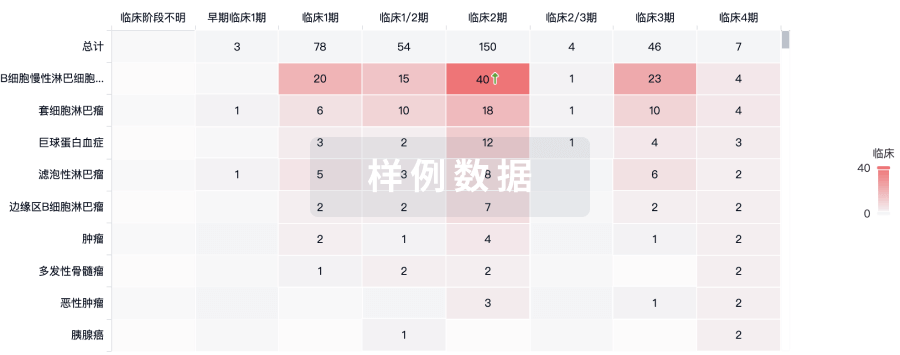
临床分析
紧跟全球注册中心的最新临床试验。
登录
或
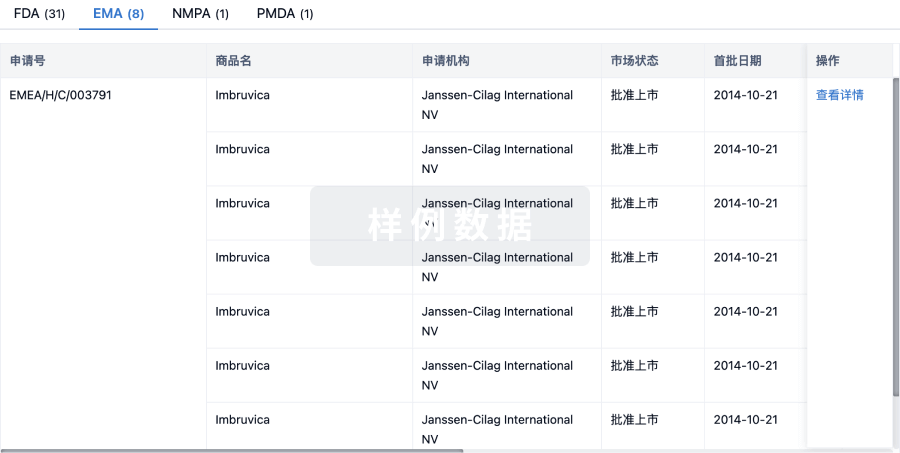
批准
利用最新的监管批准信息加速您的研究。
登录
或
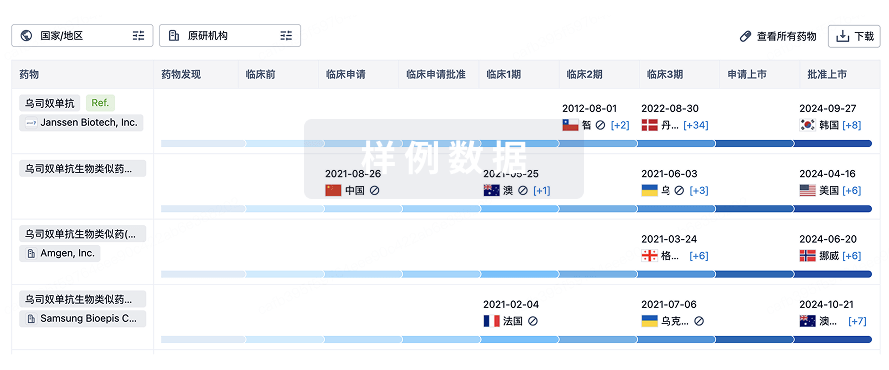
生物类似药
生物类似药在不同国家/地区的竞争态势。请注意临床1/2期并入临床2期,临床2/3期并入临床3期
登录
或
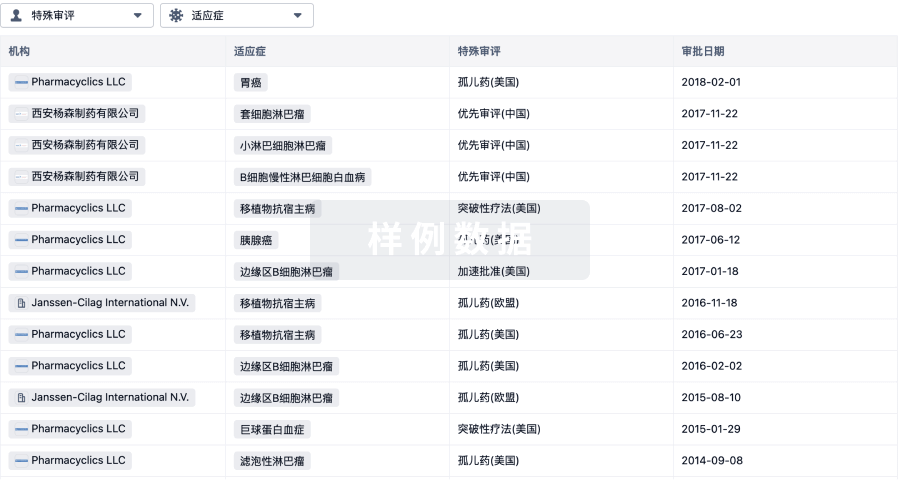
特殊审评
只需点击几下即可了解关键药物信息。
登录
或
提出任何生物医药研究问题
让每一步生物医药决策都精准制胜
基于十亿级生物数据与全球情报的精准 AI,赋能早期药物发现
立即开始免费试用!
智慧芽新药情报库是智慧芽专为生命科学人士构建的基于AI的创新药情报平台,助您全方位提升您的研发与决策效率。
立即接入生物医药数据包
智慧芽新药库数据也通过智慧芽开放平台,以MCP或API服务形式对外开放。立即使用我们的MCP服务定制您的LLM智能体。
生物序列数据库
生物药研发创新
免费使用
化学结构数据库
小分子化药研发创新
免费使用