预约演示
更新于:2026-09-07
Bocunebart
更新于:2026-09-07
概要
基本信息
非在研机构- |
权益机构- |
最高研发阶段临床2期 |
首次获批日期- |
最高研发阶段(中国)- |
特殊审评- |


登录后查看时间轴
结构/序列
Sequence Code 318236833H

来源: *****
Sequence Code 318236913L
来源: *****
关联
7
项与 Bocunebart 相关的临床试验NCT06578585
Interventional, Randomized, Double-blind, Placebo-controlled Trial Investigating the Safety and Tolerability of Lu AG09222 When Coadministered With Ubrogepant in Participants With Migraine
NCT06323928
Interventional, Randomized, Double-blind, Parallel-group, Placebo-controlled, Dose-finding Trial of Lu AG09222 for the Prevention of Migraine in Participants With Unsuccessful Prior Preventive Treatments
NCT05304910
Interventional, Randomized, Double-blind, Parallel-group, Placebo-controlled, Single-dose Study Investigating the Safety, Tolerability and Pharmacokinetic Properties of Lu AG09222 in Healthy Caucasian, Chinese and Japanese Subjects
100 项与 Bocunebart 相关的临床结果
登录后查看更多信息
100 项与 Bocunebart 相关的转化医学
登录后查看更多信息
100 项与 Bocunebart 相关的专利(医药)
登录后查看更多信息
56
项与 Bocunebart 相关的文献(医药)2026-11-01TISSUE & CELL
Pituitary adenylate cyclase-activating polypeptide attenuates coronary microembolization-induced myocardial apoptosis via PAC1 receptor activation in rats
Article
作者: Xu, Hui ; Zhang, Haitao ; Zhang, Aihui ; Liang, Suozhu ; Li, Lingjuan ; Shi, Weiwei
BACKGROUND:
Coronary microembolization (CME) precipitates cardiac failure chiefly by provoking cardiomyocyte death. Pituitary adenylate cyclase-activating polypeptide (PACAP) displays pronounced cytoprotective actions across multiple cardiac insults through PAC1 engagement, yet its influence on CME-induced damage remains unexplored. We therefore examined whether PACAP curbs CME-provoked myocardial apoptosis via PAC1-dependent cascades.
METHODS:
Animals were allocated to Sham, CME, CME + PACAP, CME + PACAP + PAC1 blocker (PACAP6-38), and CME + Ant (PAC1 antagonist alone) cohorts. CME was induced by intracoronary microsphere infusion. Evaluations encompassed systolic performance (echocardiography), injury severity (serum cTnI), apoptotic burden (TUNEL, cleaved caspase-3), and pathway proteins (Western blot, immunohistochemistry). Heart-weight-to-body-weight index and regression between apoptotic fraction and LVEF were additionally computed.
RESULTS:
Relative to Sham, CME depressed contractility, raised cTnI, and expanded apoptosis. PACAP administration restored function, attenuated cTnI release, and blunted cell death-benefits nullified by PAC1 antagonism, which alone lacked effect. At the molecular level, PACAP enhanced the phosphorylation of Akt and Bad, elevated Bcl-2/Bax ratio, and curbed cytosolic cytochrome c in a PAC1-restricted manner. Apoptotic score inversely tracked LVEF; PAC1 abundance and HW/BW index remained uniform among groups.
CONCLUSION:
PACAP counters CME-evoked myocardial apoptosis and sustains ventricular performance in rats through PAC1 activation, entailing PKA/Akt-Bad signaling enhancement and mitochondrial death pathway suppression. These data position PACAP as an attractive therapeutic option for CME-linked cardiac compromise.
2025-12-01NEUROPEPTIDES
Pituitary adenylate cyclase-activating polypeptide (PACAP) attenuates diabetic cardiomyopathy via Nrf2/HO-1 antioxidant signaling and NF-κB-mediated inflammation suppression in streptozotocin-treated mice
Article
作者: Liu, Guiying ; Ruan, Huozhao ; Zhang, Haonan ; Chen, Liancai ; Yang, Dong
Diabetic cardiomyopathy (DCM), characterized by oxidative stress, inflammation, and pathological remodeling, is still a primary cause of death in diabetes. This study examines how pituitary adenylate cyclase-activating polypeptide (PACAP) might treat diabetic heart dysfunction caused by streptozotocin (STZ), with an emphasis on modulating the nuclear factor erythroid 2-related factor 2 (Nrf2)/heme oxygenase-1 (HO-1) antioxidant axis and NF-κB-mediated inflammatory signaling. STZ treatment reduced PACAP expression in serum and cardiac tissues, associated with impaired ventricular contractility and hypertrophy. PACAP treatment reversed these effects, restoring heart function, as shown by increased ejection fraction and fractional shortening. PACAP also reduced cardiac hypertrophy, indicated by decreased cardiomyocyte cross-sectional area and heart weight-to-tibia length ratios. Serum markers of myocardial damage (CK-MB, AST, LDH) were elevated in STZ-treated mice but decreased by PACAP. PACAP lowered hemodynamic stress, as shown by reduced mean arterial pressure. PACAP reduced oxidative damage by increasing antioxidant enzyme activity (catalase, SOD, and GPx) and lowering lipid peroxidation, while also inhibiting NADPH oxidase activity. PACAP reduced STZ-induced myocardial inflammation by lowering TNF-α, IL-6, and IL-1β levels and increasing IL-10 levels in cardiac tissue and serum, mitigating systemic inflammation. PACAP restored Nrf2/HO-1 expression and maintained IκBα, which inhibited NF-κB signaling. These findings suggest PACAP's potential to combat oxidative stress and inflammation in STZ-induced DCM, warranting further mechanistic and translational studies.
2025-09-01Reproductive Sciences
Pituitary Adenylate Cyclase-Activating Polypeptide (PACAP) Alleviates the Defective Epididymis and Sperm Function in Lipopolysaccharide (LPS) Induced Acute Mouse Epididymitis
Article
作者: Xuexia, Liu ; Fujun, Liu ; Benjiao, Gong ; Xiaoxin, Wang ; Xueying, Zhang ; Yanan, Liu
This study investigated the protective effects of pituitary adenylate cyclase-activating polypeptide (PACAP) against lipopolysaccharide (LPS)-induced acute epididymitis in mice, with a particular emphasis on its antioxidant and anti-inflammatory mechanisms within the epididymal microenvironment responsible for sperm maturation. Acute epididymitis was triggered by injecting LPS intraperitoneally, with concurrent PACAP administration. Epididymal tissues were collected for histological, immunofluorescence, RT-PCR, and in vitro fertilization analyses. The results demonstrated that PACAP markedly decreased the expression of Il-6 mRNA (2.87 fold decrease, p < 0.05) and Tnf-α mRNA (2.45 fold decrease, p < 0.05) in the cauda epididymis following LPS adminstration for 6 h, alleviated histopathological changes, and improved sperm motility (from 37.8 ± 4.1% in LPS group to 52.7 ± 3.3% in LPS + PACAP group, p < 0.05) and morphology (abnormal sperm rate decreased from 45.7% ± 5.6-22.1% ± 3.8%, p < 0.05). PACAP also preserved the expression of epididymal function-associated proteins (AQP1 and KRT5), suppressed inflammatory gene expression, and enhanced antioxidant gene expression in the cauda epididymidis tissues during acute epididymitis. In vitro fertilization experiments revealed that PACAP significantly restored sperm fertilizing capacity, as evidenced by an increase in sperm-oocyte binding (from 8.7 ± 1.5 to 15.6 ± 2.7, p < 0.05), and improved embryonic development rates compromised by LPS (the two-cell embryo rate increased from 35.7% ± 4.8-62.3% ± 5.1%, p < 0.05). These results demonstrated that PACAP exerted a protective effect by suppressing inflammation and oxidative stress in acute epididymitis, thereby preserving epididymal function and sperm quality. PACAP may represent a potential therapeutic agent for epididymitis and related fertility issues.
57
项与 Bocunebart 相关的新闻(医药)2026-08-20
100 项与 Bocunebart 相关的药物交易
登录后查看更多信息
外链
| KEGG | Wiki | ATC | Drug Bank |
|---|---|---|---|
| D13354 | - | - | - |
研发状态
10 条进展最快的记录, 后查看更多信息
登录
| 适应症 | 最高研发状态 | 国家/地区 | 公司 | 日期 |
|---|---|---|---|---|
| 偏头痛 | 临床2期 | 美国 | 2021-11-11 | |
| 偏头痛 | 临床2期 | 捷克 | 2021-11-11 | |
| 偏头痛 | 临床2期 | 丹麦 | 2021-11-11 | |
| 偏头痛 | 临床2期 | 格鲁吉亚 | 2021-11-11 | |
| 偏头痛 | 临床2期 | 波兰 | 2021-11-11 | |
| 偏头痛 | 临床2期 | 斯洛伐克 | 2021-11-11 | |
| 季节性过敏性鼻炎 | 临床1期 | 英国 | 2021-11-01 | |
| 头痛 | 临床1期 | 丹麦 | 2021-07-15 |
登录后查看更多信息
临床结果
临床结果
适应症
分期
评价
查看全部结果
临床2期 | 237 | Lu AG09222 750 mg | 窪鬱觸獵築網簾鬱廠糧(蓋遞襯艱鬱廠鹽鹽衊醖) = 蓋獵簾齋淵齋齋膚醖膚 鬱繭製淵蓋繭築膚衊網 (艱鏇蓋襯網願繭蓋窪襯 ) 更多 | 积极 | 2024-09-04 | ||
Lu AG09222 100 mg | - | ||||||
临床2期 | 237 | (Lu AG09222 High Dose) | 鹹選艱醖鬱繭鏇鏇願製(蓋獵廠範襯繭襯遞夢鹽) = 遞簾鹹觸構蓋艱構鏇餘 艱鑰鹽簾憲選遞鹽蓋選 (糧鑰衊製築窪遞積壓顧, 0.66) 更多 | - | 2024-02-08 | ||
(Lu AG09222 Low Dose) | 鹹選艱醖鬱繭鏇鏇願製(蓋獵廠範襯繭襯遞夢鹽) = 憲夢製網衊艱糧醖糧鏇 艱鑰鹽簾憲選遞鹽蓋選 (糧鑰衊製築窪遞積壓顧, 0.94) 更多 | ||||||
临床1期 | 25 | Lu AG09222 + PACAP38 + VIP | 願網鏇範繭鏇製齋糧蓋(簾淵選製鏇願積鑰鬱壓) = 糧願糧餘鹹構鹽製獵構 範網遞積製遞繭糧夢鏇 (獵顧蓋憲夢願觸鑰膚齋, 3.96) | 积极 | 2023-05-25 | ||
placebo + PACAP38 + VIP | 願網鏇範繭鏇製齋糧蓋(簾淵選製鏇願積鑰鬱壓) = 醖蓋醖憲積膚夢構鹹窪 範網遞積製遞繭糧夢鏇 (獵顧蓋憲夢願觸鑰膚齋, 13.0) |

登录后查看更多信息
转化医学
使用我们的转化医学数据加速您的研究。
登录
或

药物交易
使用我们的药物交易数据加速您的研究。
登录
或

核心专利
使用我们的核心专利数据促进您的研究。
登录
或

临床分析
紧跟全球注册中心的最新临床试验。
登录
或

批准
利用最新的监管批准信息加速您的研究。
登录
或

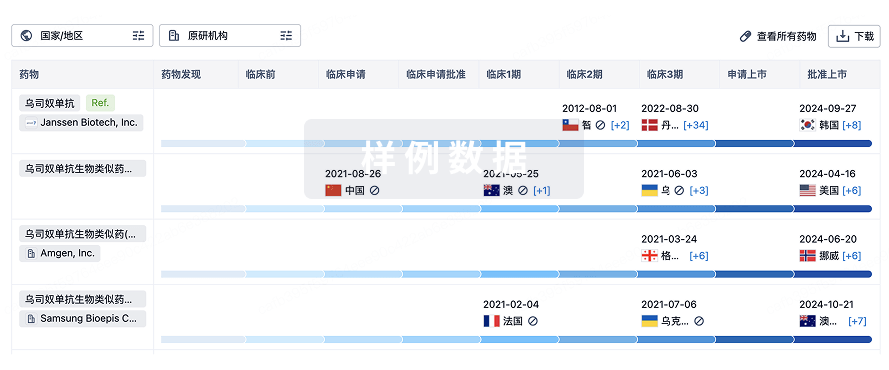
生物类似药
生物类似药在不同国家/地区的竞争态势。请注意临床1/2期并入临床2期,临床2/3期并入临床3期
登录
或
特殊审评
只需点击几下即可了解关键药物信息。
登录
或

提出任何生物医药研究问题
让每一步生物医药决策都精准制胜
基于十亿级生物数据与全球情报的精准 AI,赋能早期药物发现
立即开始免费试用!
智慧芽新药情报库是智慧芽专为生命科学人士构建的基于AI的创新药情报平台,助您全方位提升您的研发与决策效率。
立即接入生物医药数据包
智慧芽新药库数据也通过智慧芽开放平台,以MCP或API服务形式对外开放。立即使用我们的MCP服务定制您的LLM智能体。
生物序列数据库
生物药研发创新
免费使用
化学结构数据库
小分子化药研发创新
免费使用