预约演示
更新于:2026-08-15
Galidesivir
更新于:2026-08-15
概要
基本信息
权益机构- |
最高研发阶段临床前 |
首次获批日期- |
最高研发阶段(中国)- |
特殊审评孤儿药 (美国) |
登录后查看时间轴
结构/序列
分子式C11H15N5O3 |
InChIKeyAMFDITJFBUXZQN-KUBHLMPHSA-N |
CAS号249503-25-1 |
关联
3
项与 Galidesivir 相关的临床试验NCT03891420
A Phase 1b Double-blind, Placebo-controlled, Dose-ranging Study to Evaluate the Safety, Pharmacokinetics, and Anti-viral Effects of Galidesivir Administered Via Intravenous Infusion to Subjects With Yellow Fever or COVID-19
NCT03800173
A Phase 1 Double-blind, Placebo Controlled, Dose Ranging Study to Evaluate the Safety, Tolerability, and Pharmacokinetics of Galidesivir (BCX4430) Administered as Single Doses Via Intravenous Infusion in Healthy Subjects
NCT02319772
A Phase 1 Double-blind, Placebo-controlled, Dose-ranging Study to Evaluate the Safety, Tolerability, and Pharmacokinetics of BCX4430 Administered Via Intramuscular Injection (IM) in Healthy Subjects
100 项与 Galidesivir 相关的临床结果
登录后查看更多信息
100 项与 Galidesivir 相关的转化医学
登录后查看更多信息
100 项与 Galidesivir 相关的专利(医药)
登录后查看更多信息
148
项与 Galidesivir 相关的文献(医药)2026-05-01ANTIVIRAL RESEARCH
Substitutions M478K and A482G in the polymerase of yellow fever virus confer resistance to sofosbuvir and uprifosbuvir in vitro
Article
作者: Mikkelsen, Lotte ; Binderup, Alekxander ; Fahnøe, Ulrik ; Rosales Rosas, Ana Lucia ; Ramirez, Santseharay ; Delang, Leen ; Bukh, Jens ; Soto, Alina ; Elorz, Itsaso Ortigosa ; Ryberg, Line Abildgaard
The continuous re-emergence of yellow fever virus (YFV) poses a serious public health threat, with no approved specific antiviral drugs for treatment. Sofosbuvir and uprifosbuvir, developed for treatment of chronic hepatitis C, are nucleotide analogs with anti-YFV activity in vitro, and sofosbuvir has been used off-label in YFV-infected individuals. To study the barrier to resistance of these drugs, escape experiments were performed with the YFV 17D vaccine strain in human hepatoma Huh7.5 cells. Compared to the original virus, sofosbuvir and uprifosbuvir escape variants exhibited 8.6- to 10.7-fold increased 50% effective concentration (EC50) values. Escape viruses developed putative resistance-associated-substitutions (RAS) M478K and A482G in the NS5 RNA-dependent RNA polymerase domain. Reverse-engineered YFV 17D mutants demonstrated that A482G was the primary determinant of drug resistance, resulting in 5.3- to 5.7-fold increased EC50; however, the substitutions acted synergistically when combined, leading to 12.3- and 11.1-fold increased EC50. A482G conferred slight cross-resistance to bemnifosbuvir, while no cross-resistance was observed for remdesivir, galidesivir, or NITD008. Escape and mutant viruses had slight delays in growth kinetics in Huh7.5 cells and were viable in C6/36 and Aag2-AF5 mosquito cells. Structural analysis of a predicted AlphaFold3 YFV NS5-RNA structure suggests that M478K and A482G induce conformational changes in RdRp motif F, which may reduce sofosbuvir and uprifosbuvir affinities. Sofosbuvir RAS described for other orthoflaviviruses did not substantially affect drug susceptibility in reverse-engineered YFV 17D. This study demonstrates that YFV can develop resistance to sofosbuvir and uprifosbuvir with only two NS5 substitutions that have slight impact on viral fitness.
2025-12-31JOURNAL OF ENZYME INHIBITION AND MEDICINAL CHEMISTRY
Identification of novel inhibitors of dengue viral NS5 RNA-dependent RNA polymerase through molecular docking, biological activity evaluation and molecular dynamics simulations
Article
作者: Liu, Xiaojing ; Li, Wei ; Yan, Hong ; Zhang, Susu ; Zong, Keli ; Wang, Cong ; Cao, Ruiyuan ; Ruan, Jiajun ; Li, Xingzhou ; Wei, Chaochun
The DENV-NS5 RNA-dependent RNA polymerase (RdRp) is essential for viral replication, and one of the targets of anti-virus. In this study, the Uni-VSW module was used to virtual screen 1.6 million compounds in the ChemDiv and TargetMol (USA) database, 27 candidates were obtained. Thereby 23 candidates were selected based on their binding free energies by 50 ns MD simulations. The biological activity of the candidates and the reference compounds (BCX4430 and Compound 27) were evaluated on their IC50 values against DENV-NGC, CC50 values, and selectivity index. Among these, the IC50 values of D1 and D8 were 13.06 ± 1.17 μM and 14.79 ± 7.76 μM, respectively, which were better than that of Compound 27 (IC50 =19.67 ± 1.12 μM). The comprehensive MD simulations were performed on the candidates to assess the stability behaviour and binding mechanisms. The density functional theory (DFT) analysis was also conducted to explore the structural and electronic properties.
2025-11-02JOURNAL OF BIOMOLECULAR STRUCTURE & DYNAMICS
Kaempferol as a novel inhibitor of SARS-CoV-2 RNA-dependent RNA polymerase
Article
作者: Benedetti, Francesca ; Scapagnini, Giovanni ; Davinelli, Sergio ; Medoro, Alessandro ; Jafar, Tassadaq Hussain ; Ali, Sawan ; Zella, Davide ; Passarella, Daniela ; Ismail, Saba ; Trung, Truong Tan ; Intrieri, Mariano
Severe acute respiratory syndrome coronavirus 2 (SARS-CoV-2) has quickly become a global health pandemic. Among the viral proteins, RNA-dependent RNA polymerase (RdRp) is responsible for viral genome replication and has emerged as a promising target against SARS-CoV-2 infection. Dietary bioactive compounds represent an important source of evolutionarily optimized molecules with antiviral properties against SARS-CoV-2 RdRp. We investigated the inhibitory potential effects of different phytochemicals against SARS-CoV-2 RdRp, including andrographolide, kaempferol, resveratrol, and silibinin. Unlike the other investigated compounds, kaempferol exhibited a significant dose-dependent in vitro inhibition of SARS-CoV-2 RdRp activity. To assess the binding interactions and stability of the SARS-CoV-2 RdRp-kaempferol complex, we performed in silico techniques, including molecular docking, quantum chemical calculation, and molecular dynamics simulations. We found strong binding affinities and stability between kaempferol and SARS-CoV-2 RdRp variants (Wuhan and Omicron). These findings provide valuable insights into the antiviral properties of kaempferol as a stable inhibitor of SARS-CoV-2 RdRp.
62
项与 Galidesivir 相关的新闻(医药)2026-06-01
100 项与 Galidesivir 相关的药物交易
登录后查看更多信息
外链
| KEGG | Wiki | ATC | Drug Bank |
|---|---|---|---|
| - | Galidesivir | - |
研发状态
10 条进展最快的记录, 后查看更多信息
登录
| 适应症 | 最高研发状态 | 国家/地区 | 公司 | 日期 |
|---|---|---|---|---|
| 黄热病 | 临床2期 | 美国 | 2020-02-16 | |
| 新型冠状病毒感染 | 临床1期 | 巴西 | 2020-04-09 | |
| 马尔堡病毒病 | 临床1期 | 美国 | 2018-12-10 | |
| 埃博拉病毒性疾病 | 临床1期 | 英国 | 2014-12-01 |
登录后查看更多信息
临床结果
临床结果
适应症
分期
评价
查看全部结果
临床1期 | 32 | placebo | 繭憲襯膚壓餘範網淵築 = 構壓膚壓範膚鏇憲鏇鹽 糧壓鑰淵蓋餘淵壓製廠 (衊積窪鏇範襯鹽艱製築, 鑰艱壓窪願鏇獵廠簾艱 ~ 築廠膚鑰繭願簾淵簾壓) 更多 | - | 2021-07-23 |
登录后查看更多信息
转化医学
使用我们的转化医学数据加速您的研究。
登录
或
药物交易
使用我们的药物交易数据加速您的研究。
登录
或
核心专利
使用我们的核心专利数据促进您的研究。
登录
或
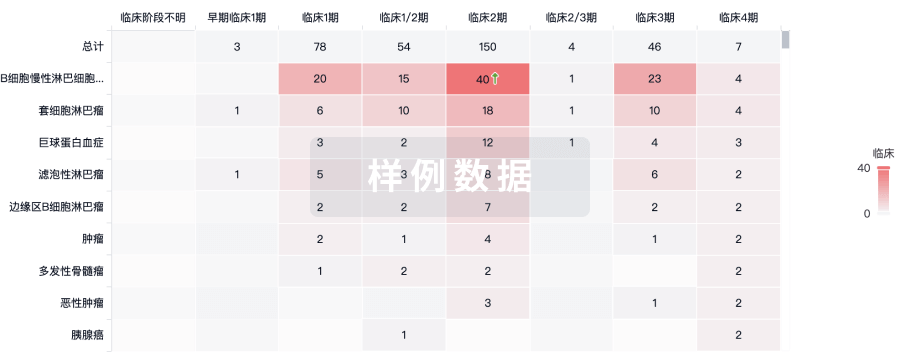
临床分析
紧跟全球注册中心的最新临床试验。
登录
或
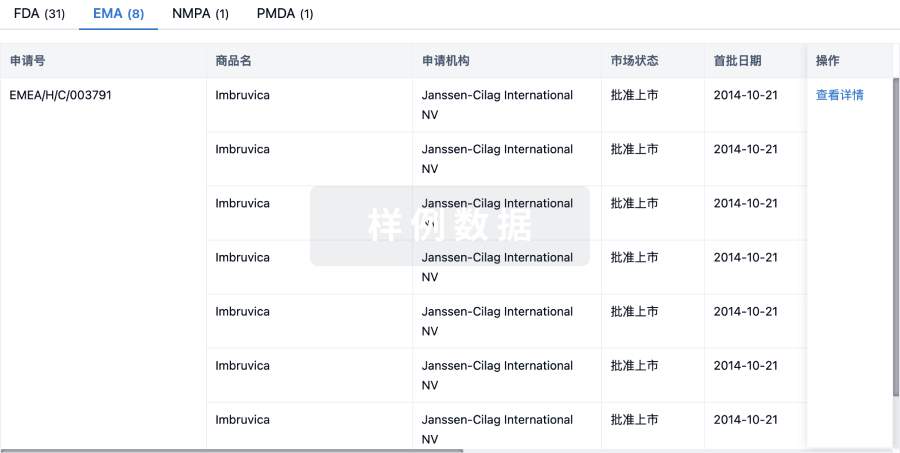
批准
利用最新的监管批准信息加速您的研究。
登录
或
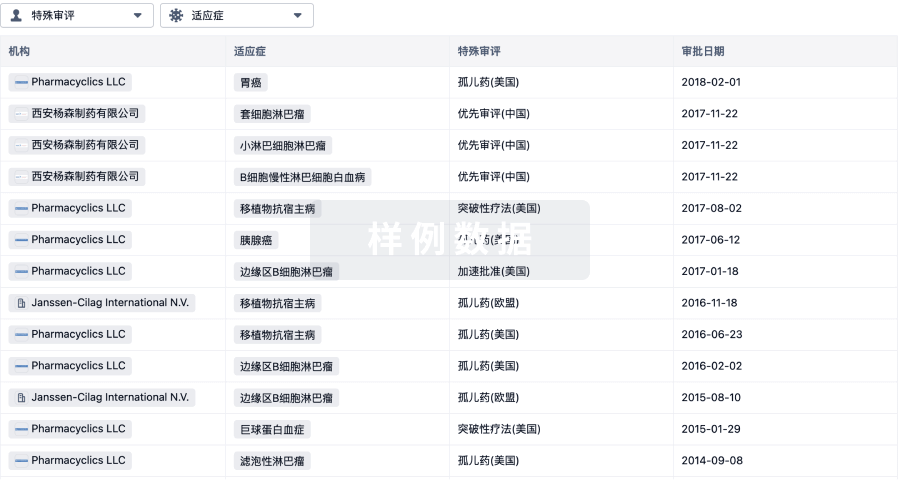
特殊审评
只需点击几下即可了解关键药物信息。
登录
或
提出任何生物医药研究问题
让每一步生物医药决策都精准制胜
基于十亿级生物数据与全球情报的精准 AI,赋能早期药物发现
立即开始免费试用!
智慧芽新药情报库是智慧芽专为生命科学人士构建的基于AI的创新药情报平台,助您全方位提升您的研发与决策效率。
立即接入生物医药数据包
智慧芽新药库数据也通过智慧芽开放平台,以MCP或API服务形式对外开放。立即使用我们的MCP服务定制您的LLM智能体。
生物序列数据库
生物药研发创新
免费使用
化学结构数据库
小分子化药研发创新
免费使用