预约演示
更新于:2026-05-09
Polyphemusin II
更新于:2026-05-09
概要
基本信息
原研机构 |
在研机构- |
非在研机构 |
权益机构- |
最高研发阶段无进展临床前 |
首次获批日期- |
最高研发阶段(中国)- |
特殊审评- |

结构/序列
分子式C108H161N37O20S4 |
InChIKeyNAHBVNMACPIHAH-HLICZWCASA-N |
CAS号125139-68-6 |
Sequence Code 4739586
关联
100 项与 Polyphemusin II 相关的临床结果
登录后查看更多信息
100 项与 Polyphemusin II 相关的转化医学
登录后查看更多信息
100 项与 Polyphemusin II 相关的专利(医药)
登录后查看更多信息
48
项与 Polyphemusin II 相关的文献(医药)2026-03-15·JOURNAL OF THE SCIENCE OF FOOD AND AGRICULTURE
Effect of beneficial microbes applications on nutritional profiles of organic tomatoes revealed by
LC
‐
MS
‐
qTOF
metabolomics
Article
作者: Bubici, Giovanni ; Lotito, Daria ; Prigigallo, Maria Isabella ; Lorito, Matteo ; Gigliotti, Claudio ; Vinale, Francesco ; Iacomino, Giuseppina ; Bolletti‐Censi, Sergio ; Staropoli, Alessia
Abstract:
BACKGROUND:
The use of microorganisms and biostimulants is increasingly supported in agriculture because of their advantageous impact on plant disease management, growth enhancement and the synthesis of beneficial bioactive secondary metabolites (SMs). Tomato (
Solanum lycopersicum
) is an important crop and is consumed worldwide because it is an excellent source of natural compounds (i.e. beta‐carotene and flavonoids) and minerals useful for human health. Although the positive effects of individual microbial applications are well‐documented, the impact of microbial consortia is underexplored.
RESULTS:
In this study, the improvement of nutritional value of tomato (
S. lycopersicum
var. Heinz), by use of beneficial microorganisms, including selected strains of
Streptomyces microflavus
(S),
Trichoderma harzianum
(M10) and
Trichoderma afroharzianum
(T22), has been investigated. These microbes were applied on tomato plants, either as single inoculants or as microbial consortia. The effects were evaluated through statistical analysis of biological parameters. T22 treatments exhibited a significant increase in plant height (107.30 cm) compared to both control and M10‐based treatments (104.30 and 102.80 cm, respectively). The similarities observed in plant height between S‐treated plants (105.70 cm) and those treated with the combination of S and T22 (106.60 cm) highlight the potential beneficial effects of microbial consortia. Moreover, the berries were subjected to an untargeted metabolomic analysis by liquid chromatography‐mass spectrometry‐quadrupole‐time of flight that led to the identification of eighteen metabolites, including tomatine and its derivatives solafloridine. Multivariate analysis demonstrated differences in berries metabolic profiles, depending on the treatment applied. Specifically, T22‐based treatment increased the accumulation of most of the identified metabolites compared to untreated plants, whereas combined treatment S + T22 induced a major accumulation of solafloridine.
CONCLUSION:
Field microbial applications significantly induced the metabolic profile change of tomato and the accumulation of metabolites with nutraceutical value. © 2025 The Author(s).
Journal of the Science of Food and Agriculture
published by John Wiley & Sons Ltd on behalf of Society of Chemical Industry.
2026-02-01·Materials Today Bio
Conjugation strategy shapes antitumor efficacy and enables dose-sparing in non-antibody protein nanoconjugates
Article
作者: Unzueta, Ugutz ; Vazquez, Esther ; Mendoza, Julian I ; Casanova, Isolda ; Mangues, Ramon ; Aviñó, Anna ; Paez, David ; Rueda, Ariana ; Fabrega, Carme ; Arena, Lourdes A ; Eritja, Ramon ; Alba-Castellon, Lorena ; Garcia-Leon, Annabel ; Villaverde, Antonio
Precision targeting is a hot topic in cancer nanomedicine, as conventional chemotherapies cause systemic toxicities, creating an urgent need for more selective treatments. Although antibody-drug conjugates (ADCs) are the current gold standard in targeted therapy, their clinical performance remains limited. As an alternative, we previously developed a multivalent protein nanocarrier (T22-GFP-H6) displaying the CXCR4-targeting peptide T22, which offers super-selective tumor accumulation driven by CXCR4 overexpression. This innovative nanovehicle showed favorable biodistribution for targeted delivery of antitumor drugs, including monomethyl auristatin E (MMAE), in a first-generation stochastic nanoconjugate format. However, unlike ADCs, where conjugation strategy is known to influence pharmacokinetics and efficacy, these parameters remain largely unexplored in non-antibody multivalent nanocarriers. Here, we evaluated the impact of precise payload accommodation using two site-specific strategies that attach a single MMAE molecule at distinct structural sites, and we compared them with first-generation nanoconjugates. The conjugation strategy substantially affected the biodistribution and antitumor efficacy, with a solvent-exposed cysteine-conjugation distal to the targeting ligand proving most effective. At equimolar nanocarrier dosing, this construct achieved tumor control similar to the stochastic conjugate in a disseminated hematologic malignancy despite an approximately 4-fold lower MMAE load (drug-to-protein ratio, DPR = 1 vs DPR ≈ 4). Moreover, at equimolar MMAE dosing, it clearly outperformed both the stochastic conjugate and the alternative site-directed design. These findings align with trends in advanced ADCs and provide practical design rules for rational, site-specific conjugation in next-generation protein-based nanomedicines aimed at enabling dose-sparing in oncology.
2024-09-01·PEST MANAGEMENT SCIENCE
Dual RNA sequencing during Trichoderma harzianum –Phytophthora capsici interaction reveals multiple biological processes involved in the inhibition and highlights the cell wall as a potential target
Article
作者: Li, Wenzhi ; Wang, Haidong ; Zhang, Zhuzhu ; Wang, Weizhen ; Long, Youhua ; Yin, Xianhui
Abstract:
BACKGROUND:
Phytophthora capsici is a destructive oomycete pathogen, causing huge economic losses for agricultural production. The genus Trichoderma represents one of the most extensively researched categories of biocontrol agents, encompassing a diverse array of effective strains. The commercial biocontrol agent Trichoderma harzianum strain T‐22 exhibits pronounced biocontrol effects against many plant pathogens, but its activity against P. capsici is not known.
RESULTS:
T. harzianum T‐22 significantly inhibited the growth of P. capsici mycelia and the culture filtrate of T‐22 induced lysis of P. capsici zoospores. Electron microscopic analyses indicated that T‐22 significantly modulated the ultrastructural composition of P. capsici, with a severe impact on the cell wall integrity. Dual RNA sequencing revealed multiple biological processes involved in the inhibition during the interaction between these two microorganisms. In particular, a marked upregulation of genes was identified in T. harzianum that are implicated in cell wall degradation or disruption. Concurrently, the presence of T. harzianum appeared to potentiate the susceptibility of P. capsici to cell wall biosynthesis inhibitors such as mandipropamid and dimethomorph. Further investigations showed that mandipropamid and dimethomorph could strongly inhibit the growth and development of P. capsici but had no impact on T. harzianum even at high concentrations, demonstrating the feasibility of combining T. harzianum and these cell wall synthesis inhibitors to combat P. capsici.
CONCLUSION:
These findings provided enhanced insights into the biocontrol mechanisms against P. capsici with T. harzianum and evidenced compatibility between specific biological and chemical control strategies. © 2024 Society of Chemical Industry.
100 项与 Polyphemusin II 相关的药物交易
登录后查看更多信息
研发状态
10 条进展最快的记录, 后查看更多信息
登录
| 适应症 | 最高研发状态 | 国家/地区 | 公司 | 日期 |
|---|---|---|---|---|
| HIV感染 | 临床前 | 日本 | 1997-10-20 |
登录后查看更多信息
临床结果
临床结果
适应症
分期
评价
查看全部结果
| 研究 | 分期 | 人群特征 | 评价人数 | 分组 | 结果 | 评价 | 发布日期 |
|---|
No Data | |||||||
登录后查看更多信息
转化医学
使用我们的转化医学数据加速您的研究。
登录
或
药物交易
使用我们的药物交易数据加速您的研究。
登录
或
核心专利
使用我们的核心专利数据促进您的研究。
登录
或
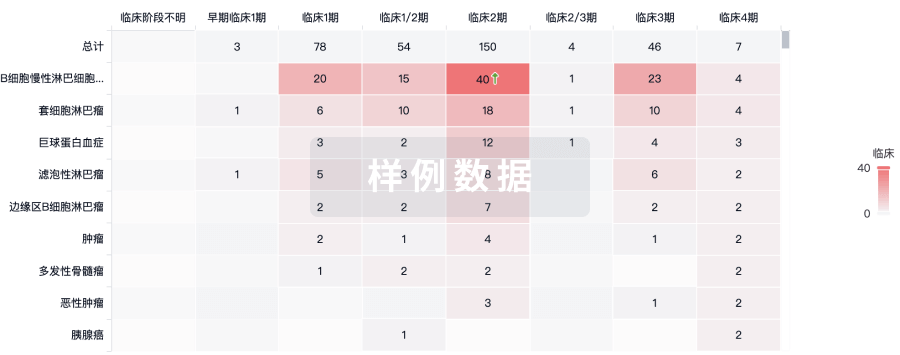
临床分析
紧跟全球注册中心的最新临床试验。
登录
或
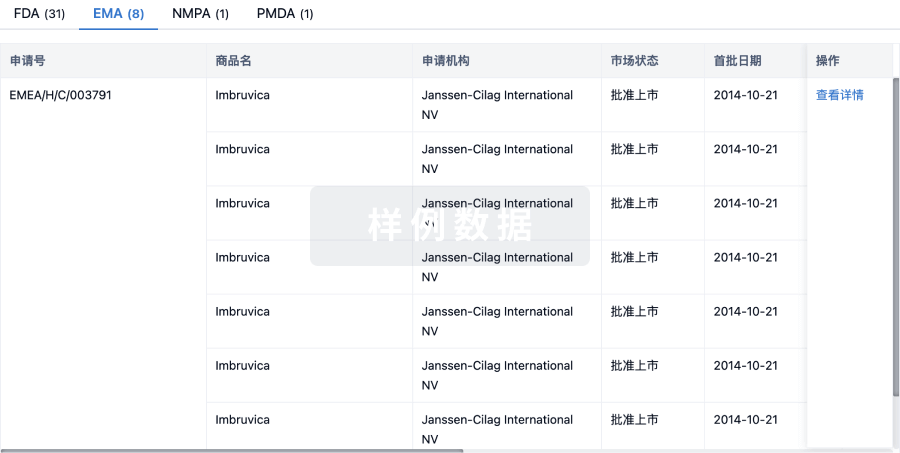
批准
利用最新的监管批准信息加速您的研究。
登录
或
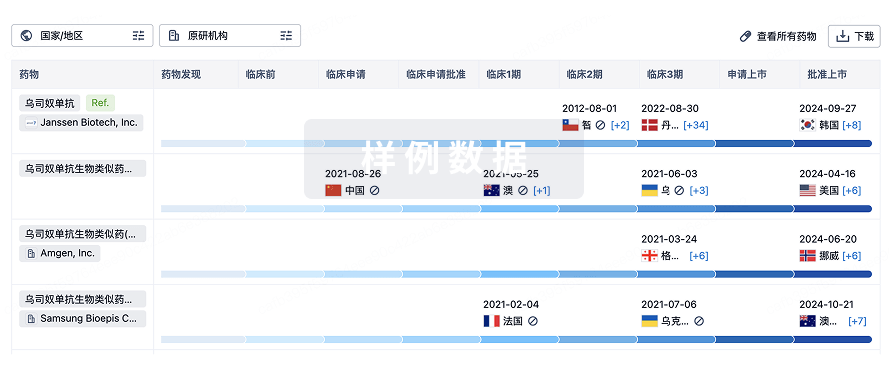
生物类似药
生物类似药在不同国家/地区的竞争态势。请注意临床1/2期并入临床2期,临床2/3期并入临床3期
登录
或
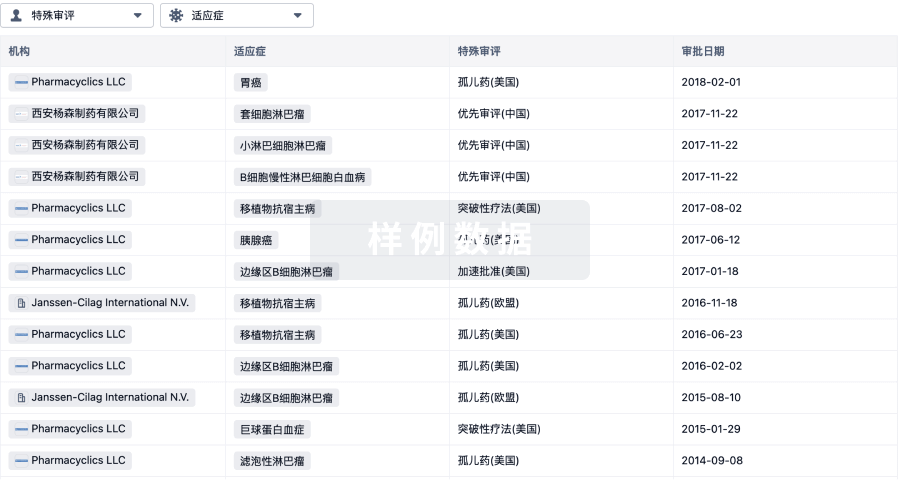
特殊审评
只需点击几下即可了解关键药物信息。
登录
或
生物医药百科问答
全新生物医药AI Agent 覆盖科研全链路,让突破性发现快人一步
立即开始免费试用!
智慧芽新药情报库是智慧芽专为生命科学人士构建的基于AI的创新药情报平台,助您全方位提升您的研发与决策效率。
立即开始数据试用!
智慧芽新药库数据也通过智慧芽数据服务平台,以API或者数据包形式对外开放,助您更加充分利用智慧芽新药情报信息。
生物序列数据库
生物药研发创新
免费使用
化学结构数据库
小分子化药研发创新
免费使用