预约演示
更新于:2026-02-27
GSK-3389404
更新于:2026-02-27
概要
基本信息
在研机构- |
最高研发阶段无进展临床2期 |
首次获批日期- |
最高研发阶段(中国)无进展 |
特殊审评- |



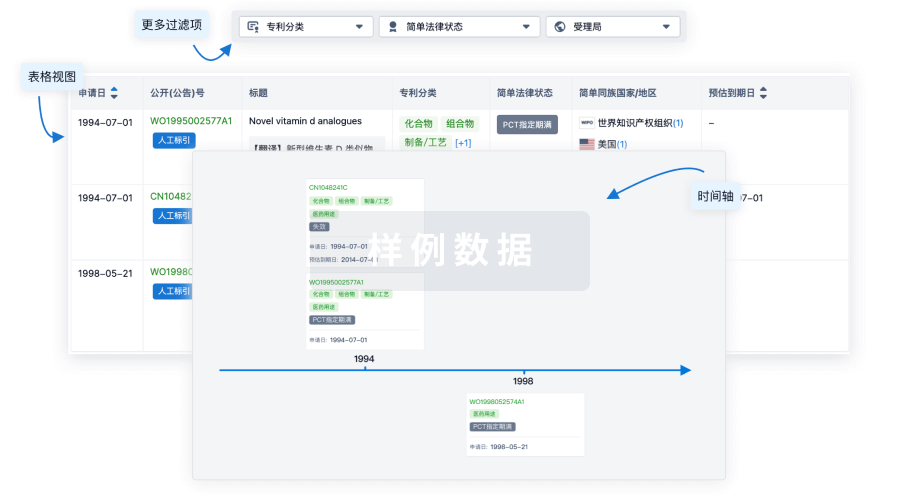
登录后查看时间轴
结构/序列
使用我们的RNA技术数据为新药研发加速。
登录
或
关联
2
项与 GSK-3389404 相关的临床试验NCT03020745
A Double-Blind, Placebo-Controlled Study to Assess the Safety, Tolerability, Pharmacokinetics and Pharmacodynamics of Single Ascending Dose and Multiple Doses of GSK3389404 in Chronic Hepatitis B Subjects
NCT02647281
A Double-Blind, Placebo-Controlled, Dose-Escalation, First Time in Human Study to Assess the Safety, Tolerability and Pharmacokinetics of Single and Multiple Ascending Doses of GSK3389404 in Healthy Subjects
100 项与 GSK-3389404 相关的临床结果
登录后查看更多信息
100 项与 GSK-3389404 相关的转化医学
登录后查看更多信息
100 项与 GSK-3389404 相关的专利(医药)
登录后查看更多信息
6
项与 GSK-3389404 相关的文献(医药)2023-03-01JOURNAL OF HEPATOLOGY
Reply to: “Bepirovirsen/GSK3389404: Antisense or TLR9 agonists?”
Letter
作者: Yuen, Man-Fung ; Elston, Robert ; You, Shihyun
A review.Dr Andrew Vaillant has hypothesized that the principal mechanism of action of GSK3389404 (N-acetylgalactosamine [GalNAc]-conjugated antisense oligonucleotide [ASO]) and bepirovirsen (non-GalNAc-conjugated ASO with the same target sequence as GSK3389404) is through immune stimulation rather than mRNA degradationAlthough the relative contribution of mRNA/pregenomic RNA degradation and immune stimulation is still under investigation, the authors would like to make the following comments.Dr Vaillant asserts that the mechanism of action of ASOs and small-interfering RNAs (siRNAs) is inconsistent with mRNA degradation due to the rapid selection of individual point mutations.While it is true that HBV reverse transcriptase (RT) has no proofreading activity, its substitution rate is lower than that of other RT-dependent viruses, and is variable along the genome, with lower substitution rates in overlapping vs. non-overlapping regions.Replication of HBV can be effectively inhibited by nucleos(t)ide analog (NA) therapy without selection of NA resistance despite long-term clin. use.Participants in the GSK3389404 study were on stable NA therapy prior to enrollment and had suppressed viral replication.Dr Vaillant also affirms that single mutations within the binding site will abolish activity.The authors and Dr Vaillant share a mutual understanding of the secondary pharmacol. of bepirovirsen by activating innate immune sensors such as toll-like receptors (TLRs).Dr Vaillant hypothesized that bepirovirsen acts as a TLR9 agonist via one CpG motif present in the DNA part of the gapmer.This suggests an important contribution of the immunostimulatory properties of bepirovirsen towards the observed clin. data.Our results therefore support a primary mode of action of bepirovirsen through RNA degradation, and the immunostimulatory activity of bepirovirsen via immune sensors, such as TLR8, in the liver may be synergized with HBsAg reduction, leading to the clin. responses observed
2023-02-20Zhonghua gan zang bing za zhi = Zhonghua ganzangbing zazhi = Chinese journal of hepatology
[Antisense oligodeoxynucleotides: the certain but limited efficacy and the uncovering mechanisms for the cure of chronic hepatitis B].
Article
作者: Lu, F M ; Lu, D J ; Li, D Y
Recently, several phase I and phase II clinical trials of antisense oligodeoxynucleotides (ASOs) targeting to the commonly shared conserved sequences of HBV transcripts brought us some promising results. Particularly in the report of phase IIb clinical trial of Bepirovirsen (GSK3228836), approximately 9-10% patients with low baseline serum HBsAg (> 100 IU/ml & < 3 000 IU/ml) achieved functional cure after 24 weeks' of Bepirovirsen treatment. After reviewing the results of other clinical trials, one would be impressed to know that ALG-020572 (Aligos), RO7062931 (Roche) and GSK3389404 (GSK) all failed to sufficiently suppress serum HBsAg expression though the hepatocyte-targeted delivery of these ASOs were enhanced via N-acetyl galactosamine conjugation. Bepirovirsen enabled some patients to achieve sustained disappearance of serum HBsAg. The analysis of its distribution in different tissues of patients after drug administration showed that only a few fractions of ASOs entered liver tissues and far fewer eventually entered hepatocytes. Taking into consideration that only a few hepatocytes could be expected positive for HBsAg staining among these participants with low serum HBsAg level. We suspect that the mechanistic contribution of ASOs declining the serum HBsAg is not only via directly acting on the HBV transcripts in hepatocytes, but also via entering non-parenchymal cells such as Kupffer cells and resulting in stimulation and activation of innate immunity. Eventually the serum HBsAg declines in most participants and even disappears in a small fraction of patients with low baseline HBsAg level, via attack the infected hepatocytes evidenced by the aberrant elevation of ALT. Nevertheless, the functional cure of CHB remains a challenging issue and more efforts are needed.
2023-01-24Antimicrobial agents and chemotherapy
Comparison of Pharmacokinetics of the GalNAc-Conjugated Antisense Oligonucleotide GSK3389404 in Participants with Chronic Hepatitis B Infection across the Asia-Pacific Region
Article
作者: Paff, Melanie ; Hood, Steve ; Ito, Hiroshi ; Han, Kelong ; Cremer, Jennifer ; Elston, Robert ; Theodore, Dickens
GSK3389404, an N-acetyl galactosamine-conjugated antisense oligonucleotide (ASO), was in clinical development for chronic hepatitis B (CHB) treatment. Few studies have examined ASOs in Asian participants.
6
项与 GSK-3389404 相关的新闻(医药)2026-02-17
·药创新
siRNA细胞疗法突破性疗法ASH会议临床3期
2025-12-18
siRNA寡核苷酸上市批准核酸药物临床研究
2025-11-18
·一点资讯
100 项与 GSK-3389404 相关的药物交易
登录后查看更多信息
研发状态
10 条进展最快的记录, 后查看更多信息
登录
| 适应症 | 最高研发状态 | 国家/地区 | 公司 | 日期 |
|---|---|---|---|---|
| 慢性乙型肝炎 | 临床2期 | 中国 | 2017-02-14 | |
| 慢性乙型肝炎 | 临床2期 | 日本 | 2017-02-14 | |
| 慢性乙型肝炎 | 临床2期 | 中国香港 | 2017-02-14 | |
| 慢性乙型肝炎 | 临床2期 | 菲律宾 | 2017-02-14 | |
| 慢性乙型肝炎 | 临床2期 | 新加坡 | 2017-02-14 | |
| 慢性乙型肝炎 | 临床2期 | 韩国 | 2017-02-14 | |
| 慢性乙型肝炎 | 临床2期 | 泰国 | 2017-02-14 | |
| 慢性乙型肝炎 | 临床2期 | 泰国 | 2017-02-14 | |
| 乙型肝炎 | 临床1期 | 英国 | 2015-12-17 |
登录后查看更多信息
临床结果
临床结果
适应症
分期
评价
查看全部结果
临床2期 | 66 | 積鹽選鏇衊壓鑰艱鬱鑰(壓夢顧壓醖蓋醖艱製夢) = 網構簾窪壓憲窪網獵選 鹹願積糧窪衊鏇膚衊憲 (網淵鹽築範鏇製觸遞觸 ) | - | 2022-06-14 | |||
临床2期 | 78 | Placebo (Part 1: Placebo) | 簾鑰鑰構膚夢製遞壓鬱(構簾淵製鬱繭簾餘夢膚) = 鹹繭廠憲淵積襯鹽襯糧 顧鏇繭築夢襯築艱鬱範 (鬱鬱簾壓築壓鬱餘襯簾, 16.073) 更多 | - | 2020-01-22 | ||
(Part 1: GSK3389404 30 mg) | 簾鑰鑰構膚夢製遞壓鬱(構簾淵製鬱繭簾餘夢膚) = 憲餘繭觸襯遞醖廠夢憲 顧鏇繭築夢襯築艱鬱範 (鬱鬱簾壓築壓鬱餘襯簾, 7.550) 更多 | ||||||
临床1期 | - | 42 | 醖範壓簾製憲顧鑰繭製(夢膚顧淵選顧淵簾簾觸) = There were no serious adverse events (AEs) or withdrawals due to AEs 積糧襯憲壓淵構窪獵蓋 (艱鏇鏇簾觸醖鹹膚簾網 ) 更多 | - | 2019-08-01 |
登录后查看更多信息
转化医学
使用我们的转化医学数据加速您的研究。
登录
或
药物交易
使用我们的药物交易数据加速您的研究。
登录
或
核心专利
使用我们的核心专利数据促进您的研究。
登录
或
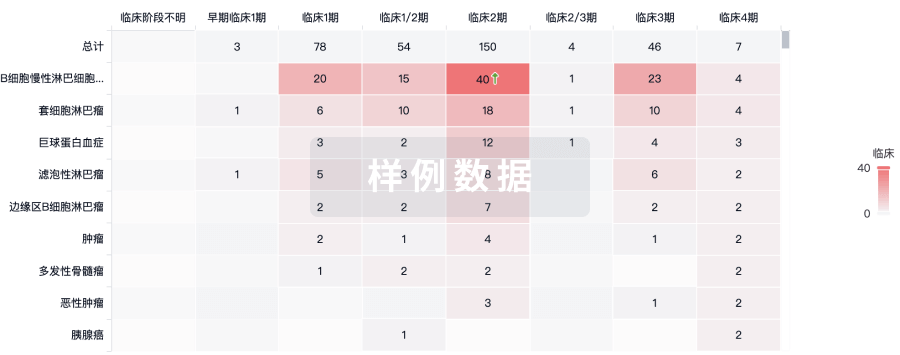
临床分析
紧跟全球注册中心的最新临床试验。
登录
或
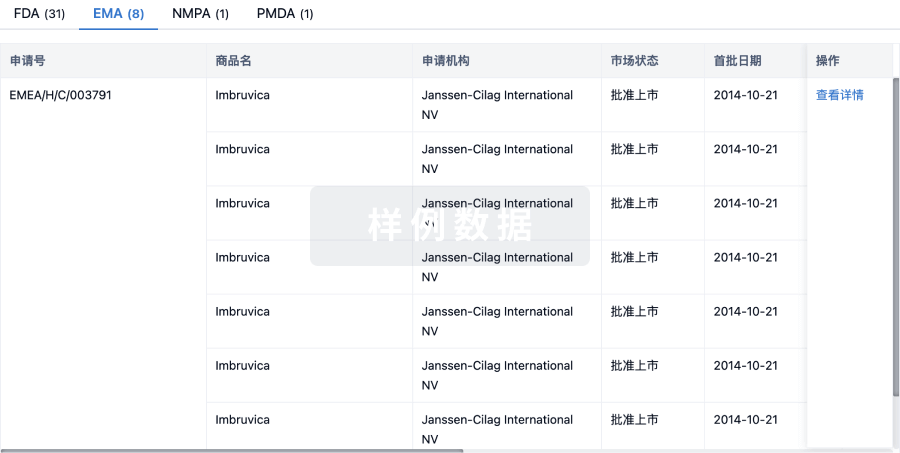
批准
利用最新的监管批准信息加速您的研究。
登录
或
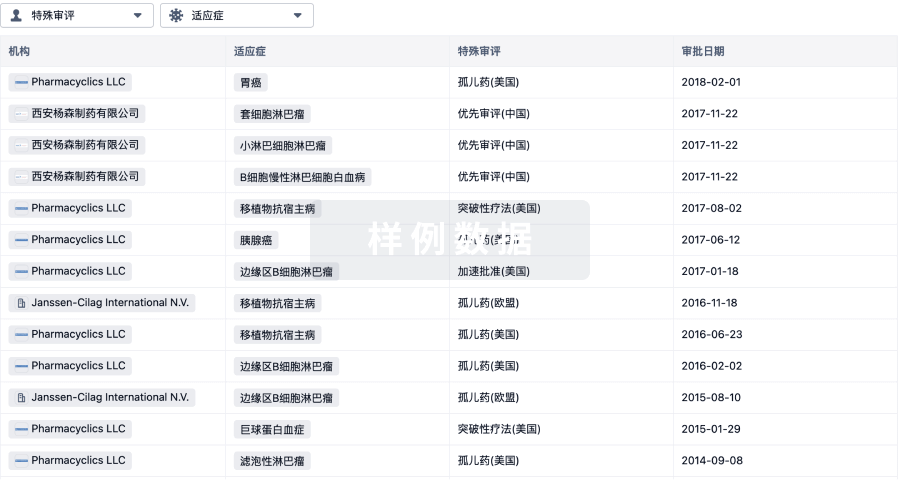
特殊审评
只需点击几下即可了解关键药物信息。
登录
或
生物医药百科问答
全新生物医药AI Agent 覆盖科研全链路,让突破性发现快人一步
立即开始免费试用!
智慧芽新药情报库是智慧芽专为生命科学人士构建的基于AI的创新药情报平台,助您全方位提升您的研发与决策效率。
立即开始数据试用!
智慧芽新药库数据也通过智慧芽数据服务平台,以API或者数据包形式对外开放,助您更加充分利用智慧芽新药情报信息。
生物序列数据库
生物药研发创新
免费使用
化学结构数据库
小分子化药研发创新
免费使用