预约演示
更新于:2026-09-19
C-Peptide
更新于:2026-09-19
概要
基本信息
原研机构 |
在研机构- |
权益机构- |
最高研发阶段终止临床2期 |
首次获批日期- |
最高研发阶段(中国)- |
特殊审评- |

登录后查看时间轴
结构/序列
分子式C129H211N35O48 |
InChIKeyVOUAQYXWVJDEQY-QENPJCQMSA-N |
CAS号33017-11-7 |
Sequence Code 63678
关联
5
项与 C-Peptide 相关的临床试验NCT06801769
Study for the Identification of a Quantitative Eco-Elastographic Score of Pancreatic Steatosis and Its Correlation With Beta-Cell Function and Metabolic Syndrome.

NCT06470295
On the Regulation of Hepatic Glucose Metabolism During Insulin-induced Hypoglycemia
JPRN-jRCTs051180058
Defining a novel law of glucose homeostasis under Dapagliflozin usage by mathematical model approach (Defining a novel law of glucose homeostasis under Dapagliflozin usage by mathematical model approach)
100 项与 C-Peptide 相关的临床结果
登录后查看更多信息
100 项与 C-Peptide 相关的转化医学
登录后查看更多信息
100 项与 C-Peptide 相关的专利(医药)
登录后查看更多信息
345
项与 C-Peptide 相关的文献(医药)2026-09-01FREE RADICAL BIOLOGY AND MEDICINE
Sustained human C-peptide protects against retinal neurodegeneration via PEDF restoration and oxidative stress inhibition in a mouse model of age-related macular degeneration
Article
作者: Ha, Kwon-Soo ; Jeon, Hye-Yoon ; Kim, Minsoo ; Yoon, Ji-Seok ; Koh, Tae-Yong ; Moon, Chan-Hee ; Cho, Woo Ri
Age-related macular degeneration (AMD) is a leading cause of irreversible vision loss in the elderly. The molecular events that initiate retinal degeneration in dry AMD remain incompletely understood, and effective therapeutic options are limited. Here, we investigated the therapeutic potential of K9-C-peptide against sodium iodate (NaIO3)-induced retinal neurodegeneration and explored its underlying molecular mechanisms. K9-C-peptide markedly attenuated NaIO3-induced retinal apoptosis, thinning, and structural disruption. These protective effects were accompanied by significant suppression of ROS generation, decreased expression of pro-inflammatory cytokines, and inhibition of reactive gliosis. Mechanistically, K9-C-peptide restored NaIO3-induced downregulation of pigment epithelium-derived factor (PEDF). Consistently, intravitreal administration of hydrogel-formulated PEDF similarly reduced oxidative stress and retinal degeneration, supporting a central role for PEDF in mediating the protective effects of K9-C-peptide. Both K9-C-peptide and PEDF improved impaired axonal transport, further confirming their neuroprotective efficacy. Notably, sustained intraocular delivery of human C-peptide or PEDF conferred robust protection against NaIO3-induced retinal neurodegeneration for at least three weeks following a single administration. These findings suggest that K9-C-peptide may serve as a long-acting therapeutic candidate that targets early oxidative and inflammatory events, potentially through PEDF restoration, in NaIO3-induced retinal degeneration. This study provides mechanistic insight into the antioxidative and anti-inflammatory actions of C-peptide-based therapy in dry AMD-like pathology.
2026-04-03CLINICAL TOXICOLOGY
Serial insulin and C-peptide concentrations following high-dose insulin for the treatment of drug poisoning: a consecutive case series
Article
作者: Nic Ionmhain, Úna ; Coulson, Lori ; Roberts, Darren M.
INTRODUCTION:
High-dose insulin is a treatment for poisoning-induced cardiogenic shock. There is a risk of hypoglycaemia after discontinuing high-dose insulin due to persistent hyperinsulinaemia. The pharmacokinetics of insulin after discontinuing high-dose insulin are poorly defined, with previous publications reporting prolonged elimination half-lives (up to 18.8 h).
METHODS:
We conducted a consecutive case series in poisoned patients treated with high-dose insulin. Serial insulin and C-peptide concentrations were measured after discontinuing high-dose insulin. The apparent elimination half-life of insulin was calculated using non-linear regression or simplified pharmacokinetic methods when data were limited.
RESULTS:
We identified 10 patients. One case had pre-existing type 2 diabetes mellitus. Five cases developed acute kidney injury, and three of these cases were treated with continuous kidney replacement therapy. Hypoglycaemia did not occur after discontinuing high-dose insulin. The median apparent elimination half-life of insulin was 1.8 h (IQR 1.4-4.0 h; range 1.23-9.8 h). The longest half-life was in the patient with type 2 diabetes mellitus who also developed acute kidney injury. C-peptide and blood glucose concentrations varied together despite hyperinsulinaemia. No cases received octreotide.
DISCUSSION:
The elimination half-life of insulin was relatively short in our study compared to previous reports and was not impacted by insulin dosage or duration, or kidney disease. There was endogenous insulin release despite hyperinsulinaemia, and C-peptide concentrations were mostly in established reference ranges, suggesting that dextrose supplementation was mostly not excessive. Resolution of hyperinsulinaemia typically occurred within 24 h of discontinuing high-dose insulin. During dextrose weaning, measuring serial C-peptide concentrations may identify excessive carbohydrate administration. Future research should assess how comorbidities such as diabetes mellitus and kidney disease influence insulin clearance.
CONCLUSIONS:
This study identified a shorter insulin elimination half-life after discontinuing high-dose insulin than previously reported. Measuring serial insulin and C-peptide concentrations may guide clinical decisions, including dextrose weaning and confirm resolution of hyperinsulinaemia.
2026-04-01BIOMEDICINE & PHARMACOTHERAPY
Corrigendum “Proinsulin C-peptide inhibits high glucose-induced migration and invasion of ovarian cancer cells” [Biomed. Pharmacother., 172 (2024) 116232]
作者: Jeon, Hye-Yoon ; Ha, Kwon-Soo ; Lee, Ah-Jun ; Kim, Eun-Bin ; Ouh, Yung-Taek ; Na, Sung Hun ; Moon, Chan-Hee
71
项与 C-Peptide 相关的新闻(医药)100 项与 C-Peptide 相关的药物交易
登录后查看更多信息
研发状态
10 条进展最快的记录, 后查看更多信息
登录
| 适应症 | 最高研发状态 | 国家/地区 | 公司 | 日期 |
|---|---|---|---|---|
| 1型糖尿病 | 临床2期 | 瑞典 | 2003-10-01 | |
| 糖尿病周围神经病变 | 临床2期 | 瑞典 | 2003-10-01 | |
| 糖尿病性神经病变 | 临床2期 | - | - |
登录后查看更多信息
临床结果
临床结果
适应症
分期
评价
查看全部结果
登录后查看更多信息
转化医学
使用我们的转化医学数据加速您的研究。
登录
或

药物交易
使用我们的药物交易数据加速您的研究。
登录
或

核心专利
使用我们的核心专利数据促进您的研究。
登录
或

临床分析
紧跟全球注册中心的最新临床试验。
登录
或

批准
利用最新的监管批准信息加速您的研究。
登录
或

生物类似药
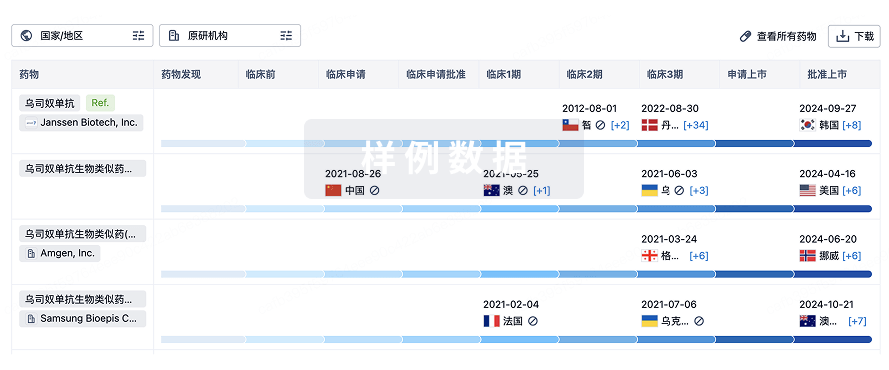
生物类似药在不同国家/地区的竞争态势。请注意临床1/2期并入临床2期,临床2/3期并入临床3期
登录
或
特殊审评
只需点击几下即可了解关键药物信息。
登录
或

提出任何生物医药研究问题
让每一步生物医药决策都精准制胜
基于十亿级生物数据与全球情报的精准 AI,赋能早期药物发现
立即开始免费试用!
智慧芽新药情报库是智慧芽专为生命科学人士构建的基于AI的创新药情报平台,助您全方位提升您的研发与决策效率。
立即接入生物医药数据包
智慧芽新药库数据也通过智慧芽开放平台,以MCP或API服务形式对外开放。立即使用我们的MCP服务定制您的LLM智能体。
生物序列数据库
生物药研发创新
免费使用
化学结构数据库
小分子化药研发创新
免费使用