预约演示
更新于:2026-07-13
ALS-205
更新于:2026-07-13
概要
基本信息
权益机构- |
最高研发阶段临床1期 |
首次获批日期- |
最高研发阶段(中国)- |
特殊审评- |



登录后查看时间轴
结构/序列
Sequence Code 23083543
关联
2
项与 ALS-205 相关的临床试验ACTRN12622000927729
An open-label, phase 1b study to evaluate the safety, tolerability, pharmacokinetics and pharmacodynamics of two doses of PMX205 in patients with amyotrophic lateral sclerosis
ACTRN12619001639112
A randomised, double-blind, placebo-controlled, phase 1 study to evaluate the safety, tolerability, pharmacokinetics and pharmacodynamics of single and multiple ascending doses of PMX205 in healthy volunteers.
100 项与 ALS-205 相关的临床结果
登录后查看更多信息
100 项与 ALS-205 相关的转化医学
登录后查看更多信息
100 项与 ALS-205 相关的专利(医药)
登录后查看更多信息
41
项与 ALS-205 相关的文献(医药)2026-06-01BRAIN RESEARCH BULLETIN
Targeted inhibition of microglial C5aR1 by PMX205 mitigates post-ischemic stroke neuroinflammation and promotes functional recovery
Article
作者: Shi, Xuan ; Liu, Yangyang ; Li, Haiying ; Bai, Lei ; Cao, Jie ; Li, Xiang ; Deng, Zilong ; Xu, Jin ; Tian, Saisai
BACKGROUND:
Ischemic stroke constitutes the leading cause of death and disability worldwide. Post-stroke neuroinflammation, a major driver of secondary neurodegeneration, has emerged as a priority therapeutic target. Microglia serve as critical initiators of this neuroinflammatory cascade in ischemic stroke. This study employed single-cell RNA sequencing and functional experiments to identify key regulatory factors in microglia following distinct ischemic stroke subtypes, with the goal of translating these findings into therapeutic targets for clinical application.
METHODS:
To identify key regulators in ischemic stroke, we mined and analyzed public single-cell RNA sequencing datasets. Two etiologically distinct stroke models were subsequently established: permanent focal ischemia via distal middle cerebral artery occlusion (dMCAO) and transient ischemia-reperfusion injury using middle cerebral artery occlusion/reperfusion (MCAO/R). C5aR1 spatiotemporal expression was quantified through immunofluorescence (cellular localization) and quantitative immunoblotting (temporal dynamics), followed by validation of PMX205-C5aR1 binding affinity via rigid-receptor molecular docking. Therapeutic assessment included acute-phase measurements (3d post-stroke): pro-inflammatory cytokines (ELISA), cerebral infarction volume (TTC staining), and co-quantification of neuronal apoptosis/viability (TUNEL/Nissl); alongside chronic functional recovery tracking (14d): motor coordination (rotarod), sensorimotor integration (adhesive removal test), anxiety-like behavior (open field exploration), and spatial working memory (Y-maze spontaneous alternation).
RESULTS:
Bioinformatics analysis identified significant upregulation of C5aR1 in activated microglia following ischemic stroke. This finding was corroborated by spatially resolved immunofluorescence and quantitative immunoblotting; molecular docking confirmed stable PMX205-C5aR1 binding via specific hydrophobic interactions, and subsequent therapeutic intervention with PMX205 profoundly suppressed neuroinflammation (IL-1β/IL-6/TNF-α), reduced cerebral infarction, attenuated neuronal apoptosis, and reversed long-term neurological deficits.
CONCLUSION:
Targeted inhibition of C5aR1 by PMX205 represents a therapeutically viable strategy to attenuate neuroinflammatory cascades and improve long-term functional recovery after ischemic stroke.
2026-01-02CANCER RESEARCH
C5aR1 Inhibition Alleviates Cranial Radiation–Induced Cognitive Decline
Article
作者: Woodruff, Trent M. ; Madan, Shreya ; Clark, Richard J. ; Vagadia, Arya R. ; Markarian, Mineh ; Krattli, Robert P. ; Usmani, Manal T. ; Baulch, Janet E. ; Do, An H. ; Tenner, Andrea J. ; Alikhani, Leila ; Acharya, Munjal M. ; El-Khatib, Sanad M.
Abstract:
Cranial radiotherapy (RT) for brain cancers leads to an irreversible decline in cognitive function without an available remedy. Radiation-induced cognitive decline (RICD) is a particularly pressing problem for brain cancer survivors who live long after RT. Radiation-induced neuroinflammation and gliosis lead to excessive loss of synaptic integrity and cognitive dysfunction. Using intact and brain cancer–bearing mouse models, we show here that inhibiting anaphylatoxin complement C5a receptor (C5aR1) signaling is neuroprotective against RICD. Both genetic loss in a C5ar1 knockout mouse and pharmacologic inhibition using the orally active, brain-penetrant C5aR1 antagonist PMX205 reversed RICD, leading to neurocognitive improvements in object recognition memory and memory consolidation tasks. Inhibiting the C5a–C5aR1 axis reduced microglial activation, astrogliosis, and synaptic loss in the irradiated brain. Importantly, C5aR1 blockade in two syngeneic, orthotopic glioblastoma–bearing mouse models protected against RICD and elevated gene signatures associated with neuroprotection without interfering with the therapeutic efficacy of RT in reducing tumor volume in vivo. As PMX205 has been found to be safe in clinical trials with healthy individuals, C5aR1 inhibition is a translationally feasible approach to address RICD, an unmet medical need.
Significance::
Complement cascade activation by cranial radiotherapy for brain cancers mediates radiation-induced neuroinflammation, synaptic loss, and cognitive dysfunction that can be alleviated by inhibiting the complement C5a–C5aR1 signaling axis, providing a tractable therapeutic approach.
2026-01-01BIOCHEMICAL PHARMACOLOGY
Targeting the C5-C5aR1 axis: A promising therapeutic strategy for Alzheimer’s disease and amyotrophic lateral sclerosis by unlocking neuroprotection
Review
作者: Guan, Pei-Pei ; Wang, Pu ; Ge, Tong-Qi
C5aR1 is a G protein-coupled receptor (GPCR) which is involved in exacerbating neurodegenerative diseases, including Alzheimer's disease (AD) and Amyotrophic Lateral Sclerosis (ALS). This review highlights the critical role of the C5-C5aR1 axis, in the pathogenesis of neurodegenerative diseases such as AD and ALS. In AD and ALS, abnormal protein aggregates activate the complement system (CS), leading to increased production of C5a. C5a activates C5aR1 on microglia, triggering the release of pro-inflammatory cytokines (IL-1β, TNF-α, IL-6) that induce synaptic loss. Concurrently, the C5-C5aR1 axis impairs microglial phagocytic capacity, promoting damage-associated molecular patterns (DAMPs) accumulation and forming a vicious cycle of inflammation and complement activation. Additionally, excessive complement molecule assembles into the terminal complement complex (TCC), which exerts direct neurotoxic effects and drives neuronal apoptosis. Preclinical studies show that C5aR1 antagonists, such as PMX205, mitigate disease progression in AD and ALS animal models by reducing neuroinflammation and preserving synaptic function. These findings underscore the C5-C5aR1 axis as a promising target for neurodegenerative disease therapy and highlight the need for further development of potential antagonists of C5aR1.
100 项与 ALS-205 相关的药物交易
登录后查看更多信息
研发状态
10 条进展最快的记录, 后查看更多信息
登录
| 适应症 | 最高研发状态 | 国家/地区 | 公司 | 日期 |
|---|---|---|---|---|
| 肌萎缩侧索硬化 | 临床1期 | 澳大利亚 | 2022-12-15 | |
| 亨廷顿舞蹈病 | 临床申请批准 | 澳大利亚 | 2022-01-30 | |
| 阿尔茨海默症 | 临床申请批准 | 澳大利亚 | 2020-06-10 | |
| 帕金森病 | 临床申请批准 | 澳大利亚 | 2020-06-10 |
登录后查看更多信息
临床结果
临床结果
适应症
分期
评价
查看全部结果
登录后查看更多信息
转化医学
使用我们的转化医学数据加速您的研究。
登录
或

药物交易
使用我们的药物交易数据加速您的研究。
登录
或

核心专利
使用我们的核心专利数据促进您的研究。
登录
或

临床分析
紧跟全球注册中心的最新临床试验。
登录
或

批准
利用最新的监管批准信息加速您的研究。
登录
或

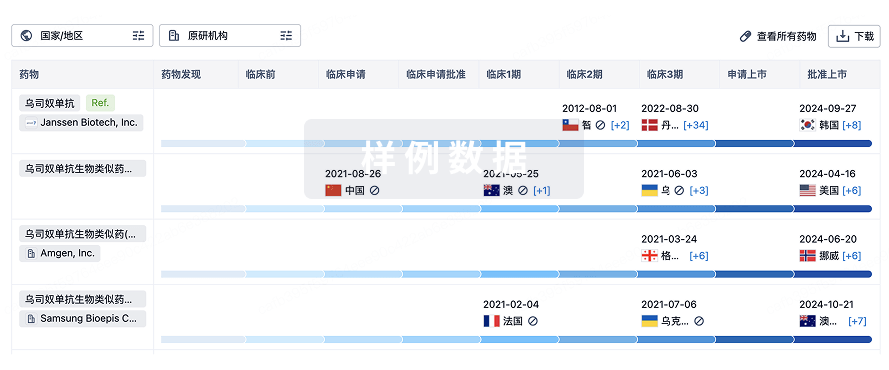
生物类似药
生物类似药在不同国家/地区的竞争态势。请注意临床1/2期并入临床2期,临床2/3期并入临床3期
登录
或
特殊审评
只需点击几下即可了解关键药物信息。
登录
或

提出任何生物医药研究问题
让每一步生物医药决策都精准制胜
基于十亿级生物数据与全球情报的精准 AI,赋能早期药物发现
立即开始免费试用!
智慧芽新药情报库是智慧芽专为生命科学人士构建的基于AI的创新药情报平台,助您全方位提升您的研发与决策效率。
立即接入生物医药数据包
智慧芽新药库数据也通过智慧芽开放平台,以MCP或API服务形式对外开放。立即使用我们的MCP服务定制您的LLM智能体。
生物序列数据库
生物药研发创新
免费使用
化学结构数据库
小分子化药研发创新
免费使用