预约演示
更新于:2026-01-31
TLR7/8 inhibitors (Baiyu Pharmaceutical)
TLR7/8抑制剂(百裕制药)
更新于:2026-01-31
概要
基本信息
药物类型 化学药 |
别名- |
作用方式 拮抗剂 |
作用机制 TLR7拮抗剂(Toll样受体7拮抗剂)、TLR8拮抗剂(Toll样受体8拮抗剂) |
治疗领域 |
在研适应症 |
非在研适应症- |
原研机构 |
在研机构 |
非在研机构- |
权益机构- |
最高研发阶段临床前 |
首次获批日期- |
最高研发阶段(中国)临床前 |
特殊审评- |

关联
100 项与 TLR7/8抑制剂(百裕制药) 相关的临床结果
登录后查看更多信息
100 项与 TLR7/8抑制剂(百裕制药) 相关的转化医学
登录后查看更多信息
100 项与 TLR7/8抑制剂(百裕制药) 相关的专利(医药)
登录后查看更多信息
5
项与 TLR7/8抑制剂(百裕制药) 相关的文献(医药)2025-12-01·EUROPEAN JOURNAL OF MEDICINAL CHEMISTRY
Structure-based rational design of TLR7/8 antagonists through agonist scaffold reengineering for psoriasis therapy
Article
作者: Fu, Qiuyue ; Wu, Peixi ; Chen, Zhipeng ; Cheng, Kui ; Huang, Lan ; Zhou, Siwei
Toll-like receptors 7 and 8 (TLR7/8) play pivotal roles in modulating the body's immune response, and their antagonists provide promising treatment options for autoimmune diseases. Here, by modifying the structure of TLR7 agonist SMU-L11, we developed a series of TLR7/8-specific antagonists with therapeutic potential for psoriasis. Experimental validation revealed that structural restriction of the N1 substituent was critical for the pharmacological efficacy of the inverted parent scaffold. Among derivatives, SMU-R39 was the optimal compound, demonstrating potent TLR7/8 inhibitory activity. In vitro studies confirmed that SMU-R39 directly binds to TLR7/8 and effectively suppresses downstream NF-κB and MAPK signaling pathways, thereby significantly reducing the secretion and transcription of pro-inflammatory cytokines in immune cells. Furthermore, in vivo studies demonstrated that SMU-R39 can markedly alleviate murine psoriasis-like skin inflammation and ameliorate histopathological tissue damage, while concurrently downregulating the transcription levels of key cytokines. Our study provides novel small-molecule antagonist specifically targeting TLR7/8 and establishes TLR7/8 antagonist as a viable therapeutic strategy for treating autoimmune diseases.
2025-05-07·JOURNAL OF LEUKOCYTE BIOLOGY
Toll-like receptor 8 activation induces a neutrophil inflammatory phenotype: therapeutic implications for the utility of toll-like receptor 8 inhibition
Article
作者: Studham, Matthew ; Shaw, Jamie ; Coughlin, Matthew ; Bender, Andrew T ; Schmidt, Angelika ; Catalina, Michelle D ; Przetak, Melinda ; Strand, Fatima ; Kalatskaya, Irina
Abstract:
Excessive activation of toll-like receptor 7 and 8 (TLR7/8) plays a role in the pathogenesis of autoimmune diseases and is associated with negative outcomes from viral infections. Neutrophil activation is highly inflammatory and mediates tissue damage. We explored the effects of TLR7/8 activation in neutrophils to better understand neutrophil biology and evaluate the therapeutic utility of TLR7/8 inhibitors in indications where neutrophils contribute to disease pathogenesis. We found that TLR8, but not TLR7, is active in human neutrophils. TLR8 activation led to increased interleukin-8 (IL-8) secretion and resulted in significant changes in gene expression, as determined by RNA sequencing, with increased expression of genes encoding cytokines and other inflammatory mediators. Type I interferon (IFN) also induced gene expression changes distinct from those induced by TLR8. Additionally, neutrophil extracellular traps (NET) formation and DNA release, or NETosis, was induced by TLR8 activation in IFN-primed neutrophils. Treatment with a TLR7/8 inhibitor (CMPD2) effectively blocked IL-8 secretion and NETosis. In a Phase II clinical trial in COVID-19 pneumonia, TLR7/8 inhibition with enpatoran affected neutrophil counts. Expression of NFKBIZ was induced by TLR8 in neutrophils in vitro and found to also be reduced by enpatoran in patients with COVID-19, suggesting it may be useful as a marker for TLR8-activated neutrophils and for identifying candidate diseases and patients that may benefit from treatment with a TLR7/8 inhibitor. Overall, our findings provide new insights into TLR8 and neutrophil biology that have therapeutic implications in autoimmune diseases and immune-mediated inflammation.
2021-08-03·Expert opinion on drug discovery3区 · 医学
Recent trends in the development of Toll-like receptor 7/8-targeting therapeutics
3区 · 医学
Article
作者: Lu, Mengji ; Zhang, Xiaoyong ; Huang, Xuan
Introduction: Toll-like receptor (TLR) 7 and TLR8 are functionally localized to endosomes and recognize specific RNA sequences. They play crucial roles in initiating innate and adaptive immune responses. TLR7/8 activation protects the host against invading pathogens and enhances immune responses. In contrast, sustained TLR7/8 signaling leads to immune overreaction. Therefore, agonists or antagonists targeting TLR7/8 signaling are favorable drug candidates for the treatment of immune disorders.Areas covered: Basic knowledge about TLR7 and TLR8 and their signaling pathways are briefly reviewed. Various therapeutic agents have been designed to activate or antagonize TLR7/8 signaling pathways, and their safety and efficacy for the treatment of multiple diseases have been investigated in preclinical animal models and clinical trials. TLR7/8 agonists exhibit potent antiviral activity and regulate anti-tumor immune responses. TLR7 agonists have also been used as adjuvants to improve vaccine immunogenicity and generate greater seroprotection. TLR7/8 antagonists are promising candidates for the treatment of autoimmune and inflammatory diseases.Expert opinion: TLR7/8 pathways are favorable targets for immunological therapies. Future research should concentrate on the optimization of drug safety, efficiency, and specificity. Detailed mechanistic studies will contribute to the development of TLR7/8 immunomodulators and novel therapeutic strategies.
2
项与 TLR7/8抑制剂(百裕制药) 相关的新闻(医药)2025-08-07
·创鉴汇
据创鉴汇不完全统计,7月28日至8月3日全球生物制药领域共披露25起交易事件,潜在交易总额近190亿美元。交易类型涵盖药物授权、合作研发、资产收购和企业并购等形式。从交易内容来看,小分子药物、抗体、RNAi和细胞疗法等热度不减。
上周两起小分子对外授权案例引人注目。
7月28日,恒瑞医药宣布和GSK达成协议,以潜在总额125亿美元(包括5亿美元首付款)将HRS-9821和至多11个项目授权给后者。HRS-9821是一款PDE3/4抑制剂,目前正处于临床开发阶段,可用于治疗慢性阻塞性肺病(COPD),作为辅助维持治疗,无需考虑既往治疗方案。其他11个项目涉及肿瘤、呼吸、自身免疫和炎症等多个领域。
紧随其后,石药集团也成功将其口服小分子药物GLP-1受体激动剂SYH2086授权给Madrigal Pharmaceuticals,此次交易金额最高可达20.75亿美元,包括1.2亿美元首付款。据悉,临床前数据显示,SYH2086具有体外激动活性,兼具降糖、减重效果。
技术平台的价值在上周交易中得到了充分体现。乐普生物将其T细胞衔接器(TCE)平台开发的两项临床前资产CTM012和CTM013授权给Excalipoint,收获超8.5亿美元的潜在交易总额。这一合作既挖掘了现有管线和技术的商业价值,也助力乐普生物聚焦下一代ADC和多特异性抗体研发。
与此同时,大型MNC在上周动态频繁。
在心脏代谢领域,赛诺菲(Sanofi)瞄准了RNA干扰(RNAi)疗法的潜力,将向Arrowhead子公司维亚臻(Visirna Therapeutics)支付1.3亿美元首付款以及高达2.65亿美元的潜在里程碑付款,获得在大中华区开发和商业化plozasiran的独家权利。Plozasiran旨在减少载脂蛋白C-III(APOC3)的生成,从而降低血液中甘油三酯水平,主要针对家族性乳糜微粒血症综合征(FCS)和重度高甘油三酯血症(SHTG)。此前该药已完成针对中国FCS患者的3期临床试验,其上市申请已获得中国国家药品监督管理局(NMPA)受理。
勃林格殷格翰(Boehringer Ingelheim)布局新型给药技术,与Re-Vana Therapeutics达成超10亿美元的眼部疾病缓释疗法合作。勃林格殷格翰将利用Re-Vana的药物递送技术,开发眼科长效疗法,解决频繁注射带来的药物依从性差的痛点。
自免领域,百时美施贵宝(BMS)与贝恩资本(Bain Capital)共同成立了一家NewCo公司。该公司将拥有并推进包括afimetoran在内的5款BMS的临床前免疫疗法资产,并将获得由贝恩资本领投的3亿美元融资。Afimetoran是一款口服TLR7/8抑制剂,目前正在进行针对系统性红斑狼疮的2期临床试验。
读者们请星标⭐创鉴汇,第一时间收到推送
免责声明:本文仅作信息交流之目的,文中观点不代表药明康德立场,亦不代表药明康德支持或反对文中观点。本文也不是治疗方案推荐。如需获得治疗方案指导,请前往正规医院就诊。
版权说明:欢迎个人转发至朋友圈,谢绝媒体或机构未经授权以任何形式转发/复制至其他平台。转发授权请在「创鉴汇」微信公众号留言联系我们。
更多数据内容推荐
点击“在看”,分享创鉴汇健康新动态
引进/卖出临床2期临床3期并购临床1期
2025-05-26
·汇聚南药
红斑狼疮的靶向治疗药物种类丰富,包括生物制剂和小分子药物等,其中生物制药有3款药获批上市,而尚无用于治疗红斑狼疮的小分子靶向药物获批上市。近期,德国默克宣布其潜在用于治疗皮肤型红斑狼疮(CLE)和系统性红斑狼疮(SLE)的“first-in-class”口服小分子TLR7/8抑制剂enpatoran的一项2期WILLOW研究取得积极结果。此次2期临床的成功,使得红斑狼疮的靶向小分子药物研发更进一步。红斑狼疮靶向治疗生物制剂生物制剂是红斑狼疮靶向治疗的重要组成部分,主要通过靶向特定的细胞因子或免疫细胞来调节免疫反应,包括B细胞激活因子(BAFF/BLyS)、增殖诱导配体(APRIL)、CD20、CD22、T细胞相关靶点CTLA4、CD40L和IL6R等(图1)。图1 红斑狼疮靶向治疗常见的靶点图片来源:参考文献1目前已获批用于治疗红斑狼疮的靶向治疗生物制剂有贝利尤单抗、阿尼鲁单抗和泰它西普。1.贝利尤单抗贝利尤单抗是由GSK和Human Genome Sciences(HGS)共同研发的一种靶向BAFF/BLyS的全人源IgG1λ单克隆抗体,于2011年3月首次在美国获批上市,用于治疗活动性、自身抗体阳性的成人系统性红斑狼疮(SLE)患者,是首个专门用于治疗红斑狼疮的生物制剂。随后2019年12月和2023年2月分别获批用于治疗活动性狼疮肾炎(LN)的成人患者和潜在治疗系统性硬化症(SSc)。贝利尤单抗的获批基于多项关键临床试验,包括BLISS-52和BLISS-76试验以及BLISS-LN试验等,其中BLISS-52和BLISS-76试验结果显示,贝利尤单抗联合标准治疗显著提高了患者的SRI-4反应率(图2)。图2 贝利尤单抗的部分临床试验结果图片来源:参考文献2贝利尤单抗自上市以来销售额呈逐年上升趋势,2022年销售额达11.46亿英镑(约14.9亿美元),2022年销售额达13.49亿英镑(约17.54亿美元),2024年销售额约14.90亿英镑(约19.37亿美元),根据Verified Market Reports的数据,贝利尤单抗的销售额预计到2033年将增至32亿美元,年复合增长率为6.9%。2.阿尼鲁单抗阿尼鲁单抗是由阿斯利康研发的靶向Ⅰ型干扰素受体1(IFNAR1)的人单克隆抗体,于2021年8月获得美国FDA批准,用于治疗正在接受标准疗法的中度至重度SLE成年患者。此次获批是基于两项TULIP 3期试验和MUSE 2期试验。在这些试验中,与安慰剂相比,更多接受阿尼鲁单抗治疗的患者经历了包括皮肤和关节在内的器官系统整体疾病活动度的降低,并且口服皮质类固醇(OCS)的使用持续减少。阿尼鲁单抗目前也在中国开展SLE临床III期试验。3.泰它西普泰它西普是由荣昌生物自主研发的靶向BAFF/BlyS和APRIL两种关键的B细胞存活因子的新型融合蛋白,于2021年3月在中国获得有条件批准,用于治疗活动性SLE患者,有研究显示抗磷脂抗体阳性SLE患者中显示有效,有望进一步拓宽其适应人群。2024年7月,NMPA接受了泰它西普用于治疗类风湿关节炎(RA)的新临床适应症申请,除此之外,泰它西普还在开展重症肌无力(MG)、IgA肾病和原发性干燥综合征(pSS)等适应症。2025年4月8日,荣昌生物在2025年美国神经病学学会(AAN)年会上公布了3期评估泰它西普在全身性重症肌无力(gMG)患者中的疗效和安全性临床试验(NCT05737160)的结果。研究结果显示:在泰它西普240 mg组的参与者中,98.1%的患者在第24周时体重肌无力日常生活活动(MG-ADL)评分降低≥3分,87%的患者定量重症肌无力(QMG)评分降低≥5分。在迄今为止报道的3期研究中,泰利西普在所有gMG药物中具有最高的MG-ADL反应率,它将提供一种重要的新治疗选择gMG。除了上市获批的用于治疗红斑狼疮的生物制剂外,还有很多在研的生物制剂,包括奥滨尤妥珠单抗、达匹罗珠单抗和利替非利单抗等。1.奥滨尤妥珠单抗奥滨尤妥珠单抗是由罗氏研发的是一种II型抗CD20单克隆抗体,于2016年2月首次在FDA获批上市,用于治疗复发或难治性滤泡性淋巴瘤(FL),除此之外,奥滨尤妥珠单抗在治疗狼疮性肾炎和系统性红斑狼疮方面显示出显著的临床益处,特别是在对传统治疗耐药的患者中。FDA已同意审查罗氏提交的奥滨尤妥珠单抗用于治疗狼疮性肾炎的申请,该请求基于3期REGENCY试验(NCT04221477)的数据以补充生物制品许可申请(sBLA)的形式提交。FDA现在预计在10月之前做出关于奥滨尤妥珠单抗批准用于狼疮性肾炎的最终决定。今年2月,3期REGENCY试验的详细分析发表在《新英格兰医学杂志》上。该研究表明,完全肾反应(CRR)的主要终点有统计学意义和临床意义的改善,显示46.4%的奥滨尤妥珠单抗联合标准疗法治疗的患者达到76周时的CRR,而单独接受标准治疗的患者只有33.1%达到。与此同时,补体水平也有临床意义的改善,抗dsDNA、疾病活动和炎症标志物也有所减少(图3)。图3 3期REGENCY试验结果图片来源:参考文献62.达匹罗珠单抗达匹罗珠单抗是由优时比和渤健联合开发的一种人源化聚乙二醇化抗CD40L Fab片段,目前正在进行3期临床试验,用于治疗中度至重度SLE。去年9月,优时比和渤健宣布达皮罗珠单抗的3期PHOENYCS GO研究的积极顶线结果:与安慰剂相比,达皮罗珠单抗组的BICLA反应率显著高于安慰剂组(49.5%vs.34.6%),中度至重度疾病活动得到更大的改善。在测量疾病活动和发作的关键次要终点中观察到临床改善。基于PHOENYCS GO研究的成功结果,优时比和渤健于今年启动第二项3期临床试验PHOENYCS FLY。3.利替非利单抗利替非利单抗是由渤健研发的一种人源化IgG1单克隆抗体,可以靶向血液树突状细胞抗原2(BDCA2),通过抑制BDCA2减少包括I型干扰素(IFN-I)在内的炎性细胞因子的产生,从而调节红斑狼疮的病理机制。此前,利替非利单抗的Ⅱ期LILAC研究结果显示其显著降低皮肤疾病活动度的效果,与安慰剂组相比,能够有效缓解CLE患者的皮肤症状。目前,利替非利单抗正在进行TOPAZ-1和TOPAZ-2两项Ⅲ期临床试验,预计今年会出临床结果。红斑狼疮靶向治疗小分子药物除了生物制剂之外,小分子靶向药物也是红斑狼疮一大类主要治疗药物,治疗的靶点包括JAK、BTK、TLR7/8和蛋白酶体等,包括JAK抑制剂托法替布、巴瑞替尼、乌帕替尼和BTK抑制剂芬布替尼、奥布替尼等。1.托法替布托法替布是由辉瑞开发的一种泛JAK抑制剂,对JAK1/3作用更强,于2012年11月首次获批上市,目前已获批用于治疗多种免疫介导的疾病,包括类风湿关节炎、银屑病关节炎、溃疡性结肠炎、多关节型幼年特发性关节炎和强直性脊柱炎等。托法替布在SLE的一项Ib/IIa期、双盲、随机对照试验取得积极结果:托法替布在无意外严重不良事件(SAE)、疾病恶化或血栓栓塞的研究中耐受性良好。托法替布治疗后血脂谱、动脉硬度、I型IFN基因特征和循环中性粒细胞胞外陷阱得到改善。STAT4风险等位基因患者的实验室参数改善更稳健,这与SLE更严重的临床表型相关。2.乌帕替尼乌帕替尼是由艾伯维研发的一种选择性口服JAK1抑制剂,于2019年8月首次获得FDA,用于治疗多种自身免疫性疾病,包括类风湿性关节炎、银屑病关节炎、特应性皮炎等。去年10月,乌帕替尼单药或者与艾尔布替尼联用(ABBV-599高剂量)显示SLE疾病活动度显著改善并减少发作,并且在48周内耐受性良好。去年12月,ACR Convergence 2024会议上艾伯维公布结果显示,ABBV-599联合治疗组和乌帕替尼单药治疗组的患者疾病活动性降低,并且这种降低在试验的后半部分得以维持,长达104周。在研的靶向TLR 7/8抑制剂TLR7(Toll样受体7)和TLR8是模式识别受体,在自身免疫性疾病(如红斑狼疮)和某些炎症性疾病中,TLR7/8的过度激活可能导致炎症反应失控。因此,开发TLR7/8抑制剂成为治疗红斑狼疮的重要策略,这些抑制剂通过阻断TLR7/8的信号传导,减少炎症反应,降低疾病活动度。目前尚无用于治疗红斑狼疮的靶向TLR7/8抑制剂获批上市,在研的药物有Enpatoran和E6742等。1.EnpatoranEnpatoran是由Merck研发的一种潜在的皮肤型红斑狼疮(CLE)和SLE的同类首创口服疗法,可以选择性地阻断TLR7/8的激活,对其他内体TLR,即TLR3和TLR9没有影响。临床前PK研究表明Enpatoran具有高口服生物利用度,小鼠、大鼠和狗的生物利用度分别为100%、87%和84%。Enpatoran在体外测定中可以有效抑制人TLR7(hTLR7)、小鼠TLR7(m TLR7)和hTLR8,但不抑制mTLR8(图4)。图4 Enpatoran体外抑制结果图片来源:InvivoGen网站近期,Merck宣布了enpatoran的一项2期WILLOW研究(NCT05162586)队列A的积极数据,表明CLE和SLE伴活动性狼疮皮疹患者第16周时疾病活动度具有临床意义的降低,Enpatoran耐受性良好,未发现新的安全性信号。2.E6742E6742是由卫材株式会社(Eisai Co.,Ltd.)研发的一种选择性靶向TLR7/8双拮抗剂,通过抑制TLR7和TLR8的激活,减少促炎细胞因子和自身抗体的产生,用于治疗SLE。E6742的一些临床1/2期试验取得积极结果:E6742具有良好的安全性,耐受性良好,并且能够抑制干扰素基因标志(IGS)反应,在第12周时,E6742 100 mg组BICLA反应率为37.5%(3/8患者),200 mg组为57.1%(4/7患者),而安慰剂组为33.3%(3/9患者)(图5)。这些结果为E6742治疗SLE提供了首个临床证据,并支持进行更大规模、更长期的临床试验。图5 E6742的临床结果图片来源:参考文献12结语红斑狼疮是一种常见的慢性、反复发作的自身免疫性疾病,市场规模也在逐年扩大。目前已有靶向的生物制剂获批上市,尚无靶向的小分子抑制剂获批上市,与生物制剂相比,小分子抑制剂具有可口服等优点。然而用于治疗红斑狼疮的靶向小分子抑制剂研发并不顺利,有多款药物折戟在临床,包括JAK抑制剂Solcitinib、BTK抑制剂Evobrutinib、TLR7/8抑制剂MHV370等,近期,Merck的选择性口服TLR7/8抑制剂2期临床成功给该类药物的研发重拾了信心。参考文献1.Dominik Samotij and Adam Reich,Biologics in the Treatment of Lupus Erythematosus:A Critical Literature Review,Biomed Res Int.2019 Jul 18;2019:81423682.Roger A Levy et.al,10 Years of belimumab experience:What have we learnt?,Lupus.2021 Jul 8;30(11):1705–1721.3.BelimouMab市场规模,竞争市场和预测20324.Saphnelo(anifrolumab)approved in the US for moderate to severe systemic lupus erythematosus5.RemeGen’s Telitacicept Shows Best-in-Class Efficacy in Phase 3 Trial for Generalized Myasthenia Gravis6.R.A.Furie et.al,Efficacy and Safety of Obinutuzumab in Active Lupus Nephritis,The New England Journal of Medicine 喜欢我们文章的朋友点个“在看”和“赞”吧,不然微信推送规则改变,有可能每天都会错过我们哦~免责声明“汇聚南药”公众号所转载文章来源于其他公众号平台,主要目的在于分享行业相关知识,传递当前最新资讯。图片、文章版权均属于原作者所有,如有侵权,请在留言栏及时告知,我们会在24小时内删除相关信息。信息来源:药智网往期推荐本平台不对转载文章的观点负责,文章所包含内容的准确性、可靠性或完整性提供任何明示暗示的保证。
临床3期上市批准ASH会议临床2期siRNA
100 项与 TLR7/8抑制剂(百裕制药) 相关的药物交易
登录后查看更多信息
研发状态
10 条进展最快的记录, 后查看更多信息
登录
| 适应症 | 最高研发状态 | 国家/地区 | 公司 | 日期 |
|---|---|---|---|---|
| 自身免疫性疾病 | 临床前 | 中国 | 2023-09-05 |
登录后查看更多信息
临床结果
临床结果
适应症
分期
评价
查看全部结果
| 研究 | 分期 | 人群特征 | 评价人数 | 分组 | 结果 | 评价 | 发布日期 |
|---|
No Data | |||||||
登录后查看更多信息
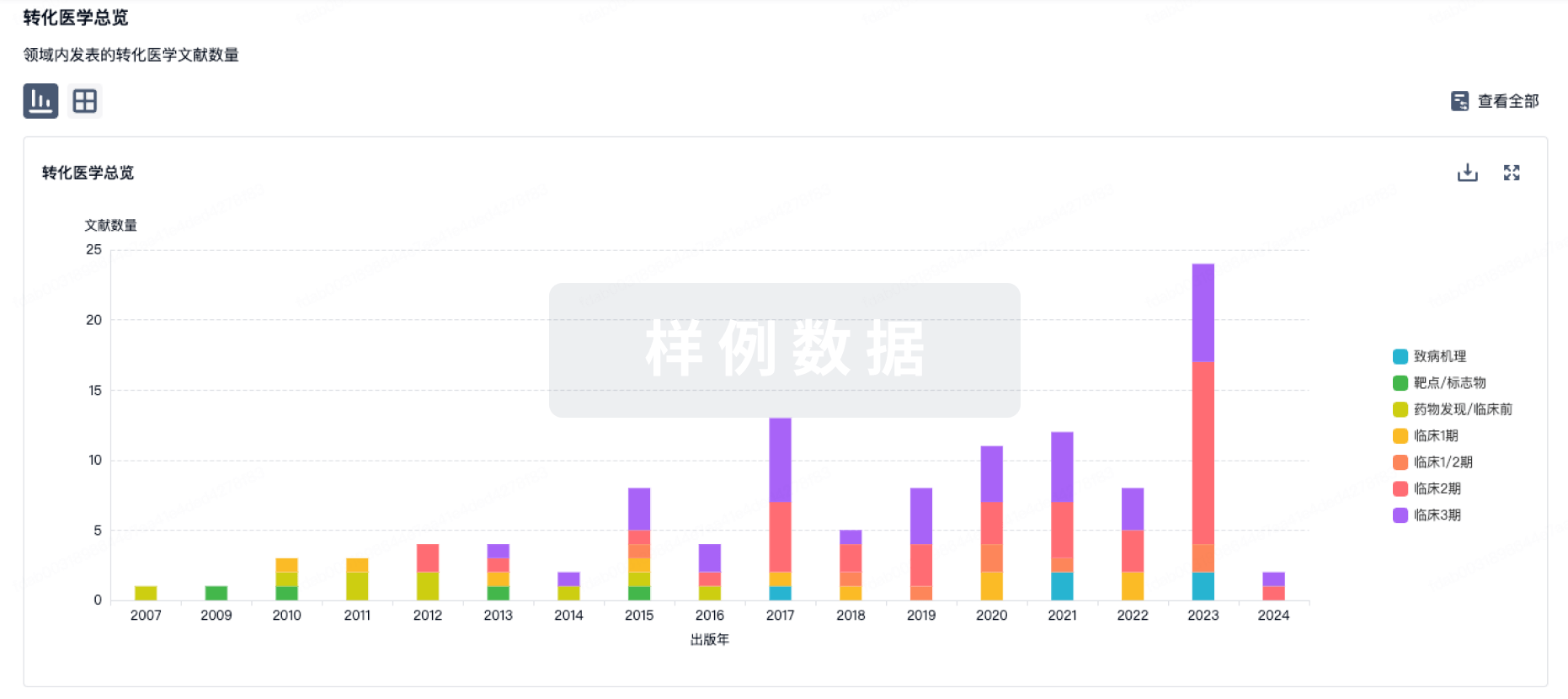
转化医学
使用我们的转化医学数据加速您的研究。
登录
或
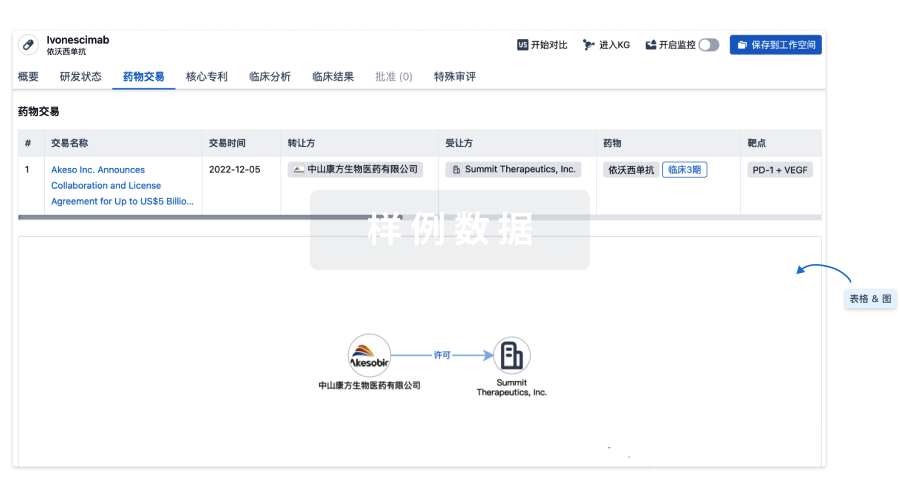
药物交易
使用我们的药物交易数据加速您的研究。
登录
或
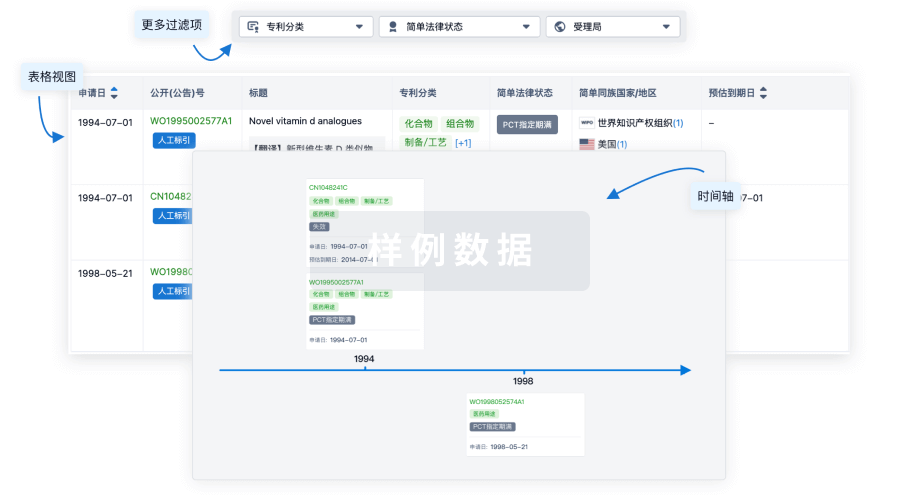
核心专利
使用我们的核心专利数据促进您的研究。
登录
或
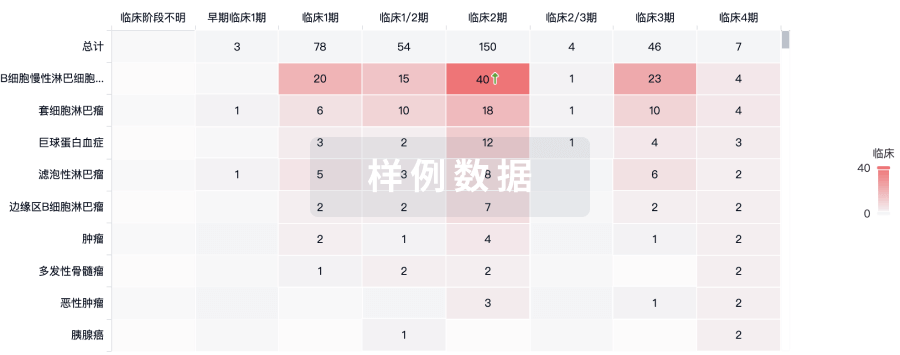
临床分析
紧跟全球注册中心的最新临床试验。
登录
或
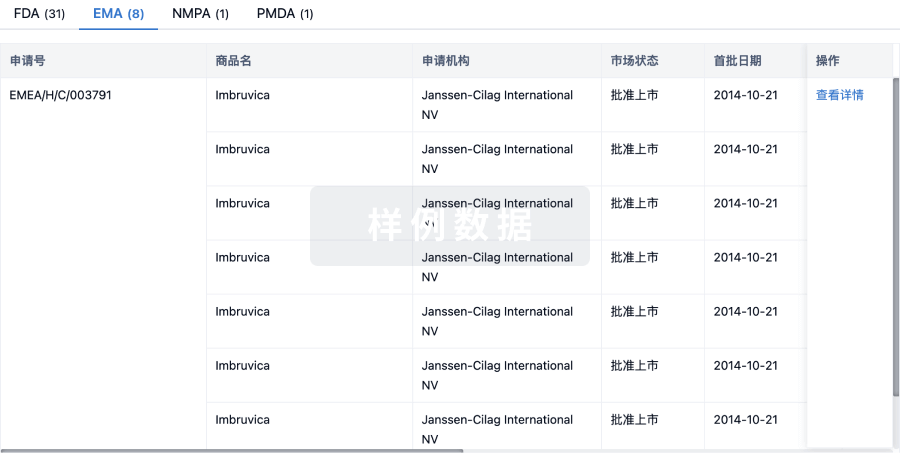
批准
利用最新的监管批准信息加速您的研究。
登录
或
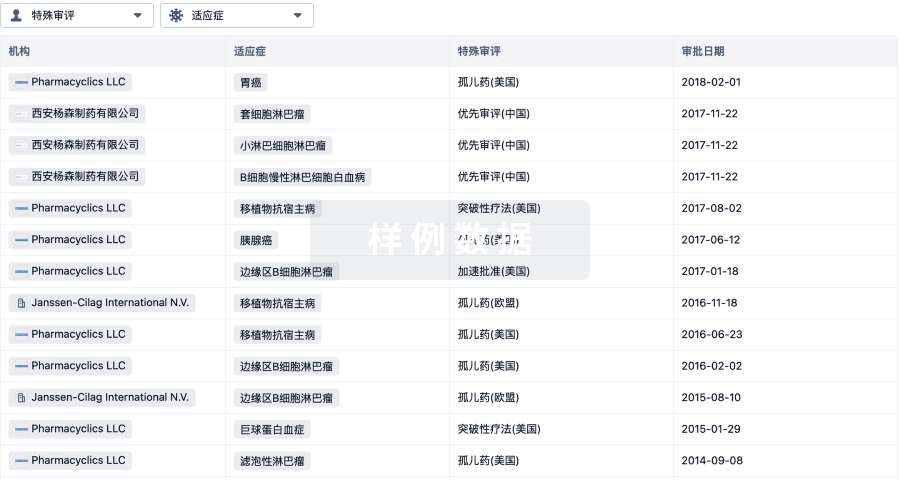
特殊审评
只需点击几下即可了解关键药物信息。
登录
或
生物医药百科问答
全新生物医药AI Agent 覆盖科研全链路,让突破性发现快人一步
立即开始免费试用!
智慧芽新药情报库是智慧芽专为生命科学人士构建的基于AI的创新药情报平台,助您全方位提升您的研发与决策效率。
立即开始数据试用!
智慧芽新药库数据也通过智慧芽数据服务平台,以API或者数据包形式对外开放,助您更加充分利用智慧芽新药情报信息。
生物序列数据库
生物药研发创新
免费使用
化学结构数据库
小分子化药研发创新
免费使用