预约演示
更新于:2025-10-30
Polygonatum cyrtonema polysaccharide
更新于:2025-10-30
概要
基本信息

关联
100 项与 Polygonatum cyrtonema polysaccharide 相关的临床结果
登录后查看更多信息
100 项与 Polygonatum cyrtonema polysaccharide 相关的转化医学
登录后查看更多信息
100 项与 Polygonatum cyrtonema polysaccharide 相关的专利(医药)
登录后查看更多信息
9
项与 Polygonatum cyrtonema polysaccharide 相关的文献(医药)2025-12-01·FOOD CHEMISTRY
Polygonatum cyrtonema polysaccharide as a modifier for soy protein isolate gel: Interaction, structural changes, and enhanced properties
Article
作者: Zhang, Sijie ; Qian, Zheng
This study investigated the effects of Polygonatum cyrtonema polysaccharide (PCP) on the aggregation behavior, microstructure, and gel properties of soy protein isolate (SPI). At a PCP incorporation level of 3.0 %, the gel exhibited maximum hardness, springiness, and water retention capacity of 0.98 N, 2.83 mm, and 93.53 %, respectively. Non-covalent interactions between PCP and SPI induced conformational variations in the protein, resulting in fluorescence quenching and the creation of a more hydrophilic microenvironment around amino acid residues. Moreover, PCP triggered a notable rearrangement of the SPI's secondary structure, marked by a significant increase in α-helix and β-turn structures alongside a reduction in random coil structure. SPI gels containing PCP displayed a spatially homogeneous and densely packed microstructure, primarily resulting from enhanced hydrophobic interactions, hydrogen bonding, and disulfide bond formation. These structural modifications collectively enhanced the gel's quality, rheological properties and thermal stability, providing a theoretical basis for developing SPI-based foods.
2025-06-01·INTERNATIONAL JOURNAL OF BIOLOGICAL MACROMOLECULES
Polygonatum cyrtonema polysaccharide alleviates dopaminergic neuron apoptosis in Parkinson's disease mouse model via inhibiting oxidative stress and endoplasmic reticulum stress
Article
作者: Luo, Jian-Ping ; Zha, Xue-Qiang ; Li, Qiang-Ming ; Xu, Huan ; Zhang, Feng-Yun
Parkinson's disease (PD) has become a global health threat as a progressive neurodegenerative disorder. Polygonatum cyrtonema polysaccharide (PCP), the main bioactive constituent in P. cyrtonema rhizome, displays various biological activities. However, its antiparkinsonian effect is elusive. Here, the effect of PCP on PD-like pathology was evaluated in 1-methyl-4-phenyl-1,2,3,6-tetrahydropyridine (MPTP)-induced PD mouse model and its molecular mechanism was further investigated. The results showed that PCP at different dosages significantly improved MPTP-induced weight loss and dyskinesia in PD mice. Moreover, PCP treatment mitigated the dopaminergic neuron loss in the substantia nigra pars compacta (SNc). Analysis of apoptosis-related proteins revealed that PCP markedly decreased the expression levels of Bax and cleaved-caspase 3, and increased the expression level of Bcl-2 in PD mice. Meanwhile, PCP markedly enhanced the activities of antioxidant enzymes superoxidase (SOD), glutathione peroxidase (GSH-Px) and catalase (CAT), reduced malondialdehyde (MDA) content, and reversed the expression of oxidant stress-related proteins Nrf2 and Keap1, in the SNc of PD mice. Furthermore, PCP treatment significantly reduced the MPTP-mediated increase of endoplasmic reticulum (ER) stress-related proteins. These findings suggest that PCP protects against PD-like pathology by mitigating oxidant stress and ER stress-mediated apoptosis of dopaminergic neurons, highlighting its potential as a therapeutic agent for PD.
2022-01-01·Environmental science and pollution research international3区 · 环境科学与生态学
Oxidative degradation of p-chlorophenol by the persulfate-doped Fe–Mn bimetallic hydroxide, the parametrical significance, and systematical optimization
3区 · 环境科学与生态学
Article
作者: Huang, Tao ; Deng, Shihan ; Zhang, Shuwen ; Liu, Longfei ; Yu, Danni ; Du, Jing
Aqueous Fe(II)-catalyzed activation commonly deteriorates the oxidation performance of persulfate (PS) to the treatment of organic contaminants. In this study, a PS-doped layered bimetallic hydroxide (Fe-Mn hydroxide) was synthesized to construct a heterogeneously catalytic system to solve the issue brought by homogeneity. The molar ratio of Fe(II) to Mn(II) and the mass ratio of PS to Fe-Mn hydroxide both had a significant impact on the catalytic degradation of p-CP. Reaction temperatures engaged in the most essential role in influencing the degradation and removal of p-chlorophenol (p-CP). The optimal combination of factors for the preparation of PS-hydroxide and the treatment of p-CP was finally determined by significance analysis. The degradation process was appropriately fitted by the pseudo-first-order kinetic model. The benzene ring in p-CP was broken by PS-hydroxide during the adsorption. The surface modification of PS-hydroxide caused by the valence transition of Mn was beneficial to the adsorption and catalytic degradation of p-CP.
100 项与 Polygonatum cyrtonema polysaccharide 相关的药物交易
登录后查看更多信息
研发状态
10 条进展最快的记录, 后查看更多信息
登录
| 适应症 | 最高研发状态 | 国家/地区 | 公司 | 日期 |
|---|---|---|---|---|
| 帕金森病 | 临床前 | 中国 | 2025-06-01 |
登录后查看更多信息
临床结果
临床结果
适应症
分期
评价
查看全部结果
| 研究 | 分期 | 人群特征 | 评价人数 | 分组 | 结果 | 评价 | 发布日期 |
|---|
No Data | |||||||
登录后查看更多信息
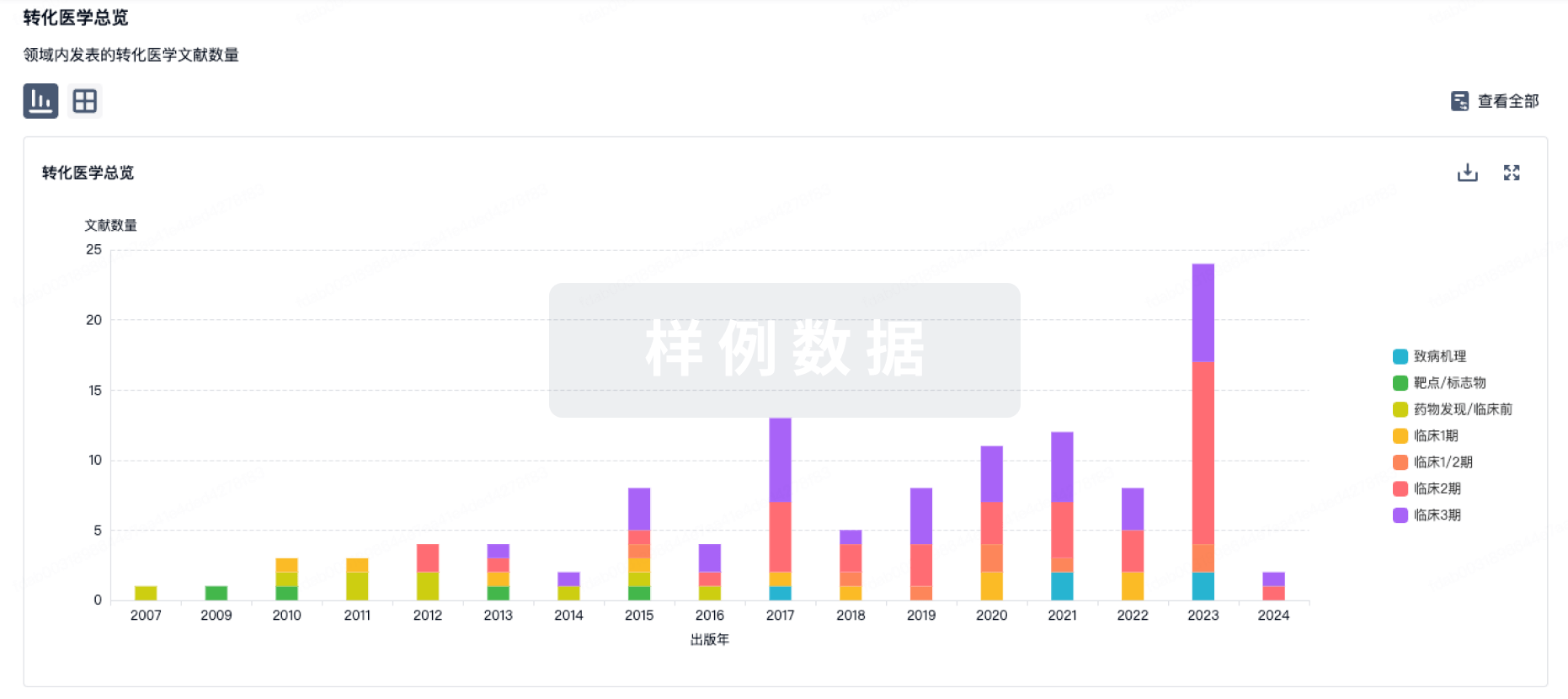
转化医学
使用我们的转化医学数据加速您的研究。
登录
或
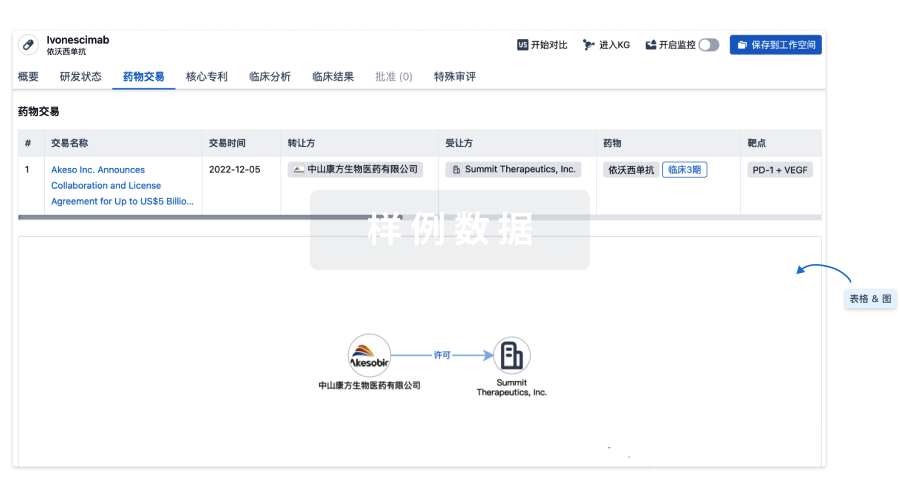
药物交易
使用我们的药物交易数据加速您的研究。
登录
或
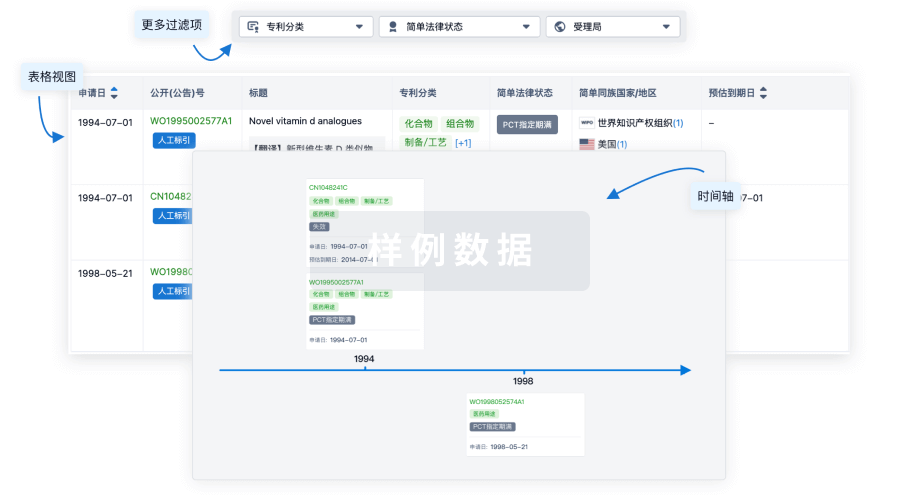
核心专利
使用我们的核心专利数据促进您的研究。
登录
或
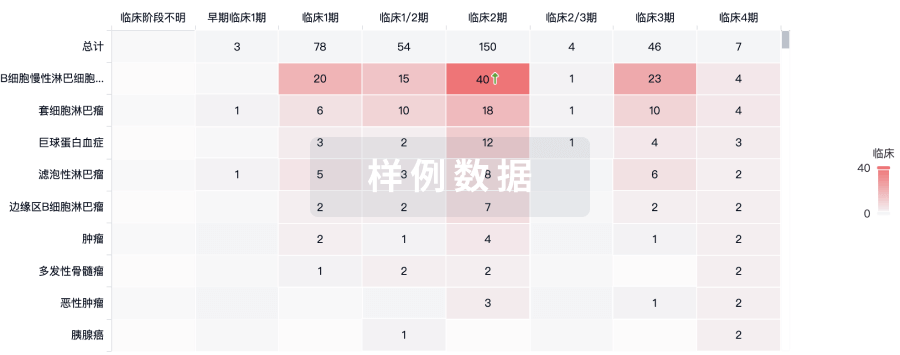
临床分析
紧跟全球注册中心的最新临床试验。
登录
或
批准
利用最新的监管批准信息加速您的研究。
登录
或
特殊审评
只需点击几下即可了解关键药物信息。
登录
或
生物医药百科问答
全新生物医药AI Agent 覆盖科研全链路,让突破性发现快人一步
立即开始免费试用!
智慧芽新药情报库是智慧芽专为生命科学人士构建的基于AI的创新药情报平台,助您全方位提升您的研发与决策效率。
立即开始数据试用!
智慧芽新药库数据也通过智慧芽数据服务平台,以API或者数据包形式对外开放,助您更加充分利用智慧芽新药情报信息。
生物序列数据库
生物药研发创新
免费使用
化学结构数据库
小分子化药研发创新
免费使用