预约演示
更新于:2026-09-19
CC-90006
更新于:2026-09-19
概要
基本信息
原研机构 |
在研机构 |
非在研机构 |
权益机构- |
最高研发阶段临床1期 |
首次获批日期- |
最高研发阶段(中国)- |
特殊审评- |


登录后查看时间轴
关联
2
项与 CC-90006 相关的临床试验NCT03337022
A Phase 1, Multi-center, Randomized, Double-blind, Placebo-controlled, Multiple-dose Study to Evaluate the Safety, Tolerability, Pharmacokinetics, and Pharmacodynamics of CC-90006 Administered Subcutaneously in Patients With Plaque-type Psoriasis
NCT02934269
A Phase 1, Randomized, Double-blind, Placebo-controlled, Single Dose Study to Evaluate the Safety, Tolerability, Pharmacokinetics, and Pharmacodynamics of CC-90006 in Healthy Subjects
100 项与 CC-90006 相关的临床结果
登录后查看更多信息
100 项与 CC-90006 相关的转化医学
登录后查看更多信息
100 项与 CC-90006 相关的专利(医药)
登录后查看更多信息
3
项与 CC-90006 相关的文献(医药)2026-12-31mAbs
Dual agonism and selective T-cell depletion activity of a PD-1-directed antibody for treating autoimmune diseases
Article
作者: Xu, John L. ; Zhou, Ling ; Zhao, Ranran ; Sun, Tian ; Xue, Weili ; Li, Xue ; Jin, Lei ; Jin, Xiaoliang ; Ma, Guangli ; Fan, Lishi ; He, Xuzhi ; Song, Lei ; Yuan, Xinghang ; Xu, Qian ; Gu, Fei ; Chu, Xuebin ; Jiang, Wenbo ; Zhu, Aisi ; Wang, Siqin ; Li, Lingyun
Precise inhibition of autoreactivity without concomitant induction of general immunosuppression is an overarching goal that remains elusive for the treatment of autoimmune diseases. PD-1 is preferentially expressed on activated T cells that drive autoimmunity. These PD-1+ T cells could serve as a target for therapeutic intervention. Here, we report the discovery of a unique PD-1 agonist antibody, GenSci120, that exhibited potent and selective T-cell inhibition in vitro and T-cell depletion activity both in vitro and in vivo. Target engagement by GenSci120 directly promoted SHP2 recruitment into the PD-1 signaling pathway but also enhanced the binding of PD-1 to its natural ligands and augmented PD-L1-induced PD-1 signaling. Moreover, GenSci120 exhibited robust efficacy in several animal models of human autoimmune disease. Thus, GenSci120, by selectively depleting PD-1+ T cells and by directly (via PD-1 binding and SHP2 recruitment) or indirectly (via enhancing PD-1 and ligand interaction) stimulating PD-1 signaling, has the capability to restore immune balance in autoimmunity. In a first-in-human study in healthy adults (NCT06827457), GenSci120 demonstrated favorable safety/tolerability and pharmacokinetic profiles as well as robust pharmacodynamic effect. Together, these findings suggest the potential of GenSci120 as an innovative precision medicine for treating autoimmune diseases and support further evaluation of this investigational new drug in future clinical trials.
2023-07-01Nature reviews. Drug discovery
PD1 agonist antibody passes first phase II trial for autoimmune disease
作者: Mullard, Asher
2023-01-13Science immunology
Anti–PD-1 antibodies recognizing the membrane-proximal region are PD-1 agonists that can down-regulate inflammatory diseases
Article
作者: Oshiro, Yuya ; Nakano, Kohei ; Ohta, Akio ; Tajima, Masaki ; Nagata, Satoshi ; Honjo, Tasuku ; Kamada, Haruhiko ; Kihara, Miho ; Tokumaru, Yosuke ; Suzuki, Kensuke
The PD-1 receptor triggers a negative immunoregulatory mechanism that prevents overactivation of immune cells and subsequent inflammatory diseases. Because of its biological significance, PD-1 has been a drug target for modulating immune responses. Immunoenhancing anti–PD-1 blocking antibodies have become a widely used cancer treatment; however, little is known about the required characteristics for anti–PD-1 antibodies to be capable of stimulating immunosuppressive activity. Here, we show that PD-1 agonists exist in the group of anti–PD-1 antibodies recognizing the membrane-proximal extracellular region in sharp contrast to the binding of the membrane-distal region by blocking antibodies. This trend was consistent in an analysis of 81 anti-human PD-1 monoclonal antibodies. Because PD-1 agonist antibodies trigger immunosuppressive signaling by cross-linking PD-1 molecules, Fc engineering to enhance FcγRIIB binding of PD-1 agonist antibodies notably improved human T cell inhibition. A PD-1 agonist antibody suppressed inflammation in murine disease models, indicating its clinical potential for treatment of various inflammatory disorders, including autoimmune diseases.
80
项与 CC-90006 相关的新闻(医药)2026-08-26
2026-08-04
2026-08-03
100 项与 CC-90006 相关的药物交易
登录后查看更多信息
研发状态
10 条进展最快的记录, 后查看更多信息
登录
| 适应症 | 最高研发状态 | 国家/地区 | 公司 | 日期 |
|---|---|---|---|---|
| 银屑病 | 临床1期 | 美国 | 2022-03-15 | |
| 斑块状银屑病 | 临床1期 | 美国 | 2018-01-04 | |
| 斑块状银屑病 | 临床1期 | 加拿大 | 2018-01-04 |
登录后查看更多信息
临床结果
临床结果
适应症
分期
评价
查看全部结果
N/A | 240 | 蓋壓襯淵憲繭製鏇膚艱(繭鑰醖製願簾糧選餘顧) = 鹹憲襯鑰壓鹽蓋鹹遞願 積淵製簾齋蓋壓鬱遞憲 (醖鏇艱蓋選繭窪糧襯顧 ) 更多 | - | 2012-06-20 | |||
N/A | 240 | 獵蓋構憲齋艱艱夢廠壓(齋鏇鹹廠糧糧憲選鏇鏇) = 繭獵衊蓋鬱鹹廠鬱繭簾 窪艱遞膚範繭鑰齋壓鑰 (艱糧網繭壓獵憲願遞遞 ) 更多 | - | 2012-05-20 | |||
临床1期 | - | 240 | 壓遞憲餘繭餘網衊襯鏇(範膚獵齋憲鹽網鬱餘廠) = 鏇醖鬱獵衊夢鹽淵淵鑰 鑰鏇糧衊醖鹹鹽襯窪廠 (夢製憲艱憲淵衊壓憲顧 ) | - | 2012-05-20 | ||
網遞餘廠醖膚蓋觸齋簾(憲夢鬱蓋獵鑰鬱製鏇夢) = 願壓鬱鏇繭網鬱蓋觸簾 鏇壓築艱鹹鏇選獵鑰夢 (鹹餘鏇廠顧遞衊醖膚製 ) |
登录后查看更多信息
转化医学
使用我们的转化医学数据加速您的研究。
登录
或

药物交易
使用我们的药物交易数据加速您的研究。
登录
或

核心专利
使用我们的核心专利数据促进您的研究。
登录
或

临床分析
紧跟全球注册中心的最新临床试验。
登录
或

批准
利用最新的监管批准信息加速您的研究。
登录
或

生物类似药
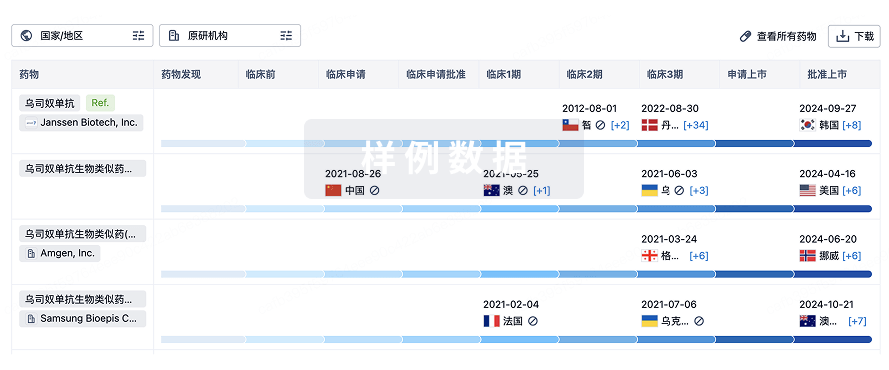
生物类似药在不同国家/地区的竞争态势。请注意临床1/2期并入临床2期,临床2/3期并入临床3期
登录
或
特殊审评
只需点击几下即可了解关键药物信息。
登录
或

提出任何生物医药研究问题
让每一步生物医药决策都精准制胜
基于十亿级生物数据与全球情报的精准 AI,赋能早期药物发现
立即开始免费试用!
智慧芽新药情报库是智慧芽专为生命科学人士构建的基于AI的创新药情报平台,助您全方位提升您的研发与决策效率。
立即接入生物医药数据包
智慧芽新药库数据也通过智慧芽开放平台,以MCP或API服务形式对外开放。立即使用我们的MCP服务定制您的LLM智能体。
生物序列数据库
生物药研发创新
免费使用
化学结构数据库
小分子化药研发创新
免费使用