预约演示
更新于:2026-07-15
BC3195
更新于:2026-07-15
概要
基本信息
原研机构 |
在研机构 |
非在研机构- |
权益机构- |
最高研发阶段临床1/2期 |
首次获批日期- |
最高研发阶段(中国)临床1/2期 |
特殊审评- |

登录后查看时间轴
结构/序列
分子式C11H22N4O4 |
InChIKeyAGGWFDNPHKLBBV-YUMQZZPRSA-N |
CAS号159858-33-0 |
查看全部结构式(2)
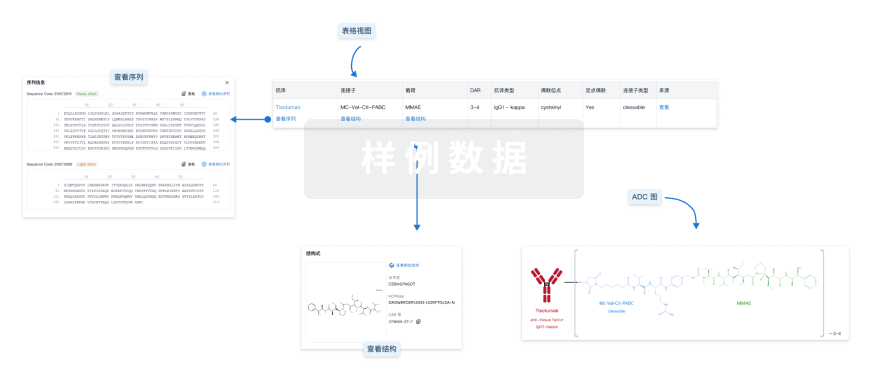
使用我们的ADC技术数据为新药研发加速。
登录
或
关联
3
项与 BC3195 相关的临床试验NCT07469774
A Phase 1/2, Open-Label, Dose Escalation and Expansion Study to Evaluate the Safety, Tolerability, Pharmacokinetics (PK), and Preliminary Efficacy of BC3195 in Combination With Pembrolizumab in Participants With Locally Advanced or Metastatic Solid Tumors
NCT06548672
A Phase Ia/Ib, Open-Label, Dose Escalation and Dose Expansion Study to Evaluate the Safety, Tolerability, Pharmacokinetics (PK), and Preliminary Efficacy of BC3195 in Patients With Locally Advanced or Metastatic Solid Tumors
NCT05957471
A Phase Ia/Ib, Open-Label, First-in-human, Dose Escalation and Dose Expansion Study to Evaluate the Safety, Tolerability, Pharmacokinetics, and Preliminary Efficacy of BC3195 in Patients With Locally Advanced or Metastatic Solid Tumors
100 项与 BC3195 相关的临床结果
登录后查看更多信息
100 项与 BC3195 相关的转化医学
登录后查看更多信息
100 项与 BC3195 相关的专利(医药)
登录后查看更多信息
1
项与 BC3195 相关的文献(医药)2026-06-01LUNG CANCER
First case report of transformation of adenocarcinoma to adenosquamous carcinoma with giant-cell carcinoma harboring HER2 mutation after zongertinib (BI 1810631) resistance
Article
作者: Zhu, Yue ; Xu, Bing-Fei ; Yan, Li-Xu ; Wu, Yi-Long ; Lin, Jia-Xin ; Sun, Yue-Li ; Tu, Hai-Yan ; Yin, Kai
BACKGROUND:
Human epidermal growth factor receptor 2 (HER2) mutations have been identified as a rare molecular subset in non-small cell lung cancer (NSCLC) with poor prognosis and limited treatment options. Zongertinib, an irreversible covalent HER2 inhibitor, demonstrated promising response rates and safety profile in the Beamion LUNG-1 trial, leading to approval for previously treated HER2-mutant NSCLC. Nevertheless, the resistance mechanisms to zongertinib remain largely unexplored despite its established efficacy.
CASE DESCRIPTION:
A 52-year-old female never-smoker was diagnosed with stage IV lung adenocarcinoma in March 2023. Next generation sequencing (NGS) of tumor tissue identified an HER2 exon 20p.Y772_A775dup mutation along with concurrent NF1, RB1, and TP53 mutations, plus increased AKT2 gene copy number. First-line platinum-based chemotherapy combined with immunotherapy was initiated with transient disease stabilization. The patient subsequently achieved a confirmed partial response to zongertinib (240 mg daily) in the Beamion LUNG-1 trial, maintaining clinical benefit for 20 months until symptomatic progression emerged. Repeat biopsy revealed histologic transformation to adenosquamous carcinoma with giant-cell features, with PD-L1 expression switch from undetectable to 80% positivity. The genomic profiling showed persistent original mutations plus newly acquired MAP3K1 mutation, HER2 amplification, and TERT amplification. In the third-line treatment, the patient was enrolled in a clinical trial evaluating BC3195, a novel CDH3-targeted antibody-drug conjugate, and achieved partial response at the time of reporting.
CONCLUSION:
This case is the first to elucidate the putative resistance mechanisms to zongertinib in HER2-mutant lung adenocarcinoma might be transformation of adenosquamous with giant-cell carcinoma and acquired HER2 amplification through integrated histological and molecular analyses. These findings highlight the necessity of post-progression biopsy and genomic profiling to characterize resistance evolution and guide subsequent therapy selection.
100 项与 BC3195 相关的药物交易
登录后查看更多信息
研发状态
10 条进展最快的记录, 后查看更多信息
登录
| 适应症 | 最高研发状态 | 国家/地区 | 公司 | 日期 |
|---|---|---|---|---|
| 局部晚期恶性实体瘤 | 临床2期 | 中国 | 2026-03-31 | |
| 结直肠癌 | 临床2期 | 中国 | 2026-03-20 | |
| 子宫内膜癌 | 临床2期 | 中国 | 2026-03-20 | |
| 食管鳞状细胞癌 | 临床2期 | 中国 | 2026-03-20 | |
| 非小细胞肺癌 | 临床2期 | 中国 | 2026-03-20 | |
| 卵巢癌 | 临床2期 | 中国 | 2026-03-20 | |
| 前列腺癌 | 临床2期 | 中国 | 2026-03-20 | |
| 头颈部鳞状细胞癌 | 临床2期 | 中国 | 2026-03-20 | |
| 尿路上皮癌 | 临床2期 | 中国 | 2026-03-20 | |
| 三阴性乳腺癌 | 临床2期 | 中国 | 2026-03-20 |
登录后查看更多信息
临床结果
临床结果

转化医学
使用我们的转化医学数据加速您的研究。
登录
或

药物交易
使用我们的药物交易数据加速您的研究。
登录
或

核心专利
使用我们的核心专利数据促进您的研究。
登录
或

临床分析
紧跟全球注册中心的最新临床试验。
登录
或

批准
利用最新的监管批准信息加速您的研究。
登录
或

生物类似药
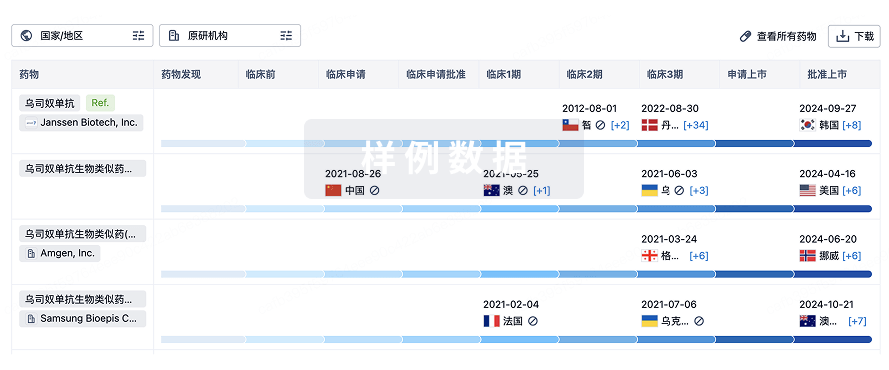
生物类似药在不同国家/地区的竞争态势。请注意临床1/2期并入临床2期,临床2/3期并入临床3期
登录
或
特殊审评
只需点击几下即可了解关键药物信息。
登录
或

提出任何生物医药研究问题
让每一步生物医药决策都精准制胜
基于十亿级生物数据与全球情报的精准 AI,赋能早期药物发现
立即开始免费试用!
智慧芽新药情报库是智慧芽专为生命科学人士构建的基于AI的创新药情报平台,助您全方位提升您的研发与决策效率。
立即接入生物医药数据包
智慧芽新药库数据也通过智慧芽开放平台,以MCP或API服务形式对外开放。立即使用我们的MCP服务定制您的LLM智能体。
生物序列数据库
生物药研发创新
免费使用
化学结构数据库
小分子化药研发创新
免费使用