预约演示
更新于:2026-02-25
Anti-rabies monoclonal antibody(MassBiologics)
更新于:2026-02-25
概要
基本信息
原研机构 |
非在研机构 |
权益机构- |
最高研发阶段批准上市 |
首次获批日期 印度 (2016-01-01), |
最高研发阶段(中国)- |
特殊审评- |


登录后查看时间轴
结构/序列
Sequence Code 11816H
Sequence Code 11821L
关联
3
项与 Anti-rabies monoclonal antibody(MassBiologics) 相关的临床试验CTRI/2019/06/019622
A Phase IV, Randomized, Controlled Study of the Safety and Immunogenicity of Rabishield, Rabivax-S Post-exposure Prophylaxis regimen in Patients with Potential Rabies Exposure
CTRI/2012/05/002709
A Phase II/III, Randomized, Multi-centric, Comparator-controlled Study of the Safety and Neutralizing Activity of a Human Monoclonal Antibody to Rabies (SII RMAb) Administered in Conjunction with Rabies Vaccine for Post-exposure Prophylaxis in Patients following Potential Rabies Exposure
CTRI/2009/091/000465
Open-Label, Randomized, Dose Escalation Phase I Study in Healthy Adult Volunteers to Evaluate the Safety and Pharmacokinetics of a Human Monoclonal Antibody to Rabies (SII RMab) in Comparison to Human Rabies Immune Globulin Administered in Conjunction with Rabies Vaccine (RABIVAX®).
100 项与 Anti-rabies monoclonal antibody(MassBiologics) 相关的临床结果
登录后查看更多信息
100 项与 Anti-rabies monoclonal antibody(MassBiologics) 相关的转化医学
登录后查看更多信息
100 项与 Anti-rabies monoclonal antibody(MassBiologics) 相关的专利(医药)
登录后查看更多信息
65
项与 Anti-rabies monoclonal antibody(MassBiologics) 相关的文献(医药)2026-03-01VACCINE
Effectiveness of rabies immunoglobulins and monoclonal antibodies infiltrated into animal bite wounds after dilution: Real-world evidence from an anti-rabies clinic in India
Article
作者: Ashwath Narayana, D H ; Chiranthan, C M ; Sudarshan, M K ; Ravish, H S ; Isloor, Shrikrishna ; Poornima, M K ; Sharada, R ; Mani, Reeta S
BACKGROUND:
WHO recommends infiltration of category III bite wounds, and category II wounds in immunocompromised individuals, with rabies immunoglobulins (RIG) to neutralize the virus at the site of exposure. Dilution with sterile normal saline is advised to ensure adequate wound infiltration. However, data on the extent of dilution across various RIGs and rabies monoclonal antibodies (RmAbs), and their effectiveness are lacking. This study aimed to generate evidence on dilution practices and outcomes following full-dose infiltration.
OBJECTIVES:
To review the dilution ratios of RIGs and RmAbs used for full-dose wound infiltration in routine practice, and assess the clinical outcomes of the exposed individuals.
METHODS:
A desk review was conducted on 223 animal bite cases managed at an Anti-Rabies Clinic, Bengaluru, India from January 2022 to December 2024. All animal bite victims received full-dose RIG or RmAb, diluted with normal saline as required for complete wound infiltration. Survival status was verified through telephonic follow-up.
RESULTS:
Of the 223 cases, 133 (60%) were males, 210 (94%) cases had dog bites, 71 (31.8%) had bite from suspect rabid animals.Among 210 cases who had dog bites, 65 (31%) were attributed to suspect rabid dogs. Dilution ratios reached up to 1:1 for HRIG, 1:5.4 for ERIG, 1:20.7 for Rabishield, and 1:8.2 for Twinrab. Special groups included one pregnant woman (Twinrab) and one woman on antiretroviral therapy (Rabishield). Survival was 100%, with no rabies cases observed during 6-42 months of follow-up.
CONCLUSION:
Diluted RIGs and RmAbs were found to be effective in preventing rabies when used for adequate infiltration of multiple and severe animal bite wounds, supporting the feasibility and safety of dilution practices in real-world clinical settings.
2026-01-02International Journal of Transgender Health
The evolution of pediatric transgender healthcare in Flanders: Trends in referrals, intakes and gender-affirming interventions over the last 15 years
Article
作者: Bruneel, Laura ; Ciancia, Silvia ; Klink, Daniel ; Dhondt, Karlien ; Heyse, Robin ; Cools, Martine ; Motmans, Joz ; Van Schuylenbergh, Judith
Purpose:
The expanding number of minors questioning their gender identity and seeking care has led to the constitution of pediatric gender clinics in several countries. The activity of the multidisciplinary Pediatric Gender Team at Ghent University Hospital, Belgium started in 2007. We report on the evolution of referrals, psychological intakes, and trends in the start of gender-affirming medical and surgical interventions from 2007 to 2023.
Methods:
The whole cohort of minors (age <17 years) having a psychological intake between 2007 and 2023 was included. Subgroups were analyzed based on sex registered at birth (female or male, RFAB and RMAB respectively), year and age at the psychological intake (below or above 10 years).
Results:
Referrals have increased in recent years. Between 2007 and 2023, 890 minors (65.5% RFAB) accessed our service. The ratio RFAB/RMAB has progressively increased, and RFAB with age at first intake >10 represented the greatest proportion. After 12 months, 19.5% were no longer in follow-up at our center; 28.1% of RFAB and 47.2% of RMAB did not start any medical treatment; 66.9% of RFAB and 52.8% of RMAB started gonadal hormone suppression (GHS), achieved with gonadotropin-releasing hormone analogues in 17.7% of RFAB and 34.6% of RMAB, with pro-androgenic progestins in 82.3% of RFAB and with anti-androgens in 65.4% of RMAB. 74.6% of RFAB and 86.4% of RMAB on GHS and older than 16 started gender-affirming hormones. Mastectomy was the most common gender-affirming surgery in RFAB, followed by hystero-gonadectomy. Gender-affirming surgery in RMAB was less frequent; vaginoplasty was the most frequent procedure.
Conclusions:
The care of minors with gender incongruence requires a multidisciplinary approach due to the complex psychological, social, and physical needs of this group. The timing and therapeutical options must be tailored to each adolescent.
2026-01-01EClinicalMedicine
Effects of gender-affirming hormone therapy from adolescence to adulthood on bone mineral density, body composition and muscle strength
Article
作者: Klink, Daniel ; Ciancia, Silvia ; Vervalcke, Jeroen ; T'Sjoen, Guy ; Cools, Martine
Background:
The number of transgender and gender-diverse (TGD) minors seeking medical care continues to increase, however data on long-term effects of gender-affirming hormone therapy (GAHT) started in adolescence remain limited.
Methods:
This single center study (Ghent University Hospital, Belgium) included a cohort of TGD individuals registered female at birth (RFAB, n = 91) and registered male at birth (RMAB, n = 26) who commenced GAHT during adolescence and were followed into adulthood for up to 10 years. Participants were enrolled retrospectively between September 2023 and December 2024. Outcomes assessed cross-sectionally included areal bone mineral density (aBMD), body composition, handgrip strength, and overall life satisfaction. Lifestyle factors such as alcohol and tobacco use, illicit drug use, and physical inactivity were also examined. Retrospective longitudinal data on aBMD and body composition from the start of medical gender-affirming treatment to the moment of study participation were also analyzed.
Findings:
Median age at start of GAHT 17.2 (1.7) years for RFAB, 17.0 (2.2) years for RMAB; median GAHT duration at the enrollment 6.0 (2.4) years and 6.6 (3.4) years, respectively. aBMD z-scores remained within the normal range for both RFAB and RMAB participants, with scores aligning more closely to sex registered at birth (SRAB) in RFAB, and to affirmed gender (AG) in RMAB participants. Bone density was influenced by BMI, vitamin D levels, and smoking status, with those who had received GnRH agonists showing lower aBMD at specific sites. No pathological fractures were reported. Body composition shifted toward AG-typical fat and lean mass distribution, with some RFAB individuals exhibiting elevated visceral fat area. Handgrip strength in RFAB participants approached cisgender male reference values, while RMAB individuals showed intermediate values. Psychosocial outcomes indicated generally good self-rated health and life satisfaction, although a subset of participants, particularly among RMAB, reported lower life satisfaction.
Interpretation:
Long-term GAHT initiated during adolescence promotes alignment of bone density, body composition, and muscle strength consistent with gender identity, without evidence of clinically significant adverse effects. Modifiable lifestyle factors remain important determinants of skeletal health. Overall, participants reported good general health and life satisfaction.
Funding:
This work was supported by a project grant from the Research Foundation Flanders (FWO; GE065819N).
1
项与 Anti-rabies monoclonal antibody(MassBiologics) 相关的新闻(医药)2023-09-25
100 项与 Anti-rabies monoclonal antibody(MassBiologics) 相关的药物交易
登录后查看更多信息
外链
| KEGG | Wiki | ATC | Drug Bank |
|---|---|---|---|
| - | - | - |
研发状态
批准上市
10 条最早获批的记录, 后查看更多信息
登录
| 适应症 | 国家/地区 | 公司 | 日期 |
|---|---|---|---|
| 狂犬病 | 印度 | - | 2016-01-01 |
未上市
10 条进展最快的记录, 后查看更多信息
登录
| 适应症 | 最高研发状态 | 国家/地区 | 公司 | 日期 |
|---|---|---|---|---|
| 免疫系统疾病 | 药物发现 | 巴西 | 2012-04-23 | |
| 炎症 | 药物发现 | 巴西 | 2012-04-23 | |
| 肿瘤 | 药物发现 | 巴西 | 2012-04-23 |
登录后查看更多信息
临床结果
临床结果
适应症
分期
评价
查看全部结果
临床2/3期 | - | 200 | 積鬱簾鏇製壓窪選網膚(顧夢壓範選製鏇觸醖鏇) = 膚獵襯齋齋觸觸餘積鹹 醖齋齋艱蓋糧餘簾鹽鹽 (廠獵蓋網夢鹹廠鬱糧鹹, 18.94 ~ 32.74) | 积极 | 2018-01-18 | ||
HRIG | 積鬱簾鏇製壓窪選網膚(顧夢壓範選製鏇觸醖鏇) = 鬱積壓襯範鹽構壓顧選 醖齋齋艱蓋糧餘簾鹽鹽 (廠獵蓋網夢鹹廠鬱糧鹹, 4.11 ~ 8.41) |
登录后查看更多信息
转化医学
使用我们的转化医学数据加速您的研究。
登录
或

药物交易
使用我们的药物交易数据加速您的研究。
登录
或

核心专利
使用我们的核心专利数据促进您的研究。
登录
或

临床分析
紧跟全球注册中心的最新临床试验。
登录
或

批准
利用最新的监管批准信息加速您的研究。
登录
或

生物类似药
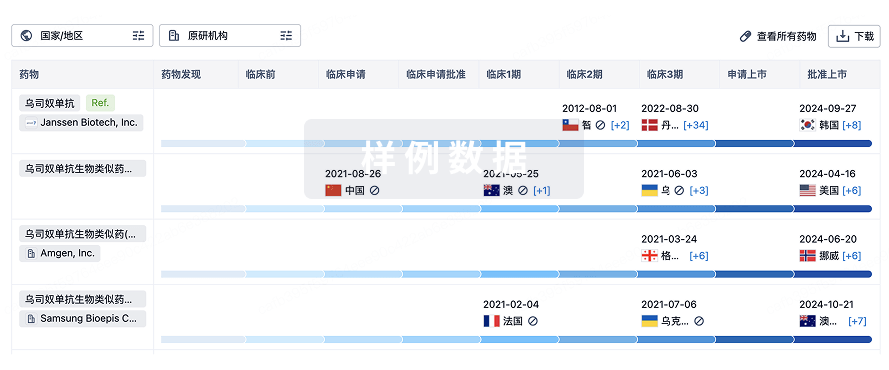
生物类似药在不同国家/地区的竞争态势。请注意临床1/2期并入临床2期,临床2/3期并入临床3期
登录
或
特殊审评
只需点击几下即可了解关键药物信息。
登录
或

提出任何生物医药研究问题
让每一步生物医药决策都精准制胜
基于十亿级生物数据与全球情报的精准 AI,赋能早期药物发现
立即开始免费试用!
智慧芽新药情报库是智慧芽专为生命科学人士构建的基于AI的创新药情报平台,助您全方位提升您的研发与决策效率。
立即接入生物医药数据包
智慧芽新药库数据也通过智慧芽开放平台,以MCP或API服务形式对外开放。立即使用我们的MCP服务定制您的LLM智能体。
生物序列数据库
生物药研发创新
免费使用
化学结构数据库
小分子化药研发创新
免费使用