预约演示
更新于:2026-09-05
BNT-141
更新于:2026-09-05
概要
基本信息
原研机构 |
在研机构- |
非在研机构 |
权益机构- |
最高研发阶段终止临床1/2期 |
首次获批日期- |
最高研发阶段(中国)- |
特殊审评- |

登录后查看时间轴
关联
1
项与 BNT-141 相关的临床试验NCT04683939
Phase I/IIa, First-in-human, Open-label, Dose Escalation Trial With Expansion Cohorts to Evaluate Safety, Pharmacokinetics, Pharmacodynamics, and Preliminary Efficacy of BNT141 as a Monotherapy and in Combination With Other Anti-cancer Agents in Patients With CLDN18.2-positive Solid Tumors
100 项与 BNT-141 相关的临床结果
登录后查看更多信息
100 项与 BNT-141 相关的转化医学
登录后查看更多信息
100 项与 BNT-141 相关的专利(医药)
登录后查看更多信息
1
项与 BNT-141 相关的文献(医药)2026-06-01MOLECULAR PHARMACEUTICS
Application of Allometric Scaling and Translational Modeling to Predict Human Pharmacokinetics of mRNA-Encoded Antibodies
Article
作者: Şahin, Uğur ; Wu, Shu-Pei ; Nguyen, Tam N. T. ; Chang, Philip K.-Y. ; Türeci, Özlem ; Panorchan, Paul
Messenger RNA (mRNA)-lipid nanoparticle (mRNA-LNP) platforms enable the in vivo expression of almost any therapeutic protein, offering unprecedented flexibility for clinical translation. However, for these rapidly deployable therapies, predicting the first-in-human (FIH) dose remains a key challenge. We developed an allometric scaling framework for human pharmacokinetic (PK) prediction of antibodies expressed from intravenously administered mRNA-LNPs, leveraging preclinical and clinical data for BNT141 (encoding RiboMab01, a full IgG1) and BNT142 (encoding RiboMab02.1, a bispecific Fab-scFv-based T-cell engager). The dose-normalized Cmax (DCmax) and dose-normalized AUC (DAUC) of translated antibodies across multiple species could be described by the allometric approach, with the estimated exponents ranging from -1.29 to -1.42 for BNT141 and BNT142. We also determined generalized single-species allometric scaling exponents of -1.26 from mice and -0.75 from nonhuman primate (NHP), respectively, that enabled the human predictions of translated antibodies exposure approximately 4-fold (mice) and within 2-fold (NHP). A mechanistic cross-species translational model was further developed that integrated mRNA-specific elimination and translation efficiency parameters to characterize the exposure of the translated antibodies from mRNA-based therapeutics. The translational model could predict the human PK exposure of translated antibodies within 1.33-fold for BNT141 and BNT142 via single-species scaling from NHP parameters as well as capturing the concentration-time profiles with reasonably high fidelity. Validation with publicly available mRNA-1944 (encoding CHKV-24, full IgG1) data confirmed both the allometric scaling and translational modeling methods' robustness when scaling from NHP data. Taken together, these results support a generalized cross-species PK relationship that is independent of the molecular characteristics of the translated antibodies or antibody-like protein products. This integrated scaling and modeling framework offers a generalizable solution for accelerating FIH dose selection of mRNA-encoded therapeutic antibodies and is adaptable to other recombinant proteins of interest.
100 项与 BNT-141 相关的药物交易
登录后查看更多信息
研发状态
10 条进展最快的记录, 后查看更多信息
登录
| 适应症 | 最高研发状态 | 国家/地区 | 公司 | 日期 |
|---|---|---|---|---|
| 食管腺癌 | 临床2期 | 美国 | 2022-01-18 | |
| 食管腺癌 | 临床2期 | 加拿大 | 2022-01-18 | |
| 晚期胰腺腺癌 | 临床2期 | 美国 | 2022-01-18 | |
| 晚期胰腺腺癌 | 临床2期 | 加拿大 | 2022-01-18 | |
| 胆管癌 | 临床2期 | 美国 | 2022-01-18 | |
| 胆管癌 | 临床2期 | 加拿大 | 2022-01-18 | |
| CLDN18.2阳性胰腺腺癌 | 临床2期 | 美国 | 2022-01-18 | |
| CLDN18.2阳性胰腺腺癌 | 临床2期 | 加拿大 | 2022-01-18 | |
| CLDN18.2阳性实体瘤 | 临床2期 | 美国 | 2022-01-18 | |
| CLDN18.2阳性实体瘤 | 临床2期 | 加拿大 | 2022-01-18 |
登录后查看更多信息
临床结果
临床结果
适应症
分期
评价
查看全部结果
登录后查看更多信息
转化医学
使用我们的转化医学数据加速您的研究。
登录
或

药物交易
使用我们的药物交易数据加速您的研究。
登录
或

核心专利
使用我们的核心专利数据促进您的研究。
登录
或

临床分析
紧跟全球注册中心的最新临床试验。
登录
或

批准
利用最新的监管批准信息加速您的研究。
登录
或

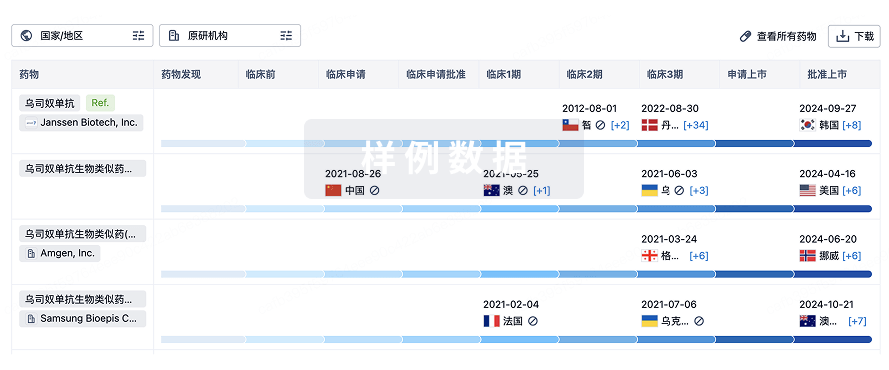
生物类似药
生物类似药在不同国家/地区的竞争态势。请注意临床1/2期并入临床2期,临床2/3期并入临床3期
登录
或
特殊审评
只需点击几下即可了解关键药物信息。
登录
或

提出任何生物医药研究问题
让每一步生物医药决策都精准制胜
基于十亿级生物数据与全球情报的精准 AI,赋能早期药物发现
立即开始免费试用!
智慧芽新药情报库是智慧芽专为生命科学人士构建的基于AI的创新药情报平台,助您全方位提升您的研发与决策效率。
立即接入生物医药数据包
智慧芽新药库数据也通过智慧芽开放平台,以MCP或API服务形式对外开放。立即使用我们的MCP服务定制您的LLM智能体。
生物序列数据库
生物药研发创新
免费使用
化学结构数据库
小分子化药研发创新
免费使用