预约演示
更新于:2025-12-07

UK Research & Innovation Ltd.
更新于:2025-12-07
概览
标签
其他疾病
神经系统疾病
消化系统疾病
ASO
小分子化药
双特异性抗体
疾病领域得分
一眼洞穿机构专注的疾病领域

技术平台
公司药物应用最多的技术
靶点
公司最常开发的靶点
关联
WO2024052379
专利挖掘靶点 |
作用机制 |
在研机构 |
原研机构 |
在研适应症 |
非在研适应症 |
最高研发阶段 |
首次获批国家/地区 |
首次获批日期 |
靶点 |
作用机制 |
在研机构 |
原研机构 |
在研适应症 |
非在研适应症 |
最高研发阶段 |
首次获批国家/地区 |
首次获批日期 |

WO2023041905
专利挖掘靶点 |
作用机制 |
在研机构 |
原研机构 |
在研适应症 |
非在研适应症 |
最高研发阶段 |
首次获批国家/地区 |
首次获批日期 |

NCT07070635
The Effect of the Fermented Seaweed Enriched Abertay Tea on Vascular Function and Markers of Cardiovascular Risk During Menopause

NCT06769009
The Next Step Towards the Elimination of Iodine Deficiency and Preventable Iodine-related Disorders in Europe
NCT06014554
Structured Tailored Rehabilitation After Hip Fragility Fracture: The 'STRATIFY' Feasibility Randomised Controlled Trial

100 项与 UK Research & Innovation Ltd. 相关的临床结果
登录后查看更多信息
登录后查看更多信息
2025-09-21PHYSICS IN MEDICINE AND BIOLOGY
Efficient motion-corrected image reconstruction for 3D cardiac MRI through stochastic optimisation
Article
作者: Kolbitsch, Christoph ; Schulz-Menger, Jeanette ; Mayer, Johannes ; Pasca, Edoardo ; Thielemans, Kris ; Protopapa, Letizia ; Duff, Margaret
Abstract:
Objective. Motion-corrected image reconstruction (MCIR) allows for fast and efficient cardiac magnetic resonance imaging (MRI) acquisition with predictable scan times. Since data obtained in all phases of respiratory and cardiac motion can be exploited, the duration of the scan is not affected by changes in heart rate or irregular breathing patterns. Achieving high-quality reconstructions from MCIR data typically requires iterative optimisation algorithms with regularisation, where reconstruction time increases with the number of motion states. This is particularly relevant in cardiac MRI, where both cardiac and respiratory motion corrections are necessary to minimise motion artefacts. Approach. In this work, we present a stochastic optimisation approach for efficient MCIR of 3D cardiac MRI images using the stochastic primal dual hybrid gradient (SPDHG) algorithm. Main results. In phantom experiments with simulated motion, we demonstrate the improved convergence rates of SPDHG with respect to deterministic algorithms, while maintaining image quality. Convergence is improved both in terms of reconstruction times and computational effort. We validate the method’s effectiveness on an in vivo 3D whole-heart cardiac MR scan. The in vivo method demonstrates that the motion compensation method we use allows for non-rigid deformations and irregular breathing patterns. Significance. This study demonstrates that stochastic algorithms can converge significantly faster than deterministic algorithms for MCIR, especially for a large number of motion states. With the proposed approach, increasing the number of motion states reduces the number of epochs required to reconstruct the image and therefore it is no longer necessary to balance the competing requirements of accurate motion correction and computational effort.
2025-09-03NANO LETTERS
Acceptor–Donor Molecular Heterojunction Control of π-Orbital-Induced Magnetic Properties of a 3d Ferromagnet
Article
作者: Aslam, Zabeada ; Ali, Mannan ; Rogers, Matthew ; Moorsom, Timothy ; Teobaldi, Gilberto ; Cespedes, Oscar ; Hickey, B. J. ; Ozdemir, Servet
Metal-organic molecule interfaces have given rise to a wide range of magnetic phenomena. These effects arise due to spin-polarized charge transfer and enhanced exchange interaction at metallo-molecular hybridization sites, where tunability via electric fields beyond ferroelectric interfaces remains to be demonstrated. Here, we explore manipulating the magnetism of cobalt with the intrinsic electric field generated at C60/phthalocyanine heterojunctions, a combination commonly used in organic photovoltaics. The results give evidence for a C60 layer thickness-dependent control of hybridization effects on cobalt. We find that the heterojunctions may attenuate the hybridization effects, with changes in coercivity and magnetization due to the built-in electric field. An emergent exchange bias is attributed to an enhanced Rashba interaction for thicker C60 layers. Our study clarifies some of the questions in the field of molecular "spinterface" physics and demonstrates that internal electric field generation is a promising method for manipulation of metallo-molecular interfaces up to room temperature.
2025-08-01JOURNAL OF CLINICAL VIROLOGY
The Human Papillomavirus (HPV) Laboratory e-Manual: A comprehensive guide for HPV testing and research
Review
作者: Cuschieri, Kate ; Redzic, Nina ; Stosic, Milan ; Baraquin, Alice ; Murray, Gerald L ; Wilkinson, Dianna E ; Molano, Monica ; Kehoe, Kaat ; Vanden Broeck, Davy ; Eklund, Carina ; Dillner, Joakim ; Silling, Steffi ; Lagheden, Camilla ; Pinto, Ligia A ; Pereira, Ana Rita ; Picconi, Maria Alejandra ; Søreng, Kristiane ; Gucht, Steven Van ; Chin, Taeyang ; Padalko, Elizaveta ; Correa, Rita Mariel ; Arroyo Mühr, Laila Sara ; Songur, Nazlı ; Arbyn, Marc ; Presthus, Gro Kummeneje ; Prétet, Jean-Luc ; Poljak, Mario ; Gultekin, Murat ; Peeters, Michael ; Lepiller, Quentin ; Garland, Suzanne M ; Fellner, María Dolores
BACKGROUND:
Human Papillomavirus (HPV) vaccination and HPV-based cervical cancer screening are central pillars of the World Health Organization (WHO) global cervical cancer elimination strategy. The WHO HPV Laboratory Manual, published in 2009, has provided essential guidance to promote an internationally comparable quality of HPV testing for many years. As the development in this area is rapid, the Global Network of National HPV Reference Laboratories considered that there is a need for an updated HPV Laboratory e-Manual to serve as a comprehensive and interactive resource for professionals engaged in quality-assured HPV testing for research and/or HPV-based cancer control.
CONTENT:
The HPV Laboratory e-Manual covers key areas, including laboratory quality assurance, HPV taxonomy and risk association, collection and handling of specimens, nucleic acid extraction, HPV detection and typing, HPV serology, data management, and the use of international standards. It provides up-to-date protocols and best practices to enhance accuracy and reliability of HPV testing. Interactive features allow for real-time updates, making it a dynamic resource for laboratories worldwide. The e-Manual is freely available at: https://www.hpvcenter.se/hpv-laboratory-manual/.
COLLABORATORS:
The e-Manual has been developed by international experts from 11 countries, including contributors from the International HPV Reference Center (IHRC, Sweden), the CDC's Global HPV Reference Laboratory (USA), and multiple National HPV Reference Laboratories (NRLs). The standard procedure for writing a chapter was that 2 NRLs authored the chapter and 1 other NRL reviewed it.
CONCLUSION:
The HPV Laboratory e-Manual represents a step toward global harmonization in laboratory methodologies for HPV testing, underpinning both research and cervical cancer control efforts.
100 项与 UK Research & Innovation Ltd. 相关的药物交易
登录后查看更多信息
100 项与 UK Research & Innovation Ltd. 相关的转化医学
登录后查看更多信息
组织架构
使用我们的机构树数据加速您的研究。
登录
或
管线布局
2026年10月23日管线快照
管线布局中药物为当前组织机构及其子机构作为药物机构进行统计,早期临床1期并入临床1期,临床1/2期并入临床2期,临床2/3期并入临床3期
药物发现
3
登录后查看更多信息
当前项目
登录后查看更多信息
药物交易
使用我们的药物交易数据加速您的研究。
登录
或
转化医学
使用我们的转化医学数据加速您的研究。
登录
或
营收
使用 Synapse 探索超过 36 万个组织的财务状况。
登录
或
科研基金(NIH)
访问超过 200 万项资助和基金信息,以提升您的研究之旅。
登录
或
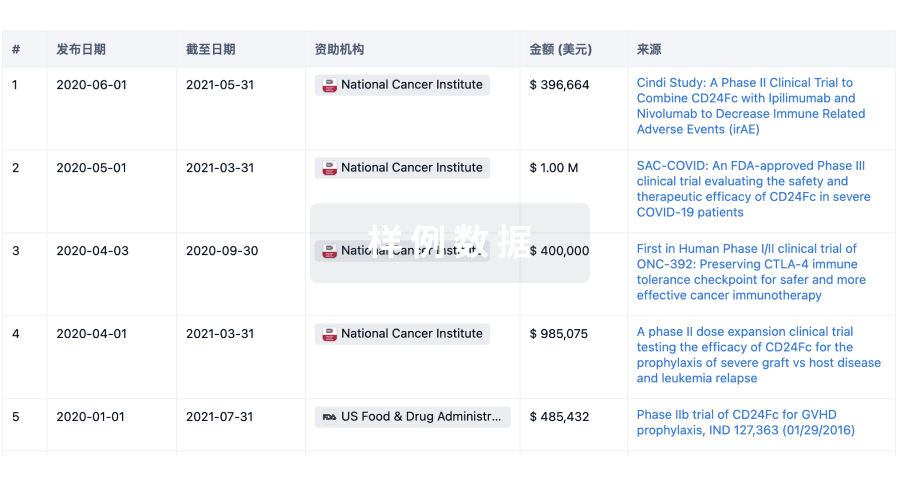
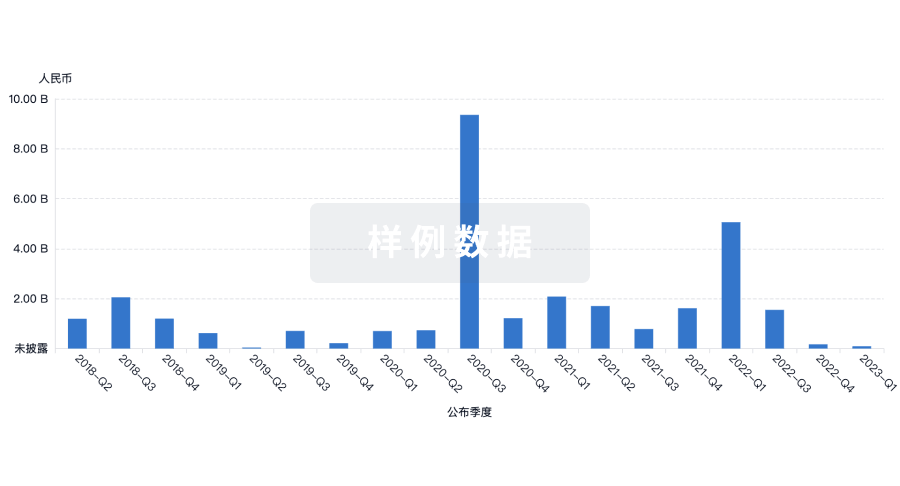
投资
深入了解从初创企业到成熟企业的最新公司投资动态。
登录
或
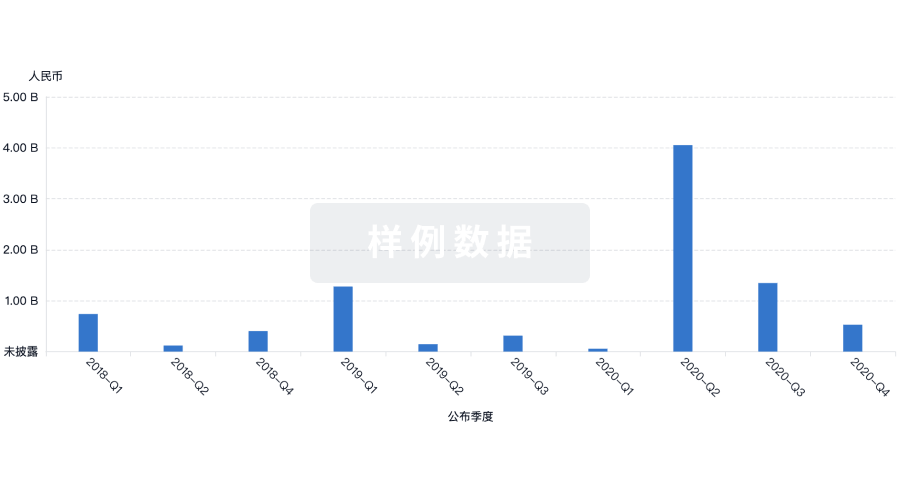
融资
发掘融资趋势以验证和推进您的投资机会。
登录
或
提出任何生物医药研究问题
让每一步生物医药决策都精准制胜
基于十亿级生物数据与全球情报的精准 AI,赋能早期药物发现
立即开始免费试用!
智慧芽新药情报库是智慧芽专为生命科学人士构建的基于AI的创新药情报平台,助您全方位提升您的研发与决策效率。
立即接入生物医药数据包
智慧芽新药库数据也通过智慧芽开放平台,以MCP或API服务形式对外开放。立即使用我们的MCP服务定制您的LLM智能体。
生物序列数据库
生物药研发创新
免费使用
化学结构数据库
小分子化药研发创新
免费使用