预约演示
更新于:2025-05-07
Tellus Therapeutics, Inc.
更新于:2025-05-07
概览
标签
神经系统疾病
小分子化药

关联
1
项与 Tellus Therapeutics, Inc. 相关的药物靶点- |
作用机制 细胞分化刺激剂 |
原研机构 |
在研适应症 |
非在研适应症 |
最高研发阶段临床前 |
首次获批国家/地区- |
首次获批日期- |

100 项与 Tellus Therapeutics, Inc. 相关的临床结果
登录后查看更多信息
0 项与 Tellus Therapeutics, Inc. 相关的专利(医药)
登录后查看更多信息
13
项与 Tellus Therapeutics, Inc. 相关的新闻(医药)2024-11-06
US presidential election winner Donald Trump has promised to let his ally Robert F. Kennedy Jr. “go wild” on drug and food policy. While Kennedy’s exact role in a potential Trump administration is unclear, it could result in unconventional picks to lead key health posts, including the FDA.
One of the emerging names to run the FDA in a Trump administration is Casey Means,
according to the
Washington Post
. Means, 37, trained as a surgeon after graduating from Stanford Medicine. Instead of practicing medicine, however, she became a health tech entrepreneur and founded the company Levels, which offers continuous glucose monitoring to the general public and provides food advice with the goal of improving health outcomes.
In recent months, Means and her brother, Calley — a former drug and food industry lobbyist — have made the rounds on conservative media, appearing on both Joe Rogan and Tucker Carlson’s shows. In interviews, in her book “Good Energy” and in her online newsletter, Casey Means has outlined a policy vision that would be a significant break in US drug and vaccine policy, as well as its approach to scientific research.
Endpoints News
reviewed many of Means’ public comments to analyze what they would mean for drug, vaccine and health policy. That includes remarks raising questions about a link between vaccines and autism, the causes of cancer, and whether the use of drugs is linked to a rise in overall disease.
Means didn’t respond to a request for comment. At a recent health technology conference in Las Vegas, she declined to say whether she’d accept a top health agency position if nominated.
“My passion is to help change the tide of the American chronic disease epidemic across the lifespan, and no matter who gets into office, I will be there to help support and educate about this topic to any listening ear,” Means said at the conference.
The Trump campaign and representatives for Kennedy also didn’t respond to requests for comment. In the volatile aftermath of the campaign, it’s far from certain that Kennedy will be as influential as he has seemed in the waning days of the campaign, or whether a more traditional policy leader on health and drug policy might emerge. Trump could also go with another name, like Johns Hopkins professor and author Marty Makary, another name mentioned by the Post. And there are also limits to what any political appointee can do at an agency like the FDA, where many decisions are made by career staff.
But the potential for Means or somebody like her to influence drug policy is already
raising concerns in biotech and pharma circles
— an industry Means has extensively criticized as more interested in selling drugs than keeping patients from getting sick.
Eric Benner, a pediatrician at Duke University and co-founder of Tellus Therapeutics — which is developing neonatal care drugs — said he could envision a scenario where Means or another Kennedy-influenced FDA chief might block a new drug application based on the class of therapy, regardless of how safety studies are conducted.
“It takes an unbiased FDA to be able to look at the data,” Benner said. “We can all point to vaccines as being probably highest on the list of difficult things to get approved through an RFK Jr.-appointed FDA. But that could trickle down into all kinds of different areas.”
Kennedy is a longtime vaccine skeptic and environmental advocate who dropped out of the race to endorse Trump in August. His “Make America Healthy Again” platform — a riff on Trump’s campaign slogan — emerged as a priority from various members of the former president’s camp, including Trump himself.
On CNN late last month, Cantor Fitzgerald CEO and Trump transition chair Howard Lutnick
questioned the effectiveness
of vaccines, saying, “Let’s give him the data. I think it’ll be pretty cool to give him the data. Let’s see what he comes up with.” And speaking to NBC News on Sunday, Trump said
he’d consider Kennedy’s proposal
for banning some childhood vaccines.
“Well, I’m going to talk to [Kennedy] and talk to other people, and I’ll make a decision, but he’s a very talented guy and has strong views,” Trump told NBC.
Vaccination has proven to be one of the biggest medical advances of the last 50 years, according to
a May paper from
The Lancet
. Since 1974, researchers found that routine childhood vaccinations have saved 154 million lives, the vast majority of which (146 million) are children under 5. In 2024, a vaccinated child under 10 years old is also 40% more likely to live to their next birthday than a child with no history of vaccination.
While Means hasn’t outright endorsed Kennedy’s view that vaccines cause autism, she has questioned their safety more broadly. The way placebo-controlled studies are currently designed and run cannot fully capture how safe they are in an environment with so many environmental and food contaminants, Means said on Rogan’s podcast.
“Yeah I bet that one vaccine probably isn’t causing autism, but what about the 20 that they’re getting before 18 months?” she asked Rogan. “We don’t look at it in a synergistic way, and so that’s a big problem.”
There is no evidence to suggest vaccines cause autism. A single academic paper on the topic, published in 1998, has been debunked multiple times and retracted.
There are already early signs in the US that anti-vaccine sentiment has led to the reemergence of some infectious diseases. In 2019, the US saw its biggest measles outbreak since 1992,
according to the CDC
. And earlier this year, the CDC said measles cases in 2024 were seven times higher than the period following that outbreak from 2020 to 2023.
But the type of research on vaccines that Means appears to be calling for would be incredibly difficult to conduct. 4D Molecular Therapeutics CEO David Kirn also questioned the feasibility of a new trial looking at each children’s vaccine’s effect on the body. There would be too many different variables to test in a way that is both financially and scientifically viable, he said.
“It would be almost impossible to study that,” Kirn said. “It would be hundreds of thousands of people that you’d have to follow for 10 to 20 years.”
Means has also weighed in on the amount of medications Americans take, saying that they coincide with an increase in disease.
“The more SSRIs we prescribe, the more depression goes up. The more metformin we prescribe, the more type 2 diabetes there is,” Means told Rogan. “We prescribe 221 million statins a year, but heart disease is still one of the leading killers. It doesn’t make any sense.”
And she’s likewise criticized the booming use of GLP-1 drugs for weight loss, saying that companies are rushing to get the use of the drugs approved in children, and making people dependent on them. “We are being gaslit to think that the pharmaceutical approach is the only legitimate science,” she said on Rogan’s podcast.
Former InCarda CEO Grace Colón, whose company developed drugs for heart disease, told Endpoints that Means’ comments about drug use and the rise of disease were “disappointing” from someone who could potentially lead the FDA. The increase in high blood pressure prescriptions is a sign the pharmaceutical business model is working as intended, Colón said, because they are almost all generics and cost patients relatively little, saving billions of dollars in healthcare costs.
“It’s the classic pitfall of correlation and causation,” Colón said. “Yes, all of these things are increasing. But where has she provided evidence to say that there is a direct result?”
Means is also a major advocate for healthier eating, getting more exercise and optimizing lifestyle choices. It’s a viewpoint connected to the tragic death of her mother from cancer in 2021.
One morning in January of that year, Means said her mother was on her daily hike with her father when she suddenly felt a sharp pain in her stomach. After going to a doctor and running some tests, the results came back the next day with stage 4 pancreatic cancer. Less than two weeks later, she died at 71.
Starting in her 40s, Means’ mother began taking drugs for high blood pressure, and added other medicine for high cholesterol and prediabetes later in life, but she ended up getting cancer anyway. This, Means said in her book, is emblematic of a healthcare system focused on maximizing revenue rather than preventing illness.
She dedicated her book to her mother, describing her pancreatic cancer as a “preventable metabolic condition.”
Means said she saw similar instances of what she describes as confounding illnesses while working in her medical residency. Patients in their 30s with migraines would come in and also have diagnoses for type 2 diabetes, depression and polycystic ovary syndrome (PCOS), among other maladies. She says she began to realize how all the different systems in the body are connected through these experiences and were the reason she launched her Oregon wellness clinic.
A central theme of Means’ book boils down to how the prevention of metabolic syndrome, a constellation of conditions that raise people’s risk of heart disease and diabetes, can provide long-term health benefits beyond what the medical establishment typically tells patients. By keeping one’s metabolic health in check from a younger age, an individual can also drastically lower their chances to get cancer, Alzheimer’s disease, liver disease and respiratory infections.
There is some scientific basis for the idea, said Georges Benjamin, executive director of the American Public Health Association. Most Americans eat high-calorie processed foods that are not healthier than other options.
But Benjamin’s biggest concern with Means, or any other Kennedy-aligned figure, is the tendency to draw conclusions about the links between nutrition and disease that don’t have much evidence backing them up. While there are some cancers where obesity is a risk, there are also many people who get cancer despite sticking to high-protein or vegetarian diets.
“There’s clearly evidence that diet and exercise and what you eat and how much you eat, etc., influences your body weight,” Benjamin said. “Now, having said that, I think that these broad statements about all the things that go wrong in our body are purely due to what you eat, that’s over the top and far too simplistic.”
疫苗
2024-09-14
▲10月26-27日成都中国临床试验产业发展大会点击免费报名
注:本文不构成任何投资意见和建议,以官方/公司公告为准;本文仅作医疗健康相关药物介绍,非治疗方案推荐(若涉及),不代表平台立场。任何文章转载需得到授权。
2024年8月22日,Zenas
BioPharma(泽纳仕生物)纳斯达克IPO申请正式获得受理,招股书公开,该公司计划以“ZBIO”为代码在纳斯达克全球市场上市。这距离Zenas上一轮融资仅仅过去了三个多月,距离该公司正式开始运营也不过三年多时间。
Zenas是一家拥有中美“双基因”的全球性生物制药公司。
药融云数据www.pharnexcloud.com显示,2021年3月23日,Zenas
BioPharma作为一家跨国(美国-中国)生物制药公司正式成立,致力于成为中国和世界各地患者免疫疗法开发和交付的全球领先企业。
在创立之时,Zenas由Tellus
BioVentures和Fairmount
Funds Management提供初期投资,还得到包括泉创资本、WuXi
Biologics HealthCare Venture和Wellington
Management在内的全球生命科学领先投资基金的联合投资支持。泉创资本董事巫荟博士担任Zenas当时的董事总经理。
Zenas创始人Lonnie
Moulder是生命科学投资基金Tellus
BioVentures的创始人和高级管理人员,在加入Zenas之前,他曾联合创立Tesaro公司并担任首席执行官兼董事,直到该公司在2019年1月被GSK以51亿美元收购,Tesaro的主要上市产品是其开发的Zejula(尼拉帕利,中文商品名:则乐®)。(Zenas目前的领导团队中有多位成员曾在Tesaro担任过重要职位。)从2019年开始,Lonnie
Moulder还是再鼎医药的董事会成员。
Zenas还曾在2021年5月任命牟骅博士担任公司的总裁兼首席执行官及代理首席医疗官。在加入Zenas之前,牟博士作为联合创办人建立了瓴路药业,同时还担任高瓴资本的风险合伙人。此外,牟博士还曾供职于先声药业、药明康德、和黄医药、Biogen和基因泰克。
2022年11月8日,Zenas宣布完成1.18亿美元的B轮股权融资,由Patient
Square Capital的投资组合公司Enavate
Sciences领投,新投资者包括Longitude
Capital和维梧资本等。(维梧资本合伙人卢红波博士加入Zenas董事会。)
2024年5月7日,Zenas宣布完成2亿美元的C轮优先股融资。(相关阅读:海外融资已恢复,这家引进模式biotech募资2亿美金)
截图自药融云数据库
“零首付”引进新药,获BMS豪掷半个亿
Zenas当前的核心在研产品Obexelimab是一种具有first-in-class潜力的双功能单克隆抗体,通过结合CD19和FcγRIIb以抑制B谱系细胞活性,有望治疗多种自身免疫性疾病。在已完成的5项临床试验中,Obexelimab治疗了198名受试者,显示出良好得耐受性和临床活性。
该候选药物出自Xencor的XmAb抗体工程技术平台。2021年11月21日,Zenas宣布从Xencor获得Obexelimab的全球独家权利。根据合作协议,Xencor获得Zenas的额外股权作为预付款,并有资格获得高达4.8亿美元的潜在里程碑付款和商业化产品净销售额的特许权使用费。
Obexelimab作用机制
这并不是Xencor第一次将Obexelimab对外授权。
早在2011年,Xencor宣布与安进就Obexelimab(前称Xmab5871/AMG-729)达成合作。根据当时的协议条款,安进可以选择在Xmab5871完成预定义的2期临床研究之后获得该药的全球独家许可,若安进行使其选择权,Xencor将获得期权行权费,加上前期和早期开发里程碑,总计7500万美元,另外,Xencor将有资格获得高达4.25亿美元的临床、监管和商业化里程碑付款,以及未来销售额的分级特许权使用费。然而在2014年,Xmab5871遭安进“退货”,Xencor重获该药的全球权益。
2018年,Xencor宣布Xmab5871治疗系统性红斑狼疮(SLE)的2期临床研究未达主要终点,但显示出积极趋势,在治疗的第225天,XmAb5871组患者有42%保持病情改善,而接受安慰剂的患者为28.6%,p=0.18,缺乏统计学意义。此前Xencor曾计划开展Xmab5871治疗IgG4相关性疾病的3期临床试验,但是这一2期研究失败的消息迫使该公司暂停这一计划,而是决定在推进3期临床之前为该药寻找合作伙伴,此后该药物开发在很长一段时间内陷入停滞。
终于在2021年,Xencor为Obexelimab(Xmab5871)寻到了买家,这在短期内并不会给Xencor带来多少财务回报,因为买家Zenas仅以股权作为首付款,在此之前Xencor就已持有Zenas公司15%的股权,价值1600万美元,而这笔交易使Xencor在Zenas完成下一轮融资时对其持股比例依然保持在15%。
不过从长期来看,这笔交易还是非常有意义的。
从Xencor取得Obexelimab全球许可后,Zenas在2022年底启动了Obexelimab治疗IgG4相关性疾病(IgG4-RD)的关键全球3期临床试验(INDIGO),并于2023年1月完成首例患者给药。药融云数据www.pharnexcloud.com显示,一项在IgG4相关性疾病患者中评价Obexelimab疗效和安全性的3期、多中心、随机、双盲、安慰剂对照研究(INDIGO)正在国内开展,国内计划招募30人,国际200人。该公司预计在2025年底之前报告INDIGO试验的顶线数据,并根据数据在2026年递交BLA申请。
截图自药融云数据库
IgG4-RD是一种慢性和严重的纤维炎症性疾病,通常影响多个器官(例如胰腺、肝脏、肾脏、胆管、唾液腺和泪腺)。仅在美国,大约有2万人被诊断出患有IgG4-RD。该病目前尚无获批的治疗方案,使用糖皮质激素是IgG4-RD的标准治疗方案,但大多数患者在停止治疗后几个月内会复发,很少能实现无需再接受治疗的长期缓解效果,并且会增加这些患者的高毒性风险,以及损害疫苗反应。
2023年8月,Zenas宣布Obexelimab治疗IgG4-RD的2期临床研究结果已刊登于《柳叶刀风湿病学》。该研究显示,治疗第169天,有12名患者(80%)的IgG4-RD
RI(应答指数)评分比基线至少降低了2分,其中8名患者(67%)的RI评分为零(完全缓解)。所有在最初产生应答的患者都在试验结束时实现了持续应答。
2023年9月5日,Zenas宣布与百时美施贵宝(BMS)达成战略许可和合作协议,授予后者在日本、韩国、台湾地区、新加坡、香港和澳大利亚开发和商业化Obexelimab用于治疗自身免疫性疾病的独家权利。根据协议条款,Zenas将获得5000万美元的预付款现金,并有资格获得与实现某些开发、监管和商业里程碑有关的额外付款,以及Obexelimab在许可地区的净销售特许权使用费。(据招股书披露,开发和监管里程碑付款最高可达7950万美元,销售里程碑付款最高可达7000万美元。)此外,百时美施贵宝对Zenas进行了股权投资。
除了IgG4-RD,Obexelimab正在被开发用于多种自身免疫性疾病。
温抗体型自身免疫性溶血性贫血(wAIHA)由IgG型自身抗体与红细胞结合驱动,导致健康红细胞过早破坏(溶血)。wAIHA是自身免疫性溶血性贫血(AIHA)最常见的亚型(占成人病例的70-80%)。据统计,美国有超过4万人受到这种疾病的影响。2023年末,Zenas启动了一项全球多中心、随机、双盲、安慰剂对照的2/3期临床试验(SApHiAre),以评估Obexelimab在wAIHA患者中的疗效和安全性。
另据招股书披露,Zenas计划在2024年第三季度启动一项评估Obexelimab治疗多发性硬化症(MS)患者的有效性和安全性的2期临床试验(MoonStone),以及一项评估Obexelimab治疗系统性红斑狼疮(SLE)患者的有效性和安全性的2期临床试验(SunStone)。
多款引进产品寻求再合作
Zenas管线中还有一系列临床项目,以期为其他免疫与炎症疾病提供潜在治疗药物,Zenas可能会与合作伙伴继续开发这些项目并最终进行商业化。
ZB002是一种抗TNFα单克隆抗体,由Zenas引进自Xencor,Zenas拥有全球权利。2024年第二季度,Zenas启动了ZB002针对类风湿性关节炎患者的1b期MAD研究。在小鼠中进行的头对头临床前研究表明,ZB002的半衰期比阿达木单抗更长(≥2倍)。若1b期MAD研究获得积极结果,Zenas可能会寻求对外合作,以在后续的试验中推进ZB002。
ZB004是一种CTLA-4-Ig融合蛋白,旨在提供比现有CTLA-4-Ig融合蛋白疗法更长的半衰期,该候选药物也是由Zenas引进自Xencor,Zenas拥有全球权利。基于正在进行的1期研究结果,该公司计划评估ZB004治疗免疫与炎症适应症的未来开发方向。
ZB001(又称VRDN-001)是一种IGF-1R(胰岛素样生长因子-1受体)单克隆抗体,由Zenas引进自Viridian
Therapeutics,Zenas拥有ZB001和相关项目在大中华区的研发和商业化权利,拟在国内开发用于治疗甲状腺眼病(TED)患者。2024年4月,ZB001治疗中国TED患者的1期MAD临床研究完成了最后的患者随访。初步数据显示,接受ZB001注射治疗后,患者体征和症状均有显著和快速的改善。在ZB001完成初步临床开发后,Zenas计划与第三方达成协议,以进一步推进ZB001和相关项目在大中华区的临床开发和商业化工作。
ZB005(又称DNTH103)是一种高选择性、靶向补体C1s活性形式的单克隆抗体,由Zenas引进自Dianthus
Therapeutics,Zenas拥有ZB005在大中华区的独家研发、制造和商业化权利。2023年8月,Dianthus报告了1期研究的数据,证实了ZB005延长半衰期和强大的经典途径抑制作用。Dianthus目前正在开展ZB005治疗全身性重症肌无力的2期临床研究。Zenas计划与第三方达成协议,以进一步推进ZB005在大中华区的临床开发和商业化工作。
财务状况
据招股书披露,截至2024年6月底,Zenas累计筹集3.583亿美元资金,投资者包括Enavate
Sciences、SR
One、Longitude
Capital、Tellus
BioVentures、Fairmount、New
Enterprise Associates、Norwest
Venture
Partners,以及百时美施贵宝(BMS)等,并通过与BMS的合作获得了5000万美元预付款。截至2024年6月底,Zenas持有1.839亿美元的现金。
持股5%及以上的股东
2023全年Zenas经营业绩如下:
全年各项目研发开支如下:
2024年上半年经营开支如下:
上半年各项目研发开支如下:
此文仅用于向医疗卫生专业人士提供科学信息,不代表平台立场,不作任何用药推荐
参考:
NMPA/CDE;
药融云数据www.pharnexcloud.com;
FDA/EMA/PMDA;
相关公司公开披露(正文图片均来自企业官方,除非另有说明);
https://zenasbio.com/news/zenas-biopharma-launches/;
https://zenasbio.com/news/zenas-biopharma-secures-118-million-to-advance-its-broad-pipeline-of-autoimmune-disease-therapeutics/;
https://www.fiercebiotech.com/biotech/xencor-finally-finds-buyer-for-one-time-lead-drug-offloading-autoimmune-asset-to-tesaro;
https://xueqiu.com/1335311504/260395589;
https://www.pharnexcloud.com/data/lcsy_a439d92ab6bed223216f037e41892922.html;等等
【关于药融圈】
药融圈PRHub旨在帮助生物医药科技型企业进行品牌推广及商务拓展服务,针对客户的真实需求制定系统化解决方案,通过“翻译-降维-场景化”将客户的品牌信息以直白易懂的方式被公众知悉,同时在流量渠道覆盖100万+垂直用户基础上实现合作目的,帮助合作伙伴完成从品牌开始到商务为终的闭环营销服务。我们已经完成了数十场线下1000人规模的生物医药研发类会议,涵盖小分子新药,大分子新药,改良型新药,BD跨境交易等多个领域,服务了百余家上市/独角兽/生物技术/制药企业。
并购IPO免疫疗法
2023-08-03
In experiments using neonatal mice, researchers have identified a fatty molecule in breast milk that triggers a process in which stem cells in the brain produce cells that create new white matter, reversing brain injury.
While it's known that the white matter loss will lead to neurological deficits, there is currently no treatment to help these infants avoid the outcome.
In experiments using neonatal mice, researchers at Duke Health have identified a fatty molecule in breast milk that triggers a process in which stem cells in the brain produce cells that create new white matter, reversing the injury.
The study appears Aug. 3 in the journal Cell Stem Cell. Eric Benner, M.D., Ph.D., is the study's corresponding author and is a distinguished assistant professor in the Department of Pediatrics at Duke University School of Medicine. Benner said further study in a clinical trial is needed, but the finding is promising.
"Developing therapies for children -- especially such medically fragile children -- is very difficult to do because there are justifiably strict safety concerns," Benner said. "The fact that this molecule is already found in something that is safe for premature babies -- breast milk -- is extremely encouraging.
"It's been known that fats in breast milk benefit a child's brain development, but there are many types of fats in breast milk," Benner said. "This work has identified a lipid molecule in breast milk that promotes white matter development. Now, we can begin to develop a therapy that isolates and delivers this lipid in a way that is safe for the unique challenges of these infants."
Benner is a neonatologist at Duke University and one of the co-founders of Tellus Therapeutics, a Duke spinout company developed with the help of the Duke University Office for Translation & Commercialization to bring this therapy from the bench into the neonatal intensive care unit.
The fatty molecule identified in the study will be administered intravenously to patients in an upcoming clinical trial. This is significant because many of the infants who are part of this vulnerable population also have gastrointestinal issues and cannot safely be given milk or medication by mouth.
The lipid molecule enters the brain and binds with stem cells there, encouraging the stem cells to become or produce a type of cell called oligodendrocytes.
The oligodendrocytes are like a hub that allow for the production of white matter in the central nervous system. This newly produced white matter in pre-term infants prevents the neurological damage that would otherwise impact the child's ability to move -- the hallmarks of cerebral palsy.
"The timing of brain injury is extremely difficult to predict, thus a treatment that could be safely given to all preterm babies at risk would be revolutionary," said Agnes Chao, M.D., a former fellow in the Division of Neonatology and first author of the paper.
"As a neonatologist, I'm so excited that I may be able to offer a treatment to families with babies that are affected by preterm brain injury who would otherwise have no other options," Chao said.
In addition to Benner and Chao, study authors include Pavle Matak, Kelly Pegram, James Powers, Collin Hutson, Rebecca Jo, Laura Dubois, J. Will Thompson, P. Brian Smith, Jason R. Gibson, Noelle E. Younge, Blaire Rikard, Simon G. Gregory, Ronald N. Goldberg, Mari L Shinohara, Estefany Y. Reyes, Chunlei Liu.
The study was funded by the National Institutes of Health (1R01NS114578, T32HD094671, K12HD043494, T32HD043728, R01AG070826, R01MH127104, P41EB015897, 1UL1-TR002553), Jean and George Brumley Jr. Neonatal Perinatal Research Institute, with additional support from the Duke Scholars Award from the School of Medicine, Duke University Center for In Vivo Microscopy, and the National Center for Advancing Translational Sciences.
100 项与 Tellus Therapeutics, Inc. 相关的药物交易
登录后查看更多信息
100 项与 Tellus Therapeutics, Inc. 相关的转化医学
登录后查看更多信息
组织架构
使用我们的机构树数据加速您的研究。
登录
或
管线布局
2026年02月07日管线快照
管线布局中药物为当前组织机构及其子机构作为药物机构进行统计,早期临床1期并入临床1期,临床1/2期并入临床2期,临床2/3期并入临床3期
临床前
1
登录后查看更多信息
药物交易
使用我们的药物交易数据加速您的研究。
登录
或

转化医学
使用我们的转化医学数据加速您的研究。
登录
或
营收
使用 Synapse 探索超过 36 万个组织的财务状况。
登录
或
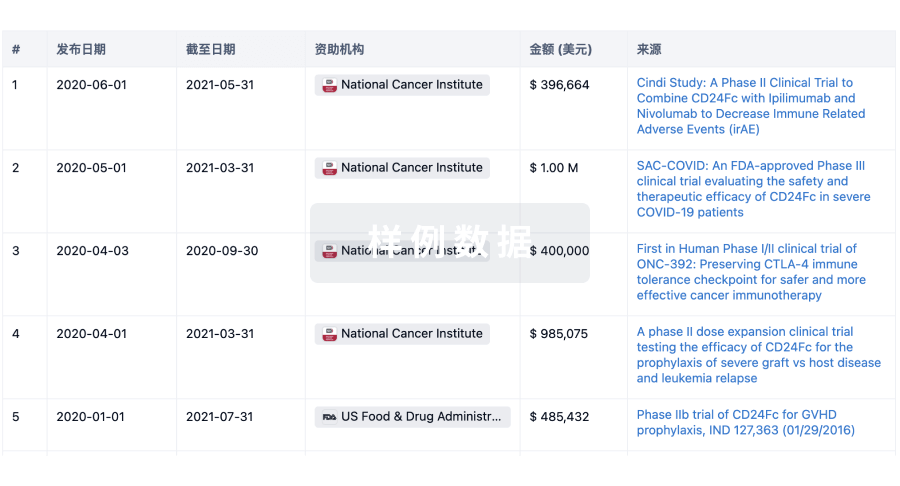
科研基金(NIH)
访问超过 200 万项资助和基金信息,以提升您的研究之旅。
登录
或
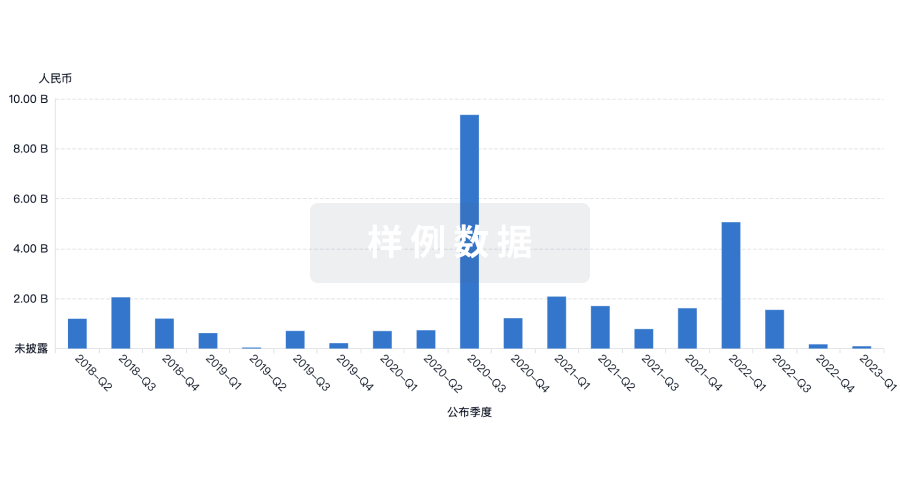
投资
深入了解从初创企业到成熟企业的最新公司投资动态。
登录
或
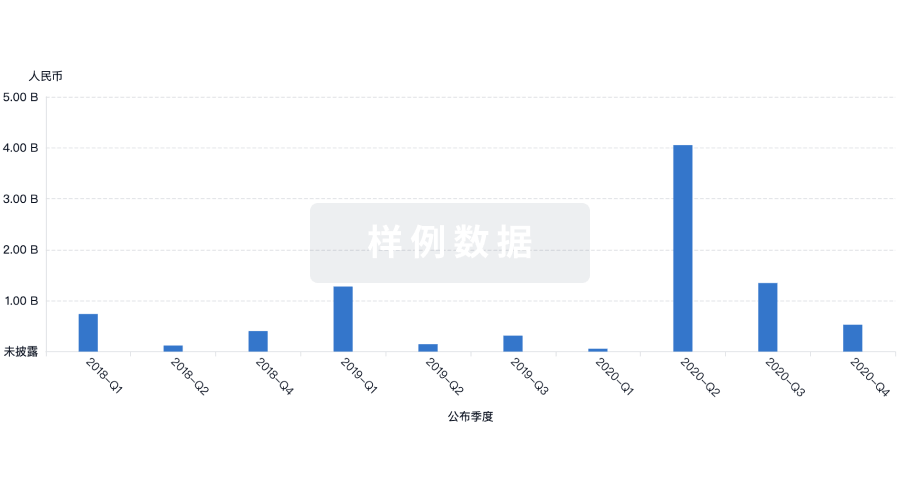
融资
发掘融资趋势以验证和推进您的投资机会。
登录
或
生物医药百科问答
全新生物医药AI Agent 覆盖科研全链路,让突破性发现快人一步
立即开始免费试用!
智慧芽新药情报库是智慧芽专为生命科学人士构建的基于AI的创新药情报平台,助您全方位提升您的研发与决策效率。
立即开始数据试用!
智慧芽新药库数据也通过智慧芽数据服务平台,以API或者数据包形式对外开放,助您更加充分利用智慧芽新药情报信息。
生物序列数据库
生物药研发创新
免费使用
化学结构数据库
小分子化药研发创新
免费使用