预约演示
更新于:2026-03-21

Zhejiang Nurotron Biotechnology Co. Ltd.
更新于:2026-03-21
概览
关联
ChiCTR2400088681
Clinical trials to evaluate the safety and efficacy of cochlear implants in patients with severe or very severe sensorineural hearing loss under specific magnetic resonance conditions
ChiCTR2400086170
To evaluate the safety and efficacy of NSP -100A cochlear speech processor in patients with severe and severe hearing loss

ChiCTR2400086315
Clinical follow-up study of Norcom Long Voyage Cochlear Implant system after marketing
100 项与 浙江诺尔康神经电子科技股份有限公司 相关的临床结果
登录后查看更多信息
登录后查看更多信息
2025-10-01NEUROIMAGE
Cortical aperiodic dynamics in hearing impairments predicts neural tracking of speech
Article
作者: Zhang, Zhili ; Lu, Yuhan ; Tian, Xing ; Mao, Hangze ; Hu, Difei ; Han, Yan ; Jiang, Zhuang ; Xiao, Yongtao ; Zhou, Shuihong
Excitation-inhibition balance is a fundamental property of cortical circuits, reflecting homeostatic plasticity that stabilizes neural activity in the face of functional disruption. This framework has been widely implicated in sensory deprivation and psychiatric disorders. In the auditory domain, it remains unclear how long-term bilateral and unilateral hearing loss reorganizes cortical E-I balance and how such reorganization affects speech processing. Here, we recorded resting-state EEG and measured spectral exponents as a noninvasive proxy for cortical E-I balance in individuals with bilateral hearing loss, single-sided deafness, and normal hearing. We found that spectral exponents differed systematically across hearing loss types. Participants with bilateral hearing loss exhibited reduced exponents, primarily in central-parietal regions, relative to normal-hearing controls, with a gradual increase with prolonged hearing-loss duration. In contrast, left- and right-sided deafness showed distinct patterns of hemispheric lateralization in spectral exponents. Participants also performed a naturalistic speech listening task, allowing quantification of neural tracking of speech. It showed stronger envelope tracking response for bilateral hearing loss group than normal control. Importantly, resting-state exponents across all hearing-impaired groups robustly predicted the strength of speech envelope tracking in noisy environments. These findings reveal dissociable patterns of aperiodic cortical dynamics following bilateral and unilateral auditory deprivation and highlight the homeostatic plasticity in supporting speech perception under challenging listening conditions.
2025-06-07Zhonghua er bi yan hou tou jing wai ke za zhi = Chinese journal of otorhinolaryngology head and neck surgery
[The 36th World Congress of Audiology summary and cutting-edge topics sharing].
Article
作者: Yin, L ; Liu, T Y ; Lin, Y P ; Gao, S X
2017-09-03Cochlear implants international
Implementation and preliminary evaluation of ‘C-tone’: A novel algorithm to improve lexical tone recognition in Mandarin-speaking cochlear implant users
Article
作者: Yin, Li ; Lu, Thomas ; Fu, Qian-Jie ; Tang, Guofang ; Wang, Ningyuan ; Ping, Lichuan ; Tu, Wenhe
OBJECTIVES:
Because of limited spectral resolution, Mandarin-speaking cochlear implant (CI) users have difficulty perceiving fundamental frequency (F0) cues that are important to lexical tone recognition. To improve Mandarin tone recognition in CI users, we implemented and evaluated a novel real-time algorithm (C-tone) to enhance the amplitude contour, which is strongly correlated with the F0 contour.
METHODS:
The C-tone algorithm was implemented in clinical processors and evaluated in eight users of the Nurotron NSP-60 CI system. Subjects were given 2 weeks of experience with C-tone. Recognition of Chinese tones, monosyllables, and disyllables in quiet was measured with and without the C-tone algorithm. Subjective quality ratings were also obtained for C-tone.
RESULTS:
After 2 weeks of experience with C-tone, there were small but significant improvements in recognition of lexical tones, monosyllables, and disyllables (P < 0.05 in all cases). Among lexical tones, the largest improvements were observed for Tone 3 (falling-rising) and the smallest for Tone 4 (falling). Improvements with C-tone were greater for disyllables than for monosyllables. Subjective quality ratings showed no strong preference for or against C-tone, except for perception of own voice, where C-tone was preferred.
DISCUSSION:
The real-time C-tone algorithm provided small but significant improvements for speech performance in quiet with no change in sound quality. Pre-processing algorithms to reduce noise and better real-time F0 extraction would improve the benefits of C-tone in complex listening environments.
CONCLUSIONS:
Chinese CI users' speech recognition in quiet can be significantly improved by modifying the amplitude contour to better resemble the F0 contour.
100 项与 浙江诺尔康神经电子科技股份有限公司 相关的药物交易
登录后查看更多信息
100 项与 浙江诺尔康神经电子科技股份有限公司 相关的转化医学
登录后查看更多信息
组织架构
使用我们的机构树数据加速您的研究。
登录
或
管线布局
2026年06月02日管线快照
无数据报导
登录后保持更新
药物交易
使用我们的药物交易数据加速您的研究。
登录
或
转化医学
使用我们的转化医学数据加速您的研究。
登录
或
营收
使用 Synapse 探索超过 36 万个组织的财务状况。
登录
或
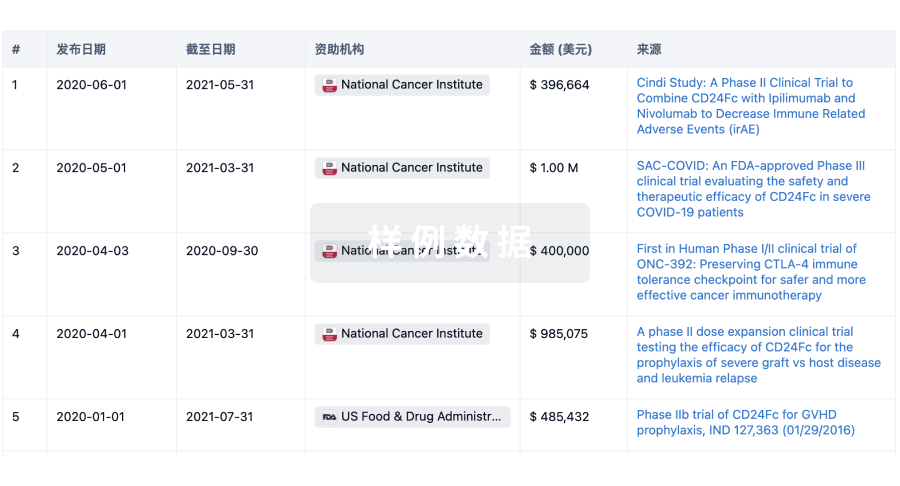
科研基金(NIH)
访问超过 200 万项资助和基金信息,以提升您的研究之旅。
登录
或
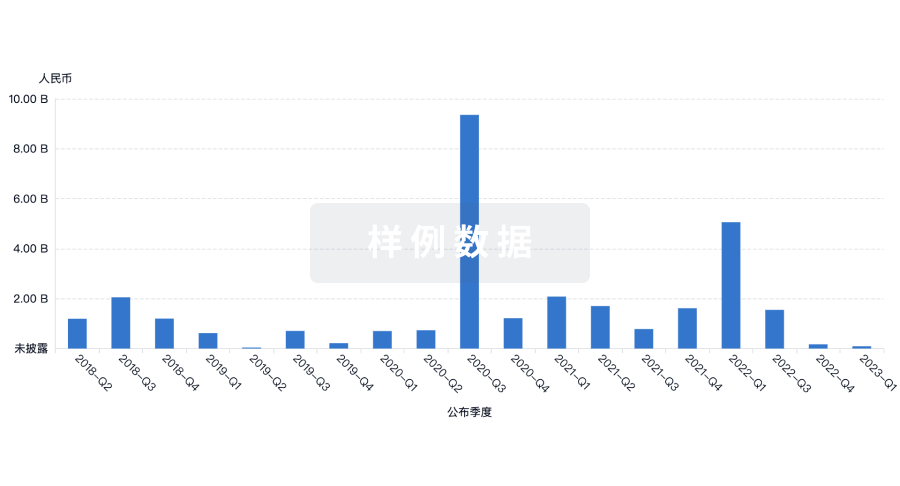
投资
深入了解从初创企业到成熟企业的最新公司投资动态。
登录
或
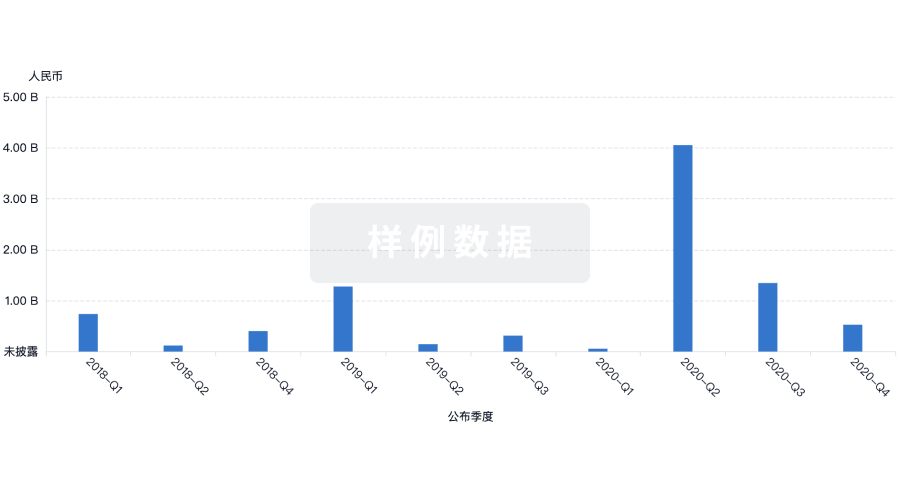
融资
发掘融资趋势以验证和推进您的投资机会。
登录
或
生物医药百科问答
全新生物医药AI Agent 覆盖科研全链路,让突破性发现快人一步
立即开始免费试用!
智慧芽新药情报库是智慧芽专为生命科学人士构建的基于AI的创新药情报平台,助您全方位提升您的研发与决策效率。
立即开始数据试用!
智慧芽新药库数据也通过智慧芽数据服务平台,以API或者数据包形式对外开放,助您更加充分利用智慧芽新药情报信息。
生物序列数据库
生物药研发创新
免费使用
化学结构数据库
小分子化药研发创新
免费使用