预约演示
更新于:2026-05-12

Illumina, Inc.
更新于:2026-05-12
概览
标签
其他疾病
寡核苷酸
疾病领域得分
一眼洞穿机构专注的疾病领域

暂无数据
技术平台
公司药物应用最多的技术
靶点
公司最常开发的靶点
关联
CN117015614
专利挖掘靶点 |
作用机制 |
在研机构 |
原研机构 |
在研适应症 |
非在研适应症 |
最高研发阶段 |
首次获批国家/地区 |
首次获批日期 |
NCT07563309
A Study to Evaluate the Performance, Usability, and Contrived Result Interpretation of TruPlex HIV/HepB/Syphilis Rapid Test by Trained Personnel at Near-Patient and Point-of-Care Settings

NCT07569900
A Study to Evaluate the Performance, Usability, and Contrived Result Interpretation of iStatis Gonorrhea Antigen Test by Trained Personnel at Near-Patient or Point-of-Care Settings
NCT07038837
Cluster Randomised Non-inferiority Trial Comparing Malaria Incidence When Implementing R21/Matrix-M Synchronized With Seasonal Malaria Chemoprevention Distribution Versus R21/Matrix-M Given Routinely Through the EPI in Two Health Districts in Chad (CoSAV-R21)
100 项与 Illumina, Inc. 相关的临床结果
登录后查看更多信息
登录后查看更多信息
2026-04-01AMERICAN JOURNAL OF HUMAN GENETICS
BLOC1S1 variants cause lysosomal and autophagic defects resulting in a hypomyelinating leukodystrophy with epileptic encephalopathy
Article
作者: Sanderson, Leslie E ; Sannaa, Nouriya A ; Mutlu, Mehmet Burak ; Quintas, Ana Sofia ; Bas, Hasan ; Teferedegn, Eden ; Hsiao-Sánchez, Nicole ; Wolvetang, Ernst ; Tripolski, Kornelia ; Simons, Cas ; Issa, Awatif Hameed ; Disanza, Brianna ; Bertoli-Avella, Aida M ; Whitehead, Matthew T ; Mojarrad, Majid ; Bhoj, Elizabeth ; Houlden, Henry ; Jabbar, Hayder Kadhim ; De Pace, Raffaella ; Bonkowsky, Joshua L ; Helman, Guy ; Romito, Antonio ; Zonic, Emir ; Ahrens-Nicklas, Rebecca C ; Williamson, Chad D ; Dominguez Gonzalez, Carlos A ; Dias, Patricia ; Oztürk, Hasan ; Maroofian, Reza ; Vossough, Arastoo ; Barakat, Tahsin Stefan ; Muirhead, Kayla ; Taft, Ryan J ; van Ham, Tjakko J ; Bonifacino, Juan S ; Pizzino, Amy ; Sheikhani, Shahriar ; Vanderver, Adeline ; Alerasool, Masoome
BLOC1S1 encodes a subunit shared by the BLOC-1 and BLOC-one-related complex (BORC) hetero-octameric complexes that regulate various endolysosomal processes. Here, we report the identification of seven distinct variants in BLOC1S1 in 11 individuals from seven independent families presenting with early psychomotor delay, hypotonia, spasticity, epileptic encephalopathy, optic atrophy, and leuko-axonopathy with hypomyelination. A subset of the affected individuals also have features of hypopigmentation and ocular albinism that are similar, although milder, than those of individuals with BLOC-1-related Hermansky-Pudlak syndrome. Functional analyses show that BLOC1S1 knockout (KO) impairs the anterograde transport of lysosomes and autophagy in both non-neuronal cells and induced pluripotent stem cell (iPSC)-derived neurons. Transfection experiments reveal that most BLOC1S1 variants exhibit reduced expression, decreased assembly with other BORC/BLOC-1 subunits, and/or impaired restoration of lysosome transport and autophagy in BLOC1S1-KO cells. Additionally, we show that KO of BLOC1S1 reduces pigmentation in a melanocytic cell line and that five of the BLOC1S1 variants partially or fully restore pigmentation. These findings provide genetic, clinical, and functional evidence that loss of function (LoF) of BLOC1S1 leads to more pronounced deficits in BORC than BLOC-1 function. We conclude that the bi-allelic BLOC1S1 variants characterized here primarily result in a neurological disorder with prominent leukodystrophy, similar to the recently reported condition caused by variants in the BORCS8 subunit of BORC. Together, these findings establish BORCopathies as a distinct disease entity.
2026-03-01Journal of Clinical Lipidology
The impact of genetic testing on physician practice in specialized cardiovascular clinics
Article
作者: Ballantyne, Christie M ; Nambi, Vijay ; Metcalf, Ginger A ; Sewell, Tyler ; Hostin, Damon ; Bhatt, Sucheta ; Spencer, Scott ; Hamid, Arsalan ; Gibbs, Richard A ; Abushamat, Layla A
BACKGROUND:
Although familial hypercholesterolemia (FH) is a US Centers for Disease Control and Prevention tier 1 condition for genetic testing, the impact of testing on clinical outcomes is unclear.
OBJECTIVE:
We aimed to assess whether genetic testing alters lipid management in HeartCare participants.
METHODS:
For participants with pathogenic/likely pathogenic variants for FH observed at Baylor College of Medicine cardiology clinics, data on laboratory values, medication prescriptions, and diagnoses were collected and compared before and after genetic testing.
RESULTS:
In the 20 participants with APOB/LDLR variants and complete data, low-density lipoprotein cholesterol (LDL-C) was numerically lower but not significantly different before vs after genetic testing (103 vs 79.5 mg/dL). Sixteen (80%) participants were from the lipid clinic; the majority had a preexisting FH diagnosis. LDL-C levels were numerically lower, and more patients received proprotein convertase subtilisin/kexin type 9 inhibitor prescriptions after genetic testing; however, the difference was not statistically significant.
CONCLUSIONS:
The majority of patients with FH achieved LDL-C <100 mg/dL after genetic testing; however, most patients with APOB/LDLR variants were from the lipid clinic and had been diagnosed with FH by clinical criteria.
2026-01-01Genetics in medicine open
Development of a comprehensive cardiovascular disease genetic risk assessment test
Article
作者: Robinson, Keisha ; Hejja, Rueben ; Golden-Grant, Katie ; Lowry, Josh ; Margulies, Elliott ; Longoni, Mauro ; Lee, Jennifer A ; Malhotra, Alka ; Ajay, Subramanian S ; Chawla, Aditi ; Huertas-Vazquez, Adriana ; Taylor, Julie P ; Milewski, Becky ; Brown, Carolyn M ; Rajkumar, Revathi ; Lanfear, David E ; Walker, Andrew ; Medrano, Phillip ; Amendola, Laura M ; Thacker, Stetson ; Perry, Denise L ; Avecilla, James ; Mullen, Felipe ; Hostin, Damon ; Kesari, Akanchha ; Kalista, Tasha ; Strom, Samuel P ; Taft, Ryan J ; Belmont, John ; Coffey, Alison J
Purpose:
Despite monogenic and polygenic contributions to cardiovascular disease (CVD), genetic testing is not widely adopted, and current tests are limited by the breadth of surveyed conditions and variant interpretation burden. To address these limitations, a comprehensive clinical genome CVD test with semiautomated interpretation was developed.
Methods:
Monogenic conditions and risk alleles were selected based on the strength of disease association and evidence for increased disease risk, respectively. Non-CVD secondary findings genes, pharmacogenomic (PGx) variants, and CVD-associated polygenic risk scores (PRS) were also assessed for inclusion. Test performance was modeled using 2594 genomes from the 1000 Genomes Project and further investigated in 20 previously tested individuals.
Results:
The CVD genome test comprises a panel of 215 high-confidence CVD gene-disease pairs, 35 non-CVD secondary findings genes, 4 risk alleles or genotypes, 10 PGx genes, and a PRS for coronary artery disease. Modeling of test performance using samples from the 1000 Genomes Project revealed approximately 6% of individuals with a monogenic finding in a CVD-associated gene, 6% with a risk allele finding, 1% with a non-CVD secondary finding, and 93% with CVD-associated PGx variants. Assessment of blinded clinical samples showed concordance with prior testing. An average of 4 variants were reviewed per case, with interpretation and reporting time ranging from 9 to 96 minutes.
Conclusion:
A genome-sequencing-based CVD genetic risk assessment test can provide comprehensive genetic disease and genetic risk information to patients with CVD. The semiautomated and limited interpretation burden suggest that this testing approach can be scaled to support population-level initiatives in phenotypically enriched populations.
2026-05-11
2026-05-08
·循因缉药
100 项与 Illumina, Inc. 相关的药物交易
登录后查看更多信息
100 项与 Illumina, Inc. 相关的转化医学
登录后查看更多信息
组织架构
使用我们的机构树数据加速您的研究。
登录
或
管线布局
2026年09月25日管线快照
管线布局中药物为当前组织机构及其子机构作为药物机构进行统计,早期临床1期并入临床1期,临床1/2期并入临床2期,临床2/3期并入临床3期
药物发现
1
3
其他
登录后查看更多信息
当前项目
登录后查看更多信息
药物交易
使用我们的药物交易数据加速您的研究。
登录
或
转化医学
使用我们的转化医学数据加速您的研究。
登录
或
营收
使用 Synapse 探索超过 36 万个组织的财务状况。
登录
或
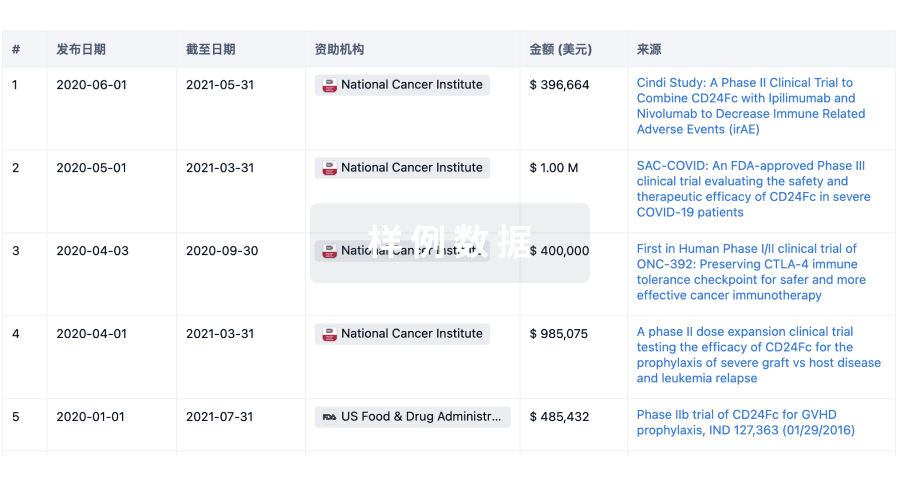
科研基金(NIH)
访问超过 200 万项资助和基金信息,以提升您的研究之旅。
登录
或
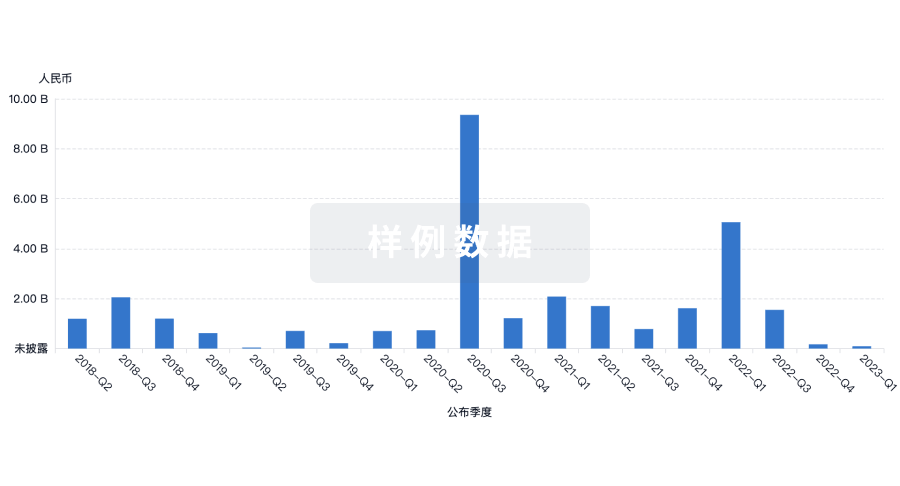
投资
深入了解从初创企业到成熟企业的最新公司投资动态。
登录
或
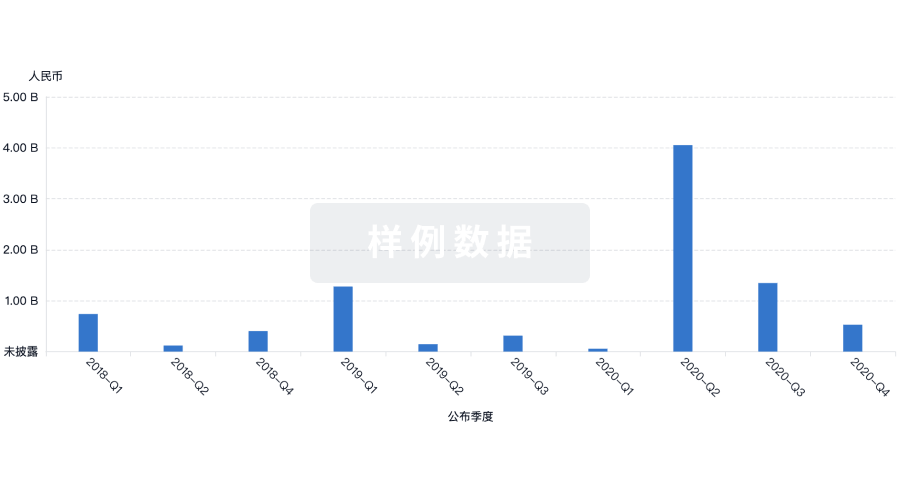
融资
发掘融资趋势以验证和推进您的投资机会。
登录
或
提出任何生物医药研究问题
让每一步生物医药决策都精准制胜
基于十亿级生物数据与全球情报的精准 AI,赋能早期药物发现
立即开始免费试用!
智慧芽新药情报库是智慧芽专为生命科学人士构建的基于AI的创新药情报平台,助您全方位提升您的研发与决策效率。
立即接入生物医药数据包
智慧芽新药库数据也通过智慧芽开放平台,以MCP或API服务形式对外开放。立即使用我们的MCP服务定制您的LLM智能体。
生物序列数据库
生物药研发创新
免费使用
化学结构数据库
小分子化药研发创新
免费使用