预约演示
更新于:2026-03-03

University of Miyazaki
更新于:2026-03-03
概览
标签
消化系统疾病
免疫系统疾病
小分子化药
Fc融合蛋白
多肽偶联药物(PDC)
疾病领域得分
一眼洞穿机构专注的疾病领域

技术平台
公司药物应用最多的技术
靶点
公司最常开发的靶点
关联
靶点 |
作用机制 |
在研机构 |
原研机构 |
在研适应症 |
非在研适应症 |
最高研发阶段 |
首次获批国家/地区 |
首次获批日期 |


靶点 |
作用机制 |
在研机构 |
原研机构 |
在研适应症 |
非在研适应症 |
最高研发阶段 |
首次获批国家/地区 |
首次获批日期 |
靶点 |
作用机制 |
在研机构 |
原研机构 |
在研适应症 |
非在研适应症 |
最高研发阶段 |
首次获批国家/地区 |
首次获批日期 |
JPRN-UMIN000059931
Evaluating the Effectiveness and Sustainability of Cancer Education Interventions for Young Adults: A Pilot Randomized Controlled Trial - CEYA Trial
JPRN-UMIN000059675
Associations among locomotive syndrome,health literacy,and physical activity in middle-aged adults(40s-50s) - LoHLPA Study
JPRN-UMIN000056242
The relationship between sodium intake and change in body weight, body composition, and gastrointestinal symptoms during carbohydrate loading - The relationship between sodium intake and change in body weight, body composition, and gastrointestinal symptoms during carbohydrate loading
100 项与 University of Miyazaki 相关的临床结果
登录后查看更多信息
登录后查看更多信息
2026-12-01PARASITOLOGY RESEARCH
Identification of Cryptosporidium and Eimeria associated with diarrhea in calves in Japan (2020–2022)
Article
作者: Sato, Reiichiro ; Kato, Kentaro ; Fukuda, Yasuhiro ; Murakoshi, Fumi ; Itoh, Megumi ; Fujikura, Atsushi ; Yamamura, Fuminosuke ; Otomaru, Konosuke ; Mochizuki, Nanako ; Miura, Hiroshi ; Goto, Akira ; Kabir, Mohammad Hazzaz Bin ; Shibano, Kenichi ; Bandai, Kazuhiro ; Endo, Takuto ; Kano, Yuto ; Yosuke Maeda ; Fumiaki Takahashi
Calf diarrhea is a multifactorial disease that poses substantial challenges to the cattle industry, necessitating timely identification and characterization of causative agents to inform effective control strategies. This study investigated the prevalence, co-occurrence, and characteristics of Cryptosporidium and Eimeria infections in diarrheic calves. A total of 348 diarrheal fecal samples were collected from calves aged 1-30 days across 15 prefectures in Japan between February 2020 and February 2022. Preliminary diagnosis of calf diarrhea was performed using an immunochromatographic test (ICT) kit. Cryptosporidium spp. were detected in 36.5% (127/348) of samples. Using nested PCR and conventional PCR with species-specific primers, targeting these two major parasitic pathogens, we assessed seasonal variations, prevalence, and associations with calf age, breed, and sex. Overall, Cryptosporidium was detected in 58.6% of samples, while Eimeria spp. were found in 7.5%. Mixed infections involving both pathogens occurred in 4.9% of samples. The highest detection rates for both pathogens were observed in calves aged 8-15 days, with a significant age-related decline in mixed infections (p < 0.05). Seasonal variations were observed, with distinct prevalence patterns for each pathogen. Breed- and sex-related differences were minimal but are described in detail. Phylogenetic analysis confirmed C. parvum as the predominant Cryptosporidium species and E. bovis as the most common Eimeria species. These findings highlight the widespread presence of Cryptosporidium and Eimeria spp. in diarrheic calves in Japan and provide insights into age- and season-related infection dynamics, informing targeted control and management strategies.
2026-04-01FISH & SHELLFISH IMMUNOLOGY
Two interleukin-1β types reinforce innate immune response modulation in Japanese medaka, Oryzias latipes
Article
作者: Kono, Tomoya ; Hikima, Jun-Ichi ; Sumiyoshi, Takechiyo ; Washim, Mizanur Rahman ; Nallaperumal, Siva ; Nishihara, Aki ; Morimoto, Natsuki
Interleukin-1β is a pro-inflammatory cytokine with pluripotent roles in mediating immune response. In fish, IL-1β plays a major role in inflammatory responses to pathogenic infections, though its immunological functions through direct stimulation have not been studied in detail. In this study, two IL-1β genes (il1b1 and il1b2) from the Japanese medaka (Oryzias latipes) were identified and characterized. The broad immunostimulatory effects of recombinant IL-1β (OlrIL-1β) from Japanese medaka were explored using embryonic fibroblast-like cell line (OLHdrR-e3) and primary cultured kidney cells. Recombinant proteins were produced via prokaryotic expression based on predicted mature isoforms IL-1β1_Asp95 (type II) and IL-1β2_Asp121 (type I) to investigate their distinct functional characteristics. Then, their immune-related gene expression, phagocytosis, and reactive oxygen species (ROS) production ability were evaluated in vitro and ex vivo. rIL-1β triggers the expression of not only pro-inflammatory cytokines such as il1b, tnfa, il6, il8, mcp1b, and csf1b, but also the antimicrobial peptide, def1b. Additionally, they upregulate the expression of cell specific markers, including macrophage- and granulocyte-specific genes mpeg1.1, mpx2, and epx, and nitric oxide synthase (NO) gene nos1. Moreover, medaka OlrIL-1β proteins exhibited robust phagocytosis and superoxide anion production ability than those in unstimulated control. In all evaluations, the OlrIL-1β proteins corresponding to the predicted cleavage sites exhibited strong immune activation, with type I OlIL-1β2_Asp121 demonstrating more potent response than type II. To our knowledge, this is the study to reveal the immunomodulatory functions of Japanese medaka IL-1β, highlighting its potential in immunotherapy for disease prevention and control in aquaculture.
2026-04-01BIOCHEMICAL AND BIOPHYSICAL RESEARCH COMMUNICATIONS
A competitive fluorescence immunoassay based on intermolecular quenching using an N-terminally fluorescent-labeled IgG antibody
Article
作者: Watanabe, Takayoshi ; Hohsaka, Takahiro ; Fukunaga, Keisuke
The development of antibody-based fluorescent sensors relying on tryptophan-mediated quenching, such as Quenchbody (Q-body), often exhibits limited fluorescence responses because dye quenching depends on the location of tryptophan residues within the antibody. Here, we developed a competitive fluorescence immunoassay, termed an intermolecular Quenchbody (iQ-body), that utilizes intermolecular Förster resonance energy transfer (FRET) between an N-terminally fluorescent-labeled IgG antibody and an antigen-quencher conjugate. Anti-thyroxine IgG antibody (clone 6901 SPTN-5) showed minimal fluorescence changes upon antigen binding, despite N-terminal labeling with TAMRA. In contrast, the addition of an antigen-quencher conjugate (QSY9-X-T3) effectively quenched the TAMRA fluorescence via intermolecular FRET. Subsequent competitive displacement by thyroxine (T4) resulted in concentration-dependent fluorescence recovery. The iQ-body strategy provides a simple approach for constructing competitive fluorescence immunoassays for small-molecule targets using publicly available IgG antibodies.
100 项与 University of Miyazaki 相关的药物交易
登录后查看更多信息
100 项与 University of Miyazaki 相关的转化医学
登录后查看更多信息
组织架构
使用我们的机构树数据加速您的研究。
登录
或
管线布局
2026年10月11日管线快照
管线布局中药物为当前组织机构及其子机构作为药物机构进行统计,早期临床1期并入临床1期,临床1/2期并入临床2期,临床2/3期并入临床3期
临床前
1
2
临床2期
其他
3
登录后查看更多信息
当前项目
登录后查看更多信息
药物交易
使用我们的药物交易数据加速您的研究。
登录
或
转化医学
使用我们的转化医学数据加速您的研究。
登录
或
营收
使用 Synapse 探索超过 36 万个组织的财务状况。
登录
或
科研基金(NIH)
访问超过 200 万项资助和基金信息,以提升您的研究之旅。
登录
或
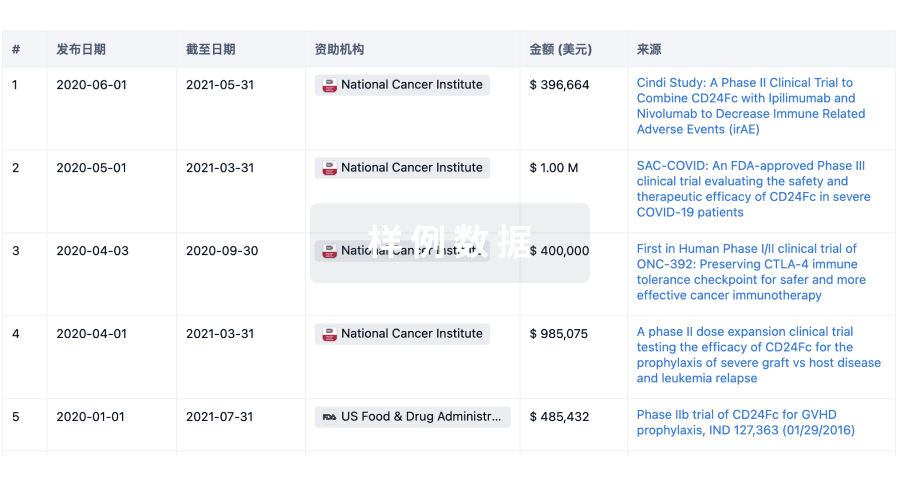
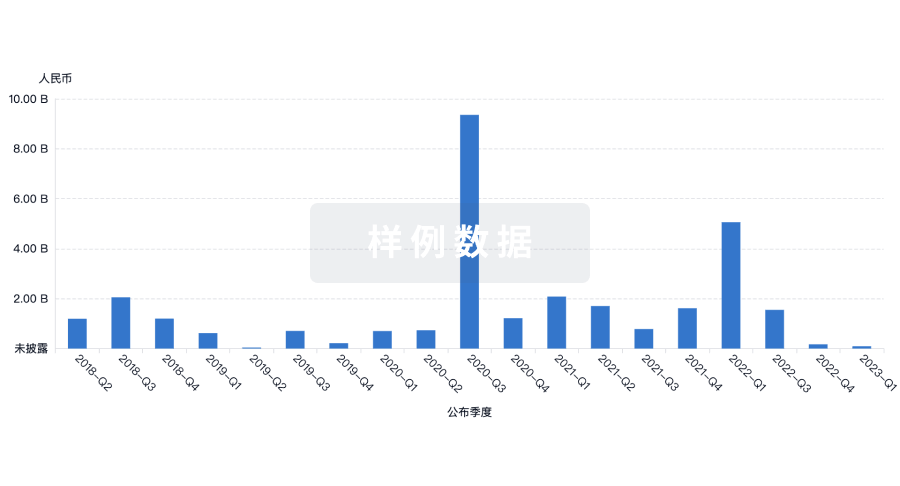
投资
深入了解从初创企业到成熟企业的最新公司投资动态。
登录
或
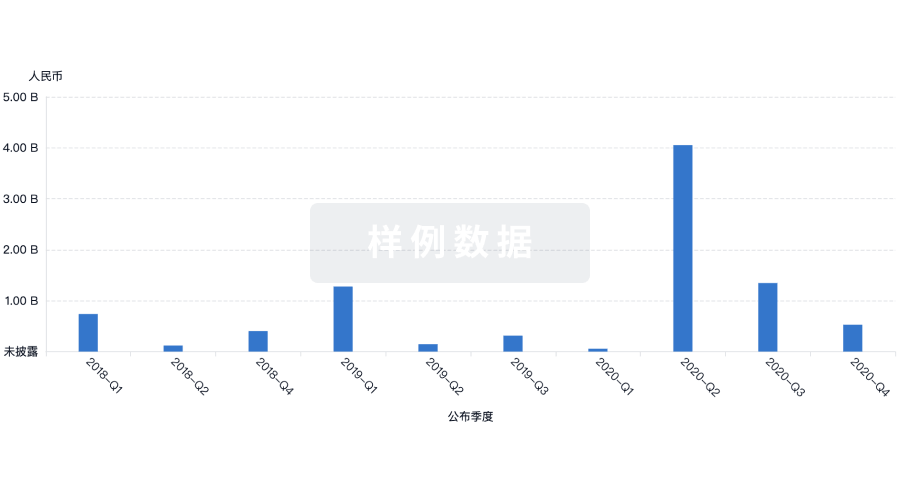
融资
发掘融资趋势以验证和推进您的投资机会。
登录
或
提出任何生物医药研究问题
让每一步生物医药决策都精准制胜
基于十亿级生物数据与全球情报的精准 AI,赋能早期药物发现
立即开始免费试用!
智慧芽新药情报库是智慧芽专为生命科学人士构建的基于AI的创新药情报平台,助您全方位提升您的研发与决策效率。
立即接入生物医药数据包
智慧芽新药库数据也通过智慧芽开放平台,以MCP或API服务形式对外开放。立即使用我们的MCP服务定制您的LLM智能体。
生物序列数据库
生物药研发创新
免费使用
化学结构数据库
小分子化药研发创新
免费使用