预约演示
更新于:2026-05-24

Tasly Holding Group Co., Ltd.
更新于:2026-05-24
概览
标签
ADC
疾病领域得分
一眼洞穿机构专注的疾病领域

暂无数据
技术平台
公司药物应用最多的技术
靶点
公司最常开发的靶点
关联
靶点 |
作用机制 |
在研机构 |
原研机构 |
在研适应症 |
非在研适应症 |
最高研发阶段 |
首次获批国家/地区 |
首次获批日期 |
靶点 |
作用机制 |
在研机构 |
原研机构 |
在研适应症 |
非在研适应症 |
最高研发阶段 |
首次获批国家/地区 |
首次获批日期 |
靶点 |
作用机制 |
在研机构 |
原研机构 |
在研适应症 |
非在研适应症 |
最高研发阶段 |
首次获批国家/地区 |
首次获批日期 |
CTR20210942
利托那韦片对盐酸优克那非片在健康受试者中的药代动力学影响研究
CTR20210619
[14C]盐酸优克那非在中国成年男性健康受试者体内的吸收、代谢和排泄临床试验-[14C]盐酸优克那非人体物质平衡及生物转化研究
CTR20210033
盐酸优克那非片对马来酸咪达唑仑片在健康受试者中的药代动力学影响研究
100 项与 天士力生物医药产业集团有限公司 相关的临床结果
登录后查看更多信息
登录后查看更多信息
2025-05-01FOOD CHEMISTRY
Structural and physicochemical properties and changes in vitro digestion and fermentation of soluble dietary fiber from tea residues modified by fermentation
Article
作者: Chen, Yang ; Wang, Min ; Wang, Yongqi ; Cao, Hailong ; Bai, Xiaoli ; Nie, Yaning ; Liu, Shunhang ; Xu, Yongquan ; Zhang, Nannan ; Xia, Ting
The aim of this study was to investigate the structure, physicochemical properties, and changes in vitro digestion and fermentation between unfermented tea residue dietary fiber (UDF) and fermented tea residue soluble dietary fiber (FSDF). The results showed that soluble dietary fiber in FSDF was increased from 2.54 % to 15.65 % after fermentation modification. Monosaccharide composition analysis showed that xylose and glucose accounted for a higher proportion in FSDF. FSDF had smaller particle size, lower crystallinity and higher thermal stability. The water holding capacity, oil holding capacity and water swelling capacity of FSDF were significantly increased. Rheological properties showed that FSDF exhibited higher viscosity and better elastic than UDF. Furthermore, FSDF generated more short-chain fatty acids, and the structure was looser than UDF, which was easier to be utilized by intestinal flora. These findings provided higher value of dietary fiber in tea residue by fermentation modification as functional products.
2024-04-01Journal of ethnopharmacology
A new insight into material basis of rhizoma Paridis saponins in alleviating pain
Article
作者: Man, Shuli ; Zhang, Xinghao ; Wang, Genbei ; Xie, Lu ; Zhou, Yaxue ; Gao, Wenyuan ; Hao, Ruijia
ETHNOPHARMACOLOGICAL RELEVANCE:
Paris polyphylla, as a traditional Chinese herbal medicine, was often used to relieve inflammation and pain. Rhizoma Paridis saponins (RPS) as the main active components of Paris polyphylla have excellent analgesic effects.
AIM OF THE STUDY:
Determine the analgesic material basis of RPS.
MATERIALS AND METHODS:
LC-MS/MS was used to analyze RPS, plasma after intravenous injection of RPS, and oral administration of RPS. H22 plantar pain model was established to explore the analgesic material basis of RPS. Moreover, correlation analysis, network pharmacology, RT-PCR and molecular docking were applied in this research.
RESULTS:
RPS had dose-dependently analgesic effects in acetic acid- and formalin-induced pain models. LC-MS/MS detection indicated that diosgenin as the metabolite of RPS mainly distributed in brain tissues. The addition of antibiotics increased the anti-tumor effect of RPS, but reduced its analgesic effect. Network pharmacology, RT-PCR and molecular docking showed that diosgenin exerted its analgesic effect through SRC and Rap1 signaling pathway.
CONCLUSION:
Diosgenin exhibited analgesic effects, while saponins had good anti-tumor effects in RPS. This discovery provided a better indication for the later application of RPS in anti-tumor and analgesic settings.
2022-10-05CRYSTAL GROWTH & DESIGN
“Drug–Coformer–Drug” Multicomponent Crystals to Simultaneously Improve the Solubility of Two Insoluble Combined Drugs by Introduction of a Soluble Coformer
作者: Huang, Yong-Liang ; Long, Xiangtian ; Ren, Bo-Ying ; Lu, Tong-Bu ; Zhang, Fang ; Chen, Jia-Mei ; Dai, Xia-Lin
One "drug-drug" (GTB-RH) and two "drug-coformer-drug" (GTB-SA-RH and GTB-SA-RH·EtOH) multicomponent crystals involving two insoluble drugs, gefitinib (GTB) and rhein (RH), and succinic acid (SA) as a soluble coformer, were successfully obtained.GTB-SA-RH and GTB-SA-RH·EtOH exhibit higher solubility and faster dissolution rates of both GTB and RH as compared to GTB-RH.This study presents an opportunity for simultaneously and effectively improving the solubility of two insoluble drugs by the introduction of a soluble coformer to construct "drug-coformer-drug" multicomponent crystals to develop improved combined medicines.
100 项与 天士力生物医药产业集团有限公司 相关的药物交易
登录后查看更多信息
100 项与 天士力生物医药产业集团有限公司 相关的转化医学
登录后查看更多信息
组织架构
使用我们的机构树数据加速您的研究。
登录
或
管线布局
2026年05月28日管线快照
管线布局中药物为当前组织机构及其子机构作为药物机构进行统计,早期临床1期并入临床1期,临床1/2期并入临床2期,临床2/3期并入临床3期
临床前
3
1
其他
登录后查看更多信息
当前项目
登录后查看更多信息
药物交易
使用我们的药物交易数据加速您的研究。
登录
或
转化医学
使用我们的转化医学数据加速您的研究。
登录
或
营收
使用 Synapse 探索超过 36 万个组织的财务状况。
登录
或
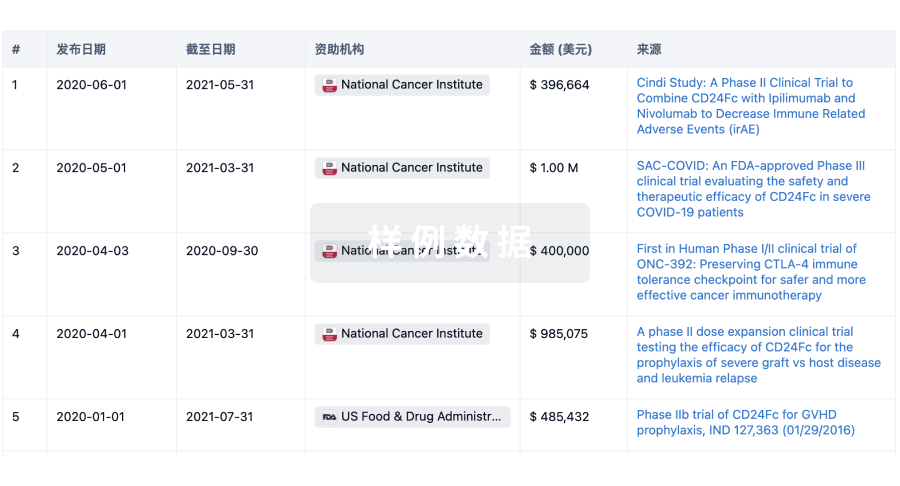
科研基金(NIH)
访问超过 200 万项资助和基金信息,以提升您的研究之旅。
登录
或
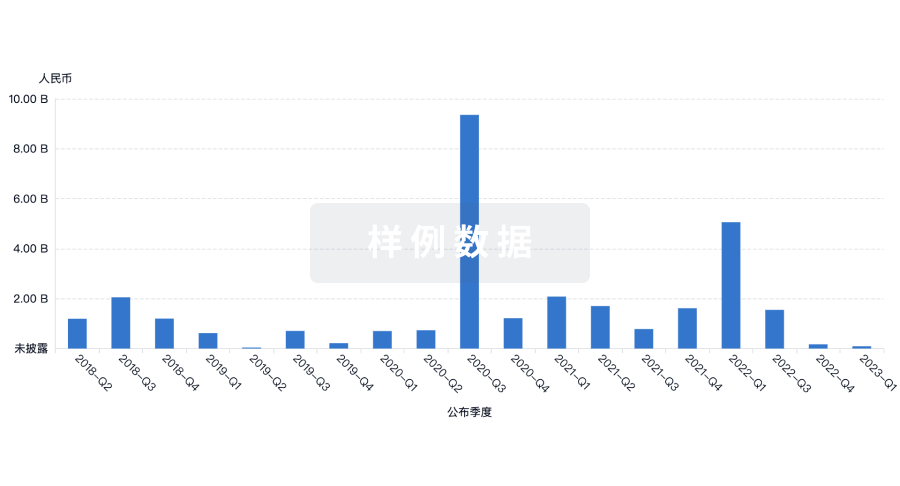
投资
深入了解从初创企业到成熟企业的最新公司投资动态。
登录
或
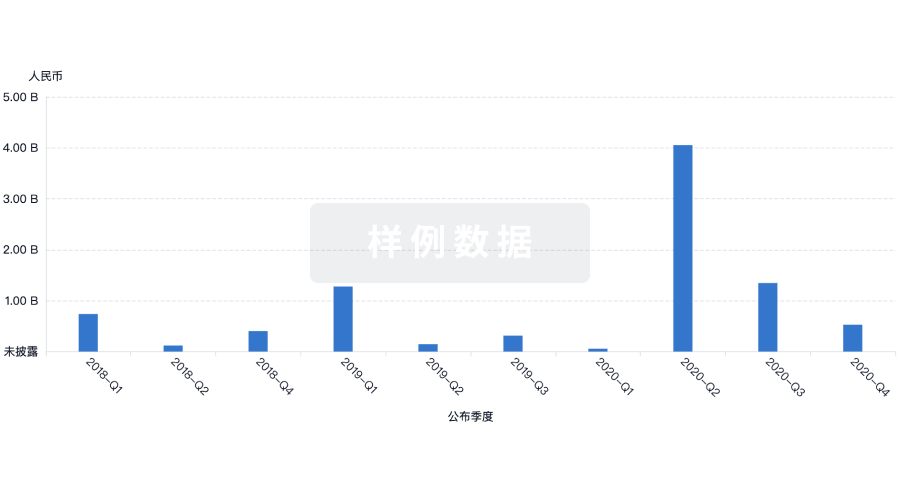
融资
发掘融资趋势以验证和推进您的投资机会。
登录
或
生物医药百科问答
全新生物医药AI Agent 覆盖科研全链路,让突破性发现快人一步
立即开始免费试用!
智慧芽新药情报库是智慧芽专为生命科学人士构建的基于AI的创新药情报平台,助您全方位提升您的研发与决策效率。
立即开始数据试用!
智慧芽新药库数据也通过智慧芽数据服务平台,以API或者数据包形式对外开放,助您更加充分利用智慧芽新药情报信息。
生物序列数据库
生物药研发创新
免费使用
化学结构数据库
小分子化药研发创新
免费使用