预约演示
更新于:2026-11-23

ZheJiang Academy of Agricultural Sciences
更新于:2026-11-23
概览
标签
内分泌与代谢疾病
消化系统疾病
皮肤和肌肉骨骼疾病
小分子化药
益生菌
多糖药物
疾病领域得分
一眼洞穿机构专注的疾病领域

暂无数据
技术平台
公司药物应用最多的技术
暂无数据
靶点
公司最常开发的靶点
暂无数据
| 排名前五的药物类型 | 数量 |
|---|---|
| 小分子化药 | 2 |
| 益生菌 | 2 |
| 多糖药物 | 2 |
| 抗体 | 1 |
| 排名前五的靶点 | 数量 |
|---|---|
| XO(黄嘌呤脱氢酶) | 1 |
| E蛋白 | 1 |
关联
7
项与 浙江省农业科学院 相关的药物
1
项与 浙江省农业科学院 相关的临床试验NCT03304041
Efficacy of Low-FODMAPs Dietary Therapy Versus Traditional Dietary Advice for Diarrhea-predominant Irritable Bowel Syndrome in China - A Prospective Randomized Controlled Trial
The primary aim of our study is to carry out a randomized trial to evaluate the efficacy of low-FODMAPs dietary therapy compared to conventional therapy for IBS patients recruited from tertiary hospitals in China. Secondary aims of this research include an analysis of clinical, physiological and microbiological factors that may predict IBS patient response to this dietary intervention.
开始日期2017-10-10 |
申办/合作机构 |

100 项与 浙江省农业科学院 相关的临床结果
登录后查看更多信息
0 项与 浙江省农业科学院 相关的专利(医药)
登录后查看更多信息
3,488
项与 浙江省农业科学院 相关的文献(医药)2027-03-01·Comparative Biochemistry and Physiology D-Genomics & Proteomics
Effects of thyroid-active agents on thyroid function and intestinal metabolism in Larimichthys polyactis: Insights from serum thyroid hormone measurement, metabolomics, and gene expression analysis
Review
作者: Wu, Rui ; Liang, Xiao ; Li, Yao ; Zhang, Yu ; Yan, Limin ; Lou, Bao
Thyroid hormones (TH) regulate intestinal metabolism in fish, while the underlying regulatory processes remain poorly understood. This study investigated the effects of dietary supplementation with triiodothyronine (T3, 20 ng/g), thyroxine (T4, 20 ng/g), and propylthiouracil (PTU, 5 μg/g) on serum free TH content and intestinal metabolism in Larimichthys polyactis. The biochemical results showed that compared with the non-supplemented group, only serum free T3 content was significantly elevated in the T3 and T4 groups (P < 0.05). Intestinal expression levels of dio2 were significantly down-regulated in the T3 and PTU groups, while expression levels of dio3 and ttr were up-regulated in the T4 group (P < 0.05). Untargeted metabolomic analysis revealed that thyroid-active agents (TA) altered intestinal metabolic profiles, universally affecting the pathway of protein digestion and absorption in all treatment groups, with indole identified as the shared differential metabolite. Moreover, PTU supplementation exhibited effects on a wider spectrum of differential amino acids (AA) compared with T3 and T4 supplementation. At the molecular level, T3 and PTU supplementation significantly down-regulated the expression levels of L-serine and threonine transporter gene (slc1a5) (P < 0.05). In summary, T3 and T4 supplementation modulated serum free TH content, and all TA supplementation regulated the intestinal protein digestion and absorption in L. polyactis, exerting divergent effects on AA metabolism. These findings provide a theoretical basis for elucidating the TH regulatory mechanism underlying intestinal function in L. polyactis.
2027-03-01·TALANTA
An aggregation-induced emission fluorescent microsphere-based intelligent lateral flow immunosensor for rapid and quantitative detection of prostate-specific antigen
Article
作者: Chen, Guanwei ; Wang, Yinglin ; Liu, Qing ; Huang, Xiaotian ; Gu, Yanzi ; Wang, Xiaofu ; Wu, Yafang
Prostate-specific antigen (PSA) is an important biomarker for prostate cancer (PCa) screening, but conventional detection methods rely on sophisticated instruments and centralized laboratories. Herein, we developed an aggregation-induced emission fluorescent microsphere-based lateral flow immunoassay strip (AIEFM-LFIS) for rapid and quantitative detection of PSA. Highly specific anti-PSA monoclonal antibodies were prepared by hybridoma technology and conjugated with AIEFMs to construct fluorescent immunoprobes, which were further integrated with a portable LumiS-1 Pro reader for quantitative signal acquisition and smartphone-based data transmission. Under optimized conditions, PSA could be detected within 20 min over a detection range of 0.5-62.5 ng/mL, with a limit of detection of 0.28 ng/mL. Clinical evaluation of 40 serum samples showed a sensitivity of 96.2%, a specificity of 100%, and a consistency of 97.5% with chemiluminescence immunoassay. Owing to its high sensitivity, portability, intelligent quantitative readout, and low cost, the developed platform provides a promising tool for decentralized PSA testing and preliminary PCa screening in primary healthcare and resource-limited settings.
2027-02-01·MICROBIOLOGICAL RESEARCH
A new species in the Magnaporthiopsis genus from wild rice enhances rice yield and disease resistance by restructuring the microbiome
Article
作者: Su, Zhenzhu ; Li, Wanting ; Li, Lin ; Wu, Yiling ; Zhu, Qinping ; Zhu, Xueming ; Zhu, Jianan ; Lin, Fucheng
Wild rice serves as a rich reservoir of beneficial endophytic fungi. However, the diversity and functional potential of these endophytes remain largely unexplored, limiting their utilization in sustainable rice production. In this work, we isolated and identified a novel endophytic fungus, Magnaporthiopsis oryzae (coded MB-9-27), from wild rice, Oryza granulata, and demonstrated that it directly promotes rice growth (yield increased by 12.66%) and enhances resistance to rice blast (disease rate decreased by 45.51%) in the field. Furthermore, MB-9-27 inoculation reshaped the rice microbiome, simplifying microbial interaction networks while significantly enriching beneficial bacteria (Methylobacterium sp., Sphingomonas sp.) and fungi (Mortierella sp., Rhizophagus sp., Mollisia sp., and Coniothyrium sp.). Among 75 fungi isolated from MB-9-27-treated rice plants, five representative strains (F14: Mortierella sp., F25: Trichoderma sp., F27: Clonostachys sp., F29: Podospora sp., and F30: Pseudeurotium sp.) corresponded to taxa ranked among the top 150 dominant fungal members identified through microbiome analysis. Functional screening revealed that Mortierella sp. (coded F14) markedly promoted rice growth, increasing shoot and root development by 55.8% and 51.6%, respectively, and reducing rice blast severity by 18.2%, indicating its dual role in promoting growth and suppressing disease. Metabolomic profiling of the rice-F14 holobiont identified significant accumulation of several metabolites, including Indole-3-glycerol phosphate (IGP), Adenine, and S-lactoylglutathione (SLG), suggesting alterations in pathways related to tryptophan metabolism, cellular metabolism, and redox homeostasis. Targeted LC-MS analysis further confirmed the production of IGP by F14. Bioassays demonstrated that IGP significantly promoted rice growth, supporting a potential role of tryptophan-derived metabolites in the plant growth-promoting activity of F14. Collectively, our findings demonstrated that MB-9-27 functions not only as a growth-promoting and disease-suppressive endophyte but also as a driver of beneficial microbiota assembly. Our results highlighted the potential of wild rice-derived endophytic fungi and their associated microbiota as valuable resources for microbial-assisted sustainable rice production.
25
项与 浙江省农业科学院 相关的新闻(医药)2026-11-07
·今日头条
别养猪养牛了,养猴吧!一只猴子现在能卖26万元,堪比10多头牛,200头猪!猴子怎么会有这样逆天的价格?
26万这个数,不是段子。2026年11月多家媒体报道,符合SPF级标准的成年食蟹猴,市场成交价已经摸到26万元一只。2025年初还不到10万,一年半翻了将近三倍。
广州有养殖企业直接报出25万到26万,但补了一句更扎心的话:部分年龄段的猴子已经断档,有价不一定有货。
价格涨成这样,根源不在炒作,在猴子自己身上。食蟹猴从一对种猴交配,到幼崽长成能进实验室的商品猴,完整周期六到七年。
雌猴四岁才性成熟,一年一胎,基本单胎,产能弹性天生就差到极点。电子厂缺货可以加产线,猴场缺货只能等下一代长大,这是生物学写死的账。
更麻烦的是,等不起的还不只是时间。国内繁殖母猴的老龄化已经相当严重。2020年底,8岁以上的繁殖母猴占比56.8%,到2023年这个数字爬到了约80%,繁殖母猴总量从6.9万只缩到6.6万只。
超过四分之三的母猴过了最佳生育年龄,出生率从50%以上掉到30%以下。前几年猴价高的时候,不少养殖户把该留种的母猴也当商品猴卖了,落袋为安,留给今天的是一副青黄不接的种群结构。
需求那头却在往上冲。创新药研发回暖,抗体、ADC、基因治疗这些大分子药物,临床前安全性评价绕不开非人灵长类。食蟹猴和人类的单抗交叉反应率约82%,很多毒性反应只有猴身上能看出来。
一个IND申报的重复给药毒性试验,就要用掉约40只实验猴。2026年全行业需求超过6万只,年供给不到5万只,缺口稳稳站在1万只以上,多家券商测算2026到2028年这个口子会扩大到1.5万到2万只。
供需拧成这样,价格自然往上顶。连官方采购都躲不开:2025年5月中检院买50只食蟹猴,中标单价9.2万元;到2026年,同一类采购的中标价已经升到17.8万到18.8万元一只。
市场价跑得比招标价还快,因为药企和CRO愿意为“马上能用”的年轻成年猴付溢价,等不起六年的繁殖周期。
可“养猴”这两个字,跟“养猪养牛”完全不是同一个重量级。食蟹猴是国家二级保护动物,养殖端要同时拿野生动物繁育许可和实验动物生产许可证,审批卡得极严,个人和普通农户根本不在合规入场的范围之内。
实验猴的种源必须是人工繁育子二代以后,不能从野外抓,谱系、防疫、微生物等级每一项都有硬杠杠。从建场、引种到稳定出栏合格商品猴,五年起步,期间的饲料、兽医、环境运维、淘汰损耗全是持续投入。
真正吃到这轮红利的,是早就把重资产砸进去的头部企业。昭衍新药自有食蟹猴存栏超过5万只,九成自养繁育,2026年上半年归母净利润同比暴增近九倍到十三倍,增长来源写得明白:生物资产市场价格上涨和自然生长增值。
这是寡头手里的牌,不是散户能复制的路子。市场上如果冒出“公司供种、农户代养、高价回收”的招商话术,对照农业农村部、公安部、市场监管总局2025年联合发布的“订单农业”骗局风险提示,套路几乎一模一样:承诺明显偏离行情的回购价,用少数履约案例当诱饵,最后风险全留在养殖户那头。
26万一只的猴子,卖的不是猴子本身,是六年时间、一套合规体系和一条还没被填上的供应链缺口。看懂了这笔账,就知道“别养猪了养猴吧”这句话,只能当一句玩笑听。真把牛棚拆了去搭猴舍的人,大概率等不到商品猴出栏的那天,先等来的是许可证被拒和资金链断裂。
官方报道与数据参考来源:
1. 界面新闻:《实验猴涨至26万一只,部分养殖企业已无现货可售》,2026年11月6日。
2. 商业时报:《实验猴飙至26万一只,CRO的成本账本开始承压》,2026年11月6日(繁殖周期、母猴老龄化、招标价数据)。
3. 36氪/氨基观察:《实验猴为什么总是不够用》,2026年3月19日(存栏量、出生率、年龄结构、单抗交叉反应率)。
4. 国家林业局:《关于加强实验用猴管理有关问题的通知》(林护发〔2004〕124号,2013年发布),严格限制野外猎捕猕猴作种源,规范实验猴养殖与销售管理。
#上头条 聊热点#
财报抗体药物偶联物
2026-11-04
iMeta 生命与医药顶刊
iMeta 大会
iMeta文章分类
iMeta高被引及热点论文
iMetaOmics高被引及热点论文
影响因子预测及期刊推荐
iMeta相关资讯
iMetaOmics相关资讯
iMetaMed相关资讯
iMetaBio相关资讯
iMetaOmics最新文章中文版+视频
iMetaMed最新文章中文版+视频
iMeta第5卷第5期(2026.10)
iMetaOmics第3卷第3期(2026.9)
iMetaMed第2卷第3期(2026.9)
iMeta第5卷第4期(2026.8)
iMeta第5卷第3期(2026.6)
iMetaOmics第3卷第2期(2026.6)
iMetaMed第2卷第2期(2026.6)
iMeta第5卷第2期(2026.4)
iMetaMed第2卷第1期(2026.2)
iMetaOmics第3卷第1期(2026.2)
iMeta第5卷第1期(2026.2)
iMeta第4卷第6期(2025.12)
iMetaMed第1卷第2期(2025.12)
iMetaOmics 第2卷第4期(2025.12)
iMeta第4卷第5期(2025.10)
iMetaMed第1卷第1期(2025.9)
iMetaOmics 第2卷第3期(2025.9)
iMeta第4卷第4期(2025.8)
iMeta第4卷第3期(2025.6)
iMetaOmics 第2卷第2期(2025.6)
iMeta 第4卷第2期(2025.4)
iMetaOmics 第2卷第1期(2025.3)
iMeta 第4卷第1期(2025.2)
第3卷第6期(2024.12)
iMetaOmics 第1卷第2期(2024.12)
第3卷第5期(2024.10)
iMetaOmics 第1卷第1期(2024.9)
第3卷第4期(2024.8)
第3卷第3期(2024.6)
第3卷第2期(2024.4)
第3卷第1期(2024.2)
第2卷第4期(2023.12)
第2卷第3期(2023.8)
第2卷第2期(2023.5)
第2卷第1期(2023.2)
第1卷第4期(2022.12)
第1卷第3期(2022.9)
第1卷第2期(2022.6)
第1卷第1期(2022.3)
iMeta 讲坛/科学传播
跟着iMeta学做分析和作图
ImageGP使用教程
iMetaOmics短视频
iMeta短视频
iMeta 生命与医药顶刊
iMeta | 综述约稿指南
喜报 | iMeta(宏)2025影响因子再创新高
iMeta审稿全流程详解
iMeta期刊投稿以及转子刊操作教程
iMeta期刊编辑部与湘湖实验室签订期刊运营合作协议
iMeta期刊2024影响因子再创新高
中科院分区表2025 | iMeta入选生物学一区Top期刊
喜报 | iMeta被SCIE、ESI等数据库正式收录!(2024/11/8)
iMeta最终2023影响因子23.8 (附中国期刊最新影响因子)
iMeta系列期刊宣传片(25版,含MetaOmics和iMetaMed)影响因子IF 33.2生物医学综合,全球第65中国第5
iMeta文章4篇入选热点论文(Top 0.1%)22篇入选高被引论文(Top 1%)
iMeta期刊宣传片(iMeta大会2024更新版)
iMeta大会2024第三天:肠道菌群/期刊论坛/国际项目/同一健康专场/组学专场
iMeta大会2024第一天:前沿技术报告
iMeta大会2024(10.11-13深圳)第三轮通知-日程更新
iMeta大会2024(10.11-13深圳)第二轮通知-仅剩不足百个名额,开通团体报名通道,报满即止
iMeta大会2024 (10.11-13深圳) 早鸟价倒记时6天
iMeta大会2024 (10.11-13深圳) 第一轮通知
iMeta获得首个影响因子,位列微生物学研究期刊全球第一,SCI期刊Top 1%(2024/6/20)
iMeta创刊宣传片全球首发-中文版(双语字幕)
iMeta | 23/11/28起被ESCI收录创刊起所有文章,24年将获得首个影响因子
iMeta | 2024年完美收官: 发文103篇, 总被引5843次, 因为有你2025将更精彩
iMeta | 2023年发文81篇总被引1954次完美收官,因为有你2024将更精彩
iMeta | 2022年发文60篇被引340次完美收官,因为有你2023将更精彩
iMeta 实时CiteScore 达到52.4
CiteScore 2025发布 iMeta 43.7
iMeta 实时CiteScore 达到43.0
iMeta 实时CiteScore 突破40
iMeta 2025.10月实时CiteScore 39.1
iMeta 2024年CiteScore23.2 (2025/6/4)
iMeta实时CiteScore 23 (2025/2/10)
CiteScore 2023发布 | iMeta 位列生物技术/微生物学科一区(Q1)
iMeta实时CiteScore突破20 (2024/11/5)
iMeta 2023 CiteScore 突破10分!
总结2022,迎接2023!iMeta 2022年度最佳综述评选
2023中国肠道大会 | iMeta专刊征稿进行中!
喜讯 | iMeta主编傅静远教授入选荷兰皇家艺术和科学院院士
喜讯 | iMeta主编傅静远教授入选荷兰皇家科学与人文学院院士
iMeta | 黄源/邓越/苏展豪/辛凤姣-心血管疾病与肠道微生物组专刊征稿
iMeta期刊104位编委入选2025年2%全球顶尖科学家
iMeta期刊40位编委入选2024年全球高被引学者
iMeta期刊34位编委入选2023年全球高被引学者
iMeta期刊26位编委入选2022年全球高被引学者
iMeta | 2025年优秀青年编委
iMeta | 2024年杰出/优秀执行副主编
iMeta | 2023年执行副主编入选名单
iMeta | 2023年杰出/优秀执行副主编
iMeta系列期刊科学/助理/新媒体编辑招聘启事(可居家办公,弹性工作)
iMeta 宁波编辑部全职编辑招聘(截止8.26)
iMeta | 2022年第一批正式受聘青年编委
iMeta期刊青年编委招募 (IF 23.7)
iMeta | 第二批正式受聘青年编委(2023年度)
iMeta宁波编辑部全职编辑招聘
iMeta系列期刊助理编辑(统计)招聘启事(可居家办公,弹性工作)
iMeta科学编辑招聘启事(可居家办公,弹性工作)
iMeta新媒体编辑招聘启事(可居家办公,弹性工作)
iMeta姊妹刊iMetaomics(定位IF>10)欢迎投稿!
iMeta姊妹刊iMetaomics编委招募 (定位IF>10)
喜讯 | iMeta被PubMed Central数据库收录
iMeta:已被谷歌学术(Google Scholar)收录
iMeta被DOAJ数据库收录!(2022/10/17)
iMeta期刊3篇文章被PubMed收录
iMeta被Scopus数据库收录!
喜讯 | iMeta正式被ESCI收录!
iMeta在中国知网(CNKI)中如何被快速检索
iMeta | 2022年60篇文章平均引用超30次 (2024/1/30)
iMeta | 被引超25000次,发文427篇,平均引用58.77,百引耗时3天(2026/10/15)
iMeta | 被引超24000次,发文419篇,平均引用57.29,百引耗时3天(2026/9/16)
iMeta | 被引超23000次,发文413篇,平均引用55.95,百引耗时3天(2026/8/22)
iMeta | 被引超22000次,发文402篇,平均引用54.82,百引耗时3天(2026/7/24)
iMeta | 被引超21000次,发文393篇,平均引用54.21,百引耗时3天(2026/7/4)
iMeta | 被引超20000次,发文385篇,平均引用52.31,百引耗时3天(2026/6/1)
iMeta | 被引超19000次,发文376篇,平均引用50.56,百引耗时3天(2026/4/28)
iMeta | 被引超18000次,发文374篇,平均引用48.32,百引耗时3天(2026/4/1)
iMeta | 被引超17000次,发文366篇,平均引用46.6,百引耗时3天(2026/3/4)
iMeta | 被引超16000次,发文359篇,平均引用45.3,百引耗时3天(2026/2/9)
iMeta | 被引超15500次,发文357篇,平均引用43.6,百引耗时3天(2026/1/20)
iMeta | 被引超14500次,发文351篇,平均引用41.43,百引耗时5天(2025/12/17)
iMeta | 被引超14000次,发文349篇,平均引用41.16,百引耗时2天(2025/12/8)
iMeta | 被引超13000次,发文343篇,平均引用38.69,百引耗时4天(2025/11/17)
iMeta | 被引超12500次,发文338篇,平均引用37.05,百引耗时3天(2025/10/19)
iMeta | 被引超11500次,发文331篇,平均引用35.59,百引耗时5天(2025/9/21)
iMeta | 被引超11000次,发文325篇,平均引用34.59,百引耗时5天(2025/8/31)
iMeta | 被引超10000次,发文317篇,平均引用31.59,百引耗时4天(2025/7/13)
iMeta | 被引超8500次,发文293篇,平均引用29.05,百引耗时5天(2025/5/8)
iMeta | 被引超8200次,发文289篇,平均引用28.60,百引耗时5天(2025/4/27)
iMeta | 被引超7500次,发文270篇,平均引用28.06,百引耗时4天(2025/3/25)
iMeta | 被引超7000次,发文257篇,平均引用27.25,百引耗时4天(2025/2/25)
iMeta | 被引超6700次,发文250篇,平均引用26.81,百引耗时3天(2025/2/10)
iMeta | 被引超5700次,发文229篇,平均引用25.04,百引耗时8天(2024/12/11)
iMeta | 被引超5400次,发文228篇,平均引用23.86,百引耗时6天(2024/11/25)
iMeta | 被引超3200次,发文188篇,百引耗时10天(2024/5/30)
iMeta | 被引超2800次,发文179篇,百引耗时16天(2024/4/17)
iMeta | 被引超2500次,发文164篇,百引耗时12天(2024/3/11)
iMeta | 被引超2200次,发文156篇,立即指数14.15,百引耗时14天(2024/2/6)
iMeta | 被引超2000次,发文141篇,立即指数14.20,百引耗时16天(2024/1/7)
iMeta | 被引超1500次,发文126篇,立即指数11.91,百引耗时18天(2023/10/23)
iMeta | 被引超1000次,发文115篇,立即指数8.78,百引耗时27天(2023/7/22)
iMeta | 被引用500次,发文85篇,立即指数5.88,百引耗时38天(2023/2/26)
iMeta | 被引用400次,发文71篇,立即指数5.63,百引耗时36天(2023/1/19)
iMeta | 引用300次,发文60篇,立即指数5,百引耗时49天(2022/12/14)
iMeta | 引用200+,立即指数3.98,百引耗时54天(2022/10/26)
iMeta创刊花絮-探索未知,永不止步(全球青年编委的祝福)
招聘 | 新加坡科技局诚聘博士后/Scientist
iMeta系列期刊青年编委招募 (IF 33.2中科院双一区Top)
iMeta系列期刊青年编委招募 (IF 33.2中科院双一区Top)
iMeta系列期刊青年编委招募 (IF 23.8中科院双一区)
iMeta期刊青年编委招募(定位IF>15)
致谢 | iMeta 2023年审稿专家名单
致谢 | iMeta 2023年审稿专家名单(第二批)
iMeta | 姚彦坡/鞠峰/崔丽/牛犇主持土壤环境生物安全与健康专刊征稿
iMeta | 娄翼来/Mendes/Kudrin主持金砖国家土壤微食物网专刊征稿
2022年9月最新学术出版透明与最佳行为准则
iMeta | 百度认证完成,搜索“iMeta”直达出版社主页和投稿链接
iMeta | 国际标准刊号ISSN印刷版正式确认,双ISSN申请完成
iMeta 恭祝您新春快乐!
iMeta | 2023年1月发展报告
iMeta | 2023年2月数据分析报告:全文下载量再创历史新高
iMeta | 2023年5月数据分析报告:2023年下载量突破10万次
iMeta | 2023年8月数据分析报告:全文下载量近30万次
iMeta | 2023年10月数据分析报告:单月下载量2.9万 再创历史新高!
iMeta | 2023年12月数据分析报告:全文下载量40万次!
iMeta | 2024年1月数据分析报告:投稿量较去年同期提高9倍!
iMeta | 2024年3月数据分析报告:全文单月下载量3.6万 创历史新高!
iMeta | 2024年4月数据分析报告:全文下载量突破50万!
iMeta | 2024年7月数据分析报告:全文下载量达到65万次
iMeta | 2024年8月数据分析报告:全文下载量约70万
iMeta | 2024年9月数据分析报告:全文下载量超72万
iMeta | 2025年1月数据分析报告:全文下载量超90万
iMeta | 2025年2月数据分析报告:全文下载量超95万
iMeta | 2025年3月数据分析报告:全文下载量超100万
iMeta | 2025年4月数据分析报告:全文单月下载量创历史新高
iMeta | 2025年6月数据分析报告:全文下载量超128万
iMeta | 2025年7月数据分析报告:全文下载量超136万
iMeta | 2025年8月数据分析报告:近半年全文月平均下载量超5万次
iMeta | 2025年9月数据分析报告:全文下载量超150万次
iMeta | 2025年10月数据分析报告:单月下载量超8万次
iMeta | 2025年11月数据分析报告:单月下载量7万次
iMeta | 2026年1月数据分析报告:单月下载量6.4万次
iMeta | 2026年4月数据分析报告:单月下载量超5万次
iMeta | 2026年5月数据分析报告:单月下载量超5万次iMeta 大会
# iMeta大会2026第3天:闭幕式/颁奖/医学AI/林学/园艺/畜牧学/组学/研究生、博士后论坛
iMeta大会2026第2天:开幕式/编委会/大会报告/农业材料/食品/生物医药
iMeta大会2026第1天:植物保护/青年专场/人才专场/动物学/生物信息学/生态学/结构生物学/中医药学
iMeta大会2026详细日程 | 国家级人才180人600余人参会(湖南长沙9.18-20)
iMeta大会2026 | 日程出炉!超150位国家级人才600余人参会(湖南长沙9.18-20)
iMeta大会2026:湖南长沙9月18-20日(早鸟价最后1天,欢迎申请报告)
iMeta大会2026:湖南长沙9月18-20日(早鸟价最后3天,欢迎申请报告)
iMeta大会2026:湖南长沙9月18-20日(早鸟价报名最后7天,欢迎申请报告)
iMeta大会2026: 信息和宏组学时代的生命和医学(湖南长沙9月18-20日)
iMeta大会2025第三天: 生物技术专场/生物医药/博后论坛/科研培训/研究生论坛
iMeta大会2025第二天: 开幕式/特邀报告/人才进阶论坛/植物前沿论坛/微生物论坛
iMeta大会2025第一天: 医学(基础/肿瘤/菌群)/人才成长论坛/医学论坛/生物(微生物/生信)/中医药高峰论坛
iMeta大会2025 | 会议预计超过70名国家级领军、青年人才到场,会议规模超过500人
iMeta大会2025 | 人才成长论坛报告简介(8.23-25, 湖北中医药大学,二轮优惠/团购报名最后2周)
iMeta大会2025 | 医学方向12位领军人才报告简介(8.23-25, 湖北中医药大学,二轮优惠/团购报名最后2周)
iMeta大会2025 | 微生物方向8位领军人才报告简介(8.23-25, 湖北中医药大学,二轮优惠/团购报名最后2周)
iMeta大会2025 | 植物方向分会场报告
iMeta大会2025 | 会议总结文章/帆布袋/T恤/卡牌预览(8.23-25, 湖北中医药大学,第二轮报名开启)
iMeta大会2025 | 开放研究人员/博后/研究生报告申请 (8.23-25, 湖北中医药大学,早鸟价最后1天)
iMeta大会2025 | 开放研究员/人才进阶/博后/研究生报告申请 (8.23-25, 湖北中医药大学,早鸟价最后3天)
iMeta大会2025第二轮通知(8.23-25, 湖北中医药大学,早鸟价最后5天)
iMeta大会2025第一轮通知(8.23-25, 湖北武汉,早鸟价最后9天)
iMeta大会2025第一轮通知(8.23-25, 湖北武汉,早鸟价最后1周)iMeta文章分类
iMeta | 近3年生态环境相关文章合集 (25.10更新)
iMeta 近3年方法相关文章合集 (25.07更新)
iMeta 近3年生态环境相关文章合集 (25.07更新)
iMeta 近3年动物相关文章合集 (25.07更新)
iMeta 近3年医学相关文章合集 (25.07更新)
iMeta 近3年植物相关文章合集(25.07更新)
iMeta 近3年医学相关文章合集 (25.06更新)
iMeta 近3年生态环境类文章合集 (25.06更新)
iMeta 近3年动物类文章合集 (25.06更新)
iMeta 近3年方法类文章合集 (25.06更新)
iMeta 近3年植物类文章合集(25.06更新)
iMeta 近2年植物类文章合集 (25.03更新)
iMeta 近2年动物类文章合集 (25.03更新)
iMeta 近2年医学类文章合集 (25.03更新)
iMeta 近2年生态环境类文章合集 (25.03更新)
iMeta 近2年方法类文章合集 (25.03更新)
iMeta | 研究类文章合集(24.12更新)
iMeta | 综述类文章合集(24.12更新)
iMeta | 医学类文章合集(24.12更新)
iMeta | 植物类文章合集 (24.12更新)
iMeta | 动物类文章合集 (24.12更新)
iMeta | 生态环境类文章合集(24.12更新)
iMeta | 方法类文章合集 (24.12更新)
iMeta | 2023文章合集
iMeta | 方法相关文章合集(2407更新)
iMeta | 生态环境类相关文章合集(2407更新)
iMeta | 医学相关文章合集(2408更新)
iMeta | 植物相关文章合集(2408更新)iMeta高被引及热点论文
iMeta高引论文 | 北大人民医院徐涛组-类器官多组学解析尿路上皮癌免疫抵抗机制
iMeta高引论文 | 重庆大学王贵学-解析姜黄素类化合物调控抗病毒免疫通路的分子途径
iMeta高引论文 | 重磅综述: 纳米孔直接RNA测序与表观转录组
iMeta高引论文 | 海军军医大邹最组-微生物代谢物与肿瘤表观遗传学
iMeta高引论文 | 美吉生物云提供全面的微生物组分析流程
iMeta高引论文 | 湖南农科院柏连阳院士团队评述纳米农药未来发展
iMeta高引论文 | 天津大学王灿组-污水处理厂活性污泥微生物种群通讯网络分析平台QSCNAS
iMeta高引论文 | 唐慧/陈洛南等-揭示多模态融合量化肿瘤微环境细胞恶性程度
iMeta高引论文 | 中农任发政院士团队-益生菌改善终末期肾病患者预后的多维度解析
iMeta高引论文 | 复旦肿瘤叶定伟组-解析补骨脂查尔酮通过靶向转铁蛋白受体增加膀胱癌对吉西他滨敏感性的机制
iMeta高引论文 | 任南琪院士团队黄聪组-厌氧微生物的靶向高通量分选方法
iMeta高引论文 | 浙大朱峰/殷佳依-开发微生物-药物-疾病相互作用图谱
iMeta高引论文 | 中科院印遇龙院士团队/徐智敏组揭示纳米塑料切断肝肠通讯并引爆宿主系统性代谢崩塌的隐秘真相
iMeta高引论文 | 中山大学陈保卫组-解析极地土壤中抗生素新型抗性基因
iMeta高引论文 | 武汉大学汪晖/陈廖斌组:解析母体肠道菌群稳态、表观遗传调控机制与子代骨质疏松症易感之间的三元关系
iMeta高引论文 | 王梦芝/周平/杨庆勇-开发7类草食动物105种组织转录组数据库
iMeta高引论文 | 上海交大蹇华哗组-解析细菌基因组中普遍存在的SOS非依赖型原噬菌体
iMeta高引论文 | 中山大学孙逸仙纪念医院黄海组-描绘中国人群前列腺癌嵌合RNA图谱
iMeta高引论文 | 浙江大学范骁辉组-空间转录组学聚类方法基准测试
iMeta高引论文 | 肖维华/蒋超/陈实富-评述肠道微生物群与癌症:从分子机制到精准医学应用
iMeta高引论文 | 阜外医院陈敬洲组-跨队列多组学分析揭示NXPE3作为高血压性脑出血的预警标记
iMeta高引论文 | 长海医院侯伟亮组-建立全肠菌移植新策略重塑整肠稳态
iMeta高引论文 | 阜外医院杨跃进组-肠—心轴视角揭示急性冠状动脉综合征的微生物组与代谢组标志物
iMeta高引论文 | 袁俊亮/郑乐民等-揭示菌源脱氧胆酸引起帕金森病血脑屏障功能障碍的关键作用
iMeta高引论文 | 申莉莎组-解析METTL5调控脱落酸响应的机制
iMeta高引论文 | 申莉莎组-解析METTL5调控脱落酸响应的机制
iMeta高引论文 | 南医大余光创组-使用treeio和ggtree探索系统发育位置数据
iMeta高引论文 | 南方医院丁轶组- 靶向“放化疗高应答”患者乳杆菌:放化疗性肠损伤防治新策略
iMeta高引论文 | 通过超深度短读长宏基因组测序与共组装揭示土壤微生物多样性
iMeta高引论文 | 中国农科院饲料所周志刚组发现一种肠道微生物和宿主协同的肠肝轴互作新方式
iMeta高引论文 | 中科院朱永官院士李刚组-解析土传遗产在抗生素抗性基因传播中的作用
iMeta高引论文 | 北京大学白凡组-揭示巨噬细胞内沙门氏菌表型耐药现象的机制
iMeta高引论文 | 香港中文大学于君组-环境抗生素耐药基因与结直肠癌
iMeta高引论文 | 黄耀伟/朱书组-解析脆弱拟杆菌通过胆盐水解酶调控石胆酸代谢拮抗猪丁型冠状病毒感染的机制
iMeta高引论文 | 中国农科院生物所普莉组-解析玉米根系微观表型的遗传变异和智能预测
iMeta高引论文 | 上海交大张晨虹组-解析膳食纤维干预期间的微生物群动态
iMeta高引论文 | 中国农科院赵圣国/王加启等-开发优势酶结构驱动的微生物组靶向功能调控方法
iMeta高引论文 | 宁大一院陈夏组-肠道细菌及代谢物治疗多囊卵巢综合征
iMeta高引论文 | 徐艳组-多组学洞察表面电荷效应 解码纳米塑料与细菌抗生素耐药性的相互作用
iMeta高引论文 | 周哲敏/张嵘/何平-解析肺炎克雷伯菌CC23的地理局限性和毒力-耐药性权衡
iMeta高引论文 | 浙大王永成/沈一飞-微生物组单细菌RNA测序深度解析人类肠道菌群的动态代谢功能特征
iMeta高引论文 | 南农土壤生态实验室-解析噬菌体介导的全球沙门氏菌毒力基因传播
iMeta高引论文 | 中科院微生物所刘宏伟组-嗜黏蛋白阿克曼菌低酰基化脂多糖通过激活 TLR4−IL-23−IL-22 通路对抗肥胖
iMeta高引论文 | 清华大学深圳院邢新会组-火麻仁DPP-IV抑制肽挖掘方法构建及其调控肠道菌群改善糖代谢机制解析
iMeta高引论文 | 上海交大刘宁宁/王慧-解析结直肠癌演进中的瘤内微生物组-宿主蛋白互作机制
iMeta高引论文 | 张和平/朱书/张发明/蓝灿辉-中国肠道大会的30条科学建议
iMeta高引论文 | 中山大学张琪/郑俊组-解析衰老小鼠多器官联动的炎症-代谢失衡
iMeta高引论文 | 尹佟明组和汪阳东组-开发用于细胞器基因组的高效图形化组装工具包PMAT2
iMeta高引论文 | 贵州大学王孝敬组-杜鹃属植物T2T基因组、泛基因组分析和热应激反应基因
iMeta高引论文 | 汤步富/黄昭/李薛鑫-开发多模态纳米系统靶向RRM2增强肝癌射频消融介导的细胞铁死亡和免疫重编程
iMeta高引论文 | 东部战区总医院王新颖组-解析全肠外营养治疗中的宿主-微生物互作
iMeta高引论文 | 北医三院段丽萍组-孕前期母体肠道菌群影响子代肠神经系统发育和疾病易感性
iMeta高引论文 | 陈亮/张宏福/汤善龙等-揭示罗伊氏乳杆菌介导的膳食低聚木糖提高猪空肠细胞存活的作用机制
iMeta高引论文 | 华中农大朱龙付组-棉花抗黄萎病的全景解析:从遗传基础到精准基因组选择
iMeta高引论文 | 龚文平/张灵霞/刘艳华组-综述肠道微生物菌群与结核病互作机制
iMeta高引论文 | 兰州大学/西藏大学张东组-PhyloSuite v2:面向系统发育与分子定年的一体化高效可视化分析平台
iMeta高引论文 | fastp 1.0:一款用于FASTQ数据质量控制与预处理的超快速全能工具
iMetaOmics高引论文 | 温州医科大李校堃院士团队-解析百合地黄汤重塑睡眠剥夺所致的肠-脑轴失衡
iMetaOmics高引论文 | 中国药大来茂德/李菁-解析戈氏副拟杆菌与饮食互作改善小鼠肠炎的机制
iMeta高引论文 | 清华李炳组-联用宏病毒组和宏基因组解译污水厂病毒圈
iMeta高引论文 | 四川大学郭安源组开发T细胞状态评估新方法
iMeta高引论文 | 罗鹏/袁硕峰/张健/程全-合作开发用于探索HPV相关肿瘤的肿瘤免疫微环境的shiny网页工具
iMeta高引论文 | 刘永鑫组-开发微生物组数据分析与可视化平台MicrobiomeStatPlots
iMeta高引论文 | 南农沈其荣院士团队发布微生物组网络分析工具ggClusterNet 2
iMeta高引论文 | 国际宏蛋白质组学倡议- 全球专家手把手教你用好宏蛋白质组学
iMeta高引论文 | 德国Engler组-tidyplots: 简化代码的数据可视化工具
iMeta高引论文 | SIDERITE:全面揭示化学空间隐藏的铁载体
iMeta高引论文 | 之江实验室/农科院基因组所联合开发CRISPR/Cas12a检测体系crRNA智能设计平台
iMeta高引论文 | 李雪萌/刘永鑫-评述开源软件USEARCH 12
iMeta高引论文 | 华北理工宋小明组开发植物激素相关基因数据库PHGD
iMeta高引论文 | 浙大儿院倪艳/傅君芬组-MetOrigin 2.0微生物代谢物的发现和溯源
iMeta高引论文 | OmicStudio:一款可组合的、即时反馈的可生成高质量的发表级图表的生物信息云平台
iMeta高引论文 | 中科院生态中心邓晔组发布微生物代谢模型网络分析iNAP 2.0
iMeta高引论文 | 美吉生物云平台2024年全新升级
iMeta高引论文 | 浙江省农科院肖英平组建立不同年龄段中国儿童游离氨基酸参考区间
iMeta高引论文 | 广东医科大学李雪萌组-解析百岁老人肠道菌群相关的色氨酸代谢物及其在健康长寿中的功能
iMeta高引论文 | 基因组所贾耿介组-解析膳食纤维、人体微生物组与疾病之间复杂关系
iMeta高引论文 | 段屹/陈汉清-综述炎症性消化系统疾病中的肠道微生物组:当前的挑战与治疗机遇
iMeta高引论文 | 林昊/吕昊/黄健-解析2型糖尿病进程中胰岛风险细胞的异常扰动
iMeta高引论文 | 电子科技大学林昊/吕昊等-从DNA复制视角预测癌症三维染色质结构
iMeta高引论文 | 南方医科大学罗鹏组-癌症中的微生物组
iMeta高引论文 | 浙大单体中组-揭示新型枯草芽孢杆菌调节肠道屏障稳态的作用机制
iMeta高引论文 | 陈连民/孔祥清/何彦等-高血压中的肠道微生物互作
iMeta高引论文 | 湘雅医院泌尿外科团队-揭示维迪西妥单抗联合免疫治疗在膀胱癌中的疗效及生物标志物
iMeta高引论文 | 李地艳/刘永鑫/毛如荣-揭示阴道微生物群影响不孕症女性体外受精的妊娠结局
iMeta高引论文 | 陈鹏/郑乐民/刘星吟/张晨虹/刘宁宁/吴文娟/黄莉萍/王琰/王高峰-综述肠道与身体九大器官的肠-x轴关系
iMeta高引论文 | 南昌大学聂少平组-葡甘露聚糖通过调节肠道共生菌改善胰岛素抵抗
iMeta高引论文 | 张龙超/王金勇/刘娣/李明洲/印遇龙/王立贤-率先完成猪T2T基因组组装
iMeta高引论文 | 北京中医药大学东方医院李军祥/毛堂友组-揭示靛蓝治疗溃疡性结肠炎的分子机制
iMeta高引论文 | 周磊/李一星组-解析HLF在代谢相关脂肪性肝病中的作用
iMeta高引论文 | 中科院南土所褚海燕组-解析合成菌群在除草剂降解和碳代谢中的调控机制
iMeta高引论文 | 东部战区总医院王新颖组-解析全肠外营养治疗中的宿主-微生物互作
iMeta高引论文 | 华大方晓东组-解析无菌小鼠跨器官微生物-宿主互作的广谱性和异质性
iMeta高引论文 | 福建农林朱方捷/王琴组揭示同源二聚化解决TF“特异性悖论”的新机制
iMeta高引论文 | 中国农大呙于明组—解析种鸡母体营养与垂直传递菌群互作关系
iMeta高引论文 | 福农朱方捷/川农黄琳凯-构建能源草类多组学数据库及表观基因组图谱
iMeta高引论文 | 浙大胡宝兰组-解析土壤中关键硝化细菌及其生态地位
iMeta高引论文 | 东南大学王进组-系统揭示丁酸重塑肠道菌群及改善食物过敏的机制
iMeta高引论文 | 西北农林刘志刚组-限时饮食通过假长双歧杆菌-丙酸-FFAR3通路缓解阿尔兹海默病认知损伤
iMeta高引论文 | 南农沈其荣院士团队-基于微生物社会性行为构建植物促生型合成菌群
iMeta高引论文 | 中国农科院环发所娄翼来研究员在“土壤微食物网”方面取得研究进展
iMeta高引论文 | 刘永鑫/陈同/李国梁/陈实富/文涛-EasyMetagenome: 用户友好且灵活的宏基因组测序数据分析流程
iMeta高引论文 | 河南农大家禽团队-鸭泛基因组研究揭示转座子插入是影响体重和白羽性状的原因突变
iMeta高引论文 | 华大研究院邹远强/肖亮揭示毛螺菌科多样性
iMeta高引论文 | 李梅/韦中等揭示合成微生物群落在提升土壤健康研究中的应用进展
iMeta高引论文 | 农科院资划所刘卫星组揭示氮富集条件下土壤细菌性状介导网络复杂性的机制
iMeta高引论文 | 浙江农科院肖英平组揭示肠道微生物影响猪脂肪沉积的作用机制
iMeta高引论文 | 王春莉/董念国/王贵学/许康 解析肠道菌群影响脉瓣膜钙化的创新机制
iMeta高引论文 | 浙江省农业科学院李有贵团队揭示桑黄多酚抗结肠炎肠道分子机制
iMeta高引论文 | Sangerbox 2: 临床生信分析平台
iMeta高引论文 | 中科院水保所邓蕾组揭示了长期植被演替下土壤活性碳组分与微生物群落的联系
iMeta高引论文 | 中国农业大学汪杰组“塑料际”微生物最新综述
iMeta高引论文 | 李香真/姚敏杰开发微生物共现网络比较流程
iMeta高引论文 | 印遇龙院士/郑大魏勇军等综述益生菌发酵中草药的研究进展
iMeta高引论文 | 安医大徐建光/张亨国组-口腔微生物工程化在心血管疾病治疗中的应用与前景
iMeta高引论文 | 河南农业大学姚文组开发绘制Circos图的交互式Web应用程序
iMeta高引论文 | 更好的ggVennDiagram, 更好用的韦恩图工具
iMeta热点及高被引论文合集(26.10更新)
iMeta 热点及高被引论文合集(25.11更新)
iMeta高引论文 | 西北农林韩新辉组揭示降水变化对土壤微生物网络复杂性和多功能性的影响
iMeta高被引论文 | OmicShare tools: 交互式的在线生物数据分析与可视化工具
iMeta高引论文 | fastp 1.0:一款用于FASTQ数据质量控制与预处理的超快速全能工具
iMeta主刊2024-2025高被引论文(医学类)
iMeta主刊2024-2025高被引论文(生命类)
iMeta主刊2024-2025高被引论文(方法类)
iMeta 2023-2025年最高引论文30篇(25.10更新)
iMeta热点论文 | 唐海宝/张兴坦-用于比较基因组学分析的多功能分析套件JCVI
iMeta热点论文 | 重医大沈伟等发布全能序列处理工具SeqKit2
iMeta热点论文 | 基因组所刘永鑫组与微科盟合作开发宏组学数据在线分析平台Wekemo Bioincloud
iMeta 2023-2025年最高引论文30篇(25.8更新)
iMeta 2023-2025年最高引论文30篇(25.7更新)
iMeta 2023-2025年最高引论文30篇(25.06更新)
iMeta | 2023和2024年高被引论文合集
iMeta | 2024年热门下载论文合集
iMeta近两年热点论文5篇, 高被引14篇(25.3更新)
iMeta | 近2年最高引论文30篇(2025.3更新)
iMeta | 在线网站和数据库文章汇总
iMeta 最高引论文30篇
iMeta | 高被引论文59篇 (24.12更新)
iMeta 高被引论文64篇
iMeta 2023年高被引论文10篇
iMeta 高被引论文40篇
iMeta 最高引论文30篇
iMeta | Sangerbox: 交互式整合临床生信分析平台
iMeta | Majorbio Cloud:一站式多组学数据分析平台
iMeta:高颜值高被引绘图网站imageGP在线发表
iMeta | 德国国家肿瘤中心顾祖光发表复杂热图(ComplexHeatmap)可视化方法
iMeta | 中科院生态中心邓晔组发布微生物组网络分析平台iNAP(图文/视频教程)
iMeta:西农韦革宏团队焦硕等-土壤真菌驱动细菌群落的构建(全文翻译/PPT/视频解读)
iMeta | 南农沈其荣团队发布微生物网络分析和可视化R包ggClusterNet
iMeta | 浙大倪艳组MetOrigin实现代谢物溯源和肠道微生物组与代谢组整合分析
iMeta|中科院地球环境研究所王云强组解析了草地土壤微生物生活史策略
iMeta: 南医大余光创组ggtree最新文章-系统发育树存储与可视化的数据结构
iMeta | 引用7000+,海普洛斯陈实富发布新版fastp,更快更好地处理FASTQ数据iMetaOmics高被引及热点论文
iMetaOmics高引论文 | 广西师范周岐海组-解析人类干扰对食叶猴肠道微生物的影响
iMetaOmics高引论文 | 华东师范张美玲组-解析幼鼠线性生长中的宿主-微生物互作
iMetaOmics高引论文 | 中科院昆明动物所王国栋组-解析家犬与人类肠道微生物功能的协同进化
iMetaOmics高引论文 | 中科院西北院王若愚组-复合微生物菌剂提升当归产量和品质研究
iMetaOmics高引论文 | 中国农大张福锁院士团队倪斌教授课题组发现核糖体RNA操纵子拷贝数可以预测不同生境微生物群落的可培养效率
iMetaOmics高引论文 | 兰州大学刘鹏飞组-全球RNA病毒AMGs功能多样性
iMetaOmics高引论文 | 嗜黏蛋白阿克曼菌在癌症中的研究现状
iMetaOmics高引论文 | 宁波大学叶央芳组-解析驱动蟹肠道菌群稳定性的关键物种
iMetaOmics高引论文 | 香港中文大学陈家亮及黄秀娟组- MOMMY队列介绍
iMetaOmics高引论文 | 军事医学研究院高月团队-提供高原心肌损伤新的治疗靶点
iMetaOmics高引论文 | 陈嘉莉/唐少军-奶源动物双歧杆菌乳亚种的膳食健康
iMetaOmics高引论文 | 赵鹏举/顾丽红等揭示鸡基因组结构变异的生物学作用
iMetaOmics高引论文 | 北京大学卢言慧组- 2型糖尿病和阿尔茨海默病的肠道微生物群及其代谢产物
iMetaOmics高引论文 | 浙大袁长征组-解析MIND膳食模式的代谢组学特征及其与认知健康的关联
iMetaOmics高引论文 | 杨光/贾书磊等发布 BioMGCore:在复杂微生物组中批量提取生物代谢基因簇
iMetaOmics高引论文 | 周建云组解析益生菌Lactobacillus johnsonii-FM1缓解结直肠肿瘤进程的作用机制
iMetaOmics高引论文 | 先进院戴磊组-解析菊粉干预期间肠道菌群的个体化动态特征
iMetaOmics高引论文 | 解放军总医院第一医学中心卫勃组-微生物与疼痛之缘
iMetaOmics高引论文 | 中国药大来茂德/李菁-解析戈氏副拟杆菌与饮食互作改善小鼠肠炎的机制
iMetaOmics高引论文 | 华中农大何启盖组-利用刺突蛋白基因多态性揭示猪流行性腹泻病毒进化规律
iMetaOmics高引论文 | 上海长海医院廖专组-解析肠易激综合征中肠道菌群-代谢物-宿主的互作机制
iMetaOmics高引论文 | 沈阳农大乌日娜组-AI驱动抗癌肽的挖掘
iMetaOmics高引论文 | 海军军医大学潘炜华组-解析高原人类皮肤微生物组特征
iMetaOmics高引论文 | 天津中医药大学田晓轩组-开发用于比较叶绿体基因组分析的自动化流程
iMetaOmics高引论文 | 中国农科院毕研亮组-精确消化道微生物群调节策略促进宿主健康
iMetaOmics高引论文 | 青能所徐健/张佳-基于拉曼流式细胞术评估益生菌质量
iMetaOmics高引论文 | 浙江省农科院卢立志组-解析藏鸡高海拔适应性机制
iMetaOmics高引论文 | 浙大朱善宽组-解析肥胖易感与肥胖抵抗小鼠的关键特征
iMetaOmics高引论文 | 中国农业大学曹志军组-MicroRNA-微生物群互作调控宿主健康
iMetaOmics高引论文 | 云南大学车荣晓组-土壤活体微生物研究方法的比较与评估
iMetaOmics高引论文 | 李英/赵江潮组-基于HiFi测序的宏基因组组装策略在MAG构建中接近单菌基因组的组装精度
iMetaOmics高引论文 | 深圳大学李猛组-沉积物中古菌的多样性和代谢潜能
iMetaOmics高引论文 | 中国农科院王秋霞组-微生物在土壤养分转换和作物营养代谢中的作用
iMetaOmics高引论文 | 中科院动物所金坚石组综述16S rRNA基因扩增子测序技术的“前世今生”
iMetaOmics高引论文 | 中国药科大学开发叶绿体基因组数据分析软件
iMetaOmics | 高引论文10篇 (2025.11更新)
iMetaOmics | 高引论文10篇 (2025.9)
iMeta 热点及高被引论文合集(25.7更新)
iMetaOmics | 高引论文10篇 (2025.7)
iMetaOmics | 中科院动物所赵勇组-解析猪肠道菌群人源化影响-肠道菌群移植
iMetaOmics | 广中医苏祓忧组-阿尔茨海默病失智行为精神症状中的微生物变化
iMetaOmics | 高引论文10篇 (2025.6)
iMetaOmics | 高引论文10篇(2025.5)
iMetaOmics | 2024年亮点论文合集影响因子预测及期刊推荐
2025年影响因子: 中国生物医学类期刊
2025年影响因子: 全球生物医学类期刊
2025年实时影响因子:中国期刊 (26.5.3更新)
2025年实时影响因子: 全球期刊(26.5.2更新)
2025年实时影响因子: 全球期刊(生物医学类26.5.1更新)
2025年实时影响因子: 全球期刊(生物医学类25.12更新)
2025年实时影响因子: 中国期刊(生物医学类,25.12更新)
2025年影响因子预测: 全球期刊(生物医学类25.11更新)
2025年影响因子预测: 中国期刊(生物医学类,25.11更新)
2025年影响因子预测: 全球期刊(生物医学类25.10更新)
2025年影响因子预测: 中国期刊(生物医学类)
2024年影响因子: 中国SCI收录期刊
2024年影响因子: 全球微生物和生物技术期刊
2024年实时影响因子: 全球微生物和生物技术期刊(25.5.3更新)
2024年实时影响因子: 全球微生物和生物技术期刊(25.3.16更新)
2024年实时影响因子: 中国期刊(25.3.15更新)
2024年实时影响因子: 全球微生物和生物技术期刊(25.2.5更新)
2024年实时影响因子: 中国期刊(25.2.4更新)
2024年影响因子预测: 中国期刊(10.30更新)
2024年影响因子预测: 微生物学期刊
2023年影响因子: 中国大陆SCI收录期刊
2023年影响因子: 微生物学期刊
2023年影响因子预测: 中国期刊
2023年影响因子预测: 环境学科期刊
2023年影响因子预测: 食品学科期刊
2023年影响因子预测: 生物技术与应用微生物期刊
2023年影响因子预测: 生物信息学期刊
2023年影响因子预测: 微生物学期刊
生物信息/微生物组期刊推荐: mBio
生物信息/微生物组期刊推荐:mSystems
生物信息/微生物组期刊推荐: ISME Journal
生物信息/微生物组期刊推荐:Microbiome
生物信息/微生物组期刊推荐: Plant Biotechnology Journal
生物信息/微生物组期刊推荐: Genome Biology
生物信息/微生物组期刊推荐:Genome Research
生物信息/微生物组期刊推荐:Nature Biotechnology
生物信息/微生物组期刊推荐:Genomics, Proteomics & Bioinformatics
生物信息/微生物组期刊推荐: Gigascience
生物信息/微生物组期刊推荐: Bioinformatics
生物信息/微生物组期刊推荐: Emerging Microbes & Infections
生物信息/微生物组期刊推荐: Journal of Integrative Plant Biology
期刊预警:Microbiology Spectrum 是9分刊吗?今年可能只有3分iMeta相关资讯
招生 | 成都理工大学生态环境学院黄进组诚招硕/博研究生
现场直击|iMeta落户宁波,邀全球同仁来“甬”创新高
报名 | 9月4日:iMeta落户仪式,4位专家宁波开讲
重磅!Nature Index 2026:学科分配方式彻底改变,应用科学+社会科学期刊新增33种
免费投稿iMeta!印度政府为作者统一支付版面费
自然指数2025-2026:全球微生物学研究机构Top 30发布
自然指数2025-2026:全球植物学研究机构Top 30发布
任胜利 等 | 2025年我国英文科技期刊发展回顾
Meet the Editors | 施春林 (iMeta系列): 华中科大生科院 (武汉, 6.30)
让宏蛋白质组学走近微生物学家:一篇国际合作指南文章的幕后故事
iMeta入选新锐期刊分区表生物学1区Top
Nature Index 2025: 全球大学榜单前十中国占九席!
Nature Index 2025: 全球科研机构排名
浙大朱书团队受邀在Trends in Microbiology综述iMeta成果:肠道菌群来源的胆汁酸在病毒感染中的双重调控作用
印度作者投稿iMeta费用由政府统一支付APC
65个主题入围!iMeta2026综述约稿申请阶段启动(截止26/1/23)
iMeta被OARL正式收录
iMeta综述2026约稿指南征集(时间截至12.20)
iMeta2024 浙江编委会暨长短读长测序技术 SEQ ALL 沙龙(2025 .11.19浙大)
iMeta 2024西南区编委会暨2024 SEQ ALL系列线下沙龙顺利召开
iMeta2024 北京编委会暨长短读长测序技术 SEQ ALL 沙龙(2025 年 11 月 15 日 北林)
iMeta 2024湖北区编委会暨2024 SEQ ALL系列线下沙龙首站顺利召开
ResearchGate | iMeta作者被引和阅读百强榜
iMeta 青年编委: 全球前2%顶尖科学家榜单
iMeta 2024长三角编委会顺利召开
iMeta 2024大湾区编委会顺利召开
iMeta 系列论坛-2024 年南京地区青年编委学术研讨会
iMeta 系列论坛-2024 年北京地区青年编委学术研讨会
iMeta微生物组工具集专刊征稿:生物信息学、生物技术和宏组学方法
iMeta | 微生物组工具虚拟专刊发布
惊人!iMeta发表文章被166个国家和地区下载104215人次!单篇最高10000+人次!
iMeta | 引用每百次打卡,立即指数 > ISME、NAR等期刊2倍
iMeta | 英文新媒体推特(twitter)主页关注人数破千(22/10/1)
iMeta公众号关注人数破万
iMeta公众号关注人数破4万
iMeta | FSCapture报告录屏和视频剪辑(视频教程)
iMeta | EndNote调整完美引文格式教程
Publons:文章审稿、编辑工作认证平台
如何投稿iMeta期刊?ScholarOne投审稿系统作者使用教程
报告视频录制:腾讯会议录屏+人像画中画特效
高影响力期刊iMeta扬帆起航(微生物组&生物信息)
iMeta被Scopus数据库收录!
iMeta入驻ResearchGate学术社交平台助力期刊国际化发展
iMeta:已被谷歌学术(Google Scholar)收录
iMeta期刊投审稿系统ScholarOne正式上线
iMeta期刊12名编委入选科睿唯安2021年度高被引学者
iMeta宏基因组&生物信息期刊-创刊背景和简介
iMeta期刊顾问James M Tiedje当选中国科学院外籍院士
中国大陆SCIE收录期刊分析:多少本刊?发文多少?解决了多大内卷?未来在哪里
微生物领域SCIE期刊分析(英美各40本,中国大陆0本)
如何破解中国95%SCI论文外流的困局
Wiley开放科学大使访谈——刘永鑫
iMeta | 2023年度“最佳研究”评选
iMeta | 2023年度“最佳研究”评选结果
iMeta | 2023年度“最佳方法”评选
iMeta 2023年度“最佳方法”评选结果
iMeta | 2023年度“最佳综述”评选
iMeta | 2023年度“最佳综述”评选结果
iMeta | 2023年度“最佳图文摘要”评选
iMeta | 2023年度“最佳图文摘要”评选结果
iMeta 2022年度最佳方法评选
iMeta 2022年度最佳研究评选
iMeta 2022年度最佳综述评选
iMeta 2022年度最佳图文摘要评选
iMeta 2022年度“最佳综述”评选结果
iMeta 2022年度“最佳研究”评选结果
iMeta 2022年度“最佳方法”评选结果iMetaOmics相关资讯
喜讯 | iMetaOmics正式被ESCI收录!
iMetaOmics正式被 PubMed 收录!
iMetaOmics主编于君教授成首位同年度揽获Cell Press三项大奖学者
iMetaOmics | 被引超1000次,发文198篇,平均引用5.36,百引耗时28天(2026/10/11)
iMetaOmics | 被引超900次,发文185篇,平均引用4.90,百引耗时41天(2026/8/30)
iMetaOmics | 被引超800次,发文174篇,平均引用4.64,百引耗时30天(2026/7/21)
iMetaOmics | 被引超700次,发文164篇,平均引用4.55,百引耗时45天(2026/7/4)
iMetaOmics | 被引超600次,发文149篇,平均引用4.07,百引耗时51天(2026/5/4)
iMetaOmics | 被引超500次,发文144篇,平均引用3.58,百引耗时54天(2026/3/20)
iMetaOmics | 被引超400次,发文128篇,平均引用3.14,百引耗时69天(2026/1/19)
iMetaOmics | 被引超300次,发文118篇,平均引用2.67,百引耗时86天(2025/11/19)
iMetaOmics | 2026年5月数据分析报告:单月下载量1.1万次
iMetaOmics | 2026年4月数据分析报告:单月下载量1.3万次
iMetaOmics | 2026年1月数据分析报告:单月下载量超1万次
iMetaOmics | 2025年11月数据分析报告:单月下载量超1万次
iMetaOmics | 2025年10月数据分析报告:单月下载量超1万次
iMetaOmics | 2025年9月数据分析报告:全文下载量超10万次
iMetaOmics | 2025年8月数据分析报告:全文下载量超9万次
iMetaOmics | 2025年7月数据分析报告:全文单月下载量超1万
iMetaOmics | 2025年6月数据分析报告:全文下载量超7万
iMetaOmics | 2025年5月数据分析报告:全文下载量超6万
iMetaOmics | 被引超200次,发文101篇,平均引用1.99,百引耗时105天(2025/8/13)
iMetaOmics | 被引100次,发文73篇,平均引用1.37,百引耗时310天(2025/5/1)
iMeta子刊iMetaMed期刊编委/副主编/顾问招募(定位IF>15)
iMetaOmics被DOAJ收录!(2025/1/27)
iMetaOmics国际标准刊号在线ISSN正式确认
出版社iMetaOmics主页正式上线!
iMeta姊妹刊iMetaOmics主编正式官宣
iMeta姊妹刊iMetaOmics投稿系统正式上线(2024.4.17)
iMeta姊妹刊iMetaOmics电子版和印刷版ISSN申请获批
iMeta姊妹刊iMetaOmics编委招募 (定位IF>10)
iMeta姊妹刊iMetaOmics(定位IF>10)欢迎投稿!iMetaMed相关资讯
喜讯 | iMetaMed正式被DOAJ收录!
官宣!iMeta子刊iMetaMed(定位IF>15)上线了!
iMetaMed | 2026年5月数据分析报告:累计下载量2.3万次
iMetaMed | 2026年4月数据分析报告:累计下载量2万次
iMetaMed | 被引100次,发文39篇,平均引用2.56,百引耗时273天(2026/5/4)iMetaBio相关资讯
iMeta子刊iMetaBio(宏生物)定位IF>8欢迎投稿!iMetaOmics最新文章中文版+视频
iMetaOmics | 兰州兽医研究所郑海学-解析口蹄疫病毒在猪体内快速复制的分子机制
iMetaOmics | 重医大彭明利/胡鹏/李世颖等-多组学分析揭示慢加急性肝衰竭特征及丁酸治疗潜力
iMetaOmics | 中国中医科学院杨洪军/陈鹏等-代谢组学为中心的多组学整合在医学研究中的进展
iMetaOmics | 刘德俊/汪洋/张嵘等-基因组分析提示儿童空肠弯曲菌感染的鸡源关联与多重耐药特征
iMetaOmics | 华南农业大学邓诣群/孙峪组-跨人群基准评估肠道菌群健康指数
iMetaOmics | 广西大学蒋钦杨团队-揭示SERPINE2维持卵巢雌激素生成与生育力的保守机制
iMetaOmics | 中国农大李胜利组-多组学揭示肠道代谢紊乱与产后奶牛腹泻的关联
iMetaOmics | 南京中医药朱立峰组-解析食竹熊猫口腔-肠道轴微生物的选择性保留机制
iMetaOmics | 香港理工大学陈声团队-解析家禽养殖场中高风险ARG的宿主与质粒背景
iMetaOmics | 浙江大学范骁辉组-病理学指导的病灶相关空间分子程序分析方法
iMetaOmics | ExMODE:极端微生物基因组与功能探索的综合资源库
iMetaOmics | 杨维康/蒋宏忱/汪沐阳等 -帕米尔高原有蹄类动物肠道微生物与食性研究
iMetaOmics | 新加坡国立大学俞皓组-短串联重复序列驱动的地钱环境适应iMetaMed最新文章中文版+视频
iMetaMed | 内科大卢元平组-AHormoneDB: 多维数据整合与智能查询的跨物种激素知识库
iMetaMed | 川大华西谭婧/孙鑫组-孕期抗感染药物与子代结局的全景式证据评估
iMetaMed | 南科大邓裕华组-泛癌症全长基因转录组解析基因可变剪切
iMetaMed | 俞卓杭/高亚东/董丽娜等: 双区室代谢组学揭示尘螨特异性皮下免疫治疗中的系统–局部代谢重编程
iMetaMed | 雷光/刘枫/邓君元/杨周等-泛癌单细胞图谱揭示骨转移中的间质与免疫细胞互作机制
iMetaMed | 张谦/孙文龙/李梦尧等-综述半胱氨酸肽在抗肿瘤免疫中的关键调控作用iMeta第5卷第5期(2026.10)
iMeta | 中科院亚热带所王乐莅组-母猪微生物影响仔猪大脑与神经内分泌发育
iMeta | 新加坡国立大学颜殷训组-肠道菌群失调影响高毒力肺炎克雷伯菌的进化命运
iMeta | 韦中/徐艳等-跨物种代谢互补驱动维生素K2合成抑制番茄枯萎病
iMeta | 韩威/陈迪俊等: 解析家鸡复杂性状遗传调控机制
iMeta | 香港浸会大学田亮组-人工智能量化中医并促进整合医学
iMeta | 宋纯理/时杰/徐迎胜等-妊娠哺乳期骨骼与大脑健康:肠道菌群的桥梁作用
iMeta | 扬大刘源组-揭示植物源天然产物抗肺炎克雷伯菌肺部感染新机制
iMeta | 福建农林李毅组-解析水平基因转移及其驯化促进昆虫适应
iMeta | 北京协和医院陈有信组-解析肥厚型息肉状脉络膜血管病变的病理性血管生成机制
iMeta | 华南农大邓懿祯组: 解析水稻-稻瘟病菌体系中铁死亡多组学全景图
iMeta | 浙江大学付爱坤组-解析肠道病毒组对宿主的氮源调控
iMeta | 首师大张爱兵组-源自土壤的广适性细菌塑造了幼虫的适应性
iMeta | 河南农大陈锋组-小麦禾谷丝核菌致病机制解析
iMeta | 重磅综述:长读长转录组分析全流程指南(上)
iMeta | 李振军/王毅/肖坤/施熠炜等-揭示重症肺炎克雷伯菌肺炎肺炎中的单核细胞炎症与适应性免疫失调
iMeta | 湖北中医药大学刘洪涛组-屎肠球菌来源的2-羟基异己酸改善肥胖
iMeta | 西北大学-香港城市大学严健/樊立刚团队-解析人类感染DNA病毒核酸结合蛋白的序列识别密码
iMeta | 重磅综述: 人类生物标志物导航仪(五)
iMeta | 重磅综述: 人类生物标志物导航仪(四)
iMeta | 重磅综述: 人类生物标志物导航仪(三)
iMeta | 重磅综述: 人类生物标志物导航仪(二)
iMeta | 重磅综述: 人类生物标志物导航仪(一)
iMeta | 朱依谆/赵荣生/闾海荣等-综述多组学驱动的精准医学
iMeta | 蔡义民/杨富裕/徐春城/王立峰/呼和涛力/韩培杰等-超越组学:推动发酵微生物组研究迈向智能生物制造iMetaOmics第3卷第3期(2026.9)
iMetaOmics期刊 第3卷第3期 在线正式发布
iMetaOmics 3卷3期封面:埃博拉入侵之门
iMetaOmics | 王建/李昌等−TM9SF2促进埃博拉病毒进入的功能与机制研究
iMetaOmics | 中山七院黄筚辉组-解析干燥综合征单细胞水平的调控机制
iMetaOmics | 中科院南京地湖所龚志军/汤祥明等-揭示"暖湿化"对湖泊微生物稳定性及功能潜力的影响
iMetaOmics | 赵娜/张博等-肠源芽孢杆菌代谢物促进鱼类多不饱和脂肪酸合成
iMetaOmics | 中山大学李文均/董雷等综述植物-土壤反馈在可持续农业中的应用
iMetaOmics | 宁夏大学徐晓锋组-利用微生物代谢与营养靶向肠-乳腺轴提升畜牧生产与健康
iMetaOmics | 山大张友明院士团队: 从基因编辑迈向精准基因组编写
iMetaOmics | 西北农林张俊/姚军虎-胆汁酸代谢与信号在同一健康中的作用
iMetaOmics | 李德卫/李慧/Huiping Zhou/P. B. Hylemon等-解析微生物组-胰腺癌交互作用
iMetaOmics | 西南大学杨震国组-AI驱动的膳食-微生物群-健康整合
iMetaOmics | 南中医朱立峰组-解析大熊猫肠道微生物和激素之间的关联
iMetaOmics | 浙江大学邵勇奇组-解析鞘翅目储粮害虫中的微生物组
iMetaOmics | 中山大学刘蔚秋组-解析反复干旱下叶际微生物生态记忆机制
iMetaOmics | 美吉生物云:代谢组与微生物组分析平台
iMetaOmics | 史卫峰/李娟/师咏勇等-发布面向RNA病毒的蛋白结构数据库
iMetaOmics | 顾民/陈明/王子杰/杜牧龙等-Ragomics-Meta: 代谢多组学分析平台
iMetaOmics | 中科院亚热带所李德军组-合成菌群促进澳洲坚果生长
iMetaOmics | 中国海洋大学汪岷组-解析深渊海沟沉积物病毒生存机制
iMetaOmics | 中国农大孙从佼组-以子宫为核心的生殖衰老视角
iMetaOmics | 苟君波/熊兴耀/李炎林等-揭示藤茶二氢杨梅素高积累的遗传-表观遗传协同调控机制
iMetaOmics | 张亚平院士团队-家犬模型在肠脑轴研究中的应用
iMetaOmics | Abdelhafid Bendahmane-泛基因组揭示月季结构变异,赋能分子设计育种
iMetaOmics | 尤彦伟/张明铭/马新东等-宏组学时代的生物学年龄
iMetaOmics | 佛山大学李英/邓飞龙组-长读长宏基因组学中的证据分级
iMetaOmics | 李培武院士团队等-气候变化与真菌毒素污染防控方案iMetaMed第2卷第3期(2026.9)
# iMetaOmics期刊 第3卷第2期 在线正式发布
iMetaMed 2卷3期封面:基因工程菌的精准医学之路
iMetaMed 2卷3期封底:玄鸟寻靶
iMetaMed | 刘东东/马海龙/Cheow Lihfeng/周平主等-淋巴系统微创采样方法与分子特征谱分析
iMetaMed | 徐州医科大学朱作斌组-综述基因工程菌在医疗中的应用
iMetaMed | 北大人民医院徐俊组-综述m6A在炎症性肠病中的作用机制
iMetaMed | 海普洛斯/新羿生物等团队揭示ddPCR在多种临床样本EGFR突变检测中与NGS方法的高度一致性
iMetaMed | 刘震/李贤煜/宋雷等-一项结合蛋白质组学与代谢组学研究的临床指标分析iMeta第5卷第4期(2026.8)
iMeta期刊 第5卷第4期 在线正式发布
iMeta 5卷4期封面:AI赋能组学研究
iMeta 5卷4期封底:微生物甲基化经纬织就气候冷暖
iMeta | 陈益定/周云翔/孟旭莉/王晓稼/李曼-评述人体微生物群在乳腺癌发生发展及治疗中的作用
iMeta | 徐云碧/于峰等-解析植物体内外环境组学交叉对话
iMeta | 北京协和张抒扬-解析肠道微生物与冠心病不良预后关联
iMeta | 中国农大王蔚组-解析瘤胃微生物DNA甲基化调控奶牛甲烷排放机制
iMeta | 山东大学冯世庆/周恒星组-脊髓损伤引发急性微生物组休克及多器官转录组重编程
iMeta | 徐顺清/盛夏/Samali/孙朝阳等-评述环境化合物对肿瘤免疫微环境的重塑作用
iMeta | 国内外学者联合综述母婴肠道微生物组(下)
iMeta | 国内外学者联合综述母婴肠道微生物组(上)
iMeta | 北大三院李蓉组-揭示八子补肾胶囊通过重塑线粒体稳态改善子宫内膜衰老并恢复生育力
iMeta | 余洪华/卓业鸿等-空间多组学解析视网膜缺血-再灌注病理机制
iMeta | 中国微生物学者联合综述植物微生物组(下)
iMeta | 中国微生物学者联合综述植物微生物组(上)
iMeta | 骆永明/赵宁伟等-微/纳塑料暴露与人体健康风险评估
iMeta | 陈汉清/聂广军/赵瑞芳/刘俊秀等-解析鼻肠轴介导的免疫耐受重塑机制
iMeta | 姚斌院士团队-解析肠道益生菌改善雌性生殖力
iMeta | 遗传发育所韩方普组-解析揭示六倍体小黑麦R亚基因组及着丝粒分化与生殖隔离的关联
iMeta | 赵小萱/张爱华/何嘉琳组-解析金丝桃苷缓解复发性流产中子宫内膜基质细胞衰老的调控机制
iMeta | 基因组所刘永鑫组联合微科盟推出-微科盟生科云2026:AI赋能多组学分析平台
iMeta | 高月院士/李兰娟院士等团队-综述微生物群与衰老
iMeta | 郑琰/潘雄飞/洪尚宇/陈达等-解析肠道菌群及脂质代谢与孕期代谢健康的关联
iMeta | 海南医科大学尹飞飞组-揭示恙虫病急性期免疫失调特征
iMeta | 浙大柳志刚组-把肠道微生物组理解为一个“器官样功能系统”iMeta第5卷第3期(2026.6)
iMeta期刊 第5卷第3期 在线正式发布
iMeta 5卷3期封底:猪器官之城-发育密码
iMeta 5卷3期封面:金属依赖性的调控性细胞死亡
iMeta | 中国农科院李奎/周荣等-猪多组织发育时空单细胞图谱揭示细胞调控动态及驯化相关细胞靶点
iMeta | 姚敏杰/邵瑞鑫/李香真等联合发布R-microeco包第二版
iMeta | 中科院精密测量院张利民团队-解析百岁人群微生物关键类群和代谢特征
iMeta | 武汉大学叶青松/杨菁组-发现复发性流产新机制,提出与免疫稳态相关治疗新靶点
iMeta | 王福俤/陈临溪/闵军霞/吕德官/黄科瑞/胡昊良等-综述金属依赖性的调控性细胞死亡(上)
iMeta | 重磅综述: 纳米孔直接RNA测序与表观转录组(下)
iMeta | 重磅综述: 纳米孔直接RNA测序与表观转录组(上)
iMeta | 邵浩靖/原致远/丁俊/李昊阳/王丹/贾耿介/崔红娟/杨明玉等-综述人工智能时代空间组学
iMeta | 曹晓风院士/贾保磊/王富强/魏海雷/翟俊峰-利用合成微生物群落开发气候智慧型微生物肥料
iMeta | 中科院生态中心魏源送组-揭示噬菌体免疫系统的双面性
iMeta | iMeta | 湖南农科院柏连阳院士团队评述纳米农药未来发展
iMeta | 北大人民医院徐涛组-类器官多组学解析尿路上皮癌免疫抵抗机制
iMeta | 伦敦国王学院量化系统生物学组-解析肝硬化中口腔-肠道转移细菌与宿主互作
iMeta | 中国农科院马培华等:可解释多组学AI推动采后保鲜从“预测”走向“可操作机制”
iMeta | 昆明理工大学陈永昌组- 揭示Rett综合征非人灵长类模型早期肠道微生物与代谢失调iMetaOmics第3卷第2期(2026.6)
iMetaOmics | 天津中医药大学田晓轩组-开发用于比较叶绿体基因组分析的自动化流程
iMetaOmics | 华中农大周扬组-揭示非SNP标记SV在牛育种的关键作用
iMetaOmics | 香港理工甘人友组-破解膳食植物化学物“功效悖论”
iMetaOmics | 安徽医科大学韩毛振组-开发长读长宏基因组耐药基因快速谱系分析新管道
iMetaOmics | 浙大靳明亮组-解析工程芽孢杆菌改善ETEC K88感染仔猪肠道屏障损伤的机制
iMetaOmics | 暨大马文军/刘涛组-解析肠道菌群在大气污染物和气象因素与代谢综合征关联中的中介作用
iMetaOmics | 川大王红宁/雷昌伟组-解析猪肉生产链中tet(X4)介导替加环素耐药的传播与风险
iMetaOmics | 中国农科院生物所谷晓峰组-解析水稻对高浓度CO₂和镉胁迫响应的转录调控机制
iMetaOmics | 河南农大康相涛院士团队-解析禁食诱导换羽过程中肠道微生物的变化及其影响
iMetaOmics | 广州妇儿中心顾晓琼组-解析儿童腺样体肥大的空间菌群异质性
iMetaOmics | 深圳大学陶涛/梁婷组-单细胞多组学揭示膀胱癌微环境多细胞通讯及靶向治疗新策略iMetaMed第2卷第2期(2026.6)
iMetaMed 2卷2期封面:Bizard:一个社区驱动的生物医学数据可视化加速与增强平台
iMetaMed | 陈欢/赵国屏院士/王知坚等-建立细菌生物安全综合评估数据库BacSafe
iMetaMed | 中山药创院徐骏宇/谭敏佳组解析分枝杆菌激酶PknG在宿主-底物互作
iMetaMed | 复旦大学张朝组-bacNeo:一种鉴定人类癌症中菌源性肿瘤新抗原的计算工具包
iMetaMed | 苏大附一院-HFpEF药物治疗临床试验研究
iMetaMed | 华大研究院邹远强组揭示益生菌BGI-L99改善多囊卵巢综合征的机制
iMetaOmics | 中科院深圳先进院戴磊组综述:皮肤微生物组工程iMeta第5卷第2期(2026.4)
iMeta期刊 第5卷第2期 在线正式发布
iMeta 5卷2期封面:肝癌微生态“生命之树”
iMeta 5卷2期封底:哪吒破鼎焕活肌能
iMeta | 中国农科院加工所张德权组-解析硫酸软骨素-微生物-宿主互作
iMeta | 解放军总医院谢菲组-解析甲型流感病毒感染的免疫全景
iMeta | 基因组所刘永鑫组/昊为泰生物-发布微生物扩增子绝对定量方法Accu16S/AccuITS
iMeta | 北大詹启敏院士团队-靶向DGKα/PA轴增敏消化道肿瘤免疫治疗
iMeta | 中国农科院油料所李培武院士团队-合成微生物群落ARC耦合抑制黄曲霉毒素与促进根瘤菌-豆科植物结瘤
iMeta | 丁侃/邵成浩/李川/李美霞等解析瘤内霍氏肠杆菌介导胰腺癌吉西他滨耐药新机制
iMeta | 西工大/中国农科院哈兽所联合发布FluNexus: 抗原性预测和可视化平台iMetaMed第2卷第1期(2026.2)
iMetaMed 2卷1期封面:神经系统与癌症
iMetaMed | 山西医大二院赵宇慧-美国绝经后女性RA死亡率
iMetaMed | 新大李金耀组-综述结直肠癌形成过程中宿主-微生物代谢物互作
iMetaMed | 李文乐/栾昊鹏/刘强-基于机器学习的后路脊柱矫形手术难度预测及风险分层:多中心队列研究
iMetaMed | 辰山植物园郝洁课题组-基于DECEPTICONx构建的泛癌肿瘤微环境图谱
iMetaMed | 西湖大学陶亮组-解析皮肤微生物-宿主互作
iMetaMed | 王诗翔/罗鹏/李剑峰/曾健明—Bizard 平台:加速与提升生物医学数据可视化
iMetaMed | 上海交通大学医学院附属新华医院龚伟组:探索肿瘤神经生物学
iMetaMed | 重庆医科大学令狐华组-解析吡哆醛杀伤卵巢癌的分子机制
iMetaMed | 南通大学附属医院徐云钊组-解析衰老在复发性流产中的机制iMetaOmics第3卷第1期(2026.2)
iMetaOmics期刊 第3卷第1期 在线正式发布
iMetaOmics 3卷1期封面:地球之肠
iMetaOmics 3卷1期封底:火上浇油:双重压力下河口病毒携带的抗生素抗性基因的环境风险加剧
iMetaOmics | 西安交大戴晓峰团队-突破自由基衰老理论
iMetaOmics | 港中文苏奇组&浙江大学吴海冲组-人参多糖通过鼠乳杆菌源脱氧胆酸介导的TGR5信号通路防治乳腺炎
iMetaOmics | 中科院西北院王若愚组-复合微生物菌剂提升当归产量和品质研究
iMetaOmics | 江南大学吴群组&河南大学时玉组-解析高温发酵群落稳定性
iMetaOmics | 海南大学盛夏组解析泛癌水平未折叠蛋白响应与肿瘤进展关联
iMetaOmics | 华南理工张斌课题组-解析完整豆类细胞饮食调控生长轴的宿主代谢机制
iMetaOmics | 微生物所高程组利用根系宏转录组揭示丛枝菌根真菌的群落丰度、功能特征及共生互作机制
iMetaOmics | 中山大学曹永长组-解析微生物增强鸡抗病毒感染能力的机制
iMetaOmics | 南方医院吴芃组-解析膀胱癌中微生物-尿路上皮互作与临床转化
iMetaOmics | 中国农大顾少华和左元梅组-开发线虫群落分析软件包
iMetaOmics | 湖南师大杨焕胜组-解析肠上皮绒毛尺寸的调控机制
iMetaOmics | 赣南医科大学万绍贵组-染色体外环状DNA生信分析方法
iMetaOmics | 中山大学曹永长组-基于刺突蛋白的禽传染性支气管炎病毒进化图景与血清型动态研究
iMetaOmics | 中山大学李春炜/丁涛/李健团队-揭示慢性鼻窦炎伴鼻息肉存在不同鼻腔菌型及其临床病理特征
iMetaOmics | 王攀登/李文均等-揭秘河口病毒携带的“抗生素抗性基因库”
iMetaOmics | 安徽大学宋立岩组-解析全球填埋场系统中抗性组的特征及其流动路径
iMetaOmics | 苏州大学周哲敏/杨晓东/徐鉴城团队-联合转录组和微生物组分析揭示微生物对结直肠癌免疫调节及进展的影响
iMetaOmics | 中国农大张福锁院士团队倪斌教授课题组发现核糖体RNA操纵子拷贝数可以预测不同生境微生物群落的可培养效率
iMetaOmics | 安徽农大刘威组-解析黑水虻肠道微生物组的尿酸解毒机制
iMetaOmics | 阿姆斯特丹大学李时佳-用于微生物组时间序列数据分析的R包
iMetaOmics | 浙大阎芙洁组-解析微生物减少铜诱导的神经毒性
iMetaOmics | 华东师范张美玲组-解析幼鼠线性生长中的宿主-微生物互作
iMetaOmics | 中国农大赖锦盛/辛蓓蓓组-挖掘新型Cas12亚型揭示其进化多样性
iMetaOmics | 基因组所李伟组-早期苦参碱干预肠道菌群预防二型糖尿病iMeta第5卷第1期(2026.2)
iMeta期刊 第5卷第1期 在线正式发布
iMeta 5卷1期封面:攻克肿瘤基质堡垒
iMeta 5卷1期封底:肠・太极
iMeta | 深圳湾实验室梁卓斌组-工程化细菌实现肿瘤相关成纤维细胞靶向清除
iMeta | 中科院印遇龙院士团队/徐智敏组揭示纳米塑料切断肝肠通讯并引爆宿主系统性代谢崩塌的隐秘真相
iMeta | 中国农科院饲料所周志刚组发现一种肠道微生物和宿主协同的肠肝轴互作新方式
iMeta | 中国农大李胜利组-微生物组驱动能量供给调控高原适应性的机制探究
iMeta | 中南大学艾可龙组-靶向抑制UCP2阻断IBD-CDI恶性循环
iMeta 2026新年贺词—龙马精神:感恩与前行 (年度进展与展望)
iMeta | 重庆大学王贵学-解析姜黄素类化合物调控抗病毒免疫通路的分子途径
iMeta | 中国中医科学院杨洪军-陈鹏组开发药用植物提取物中共价结合分子筛选新技术
iMeta | 西北农林雷初朝组-解析世界家牛的气候适应性
iMeta | 长海医院烧创伤与创面修复科夏照帆、纪世召团队牵头构建特重度烧伤患者多系统微生态队列
iMeta | 西北工业大学徐春兰组-从肠道菌群角度揭示高甘油三酯血症加重急性胰腺炎的机制
iMeta | 陆军军医大学王军平/王成/陈川组-解析宿主防御素衍生寡肽缓解放射性肠道损伤机制
iMeta | 天津大学陈为刚组-DNA数据存储的自举式读出
iMeta | 美吉生物云提供全面的微生物组分析流程
iMeta | 浙江农科院卢立志/曾涛联合中南大学湘雅医院揭示人参皂苷Rg3缓解肝脏铁死亡的新机制
iMeta | 海军军医大邹最组-微生物代谢物与肿瘤表观遗传学iMeta第4卷第6期(2025.12)
iMeta期刊 第4卷第6期 在线正式发布
iMeta 4卷6期封面:单实体测序微流控平台
iMeta 4卷6期封底:啄木鸟 HHT 捕食 EWSR1
iMeta | 刘永鑫/陈刚/陈同/罗鹏等-iMeta大会2025: 打造高水平国际期刊
iMeta | 香港中文大学于君、何亦平组-联合开发单实体基因组测序平台
iMeta | 北大曾克武组-高三尖杉酯碱通过EWSR1-m6A-YTHDF2轴抑制AML
iMeta | 浙江大学范骁辉组-空间转录组学聚类方法基准测试
iMeta | 上海交大刘宁宁/王慧-解析结直肠癌演进中的瘤内微生物组-宿主蛋白互作机制
iMeta | 兰州大学/西藏大学张东组-PhyloSuite v2:面向系统发育与分子定年的一体化高效可视化分析平台
iMeta | 国防科大朱律韵组-解析新型选择性剪接调控因子介导细胞内源性免疫调控机制
iMeta | 华中农大谢卡斌组—探索水稻与微生物组有益互作的机制
iMeta | 浙大孙会增组-抗氧化驱动奶牛瘤胃上皮代谢重塑
iMeta | 任南琪院士团队黄聪组-厌氧微生物的靶向高通量分选方法
iMeta | 陈慕璇/周宏伟组-解析中国女性阴道微生物组及关键影响因素
iMeta | 长海医院侯伟亮组-建立全肠菌移植新策略重塑整肠稳态
iMeta | 中科院朱永官院士李刚组-解析土传遗产在抗生素抗性基因传播中的作用
iMeta | 长春科技学院李春义组-多成骨机制协同支撑鹿茸超快速生长
iMeta | 中国药科大学顾丰组-解析黄葵治疗糖尿病肾病机制iMetaMed第1卷第2期(2025.12)
iMetaMed期刊 第1卷第2期 在线正式发布
iMetaMed | 香港大学袁硕峰组-人工智能革新抗感染药物研发-药物研发
iMetaMed | 温附一夏二杰组-预测乳腺癌5年生存率-可解释机器学习模型
iMetaMed | 解放军总医院龚文平组-肺癌合并肺结核—转录组分析
iMetaMed | 中山大学唐海林组-五达颗粒通过肠-脑轴改善比格犬胃肠运动
iMetaMed | Gokhan Zengin/张谦/李梦尧揭示山梨酸钾通过干扰细胞间通讯诱导急性肾损伤的分子机制
iMetaMed | 蒙纳士大学苏州校区张麟组-探究医疗数据资产的挑战与策略
iMetaMed | 南通大学陈金铃组-解析母胎界面巨噬细胞的功能
iMetaMed | 滨医附院王晓芝组-解析屋尘螨刺激支气管成纤维细胞分泌细胞因子:在过敏性气道炎症中的作用
iMetaMed | 宁静源/池浩等-网络扰动分析解码子宫内膜癌新的分子亚型
iMetaMed | 南中医曹鹏组-解析蝎毒来源细胞穿膜肽调控肝脏脂质代谢的分子机制iMetaOmics 第2卷第4期(2025.12)
iMetaOmics期刊 第2卷第4期 在线正式发布
iMetaOmics 2卷4期封面:MOMMY队列介绍
iMetaOmics 2卷4期封底:人类干扰对食叶猴肠道微生物的影响
iMetaOmics | 香港中文大学陈家亮及黄秀娟组- MOMMY队列介绍
iMetaOmics | 沈阳农大乌日娜组-AI驱动抗癌肽的挖掘
iMetaOmics | 北京理工大学罗爱芹组-微生物-肠-脑轴器官芯片构建及应用
iMetaOmics | 广西师范周岐海组-解析人类干扰对食叶猴肠道微生物得影响
iMetaOmics | 四川大学孙群组-中国结核分枝杆菌的跨大陆传播与宿主适应
iMetaOmics | 北京大学Kazuo Isobe组-微生物群落响应及其对氮循环的影响
iMetaOmics | 杜克大学匡世焕组-解析PRMT5 在白色脂肪细胞的调控
iMetaOmics | 浙大陆柏益组-解析动脉粥样硬化过程中泡沫细胞的分化与脂质代谢
iMetaOmics | 北京科技大学杜宏武组-细胞类型映射注释
iMetaOmics | 中国中医科学院郭兰萍组-解析驱动苍术化学型分化过程中的基因、环境和微生物协同作用
iMetaOmics | 广中医苏祓忧组-阿尔茨海默病失智行为精神症状中的微生物变化
iMetaOmics | 杨光/贾书磊等发布 BioMGCore:在复杂微生物组中批量提取生物代谢基因簇
iMetaOmics | 左志向/陈志航/刘炜-开发癌症组织偏向性基因数据库TBCancer
iMetaOmics | 北大口腔邓旭亮组-构建基于唾液微生物组的衰老评估模型
iMetaOmics | 李英/赵江潮组-基于HiFi测序的宏基因组组装策略在MAG构建中接近单菌基因组的组装精度
iMetaOmics | 中科院城环所叶国注组-解析微塑料暴露下肠道微生物富集特征及其功能紊乱
iMetaOmics | 港城大孙燕妮组-基于短读长的全感染组分类学分析流程
iMetaOmics | 南方医周晓红组-登革病毒数据库和基因分型研究平台iMeta第4卷第5期(2025.10)
iMeta期刊 第4卷第5期 在线正式发布
iMeta 4卷5期封底:肠-心轴
iMeta 4卷5期封面:肝细胞癌靶向纳米箭
iMeta | 编辑部: 通过社交媒体促进学术分享与科研合作
iMeta | 复旦大学黄广华组-解析小鼠“无菌”器官的微生物组
iMeta | 陈亮/张宏福/汤善龙等-揭示罗伊氏乳杆菌介导的膳食低聚木糖提高猪空肠细胞存活的作用机制
iMeta | 张和平/朱书/张发明/蓝灿辉-中国肠道大会的30条科学建议
iMeta | 袁俊亮/郑乐民等-揭示菌源脱氧胆酸引起帕金森病血脑屏障功能障碍的关键作用
iMeta | 阜外医院杨跃进组-肠—心轴视角揭示急性冠状动脉综合征的微生物组与代谢组标志物
iMeta | 通过超深度短读长宏基因组测序与共组装揭示土壤微生物多样性
iMeta | 周哲敏/张嵘/何平-解析肺炎克雷伯菌CC23的地理局限性和毒力-耐药性权衡
iMeta | fastp 1.0:一款用于FASTQ数据质量控制与预处理的超快速全能工具
iMeta | 河南中医大孙晓波组-报道二甲双胍改善糖尿病肌腱损伤
iMeta | 唐慧/陈洛南等-揭示多模态融合量化肿瘤微环境细胞恶性程度
iMeta | 上海交大蹇华哗组-解析细菌基因组中普遍存在的SOS非依赖型原噬菌体
iMeta | 南方医科大学罗鹏组-癌症中的微生物组 (二)
iMeta | 南方医科大学罗鹏组-癌症中的微生物组 (一)
iMeta | 清华大学深圳院邢新会组-火麻仁DPP-IV抑制肽挖掘方法构建及其调控肠道菌群改善糖代谢机制解析
iMeta | 复旦肿瘤叶定伟组-解析补骨脂查尔酮通过靶向转铁蛋白受体增加膀胱癌对吉西他滨敏感性的机制
iMeta | 汤步富/黄昭/李薛鑫-开发多模态纳米系统靶向RRM2增强肝癌射频消融介导的细胞铁死亡和免疫重编程
iMeta | 中科院微生物所刘宏伟组-嗜黏蛋白阿克曼菌低酰基化脂多糖通过激活 TLR4−IL-23−IL-22 通路对抗肥胖
iMeta | 黄耀伟/朱书组-解析脆弱拟杆菌通过胆盐水解酶调控石胆酸代谢拮抗猪丁型冠状病毒感染的机制
iMeta | 宁大一院陈夏组-肠道细菌及代谢物治疗多囊卵巢综合征iMetaMed第1卷第1期(2025.9)
iMetaMed期刊 第1卷第1期 在线正式发布
iMetaMed | 超越学科边界与医学综合视野
iMetaMed | 上海五院张静组-切片与词典:医疗大数据的新方法
iMetaMed | FastUKB:一款革新性的UK Biobank数据分析工具
iMetaMed | 澳门大学苗凯组-深度探讨纳米材料在肿瘤微环境调控中的应用与挑战
iMetaMed | 东海县人民医院冯素银组-肿瘤电生理在肿瘤精准治疗中的应用
iMetaMed | 医科院病原所杨帆组-揭示宏基因组学新发传染病监测的漏洞
iMetaMed | 大连医科大学葛瑛-FigureYa:一个用于提升生物医学数据解读与研究效率的标准化可视化框架
iMetaMed | 徐嘉宝/王含必/熊巍-单细胞拉曼揭示卵母细胞衰老代谢
iMetaMed | 中国间皮瘤研究协作组-恶性睾丸鞘膜间皮瘤临床诊治专家共识(2025)
iMetaMed | 浙大一院常天棋等表征人乳头瘤病毒疫苗男性受种者的安全性概况iMetaOmics 第2卷第3期(2025.9)
iMetaOmics | 扬州大学李瑞超/王志强组-CycloneSEQ纳米孔测序解析多重耐药菌基因组特征
iMetaOmics | 中科院昆明动物所王国栋组-解析家犬与人类肠道微生物功能的协同进化
iMetaOmics期刊 第2卷第3期 在线正式发布
iMetaOmics 2卷3期封底:文昌鸡遗传多样性与羽色性状
iMetaOmics 2卷3期封面:益生菌的拉曼流式细胞术分析
iMetaOmics | 上海长海医院廖专组-解析肠易激综合征中肠道菌群-代谢物-宿主的互作机制
iMetaOmics | 华南农大马静云组-揭示猪急性腹泻综合征冠状病毒辅助蛋白对病毒致病性的影响
iMetaOmics | 中科院动物所赵勇组-解析猪肠道菌群人源化影响-肠道菌群移植
iMetaOmics | 贵州大学任明见组-解析不对称基因表达影响小麦穗发育
iMetaOmics | 中国农业科学院质标所陈爱亮组-打造益生菌检测新范式
iMetaOmics | 周建云组解析益生菌Lactobacillus johnsonii-FM1缓解结直肠肿瘤进程的作用机制
iMetaOmics | 浙江省农科院卢立志组-解析藏鸡高海拔适应性机制
iMetaOmics | 先进院戴磊组-解析菊粉干预期间肠道菌群的个体化动态特征
iMetaOmics | 吉林大学付守鹏/郭文晋组-解析高脂饮食通过肠肝轴对孕期小鼠及其子代的影响
iMetaOmics | 赵鹏举/顾丽红等揭示鸡基因组结构变异的生物学作用
iMetaOmics | 青能所徐健/张佳-基于拉曼流式细胞术评估益生菌质量
iMetaOmics | 北京大学卢言慧组- 2型糖尿病和阿尔茨海默病的肠道微生物群及其代谢产物iMeta第4卷第4期(2025.8)
iMeta期刊 第4卷第4期 在线正式发布
iMeta 4卷4期封面:合成菌群赋能未来农业
iMeta | 中山大学陈保卫组-解析极地土壤中抗生素新型抗性基因
iMeta | 徐艳组-多组学洞察表面电荷效应 解码纳米塑料与细菌抗生素耐药性的相互作用
iMeta | 申莉莎组-解析METTL5调控脱落酸响应的机制
iMeta | 南农沈其荣院士团队-基于微生物社会性行为构建植物促生型合成菌群
iMeta | 重医附二消化团队-解析IL-33+内皮细胞促进胃早癌进展机制
iMeta | 湘雅医院泌尿外科团队-揭示基于新辅助免疫治疗的肌层浸润性膀胱癌的保膀胱疗法
iMeta | 林昊/吕昊/黄健-解析2型糖尿病进程中胰岛风险细胞的异常扰动
iMeta | 尹佟明组和汪阳东组-开发用于细胞器基因组的高效图形化组装工具包PMAT2
iMeta | 中农任发政院士团队-益生菌改善终末期肾病患者预后的多维度解析
iMeta | 北京大学白凡组-揭示巨噬细胞内沙门氏菌表型耐药现象的机制
iMeta | 西安交大一附院戴晓峰组-低温常压等离子体医学研究中心
iMeta | 电子科技大学林昊/吕昊等-从DNA复制视角预测癌症三维染色质结构
iMeta | 南农土壤生态实验室-解析噬菌体介导的全球沙门氏菌毒力基因传播
iMeta | 中国农大呙于明组—解析种鸡母体营养与垂直传递菌群互作关系
iMeta | 王春莉/董念国/王贵学/许康 解析肠道菌群影响脉瓣膜钙化的创新机制
iMeta | 中国农大曹志军组-解析奶业系统中奶牛-犊牛胃肠道抗性组的传播
iMeta | 上海交大张晨虹组-解析膳食纤维干预期间的微生物群动态
iMeta | 武汉大学汪晖/陈廖斌组:解析母体肠道菌群稳态、表观遗传调控机制与子代骨质疏松症易感之间的三元关系
iMeta | 龚文平/张灵霞/刘艳华组-综述肠道微生物菌群与结核病互作机制iMeta第4卷第3期(2025.6)
iMeta | 中科院南土所褚海燕组-解析合成菌群在除草剂降解和碳代谢中的调控机制
Meta期刊 第4卷第3期 在线正式发布
iMeta 4卷3期封底:HER2抗体药物
iMeta 4卷3期封面:微生态护卫联盟
iMeta | 浙江省农科院肖英平组建立不同年龄段中国儿童游离氨基酸参考区间
iMeta | 钟雯/李秋/徐涛/刘恩梅等西部联盟团队-西部贝贝出生队列
iMeta | 南方医院丁轶组- 靶向“放化疗高应答”患者乳杆菌:放化疗性肠损伤防治新策略
iMeta | 华中农大朱龙付组-棉花抗黄萎病的全景解析:从遗传基础到精准基因组选择
iMeta | 浙大王永成/沈一飞-微生物组单细菌RNA测序深度解析人类肠道菌群的动态代谢功能特征
iMeta | 国际宏蛋白质组学倡议- 全球专家手把手教你用好宏蛋白质组学
iMeta | 中国医科大李薛鑫组-开发一站式单细胞多组学分析平台
iMeta | 阜外医院陈敬洲组-跨队列多组学分析揭示NXPE3作为高血压性脑出血的预警标记
iMeta | 中国农科院赵圣国/王加启等-开发优势酶结构驱动的微生物组靶向功能调控方法
iMeta | 湘雅医院泌尿外科团队-揭示维迪西妥单抗联合免疫治疗在膀胱癌中的疗效及生物标志物
iMeta | 南农沈其荣院士团队发布微生物组网络分析工具ggClusterNet 2
iMeta | 广东医科大学李雪萌组-解析百岁老人肠道菌群相关的色氨酸代谢物及其在健康长寿中的功能
iMeta | 中山大学张琪/郑俊组-解析衰老小鼠多器官联动的炎症-代谢失衡
iMeta | 浙大马斌/刘杏梅-土壤中脊椎动物病毒的潜在健康风险
iMeta | 北京中医药大学东方医院李军祥/毛堂友组-揭示靛蓝治疗溃疡性结肠炎的分子机制
iMeta | Atanasov/Fatimi/甘人友等-应对菌群失调的全球专利格局
iMeta | 天津大学王灿组-污水处理厂活性污泥微生物种群通讯网络分析平台QSCNAS
iMeta | 东南大学王进组-系统揭示丁酸重塑肠道菌群及改善食物过敏的机制
iMeta | 中国药大王广基/李昔诺-太空飞行重新定义与衰老相关的微生物群iMetaOmics 第2卷第2期(2025.6)
iMetaOmics期刊 第2卷第2期 在线正式发布
iMetaOmics 2卷2期封底:变脸
iMetaOmics 2卷2期封面:创生之光
iMetaOmics | 同济大学刘思航开发宏病毒组学一站式高效快速分析流程
iMetaOmics | 曹务春/任丽丽/陈玉国-面向蜱病毒组及新发蜱媒病毒的研究:方案、挑战与展望
iMetaOmics | 张磊/宁康团队-迁移学习识别用于2型糖尿病跨区域诊断的及阶段特异性膳食纤维干预的细菌特征
iMetaOmics | 长海医院王林辉组-解析VEGF/VEGFR抑制剂与血栓性微血管病
iMetaOmics | 海南大学张家超组-解析Roseburia与女性高尿酸血症的性别特异性关联
iMetaOmics | 吕农华/祝荫/Graham-发现幽门螺杆菌40周年:临床根除治疗中进行优化的“减法”
iMetaOmics | 华中农大何启盖组-利用刺突蛋白基因多态性揭示猪流行性腹泻病毒进化规律
iMetaOmics | 嗜黏蛋白阿克曼菌在癌症中的研究现状
iMetaOmics | 中科院深圳先进院戴磊组综述:皮肤微生物组工程
iMetaOmics | 云南大学车荣晓组-土壤活体微生物研究方法的比较与评估
iMetaOmics | 中国药大来茂德/李菁-解析戈氏副拟杆菌与饮食互作改善小鼠肠炎的机制
iMetaOmics | 香港理工大学陈声组-解析市场猪肉表面微生物和抗性组
iMetaOmics | 华中农大赵述淼组-构建人造榨广椒微生物群落
iMetaOmics | 邵明伟/喻国辉组-解析R31促进根际功能菌株定殖在香蕉内部以控制香蕉枯萎病
iMetaOmics | 俄亥俄州立大学朱江疆组- 机器学习识别结直肠癌中的代谢变化
iMetaOmics | 中科院城环所叶国注组-解析肠道抗生素抗性组选择性扩增及其潜在通路
iMetaOmics | 海军军医大学潘炜华组-解析高原人类皮肤微生物组特征
iMetaOmics | 兰州大学刘鹏飞组-全球RNA病毒AMGs功能多样性iMeta 第4卷第2期(2025.4)
iMeta期刊 第4卷第2期 在线正式发布
iMeta 4卷2期封底:肠道稳态
iMeta 4卷2期封面:同源二聚化可区分旁系同源转录因子
iMeta | 周磊/李一星组-解析HLF在代谢相关脂肪性肝病中的作用
iMeta | 张才喜/纠松涛/董扬/宋小明-毛樱桃染色体水平基因组组装为其进化与高耐寒性提供了新见解
iMeta | 德国Engler组-tidyplots: 简化代码的数据可视化工具
iMeta | 四川农大卢艳丽组-发现组胺在红光增强玉米对拟轮枝镰孢菌的抗性中发挥重要作用
iMeta | 首医大胡翼飞组-探索学校重金属暴露对儿童肠道菌群的影响及环境微生物的中介作用
iMeta | 张龙超/王金勇/刘娣/李明洲/印遇龙/王立贤-率先完成猪T2T基因组组装
iMeta | 浙大朱峰/殷佳依-开发微生物-药物-疾病相互作用图谱
iMeta | 肖维华/蒋超/陈实富-评述肠道微生物群与癌症:从分子机制到精准医学应用
iMeta | 中国农科院生物所普莉组-解析玉米根系微观表型的遗传变异和智能预测
iMeta | 北医三院段丽萍组-孕前期母体肠道菌群影响子代肠神经系统发育和疾病易感性
iMeta | 中山大学孙逸仙纪念医院黄海组-描绘中国人群前列腺癌嵌合RNA图谱
iMeta | 香港中文大学于君组-环境抗生素耐药基因与结直肠癌
iMeta | 福建农林朱方捷/王琴组揭示同源二聚化解决TF“特异性悖论”的新机制
iMeta | 贵州大学王孝敬组-杜鹃属植物T2T基因组、泛基因组分析和热应激反应基因
iMeta | 浙大单体中组-揭示新型枯草芽孢杆菌调节肠道屏障稳态的作用机制
iMeta | 东部战区总医院王新颖组-解析全肠外营养治疗中的宿主-微生物互作
iMeta | 西北农林刘志刚组-限时饮食通过假长双歧杆菌-丙酸-FFAR3通路缓解阿尔兹海默病认知损伤iMetaOmics 第2卷第1期(2025.3)
iMetaOmics期刊 第2卷第1期 在线正式发布
iMetaOmics期刊 第2卷第1期封面:愈痛之钥
iMetaOmics | 浙大朱善宽组-解析肥胖易感与肥胖抵抗小鼠的关键特征
iMetaOmics | 张磊/赵国屏院士团队-利用HTBGC-Finder识别人类肠道中水平转移的生物合成基因簇
iMetaOmics | 温州医科大李校堃院士团队-解析百合地黄汤重塑睡眠剥夺所致的肠-脑轴失衡
iMetaOmics | 浙大袁长征组-解析MIND膳食模式的代谢组学特征及其与认知健康的关联
iMetaOmics | 解放军总医院第一医学中心卫勃组-微生物与疼痛之缘
iMetaOmics | 军事医学研究院高月团队-提供高原心肌损伤新的治疗靶点
iMetaOmics | 中国农科院王秋霞组-微生物在土壤养分转换和作物营养代谢中的作用
iMetaOmics | 中国农业大学曹志军组-MicroRNA-微生物群互作调控宿主健康
iMetaOmics | 华东理工叶邦策组-多组学分析分枝杆菌侵染宿主过程
iMetaOmics | 深圳大学李猛组-沉积物中古菌的多样性和代谢潜能
iMetaOmics | 中国农科院毕研亮组-精确消化道微生物群调节策略促进宿主健康
iMetaOmics | 李维勤/余艺文-重症急性胰腺炎自发性腹腔出血的遗传调控机理
iMetaOmics | 宁波大学叶央芳组-解析驱动蟹肠道菌群稳定性的关键物种
iMetaOmics | 西北农林曹阳春组综述艰难梭菌感染病理机制及饮食模式对其影响策略
iMetaOmics | 陈嘉莉/唐少军-奶源动物双歧杆菌乳亚种的膳食健康
iMetaOmics | 中国农大汪杰组-解析微塑料胁迫下玉米的分子响应
iMetaOmics | 汝之蜜糖彼之砒霜:源自益生菌LGG的研究证据
iMetaOmics | 东京科学大学奥村学组-Hyena架构蛋白质语言建模
iMetaOmics | 兰大南志标/段廷玉组-丛枝菌根网络影响邻近植物对病原菌的响应
iMetaOmics | 江苏省农科院植物细菌团队-解析中国梨火疫菌特征及溯源分析iMeta 第4卷第1期(2025.2)
iMeta期刊 第4卷第1期 在线正式发布
iMeta期刊 第4卷第1期封面:饱经风霜的青铜心脏(心梗)
iMeta期刊 第4卷第1期封底:高血压中的肠道微生物相互作用
iMeta | 陈鹏/郑乐民/刘星吟/张晨虹/刘宁宁/吴文娟/黄莉萍/王琰/王高峰-综述肠道与身体九大器官的肠-x轴关系
iMeta | 基因组所贾耿介组-解析膳食纤维、人体微生物组与疾病之间复杂关系
iMeta | 崔红元/赵方庆/肖飞-发现益生元预防胆结石新潜力
iMeta | 刘永鑫/陈同/李国梁/陈实富/文涛-EasyMetagenome: 用户友好且灵活的宏基因组测序数据分析流程
iMeta | 刘永鑫组-开发微生物组数据分析与可视化平台MicrobiomeStatPlots
iMeta | 华大生命科学研究院方晓东组-解析无菌小鼠跨器官微生物-宿主互作的广谱性和异质性
iMeta | 陈连民/孔祥清/何彦等-高血压中的肠道微生物互作
iMeta | 西北工业大学徐春兰组-从肠道菌群角度揭示高甘油三酯血症加重急性胰腺炎的机制
iMeta | 浙大胡宝兰组-解析土壤中关键硝化细菌及其生态地位
iMeta | 王梦芝/周平/杨庆勇-开发7类草食动物105种组织转录组数据库
iMeta | 南医大余光创组-使用treeio和ggtree探索系统发育位置数据
iMeta | 高海/王伟/李春/李蕾-探索多不饱和脂肪酸氧化物与急性心梗预后关系
iMeta | 段屹/陈汉清-综述炎症性消化系统疾病中的肠道微生物组:当前的挑战与治疗机遇
iMeta | 广东省农科院舒鼎铭组-挖掘鸡节粮性状的益生菌
iMeta | 福农朱方捷/川农黄琳凯-构建能源草类多组学数据库及表观基因组图谱第3卷第6期(2024.12)
iMeta期刊 第3卷第6期 在线正式发布
iMeta期刊 第3卷第6期封底:猪泛基因组
iMeta期刊 第3卷第6期封面:DNA的编织:东西方猪种差异
iMeta | 印遇龙院士团队-解析假小链双歧杆菌降低宁乡猪脂肪沉积的机制
iMeta | 蒋瑀霁/陈利军等-解析了细菌网络稳定性对玉米产量的影响
iMeta | 西北农林于太永组-利用猪图形泛基因组与结构变异解析抗逆性和重要经济性状形成的遗传基础
iMeta | 江西农大黄路生院士团队-解析猪肺部微生物组及其导致肺部病变的机理
iMeta | 南医大潘永初/王美林组-鉴定KLC1调控线粒体自噬参与非综合征型唇腭裂的发生机制
iMeta | 王加启/任广旭等-探索长期摄入乳脂肪与宿主血脂关系
iMeta | 兰州大学团队-绘制国际首张绵羊多组织表观基因组图谱
iMeta | 内蒙古农业大学-解析益生菌对本地肠道微生物群的影响
iMeta | 陈诚/郑道君组-联合解析植物自噬功能多样化的演化规律
iMeta | 中国农科院唐中林组-解析猪表型分化和复杂性状形成的遗传机制
iMeta | 大会报告-iMeta大会2024“构建微生物组创新型科研生态”于深圳成功举办
iMeta | 汤步富/罗鹏/黄昭-靶向SLC7A11增强肝细胞肝癌消融中的免疫反应
iMeta | 中山大学李文均组-朱雀菌门的混合营养生活方式
iMeta | 河南农大吴刘记课题组-构建玉米内源肽全景图谱
iMeta | 浙大儿院倪艳/傅君芬组-MetOrigin 2.0微生物代谢物的发现和溯源
iMeta | 娄翼来/蒋瑀霁/李洪波-大气二氧化碳浓度升高下根际微食物网介导的作物磷获取策略
iMeta | 中国海洋大学张伟鹏组-海洋生物被膜抗菌肽iMetaOmics 第1卷第2期(2024.12)
iMetaOmics期刊 第1卷第2期 在线正式发布
iMetaOmics期刊 第1卷第2期封面:同一健康
iMetaOmics | 基因组所刘永鑫组-易扩增子(EasyAmplicon):用户友好的扩增子测序数据分析指南
iMetaOmics | 上科大刘雪松组开发CD4 TCR特异性预测工具Pep2TCR
iMetaOmics | 香港中文苏奇组-抗菌多肽开发中的见解: 一个多学科视角的观察
iMetaOmics | 北京协和医院杨启文组-ramR基因突变增强免疫激活和依拉环素耐药性
iMetaOmics | 四川大学王红宁组-解析产气荚膜梭菌的基因组宿主适应性
iMetaOmics | 重庆大学王贵学组-肠道微生物细胞外囊泡在神经退行性疾病中的新作用及其治疗策略
iMetaOmics | 刘永鑫/陈同-用于食物微生物组成和时间序列研究的微生物组数据库FoodMicroDB
iMetaOmics | 白立景/邢凯组-解析脊椎动物肠道微生物多样性的影响因素
iMetaOmics | 徐州医科大学朱作斌组-微生物对寿命的调节:机制和治疗策略
iMetaOmics | 魏来/贾慧珏/何明光-多组学助力揭示塑造转录组的基因型-微生物组相互作用
iMetaOmics | 南京农大朱伟云组-外周血清素在结肠稳态中的作用
iMetaOmics | 甘肃农大刘自刚组-强抗寒甘蓝型冬油菜的基因组组装和基因组特征解析
iMetaOmics | 陈绍鸣-关于靶向NF-κB的潜伏逆转剂及其在HIV潜伏期的表观遗传和突变影响的评论
iMetaOmics | 同济/上海交大-开发支持群体分组分析的宏基因组测序综合分析软件
iMetaOmics | 杨瑞馥/袁静综述微生物组与“同一健康”的联系
iMetaOmics | 庐山植物园刘芬组揭示了自噬在植物-根微生物互作机制中的调控作用
iMetaOmics | 中南大学夏晓波团队揭示青光眼和SLE发病机制新关联
iMetaOmics | 中国药科大学开发叶绿体基因组数据分析软件
iMetaOmics | 清华刘晓组和复旦王久存组揭示特定细菌在皮肤老化中的作用第3卷第5期(2024.10)
iMeta期刊 第3卷第5期 在线正式发布
iMeta期刊 第3卷第5期封底:肿瘤相关巨噬细胞新的免疫检查点
iMeta期刊 第3卷第5期封面:肠道菌群稳态
iMeta | Sangerbox 2: 临床生信分析平台
iMeta | 上海交大贾伟/赵爱华组-新型微生物修饰的胆汁酸和它们的功能意义
iMeta | 山大-青大附院联合发现并培养类风湿关节炎肠道核心微生物组
iMeta | 华南农大任文凯组发现肠道真菌与细菌互作影响肺炎
iMeta | 高颜值高被引绘图网站ImageGP 2.0在线发表
iMeta | 苏州大学张勇组发现阿克曼氏菌改善一型糖尿病
iMeta | 中科院生态中心邓晔组发布微生物代谢模型网络分析iNAP 2.0
iMeta | 毛文君/张发明/万源/刘宁宁/Scott J. Tebbutt -论述免疫-肿瘤-微生物群轴:从生物技术到新疗法
iMeta | 李雪萌/刘永鑫-评述开源软件USEARCH 12
iMeta | 四川大学郭安源组开发T细胞状态评估新方法
iMeta | 空军军医大学秦鸿雁/陈衍-肿瘤免疫治疗中新的髓系细胞免疫检查点
iMeta | 西北农林王禹组-解析牛瘤胃甲烷生成中的宿主-微生物互作
iMeta | 梁乃新/刘志华-评论肺部微生物群在肺癌发展中的作用
iMeta | 孔思远/潘玮华-高效易用的GutHi-C技术:捕获菌群宏基因组3D互作
iMeta | 左志向/张迪/余光创-开发肿瘤免疫治疗转录组数据分析R包tigeR
iMeta | 暨南大学陈嘉莉/杨华综述饮食疗法介导肠菌与人类健康互作
iMeta | OmicShare tools: 交互式的在线生物数据分析与可视化工具iMetaOmics 第1卷第1期(2024.9)
iMetaOmics期刊 第1卷第1期 在线正式发布
iMetaOmics期刊 第1卷第1期封面
iMetaOmics | 苏州大学林俊组-揭示活性微生物及益生元/益生菌与关节炎联系
iMetaOmics | 通过整合宏组学促进人类与环境健康发展
iMetaOmics | 徐涛/黄蓉/苏国海-急性冠脉综合征纵向多组学队列建设
iMetaOmics | 安徽农大李晓玉组-丛枝菌根真菌对玉米内生菌群的影响
iMetaOmics | 中山大学刘鹏/邹宇田-整合人工智能实现HER2阳性乳腺癌精准管理
iMetaOmics | 上科大刘雪松组开发基于通路的肿瘤细胞鉴别工具TCfinder
iMetaOmics | 基因组所刘永鑫/卢洪评述微生物在提高杂种优势中的作用
iMetaOmics | 陈汉清/陈俊综述有关肝细胞癌治疗的新兴纳米医学策略
iMetaOmics | 杜娟/林婷婷-慢性泪囊炎患者眼部菌群类型和纵向菌群变化
iMetaOmics | 张开春组利用多组学方法揭示甜樱桃加倍后果色变化的候选基因
iMetaOmics | 暨南大学潘永勤/杨华组-炎症蛋白联合检测有利于诊断甲状腺乳头状癌和结节性甲状腺肿
iMetaOmics | 张勇/李福平-先进糖蛋白组学在男性生殖研究中的潜在应用
iMetaOmics | 浙大张天真组完成二倍体棉种泛基因组构建
iMetaOmics | 中科院动物所金坚石组综述16S rRNA基因扩增子测序技术的“前世今生”
iMetaOmics | 徐州医科大杨欢组揭秘沙门氏菌-宿主-微生物群在免疫与代谢中的相互作用
iMetaOmics | 罗鹏/袁硕峰/苗凯/程全发表STAGER: 生成式人工智能可靠性的标准化测试和评估推荐
iMetaOmics | 浙江大学宗鑫组揭示两猪种宿主-肠道菌群互作差异第3卷第4期(2024.8)
iMeta期刊 第3卷第4期封底:微生物群介导的植物免疫
iMeta期刊 第3卷第4期封面:鸭肠道宏基因组
iMeta期刊 第3卷第4期 在线正式发布
iMeta | 首都儿科所王毅等揭示布鲁氏菌病患者转录组图谱
iMeta | 浙大刘建新组-破译瘤胃微生物的功能群及其在塑造宿主表型中的潜在因果关系
iMeta | 南农王一鸣组揭示稻瘟病及稻曲病微生物防御机制
iMeta | 首医钟久昌组-缬沙坦通过肠道菌群改善高血压靶器官损伤
iMeta | 张和平团队-对肠道-乳腺轴的深入解析:母乳源益生菌Probio-M9可缓解乳腺炎并增强抗生素效果
iMeta | 卢洪洲/陆蒙吉/张继明/王俊-构建贝叶斯多组学分析模型探索肝内炎症发生机制
iMeta | 中国科学院宋默识/王军-补充婴儿双歧杆菌可减轻心肌缺血再灌注损伤
iMeta | 韦革宏/焦硕-体型更小的土壤微生物在扰动下维持更高的稳定性和功能
iMeta | 康奈尔大学郭春君组开发非模式肠道菌基因编辑工具
iMeta | 浙江大学联合多家医院构建重症肺炎微生物组千人队列
iMeta | 美吉生物云平台2024年全新升级
iMeta | 吴松锋/李京丽/朱云平-联合开发在线蛋白质组数据分析平台
iMeta | 之江实验室/农科院基因组所联合开发CRISPR/Cas12a检测体系crRNA智能设计平台
iMeta | 唐海宝/张兴坦-用于比较基因组学分析的多功能分析套件JCVI
iMeta | 陈卫华/王燕-基于口腔宏基因组的牙周炎的通用特征分析研究
iMeta | 首都医科大学陈汉清-肠道菌群靶向纳米药物治疗结直肠癌的挑战与机遇
iMeta | 高峥/刘永鑫-微生物介导的植物跨时空通讯
iMeta | 浙江省农科院杨华/肖英平组-鸭肠道微生物参考基因组及与肠道区域、发育阶段和饲养条件相关的菌群特征第3卷第3期(2024.6)
iMeta期刊 第3卷第3期 在线正式发布
iMeta | 金双侠/张勇等开发棉花基因编辑工具CRISPR/Mb2Cas12a
iMeta | 季福绥/金鹏飞/陈章然-论述非传统有益菌用于活菌药物开发的可行性
iMeta | 张国庆/王风平/赵国屏/王寅炤-基于海洋宏基因组数据研究微生物多样性、功能和生物地理学的交互式平台
iMeta | 魏泓/卞修武/周亚红提出一种新的药物-微生物相互作用评估系统和研究策略
iMeta | 安医大徐建光/张亨国组-口腔微生物工程化在心血管疾病治疗中的应用与前景
iMeta | 西北农林曹阳春组综述艰难梭菌感染中的宿主免疫反应:对病原学和免疫治疗的意义
iMeta | 山一大李乐平/种微识别胃癌铜死亡特征相关分子亚型
iMeta | 大连工大夏效东组揭示嗜黏蛋白阿克曼菌可通过增加肠道亚油酸水平增强小鼠抗李斯特菌感染的能力
iMeta | 广西医科大安三奇等开发肠道疾病多组学数据库GutUDB
iMeta | 李地艳/刘永鑫/毛如荣揭示阴道微生物群影响不孕症女性体外受精的妊娠结局
iMeta | 清华李炳组-联用宏病毒组和宏基因组解译污水厂病毒圈
iMeta | 农科院资划所刘卫星组揭示氮富集条件下土壤细菌性状介导网络复杂性的机制
iMeta | 重医大沈伟等发布全能序列处理工具SeqKit2
iMeta | 最全可视化韦恩图和集合图工具EVenn使用手册
iMeta | 武汉理工方临川组揭示以丛枝菌根真菌为中心的退化生态系统恢复新机制
iMeta | 南科大杨亮/刘洋-开发研究细菌DNA甲基化组及其转录调控工具Bacmethy第3卷第2期(2024.4)
iMeta期刊 第3卷第3期封面:双管齐下
iMeta期刊 第3卷第3期封底:一种新的药物-微生物相互作用评估系统和研究策略
iMeta期刊 第3卷第2期 在线正式发布
iMeta期刊 第3卷第2期封面:非土著益生菌在鱼类上的应用风险
iMeta | 中国农科院深圳基因组所陶永富组完成高粱T2T基因组组装
iMeta | 农科院饲料所周志刚组以鼠李糖乳杆菌GG致损斑马鱼肠道为例揭示益生菌(益生作用)宿主依赖机制
iMeta | SIDERITE:全面揭示化学空间隐藏的铁载体
iMeta | 刘杏忠团队揭示长期连作缓解烟草连作障碍的微生物机制
iMeta | 基因组所刘永鑫组联合全球95家单位合作倡议发起微生物组实验手册第二版
iMeta | 浙江省农业科学院李有贵团队揭示桑黄多酚抗结肠炎肠道分子机制
iMeta | 探究人体肠道菌群与口服降糖药之间相互作用的特性与共性
iMeta | 刘金鑫/徐珂琳/张安云-揭示生命早期微生物碳水化合物代谢的改变
iMeta | 上海交大刘宁宁组综述癌症进展中"营养-真菌-宿主"三方的相互作用
iMeta | 王继刚/戴凌云/徐承超/韩光-基于光亲和标记策略鉴定青蒿素在恶性疟原虫红细胞内期中的抗疟靶标
iMeta | 华大研究院邹远强/肖亮揭示毛螺菌科多样性
iMeta编辑部和湘湖实验室联合发表ChatGPT与生成式AI的高效使用方法和使用规范
iMeta | 北大深圳医院桂耀庭组揭示弱精子症患者精浆微生态的动态变化及核心代谢物十六酰胺的作用机制
iMeta | 熊长明/郑乐民/杨跃进揭示肠道菌群在肺动脉高压中的神秘面纱
iMeta | 黄小罗/戴俊彪等开发 DNA 数据存储用户友好型平台:Storage-D
iMeta | 山东大学张群业组综述肠道菌群与妊娠并发症:当前见解与未来展望第3卷第1期(2024.2)
iMeta期刊 第3卷第1期 在线正式发布
iMeta | 佛山科学技术学院李英组-大熊猫肠道微生物抗生素抗性基因宿主和表达模式
iMeta | 中科院免疫感染所高义舟等阐述胎粪中的细菌载量
iMeta | 李梅/韦中等揭示合成微生物群落在提升土壤健康研究中的应用进展
iMeta | 清华大学刘锐平组利用几何深度学习揭示光控反硝化微生物组的应用
iMeta | 河南农大家禽团队-鸭泛基因组研究揭示转座子插入是影响体重和白羽性状的原因突变
iMeta | 更好的ggVennDiagram, 更好用的韦恩图工具
iMeta | 华中农大陈振夏组揭示黑米饮食对结直肠癌发展的健康效用及潜在机制
iMeta | 基因组所刘永鑫组与微科盟合作开发宏组学数据在线分析平台
iMeta | 华北理工宋小明组开发植物激素相关基因数据库PHGD
iMeta | 南昌大学聂少平组-葡甘露聚糖通过调节肠道共生菌改善胰岛素抵抗
iMeta | 中国农科院环发所娄翼来研究员在“土壤微食物网”方面取得研究进展
iMeta | 浙江农科院肖英平组揭示肠道微生物影响猪脂肪沉积的作用机制
iMeta | 天津大学高峰组:必需基因特性表征与相关数据库开发的研究进展
iMeta | 中山大学谢小明/伍民庆/邹宇田综述肠道菌群重塑癌症免疫治疗疗效: 机制和治疗策略
iMeta | 华南农大孙坚组揭示了猪场日常职业暴露对人皮肤微生物组和耐药组的影响
iMeta | 广东省人民医院张学礼等更新结直肠癌生物标志物数据库CBD2第2卷第4期(2023.12)
iMeta期刊 第2卷第4期 在线正式发布
iMeta期刊 第2卷第4期封面:解码先天性心脏病患者肠道微生态奥秘
iMeta期刊 第2卷第4期封底:肠道稳态
iMeta | 华中科大宁康组与元码基因联合开发在线微生物关联分析平台
iMeta | 浙江大学邵勇奇组揭示引物选择影响环境微生物组的微生态模式评估
iMeta | 尤祥伟/李义强团队-揭示水热炭调控滨海盐碱土固碳减排新机制
iMeta | 东北林业大学冯富娟组发现丛枝菌根真菌诱导削弱镉的迁移
iMeta|香港中文大学(深圳)及福田生物医药创新研发中心与海普洛斯联合推出单细胞分析流程ScRNAPip
iMeta | 江南大学陈卫课题组探究清酒乳杆菌对炎症性肠病的种间差异机制
iMeta | 厦门大学游伟伟组开发具备Shinyapp界面的一站式转录组分析和可视化R包
iMeta | 中国科学院微生物所魏鑫丽组揭示荒漠地衣结皮中关键细菌具宿主选择趋势
iMeta | 中科院水保所邓蕾组揭示了长期植被演替下土壤活性碳组分与微生物群落的联系
iMeta | 解放军总医院卫勃组-褪黑素延长创伤性结肠损伤个体生存时间的新作用及相关机制
iMeta | tNGS利器:跨物种超多重靶向测序引物设计软件MultiPrime
iMeta | 朱永官院士团队苏建强组-空气丰富与稀有种对大气环境变化的响应
iMeta | 中科院微生物所王军组-MetaSVs:结合长、短reads用于宏基因组结构变异分析和可视化流程
iMeta | 上海市食药检院/美吉生物-MIST: 可交互微生物鉴定和溯源分析平台
iMeta封面 | 阜外医院李守军/黄源/刘禹泽-解码先天性心脏病患者肠道微生态奥秘
iMeta | 安徽医科大梁朝朝组基于多组学数据揭示肾透明细胞癌分子分型
iMeta | 南京大学陈迪俊组开发了可用于构建基因动态调控和网络的整合分析平台第2卷第3期(2023.8)
iMeta期刊 第2卷第3期在线正式发布
iMeta期刊 第2卷第3期封面:植物病害之隐秘推手
iMeta | 青岛大学朱素杰组开发了基于集成学习的新冠患者疾病严重程度打分
iMeta | 罗鹏/袁硕峰/张健/程全-合作开发用于探索HPV相关肿瘤的肿瘤免疫微环境的shiny网页工具
iMeta | 杨跃进/熊长明/郑乐民综述琥珀酸的多效性:肠道菌群与心血管疾病的相互作用
iMeta | 索尔克研究所丁武斌开发可视化多模态基因组学数据的python包教程
iMeta | 中国海洋大学张伟鹏组揭示海洋微塑料表面生物被膜组装机制
iMeta | 中山大学李文均教授团队描绘不同极端环境原核微生物培养策略
iMeta | 齐素华/顾兵/罗兰/王亮-揭示玛咖来源细胞外囊泡可通过脑-肠轴促进五羟色胺释放改善抑郁症
iMeta | 威斯康星大学周之超开发模块化工具研究病毒组
iMeta | 刘吉泉/徐健-揭示洗涤过程中抗菌洗涤剂对衣物中微生物交换及后续异味的影响
iMeta | 徐健/姚粟/崔云龙-合作发明基于拉曼组原理的益生菌单细胞质检技术
iMeta | 浙江大学王蒙岑组综述植物发病机制:走向对微生物组的多维理解
iMeta | 中国药科大学李萍/李菁-编码胆盐水解酶的乳酸杆菌的分类鉴定:调节肝肠胆汁酸谱
iMeta | 韩新巍/张振宇/刘灶渠基于免疫扰动网络揭示胶质母细胞瘤的生物学异质性
iMeta | 北京协和医学院张健/张宇辉综述心力衰竭中的肠道菌群及相关干预措施
iMeta | 内蒙古大学包玉英组揭示火山极端环境下不同岩石表层土壤微生物组的模式和驱动因素第2卷第2期(2023.5)
iMeta期刊 第2卷第2期 在线正式发布
iMeta期刊 第2卷第2期封面:肠道菌群之歌
iMeta | 中国农业大学胡永飞组揭示鸡肠道微生物发育轨迹及其与宿主代谢的关系
iMeta | 南方医科大学刘志华揭示高盐饮食诱导突触丧失和记忆损伤
iMeta | 瑞典卡罗林斯卡医学院杜娟团队揭示宫颈异常增生患者唾液菌群发生改变且受锥形切除术治疗的影响
iMeta | 引用7000+,海普洛斯陈实富发布新版fastp,更快更好地处理FASTQ数据
iMeta | 复旦大学附属华山医院证实肾上腺皮质癌中瘤内菌的存在并与预后相关
iMeta | 军事医学研究院杨瑞馥组开发IMBEC技术用于分离结直肠癌患者体内的致病共栖菌
iMeta |中科院南京土壤所褚海燕组开发量化微生物群落水平生物关联的方法
iMeta | 华中科技大学杨操组综述细胞外囊泡和微生物组的互作:疾病治疗新策略
iMeta | 西北农林科技大学韩新辉组揭示降水变化对土壤微生物网络复杂性和多功能性的影响
iMeta | 张彦琼/许海玉/周雪忠联合开发基于SoFDA病-证-方关联的本体表征、富集分析和相似度计算评价
iMeta | 河南农业大学姚文组开发绘制Circos图的交互式Web应用程序
iMeta |吴小立/谢黎炜综述肠道菌群可能作为精神分裂症和肥胖症发病机制的共同枢纽
iMeta | 中科院城市所杨军团队揭示城市公园微生物迁移对生物多样性和生态功能的影响
iMeta | 中国农业大学汪杰组“塑料际”微生物最新综述
iMeta | 格罗宁根大学傅静远组发表对于Nature微生物菌株传播研究的评论
iMeta | 南方医科大学谢黎炜、马颖联合发现新生儿肠道微生物网络结构变化规律
iMeta | 浙大吴顶峰和同济刘蕾等对微生物富集分析中Reporter Score的误用研究
iMeta | 印遇龙院士/郑大魏勇军等综述益生菌发酵中草药的研究进展
iMeta | 调控肠道菌群的宿主源代谢分子概述
iMeta | 西湖大学郑钜圣团队:妊娠期糖尿病队列研究方案第2卷第1期(2023.2)
iMeta期刊 第2卷第1期 在线正式发布
iMeta期刊 第2卷第1期 封面正式发布
iMeta | 兰州大学张东青年研究员:使用PhyloSuite进行分子系统发育及系统发育树的统计分析
iMeta | 宁波大学附属第一医院崔翰斌团队综述缺血性心脏病相关肠道微生物及菌群代谢物研究进展
iMeta | 2022年iMeta进展与审稿人致谢
iMeta | 中科院植物所周世良团队和河北工程大学刘艳磊团队揭示现代丝绸之路东段植物物种多样性格局及其影响因素
iMeta | 易扩增子(EasyAmplicon):易用、可重复的微生物组扩增子分析流程
iMeta | 李香真/姚敏杰开发微生物共现网络比较流程
iMeta | OmicStudio:一款可组合的、即时反馈的可生成高质量的发表级图表的生物信息云平台
iMeta | 农科院资划所曹卫东组揭示种植利用豆科绿肥内源驱动土壤自生固氮的作用
iMeta | 北中药李晓骄阳组综述解码免疫T细胞的作用-改善代谢相关脂肪性肝病的新领域
iMeta | 中科院武汉植物园杨玉义组探究浮游生物应对城市湖泊藻华加剧的分化策略
iMeta | 兰州大学刘勇勤组揭示植物定殖对冰川前缘微生物群落动态的影响
iMeta | 南京农业大学韦中组开发多病原生物污染高通量快检平台
iMeta | 南科大夏雨组综述二三代宏基因组分析的策略和工具(Illumina & Nanopore)
iMeta | 俄亥俄州立大学郑庆飞组发表多组学方法研究肿瘤微生物组综述
iMeta | 山东大学刘建团队–盐度胁迫削弱了微生物世界的马太效应
iMeta|哈佛医学院刘洋彧组揭示生态动力学对微生物溯源的挑战
iMeta|暨南大学陈嘉莉/白卫滨综述高脂饮食介导的肠菌紊乱与慢性疾病的互作机制
iMeta | 西悉尼大学刘洪伟/张海洋-温暖和干燥环境选择基因组较小的细菌
iMeta|南医大刘星吟组研发微生物绝对丰度变化新方法(QMD)
iMeta | 大连海洋大学傅松哲和根特大学杨倩开发宏基因组测序和流式细胞术相结合的工作流程
iMeta | 中科院地球环境研究所王云强组解析了草地土壤微生物生活史策略
iMeta | 湘雅医院刘庆组-泛癌分析揭示铜死亡调节子的临床和分子特征第1卷第4期(2022.12)
iMeta | 第1卷第4期来自8个国家的20篇文章正式发布(2022.12)
iMeta | 原核微生物泛基因组与基因组分析平台IPGA
iMeta | 中科院南京土壤所吴永红组揭示周丛生物非生物成分的地理印记和生态功能
iMeta | mibPOPdb: 华中科技大学张后今开发微生物降解数据库
iMeta|中科院微生物所刘双江组发布人源毛螺菌科菌株资源库和菌株水平代谢谱
iMeta | 水科院南海所姜敬哲/中大施莽利用病毒组揭示的牡蛎体内的新型RNA病毒
iMeta | 中国农大杨栋组揭示膳食纤维化学结构对肠道微生物的调控
iMeta | 同济大学朱瑞新团队靶向基石菌种可恢复非酒精性脂肪肝中失调的产丁酸菌
iMeta | 中科院上海巴斯德所崔杰组综述海洋RNA病毒圈的二十年研究
iMeta | 扬州大学杜予州团队揭示同域内同食物的两种昆虫肠道微生物群落装配机制
iMeta | 南医大余光创组ggtree最新文章-系统发育树存储与可视化的数据结构
iMeta | 中科院南土所褚海燕组揭示真菌对高寒林线多界生物群落的稳定作用
iMeta | 中农马曦组综述肠道菌群与干细胞巢互作维持肠内稳态平衡
iMeta | 德加合作揭示葛藤菌根真菌的遗传多样性和群落组成
iMeta | 华科宁康等打通中药成分鉴定和网络药理分析,助力中药标准化数字化国际化
iMeta | 浙大蒋超组综述环境暴露组全景景观图
iMeta | 成都中医药大学张杨组开发抗新冠中医药及其机制与疗效数据库
iMeta | 青岛华大范广益组基于共标签测序数据的高质量宏基因组组装工具MetaTrass
iMeta | 厦门大学马永慧组探究捐菌者对肠菌移植的伦理认知和态度第1卷第3期(2022.9)
iMeta | 第1卷第3期来自8个国家的14篇文章正式发布(2022.9)
iMeta | 南农沈其荣团队发布微生物网络分析和可视化R包ggClusterNet教程计算网络稳定性
iMeta | 德国国家肿瘤中心顾祖光发表复杂热图(ComplexHeatmap)可视化方法这是世界上最短的引文?
iMeta | 海南大学张家超组-基于肠道菌群SNV基因标记物的炎症性肠病预测模型
iMeta | 深圳先进院戴磊组开发可同时提取共存菌株的组成和基因成分谱的菌株分析工具视频教程
iMeta | Sangerbox: 交互式整合临床生信分析平台
iMeta | 短读长扩增子测序是否适用于微生物组功能的预测?
iMeta | 林雁冰/James M. Tiedje/谷洁等揭示菌群对寄生植物列当的调控作用
iMeta | 东农吴凤芝/南农韦中等揭示生物炭抑制作物土传病害机理
iMeta | 华南农大陈程杰/夏瑞等发布TBtools构造Circos图的简单方法
iMeta | 叶茂/时玉等综述环境微生物组中胞内与胞外基因的动态穿梭与生态功能
iMeta | 华南师大王璋组综述人体肺部微生物组与人类健康和疾病之间的隐秘关联
iMeta | 中农李季组揭示有机农业长期定位试验番茄微生物组结构
iMeta | 新加坡城市污水处理厂中流式细胞仪分类群落和鸟枪法病毒宏基因组学的比较研究第1卷第2期(2022.6)
iMeta | 第1卷第2期 在线正式发布(2022.6)
iMeta | 中科院生态中心邓晔组发布微生物组网络分析平台iNAP
iMeta | 南京医科大学孔祥清团队创建前瞻性多组学纵向原发高血压队列eHypertension
iMeta | Majorbio Cloud:一站式多组学数据分析平台
iMeta | 南医大陈连民/孔祥清等综述从基因组功能角度揭示肠菌对复杂疾病的潜在影响
iMeta | 北大陈峰组综述口腔微生物组的标准化研究:从技术驱动到假说驱动
iMeta封面 | 宏蛋白质组学分析一站式工具集iMetaLab Suite(加拿大渥太华大学Figeys组)1小时视频教程+PPT
iMeta | 北大陈峰/陈智滨等发表口腔微生物组研究中各部位取样的实验方法(Protocol)
iMeta | 南昌大学丁霞等-水产养殖系统对中华鳖微生物组和肠道代谢组的影响
iMeta|西工大钟杨权威等-根系菌群沿环境梯度的响应机制
iMeta | 深圳先进院马迎飞组开发基于神经网络分析肠道菌群的方法
iMeta | 华南农大曾振灵/熊文广等-家庭中宠物犬与主人耐药基因的共存研究
iMeta | 南科大夏雨组纳米孔测序揭示微生物可减轻高海拔冻土温室气体排放第1卷第1期(2022.3)
iMeta | 第1卷第1期在线正式发布(2022/3/28)
iMeta | 高颜值高被引绘图网站imageGP
iMeta: 整合宏组学重新认识生命和环境科学
iMeta | 吴青龙/王明福/刘金鑫等-从肠道菌群看待人类对高原饮食的适应性
iMeta | 德布鲁因图在微生物组研究中的应用
iMeta | 南科大宋毅组综述逆境胁迫下植物向微生物组求救的遗传基础
iMeta | 华中科大宁康组综述用于蛋白质结构预测的宏基因组定量分析
iMeta | 电子科大林昊组开发蛋白质赖氨酸乳酸化位点预测工具DeepKla
iMeta | 青岛大学苏晓泉组开发跨平台可交互的微生物组分析平台
iMeta | 西农韦革宏团队焦硕等-土壤真菌驱动细菌群落的构建
iMeta | 哈佛刘洋彧等基于物种组合预测菌群结构的深度学习方法
iMeta | 中科院李小方等膳食甘草促进小鼠镉解毒并调节肠道菌群代谢
iMeta | 浙大倪艳组MetOrigin实现代谢物溯源和肠道微生物组与代谢组整合分析iMeta 讲坛/科学传播
iMeta讲坛28 | 任妍: 小麦纹枯病重要调控基因挖掘及功能研究(11.5 19:00)
iMeta 讲坛27期 | 长读长直接RNA测序与表观转录组前沿(7.14~7.15)
学术安医第346讲 | 施春林 (iMeta系列): 安徽医科大学 (合肥, 7.8)
直播回放 | 刘永鑫-iMeta系列期刊和高影响力文章特点
报告 | 刘永鑫-iMeta系列期刊和高影响力文章特点(4.22晚7点)
视频回放 | iMeta讲坛26期:赵立平-肠道菌群的核心生态结构
iMeta 讲坛26 | 赵立平-肠道菌群的核心生态结构(3.18下午14:30)
视频回放 | iMeta讲坛25期:谢卡斌——水稻-微生物互作机制的初步探索
iMeta 讲坛25 | 谢卡斌-水稻与微生物组互作机制(1.29晚7点)
视频回放 | 张东-从序列到进化树和时间:PhyloSuite在系统发育与分子定年分析中的应用
iMeta 讲坛24 | 张东-PhyloSuite在系统发育与分子定年分析中的应用(1.8晚7点)
视频回放 | 王国平-照亮海量生物暗物质
iMeta 讲坛23 | 王国平/赵浏阳/石宇-照亮海量生物暗物质(11.20晚8点)
视频回放 | 刘永鑫: 微生物组方法开发、功能挖掘和科学传播
报告 | 刘永鑫: 微生物组方法开发、功能挖掘和科学传播(11.6下午2:30线上)
iMeta 讲坛22 | 张艳聪-微生物群落基因"暗物质"功能预测(10.30晚7点)
视频回放 | 刘永鑫-微生物组学方法开发、功能挖掘和科学传播
视频回放 | 周哲敏-计算生物学解析肺炎克雷伯菌进化和传播趋势
iMeta 讲坛21 | 周哲敏-计算生物学解析肺炎克雷伯菌进化和传播趋势
刘永鑫丨微生物组学方法开发功能挖掘和科学传播(7.18|山大)
iMeta 讲坛20 | 李长超-如何打造高影响力论文:第一作者的全流程攻略
CGM第488期(iMeta讲坛第19期):周六畅聊-微生物组专题(6)
CGM第463期-iMeta第18期:植物病原微生物组-微生物组专题(5)
iMeta 讲坛17 | 程全-论文发表:知己知彼
视频回放 | 程全-论文发表:知己知彼
视频回放 | 陈实富-面向产业的高性能生信软件开发和开源实践
iMeta 讲坛16 | 陈实富-面向产业的高性能生信软件开发和开源实践(11.28晚7点线上)
视频回放 | 曹海龙-肠道菌群与炎症性肠病
iMeta 讲坛15 | 曹海龙-肠道菌群与炎症性肠病(11.21晚7点线上)
视频回放 | 陈连民-我国人群特征性肠道微生物遗传图谱构建及其心血管代谢调控功能解析
iMeta 讲坛14 | 陈连民-我国人群特征性肠道微生物遗传图谱构建及其心血管代谢调控功能解析
视频回放 | 陈汉清-消化系统疾病危险因素及干预策略
iMeta 讲坛13 | 陈汉清-消化系统疾病危险因素及干预策略
视频回放 | 陈程杰-“接地气的”生物软件开发与社区维护-“用户视角”
iMeta 讲坛12 | 陈程杰-“接地气的”生物软件开发与社区维护-“用户视角”
视频回放 | 刘永鑫-iMeta期刊介绍和高影响力文章(研究/方法/综述)特点
iMeta 讲座11 | 刘永鑫-iMeta期刊介绍和高影响力文章(研究/方法/综述)特点
报告 | 施春林-iMeta期刊及文章发表(上交大10月9日9:30)
视频回放 | 陈哲生-怎么写一篇高影响力的综述
iMeta 讲座10 | 怎么写一篇高影响力的综述
刘永鑫 | 微生物组科研生态构建方法开发、功能研究和科学传播(240813报告回放)
施春林 | iMeta期刊及文章发表(南京医科大学,7月9日14点)
iMeta 讲座9 | 文涛-ggClusterNet在微生物组网络分析中的应用
视频回放 | 文涛-ggClusterNet在微生物组网络分析中的应用
iMeta典型文章系列讲座八:顾祖光-组学数据分析和可视化工具开发
视频回放 | 顾祖光-组学数据分析和可视化工具开发
视频回放 | 朱穗-医学统计数据常见分析方法及其误用
iMeta讲座 | 朱穗-医学统计数据常见分析方法及其误用
视频回放 | 蒲中机-生成式人工智能的科研实践与应用
iMeta典型文章系列讲座六:蒲中机-生成式人工智能的科研实践与应用
施春林 | iMeta期刊文章发表(12/26下午2点湘湖实验室)
视频回放 | iMeta格式跟进介绍
报告 | 刘永鑫: 高影响力文章特点及如何支持国刊发展(12月14日20:00)
视频回放 | 刘永鑫: 高影响力文章特点及如何支持国刊发展
iMeta典型文章系列讲座四:焦硕-土壤真菌驱动细菌群落的构建
视频回放: 焦硕-土壤真菌驱动细菌群落的构建
iMeta典型文章系列讲座三:吕天星-作物微生物组
视频回放: 吕天星-作物微生物组
iMeta典型文章系列讲座二:陈同-高被引绘图网站imageGP
视频教程:陈同-高被引绘图网站imageGP
iMeta典型文章系列讲座一:胡永飞-鸡肠道菌群结构与功能
胡永飞:定量微生物组揭示鸡肠道微生物发育轨迹及其与宿主代谢的关系(含视频/PPT)
会议 | 施春林-iMeta期刊及文章发表(3.29 浙江·西湖)
报告 | 刘永鑫-iMeta(23.8)系列期刊助力医学科研生态发展(广东医科大12.25 16:30)
报告 | 刘永鑫-微生物组创新型科研生态构建(11.13中山大学)
报告 | 刘永鑫-iMeta系列期刊助力生命、医学、环境科研生态构建(南京大学12.2 14:30)跟着iMeta学做分析和作图
跟着iMeta学作图 | 堆叠柱状图展示物种丰度差异
跟着iMeta学作图 | 箱线图展示α多样性差异
跟着iMeta学作图|PCoA展示群落差异
跟着iMeta学作图|分组柱状图+差异字母标记
iMeta视频教程 | 使用PSOSP分析原噬菌体诱导模式(图文+视频)
scMETA教程 | 可视化单细胞宏基因组的在线平台
科研指南 | Dimensions数据库功能查询教程
冲击图展示菌群随盐度的变化
山峦图展示微生物丰度随盐度增加的动态变化
环境因子在地图上的可视化
如何用python画世界地图,并用不同的颜色展现每个国家的数据?
ggplot2绘制相关性分析线面组合热图
双侧柱状图展示具有正负相关性的类型数量
跟着iMeta学做图|用三元图展示微生物种群相对丰度
分面箱线图展示alpha多样性并用标注差异分析结果
ggplot2包绘制棒棒糖图展示变量间的相关性
绘制基于非加权Unifrac距离的主坐标分析PCoA图
ComplexHeatmap包绘制热图展示不同样本物种相对丰度
用ggClusterNet绘制共现网络(Co-occurrence Network)
circlize绘制环状热图展示细菌功能聚类分析
NMDS分析展示群落beta多样性
群落微生物与环境因子相关性分析
circlize绘制和弦图展示样本物种相对丰度
ggplot2绘制多个饼图展示菌群物种组成
微生物组共现网络(Co-occurrence Network)绘制
ggplot2绘制曼哈顿图展现物种丰度差异
跟着iMeta学做图|ComplexHeatmap绘制多样的热图
世界海拔地图
使用ImageGP绘图热图Heatmap
使用ImageGP绘图富集分析泡泡图
使用PMS分析微生物组(图文+视频)
DeepKla预测赖氨酸乳酸化位点ImageGP使用教程
分享高颜值免费在线绘图介绍和使用的一次视频直播
视频演示 | 如何解读和在线绘制进化树并添加属性注释?
视频演示 | WGCNA加权共表达分析在线操作
视频演示 | ImageGP重新绘制WGCNA性状关联热图
视频演示 | 在线差异基因/物种分析
视频演示 | 画个火山图,标记下基因的名字
视频演示 | BIC无代码绘制差异基因火山图
视频演示 |点点鼠标在线绘制GO/KEGG富集分析泡泡图
视频演示 | Meta-gene图谱在线绘制
视频演示 | 高颜值免费在线绘图工具功能预览和帮助预览
视频演示 | 在线轻松绘制配对连线箱线图
简单强大的在线绘图
简单强大的在线绘图-升级版
简单强大的在线绘图-第3版
在线WGCNA分析 (直接出交互式结果报告)
在线差异基因分析 (支持自动和指定批次校正)
这个工具可以组合参数画出2种单细胞Marker显示图
高颜值免费在线SCI绘图工具增加上传功能
ImageGP新上几个小工具
如何保证文章中同一组样品在不同子图颜色一致?
推荐一款生信分析工具的集大成者
视频演示 | 功能新增 | 增强版在线LEFSe分析和可视化鉴定标志性基因或物种
Venn网络展示富集分析结果
单个基因集富集分析泡泡图绘制
多个基因集富集结果泡泡图绘制展示
无代码调整聚类热图分支顺序
基因表达热图聚类并增加行列注释
热图绘制一个快乐五一
轻轻松松画个热图
续昨天的文章,在火山图标记基因名字
画个火山图,标记下基因的名字
无代码绘制基因表达箱线图
什么是倾斜45度的火山图?
在线直接绘制倾斜45度的“火山图”
在线进行 PCoA 分析和相关统计检验iMetaOmics短视频
iMetaOmics短视频 | 李英/赵江潮组-基于HiFi测序的宏基因组组装策略在MAG构建中接近单菌基因组的组装精度
iMetaOmics短视频 | 中国农大汪杰组-解析微塑料胁迫下玉米的分子响应
iMetaOmics短视频 | 中科院动物所金坚石组综述16S rRNA基因扩增子测序技术的“前世今生”
iMetaOmics短视频 | 安徽农大李晓玉组-丛枝菌根真菌对玉米内生菌群的影响
iMetaOmics短视频 | 张勇/李福平-先进糖蛋白组学在男性生殖研究中的潜在应用
iMetaOmics短视频 | 基因组所刘永鑫组-易扩增子(EasyAmplicon):用户友好的扩增子测序数据分析指南
iMetaOmics短视频 | 罗鹏/袁硕峰/苗凯/程全发表STAGER: 生成式人工智能可靠性的标准化测试和评估推荐
iMetaOmics短视频 | 中山大学刘鹏/邹宇田-整合人工智能实现HER2阳性乳腺癌精准管理
iMetaOmics短视频 | 中国农科院王秋霞组-微生物在土壤养分转换和作物营养代谢中的作用
iMetaOmics短视频 | 四川大学王红宁组-解析产气荚膜梭菌的基因组宿主适应性
iMetaOmics短视频 | 杨瑞馥/袁静综述微生物组与“同一健康”的联系
iMetaOmics短视频 | 白立景/邢凯组-解析脊椎动物肠道微生物多样性的影响因素
iMetaOmics短视频 | 刘永鑫/陈同-用于食物微生物组成和时间序列研究的微生物组数据库FoodMicroDB
iMetaOmics短视频 | 东京科学大学奥村学组-Hyena架构蛋白质语言建模
iMetaOmics短视频 | 兰大南志标/段廷玉组-丛枝菌根网络影响邻近植物对病原菌的响应
iMetaOmics短视频 | 清华刘晓组和复旦王久存组揭示特定细菌在皮肤老化中的作用
iMetaOmics短视频 | 张开春组利用多组学方法揭示甜樱桃加倍后果色变化的候选基因
iMetaOmics短视频 | 中国农业大学曹志军组-MicroRNA-微生物群互作调控宿主健康
iMetaOmics短视频 | 深圳大学李猛组-沉积物中古菌的多样性和代谢潜能
iMetaOmics短视频 | 浙大朱善宽组-解析肥胖易感与肥胖抵抗小鼠的关键特征
iMetaOmics短视频 | 徐州医科大学朱作斌组-微生物对寿命的调节:机制和治疗策略
iMetaOmics短视频 | 暨南大学潘永勤/杨华组-炎症蛋白联合检测有利于诊断甲状腺乳头状癌和结节性甲状腺肿
iMetaOmics短视频 | 西北农林曹阳春组综述艰难梭菌感染病理机制及饮食模式对其影响策略
iMetaOmics短视频 | 云南大学车荣晓组-土壤活体微生物研究方法的比较与评估
iMetaOmics短视频 | 徐州医科大杨欢组揭秘沙门氏菌-宿主-微生物群在免疫与代谢中的相互作用
iMetaOmics短视频 | 徐州医科大杨欢组揭秘沙门氏菌-宿主-微生物群在免疫与代谢中的相互作用
iMetaOmics短视频 | 陈汉清/陈俊综述有关肝细胞癌治疗的新兴纳米医学策略
iMetaOmics短视频 | 徐涛/黄蓉/苏国海-急性冠脉综合征纵向多组学队列建设
iMetaOmics短视频 | 上科大刘雪松组开发基于通路的肿瘤细胞鉴别工具TCfinder
iMetaOmics短视频 | 重庆大学王贵学组-肠道微生物细胞外囊泡在神经退行性疾病中的新作用及其治疗策略
iMetaOmics短视频 | 华东理工叶邦策组-多组学分析分枝杆菌侵染宿主过程iMeta短视频
iMeta短视频 | 美吉生物云提供全面的微生物组分析流程
iMeta短视频 | 天津大学陈为刚组-DNA数据存储的自举式读出
iMeta短视频 | 中国中医科学院杨洪军-陈鹏组开发药用植物提取物中共价结合分子筛选新技术
iMeta短视频 | 西北农林雷初朝组-解析世界家牛的气候适应性
iMeta短视频 | 长海医院烧创伤与创面修复科夏照帆、纪世召团队牵头构建特重度烧伤患者多系统微生态队列
iMeta短视频 | 陈鹏/郑乐民/刘星吟/张晨虹/刘宁宁/吴文娟/黄莉萍/王琰/王高峰-综述肠道与身体九大器官的肠-x轴关系
iMeta短视频 | Atanasov/Fatimi/甘人友等-应对菌群失调的全球专利格局
iMeta短视频 | 浙大蒋超组综述环境暴露组全景景观图
iMeta短视频 | 安医大徐建光/张亨国组-口腔微生物工程化在心血管疾病治疗中的应用与前景
iMeta短视频 | 浙江大学范骁辉组-空间转录组学聚类方法基准测试
iMeta短视频 | 上海交大刘宁宁/王慧-解析结直肠癌演进中的瘤内微生物组-宿主蛋白互作机制
iMeta短视频 | 国际宏蛋白质组学倡议- 全球专家手把手教你用好宏蛋白质组学
iMeta短视频 | 南农沈其荣院士团队-基于微生物社会性行为构建植物促生型合成菌群
iMeta短视频 | 张和平/朱书/张发明/蓝灿辉-中国肠道大会的30条科学建议
iMeta短视频 | 香港中文大学于君、何亦平组-联合开发单实体基因组测序平台
iMeta短视频 | 陈慕璇/周宏伟组-解析中国女性阴道微生物组及关键影响因素
iMeta短视频 | 北大曾克武组-高三尖杉酯碱通过EWSR1-m6A-YTHDF2轴抑制AML
iMeta短视频 | 刘永鑫/陈同/李国梁/陈实富/文涛-EasyMetagenome: 用户友好且灵活的宏基因组测序数据分析流程
iMeta短视频 | 西北农林刘志刚组-限时饮食通过假长双歧杆菌-丙酸-FFAR3通路缓解阿尔兹海默病认知损伤
iMeta短视频 | 德国Engler组-tidyplots: 简化代码的数据可视化工具
iMeta短视频 | 湘雅医院泌尿外科团队-揭示基于新辅助免疫治疗的肌层浸润性膀胱癌的保膀胱疗法
iMeta短视频 | 刘永鑫组-开发微生物组数据分析与可视化平台MicrobiomeStatPlots
iMeta短视频 | 浙大单体中组-揭示新型枯草芽孢杆菌调节肠道屏障稳态的作用机制
iMeta短视频 | 南农沈其荣院士团队发布微生物组网络分析工具ggClusterNet 2
iMeta短视频 | 陈连民/孔祥清/何彦等-高血压中的肠道微生物互作
iMeta短视频 | 东南大学王进组-系统揭示丁酸重塑肠道菌群及改善食物过敏的机制
iMeta短视频 | 中国农大呙于明组—解析种鸡母体营养与垂直传递菌群互作关系
iMeta短视频 | 浙大胡宝兰组-解析土壤中关键硝化细菌及其生态地位
iMeta短视频 | 重医大沈伟等发布全能序列处理工具SeqKit2
iMeta短视频 | 山东大学刘建团队–盐度胁迫削弱了微生物世界的马太效应
iMeta短视频 | 易扩增子(EasyAmplicon):易用、可重复的微生物组扩增子分析流程
iMeta短视频 | 易扩增子(EasyAmplicon):易用、可重复的微生物组扩增子分析流程
iMeta短视频 | 基因组所刘永鑫组与微科盟合作开发宏组学数据在线分析平台
iMeta短视频 | 基因组所刘永鑫组与微科盟合作开发宏组学数据在线分析平台
iMeta短视频 | 兰州大学/西藏大学张东组-PhyloSuite v2:面向系统发育与分子定年的一体化高效可视化分析平台
iMeta短视频 | 最全可视化韦恩图和集合图工具EVenn使用手册
iMeta短视频 | 暨南大学陈嘉莉/杨华综述饮食疗法介导肠菌与人类健康互作
iMeta短视频 | OmicShare tools: 交互式的在线生物数据分析与可视化工具
iMeta短视频 | 电子科技大学林昊/吕昊等-从DNA复制视角预测癌症三维染色质结构
iMeta短视频 | 东部战区总医院王新颖组-解析全肠外营养治疗中的宿主-微生物互作
iMeta短视频 | 林昊/吕昊/黄健-解析2型糖尿病进程中胰岛风险细胞的异常扰动
iMeta短视频 | 唐海宝/张兴坦-用于比较基因组学分析的多功能分析套件JCVI
iMeta短视频 | 张龙超/王金勇/刘娣/李明洲/印遇龙/王立贤-率先完成猪T2T基因组组装
iMeta | 广东医科大学李雪萌组-解析百岁老人肠道菌群相关的色氨酸代谢物及其在健康长寿中的功能
iMeta短视频 | 北京中医药大学东方医院李军祥/毛堂友组-揭示靛蓝治疗溃疡性结肠炎的分子机制
iMeta短视频 | 中科院南土所褚海燕组-解析合成菌群在除草剂降解和碳代谢中的调控机制
iMeta短视频 | 南方医科大学罗鹏组-癌症中的微生物组
iMeta短视频 | 浙江省农科院肖英平组建立不同年龄段中国儿童游离氨基酸参考区间
iMeta短视频 | 周磊/李一星组-解析HLF在代谢相关脂肪性肝病中的作用
iMeta短视频 | 基因组所贾耿介组-解析膳食纤维、人体微生物组与疾病之间复杂关系
iMeta短视频 | 西北工业大学徐春兰组-从肠道菌群角度揭示高甘油三酯血症加重急性胰腺炎的机制
iMeta短视频 | 浙江省农科院杨华/肖英平组-鸭肠道微生物参考基因组及与肠道区域、发育阶段和饲养条件相关的菌群特征
iMeta短视频 | 中科院生态中心邓晔组发布微生物代谢模型网络分析iNAP 2.0
iMeta短视频 | 李雪萌/刘永鑫-评述开源软件USEARCH 12
iMeta短视频 | Sangerbox 2: 临床生信分析平台
iMeta短视频 | 高颜值高被引绘图网站ImageGP 2.0在线发表
iMeta短视频 | 浙大儿院倪艳/傅君芬组-MetOrigin 2.0微生物代谢物的发现和溯源
iMeta短视频 | 段屹/陈汉清-综述炎症性消化系统疾病中的肠道微生物组:当前的挑战与治疗机遇
iMeta短视频 | 高海/王伟/李春/李蕾-探索多不饱和脂肪酸氧化物与急性心梗预后关系
iMeta短视频 | 福建农林朱方捷/王琴组揭示同源二聚化解决TF“特异性悖论”的新机制
iMeta短视频 | 福农朱方捷/川农黄琳凯-构建能源草类多组学数据库及表观基因组图谱
iMeta短视频 | 之江实验室/农科院基因组所联合开发CRISPR/Cas12a检测体系crRNA智能设计平
iMeta短视频 | 华大研究院邹远强/肖亮揭示毛螺菌科多样性
iMeta短视频 | 南昌大学聂少平组-葡甘露聚糖通过调节肠道共生菌改善胰岛素抵抗
iMeta短视频 | 更好的ggVennDiagram, 更好用的韦恩图工具
iMeta短视频 | 李梅/韦中等揭示合成微生物群落在提升土壤健康研究中的应用进展
iMeta短视频 | 华北理工宋小明组开发植物激素相关基因数据库PHGD
iMeta短视频 | 中国农科院环发所娄翼来研究员在“土壤微食物网”方面取得研究进展
iMeta短视频 | 中山大学谢小明/伍民庆/邹宇田综述肠道菌群重塑癌症免疫治疗疗效: 机制和治疗策略
iMeta短视频 | 基因组所刘永鑫组/昊为泰生物-发布微生物扩增子绝对定量方法Accu16S/AccuITS
iMeta短视频 | 浙江省农业科学院李有贵团队揭示桑黄多酚抗结肠炎肠道分子机制
iMeta短视频 | SIDERITE:全面揭示化学空间隐藏的铁载体
共同主办单位
更多推荐
(▼ 点击跳转)
高引文章 ▸▸▸▸
iMeta | fastp 1.0:一款用于FASTQ数据质量控制与预处理的超快速全能工具
高引文章 ▸▸▸▸
iMeta | 兰州大学/西藏大学张东组-PhyloSuite v2:面向系统发育与分子定年的一体化高效可视化分析平台
高引文章▸▸▸▸
iMeta | 唐海宝/张兴坦-用于比较基因组学分析的多功能分析套件JCVI
iMeta(宏)往期文章
1卷1期
1卷2期
1卷3期
1卷4期
2卷1期
2卷2期
2卷3期
2卷4期
3卷1期
3卷2期
3卷3期
3卷4期
3卷5期
3卷6期
4卷1期
4卷2期
4卷3期
4卷4期
4卷5期
4卷6期
5卷1期
5卷2期
5卷3期
5卷4期
iMetaOmics(宏组学)往期文章
1卷1期
1卷2期
2卷1期
2卷2期
2卷3期
2卷4期
3卷1期
3卷2期
3卷3期
iMetaMed(宏医学)往期文章
1卷1期
1卷2期
2卷1期
2卷2期
2卷3期
期刊简介
iMeta(宏)是由威立、宏科学和本领域数千名华人科学家合作出版的开放获取期刊,主编由中科院微生物所刘双江研究员和荷兰格罗宁根大学傅静远教授担任。目的是发表生物、医学及前沿交叉学科高影响力(IF>30)的研究、方法和综述。期刊特色包括中英双语图文、双语视频、可重复分析、图片打磨、60万用户的社交媒体宣传等。2022年2月正式创刊!相继被Google Scholar、PubMed、SCIE、ESI、DOAJ、Scopus等数据库收录!2026年6月影响因子44.4,一区Top,位列全球SCI期刊千分之二(47/22643),中国期刊4/819!
iMetaOmics(宏组学)主编由中国科学院北京生命科学研究院赵方庆研究员和香港中文大学于君教授担任。iMetaOmics(宏组学)相继被PubMed、ESCI、DOAJ、Crossref和EZB等数据库收录,目标是成为IF>15的高水平生物医学综合期刊,欢迎投稿!
iMetaMed(宏医学)专注于医学、健康和生物技术领域,目标是成为IF>15的医学综合类期刊,现已被DOAJ收录,欢迎投稿!
iMeta(宏)主页:
http://www.imeta.science
iMetaOmics(宏组学)主页:
http://www.imeta.science/imetaomics/
iMeta(宏)出版社主页:
https://onlinelibrary.wiley.com/journal/2770596x
iMetaOmics(宏组学)出版社主页:
https://onlinelibrary.wiley.com/journal/29969514
iMetaMed(宏医学)出版社主页:
https://onlinelibrary.wiley.com/journal/3066988x
iMeta(宏)投稿:
https://wiley.atyponrex.com/journal/IMT2
iMetaOmics(宏组学)投稿:
https://wiley.atyponrex.com/journal/IMO2
iMetaMed(宏医学)投稿:
https://wiley.atyponrex.com/submission/dashboard?siteName=IMM3
邮箱:
office@imeta.science
临床2期临床结果临床3期
2026-11-03
点击蓝字 关注我们
约氏乳杆菌通过重塑肠-卵巢轴延缓卵巢衰老
iMetaOmics主页:http://www.imeta.science/imetaomics/
研究论文
● 期刊: iMetaOmics (宏组学,ESCI、PubMed收录)
● 英文题目: Lactobacillus johnsonii attenuates ovarian aging by remodeling the gut-ovary axis
● 中文题目: 约氏乳杆菌通过重塑肠-卵巢轴延缓卵巢衰老
● 原文链接: https://onlinelibrary.wiley.com/doi/10.1002/imo2.70152
● DOI: https://doi.org/10.1002/imo2.70152
● 2026年10月29日,浙江大学陈淑洁、王良静和金敏等在iMetaOmics在线发表了题为“Lactobacillus johnsonii attenuates ovarian aging by remodeling the gut-ovary axis”的文章。本研究发现约氏乳杆菌通过 LdhA 产生 ILA,经共生菌转化生成 IPA;IPA 激活卵巢 AhR-YAP 通路促进颗粒细胞增殖,依托肠-卵巢轴延缓卵巢衰老,动物模型与人体队列共同证实其作为卵巢衰老益生菌干预靶点的潜力。
● 第一作者:何嘉敏(12018210@zju.edu.cn)、王其温(qiwenwang@zju.edu.cn)、陈璐祎(clyemma@zju.edu.cn)、戚亚东(12118433@zju.edu.cn)
● 通讯作者:陈淑洁(chenshujie77@zju.edu.cn)、王良静(wangljzju@zju.edu.cn)、金敏(min_jin@zju.edu.cn)
● 合作作者:贾丁佳成、徐继蕾、王清逸、姜堯、周健、孙泳、严若晨、王岚、侯童瑶、匡正
● 主要单位:浙江大学医学院附属邵逸夫医院、浙江大学医学院老化病防治研究中心、浙江大学医学院附属第二医院、卡内基梅隆大学生物科学系
亮 点
● 肠道共生菌约氏乳杆菌丰度随卵巢衰老逐步降低;补充该菌株可改善两种小鼠模型的卵巢功能损伤;
● 肠道微生物来源的3-吲哚丙酸(IPA)通过AhR-YAP信号级联反应驱动卵巢颗粒细胞增殖;
● 人体粪便样本中约氏乳杆菌丰度、IPA含量均与卵巢功能呈正相关,为靶向肠-卵巢轴、干预女性生殖衰老提供益生菌策略依据。
摘 要
生殖衰老伴随性激素水平紊乱,不仅影响女性整体健康,更对女性生命质量构成重大威胁。肠道微生物群在调控宿主衰老进程中发挥关键作用,是缓解生殖衰老极具潜力的干预靶点。本研究发现,雌性衰老小鼠发生卵巢功能衰退的同时,肠道共生菌约氏乳杆菌(Lactobacillus johnsonii)丰度显著下降。在自然衰老及化学诱导的卵巢功能衰退小鼠模型中,补充约氏乳杆菌可部分恢复机体激素水平,进而延缓认知功能减退,并延长雌性早衰小鼠的寿命。约氏乳杆菌的活性代谢产物3-吲哚丙酸(IPA)可激活AhR-YAP信号通路,促进颗粒细胞增殖,调节性类固醇激素分泌水平。本研究证实约氏乳杆菌的LdhA蛋白是合成3-吲哚乳酸(ILA)的关键功能酶,ILA可在共生菌的协同下进一步生成下游代谢物IPA。人体队列研究显示,粪便中约氏乳杆菌丰度、IPA水平均与卵巢功能呈显著正相关。上述结果证实,约氏乳杆菌可作为益生菌干预靶点,通过肠-卵巢轴介导的微生物代谢信号通路改善卵巢衰老。
视频解读
Bilibili:https://www.bilibili.com/video/BV1bwxY63EtG/
Youtube:https://youtu.be/QLsT7KbSvq4
中文翻译、PPT、中/英文视频解读等扩展资料下载
请访问期刊官网:http://www.imeta.science/imetaomics/
全文解读
引 言
生殖衰老是机体全身衰老的重要驱动因素,包含生理性卵巢衰老与病理性卵巢衰老两大类:生理性衰老是卵巢功能自然衰退,最终进展至绝经;病理性卵巢衰老由内外源因素诱发,表现为卵巢功能异常下降。卵巢衰老会造成女性生育力减退,还会诱发骨质疏松、心血管疾病、认知功能下降等激素相关疾病。激素替代治疗是目前临床主流方案,但长期用药的潜在副作用导致患者依从性较差,亟需开发依从性更高、安全性更优的卵巢衰老干预手段。
卵巢衰老机制十分复杂,涉及线粒体功能异常、表观遗传紊乱、慢性炎症微环境、干细胞耗竭等内在因素。除上述内在机制外,越来越多证据表明肠道微生物是调控机体生理状态与衰老进程的重要外源性因素。肠道菌群产生种类丰富的代谢物进入体循环,作为信号分子介导肠道与远端器官的交互对话。已有动物实验证实,将年轻小鼠粪便微生物移植至老年小鼠体内,能够缓解老年小鼠生殖功能衰退;而Eggerthella丰度升高会诱发卵巢功能下降,充分说明肠道微生物参与卵巢衰老进展。微生物来源代谢物是维持宿主健康的关键介质,例如微生物代谢产物亚精胺可保护卵母细胞对抗衰老损伤。色氨酸衍生物3-吲哚丙酸(IPA)已被证实能够促进神经再生、减轻辐射毒性、改善动脉粥样硬化。因此,挖掘调控卵巢功能的关键微生物代谢物,并阐明其保护宿主的分子机制,具有重要研究价值。
本研究发现自然衰老雌性小鼠粪便中约氏乳杆菌丰度随年龄增长显著降低。补充约氏乳杆菌可改善自然衰老小鼠与环磷酰胺诱导卵巢损伤小鼠的卵巢功能。LdhA是约氏乳杆菌合成3-吲哚乳酸(ILA)的关键酶;ILA在产芽孢梭菌等共生菌的协同作用下转化生成IPA。累积的IPA进一步激活AhR-YAP信号通路,修复卵巢功能。动物实验证实,补充约氏乳杆菌能够改善自然衰老雌性小鼠健康寿命,并延长Zmpste24–/–早衰雌性小鼠的生存时间。人体队列分析同样表明粪便约氏乳杆菌、IPA水平与卵巢功能显著正相关。本研究揭示肠卵巢轴的重要调控作用,证明约氏乳杆菌是干预卵巢衰老极具前景的候选益生菌。
结 果
约氏乳杆菌改善衰老雌性小鼠的卵巢功能
衰老伴随肠道菌群结构改变,肠道微生物是调控寿命与健康寿命(无严重失能疾病的生存阶段)的重要因素。本研究通过16S rRNA测序证实,自然衰老雌性小鼠的微生物多样性发生显著改变,微生物失调指数(MDI)明显升高(图1A-C)。对比20月龄老年小鼠与4月龄年轻小鼠粪便菌群,老年小鼠体内约氏乳杆菌丰度显著下降(图1D),但约氏乳杆菌对卵巢的保护作用尚不明确。
本研究选用模拟卵巢渐进性功能衰退的自然衰老雌性小鼠开展体内干预实验(图1E)。补充约氏乳杆菌后,小鼠卵巢相对重量、血浆雌二醇(E2)水平上升,卵泡刺激素(FSH)水平下降(图1F-G)。卵巢组织学定量分析显示,约氏乳杆菌干预可减少闭锁卵泡数量,维持较高的窦前卵泡、窦状卵泡数目,对原始卵泡无显著影响(图1I-L,图S1A)。既往研究报道,卵巢切除会缩短小鼠寿命;接受年轻供体卵巢移植的老年雌性小鼠寿命较对照组延长约14%。Zmpste24–/–小鼠是经典早衰模型,用于衰老及寿命研究;相较于同周龄野生型雌鼠,Zmpste24–/–雌鼠体内约氏乳杆菌丰度显著降低(图S1B)。对Zmpste24–/–雌性小鼠持续灌胃约氏乳杆菌4个月,其中位寿命延长12.09%(图1M, N);qPCR结果验证约氏乳杆菌可在该模型小鼠肠道成功定植(图1O)。上述结果证明约氏乳杆菌可延长衰老小鼠寿命。
约氏乳杆菌干预显著重塑小鼠肠道代谢组,粪便雌激素水平也得到升高(图S1C, D);但体外实验证实该菌株无法从头合成雌激素(图S1E)。同时,在去卵巢(OVX)小鼠模型中,补充约氏乳杆菌不能提升循环雌二醇水平(图S1F)。综上,约氏乳杆菌的保护效应至少部分依赖于直接调控卵巢本身功能。
图1. 雌性小鼠肠道约氏乳杆菌丰度下降,补充约氏乳杆菌改善卵巢功能
(A) 4 月龄年轻雌性小鼠与 20 月龄自然衰老雌性小鼠之间筛选衰老相关细菌的实验流程示意图。(B) 两组小鼠粪便微生物基于 OTU 水平的主成分分析(PCA),每组 n=10-11 只小鼠。(C) 两组小鼠的微生物失调指数(MDI)比较,每组 n=10-11 只小鼠。(D) 基于粪便 16S rRNA 测序,采用 Wilcoxon 秩和检验分析两组间丰度排名前 10 的差异物种,每组 n=10-11 只小鼠。(E) 约氏乳杆菌处理自然衰老雌性小鼠的实验流程示意图,每组 n=6 只小鼠;约氏乳杆菌重悬于磷酸盐缓冲液(PBS)中。(F) 两组自然衰老小鼠的卵巢相对重量(卵巢重量 mg / 体重 g),每组 n=6 只小鼠。(G‑H) ELISA 检测两组小鼠血浆雌二醇 (G)、卵泡刺激素 FSH (H) 水平,每组 n=6 只小鼠。(I‑L) 两组自然衰老小鼠不同类型卵泡的定量统计,每组 n=6 只小鼠。(M) 约氏乳杆菌处理 Zmpste24–/–雌性小鼠的实验流程示意图,每组 n=13-14 只小鼠;约氏乳杆菌重悬于 PBS。(N) 灌胃 PBS 或约氏乳杆菌的 Zmpste24–/–雌性小鼠生存百分比,每组 n=13-14 只小鼠。(O) qPCR 检测Zmpste24–/–雌性小鼠粪便中约氏乳杆菌的相对丰度,每组 n=13-14 只小鼠。数据以均值 ± 标准差(mean±SD)表示;* p <0.05,** p <0.01,*** p <0.001,**** p <0.0001,ns,无统计学差异。
约氏乳杆菌改善环磷酰胺诱导卵巢衰退小鼠的卵巢功能与生育能力
卵巢衰老分为年龄相关性衰老和多因素诱导的卵巢功能损伤。环磷酰胺(Cy)处理会降低小鼠卵巢相对重量;相较于对照组,约氏乳杆菌干预可有效减轻环磷酰胺造成的卵巢损伤(图2A, B)。环磷酰胺造模后,小鼠FSH升高,雌二醇、抗缪勒管激素(AMH)降低;约氏乳杆菌处理可逆转上述激素紊乱:降低FSH,提升雌二醇及AMH(图2C-E)。组织学结果显示,约氏乳杆菌能够挽回环磷酰胺造成的原始卵泡、窦前卵泡、窦状卵泡丢失,减少闭锁卵泡数量(图2F-J)。
进一步评估约氏乳杆菌对生育力的保护效果:将干预后的雌鼠与可育雄鼠合笼,环磷酰胺导致的每窝产仔数下降可被约氏乳杆菌部分逆转(图2K,L)。持续4个月长期生育力观察,对照组平均每只小鼠分娩2.8次,PBS处理模型组平均2.0次,约氏乳杆菌干预组平均2.6次(图2M);干预一定程度提升分娩频次,但组间无统计学差异。说明约氏乳杆菌可部分修复受损生育能力。
图2. 约氏乳杆菌减轻环磷酰胺诱导的卵巢损伤并部分恢复生育能力
(A) 约氏乳杆菌处理环磷酰胺诱导卵巢衰退小鼠的实验流程示意图。第 90 天,每组随机选取 6 只小鼠用于卵巢激素及卵泡分析,剩余 5 只小鼠开展为期 4 个月的生育力检测。(B) 三组小鼠卵巢相对重量(卵巢重量 mg / 体重 g),每组 n=6 只小鼠。(C‑E) ELISA 检测血浆雌二醇 (C)、抗缪勒管激素 AMH (D)、卵泡刺激素 FSH (E) 水平,每组 n=6 只小鼠。(F) 三组小鼠卵巢苏木素‑伊红(H&E)染色代表性图像;细标尺 = 500 μm,粗标尺 = 200 μm。(G‑J) 环磷酰胺诱导卵巢衰退小鼠三组不同卵泡的定量统计,每组 n=6 只小鼠。(K) 干预后三组小鼠新生幼崽代表性图片,标尺 = 10 mm,每组 n=5 只小鼠。(L) 干预后三组小鼠首次妊娠的产仔数量;每组 n=5 只小鼠。(M) 干预后三组小鼠4 个月观察期内每只母鼠分娩次数,每组 n=5 只小鼠。数据以均值 ± 标准差(mean±SD)表示;* p <0.05,** p <0.01,*** p <0.001,ns,无统计学差异。
微生物来源ILA与IPA改善环磷酰胺诱导小鼠卵巢功能损伤
补充约氏乳杆菌可在一定程度上提升乳杆菌属、阿克曼菌属等有益菌丰度(图S2)。本课题组前期研究证实约氏乳杆菌可调控色氨酸代谢,生成吲哚类衍生物。对环磷酰胺造模小鼠饲喂无色氨酸饲料后,约氏乳杆菌不再能够提升卵巢相对重量,也无法修复激素紊乱(图S3A-E)。代谢组检测发现,约氏乳杆菌干预显著上调血浆中3 吲哚丙酮酸(IPYA)、ILA、IPA等色氨酸代谢物,降低3 吲哚丙烯酸(IA)水平(图3A,图S3F-I)。
候选卵巢效应代谢物筛选发现,仅ILA与IPA能够在卵巢组织中检出,且IPA在卵巢组织中升高幅度最为显著(图3B,C)。因此开展体内卵巢差异代谢物回补实验(图3D):与对照组相比,ILA或IPA干预均可提升卵巢相对重量(图3E)。ILA仅降低血浆FSH,对E2、AMH无明显作用;而IPA能够全面纠正三项性激素的紊乱状态(图3F-H)。ILA、IPA均可提升原始卵泡、窦前卵泡、窦状卵泡计数;IPA可显著减少闭锁卵泡,ILA对闭锁卵泡无显著影响(图3I-K)。持续给予约氏乳杆菌可维持血浆ILA、IPA稳定水平(图S3J,K),证明补充该菌能够稳定供给上述关键代谢物。
图3. 微生物来源 ILA 与 IPA 改善环磷酰胺诱导卵巢衰退小鼠的卵巢功能
(A) 约氏乳杆菌处理的环磷酰胺诱导卵巢衰退小鼠血浆色氨酸靶向代谢物筛选,每组 n=6 只小鼠。星号代表三组间统计学差异(* p < 0.05,** p < 0.01,*** p < 0.001)。(B-C) 约氏乳杆菌处理的环磷酰胺诱导卵巢衰退小鼠卵巢组织中 ILA、IPA 的含量,每组 n=6 只小鼠。(D) ILA 或 IPA 处理环磷酰胺诱导卵巢衰退小鼠的实验流程示意图,每组 n=8 只小鼠。(E) 四组小鼠卵巢相对重量(卵巢重量 mg / 体重 g),每组 n=8 只小鼠。(F-H) ELISA 检测四组小鼠血浆雌二醇 (F)、卵泡刺激素 FSH (G)、抗缪勒管激素 AMH (H) 水平,每组 n=8 只小鼠。(I-L) 四组小鼠不同卵泡的定量统计,每组 n=8 只小鼠。数据以均值 ± 标准差(mean±SD)表示;* p <0.05,** p <0.01,*** p <0.001,ns,无统计学差异。
LdhA 是约氏乳杆菌缓解卵巢衰退的关键酶
肠道微生物可将色氨酸依次代谢生成IPYA、ILA、IA,最终转化为IPA。课题组既往研究证实约氏乳杆菌可在体外大量生成ILA,但无法独立将ILA进一步转化为IPA。我们在无菌小鼠的体内也证实单一定植约氏乳杆菌无法在肠道中产生IPA,需要产芽孢梭菌等其他共生菌协同;二者共同定植可协同升高血浆IPA浓度(图4A-D)。
我们进一步比较了几株不同肠道乳杆菌菌株(加氏乳杆菌、发酵乳杆菌、黏乳杆菌、鼠李糖乳杆菌、副干酪乳杆菌)产ILA能力,结果发现约氏乳杆菌的产ILA活性最高(图S4A)。结合全基因组测序与蛋白序列比对发现,ldhA基因编码约氏乳杆菌合成ILA的关键酶;序列同源性分析显示约氏乳杆菌、加氏乳杆菌、发酵乳杆菌LdhA同源性较高,而黏乳杆菌、鼠李糖乳杆菌、副干酪乳杆菌同源性较低(图S4B)。受限于约氏乳杆菌遗传操作难度,我们后续将ldhA异源表达于大肠杆菌;体外实验证实过表达ldhA的大肠杆菌(E. coli-ldhA)可利用IPYA合成ILA(图S4C,D)。动物实验表明E. coli-ldhA灌胃能够提升环磷酰胺卵巢损伤小鼠血浆及卵巢组织IPA水平(图4E-G),有效减轻卵巢损伤(图4H-Q)。以上结果证明微生物来源色氨酸衍生物可缓解卵巢衰退。
图4. LdhA 是约氏乳杆菌缓解卵巢衰退的关键酶
(A,B) 四组无菌小鼠粪便中 ILA、IPA 水平,每组 n=7 只小鼠。(C,D) 四组无菌小鼠血浆中 ILA、IPA 水平,每组 n=7 只小鼠。(E) 过表达 ldhA 大肠杆菌(E. coli-ldhA)处理环磷酰胺诱导卵巢衰退小鼠的实验流程示意图,每组 n=8 只小鼠。(F) 大肠杆菌对照组与 E. coli-ldhA 组小鼠血浆 IPA 水平,每组 n=8 只小鼠。(G) 大肠杆菌对照组与 E. coli-ldhA 组小鼠卵巢组织 IPA 水平,每组 n=8 只小鼠。(H) 对照组、野生大肠杆菌组、E. coli-ldhA 组小鼠卵巢相对重量(卵巢重量 mg / 体重 g),每组 n=8 只小鼠。(I-K) ELISA 检测血浆雌二醇 (I)、卵泡刺激素 FSH (J)、抗缪勒管激素 AMH (K) 水平,每组 n=8 只小鼠。(L-O) 三组小鼠不同卵泡的定量统计,每组 n=8 只小鼠。(P) 三组小鼠卵巢卵泡 Ki67 免疫荧光代表性图像;标尺 = 20 μm,每组 n=8 只小鼠。(Q) 卵巢卵泡 Ki67 免疫荧光信号定量统计,每组 n=8 只小鼠。数据以均值 ± 标准差(mean±SD)表示;* p <0.05,** p <0.01,*** p <0.001,ns,无统计学差异。
IPA通过调控AhR/YAP通路促进颗粒细胞增殖
颗粒细胞是激素调控的关键功能细胞。KGN为人颗粒细胞瘤细胞系,广泛用于体外人颗粒细胞生理功能研究。细胞增殖实验表明ILA、IPA均可剂量依赖性促进KGN细胞增殖,IPA效应更强;只有IPA能够抑制细胞凋亡,ILA对凋亡无显著作用(图5A,图S5A,B)。IPA处理KGN细胞的RNA seq结果显示YAP通路经典靶基因CTGF、CYR61表达显著改变(图5B);qPCR验证IPA干预后YAP1转录水平上调(图5C);蛋白免疫印迹证实IPA提升YAP、CTGF、CYR61蛋白表达(图5D)。
环磷酰胺小鼠卵巢组织免疫荧光显示,IPA或约氏乳杆菌处理后,YAP、CTGF、CYR61信号增强(图5E,图S5C);细胞免疫荧光证实IPA可促进KGN细胞中YAP向细胞核聚集(图5F)。加入YAP抑制剂维替泊芬(VP)后,IPA不再促进体外颗粒细胞增殖(图S5D),体内也无法提升卵巢相对重量、纠正激素紊乱(图5G-J)。YAP受AhR调控,吲哚类分子是AhR激动剂;AhR抑制剂SR1可消除IPA促增殖效应,同时抑制YAP通路激活(图5K-M,图S5E)。JASPAR数据库预测YAP1启动子区存在AhR结合基序(图S5F)。利用分辨率2.51 Å的AhR蛋白晶体结构(PDB:7ZUB)开展分子对接,提示IPA与AhR氨基酸残基存在相互作用(图5N);分离纯化AhR的D链结构域,表面等离子体共振(SPR)测定IPA与该结构域解离常数KD=224 μM(图5O)。综上,IPA依赖AhR-YAP信号轴促进颗粒细胞增殖。
图5. IPA通过调控AhR/YAP通路促进颗粒细胞增殖
(A) 不同浓度 IPA 处理 KGN 细胞后的细胞增殖检测;n=6 生物学独立样本,共 3 次独立重复实验。(B) IPA 处理与溶剂对照(PBS)KGN 细胞 RNA‑seq 的火山图,展示差异表达基因;n=4 生物学独立样本。(C) qRT‑PCR 检测对照组与 IPA 处理组 KGN 细胞 YAP1 的 mRNA 相对表达水平;n=6 生物学独立样本。(D) IPA 处理与否的 KGN 细胞 YAP、CTGF、CYR61 蛋白免疫印迹;ACTIN 作为内参。(E) IPA 处理的环磷酰胺诱导卵巢衰退小鼠卵巢组织 YAP、CYR61、CTGF 免疫荧光代表性图片;标尺 = 20 μm。(F) PBS 与 IPA 处理 KGN 细胞 YAP 免疫荧光染色;DAPI 标记细胞核;标尺 = 30 μm。(G) 维替泊芬处理的环磷酰胺诱导卵巢衰退小鼠卵巢相对重量(卵巢重量 mg / 体重 g),每组 n=8 只小鼠。(H‑J) ELISA 检测四组小鼠血浆雌二醇 (H)、卵泡刺激素 FSH (I)、抗缪勒管激素 AMH (J) 水平,每组 n=8 只小鼠。(K) IPA 单独处理、IPA 联合 SR1 处理后 KGN 细胞增殖;n=8 生物学独立样本,共 3 次独立重复实验。(L) PBS、IPA、IPA+SR1 处理 KGN 细胞,qRT‑PCR 检测 YAP1 mRNA 相对水平。(M) IPA 刺激、有无 SR1 共处理条件下 KGN 细胞 AhR、YAP、CTGF、CYR61 蛋白免疫印迹;ACTIN 作为内参;共计 3 次独立实验。(N) AhR 与 IPA 分子对接模型。(O) SPR 检测 IPA 与纯化 AhR 蛋白结构域结合亲和力(KD = 224 μM,COOH 芯片)。数据以均值 ± 标准差(mean±SD)表示;* p <0.05,** p <0.01,*** p <0.001,ns,无统计学差异。
约氏乳杆菌改善衰老雌性小鼠及人群的健康寿命
雌激素信号广泛调控大脑与全身能量稳态;卵巢衰老女性容易出现认知功能减退。本研究利用新物体识别实验、Y迷宫实验证实,补充约氏乳杆菌可缓解自然衰老小鼠雌激素缺乏相关的认知下降(图6A-D);而在去卵巢小鼠中,该保护效应消失,提示约氏乳杆菌改善认知功能依赖卵巢功能修复(图6E-H)。
人体队列结果显示,40-50岁女性粪便约氏乳杆菌丰度、IPA水平显著低于20-40岁女性(图6I-J);粪便IPA浓度与约氏乳杆菌丰度正相关;二者均与年龄呈负相关(图S6A-C)。进一步分析同一队列,将粪便约氏乳杆菌丰度、IPA水平与卵巢储备临床标志物窦卵泡计数(AFC)做关联分析:粪便约氏乳杆菌丰度、IPA含量均与窦卵泡计数显著正相关(图6K,L)。上述数据进一步证实肠卵巢轴具备临床转化潜力。
图6. 约氏乳杆菌改善衰老雌性小鼠及人群的健康寿命
(A) 自然衰老雌性小鼠健康寿命相关检测的实验流程示意图,每组 n=6 只小鼠。(B) 新物体识别实验三组小鼠识别指数,每组 n=6 只小鼠。(C-D) Y 迷宫实验三组小鼠训练次数与正确率,每组 n=6 只小鼠。(E) 去卵巢(OVX)小鼠模型实验流程示意图,每组 n=8只小鼠。(F) 去卵巢模型小鼠新物体识别实验的识别指数,每组 n=8只小鼠。(G-H) 去卵巢模型小鼠 Y 迷宫实验训练次数与正确率,每组 n=8只小鼠。(I) qPCR 检测两个年龄组女性粪便约氏乳杆菌相对丰度;每组 n=30名女性受试者。(J) LC-MS/MS 检测两个年龄组女性粪便 IPA 水平;每组 n=30 名女性受试者。(K) 队列样本中粪便约氏乳杆菌相对丰度与窦卵泡计数的线性回归;浅蓝色圆形:20-40岁组;橙色三角形:40-50岁组。(L) 队列样本粪便 IPA 水平与窦卵泡计数的线性回归;浅蓝色圆形:20-40岁组;橙色三角形:40-50岁组。
讨 论
约氏乳杆菌是婴儿肠道主要乳杆菌,也可定植于成人肠道,通过调控氧化应激、炎症与免疫稳态维持皮肤及肠道健康。卵巢衰老机制复杂,目前缺乏有效干预手段。本研究体内外证实约氏乳杆菌通过色氨酸代谢产物IPA调控卵巢功能。既往已有研究报道白藜芦醇通过逆转菌群介导色氨酸-犬尿氨酸通路改善卵巢氧化应激;本研究发现补充约氏乳杆菌可富集阿克曼菌等有益菌,同时调控肠-卵巢轴色氨酸代谢,与既往动物及临床研究结果相互印证。近期文献报道色氨酸代谢物IPA通过抗氧化、抗炎机制减轻表阿霉素诱导的卵巢损伤。本研究采用自然衰老、化学损伤两种卵巢衰退模型,阐释IPA通过AhR-YAP通路促进卵巢颗粒细胞增殖的分子机制。人体横断面队列同样观察到40-50岁女性粪便约氏乳杆菌、IPA低于20-40岁,二者与窦卵泡计数正相关。横断面研究存在固有局限:年龄是重要混杂因素,无法推导因果关系;未来需要开展年龄匹配队列或干预临床试验进一步验证肠-卵巢轴的临床转化价值。相较于直接补充IPA,补充能够内源生成IPA的益生菌更适合用于卵巢衰退干预,该方式模拟肠道内源产生IPA的生理模式,维持肠-卵巢轴信号稳态。
IPA经由YAP通路促进颗粒细胞增殖。已有报道YAP/TAZ TEAD复合物是KGN细胞类固醇合成酶编码基因的新型转录调控因子;CTGF、CYR61是卵母细胞质量标志物,参与卵泡发育、颗粒细胞增殖调控。AhR是肠道微生物IPA发挥抗炎效应的关键介质;AhR抑制剂可阻断IPA对环磷酰胺损伤小鼠体内YAP通路的激活。IPA在体内处于动态代谢,本研究借助分子对接、SPR体外证实IPA与AhR直接结合。虽然体内血浆IPA浓度低于体外细胞实验给药浓度,但约氏乳杆菌灌胃提升的IPA水平足以发挥保护效应;IPA在卵巢组织内的详细药代动力学有待后续深入解析。
结 论
综上,本研究表明约氏乳杆菌在肠道生态位稳定定植,是ILA的重要来源;ILA经共生微生物进一步代谢生成IPA。这种微生物来源的IPA作为类内分泌系统信号分子进入循环,激活卵巢内AhR-YAP通路,搭建起肠-卵巢轴的分子桥梁。本研究解析肠-卵巢轴作用机制,提示约氏乳杆菌是极具潜力的卵巢衰老益生菌治疗候选菌株。
方 法
菌株分离与培养
本研究所用约氏乳杆菌由粪便样本自主分离,保藏于中国普通微生物菌种保藏管理中心(CGMCC 29884)。菌株在MRS培养基37 ℃厌氧培养24 h,实验干预前重悬于PBS。
动物模型与处理
所有动物实验方案均通过浙江中医药大学实验动物伦理委员会(20221205 28)、浙江大学动物实验伦理委员会(ZJU20220379)审批。动物饲养条件标准化,实验遵循ARRIVE指南。
•自然衰老筛选模型:4月龄、20月龄C57BL/6雌鼠用于16S rRNA测序筛选卵巢衰老相关候选菌。
•自然衰老干预:10月龄C57BL/6老年雌鼠分为PBS对照组、约氏乳杆菌组(1 × 109 CFU),干预持续10个月;4月龄雌鼠作为年轻对照。
•环磷酰胺诱导卵巢损伤:6-8周C57BL/6雌性小鼠腹腔注射环磷酰胺75 mg/kg,等量PBS为对照;7 天后分组。约氏乳杆菌干预:对照组、PBS模型组、约氏乳杆菌组(1 × 10⁹ CFU);第90天取6只小鼠用于卵巢检测,剩余5只用于4个月生育力观察。过表达ldhA干预设置对照组、野生大肠杆菌组、E. coli ldhA组(1 × 10⁹ CFU)。代谢物干预:IPA 60 mg/kg/天,ILA 20 mg/kg/天灌胃;YAP抑制剂维替泊芬50 mg/kg每日腹腔注射。检测代谢物稳定性:通过采集灌胃后0 h、1 h、3 h、6 h、12 h、24 h血浆,LC-MS/MS检测ILA、IPA。
•Zmpste24–/–早衰雌鼠:5-7周雌性Zmpste24–/–小鼠,隔日灌胃200 μL(1 × 10⁹ CFU )约氏乳杆菌或PBS直至自然死亡,记录生存曲线。
•无菌小鼠实验:PBS、约氏乳杆菌、产芽孢梭菌、约氏乳杆菌+产芽孢梭菌,干预7 天后收集粪便、血浆样本。
•去卵巢(OVX)模型:8-10周C57BL/6雌鼠行双侧卵巢切除术;假手术组不切除卵巢。术后恢复7 天,给予PBS或约氏乳杆菌干预1个月。
16S rRNA测序
采用SPINeasy粪便DNA提取试剂盒提取粪便微生物DNA,扩增16S rRNA V3-V4高变区,Illumina MiSeq平台双端测序,由Majorbio完成测序并在云平台上分析。微生物失调指数MDI = log10[疾病组上调菌属总丰度/疾病组下调菌属总丰度];MDI数值越高代表菌群紊乱程度越高。
实时荧光定量PCR(qPCR)
粪便细菌基因组DNA提取后,使用SYBR Green Fast qPCR Mix在Roche LightCycler 480平台扩增。通用细菌16S作为内参。
约氏乳杆菌引物:正向5′ TCGAGCGAGCTTGCCTAGATGA 3′;反向5′ TCCGGACAACGCTTGCCACC 3′ 通用细菌引物:正向5′ CGGCAACGAGCGCAACCC 3′;反向5′ CCATTGTAGCACGTGTGTAGCC 3′
新物体识别实验(NOR)
小鼠先适应实验箱1 h;放入两个相同物体,探索5 min;休息30 min后,放入1个熟悉物体+1个全新物体,记录5 min探索行为。识别指数RI = 新物体探索时长/(新物体+旧物体探索时长) × 100 %。
Y迷宫(电刺激模式)
小鼠趋暗,光亮臂为安全区;训练改变安全区位置,10 s内进入安全区记为正确。连续10次电击≥9次正确视为学习达标,记录达到标准所需电击次数。训练24 h后进行记忆测试,给予30次电击,统计错误次数。
HE染色
4 %多聚甲醛固定卵巢组织,石蜡包埋切片,苏木素-伊红染色。采用盲法计数,隔5张切片统计全部卵泡。卵泡分类:原始卵泡(单层扁平鳞状卵泡细胞包裹卵母细胞);窦前卵泡(两层及以上立方形颗粒细胞,无卵泡腔);窦状卵泡(多层颗粒细胞、卵泡腔、卵泡膜细胞);闭锁卵泡(卵泡空泡化,卵母细胞退化,颗粒细胞核固缩)。Olympus BX43显微镜拍照。
代谢组学分析
组织样本处理:精确称取卵巢组织(10 mg)或粪便样本(15 mg)置于冷冻研磨管中,加入 150 μL 提取液。混合物于-10 ℃、50 Hz 条件下研磨 6 min;充分涡旋后,于-20 ℃孵育 60 min。随后14000 g 离心 10 min,收集上清并再次离心。细菌培养上清处理:先经 14000 g 离心 10 min 去除菌体与杂质;上清用盐酸酸化至 pH 2.5,加入 2 倍体积乙酸乙酯萃取 2 次。萃取完成后,样本室温吹干,采用 1/10 原始体积的甲醇复溶。上述代谢物检测由上海美吉生物医药科技有限公司或浙江省农业科学院完成,检测流程参照之前已建立的进行。
血浆激素检测
内眦静脉取血,3500 g,4 ℃离心15 min留取血浆, 80 ℃保存。按照ELISA试剂盒检测E2、FSH、AMH。
生育力评估
环磷酰胺模型雌鼠与可育雄鼠1:1合笼,持续至少4个月;记录每窝出生第2天仔鼠数量,开展统计分析。
ldhA过表达大肠杆菌构建
将全长ldhA克隆至pRSFDuet载体,测序验证;转化BL21(DE3)感受态细胞,卡那霉素筛选;同时构建空载对照。OD₆₀₀达到0.6后加入200 μM IPTG,37 ℃诱导6 h,继续LB培养24 h;重悬于PBS至1 × 10⁹ CFU/mL用于干预。
细胞培养与增殖实验
KGN细胞采用DMEM/F12培养基,添加10 %胎牛血清、1 %双抗。96孔板铺板24 h,给予梯度浓度IPA、ILA或AhR抑制剂SR1处理48 h;CCK-8检测450 nm吸光度评估细胞活力。
RNA测序
IPA处理KGN细胞RNA-seq由上海美吉生物完成。RSEM计算基因表达TPM;DESeq2进行差异分析;校正批次效应;校正后P<0.05,|Log₂FC|≥0.5判定为差异基因。
蛋白免疫印迹(Western blot)
裂解细胞提取总蛋白;SDS-PAGE电泳、转膜至PVDF膜;封闭后一抗4 ℃孵育过夜(AhR、YAP1、CTGF、CYR61);二抗孵育;ECL发光显影。
免疫荧光染色
细胞免疫荧光:4 %多聚甲醛固定,0.2 % Triton X-100透膜,5 % BSA封闭;一抗YAP1 4 ℃孵育过夜;荧光二抗避光孵育;DAPI染核,Olympus BX53采集图像。 组织免疫荧光:卵巢石蜡切片脱蜡水化,柠檬酸盐抗原修复;透膜封闭;一抗YAP1、CTGF、CYR61孵育;荧光二抗;DAPI染核。
IPA-AhR分子对接
从PDB数据库获取AhR蛋白结构(PDB:7ZUB),无约束条件对接模拟,PyMOL可视化。
AhR-D链蛋白表达纯化
对AhR的D链结构域密码子优化,PCR扩增;载体酶切连接,转化感受态;IPTG诱导表达;超声裂解,Ni亲和层析纯化包涵体蛋白,透析浓缩,SDS-PAGE鉴定蛋白。
表面等离子体共振SPR
OpenSPR仪器,COOH芯片;PBS(pH 7.4)为运行缓冲液。EDC/NHS活化芯片,固定AhR蛋白;乙醇胺封闭。IPA梯度稀释(1000、500、250、125、62.5、0 μM);结合240 s,解离360 s;10 mM甘氨酸-HCl再生芯片。获得IPA与AhR的结合解离常数KD。
人粪便样本收集
健康体检中心招募20-40岁、40-50岁女性受试者;入组前至少1个月未使用抗生素、益生菌。受试者签署知情同意书。本研究经浙江大学医学院附属邵逸夫医院临床研究伦理委员会审批(伦理号:2023-0685)。
统计学分析
GraphPad Prism 7.0开展统计分析。每个实验组至少3个生物学重复,实验至少独立重复两次。Shapiro-Wilk检验正态分布,Levene检验方差齐性。满足正态、方差齐,两组比较采用双尾t检验;多组采用单因素ANOVA,Tukey事后检验。不满足正态或方差不齐,两组采用Mann-Whitney U检验;多组采用Kruskal-Wallis H检验,Dunn多重比较。生存曲线采用Log-rank(Mantel± Cox)检验。数据以均值±标准差(mean ± SD)表示。ns代表无统计学差异;* P < 0.05,** P < 0.01,*** P < 0.001,**** P < 0.0001。
代码和数据可用性:
本研究所使用的原始测序数据已存储在国家基因组科学数据中心BioProject(PRJCA050599)(https://ngdc.cncb.ac.cn/bioproject/browse/PRJCA050599)中。主要数据已上传至Github网站,网址为:https://github.com/emily-he27/he2026imetaomics。更详细的数据信息可联系通讯作者获取。补充材料(文本、图、表、中文翻译版本或视频)也可从线上(http://www.imeta.science/)获取。
引文格式:
Jiamin He, Qiwen Wang, Luyi Chen, Yadong Qi, Dingjiacheng Jia, Jilei Xu, Qingyi Wang, et al. 2026. “Lactobacillus johnsonii attenuates ovarian aging by remodeling the gut-ovary axis.” iMetaOmics 3: e70152. https://doi.org/10.1002/imo2.70152.
https://doi.org/10.1002/imo2.70152
作者简介
何嘉敏(第一作者)
● 浙江大学附属邵逸夫医院 全科医学科 住院医师。
● 研究方向为肠道微生态与衰老相关的临床与基础研究,以第一或者共同第一作者在Aging Cell、Nature Communication、Advanced Science等国际学术期刊发表SCI论文。
王其温(第一作者)
● 浙江大学附属第二医院 消化内科 住院医师。
● 研究方向为肠道微生态在机体衰老以及肠炎、肠癌等肠道疾病中的作用和机制。以第一或者共同第一作者在Cell、Advanced Science、Nature Communication等国际学术期刊发表论文。
陈璐祎(第一作者)
● 浙江大学附属邵逸夫医院 全科医学科 主治医师。
● 研究方向为肠道微生态与衰老相关的临床与基础研究,以第一或者共同第一作者在Nature Aging、Ebiomedicine等国际学术期刊发表SCI论文6篇。
戚亚东 (第一作者)
● 浙江大学附属第二医院 消化内科 住院医师。
● 研究方向为肠道微生态与肠道衰老、肠道炎症。以第一或者共同第一作者在Cell、Nature Aging、Nature Communication等国际学术期刊发表SCI论文。
陈淑洁(通讯作者)
● 教授、主任医师、博士生导师,浙江大学医学院附属邵逸夫医院胃肠实验室主任。
● 研究方向长期致力于肠道菌群和肠道疾病的基础和临床转化研究。以第一/通讯作者(含共同)在Cell、Nature Aging、Nature Communications、Advanced Science、EBioMedicine等期刊发表SCI论文30余篇,受邀为Cell Host & Microbe、Trends in Immunology、Trends in Cancer等期刊撰写述评和综述,临床研究成果被写入7项国内外疾病指南和专家共识。
王良静(通讯作者)
● 教授、主任医师、博士生导师、浙江大学求是特聘医师,浙江大学医学院附属第二医院副院长,浙江大学胃肠病研究所所长,国家“万人计划”科技创新领军人才。担任中国医师协会消化医师分会第六届委员会副会长,中华医学会消化病学分会委员兼微生态学组副组长,浙江省医学会消化分会候任主委,浙江省医师协会消化医师分会会长等职务。
● 研究方向聚焦肠道稳态及相关疾病的微生态干预,成果作为最后通讯作者发表于Cell, Nature Aging, Nature Communications, J Clin Invest等国际期刊。
金敏(通讯作者)
● 主任医师、博士生导师。
● 研究方向为早期胚胎发育和着床免疫机制、PCOS脂代谢病生理机制。以第一/通讯作者(含共同)在以第一或通讯作者(含共同)在Nature Communications、 Biol Reprod、 FASEB J、 BMC Pregnancy Childbirth、 Nutr Diabetes等国际权威期刊发表SCI论文30余篇。
共同主办单位
更多推荐
(▼ 点击跳转)
高引文章 ▸▸▸▸
iMeta | fastp 1.0:一款用于FASTQ数据质量控制与预处理的超快速全能工具
高引文章 ▸▸▸▸
iMeta | 兰州大学/西藏大学张东组-PhyloSuite v2:面向系统发育与分子定年的一体化高效可视化分析平台
高引文章▸▸▸▸
iMeta | 唐海宝/张兴坦-用于比较基因组学分析的多功能分析套件JCVI
iMeta(宏)往期文章
1卷1期
1卷2期
1卷3期
1卷4期
2卷1期
2卷2期
2卷3期
2卷4期
3卷1期
3卷2期
3卷3期
3卷4期
3卷5期
3卷6期
4卷1期
4卷2期
4卷3期
4卷4期
4卷5期
4卷6期
5卷1期
5卷2期
5卷3期
5卷4期
iMetaOmics(宏组学)往期文章
1卷1期
1卷2期
2卷1期
2卷2期
2卷3期
2卷4期
3卷1期
3卷2期
3卷3期
iMetaMed(宏医学)往期文章
1卷1期
1卷2期
2卷1期
2卷2期
2卷3期
期刊简介
iMeta(宏)是由威立、宏科学和本领域数千名华人科学家合作出版的开放获取期刊,主编由中科院微生物所刘双江研究员和荷兰格罗宁根大学傅静远教授担任。目的是发表生物、医学及前沿交叉学科高影响力(IF>30)的研究、方法和综述。期刊特色包括中英双语图文、双语视频、可重复分析、图片打磨、60万用户的社交媒体宣传等。2022年2月正式创刊!相继被Google Scholar、PubMed、SCIE、ESI、DOAJ、Scopus等数据库收录!2026年6月影响因子44.4,一区Top,位列全球SCI期刊千分之二(47/22643),中国期刊4/819!
iMetaOmics(宏组学)主编由中国科学院北京生命科学研究院赵方庆研究员和香港中文大学于君教授担任。iMetaOmics(宏组学)相继被PubMed、ESCI、DOAJ、Crossref和EZB等数据库收录,目标是成为IF>15的高水平生物医学综合期刊,欢迎投稿!
iMetaMed(宏医学)专注于医学、健康和生物技术领域,目标是成为IF>15的医学综合类期刊,现已被DOAJ收录,欢迎投稿!
iMeta(宏)主页:
http://www.imeta.science
iMetaOmics(宏组学)主页:
http://www.imeta.science/imetaomics/
iMeta(宏)出版社主页:
https://onlinelibrary.wiley.com/journal/2770596x
iMetaOmics(宏组学)出版社主页:
https://onlinelibrary.wiley.com/journal/29969514
iMetaMed(宏医学)出版社主页:
https://onlinelibrary.wiley.com/journal/3066988x
iMeta(宏)投稿:
https://wiley.atyponrex.com/journal/IMT2
iMetaOmics(宏组学)投稿:
https://wiley.atyponrex.com/journal/IMO2
iMetaMed(宏医学)投稿:
https://wiley.atyponrex.com/submission/dashboard?siteName=IMM3
邮箱:
office@imeta.science
微生物疗法临床研究
100 项与 浙江省农业科学院 相关的药物交易
登录后查看更多信息
100 项与 浙江省农业科学院 相关的转化医学
登录后查看更多信息
组织架构
使用我们的机构树数据加速您的研究。
登录
或
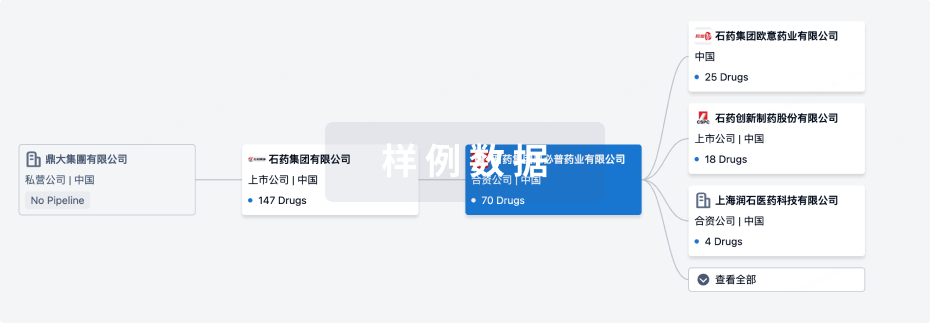
管线布局
2026年11月25日管线快照
管线布局中药物为当前组织机构及其子机构作为药物机构进行统计,早期临床1期并入临床1期,临床1/2期并入临床2期,临床2/3期并入临床3期
药物发现
1
6
临床前
登录后查看更多信息
当前项目
| 药物(靶点) | 适应症 | 全球最高研发状态 |
|---|---|---|
Lacticaseibacillus paracasei 36(Zhejiang University) | 肝损伤 更多 | 临床前 |
Hesperetin ( XO ) | 高尿酸血症 更多 | 临床前 |
Lactobacillus paragasseri(Shanxi Medical University) | 慢性荨麻疹 更多 | 临床前 |
Cyanidin-3-rutinoside (C3R) | 血脂障碍 更多 | 临床前 |
HCP-2b | 糖尿病 更多 | 临床前 |
登录后查看更多信息
药物交易
使用我们的药物交易数据加速您的研究。
登录
或
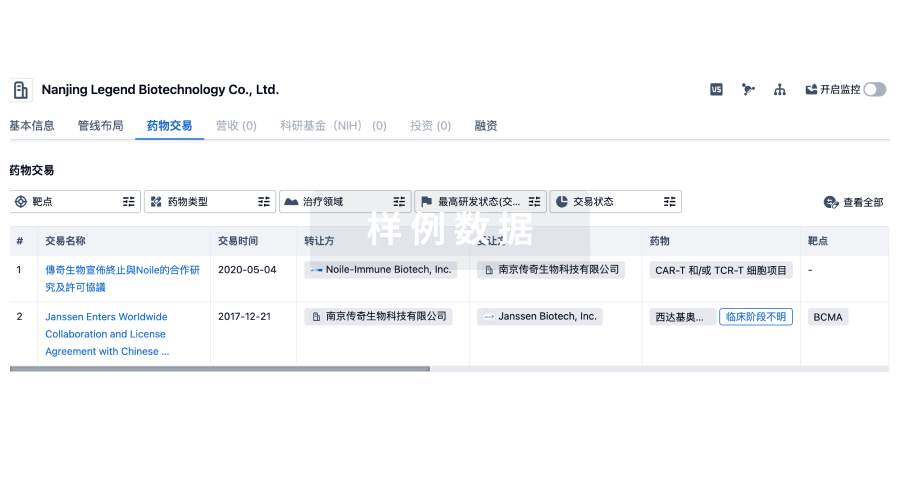
转化医学
使用我们的转化医学数据加速您的研究。
登录
或
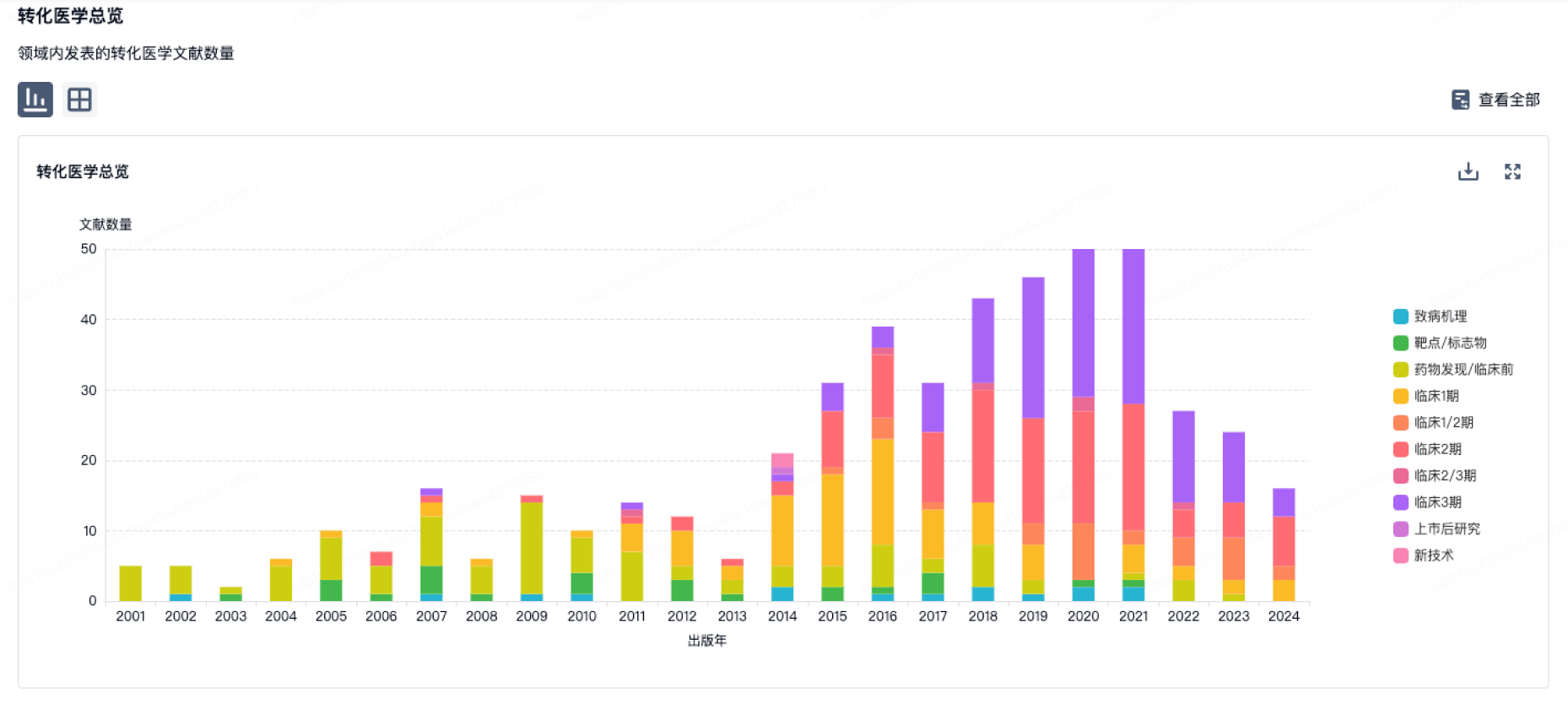
营收
使用 Synapse 探索超过 36 万个组织的财务状况。
登录
或
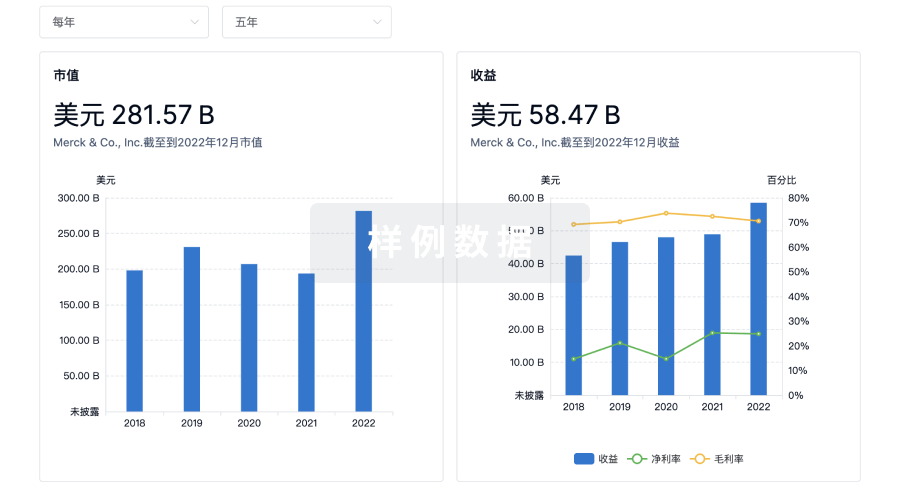
科研基金(NIH)
访问超过 200 万项资助和基金信息,以提升您的研究之旅。
登录
或
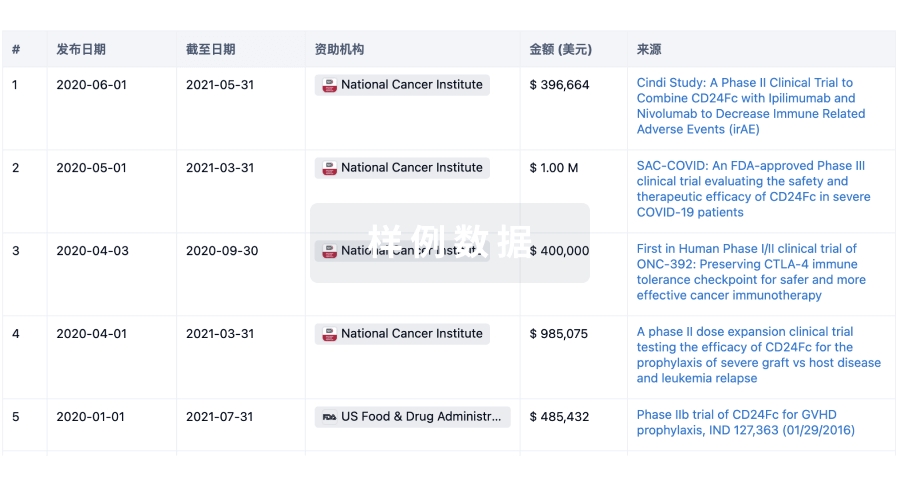
投资
深入了解从初创企业到成熟企业的最新公司投资动态。
登录
或
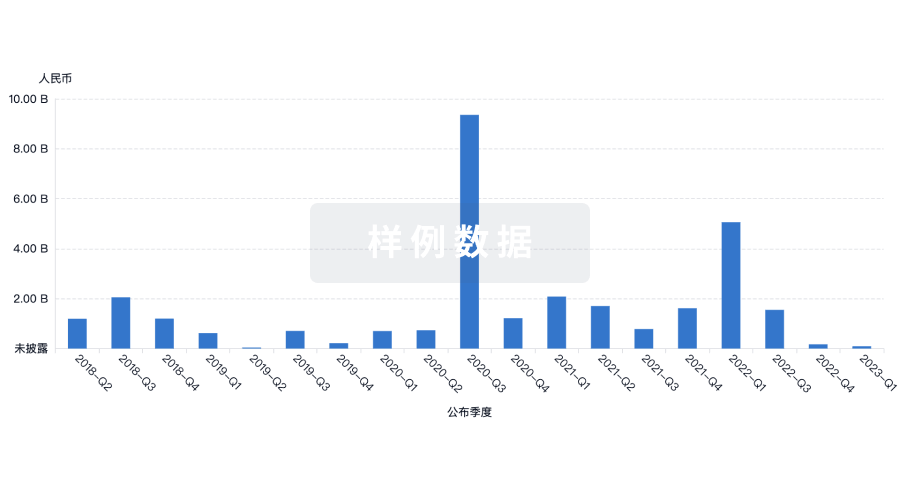
融资
发掘融资趋势以验证和推进您的投资机会。
登录
或
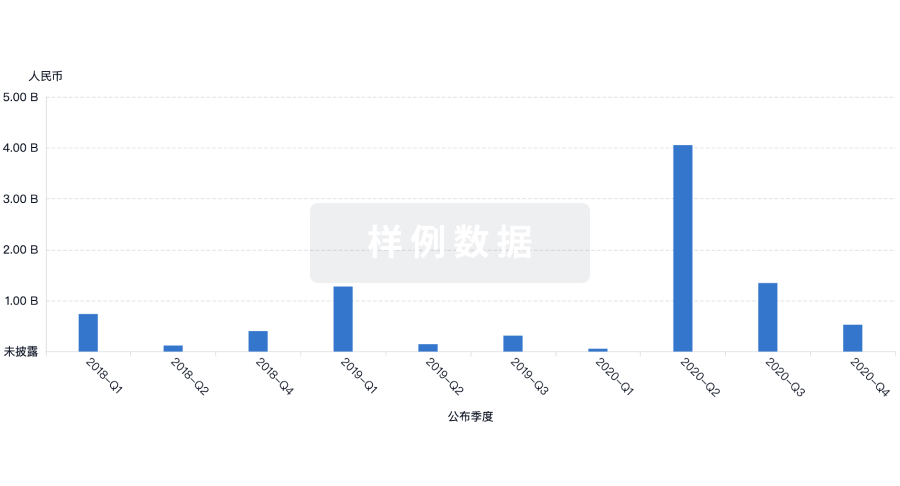
提出任何生物医药研究问题
让每一步生物医药决策都精准制胜
基于十亿级生物数据与全球情报的精准 AI,赋能早期药物发现
立即开始免费试用!
智慧芽新药情报库是智慧芽专为生命科学人士构建的基于AI的创新药情报平台,助您全方位提升您的研发与决策效率。
立即接入生物医药数据包
智慧芽新药库数据也通过智慧芽开放平台,以MCP或API服务形式对外开放。立即使用我们的MCP服务定制您的LLM智能体。
生物序列数据库
生物药研发创新
免费使用
化学结构数据库
小分子化药研发创新
免费使用