预约演示
更新于:2026-06-25

Shenzhen Mindray Bio-Medical Electronics Co., Ltd.
更新于:2026-06-25
概览
关联
ChiCTR2600125079
A prospective, multi-center, single-group target value clinical investigation to evaluate the efficacy and safety of the IntroSky Catheter Sheath in the neurovascular interventional procedure

ChiCTR2500111747
A prospective, multicenter, single-group target-value clinical trial evaluating the use of coronary cutting balloon for pretreatment of coronary artery stenosis

ChiCTR2600116602
A Prospective, Multi-center, Single-arm Clinical Trial to Evaluate the Safety and Effectiveness of the Trapping Balloon Catheter in Percutaneous Coronary Intervention
100 项与 深圳迈瑞生物医疗电子股份有限公司 相关的临床结果
登录后查看更多信息
登录后查看更多信息
2026-03-01ACADEMIC RADIOLOGY
Real-time Automatic Guidance During Shoulder Ultrasound Scanning with Artificial Intelligence: Reducing Operator Dependency in Rotator Cuff Assessment
Article
作者: Xiao, Zhenxiang ; Wang, Tong ; Xiong, Kun ; Ye, Jialin ; Zhu, Mingliu ; Yi, Wenhong ; Zeng, Dejun ; Wan, Puyue ; Liu, Shuo ; Li, Sushu ; Li, Zhenzhou ; He, Yanni ; Zhou, Meijun ; Liu, Hongmei ; Bai, Tong ; He, Songze ; Wu, Haorong
OBJECTIVES:
This study aimed to develop an artificial intelligence (AI)-guided system for real-time automatic classification and structural recognition of shoulder US planes, in order to standardize the US scanning process.
MATERIALS AND METHODS:
This was a prospective multicenter study. 852 standard plane images and 74,909 frame images from 13,312 shoulder US videos from Center 1 were used for model training/internal testing. 8458 frame images from 480 videos from Center 2 were collected as external test set. Convolutional neural networks were developed. Performance was evaluated using classification metrics (AUC) and structure detection metrics (average precision, AP). The clinical utility was assessed by comparing the examination duration of primary residents with and without AI guidance. AI performance in real-time shoulder US was evaluated by musculoskeletal (MSK) US expert with classification accuracy and target structure detection accuracy.
RESULTS:
The EfficientNetB2-based AI system, capable of concurrently guiding the acquisition of 15 standard planes and localizing 27 key structures, demonstrated robust performance on an independent external validation set (AUC: 0.99; mAP: 0.89). For junior residents, AI guidance significantly reduced shoulder US examination time by 34% compared to unassisted scans ([10.06 ± 2.74] min vs. [15.26 ± 5.07] min; p = 0.014), achieving efficiency comparable to expert supervision. Independent expert evaluation confirmed the high real-time guidance accuracy of the system.
CONCLUSION:
Our AI system standardizes shoulder US acquisition by providing accurate, real-time guidance. It reduces operator dependency for novices and establishes a reproducible foundation for subsequent diagnostic interpretation, representing a critical advancement towards standardized MSK US imaging acquisition.
2026-03-01IEEE Journal of Biomedical and Health Informatics
OrthoDetNet: An Enhanced YOLO-Based Framework for Detection of Orthopedic Surgical Instruments
Article
作者: Liu, Mengxing ; Chen, Yang ; Zhou, Guangquan ; Xu, Peng ; Zhou, Ping ; Guo, Chu ; Qiu, Yixuan
Accurate detection of surgical instruments is critical for both routine surgical procedures and surgical robotics research. To the best of our knowledge, there is a notable lack of datasets and dedicated detection studies specifically addressing orthopedic surgical instruments. Detecting orthopedic surgical instruments presents particular challenges including significant size variations, highly similar shapes, and frequent, severe occlusions due to instrument intersections. To address these issues, we propose an orthopedic surgical instrument detection method (OrthoDetNet) incorporating three specialized modules. The FilterUnit mitigates occlusion effects via an adaptive feature filtering mechanism, that dynamically adjusts its filtering strategy based on context, prioritizing features from key regions while suppressing distracting interference features. The DEUnit enhances fine-grained feature discrimination in local regions to distinguish instruments with high shape similarity, and the BDFusion module improves multi-scale detection performance through bi-directional feature fusion between deep and shallow-level feature maps. A dataset for orthopedic surgical instrument detection is created, which is based on the proximal femoral nail antirotation (PFNA) instrument package manufactured by Shenzhen Mindray Bio-Medical Electronics Co., Ltd. Images were captured in a controlled, simulated experimental environment, ensuring no patient privacy or ethical concerns. We obtained explicit authorization from the manufacturer for instrument use. Experimental results on this dataset demonstrate the effectiveness of the OrthoDetNet and its constituent modules.
2026-01-27CLINICAL CHEMISTRY AND LABORATORY MEDICINE
An automatic chemiluminescence immunoassay for a novel biomarker NT-IGFBP-4: analytical performance and clinical relevance in heart failure
Article
作者: Zhang, Litao ; Wang, Hui ; Li, Ling ; Yang, Juan ; Zhang, Zhenlu ; Wu, Yu ; Shu, Xin ; Cao, Shuzheng ; Wang, Jing ; Zhang, Yi ; Jing, Yisha
Abstract:
Objectives:
Insulin-like growth factor binding protein-4 (IGFBP-4) fragments are reported as emerging biomarkers for cardiovascular disease (CVD) risk assessment. To ensure data reliability and improve clinical application, the first automatic chemiluminescent immunoassay (CLIA) for NT-IGFBP-4 was developed and its distribution across CVDs was evaluated in this study.
Methods:
Fragment-specific monoclonal antibodies were used to develop immunoassay, followed by comprehensive analytical validation, including limit of blank (LoB), limit of detection (LoD), limit of quantification (LoQ), linearity, specificity, precision, sample type compatibility, and stability. Reference intervals for NT-IGFBP-4 were established in healthy individuals, with variations analyzed based on gender, age, body mass index (BMI), and renal function. Additionally, NT-IGFBP-4 distribution was explored in CVD patients.
Results:
The newly developed chemiluminescence assay demonstrated high specificity for NT-IGFBP-4, with excellent sensitivity (LoQ=1.0 ng/mL), broad linearity (1.0–1,000.0 ng/mL), and strong precision (CV≤3.0 %). It showed no interference from common endogenous substances, maintained compatible with various sample types, and remained stable under different storage conditions. Reference intervals showed slight variations by gender and age, with levels being independent of BMI but influenced by renal function. NT-IGFBP-4 levels were significantly elevated in CVDs, especially in heart failure, correlating with NYHA classification and LVEF (%), with higher levels indicating worse cardiac function.
Conclusions:
The new automatic NT-IGFBP-4 (CLIA) assay offers a highly specific, sensitive and precise method for quantifying IGFBP-4 fragments. Its validated performance and disease association findings would enhance its diagnostic and prognostic potential in CVD research, particularly in heart failure.
100 项与 深圳迈瑞生物医疗电子股份有限公司 相关的药物交易
登录后查看更多信息
100 项与 深圳迈瑞生物医疗电子股份有限公司 相关的转化医学
登录后查看更多信息
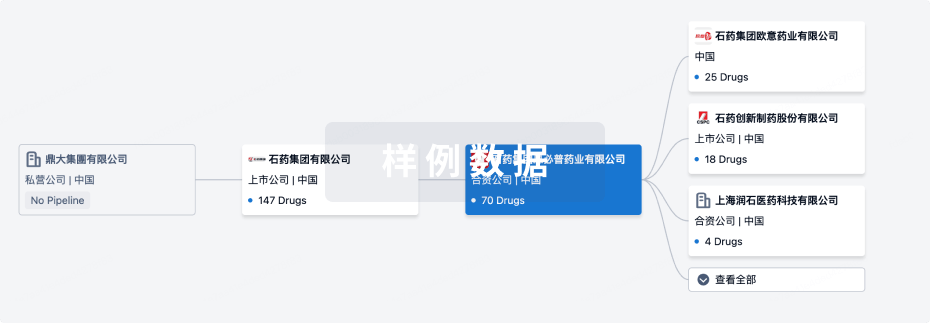
组织架构
使用我们的机构树数据加速您的研究。
登录
或
管线布局
2026年10月11日管线快照
无数据报导
登录后保持更新
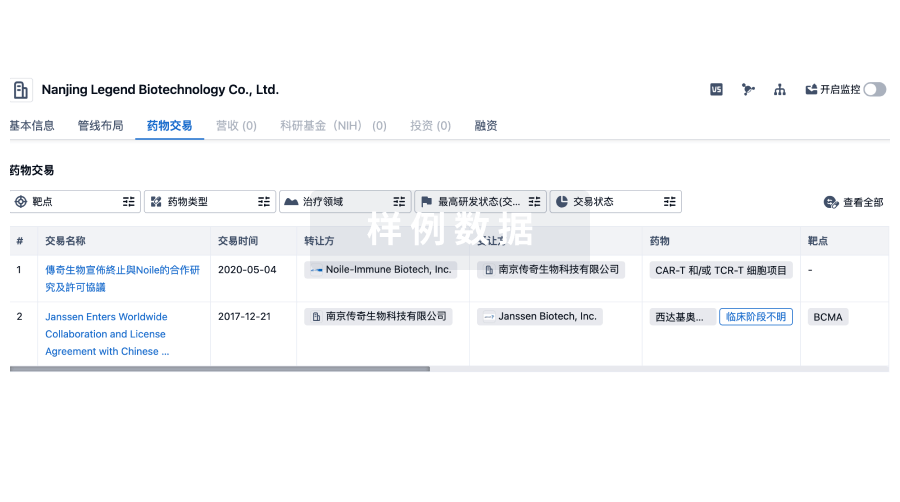
药物交易
使用我们的药物交易数据加速您的研究。
登录
或
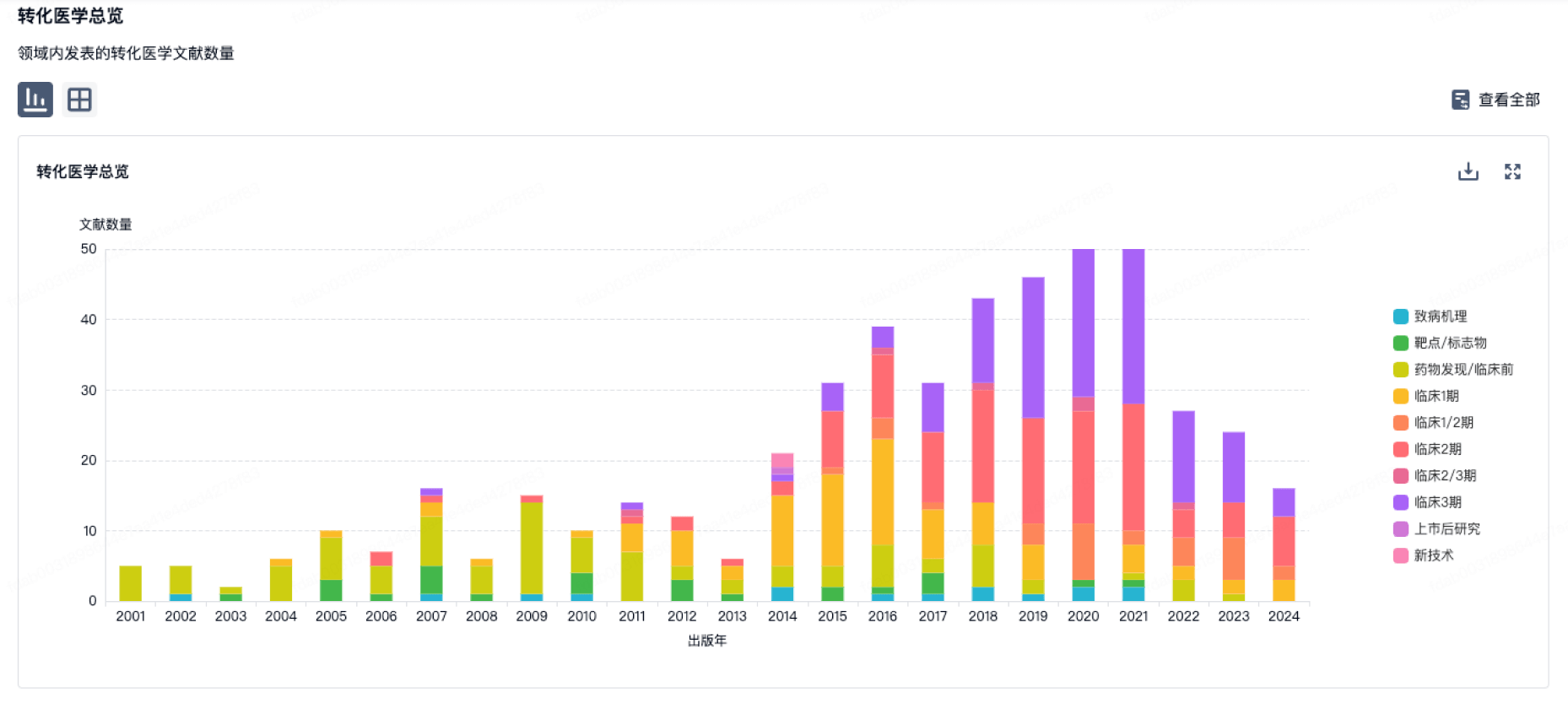
转化医学
使用我们的转化医学数据加速您的研究。
登录
或
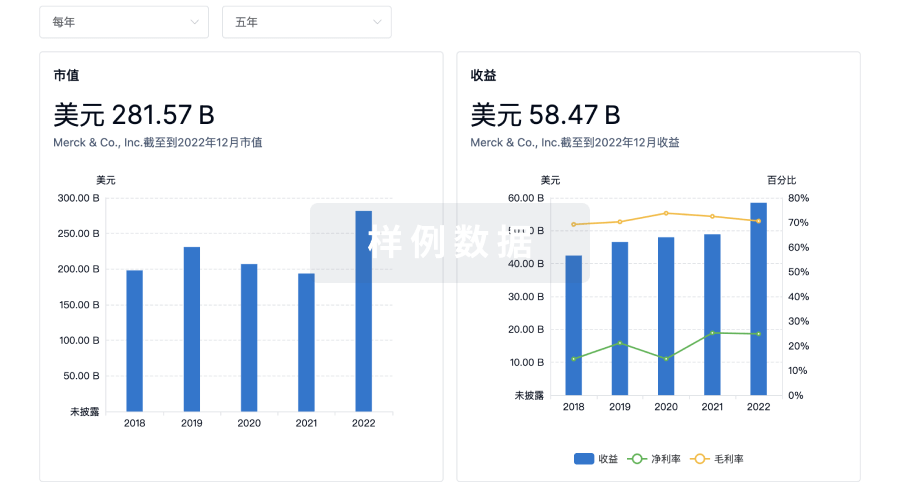
营收
使用 Synapse 探索超过 36 万个组织的财务状况。
登录
或
科研基金(NIH)
访问超过 200 万项资助和基金信息,以提升您的研究之旅。
登录
或
投资
深入了解从初创企业到成熟企业的最新公司投资动态。
登录
或
融资
发掘融资趋势以验证和推进您的投资机会。
登录
或
提出任何生物医药研究问题
让每一步生物医药决策都精准制胜
基于十亿级生物数据与全球情报的精准 AI,赋能早期药物发现
立即开始免费试用!
智慧芽新药情报库是智慧芽专为生命科学人士构建的基于AI的创新药情报平台,助您全方位提升您的研发与决策效率。
立即接入生物医药数据包
智慧芽新药库数据也通过智慧芽开放平台,以MCP或API服务形式对外开放。立即使用我们的MCP服务定制您的LLM智能体。
生物序列数据库
生物药研发创新
免费使用
化学结构数据库
小分子化药研发创新
免费使用