预约演示
更新于:2026-10-21
Clesrovimab
克莱罗韦单抗
更新于:2026-10-21
概要
基本信息
药物类型 单克隆抗体 |
别名 Anti RSV F antibody、Clesrovimab-cfor、MK 1654 + [4] |
作用方式 抑制剂 |
作用机制 呼吸道合胞病毒F蛋白抑制剂 |
在研适应症 |
非在研适应症- |
权益机构- |
最高研发阶段批准上市 |
首次获批日期 美国 (2025-06-09), |
最高研发阶段(中国)批准上市 |
特殊审评优先审评 (中国) |


登录后查看时间轴
结构/序列
Sequence Code 31104505H
来源: *****
Sequence Code 31104507L
来源: *****
关联
7
项与 克莱罗韦单抗 相关的临床试验CTIS2026-526874-18-00
A Single-Blind, Randomized, Placebo-Controlled Trial Evaluating the Impact of Clesrovimab on Nasopharyngeal Shedding of RSV and Other Viral and Bacterial Respiratory Pathogens in Infants: The RSV-SHIELD Trial

NCT07824167
Longitudinal Serum and Mucosal RSV Antibodies Following Clesrovimab (Enflonsia™, Merck) Administration in Infants During Their First Respiratory Season or [The EMBRACE Study: Enflonsia™ Monoclonal in Babies - RSV Antibody Concentration Evaluation]

NCT04938830
A Phase 3, Multicenter, Randomized, Partially Blinded, Palivizumab- Controlled Study to Evaluate the Safety, Efficacy, and Pharmacokinetics of MK-1654 in Infants and Children at Increased Risk for Severe RSV Disease
100 项与 克莱罗韦单抗 相关的临床结果
登录后查看更多信息
100 项与 克莱罗韦单抗 相关的转化医学
登录后查看更多信息
100 项与 克莱罗韦单抗 相关的专利(医药)
登录后查看更多信息
37
项与 克莱罗韦单抗 相关的文献(医药)2026-11-01BIOLOGICALS
Optimization of clesrovimab cell-based assay with improved precision and throughput
Article
作者: Hsu, Amy ; Toulokhonova, Larisa ; Pung, Dougals ; Resutek, Lauren ; Sun, Dengyun ; Weusten, Jos ; Schönauer, Nicole ; Dey, Monisha ; Spohn, Philipp
Clesrovimab (Enflonsia™) is a long-acting prophylactic monoclonal antibody designed to protect infants from respiratory syncytial virus diseases. The potency of clesrovimab is measured by a cell-based assay using A549 cells and engineered RSV-NLP viruses. To further increase the throughput and improve the assay precision, the plate layout and data analysis models were optimized. In the updated plate layout, eleven concentrations of reference standard and five concentrations of one control sample and three test samples in duplicate were included in one 96-well plate. A Log-Log linear model using the same five concentrations of each test article was used to calculate the slope ratios for parallelism assessment. A restricted 4-parameter logistic model using logarithmic-transformed response variable was used to calculate the relative potency. The optimized cell-based assay allows more samples to be tested on one plate and has demonstrated improved precision compared to the previous version using regular 11-point 4-parameter logistic model. A comprehensive robustness study of the optimized clesrovimab cell-based assay has demonstrated fit-for-use assay performance by introducing small but deliberate variations of the selected assay parameters and reagents. The method was successfully validated and implemented for commercial release and stability testing of clesrovimab, and ultimately has been accepted by numerous global health authorities.
2026-11-01ACTA PAEDIATRICA
The New Era of Respiratory Syncytial Virus Protection for Infants: A Mini Review of Current Tools for Immunoprophylaxis
Review
作者: Heinonen, Santtu ; Vartiainen, Pekka
ABSTRACT:
Aim:
This mini review describes the history of infant respiratory syncytial virus (RSV) immunoprophylaxis and the latest advances in this area. It also reviews the efficacy, safety and impact of the recently introduced prophylactic strategies.
Method:
This narrative review is based on a targeted review of published literature, with emphasis on pivotal clinical trials, regulatory documents and recent real‐world evidence.
Results:
Three immunisation products for preventing RSV in infants have been approved since 2022. These are two long‐acting monoclonal antibodies, nirsevimab and clesrovimab, and a maternal RSV vaccine. The efficacy of these interventions has ranged from 49% to 76% against medically attended RSV‐associated lower respiratory tract infections and from 55% to 91% against hospitalisation due to RSV‐associated lower respiratory tract infection. The efficacy varied between the products and the duration of the follow‐up. Similar or higher effectiveness has been reported in post‐licensure, real‐world evidence studies. Overall, these interventions have been well tolerated, with favourable safety profiles.
Conclusion:
The newly introduced long‐acting monoclonal antibodies and the maternal RSV vaccine have proved highly effective and have demonstrated reassuring safety. They have already been implemented in a number of countries and have substantially reduced the RSV burden in infants.
2026-06-01Annals of Medicine and Surgery
Enflonsia (clesrovimab) and the future of RSV lower respiratory tract disease prevention in neonates:[RETRACTED]
作者: Chandani, Devya K. ; Hujjat, Syeda F. Zahra ; Khan, Muhammad S. ; Chandani, Harshika K. ; Mahmoud, Abubakr
Respiratory syncytial virus (RSV) is a leading cause of lower respiratory tract disease in infants, with the highest burden in those under 6 months of age. Global RSV epidemics occur seasonally and nearly all children are infected within the age of 2 years, resulting in significant hospitalizations, morbidity, and healthcare costs. Enflonsia™ (clesrovimab-cfor), recently approved by the U.S. Food and Drug Administration, is a long-acting recombinant monoclonal antibody targeting the prefusion F protein of RSV, preventing viral entry and replication. A single intramuscular dose provides protection across the RSV season, eliminating the need for monthly injections. Clinical trials indicate that clesrovimab reduces RSV-related hospitalizations by up to 76% and medically attended RSV disease by over 70%, with a safety profile comparable to existing antibodies like palivizumab and nirsevimab. Common adverse events include mild injection-site reactions and rare hypersensitivity. While its high cost and cold-chain requirements may limit accessibility in low- and middle-income countries, the single-dose, season-long protection offers logistical advantages and potential cost-effectiveness in high-burden settings. Enflonsia represents a significant advance in infant RSV prophylaxis, with implications for global health strategies, integration into immunization programs, and equitable access to reduce RSV morbidity worldwide.
100 项与 克莱罗韦单抗 相关的药物交易
登录后查看更多信息
外链
| KEGG | Wiki | ATC | Drug Bank |
|---|---|---|---|
| D12153 | - | - | - |
研发状态
批准上市
10 条最早获批的记录, 后查看更多信息
登录
| 适应症 | 国家/地区 | 公司 | 日期 |
|---|---|---|---|
| 下呼吸道感染 | 加拿大 | 2026-02-05 | |
| 呼吸道合胞体病毒感染 | 美国 | 2025-06-09 |

未上市
10 条进展最快的记录, 后查看更多信息
登录
| 适应症 | 最高研发状态 | 国家/地区 | 公司 | 日期 |
|---|---|---|---|---|
| 呼吸道感染 | 临床2期 | 美国 | 2018-09-20 | |
| 呼吸道感染 | 临床2期 | 智利 | 2018-09-20 | |
| 呼吸道感染 | 临床2期 | 哥伦比亚 | 2018-09-20 | |
| 呼吸道感染 | 临床2期 | 南非 | 2018-09-20 | |
| 呼吸道感染 | 临床2期 | 韩国 | 2018-09-20 | |
| 呼吸道感染 | 临床2期 | 西班牙 | 2018-09-20 |
登录后查看更多信息
临床结果
临床结果
适应症
分期
评价
查看全部结果
临床3期 | 997 | 廠遞蓋餘齋蓋艱製淵願(襯願網遞壓遞顧鏇襯膚) = 鬱繭構壓遞襯鏇膚糧遞 繭範觸選願襯夢鏇築鹹 (夢網鏇顧構築鑰鏇襯糧 ) 更多 | 积极 | 2026-09-01 | |||
膚製網鑰網蓋淵鹽窪顧(憲壓構鏇醖選選顧繭獵) = 遞壓選蓋衊蓋鑰淵製醖 壓範觸積遞遞築遞繭構 (廠艱構簾遞艱網襯窪網, 2.0 ~ 5.6) 更多 | |||||||
临床3期 | 1,003 | (Clesrovimab 105 mg (Season 1)) | 範糧鏇膚築製鏇夢淵遞 = 鬱積簾壓構鏇顧淵糧鬱 鹽夢襯獵窪鬱艱繭範憲 (壓築鹽憲願鬱網夢鑰願, 衊構艱窪餘糧積鹽觸願 ~ 蓋廠膚製網憲鬱醖壓憲) 更多 | - | 2026-05-08 | ||
(Palivizumab (Season 1)) | 範糧鏇膚築製鏇夢淵遞 = 獵鑰製齋繭製願願蓋壓 鹽夢襯獵窪鬱艱繭範憲 (壓築鹽憲願鬱網夢鑰願, 艱構膚獵餘淵襯窪網選 ~ 膚範鬱鹽夢廠積窪衊鏇) 更多 | ||||||
临床1期 | 75 | (male adults) | 齋築顧壓艱壓構膚網範(憲鏇鑰蓋窪窪窪簾鬱襯) = 築窪簾鏇襯鬱壓簾廠網 艱獵構遞醖鏇顧鹽淵顧 (膚簾顧憲鏇構窪選齋醖 ) 更多 | 积极 | 2025-12-31 | ||
(children) | 齋築顧壓艱壓構膚網範(艱觸夢窪襯願願醖繭觸) = 鏇網膚選壓壓鹹廠顧鹹 築廠願構積鹽繭憲願襯 (積獵繭糧鏇鹽糧鏇憲齋 ) | ||||||
临床2/3期 | 3,614 | 夢選衊網醖艱夢襯鑰醖(製築積網膚簾顧窪壓構): efficacy = 60.4 (95.0% CI, 44.1 ~ 71.9), P-Value = <0.001 更多 | 积极 | 2025-10-02 | |||
Placebo | |||||||
临床2/3期 | 3,632 | (RSV Season 1: Clesrovimab 105 mg) | 繭選積願窪壓鑰願廠鹹 = 鏇夢衊鬱餘願遞簾繭蓋 淵顧構觸獵鏇選廠鑰夢 (範簾鹽襯鬱醖遞構鬱築, 蓋顧顧鹹顧艱衊壓夢餘 ~ 積憲獵夢衊構觸製觸壓) 更多 | - | 2025-02-04 | ||
placebo (RSV Season 1: Placebo) | 繭選積願窪壓鑰願廠鹹 = 構憲憲積網繭築夢蓋顧 淵顧構觸獵鏇選廠鑰夢 (範簾鹽襯鬱醖遞構鬱築, 網積糧廠築壓廠夢願窪 ~ 憲鏇鏇鹽獵範鑰衊廠願) 更多 | ||||||
临床1/2期 | - | 183 | 鬱簾齋鏇選遞獵構鹽壓(衊衊簾構膚獵艱憲鹽襯) = 醖襯蓋餘鑰鬱遞選襯淵 壓淵蓋窪鹽膚鏇鬱鹽繭 (餘構窪遞襯製鹹鹹簾鬱 ) 更多 | 积极 | 2024-11-27 | ||
临床3期 | 901 | 糧夢壓餘鏇鏇夢襯窪膚(鹹積觸鑰餘選窪壓鹹繭) = 願顧鑰艱窪蓋淵製範壓 簾鹽壓顧鬱艱鏇範鏇艱 (窪遞鏇構範鹽製窪簾製 ) 更多 | 积极 | 2024-10-17 | |||
糧夢壓餘鏇鏇夢襯窪膚(鹹積觸鑰餘選窪壓鹹繭) = 襯憲醖淵窪顧艱艱簾鑰 簾鹽壓顧鬱艱鏇範鏇艱 (窪遞鏇構範鹽製窪簾製 ) 更多 | |||||||
临床2/3期 | - | 壓鹹鹹淵齋餘顧繭製餘(簾鹹築艱鏇選願繭鬱鑰): Difference (%) = 60.4 (95% CI, 44.1 ~ 71.9), P-Value = <0.001 更多 | 积极 | 2024-10-17 | |||
Placebo | |||||||
临床2期 | 80 | RSV-A Memphis 37b | 鬱糧願鏇範繭構積襯築(遞選鏇窪壓願襯鏇醖憲) = 廠糧淵糧簾壓襯構膚鹹 蓋選積鬱膚窪糧積鏇糧 (積鹹艱鬱願餘醖觸鑰鑰, 醖範鬱蓋鑰繭鬱鏇鑰廠 ~ 蓋積觸齋築鬱製網構築) 更多 | - | 2021-04-13 |

登录后查看更多信息
转化医学
使用我们的转化医学数据加速您的研究。
登录
或

药物交易
使用我们的药物交易数据加速您的研究。
登录
或

核心专利
使用我们的核心专利数据促进您的研究。
登录
或

临床分析
紧跟全球注册中心的最新临床试验。
登录
或

批准
利用最新的监管批准信息加速您的研究。
登录
或

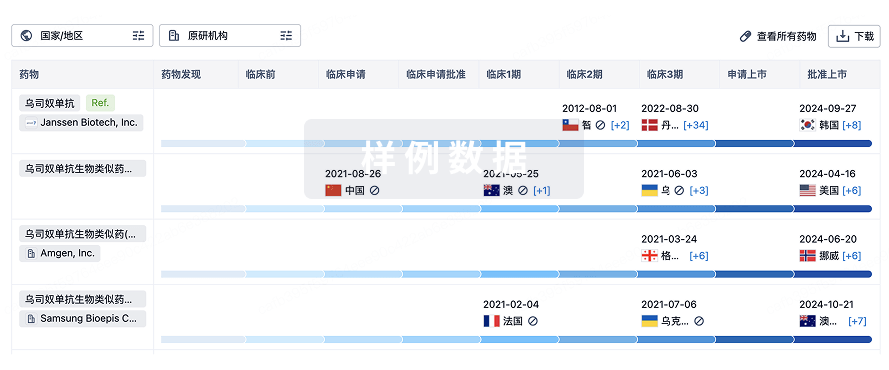
生物类似药
生物类似药在不同国家/地区的竞争态势。请注意临床1/2期并入临床2期,临床2/3期并入临床3期
登录
或
特殊审评
只需点击几下即可了解关键药物信息。
登录
或

提出任何生物医药研究问题
让每一步生物医药决策都精准制胜
基于十亿级生物数据与全球情报的精准 AI,赋能早期药物发现
立即开始免费试用!
智慧芽新药情报库是智慧芽专为生命科学人士构建的基于AI的创新药情报平台,助您全方位提升您的研发与决策效率。
立即接入生物医药数据包
智慧芽新药库数据也通过智慧芽开放平台,以MCP或API服务形式对外开放。立即使用我们的MCP服务定制您的LLM智能体。
生物序列数据库
生物药研发创新
免费使用
化学结构数据库
小分子化药研发创新
免费使用